








Raised $365 million, monthly income of $20 per node, has the Helium protocol failed?

 Helium CEO: This is just the beginning.
Original source: Liron Shapira, Amir, Kyle Samani Twitter
Compilation: 0x711, wzp, czgsws, BlockBeats
Cryptocurrency investor Liron Shapira recently posted on social media that the decentralized wireless communication network Helium has raised an exorbitant $365 million in funding. However, the results are not ideal; according to his statistics, the monthly revenue of the Helium network is only $6,500, and the monthly revenue for a single miner is just $20.
This sparked widespread discussion in the community after the long tweet was published, drawing responses from Helium founder Amir and Multicoin Capital managing partner Kyle Samani. The two sides engaged in a heated debate about the future of the Internet of Things and Helium, summarized as follows.
Liron Shapira's Questions
Recently, I have seen more and more comments about Helium's poor return rates in Helium's Reddit community. They spent an average of $400-800 to purchase a miner (hotspot), with total miner sales exceeding $250 million, and nodes hoped to earn $100 per month. However, the fact is that the current monthly revenue for a single node and miner is only $20.
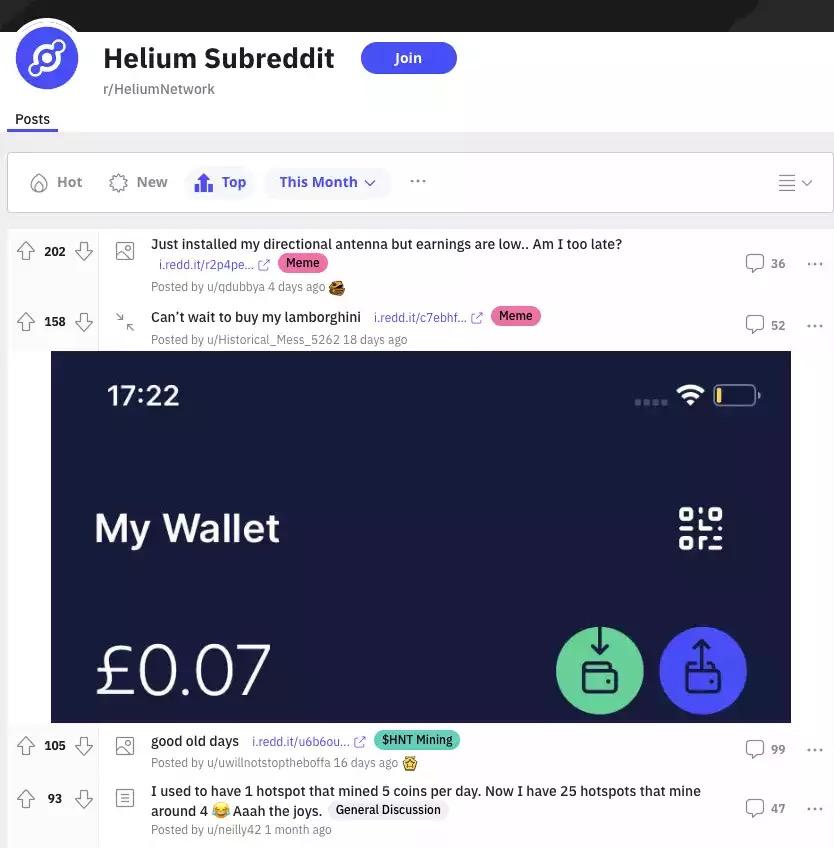
Meanwhile, the development company behind the Helium network, Nova Labs, can extract 30 million HNT from the network each year.
a16z partner Chris Dixon once stated in his tweet about "mental models" that Helium cannot be built in Web2 because it requires token incentives. But the fact shows that Web2 will not incentivize Helium due to low demand.
It is not surprising that end-user demand for Helium is lacking. Basic LoRaWAN market analysis indicates that this is a speculative bubble built around false and exaggerated use cases.
While miner income for any network has significantly shrunk during the bear market, the figure of $20 is too exaggerated, prompting responses from Helium's founders and investors.
Response from Helium Founder and CEO Amir
First, regarding some of the data mentioned by Liron Shapira:
Nova Labs has completed approximately $250 million in funding since its establishment. However, the funding is for purchasing equity in the company, not tokens in the network;
The company earns about 1.5 million HNT per year, not the 30 million reported.
About Revenue:
The Helium network generates about $2 million in fees each month. Most of this is in the form of fixed hotspot onboarding fees, which gradually decrease as the network saturates.
The network transmits about 650 million data packets each month, generating $6,500.
Looking at network revenue through the lens of company equity investment is like comparing apples to oranges. But Nova Labs has indeed raised a lot of funding, and we have many great things to do. We will use it to create the first wireless protocol, LoRaWAN, which is a very low-power, low-data-rate protocol designed specifically for sensor and telemetry applications that Helium is currently focusing on. This is typically referred to in the telecommunications field as a low-power wide-area network, or LPWAN. These types of devices do not rely on cellular networks because of short battery life and typically high hardware costs. LoRaWAN should not compete with LTE or 5G in any way.
Although it has existed for about the past decade, LPWAN is still very much in its early stages. I believe the LPWAN field has faced an extreme chicken-and-egg problem. Excellent applications cannot be built because there is no network, and conversely, there is no network because there are no applications.
The goal of Helium's LoRaWAN is to build a network by creating a personal economic system to solve the aforementioned paradox. With nearly 1 million nodes and 10% of the world's population covered, this seems to be working well.
So why does Helium only have $6,500 in monthly revenue? Unlike traditional cellular networks, there are currently not millions of devices that can connect to Helium. Top applications have not yet been built, and building them will take months or years.
However, applications are now emerging, and they are great. How about a tracking device in the form of a sticker that can be attached to anything? Such devices are being deployed as we discuss this.
Building the infrastructure is the first step. In fact, Helium has only been "available" in its coverage area for the past 6-9 months. Convincing users to rely on a distributed network built by individuals is not easy, and the coverage is uneven. Many areas are still uncovered.
So, is Helium a failed case proving that Web3 is terrible? I would say that everything is just beginning. My expected timeline for LoRaWAN has always been 5 to 10 years after a usable network exists, which means coverage and cost.
I hope we see more applications built on the LoRaWAN side. The technology allows for the use of unprecedentedly cheap battery-powered devices. I am excited to see what people build. Here you can see some of these builds showcased.
Meanwhile, new 5G networks using unlicensed CBRS spectrum are being established. Most modern smartphones support these bands, and new open-source protocol stacks make building public cellular networks possible for the first time.
Additionally, with the passage of the HIP51 proposal, other new networks will be built on top of Helium, including VPNs, CDNs, WiFi networks, and almost anything involving distributed node networks.
Critical voices are beneficial for the crypto and Web3 world. There are many garbage projects, but global IoT networks are not one of them, and I am proud of what the Nova Labs team has built. We are witnessing significant progress in this field from teams like Pollen Mobile and Althea Network.
Expand your perspective over time, focus on projects that are genuinely working, and stay low-key during tough times; everything else is just noise.
Kyle's Response
I have no disagreement with this figure; the delivery time for IoT customers is long. Customers only started taking Helium IoT seriously about 6 months ago, and considering the time for network testing, hardware upgrades, service portal updates, and shipping, it takes 6-12 months.
Liron's Reply
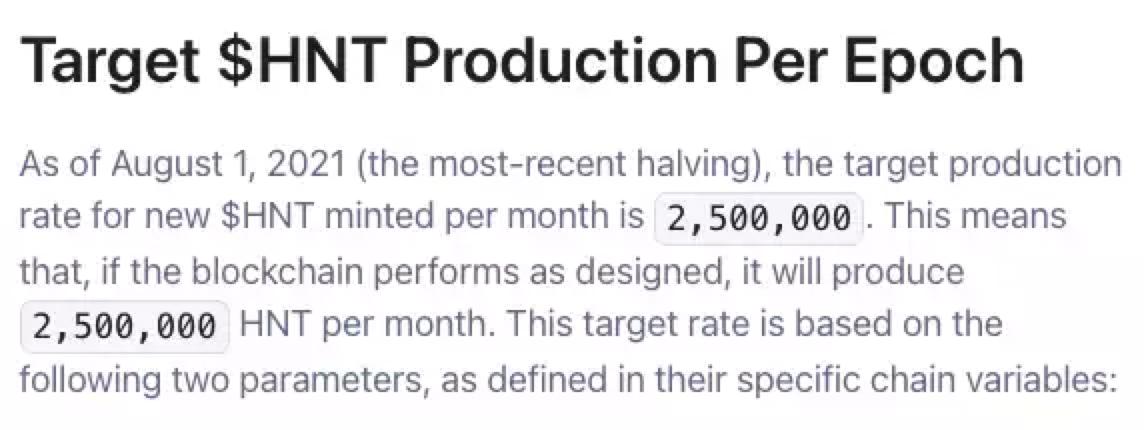
According to Crunchbase reports, in addition to the total of $250 million in venture capital funding, a16z led the company's $111 million ICO in 2021.
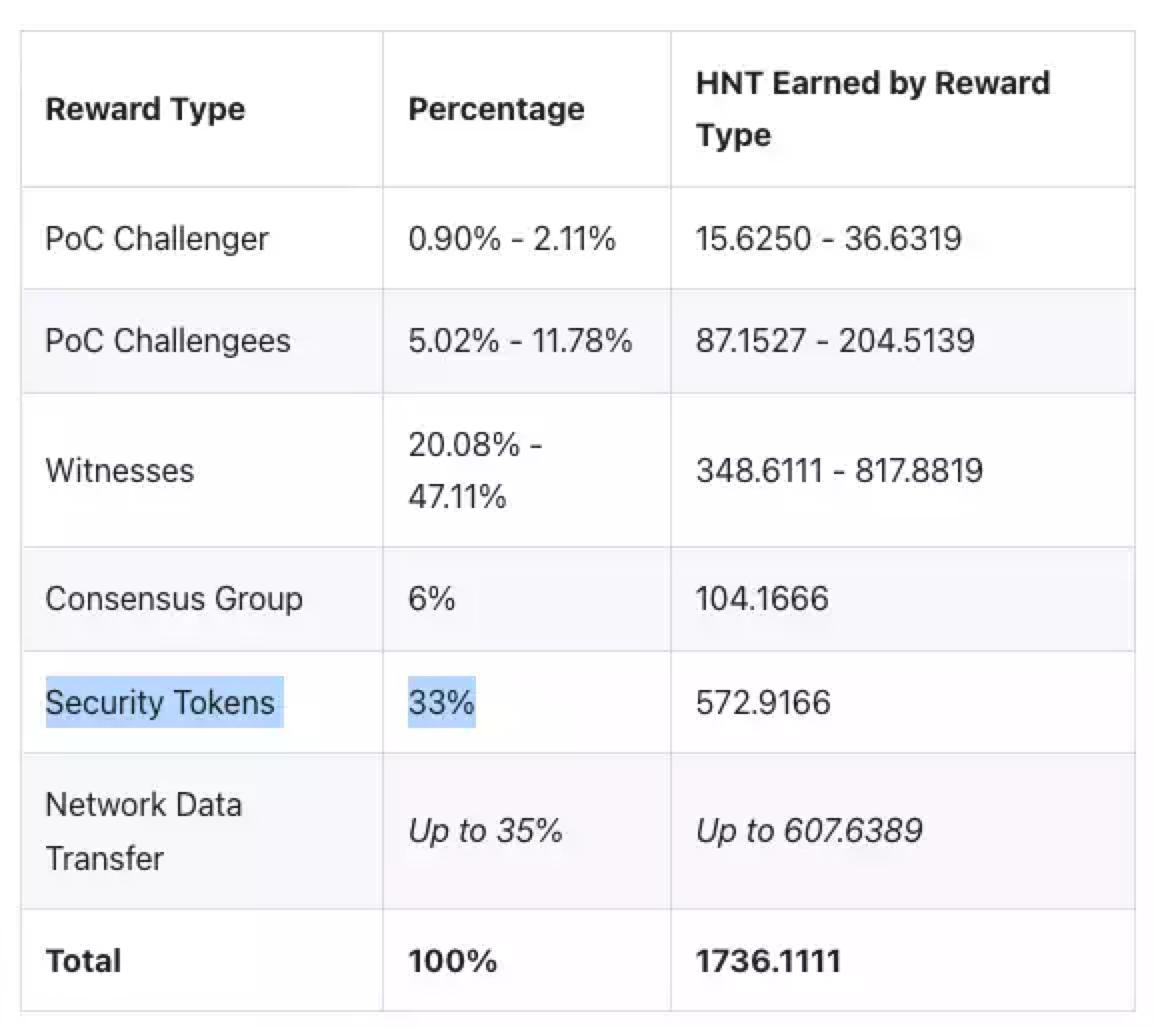
Furthermore, according to its white paper, the Helium network mints an additional 30 million HNT each year, of which 33%, or 10 million HNT, is paid to Helium Inc. and other investors holding security tokens.
Amir believes that the LoRaWAN network will gain applications through programs like NanoThings. But where is the traction?
Data does not lie. Retail investors have spent over $250 million to purchase over 500,000 hotspots to build a distributed network that currently earns only $6,500 per month from data usage.
This was my discussion with Helium venture capitalist Kyle Samani in December 2021, where I asked what Helium's specific use cases are. Think about it… how big is the pay-per-use LoRaWAN market when you reason through specific examples?
Now Helium is shifting to build a 5G network. They are competing with existing 5G networks that have perfect cellular architecture. They say just give it time. In our debate 8 months ago, Kyle said to give it a year. Based on their LoRaWAN data, I am skeptical about their 5G competition.
Focusing on project details can help more members of the tech community distinguish between Web3 hype and reality. When opinion leaders share hollow abstractions, ask for specifics. I used this technique in my post。
Web3 opinion leaders often deflect, shame, or block real inquiries, which is unfortunate. With enough pressure (obviously 14,000 likes), we can answer basic questions about use cases and funding flows. I applaud Amir Haleem's response and hope to see the same from Web3 venture capitalists like a16z.
I know that most tech platforms have their life cycles; does anyone still use CDs? But Helium has attracted over 200,000 ordinary investors to invest in over 500,000 devices at a financing price of over $250 million. Moreover, there is a circulating total value of over $1 billion in HNT tokens. At some point, we have to conclude that Helium has reached a dead end in the Web3 world.
 Risk warning
 Risk warning


Popular articles





