








Alpha opportunities still exist, starting from scratch to sort out the investment logic of DePIN

 This article attempts to outline the investment logic of DePIN from scratch, including why DePIN is an investment track worth our attention, and proposes a simple analytical framework.
Original Title: IOSG Weekly Brief|DePIN 101 #275
Original Author: Jiawei, IOSG Ventures
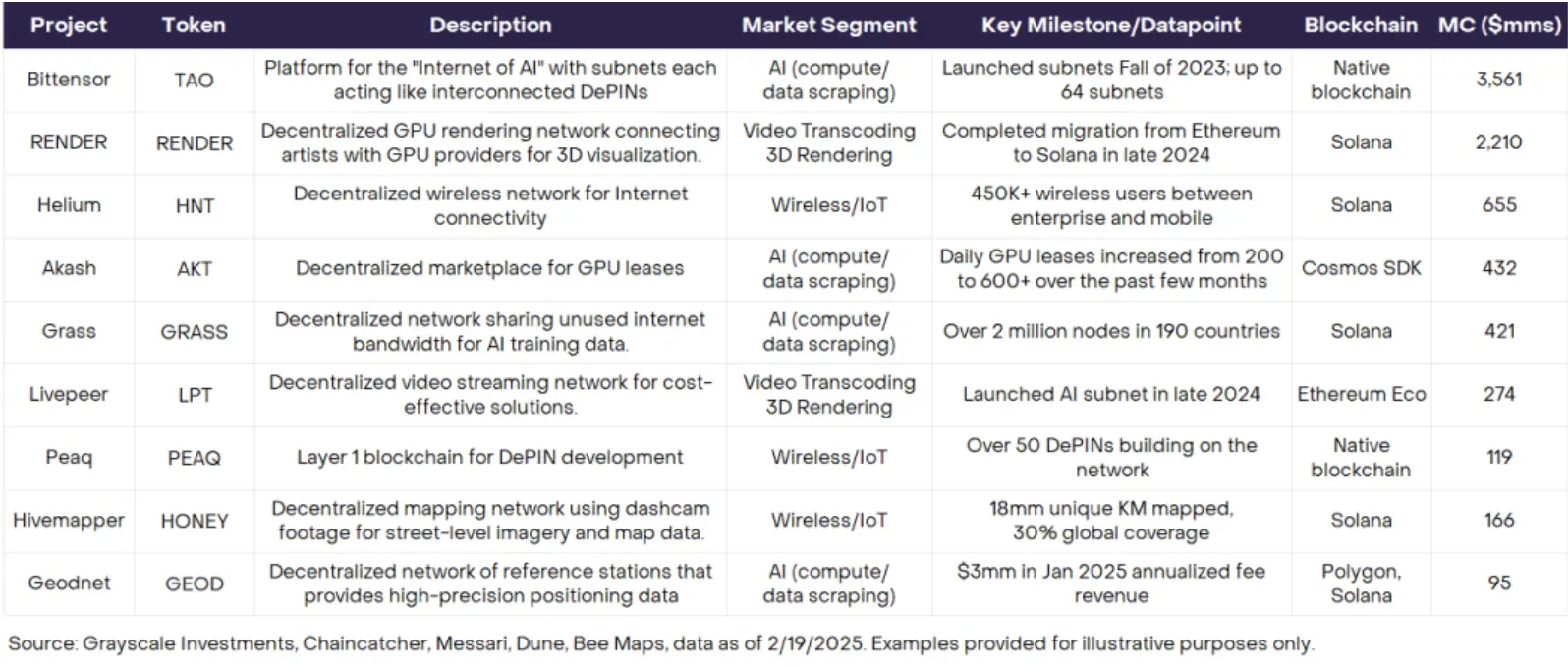
Source: Grayscale
Grayscale published a research report on DePIN earlier this year, and the table above shows the leading DePIN projects along with their market capitalizations. Since 2022, DePIN and AI have been discussed as two new directions for Crypto investment. However, there seems to be no iconic project emerging in the DePIN space. (Helium can be considered a leading project, but it appeared even before the concept of DePIN; the projects listed in the table such as Bittensor, Render, and Akash are more associated with the AI track.)
This suggests that DePIN lacks a sufficiently strong leading project to break the ceiling of this track. There may still be some Alpha in the DePIN space in the next 1-3 years.
This article attempts to outline the investment logic of DePIN from scratch, including why DePIN is a worthy investment track for us to pay attention to, and proposes a simple analytical framework. Since DePIN is a comprehensive concept that encompasses many diverse sub-tracks, this article will slightly zoom out to explain the concept from an abstract perspective, while still providing some concrete examples.
Why Focus on DePIN Investment
DePIN is not a buzz word
First, it is important to clarify that decentralizing physical world infrastructure is not a flashy idea, nor is it merely a "narrative play," but something that can be executed. There are indeed scenarios in DePIN where decentralization can "enable" something or "optimize" something.
Here are two simple examples:
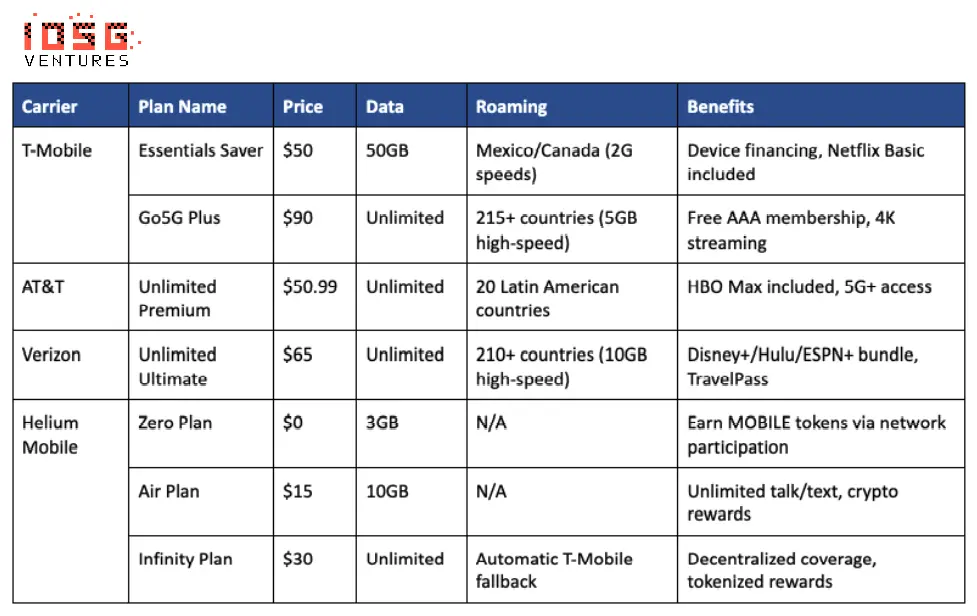
Source: IOSG
In one major track of DePIN—the telecommunications sector, taking the U.S. market as an example, traditional telecom operators (such as AT&T, T-Mobile) often need to invest billions of dollars in spectrum license auctions and base station deployments, paying deployment costs of $200,000 to $500,000 for each macro base station covering a radius of 1-3 kilometers. In a 2022 auction by the U.S. Federal Communications Commission (FCC) for 5G spectrum in the 3.45GHz band, AT&T invested $9 billion, becoming the operator with the highest investment. This centralized infrastructure model leads to high prices for communication services.
Helium Mobile, on the other hand, crowdsources this early cost across users, allowing individuals to connect to the network by purchasing hotspot devices for $249 or $499, becoming "micro-operators" and driving community-driven networking through token incentives, thereby reducing overall investment. Verizon's cost to deploy a macro base station is about $200,000, while Helium can achieve a similar coverage area by deploying about 100 hotspot devices (total cost around $50,000), reducing costs by approximately 75%.
Additionally, in the AI data field, traditional AI companies need to pay up to $300 million per year in API fees to platforms like Reddit and Twitter to obtain training data, and they scrape data using Bright Data (residential proxies) and Oxylabs (data center proxies). Moreover, they increasingly face more copyright and technical restrictions, making it difficult to ensure the compliance and diversity of data sources.
Grass has cracked this dilemma through distributed web scraping, allowing users to share idle bandwidth by downloading a browser extension to help scrape publicly available web data and earn token rewards from it. This model significantly reduces the data acquisition costs for AI companies while achieving diversity and geographical distribution of data. According to Grass statistics, there are currently 109,755,404 IP addresses participating in the network from 190 countries, contributing an average of 1,000 TB of internet data daily.
In summary, a fundamental starting point for investing in DePIN is that decentralized physical infrastructure has the opportunity to perform better than traditional physical infrastructure, and even accomplish things that traditional methods cannot.
Intersection of Infra and Consumer
As the two main lines of Crypto investment, Infra and Consumer each face some challenges.
Infra projects generally have two characteristics: first, they have a strong technical nature, such as ZK, FHE, MPC, etc., which have high barriers to entry, leading to a certain disconnect in market perception. Second, apart from the familiar Layer 1/2, cross-chain bridges, staking, and other projects that can directly reach end users, most Infra projects are actually B2B. For example, developer tools, data availability layers, oracles, co-processors, etc., are relatively distant from users.
These two points make it difficult for Infra projects to drive user mindshare and have poor dissemination. Although high-quality Infra has a certain product-market fit (PMF) and revenue, enabling it to be self-sufficient across cycles, the lack of mindshare in a market with scarce attention makes subsequent listings very challenging.
Conversely, Consumer projects have the advantage of being directly aimed at end users, giving them a natural edge in capturing mindshare. However, new concepts can easily be disproven by the market and may plummet after a shift in hot topics. These types of projects often fall into a cycle of narrative-driven short-term bursts followed by disproval and decline, with short lifecycles. Examples include friend.tech and Farcaster.
Growth, mindshare, and listings are all issues that have been widely discussed in this cycle. Overall, DePIN can effectively address the dilemmas posed by the above two points and find a balance.
DePIN is built on the real demand in the physical world, such as energy, wireless networks, etc. High-quality DePIN projects have solid PMF and revenue, making them less prone to disproval and easier for the market to understand. For example, Helium's $30 per month unlimited data plan is clearly cheaper than the plans offered by traditional operators. DePIN also has user-side usage demands that can capture mindshare. For instance, users can download Grass's browser extension to contribute their idle bandwidth; currently, Grass has reached 2.5 million end users, many of whom are non-crypto native users. Other tracks like eSIM, WiFi, and in-car data are similarly close to users.
DePIN Investment Framework
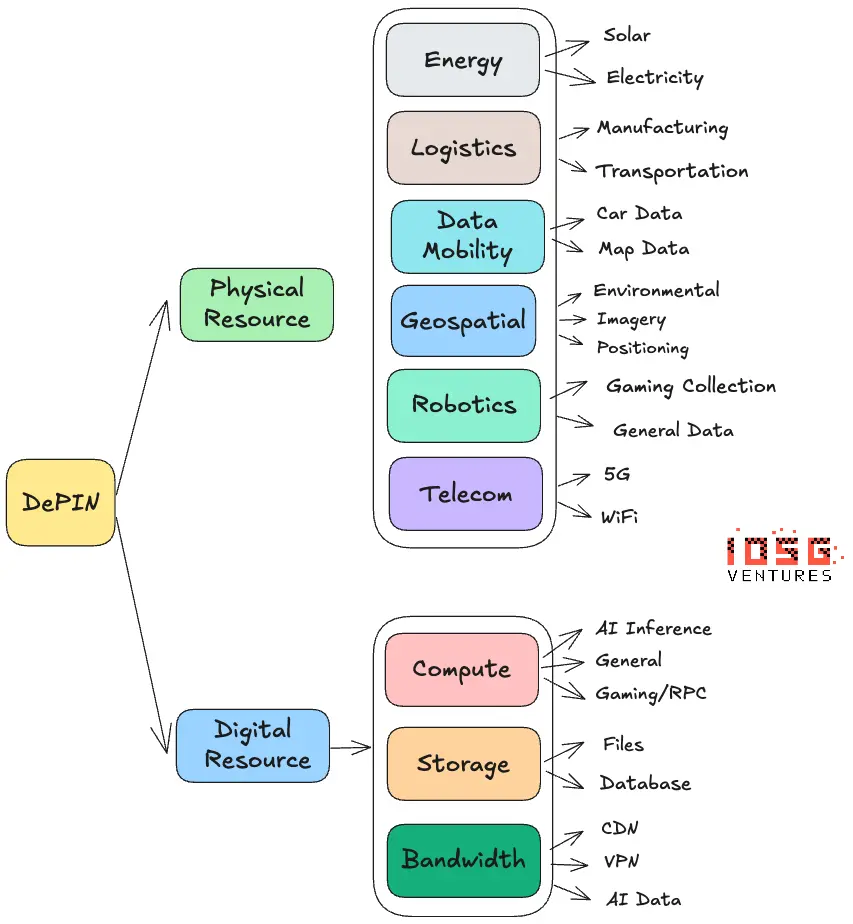
Source: Messari, IOSG
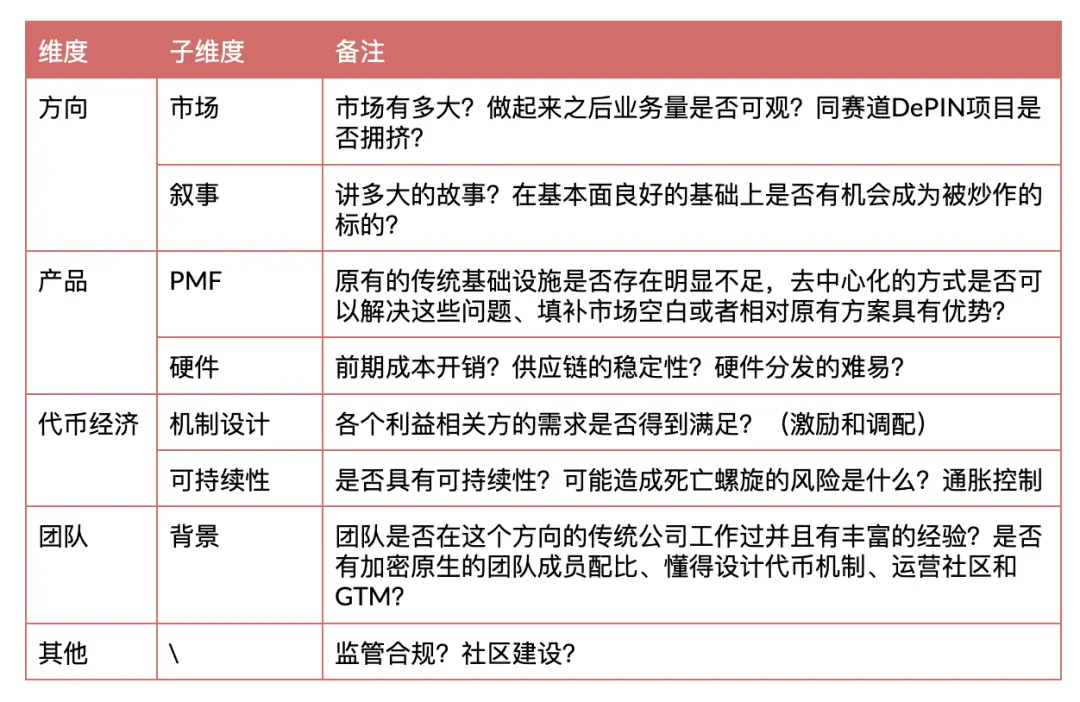
Direction
Intuitively, 5G and wireless networks represent large markets, while in-car data and weather data are smaller markets. From the demand side, we should assess whether it is a necessity (5G) or has strong demand. Additionally, since markets like 5G have a very large share in the traditional market, even capturing a small portion of it would still represent a considerable market capacity in the context of Crypto.
Product
According to Grayscale's report, the DePIN model is particularly suitable for industries with high capital requirements, high entry barriers, obvious monopolistic patterns, and underutilized resources. Answering the PMF question essentially involves two points.
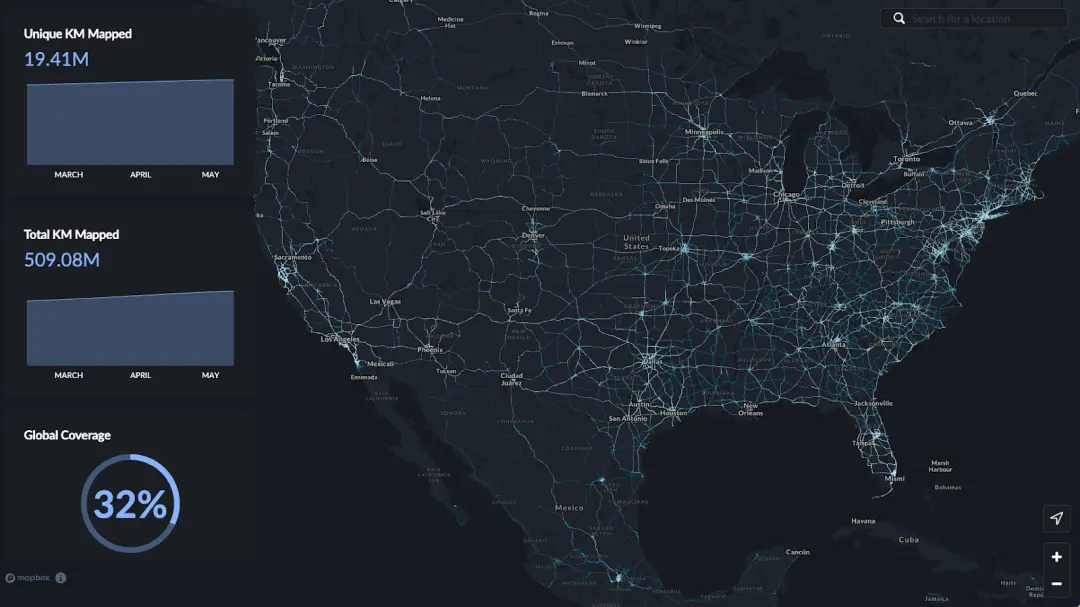
Source: Hivemapper
On the supply side, has DePIN accomplished something that could not be done before, or does it have outstanding advantages over existing solutions (cost, efficiency, etc.)? For example, in the map collection track where Hivemapper operates, traditional map collection faces at least three major issues:
- Traditional methods rely on professional fleets and manual labeling, which are costly and have poor scalability.
- Google Street View has long update cycles and low coverage in remote areas.
- Centralized map service providers monopolize data pricing power.
Hivemapper allows users to collect data by selling dashcams, turning data collection into something users do during their daily driving. By incentivizing users with tokens, resources can be prioritized in high-demand areas. On the demand side, the products offered by DePIN must have real market demand, preferably with a strong willingness to pay. A similar example is that Hivemapper can sell map data to autonomous driving, logistics, insurance companies, and municipalities, validating key demand. Regarding hardware, Multicoin's article "Exploring The Design Space Of DePIN Networks" in 2023 discusses hardware at the outset. Here, I would like to add a few points.
The hardware timeline can be summarized as "manufacturing---sales---distribution---maintenance."
· Manufacturing: Does the project team design and manufacture the hardware themselves, or do they use existing hardware? For example, Helium provides two types of its own hotspots and also supports integration with existing WiFi networks. Alternatively, computing and storage-related DePIN projects can directly use existing graphics cards and hard drives, etc.
· Sales: The clear pricing of sales means that users will calculate the payback period based on potential returns. Helium's home mobile hotspot is priced at $249, while DIMO's in-car data collector is priced at $1,331.
· Distribution: How is distribution handled? Distribution involves many uncertainties: logistics timeliness, transportation costs, and delivery cycles starting from pre-sales, etc. For projects targeting a global scope, inappropriate distribution design and methods could significantly slow down project progress.
· Maintenance: What do users need to do to maintain the hardware? Some devices may experience depreciation or wear and tear. The simplest maintenance example is Grass, where users only need to download a browser extension with no other operations required; or Helium's hotspots, which only require simple installation to keep running. If solar power generation is involved, it may be more complex.
Considering the above points, the simplest model is Grass's model—directly utilizing existing network bandwidth, requiring no manufacturing and distribution, allowing users to start without barriers, and not needing sales, which helps rapidly expand the network in the early stages of the project. Admittedly, each project's hardware requirements differ. However, hardware relates to the friction of initial adoption. The less friction there is in the early stages of a project, the better; as the project matures, some friction can lead to retention and a certain degree of binding relationships. For startup teams, it is essential to control the path choices and resource investments regarding hardware, progressing gradually rather than all at once.
Imagine if "manufacturing---sales---distribution---maintenance" is all challenging, then unless there are very strong and highly certain incentives, why would users want to participate?
Token Economics
The design of the token mechanism is the most challenging aspect of DePIN projects. Unlike projects in other fields, DePIN needs to incentivize various participants in the network early on, thus requiring the launch of tokens at a very early stage of the project. This topic is suitable for a separate article with some case studies, and will not be elaborated on here.
Team
In terms of team composition, the founder should have at least one individual with the following backgrounds: one who has worked in traditional companies in this field with rich experience, responsible for technical and product implementation, and another who is crypto-native, understands token economics and community building, and can distinguish between the preferences and mental models of crypto and non-crypto users.
Others
Regulatory issues, such as collecting road images and data domestically, are clearly very sensitive.
Conclusion
Crypto has not truly "broken the circle" in this cycle, and it seems we are still far from adoption by users outside the circle. Some short-term incentives provided by Crypto applications are the reasons users use them, but they cannot last. DePIN, derived from the underlying economic benefits, has the potential to replace traditional infrastructure on the user side, thus achieving application sustainability and large-scale adoption.
Source: Helium
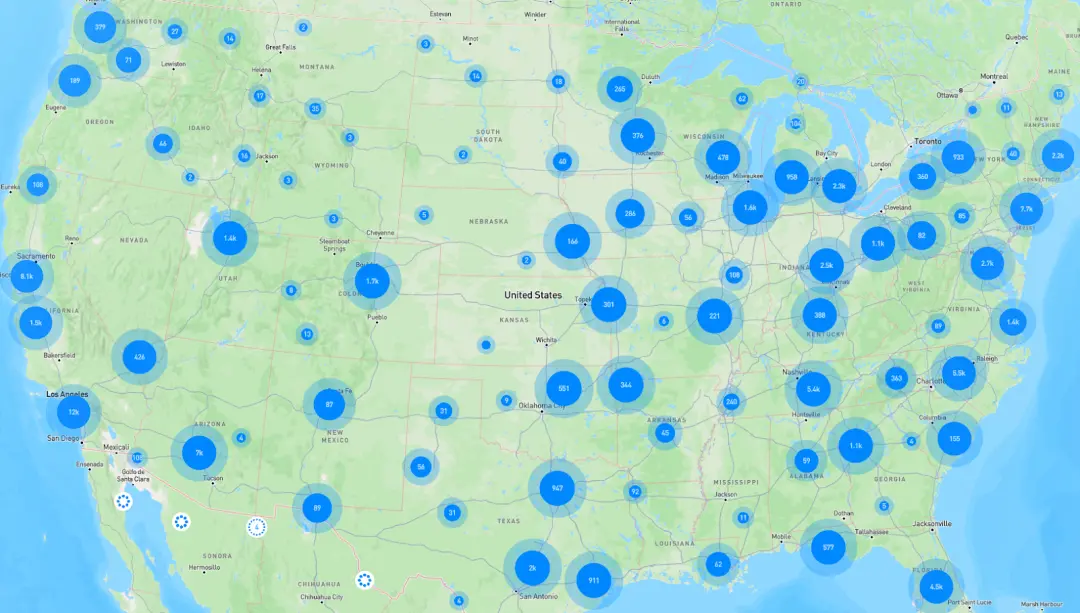
Although the characteristics of DePIN's connection to reality lead to a longer development cycle, we have already seen some glimmers of hope from the development of Helium Mobile: Helium Mobile collaborates with T-Mobile, allowing user devices to seamlessly switch to T-Mobile's nationwide 5G network. For example, when users leave the coverage area of Helium community hotspots, they automatically connect to T-Mobile base stations, avoiding signal interruptions. Earlier this year, Helium announced a partnership with global telecom giant Telefónica to deploy Helium Mobile 5G hotspots in Mexico City and Oaxaca, beginning its expansion in South America. Telefónica's subsidiary Movistar in Mexico has about 2.3 million users, and this collaboration directly connects these users to Helium's 5G network.
In addition to the content discussed above, we also believe that DePIN has two unique advantages:
1. Compared to traditional monopolistic large enterprises, DePIN has more flexible deployment methods and means, and can align incentives within the ecosystem through token models. For example, the traditional telecom industry is usually dominated by a few giants, lacking the motivation for innovation. In rural areas, for instance, due to the dispersed population, traditional operators have low investment returns and long timelines, leading them to lack the motivation to promote deployment. However, through appropriate token economic design, networks can be encouraged to deploy in areas with few hotspots. Hivemapper setting higher incentives in areas where map resources are scarce follows the same logic.
2. DePIN has the opportunity to bring positive externalities. The purchase of internet data collected by Grass by AI companies, the purchase of street-level map data from Hivemapper by autonomous driving companies, and Helium Mobile providing low-cost data plans all demonstrate that DePIN can actually step outside the realm of Crypto to bring value to real life and other industries, and through token economics, feed back into the entire ecosystem. In other words, the tokens of DePIN are backed by real value, rather than being a Ponzi scheme.
Of course, DePIN also faces many uncertainties: for instance, uncertainties in time cycles due to operating hardware, regulatory risks, due diligence risks, etc. In summary, DePIN is a track we will focus on in 2025, and we will continue to produce more research related to DePIN.
 Risk warning
 Risk warning
Popular articles





