








The Birth of the Unicorn Immutable: From "Internet Addiction Teenager" to the Fergusons Brothers Worth Over $1 Billion

 Meet Robbie Ferguson and James Ferguson, two wild Web3 rangers from Australia, who created Immutable, one of the fastest-growing unicorn companies.
Written by: Anastasia Santoreneos
Compiled by: aididiaojp.eth, Foresight News
Key Points
Immutable is currently valued at $2.5 billion and completed a $200 million Series C funding round in March.
James Ferguson and Robbie Ferguson predict that Web3 will first transform gaming and digital entertainment, followed by finance, and finally real-world assets.
In the context of a recent sharp decline in tech valuations, Immutable's valuation has remained stable, and the company raised another $21.5 million in July.
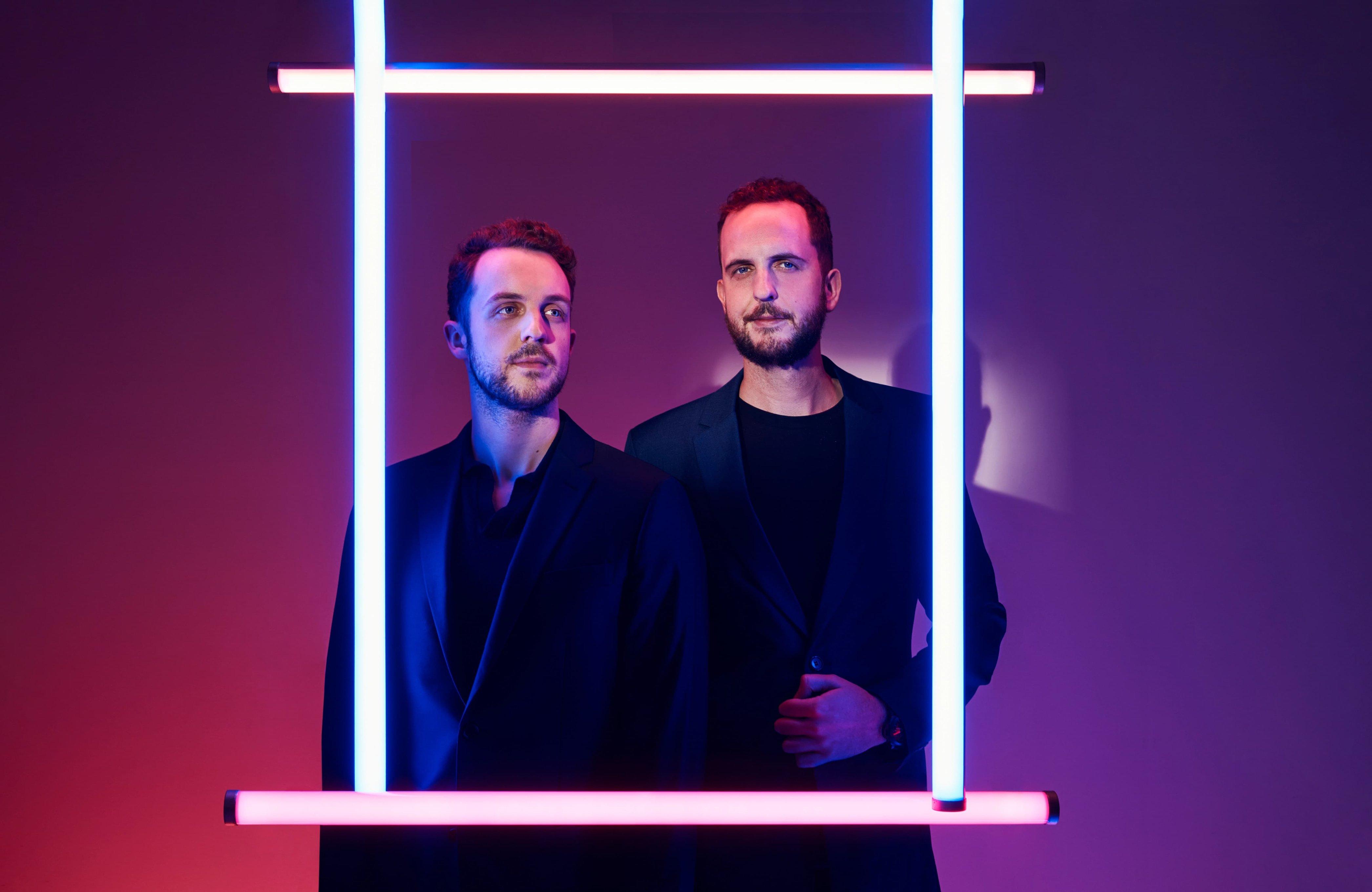
Left: Robbie Ferguson, Right: James Ferguson, Image Source: Damian Bennett
30-year-old James Ferguson sits in front of an A2-sized framed photo, saying, "Web3 will devour the world." The photo features a charging bull with a massive golden Bitcoin on its back.
This artwork, titled Bull Run, was created by artist Mike Winkelmann, known as Beeple. 25-year-old Robbie Ferguson printed and framed it as a gift for his brother James Ferguson. James is confident that Web3 will change the game.
I believe that most, if not all, value in the world will ultimately be represented in the digital realm supported by blockchain technology.
------Robbie Ferguson, President of Immutable
James and Robbie co-founded Immutable, the fastest-growing unicorn company in Australia. It may be the country's most successful Web3 company, valued at $1 billion.
James serves as CEO, while Robbie is the president, and both made it onto Forbes Asia's "30 Under 30" list in 2019.
Immutable was originally named Fuel Game, founded in 2018. Immutable is the developer and publisher of the blockchain games Gods Unchained and Guild of Guardians. It was later renamed Immutable in 2019 and launched an NFT trading platform, ultimately reaching a valuation of $2.5 billion.
The Ferguson brothers predict that Web3 will first transform gaming and digital entertainment, then finance, and finally real-world property.
"I believe that most, if not all, value in the world will ultimately be represented in the digital realm supported by blockchain technology. The wonderful thing about it is that it is an open infrastructure with greater transparency and empowers people," Robbie said.
Of course, there are opposing views, such as software engineer and Wikipedia editor Molly White, who believes Web3 is complete nonsense; it's just a very effective marketing strategy to get you to buy more cryptocurrency and then lose it. She thinks Web3 doesn't exist at all.

Image Source: Getty
For those who say, "Don't partner with your brother," James does not argue. But if your brother is very smart and also a software engineer, partnering can be a good idea. Robbie was a star student, and after completing his studies, he began pursuing a dual degree in computer science and law. Immutable's third co-founder and CTO, Alex Connolly, is also very talented.
James jokingly refers to himself as an ungraduated law student. He always wanted to start a tech company, so after studying business and law for a year, he went to San Francisco to work in programming.
The birth of Immutable was not necessarily driven by pioneering Web3 but rather by the founders' love for video games.
"We spent countless hours playing RuneScape and League of Legends as kids, much to the annoyance of our parents," James said. "Fortunately, it basically gave us an understanding of what the digital world is like."
In 2015, the brothers learned about Ethereum, a blockchain-based smart contract platform for developers, where transaction records are encoded and immutable. They both saw great potential in Ethereum, and from then on, the Ferguson brothers' business began to thrive.
Later, they discovered NFTs, digital artworks that cannot be replaced by anything else, along with the transaction records of each NFT existing on the Ethereum blockchain.
When the NFT collection CryptoPunks launched in 2017, Ferguson had an epiphany.
CryptoPunks is the proof of concept for the idea of crypto collectibles in my mind; we thought it was cool, but for us, combining it with video games was obviously more appealing, James said.
They then worked continuously for over a year to launch their first multiplayer competitive blockchain game, Etherbots.
Fortunately, the game was a huge success, generating an estimated $1 million in revenue in its first week.
Etherbots gave the brothers tremendous confidence, and soon after, they continued to launch new blockchain games, Gods Unchained, Guild of Guardians, and finally Immutable X built on Layer 2.
Layer 2 solutions are used to address issues of scalability, cost, and user experience on the Ethereum blockchain. At Immutable, they use ZK Rollup to bundle multiple transactions together, improving efficiency and reducing costs.
Immutable allows individuals and businesses to build their own NFT projects in a short time while maintaining security on par with the Ethereum blockchain. Companies like TikTok, Disney, and GameStop have chosen Immutable to help them enter the digital art space.

Ethereum is also working to address these usability issues and successfully transitioned from PoW to PoS consensus mechanism in September. This means the network no longer needs to consume energy to verify transactions.
However, this does not make Layer 2 redundant, Robbie said, as the main goal of the merge is to reduce energy consumption, but it does not help solve Ethereum's scalability issues.
Although the merge is a key upgrade for Ethereum, you can still only process about 5 NFTs per second. In contrast, when used in conjunction with Immutable X, it can achieve over 10,000 transactions per second.
Driven by early success, the Ferguson brothers are almost fanatical about Web3. Of course, there is data to suggest they have reason to be. A study by Brandessence Market Research predicts that the global Web3 blockchain market will reach $42 billion by 2028.
When discussing the intersection of NFTs and decentralized finance (DeFi), the brothers become noticeably excited, saying that digital property ownership and tokenized savings will provide consumers with a better experience.
DeFi is a blockchain-based financial innovation that eliminates intermediaries in financial transactions, theoretically allowing people to complete transactions in seconds. However, it is still in its early stages, and regulatory measures are not yet sufficient, but the Ferguson brothers believe NFTs are crucial to the development of DeFi.
They believe NFTs can serve as digital proof of ownership during financial transactions, thereby increasing the efficiency of transactions. At the same time, NFTs can address liquidity issues; for example, selling a real piece of art can be tricky, but trading NFTs is relatively easy.
James predicts that this transition will take time, about 10 years or even longer. If your land ownership exists in the form of NFTs, they can not only be easily traded but also interact with other smart contracts built on NFTs. Some of these smart contracts allow for mortgages, which is just the beginning of the many possibilities that an open financial system can offer.
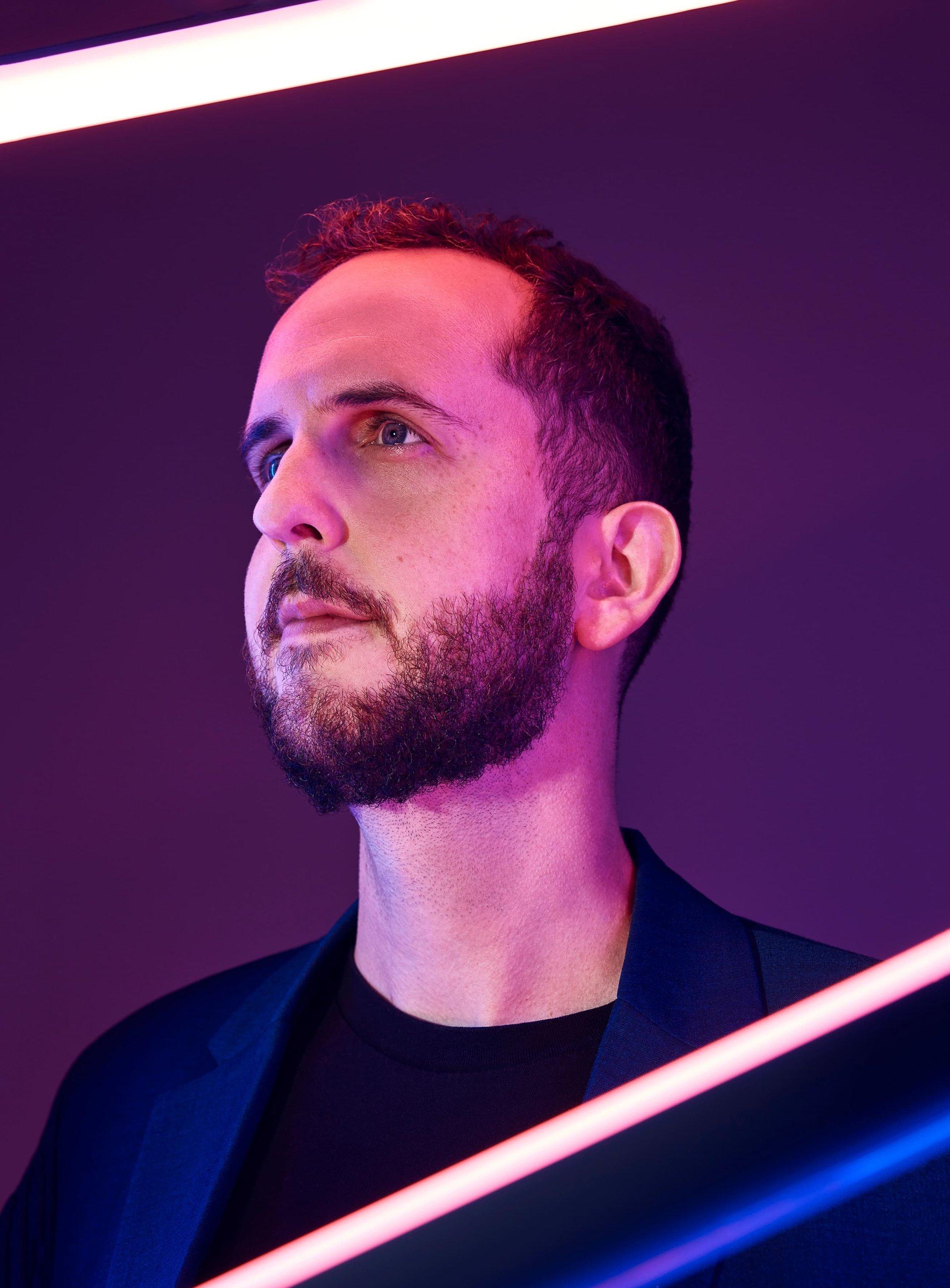
Meanwhile, White runs a real-time blog site, Web3isgoinggreat.com, which she says shows the credibility of Web3. To her, it all sounds ridiculous.
What exactly is better about Web3 than the existing systems? she questions.
White does not profit from the site and does not hold any cryptocurrencies or NFTs. She documents layoffs, hacks, scams, phishing attacks, and the amounts lost due to Web3 fraud.
In reality, using NFTs to represent ownership is flawed; it still requires legal and trusted authorities' support and needs government oversight for such transactions.
If that's the case, we end up with a system that's exactly the same as the one we have now. For those who think Web3 will be a decentralized utopia, she wants to say, "We can dream, but fully owning our data is just a 'red herring.'"
Today, no one is forcing you to provide data to Facebook, and you do so for various reasons, and that won't disappear with Web3; you still need to choose who to share your data with.
At the time of writing, White's team has tracked losses of $10.5 billion due to Web3 scams, which has not made her sympathetic to the venture capital funds supporting Web3 projects.
They are very profit-driven, she said, the arrival of cryptocurrency has been a windfall for VCs, allowing them to earn more profit faster than from traditional investments.
Of course, the Ferguson brothers are not intimidated by opposing voices; Immutable completed a $200 million Series C funding round in March, reaching a valuation of $2.5 billion, and reportedly the brothers' total net worth has also reached $1.01 billion.
Major backers of Immutable's Series C funding include Temasek and Tencent, the former being Singapore's sovereign wealth fund and the latter being the world's largest video game supplier. Notably, this is Tencent's first public investment in the Web3 space.
Early investor AirTree Ventures stated that blockchain technology is part of the future, unlocking innovations such as digital ownership and a more open financial system.
John Henderson, a major investor in AirTree's newly established $50 million Web3-themed fund, said, "Robbie and James have the capability to achieve this. They share a common vision and possess innate leadership skills; they are both excellent startup captains."
Henderson added that non-fungibility will be key to the future penetration of NFTs into many fields, starting with gaming.
The vast majority of value in the world is unique.
------Robbie Ferguson, President of Immutable
Robbie and James stated they are committed to improving the security and applicability of Web3, starting with increasing blockchain uptime. Uptime is the time the blockchain is operational, while downtime is the time it is not.
Robbie claims that Immutable's uptime is two to three orders of magnitude higher than that of L2, meaning Immutable's uptime is superior to others.
If Immutable X further addresses some potential issues with blockchain, it could become a significant platform for Web3 gaming, but competition in this field will also be fierce.
Regardless, Immutable believes that Web3 is on the horizon and will change everything.
The vast majority of value in the world is unique, and for the first time, we have a token that allows people to trade at the fairest price and own true digital property. This is why it has become an unstoppable force, as people believe in a fairer future.
What is Web3?
Web1.0 was the first phase of the internet, an era of static pages with no interactive features.
Web2.0 began with the massive emergence of social media sites, including Myspace and Facebook. The hallmark of this transition was that users could contribute content to the web. The biggest flaw of Web2 is the invasion of data privacy. For example, in 2016, millions of Facebook users' data were used by the British consulting firm Cambridge Analytica for political advertising without consent.
Web3 is still evolving, primarily as the internet becomes decentralized, and users have more ownership of their data. This means the internet will be based on public blockchains, and websites will no longer be accessed through platforms like Google or Facebook but through single blockchain-supported networks.
Competition Facing Immutable
Chris Barter, co-founder of Immutable supporter King River Capital, believes that Immutable is at the forefront of efficient, low-cost minting and trading of NFTs. But it is not the only player in the game.
Barter said it is hard to find a Web3 company in Australia that does not have a successful American counterpart.
Based in the U.S., Arbitrum is an L2 solution similar to Immutable X, aimed at improving Ethereum network performance.
Founded in the U.S., Polygon is also a scalability solution for the Ethereum blockchain, originally known as Matic Network.
Polygon does not use L2 solutions but instead uses sidechains to provide faster and cheaper transactions on Ethereum.
The leading NFT marketplace Magic Eden, based on Solana, is a different blockchain that runs faster and costs less than Ethereum.
Immutable also faces competition in the gaming space from Forte and Enjin Coin, the latter providing tools for companies to create their own NFTs.
Immutable's main advantage is that it has a foothold in nearly every area of the blockchain gaming industry.
 Risk warning
 Risk warning



Popular articles





