








2023 Outlook: Concepts like GameFi will revive during the cycle, and Web3 is trending towards systematization

 The narrative of 2023 may consist of two sub-themes: "cycle" and "system."
Author: Harry Liu, Forj CEO
Editor: Wayne Zhang, Forj Network
Before discussing the cycles and systems of 2023, let's take a look at the investment situation in Q4 2022 for comparison, hoping to find new trends for 2023 from VC data.
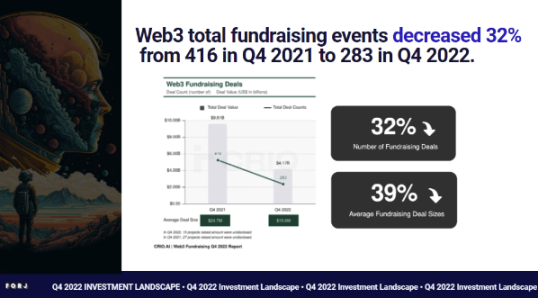
In Q4 2021, there were 416 financing events in Web3, which decreased by 32% to a total of 283 in 2022. The average financing size was $15.6 million, down to 61% of last year's figure. The data diverges from reality, as Web3 has made significant progress in both adoption and technological innovation compared to last year, yet there has been a substantial decline in scale and frequency. One reason is that, in the context of a bear market, funding has gradually become more conservative.
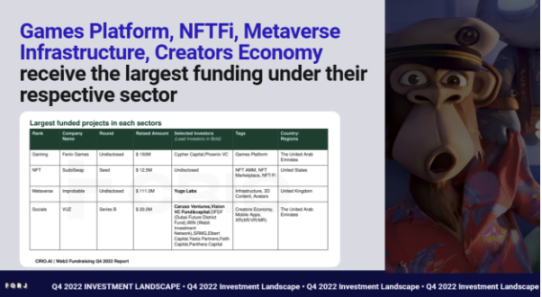
The largest financing events occurred in sectors such as gaming platforms, NFTFi, metaverse infrastructure, and creator economy. Fenix Games, a company in the gaming sector, secured the largest financing of the quarter, reaching $150 million. Following closely was Improbable, which raised $111 million.
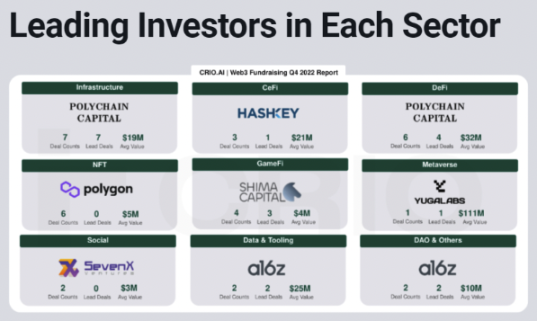
Segmenting by field, in Q4, POLYCHAIN Capital made seven investments in the infrastructure sector, all as lead investors. Their approach was quite generous, with an average size of around $19 million. The following chart also shows the VC firms that heavily invested in other sectors in Q4 and their investment situations.
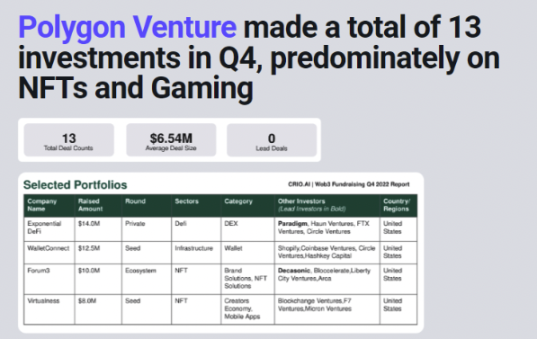
 It is worth mentioning that Polygon has also been mentioned in our previous articles on large-scale Web3 adoption, collaborating with multiple Web2 brands to promote Web3 adoption through NFTs, metaverse, and other means. In addition to collaborations, Polygon Venture made a total of 13 investments in Q4, with an average size of $6.54 million, primarily focusing on the NFT and gaming sectors.
2023 Themes
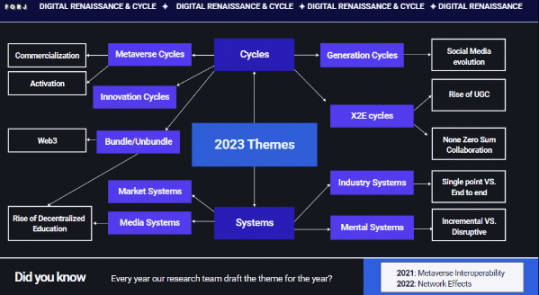
Looking back over the past two years, the theme of 2021 can be summarized as "metaverse interoperability," while the theme of 2022 was "network effects." The narrative for 2023 may consist of two sub-themes: "cycles" and "systems." On one hand, concepts like the metaverse, X2E, and GameFi, which made a spectacular debut during the bull market, will rise again after being refined in the bear market. On the other hand, with the improvement of infrastructure and the continuous emergence of innovative technologies, systematization will become a trend, potentially leading to the establishment of a Web3 market system, media system, and more.
Systems & Institutions
From 1880 to 1930, the United States achieved various foundational innovations. With the emergence of important infrastructure, systems based on electricity, highways, urban planning, and more began to be utilized. From 1930 to 1970, innovation also became systematic, with education continuously enhancing productivity, leading to the gradual birth and perfection of institutions, factories, media, and management systems. Since 1970, we have been in an era of expanding and continuously establishing systems, with increasing monopolies and stricter regulations, prompting the creation of new systems to limit power. Here, systematic and systematic innovation is driving social progress.
This leads us to ponder a question: Can games replace schools? Especially in some Asian schools, there is a strong emphasis on grades and KPIs. Many students train like testing robots to achieve results. However, in reality, you can learn all the knowledge from elementary school to university through the internet on a computer or phone. The measurement of knowledge is constrained by grades, but mastery and proficient use are what society needs. Despite its drawbacks, this remains a mature system. We believe that this institutional innovation will further enhance productivity, such as optimizing the pathway from data → information → knowledge → wisdom.
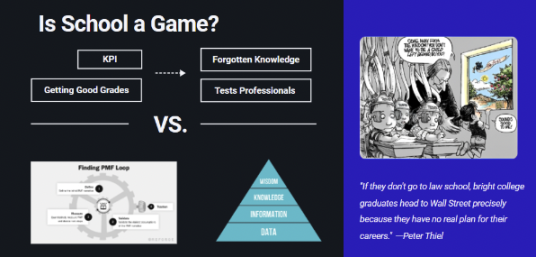
For social media, follower counts and views can also be seen as scores; like a game, the higher the attention, the higher your ranking. Forj Research is also participating in this game by publishing research reports to gain trust and attention. In this social media game, you can meet more people and earn income through using applications and publishing content. If we consider the internet as a whole, each service is a system; Twitter may not be a game, but rather a game with 250 million daily active users.
Companies often prioritize their profits over industry innovation. Kodak, once valued at $30 billion, was a top 30 company focused on film photography. The digital camera that changed Kodak's fate was actually developed first in Kodak's lab, but based on the assumption that the high profit margins of film could be sustained long-term, it did not pursue this as a development direction. What happened afterward is well known; the emergence of digital products led to Kodak's decline.
An overly systematic world may lack diversity of thought and foster a conformist mindset, prioritizing the maintenance of the status quo and being less receptive to new and disruptive ideas, which could stifle innovation and creativity and hinder entrepreneurship. On the other hand, this may inspire some to question and challenge, finding new opportunities and motivations.
Once a system scales up, it becomes difficult to replace it with new institutions and innovations. Startups and venture capital firms are important participants in this revolution to replace the system. Meanwhile, changing multiple systems requires waiting for critical moments. Various fields are facing a critical moment, as they finally begin to adopt a system of key innovations.
Cycles
Systems exist because existing industries, companies, regulations, and institutions have formed and continue to evolve, while cycles continuously recur with innovation. Mark Twain once said, "History does not repeat itself, but it often rhymes."
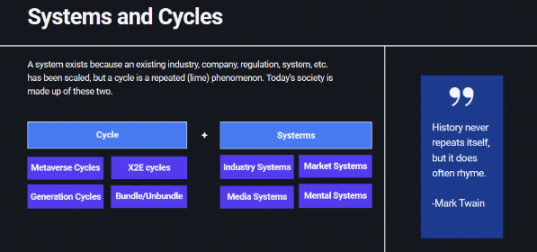
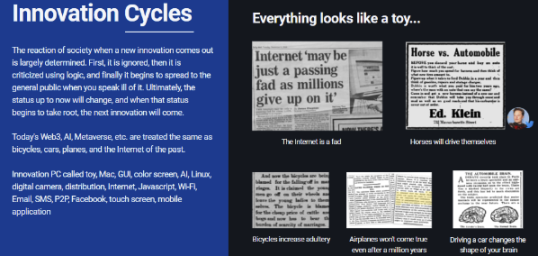
We believe Web3 is no different. When a new innovation appears, it is often initially overlooked, followed by logical criticism, public discussion, and then acceptance and adoption of the innovation. Today's Web3, AI, metaverse, and previous innovations like automobiles, airplanes, and the internet are encountering similar scenarios.
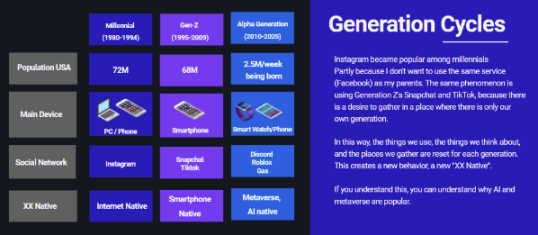
The emergence of Generation Z and the new generation will also lead to new innovation cycles, just as the Snapshot and Tiktok that young people enjoy are gradually becoming mainstream, and smartphones and smart wearable devices are becoming increasingly popular. New users and new ways of thinking bring new demands, heralding the arrival of a new cycle.
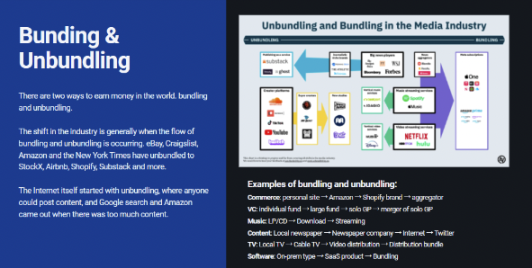
Industry transformation occurs through "division" and "integration," with the internet combining multiple layered protocols and further segmenting into various contents. Innovations in DeFi technology have stimulated new liquidity, and small innovations in areas like cross-chain have led to multifunctional aggregators and complex, feature-rich DEXs. In other words, for entrepreneurs, both horizontal innovation and vertical exploration can drive industry development to achieve success and wealth growth.
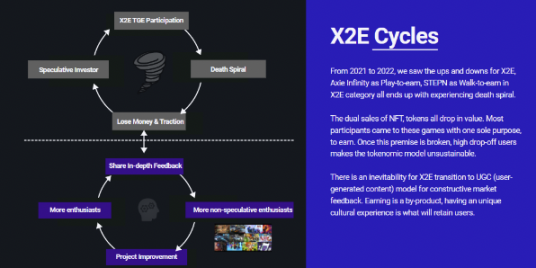
From 2021 to 2022, we witnessed the ups and downs of X2E, whether it was the Play-to-earn Axie or the Walk-to-earn Stepn. Despite being hot at the time, NFT sales and token prices are currently facing significant shrinkage. This also proves that relying solely on Earn to sustain projects is unsustainable. UGC (User Generated Content) is an inevitable trend for the future of gaming, where earning will become a byproduct of the game. The new project growth flywheel will be: fun → depth of engagement feedback sharing → more non-speculative players → project optimization → more fun.
New Systems
To differentiate, we will categorize systems into four types and discuss the characteristics, cases, and emerging new systems of each:
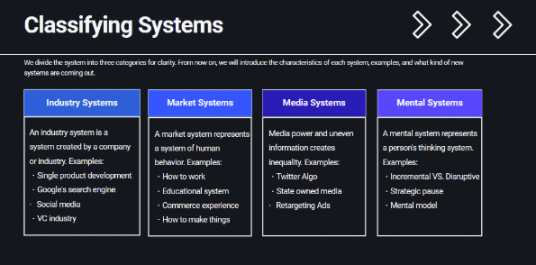
Industrial Systems
Industrial systems are generally established by a company (industry leader level) or an entire industry. A common piece of advice we receive when starting a business is to "focus on one thing," which is indeed important. However, over the past 10 to 15 years, the situation has changed. The reason Slack was sold to Salesforce in 2020 was that it could not compete with Microsoft's bundled product system. If you want to defeat Microsoft, you must fundamentally change your approach.
Many companies launch multiple products from the moment they are established or offer services based on them. Having multiple products reduces the number of competitors, increases market size, supports bundled pricing adjustments, facilitates a universal UI, APIs, etc., and allows for deeper collaboration. As a composite product company, collaboration will also become a product, with underlying data and charts becoming important. Changing the organizational structure requires original investment and time, but if the ultimate goal is GAFA (Google, Apple, Facebook, Amazon), it is worth it. Animoca Brands is a great example, gradually forming network effects through its investments in NFTs, the metaverse, gaming, and more.
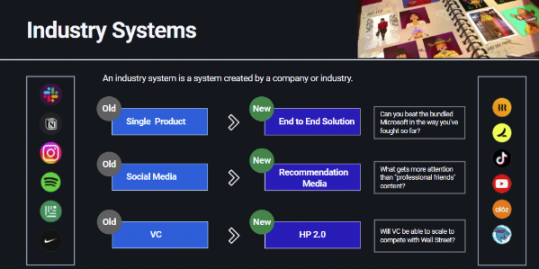
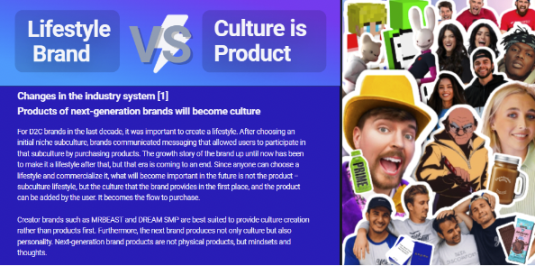
The biggest change in industry systems is that culture will become a product. Unlike the previous wave of innovations that shaped lifestyles, today's consumers can choose any lifestyle, and culture makes brands more recognizable and distinctive. Products may not only be physical items but also a way of thinking, a cultural product.
Market Systems
Market systems are also a system of human behavior. Taking the education system as an example, universities also offer bundled services: education, socializing, dating, status, and creativity. There are concerns that online courses cannot meet these conditions, but the focus of next-generation educational services is to consider the learning environment. Enhancing curiosity, igniting interest in the fields students are in, while allowing them to explore various new areas requires a system that permits more collaboration and personalization. At this point, AI may become a better choice.
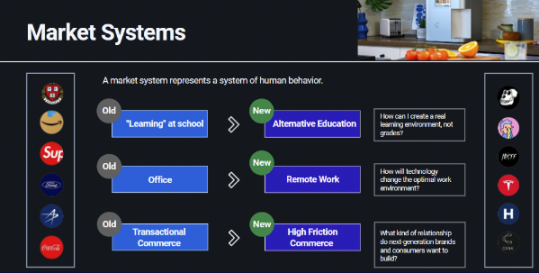
In previous years, people thought that working in a fixed office space should be the norm. Now, remote work is gradually being accepted. In the U.S. and Japan, to improve conversion rates, companies are opting to provide the minimum commercial experience for convenience. As times change, we want more than just a shopping experience that emphasizes convenience; we seek a brand experience that provides a gamified experience to deepen relationships with users. It is important to fill the feeling of "play" with the brand. For example, the NFT game experience created by Gucci in collaboration with 10KTF attracted over 3,000 collectors with 4,253 collectibles, not only generating revenue but also providing a new commercial experience for these collectors.

Brands used to spread continuously through mass media; now technology and data allow brands to solve personalization issues. Brands can quickly target specific groups based on data collected from statistical user habits, but this also raises challenges regarding privacy and costs.
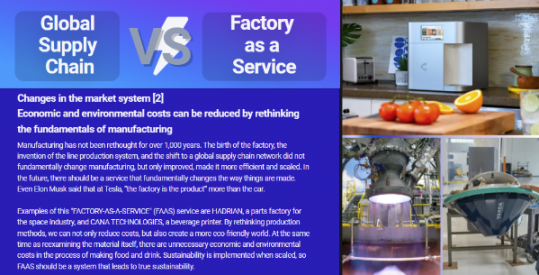
The birth of factories, the invention of production lines, and the development of global supply chain networks fundamentally changed the manufacturing industry. However, what we can currently do is improve knowledge through technology to make it more efficient or scalable to reduce costs. In the future, there should be a service that fundamentally changes the way things are made. Elon Musk has also said, "At Tesla, the factory is more like a product than the car." This factory-as-a-service model is more likely to become a sustainable system.
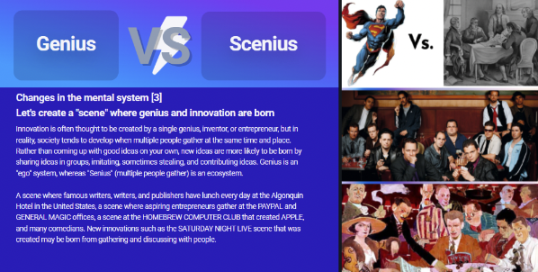
Finally, we will share insights on media systems and spiritual systems in future reports. However, regarding the spiritual system, one obvious trend is that more innovations may come from collective brainstorming rather than individual genius. Good ideas are continuously shared, imitated, processed, and gradually implemented, then put into practice.
Conclusion
The price cycle is the most obvious cycle we are currently experiencing, and the decline in prices stimulates the creativity of believers. In the bear market, we can observe:
- A decrease in speculators: the reduction in the trading amount and number of NFTs and FTs
- The entry of new brands: brands like Nike, Gucci, Reddit testing the waters in Web3
- Technological innovations: cross-chain, L2s, Move language, etc.
- ……
Whether it is technological, product, or model-level innovation, foundational innovations are continuously driving the overall system innovation of Web3. New entrepreneurs and entrants are reshaping the gameplay of the Web3 system. We can predict that X2E, the metaverse, and others will become active again after being refined in the bear market, but we can more confidently predict that the next wave of innovation will come from Scenius rather than Genius.
 Risk warning
 Risk warning


Popular articles





