








Looking back at the history of the Federal Reserve's interest rate cuts, can this round of rate cuts bring Bitcoin back to a bull market?

 The Federal Reserve's interest rate cut may come soon, which means something "bigger" than the Bank of Japan's rate hike is on the way.
*Author: Huohuo, *Plain Language Blockchain**
On August 5, the Bank of Japan's interest rate hike triggered severe turbulence in global financial markets, with Japanese and U.S. stocks crashing and the Bitcoin fear index soaring nearly 70%. Stock markets in multiple countries experienced several circuit breakers, and even European and emerging market stocks faced significant blows. Under immense market pressure, people began to seek remedies, calling for the Federal Reserve to cut interest rates to save the market. A Fed rate cut may come soon, which means something "bigger" than the Bank of Japan's rate hike is on the way. Can it pull Bitcoin back into a bull market?
Why is the Federal Reserve's Influence So Great?
1) What is the Federal Reserve?
Before understanding the concepts of Fed rate hikes and cuts and their impacts, we first need to know what the Federal Reserve is.
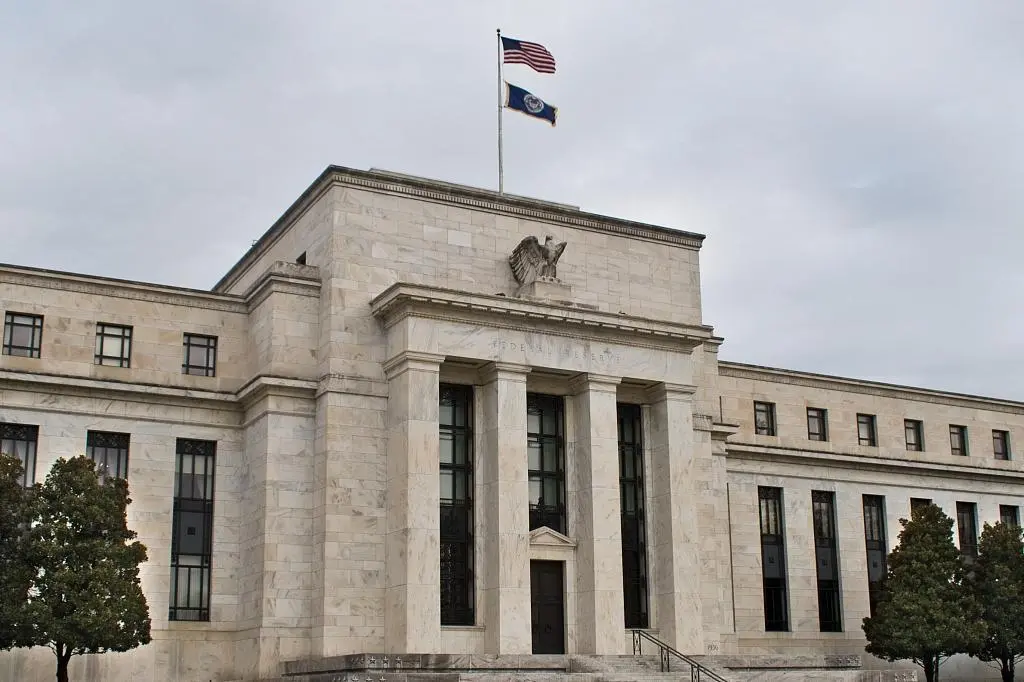
The Federal Reserve, or the Fed, is the central banking system of the United States, composed of 12 regional Federal Reserve Banks. Its goals are to stabilize prices and maximize employment through monetary policy regulation. Indicators such as inflation rates and employment rates are crucial for economic health, which is why investors and market participants closely monitor them to assess economic prospects and investment risks.
As the central bank of the United States, the Fed has a significant influence on financial markets. So how does the Fed exert its influence? It primarily adjusts interest rates through the following monetary policy tools, namely rate hikes or cuts:
A rate hike means increasing the borrowing costs between banks, thereby raising the loan rates that commercial banks charge to businesses and individuals: When the Fed raises rates, the interest rates on dollar deposits increase, leading to higher interest income for savers, which causes capital to flow into the U.S. and reduces investments in other countries, worsening the economic environment and increasing unemployment. High rates also raise borrowing costs, increasing the risk of defaults for businesses and individuals, potentially leading to corporate bankruptcies.
Conversely, a rate cut lowers deposit rates and borrowing costs: When the Fed cuts rates, dollar deposit rates decrease, capital flows out of banks to other countries, promoting global investment and economic recovery.
So how many times has the Fed cut rates before? What impacts did each have?
2) The History of Rate Cuts
Looking back at history, since the 1990s, the Fed has undergone six notable rate-cutting cycles. In terms of patterns, these include two preemptive rate cuts, three crisis-related rate cuts, and one mixed rate cut that combines both preemptive and crisis-related cuts.

First, let's clarify the differences between these types of rate cuts:
Preemptive rate cuts refer to the monetary authority's proactive policy adjustments to interest rates when signs of economic downturn or potential external risks appear, aimed at reducing the risk of recession and promoting a "soft landing" for the economy. Characteristics include: shorter rate-cutting cycles, moderate initial cuts, limited number of cuts, and the federal funds rate not falling below 2%.
Crisis-related rate cuts are continuous and significant rate cuts taken by the monetary authority during severe recession threats or major shocks, aimed at helping the real economy and households, avoiding severe recession, and promoting economic recovery. Characteristics include: longer rate-cutting cycles (possibly lasting 2-3 years), steep cuts (initially may involve consecutive large cuts), strong initial cuts (usually exceeding 50 basis points), and a large total cut (final rates falling below 2% or close to zero).
In contrast, mixed rate-cutting cycles are more complex. They may initially appear as conventional preemptive cuts but can shift to crisis-related cuts due to rapidly changing circumstances.

So, what impacts did these significant rate-cutting cycles have on the market and the economy since the 1990s?
1990-1992:
Rate Cut Situation: During this cycle, the Fed lowered the federal funds rate from 9.810% to 3.0%.
Market Impact: This round of rate cuts helped support the economy's recovery from the 1990 recession. The stock market began to rise during this period, and economic growth gradually resumed, although inflation and unemployment rates still posed pressures, the overall economic situation improved.
1995-1996:
Rate Cut Situation: The Fed began cutting rates in 1995, lowering the federal funds rate from 6.0% to 5.25%.
Market Impact: This round of rate cuts was primarily aimed at addressing the slowdown in economic growth, supporting the stock market's rise and economic stability. This phase marked the continuation of economic expansion, with strong stock market performance, particularly benefiting technology stocks, leading to the tech boom of the 1990s.
1998 (September - November):
Rate Cut Situation: The federal funds rate was lowered from 5.50% to 4.75%.
Market Impact: This alleviated market tensions and supported economic growth. The rate cuts had a positive impact on the stock market, especially with a strong rebound in technology stocks, with the Nasdaq index significantly rising in 1998, laying the foundation for the subsequent tech boom.
2001-2003:
Rate Cut Situation: During this cycle, the Fed lowered rates from 6.5% to 1.00%.
Market Impact: This round of cuts occurred after the 2001 recession. The cuts helped support economic recovery and drove stock market gains in 2002 and 2003. However, the excessive loosening of rates during this period also sowed the seeds for the subsequent real estate bubble and financial crisis.
2007-2008:
Rate Cut Situation: The Fed lowered rates from 5.25% to near zero (0-0.25%).
Market Impact: This round of cuts was aimed at addressing the severe impacts of the 2008 financial crisis. The low-rate policy effectively alleviated pressure on financial markets, supported economic and financial market recovery, and propelled a strong stock market rebound after 2009.
2019-2020:
Rate Cut Situation: The Fed cut rates from 2.50% to near zero (0-0.25%) in 2019 and 2020.
Market Impact: The initial rate cuts were primarily to address economic slowdown and global uncertainty. After the pandemic outbreak, further cuts and massive monetary stimulus measures helped stabilize financial markets and support economic recovery. The stock market experienced a rapid rebound in 2020, despite severe economic shocks from the pandemic, as policy measures mitigated some negative impacts. This round of cuts also indirectly facilitated the occurrence of the crypto 312 event.
It can be said that each rate-cutting cycle has had different impacts on the market and the economy, and the formulation of rate-cutting policies is influenced by the economic environment, market conditions, and global economic situation at the time.
3) Why is the Federal Reserve's Influence So Great?
The Federal Reserve has a huge impact on global financial markets, so its policies directly affect global liquidity and capital flows. The specific influences are reflected in the following points:
Global Reserve Currency: The dollar is the world's primary reserve currency, and most international trade and financial transactions are denominated in dollars. Therefore, changes in the Fed's monetary policy directly impact global financial markets and economies.
Interest Rate Determination: The Fed's interest rate policies have a direct impact on interest rates in global financial markets. Fed rate hikes or cuts guide other central banks to adjust their policies accordingly. This interest rate transmission mechanism means that the Fed's policy decisions have profound effects on global capital flows and financial market trends.
Market Expectations: The Fed's statements and actions often trigger fluctuations in global markets. Investors closely monitor the Fed's policy direction, and market expectations regarding the Fed's future policies directly influence asset prices and market sentiment.
Global Economic Interconnection: Due to the high interconnection of the global economy, the economic situation in the U.S., as the largest economy in the world, significantly impacts other countries' economies. The Fed's monetary policy adjustments to the U.S. economy also influence global economic trends.
Volatility in Risk Asset Prices: The Fed's policy actions significantly affect the prices of risk assets (such as stocks, bonds, and commodities). Market interpretations and expectations of the Fed's policies directly influence the volatility of global risk asset markets.
Overall, due to the importance of the U.S. economy and the global status of the dollar, the Fed's policy actions have profound and direct impacts on global financial markets, making its decisions a focal point for global market attention.
So what about the upcoming Fed rate-cutting cycle? What will be the magnitude, speed, and frequency? How long will the entire rate-cutting cycle last? How will it affect global financial markets?
How to View the Fed's Current Rate Cuts
1) Expectations for the Current Rate Cuts
As we enter the third quarter of 2024, signs in the U.S. domestic market indicate a potential need to adjust monetary policy. Indicators such as unemployment rates, employment numbers, and wage growth show a decline in market activity, while the decline in tech stocks indicates a slowdown in economic growth, and the U.S. still has a massive amount of unpaid debt interest. Various signs suggest that the Fed needs to cut rates to stimulate consumption, revitalize the economy, and create excess currency. Before Black Monday, the market widely predicted that the Fed might start cutting rates as early as September this year.
According to market expectations, Goldman Sachs previously estimated that the Fed would cut rates by 25 basis points in September, November, and December, noting that if the August employment report is weak, a 50 basis point cut in September is possible. Citibank also predicted that there might be a 50 basis point cut in September and November. JPMorgan economists adjusted their forecasts, suggesting that the Fed might cut rates by 50 basis points in September and November, and mentioned the possibility of an emergency cut between meetings.
After Black Monday, some aggressive analysts believe that the Fed may take action before the September meeting, with a 60% probability of a 25 basis point cut, a situation that is extremely rare and typically used to address severe risks. The last emergency cut occurred at the onset of the pandemic.
However, the uncertainty surrounding the global economic trajectory, including the U.S. economy, remains significant. Whether this round of cuts is preemptive or crisis-related is debated among various institutions, and the impacts of the two differ greatly, requiring further observation.
2) Possible Impacts of the Current Fed Rate Cuts
Expectations of Fed rate cuts have already begun to impact global financial markets and capital flows. To address economic downward pressure, bets on rate cuts by the Bank of England and the European Central Bank are also rising. Previously, some investors believed that the likelihood of the Bank of England cutting rates in September exceeds 50%. For the European Central Bank, traders expect two rate cuts by October, and the expectation of a significant cut in September is not far off.
Next, let's look at some potential impacts of this round of rate cuts:
A. Impact on Global Markets
This Fed rate cut is expected to have a significant impact on global financial markets.
First, the reduction in dollar interest rates may prompt capital to flow into markets and assets with higher yields, leading to increased global capital movement.
Rate cuts may also lead to a depreciation of the dollar, potentially triggering exchange rate fluctuations and pushing up the prices of dollar-denominated commodities, such as oil and gold. Additionally, a weaker dollar may enhance U.S. export competitiveness but could also exacerbate international trade tensions.
At the same time, rate cuts may lower the borrowing costs for global stock markets, boosting corporate profit expectations and thereby driving stock prices higher.
The reduction in international capital costs will encourage more investment, but the impact on countries and companies with high debt levels will be limited.
While lower international capital costs may encourage investment, highly indebted countries and companies may find it difficult to utilize these low-cost funds for new investments due to debt pressures and strict borrowing conditions.
Finally, rate cuts may bring global inflationary pressures, especially when currency depreciation and rising commodity prices occur, impacting economic stability and central bank policies.
B. Will Rate Cuts Directly Benefit the Crypto Market?
Although many believe that rate cuts increase market liquidity and lower borrowing costs, potentially driving up cryptocurrency prices, the increased economic uncertainty may lead investors to turn to safe-haven assets like Bitcoin. However, there are also cautious viewpoints warning of potential recession risks.
Nonetheless, many institutions generally believe that in a complex and volatile market environment, the market may also experience significant fluctuations during the rate-cutting period. During the 2008 financial crisis, even though the Fed initially took rate-cutting measures, the market sharply declined after briefly reaching a peak. Although the Fed quickly and significantly lowered rates, it failed to effectively contain the spread of the crisis. The roots of this crisis can be traced back to the successive bursts of the internet and real estate bubbles, which had a profound recessionary impact on the economy.
Whether the current rate-cutting policy will repeat past mistakes and trigger events like an AI bubble or a U.S. debt crisis, thereby dragging down the crypto market, remains to be seen.
However, in the short term, the global central banks' rate cuts, represented by the Fed, serve as a strong stimulus for global financial markets and the crypto market. Undoubtedly, the expectation of rate cuts will directly promote an increase in market liquidity, triggering optimistic market sentiment, and may lead to a short-term rally in the cryptocurrency market, providing investors with quick profit opportunities.
In the long term, the trajectory of the cryptocurrency market will be influenced by more complex and variable factors, and price fluctuations are driven by multiple factors that require comprehensive analysis:
First, market trends primarily depend on the strength of economic recovery. If rate cuts can stimulate economic growth, the cryptocurrency market may benefit; conversely, if economic recovery is weak and market confidence diminishes, cryptocurrencies may also be adversely affected. During the COVID-19 pandemic in 2020, Bitcoin experienced a crash due to the stock market and commodities. Markus Thielen from 10x Research recently pointed out that the U.S. economy is weaker than the Fed expects, and if the stock market follows the decline of the ISM manufacturing index, Bitcoin prices may continue to fall. Additionally, during economic downturns, investors may sell Bitcoin.
Second, inflation factors need to be considered. Central bank rate cuts aim to stimulate the economy and promote consumption, but they may also lead to inflation risks, such as rising prices. Rising inflation may, in turn, lead to Fed rate hikes, putting new pressure on the crypto market.
Third, the U.S. elections and global regulatory changes also have far-reaching impacts. Who will be the new president of the U.S.? What policies will the new president adopt regarding cryptocurrencies remains uncertain.
In summary, the onset of rate cuts by global central banks undoubtedly brings new opportunities and challenges to the crypto market. Rate cuts are likely to provide liquidity support for crypto assets in the short term, including favorable liquidity increases and heightened safe-haven demand. However, it also faces challenges from historical financial crisis lessons and other complex factors, making it difficult to guarantee that it will definitely benefit crypto development.
Conclusion
Overall, this Black Monday was a response to concerns about a U.S. economic recession, leading to a market crash, compounded by industry giants' pessimism about U.S. economic expectations and global geopolitical turmoil. In the short term, these factors will keep the market in a period of policy volatility.
According to historical financial cyclical patterns, crises and opportunities coexist. Generally, economic downturns, market fluctuations, and investment losses may cause anxiety and panic, but they also provide investors and businesses with opportunities to regroup and seek innovative opportunities. At the same time, crises force companies to improve their business models and enhance efficiency, allowing for more robust development in the future.
 Risk warning Risk warning


Popular articles





