








If Singapore does not clean up non-compliant Web3, the FATF assessment in June may result in a downgrade, which could jeopardize its status as a financial center

 Singapore faces FATF evaluation pressure, cleaning up non-compliant Web3 to maintain its status as a financial center.
Note: This article is a submission and does not represent the views of ChainCatcher, nor does it constitute investment advice. Please approach it with caution.
Author: Crypto Brave
Let’s start with the conclusion:
- The Monetary Authority of Singapore (MAS) is implementing virtual asset regulations in preparation for the Financial Action Task Force (FATF) mutual evaluation set to begin in June 2025. The FATF has had guidelines related to virtual assets since 2021, and Singapore has not provided an extension, but has precisely timed its actions.
- Singapore has been warned by the FATF for two consecutive years about issues in anti-money laundering (AML) and counter-terrorist financing (CFT). If there are further issues in this year’s evaluation, it may face downgrading, which could affect the flow of significant capital and the image of being an international financial center.
- Since last year, the Singapore government has been intensively issuing policies and self-assessment reports, repeatedly emphasizing the challenges and effectiveness in combating money laundering, with virtual assets and digital payment channels identified as the primary new threats.
- The FATF evaluation process must be conducted separately with virtual asset service providers (VASPs) (government personnel cannot be present). This is also why Singapore is "driving away" unlicensed VASPs before June 30, ensuring that only compliant entities participate, thereby reducing the risk of being accused of regulatory loopholes.
- Like Singapore, Hong Kong also complies with the FATF's anti-money laundering guidelines. Singapore is regulated by the MAS, while Hong Kong is primarily regulated by the SFC. It is difficult to expect Hong Kong to be more innovative in Web3 policies and catch the wave from Singapore.
To elaborate:
The FATF is an intergovernmental organization responsible for setting and evaluating international standards for AML, CFT, and counter-proliferation financing (CPF). By reviewing the compliance and effectiveness of measures in member countries, it maintains "grey lists" and "black lists," applying pressure on non-compliant countries and addressing emerging threats such as virtual assets.
If downgraded by the FATF, Singapore may face risks such as restrictions on cross-border transactions, capital outflows and reduced investments, financial market volatility, damage to international reputation, and increased regulatory and compliance costs.
Singapore's last FATF mutual evaluation was in 2016, where the first national risk assessment report rated foreign-sourced terrorist financing (TF) activities as medium risk. Among non-financial sectors, the report identified telecommunications service providers, the casino industry, and pawnshops as having high ML/TF risks.
In 2024, Singapore's national risk assessment report assessed the money laundering risks related to virtual assets as moderately high and provided a detailed analysis of the risks of virtual assets in cybercrime, investment fraud, illegal trading, and terrorist financing, such as the cross-border nature of remittances between cryptocurrency exchanges and the anonymity of mixing services in DeFi activities.

The report also mentioned that in the past five years, Singapore has uncovered 6 billion SGD in laundered money. These assets include bank deposits, real estate, and cryptocurrencies. In some negative media reports, Singapore has inadvertently become known as a global "money laundering center."
According to sources in Singapore's crypto compliance sector, Singapore has indeed been warned by the FATF for two consecutive years about issues in AML and CFT. If there are further issues in this year's evaluation, it may face downgrading, which could affect the flow of significant capital and the image of being an international financial center.
Therefore, during the same period, the Singapore government has also begun to intensively issue relevant policies, compliance guidance for major industry associations, and media promotions in preparation for the FATF mutual evaluation in June 2025.
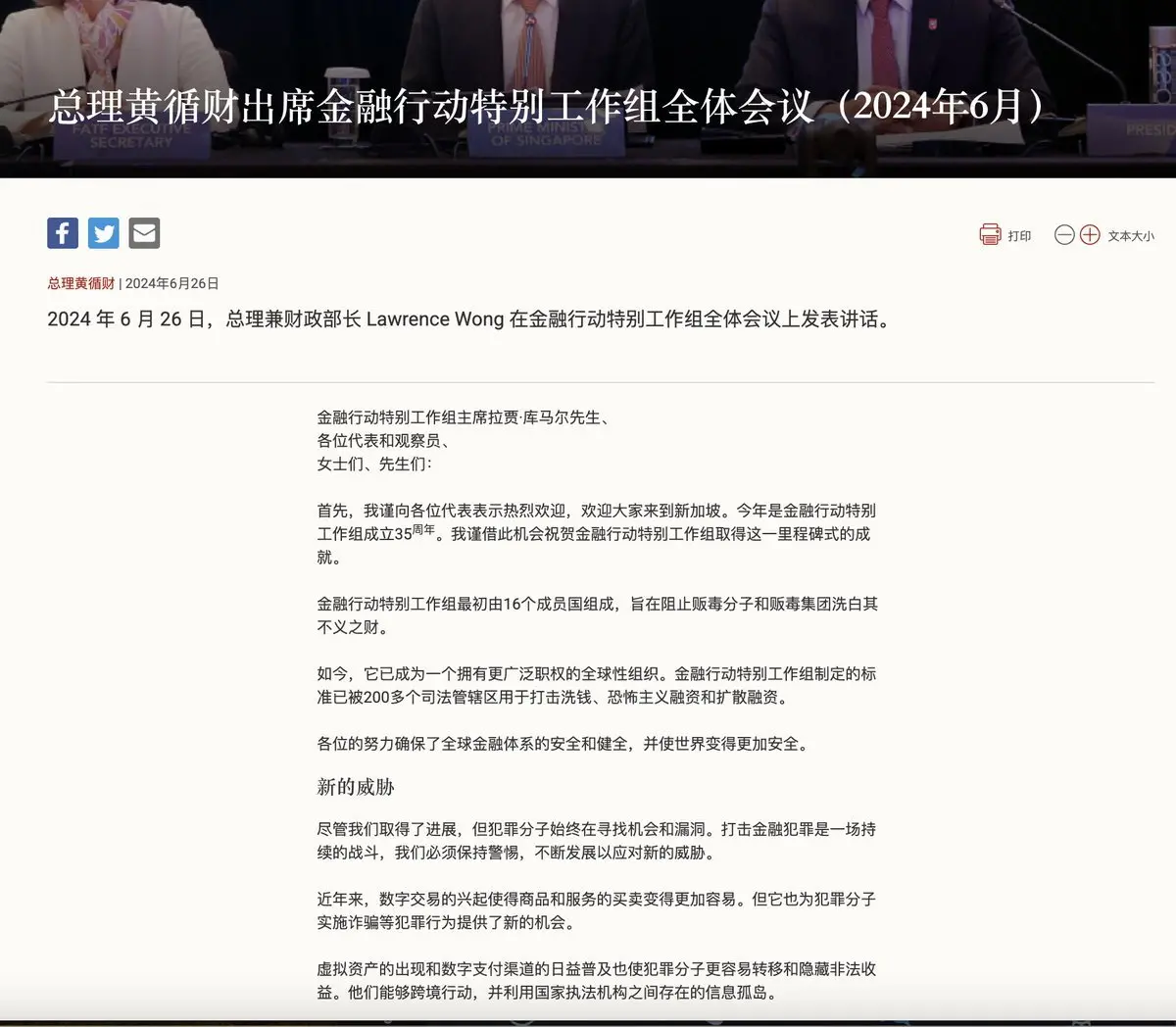
Singapore's Prime Minister Lawrence Wong emphasized during the FATF plenary meeting last year speech that virtual assets and digital payment channels are the primary new threats.
Singapore's FATF mutual evaluation this year will likely need to meet the effectiveness criteria outlined in the 2021 FATF “Updated Guidance for a Risk-Based Approach to Virtual Assets and Virtual Asset Service Providers (VASPs)”, which covers six key areas: definitions of VASPs, stablecoins, P2P transactions, licensing and registration, travel rules, and regulatory cooperation, providing detailed guidance for AML/CFT implementation.
The new regulations for digital token service providers (DTSP) implemented by MAS starting June 30 also primarily aim to comply with the effectiveness of FATF guidelines. In other words, Singapore has provided the virtual asset industry with sufficient grace periods over the past few years, and this year is indeed the last moment before tightening regulations.
The Singapore government is known for its efficiency, and this FATF evaluation has been prepared for a long time. It is technically unlikely that FATF will find significant flaws, and the possibility of being downgraded or losing membership status is also low.
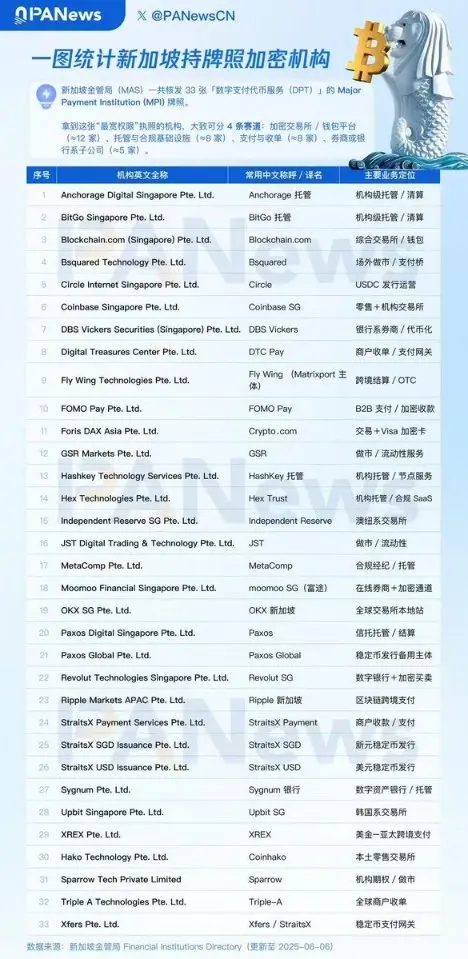
For example, the FATF mutual evaluation requires separate discussions with the private sector (including VASPs), with government personnel not allowed to be present. To this end, Singapore has required unlicensed VASPs to cease operations before June 30, 2025, aiming to ensure that only compliant VASPs participate in the evaluation, thereby reducing the risk of being accused of regulatory loopholes. The list and classification of licensed and exempt entities can be referenced in media compilations.
Additionally, both Hong Kong and Singapore adhere to the FATF's anti-money laundering guidelines. Singapore is regulated by the MAS, while Hong Kong is primarily regulated by the SFC. It is difficult to expect Hong Kong to be more innovative in Web3 policies and catch the wave from Singapore. The breakthroughs in Hong Kong's Web3 still depend on policies and regulations from the mainland.
 Risk warning
 Risk warning



Popular articles





