Morning News | Mask Network announces takeover of Lens Protocol; Pump.fun establishes investment division Pump Fund; Strategy invests $2.13 billion to increase Bitcoin holdings

 Overview of Important Market Events on January 20
整理:ChainCatcher
Important News:
- CZ: The launch of the tokenization platform by the New York Stock Exchange is beneficial for cryptocurrencies and crypto trading platforms
- Pump.fun announces the establishment of its investment department, Pump Fund
- Hong Kong Securities and Futures Professionals Association: Hong Kong has completed the preliminary regulatory infrastructure for virtual assets, and the next focus should shift to commercial application implementation
- Binance Wallet launches stock token trading incentives, with a single purchase of ≥50 USDT eligible for 5 Binance Alpha points
- PayPal launches a free self-service tax reporting service, requiring reporting of digital asset disposal gains to the IRS starting in 2025
- Mask Network announces takeover of decentralized social protocol Lens Protocol
- Strategy invests $2.13 billion to increase its holdings of 22,305 bitcoins
What important events have occurred in the past 24 hours?
Mask Network announces takeover of decentralized social protocol Lens Protocol
According to ChainCatcher, the decentralized social protocol Mask Network and Lens Protocol jointly announced that Mask Network has become the new steward of Lens Protocol. In the future, the focus of Lens Protocol will shift from protocol experimentation to consumer-facing user experience, product design, and global distribution.
"Mask's mission is to make decentralized social features easy to use, intuitive, and meet the needs of everyday users, which aligns with the next development phase of Lens," said Mask's founder Suji Yan.
"As Mask leads this important phase, our role will shift from daily product development to consulting. In this role, we remain committed to making open, scalable, user-owned social networks a core pillar of the future internet. We are dedicated to the long-term success of Lens, its developers, its community, and the Suji and Mask teams," Lens stated on its official blog.
According to RootData, Lens Protocol has raised over $46 million, with investors including Tencent, Robot Ventures, and Variant Fund. Last June, media reported plans for a new round of financing at a valuation of $500 million. Mask Network has previously raised over $57 million, and its token MASK currently has an FDV of $60 million.
According to ChainCatcher, PayPal announced a partnership with embedded tax technology platform April, allowing U.S. PayPal debit Mastercard users to use April's self-service tax reporting service for free to report federal and state taxes for 2025.
Additionally, information from PayPal's official website indicates that users must report cryptocurrency on its platform for tax purposes. Starting from the 2025 tax year, the IRS requires U.S. digital asset brokers like PayPal to report gains from digital asset disposals on Form 1099-DA. If users dispose of their PayPal wallet by selling or exchanging cryptocurrency during the applicable tax year, PayPal will send users the IRS tax Form 1099-DA by February 15.
Data: BlackRock's PFF ETF holds $380 million in MSTR preferred shares
According to ChainCatcher, as reported by CoinDesk, as of January 16, BlackRock's iShares Preferred and Income Securities ETF (PFF) holds Strategy (MSTR) Stretch (STRC) as its fourth-largest holding, with an allocation of $210 million, equivalent to a 1.47% weight.
The ETF also holds other MSTR perpetual preferred stock products, including Strife (STRF) with an allocation of $97.5 million and a weight of 0.69%; MSTR common stock with an allocation of $90 million and a weight of 0.64%; and Stride (STRD) with an allocation of $73 million and a weight of 0.51%.
Strategy invests $2.13 billion to increase its holdings of 22,305 bitcoins
According to ChainCatcher, Strategy has purchased 22,305 bitcoins for approximately $2.13 billion, with an average transaction price of about $95,284 per coin.
As of January 19, 2026, Strategy holds a total of 709,715 bitcoins, with a cumulative investment of approximately $53.92 billion and an average holding price of about $75,979 per coin.
Binance Wallet launches stock token trading incentives, with a single purchase of ≥50 USDT eligible for 5 Binance Alpha points
According to ChainCatcher, Binance announced on the X platform that trading stock tokens with Binance Wallet will earn Binance Alpha task points.
Event duration: January 20, 2026, 21:00 --- February 3, 2026, 20:59 (UTC+8).
During the event, successfully purchasing stock tokens worth ≥50 USDT/USDC in Binance Wallet (App/web) will earn 5 Binance Alpha points (limited to one per user).
Korean illegal crypto exchange operator sentenced to five years for money laundering
According to ChainCatcher, DLNews reported that the Daegu District Court in South Korea sentenced a 41-year-old operator of an illegal cryptocurrency exchange to five years in prison for laundering $1 million for an overseas voice scam gang using USDT. A 35-year-old employee of the exchange was also sentenced to two years and eight months in prison.
The criminal gang contacted victims via Telegram, posing as law enforcement and family members to trick them into transferring money, which was then quickly converted to USDT, all within an hour, preventing banks from freezing accounts in time. Judge Lee Yong-cheol described this as "a heinous crime" and noted that the defendant took no measures to compensate the victims. South Korean legislator Kim Seong-jun called for strengthened regulation of stablecoins to address new types of foreign exchange crimes.
Bloomberg: About one-fifth of the Trump family's $6.8 billion wealth is allocated to crypto assets
According to ChainCatcher, Bloomberg reported that in the past year, crypto assets have added approximately $1.4 billion to the Trump family's wealth, bringing the proportion of their total assets to nearly one-fifth for the first time.
As Trump embarks on his second presidential term, the structure of his personal and family assets has significantly changed compared to his first term. The report noted that in addition to traditional real estate and brand licensing businesses, Trump has added social media companies, a crypto platform co-founded by him, and meme coins named after him to his digital asset portfolio. This marks a significant source of wealth growth for the Trump family, deepening the correlation between their overall assets and the crypto industry.
According to ChainCatcher, Injective's governance proposal IIP-617 was overwhelmingly approved, with 99.89% of community members voting in favor, officially launching the next phase of development for the INJ token.
The proposal has taken immediate effect and will significantly reduce the total supply of INJ tokens, making INJ one of the most deflationary assets in the crypto market.
Pump.fun announces the establishment of investment department Pump Fund
According to ChainCatcher, Pump.fun announced the establishment of its investment department, Pump Fund, which will promote the development of startup projects within the ecosystem through long-term partnerships with projects.
The first initiative of Pump Fund is to launch a $3 million BiP hackathon: with a valuation of $10 million, it will invest $250,000 in 12 projects and provide various support, including guidance from the founding team of Pump.fun.
According to ChainCatcher, the Hong Kong government plans to announce the 2026/2027 fiscal budget on February 25, focusing on areas such as virtual assets and investor protection. The Hong Kong Securities and Futures Professionals Association stated that Hong Kong has completed the preliminary regulatory infrastructure in the virtual asset field, and the next focus should shift to commercial application implementation.
By enhancing RWA secondary market liquidity, accelerating product approvals, introducing international liquidity, and strengthening practitioner training, Hong Kong can upgrade from a clearly regulated market to a globally recognized virtual asset center with abundant liquidity and widespread application, aligning with the national "14th Five-Year Plan" for financial openness and digital economy strategy.
According to ChainCatcher, Wintermute's 2026 outlook report mentioned that the anticipated bullish market did not materialize in 2025, and the traditional four-year cycle is becoming outdated. A few large companies have absorbed most of the new capital, leaving the entire market struggling.
To expand market participation in 2026, it depends on whether one of the following three scenarios can significantly increase liquidity, moving beyond a few large-cap assets.
ETFs and DAT expand their investment scope, such as SOL and XRP ETFs.
A strong rise in Bitcoin or Ethereum could create a wealth effect, but it remains uncertain how much capital will flow back into the digital asset space.
Retail investors' attention may shift from stocks (AI, rare earths, quantum technology) to cryptocurrencies, bringing new capital inflows and stablecoin issuance. (The least likely scenario)
According to ChainCatcher, the Korea Herald reported that South Korean financial authorities are working to reform the digital asset regulatory framework, planning to abolish the "1 exchange -- 1 bank" binding restriction, allowing crypto derivatives issuance and institutional accounts to participate in trading, breaking the current market monopoly structure and promoting liquidity.
Regulators believe that while this restriction is not legally mandated, it has long existed due to anti-money laundering requirements, limiting competition among exchanges and user choices. Subsequent policies will be included in the second phase of the "Digital Asset Basic Law" legislation, and both parties in the National Assembly have reached a consensus on some regulatory relaxations.
According to ChainCatcher, CZ responded to the "New York Stock Exchange's announcement of the launch of a tokenization platform," stating, "This is good news for cryptocurrencies and crypto trading platforms."
Earlier reports indicated that the Intercontinental Exchange Group's New York Stock Exchange announced today that it is developing a platform for tokenized securities trading and on-chain settlement and will seek regulatory approval for this. The NYSE's new digital platform will support a tokenized trading experience, including 24/7 operation, instant settlement, dollar-denominated orders, and stablecoin-based fund transfers.
According to ChainCatcher, a16z Crypto senior security researcher Daejun Park published an article calling for DeFi protocols to shift from "code is law" to "regulation is law," adopting a more principled security approach. The specific approach is to hard-code security guarantees through standardized regulations and invariant checks, automatically reverting transactions that violate predefined rules. Park pointed out that almost all known vulnerabilities would trigger such checks, potentially preventing hacker attacks during execution.
According to Slowmist, hackers stole over $649 million through code vulnerabilities last year. Even established protocols like Balancer, which has been running since 2021, lost $128 million last November due to code vulnerabilities. Developers are concerned that hackers are increasingly using AI to find vulnerabilities.
Immunefi's security chief pointed out that invariant checks would increase gas costs, potentially driving away users and are not a panacea. The co-founder of Asymmetric Research stated that many vulnerabilities are difficult to write invariant rules that can detect attacks without false positives.
According to ChainCatcher, Shenzhen IT man Li Dong (pseudonym) has been targeted by police in Xiang and Yu provinces. A large amount of bitcoin was found in his virtual currency wallet. The public security agencies in Zhangjiajie, Hunan, and Changge, Henan, have both opened investigations against Li Dong, with the charges being "operating a gambling house." The Zhangjiajie police seized over 100 bitcoins from Li Dong's account, converting them into over 40 million RMB; the Henan police seized 80 bitcoins from him, with a market value exceeding 40 million RMB.
Later, Li Dong was not found guilty of "operating a gambling house." He was prosecuted by the Changge City Prosecutor's Office in Henan for theft and violation of citizens' personal information. In January 2026, the case was publicly heard in the Changge City Court. After the recess, the court stated that it would schedule another hearing. Li Dong, born in the 1980s, is a network information security engineer who studied information security in college. He has worked in network security technology for several well-known internet companies and later settled in Shenzhen, where he started an internet company in recent years.
According to his family, Li Dong began trading stocks and cryptocurrencies around 2016 and acquired some bitcoins. However, police investigations later suggested that his bitcoins came from other "channels." In September 2024, the Zhangjiajie Public Security Bureau summoned Li Dong on suspicion of "operating a gambling house." It turned out that in May of that year, the Zhangjiajie police opened an investigation into an online gambling case based on an "anonymous tip," and Li Dong was listed as a suspect. The Zhangjiajie police seized 103 bitcoins from Li Dong's digital wallet, converting them into over 49.61 million RMB. Soon, Li Dong was released on bail. However, the charges listed in the seizure decision and bail documents changed from "operating a gambling house" to "illegally obtaining data from computer information systems."
Meme Popularity Ranking
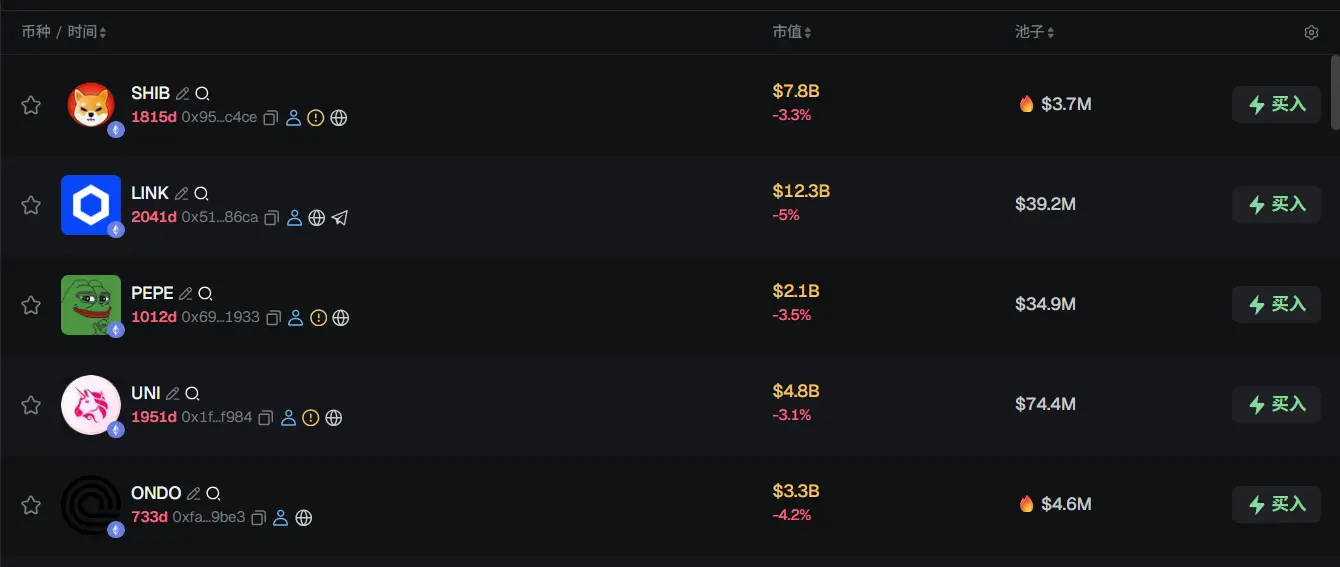
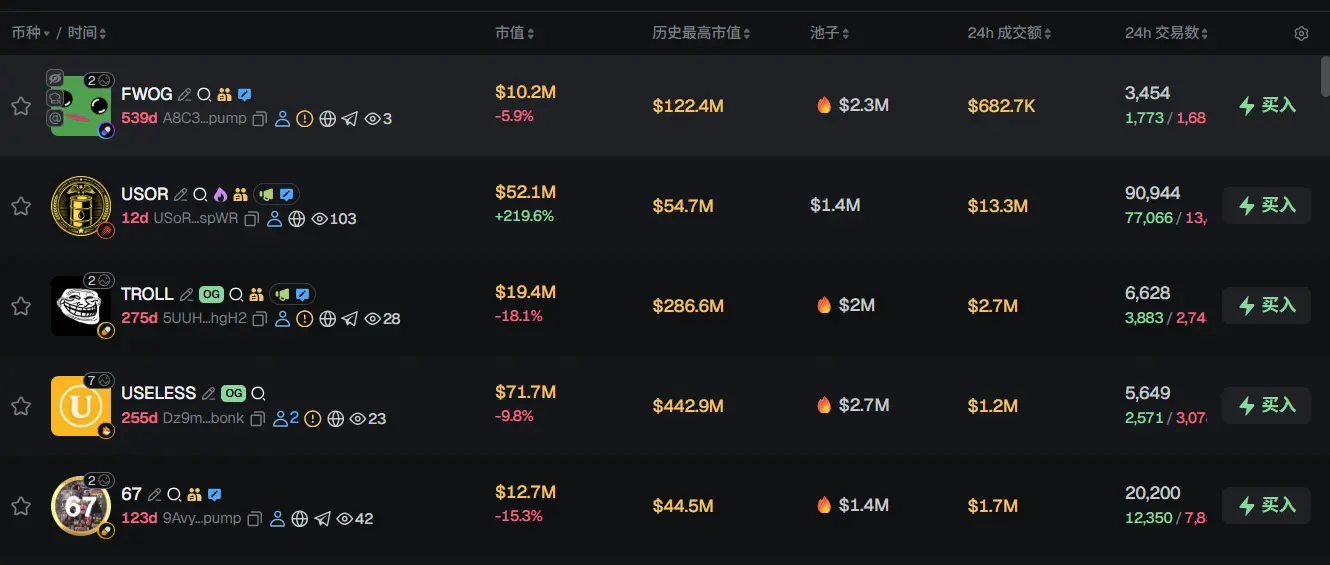
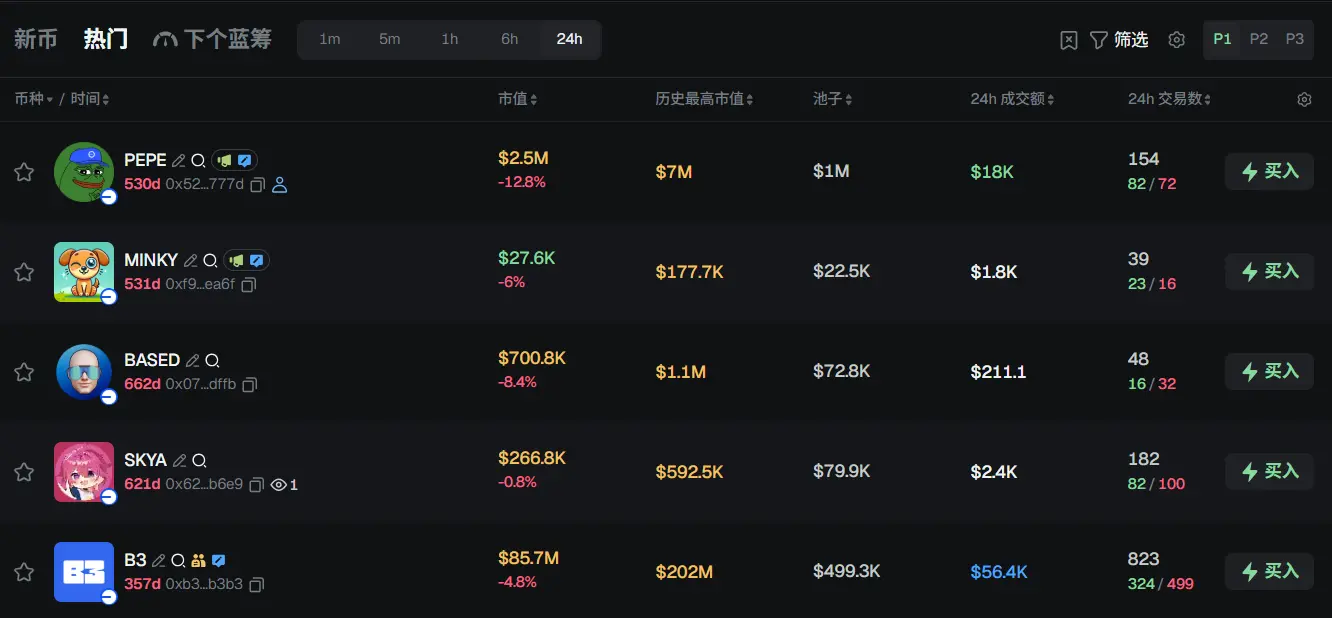
According to meme token tracking and analysis platform GMGN, as of January 21, 09:00,
The top five popular ETH tokens in the past 24 hours are: SHIB, LINK, PEPE, UNI, ONDO
The top five popular Solana tokens in the past 24 hours are: FWOG, USOR, TROLL, USELESS, 67
The top five popular Base tokens in the past 24 hours are: PEPE, MINKY, BASED, SKYA, B3
What are some interesting articles worth reading in the past 24 hours?
Decentralized AI: Betting on Ethereum's Next Decade
AI agents need a playing field without referees. And blockchain, especially a sufficiently decentralized blockchain like Ethereum, is just that.
Behind the 80% Gas Plunge: Focusing on Work Becomes a Reason for Market Crash?
In recent days, it's hard not to be bombarded by BAGS on Twitter.
The hype around BAGS comes not only from the crazy influx of on-chain players but also from an article that ignited the frenzy—programmer Steve Yegge's long piece titled "Bags and the Creator Economy," published on January 15, detailing his journey from "skeptical of scams" to "it's actually good."
NYSE Plans to Launch 24/7 Tokenized Stock Trading, Leaving Competitors Stunned
"Flash Crash Monday" is not over yet, and just now, the crypto market is hit with another bombshell—according to multiple media sources, the NYSE plans to launch a platform for tokenized securities trading and on-chain settlement that supports 24/7 trading. After investing $2 billion in Polymarket last year, the ICE Group is once again leveraging its securities exchange to join the century's wave of cryptocurrency transformation.
Notably, as early as last September, "competitor" Nasdaq had submitted an application to the SEC for tokenized stock trading, and the NYSE's change is interpreted as a response to competition among stock exchanges.
In Singapore's payment circle, there is a saying that resonates: "MPI is worth ten million, JPM account is worth one hundred million." This is not an exaggerated metaphor but a true reflection of JPMorgan's status in the global financial system. For institutions attempting to operate in sensitive areas such as cross-border payments, virtual assets, and stablecoins, JPMorgan is not only the main gateway to the dollar system but also a stringent measure of compliance and capability.
The founder of Coinbase, a leading exchange in the crypto world, has stated that the key factor that has allowed the company to reach where it is today is not technology, user growth, or regulatory environment, but having a strong banking partner—JPMorgan. Since 2020, JPMorgan has become Coinbase's core bank, a relationship that not only opened the dollar channel for it but also endorsed its "legitimacy" in the eyes of traditional finance in terms of compliance and credibility. In the context of the entire crypto industry suffering from marginalization by the banking system, such cooperation is undoubtedly a rare pass.
 Risk warning
 Risk warning