How Tokenization of US Stocks Could Inflate a Huge Bubble in the Future

 The chain of "on-chain debt" released by equity assets.
Author: Beta哥 from US Stocks
The Chain of "On-chain Debt" Released by Equity Assets
You start with $1 million USDC, a compliant stablecoin, which is used to purchase tokenized TSLA on a regulated on-chain platform, representing real Tesla stock 1:1 as a digital asset (like TSLA-T).
This token is held by a securities custodian that safeguards the corresponding stock and is issued on a compliant chain through Coinbase or similar platforms. At this point, your $1 million has become an "on-chain mirror of real equity."
Next, you bridge TSLA-T to a high-freedom, non-regulated DeFi chain (like Arbitrum or Blast), where the bridging contract locks the original token and releases a mapped asset on the target chain, such as wTSLA. At this moment, you hold an "on-chain financial asset backed by real equity," which is accepted as high-grade collateral by DeFi protocols.
Subsequently, you collateralize wTSLA to a lending protocol (like Morpho, Silo, Gearbox, etc.) to borrow $900,000 in USDT or DAI, stablecoins that can be freely moved and exchanged within the DeFi system.
You convert this borrowed fund into USDC or USDP through Curve or OTC channels, and then withdraw it to your bank account via centralized withdrawal paths (like Coinbase, Kraken, Silvergate), turning it into real-world USD fiat. Thus, you have extracted $900,000 of off-chain cash using the "on-chain shell" of tokenized TSLA, which is economically free to use, consume, or invest. You can use it to repurchase Tesla stock through a brokerage, entering the off-chain securities system.
After completing the off-chain purchase, you follow the same process again: tokenize the real stock, generate TSLA-T, and bridge it back to wTSLA, cycling through collateralization, borrowing, currency exchange, and withdrawal.
This series of operations essentially packages the originally static equity assets into an on-chain system that can release "stablecoin debt," with the released debt becoming usable cash in the real world through bridging and liquidation mechanisms.
Each cycle does not require new capital investment; the actual asset (Tesla stock) is merely "shifted" in your hands, while new cash availability is continuously released on-chain. This is what you referred to in your diagram: "As long as Tesla does not fluctuate significantly, my stock is staked on-chain, and there is an additional $900,000 USD fiat outside"—to be precise, it is through high-frequency, low-friction tokenization → borrowing → cashing out cycles that static assets are converted into off-chain cash liquidity, releasing nearly equivalent loan funds each round, ultimately achieving asset outflow and credit layer amplification.
Advanced Version of the FTT Explosion Script
In this structure, tokenized stocks do not need to be high-traffic, high-profile stocks like TSLA.
Instead, choosing a low-liquidity, easily controlled small-cap stock (like OTC market stocks, Penny Stocks, or non-mainstream assets held under certain compliant brokers) is a rational choice.
You can control 10%–30% of its circulating supply with a few million dollars, quietly driving up the price off-chain, then tokenize this stock to mint a mapped asset on-chain, bridge it to the DeFi chain, and use the wSTOCK that you artificially inflated as collateral to borrow a large amount of stablecoins.
Since most on-chain protocols only recognize oracle prices and superficial volatility, as long as you can raise the off-chain market cap and trading depth—even if just for a few trading days—the on-chain system will perceive this as a "high-quality, high-value" compliant asset, thereby releasing a very high lending limit. TVL continues to grow in this process because the stablecoins released from each borrowing are injected into new liquidity pools (LPs, market making, re-staking), and you can even artificially create a liquidity growth curve, leading protocols, communities, and even on-chain data analysis platforms to believe this is the "blueprint for the financialization of next-generation on-chain assets."
You can easily create a "growth narrative": claiming that these assets can connect TradFi and DeFi, stating that this is part of the RWA wave. Once the market and protocols believe this story, your cash-out channel will be opened. After completing several rounds of cashing out and successfully selling a large amount of stocks held off-chain at a high price, you only need to stop supporting the price at a certain point—like withdrawing from LP or allowing liquidation—then the on-chain price of this stock will collapse, and the protocol liquidation system will take over, while you have already completed your fiat escape.
SBF used FTT as collateral, repeatedly collateralizing, borrowing, buying back, and driving up prices between FTX and Alameda, forming a completely closed-loop, seemingly risk-free nested cycle. However, he used centralized ledgers and his own platform, lacking the transparency and decentralized illusion of on-chain systems.
What you are proposing now essentially replicates this structure on-chain, using the shell of real securities and the anchoring of compliant stablecoins to give it "legitimacy," but its core remains collateral value manipulation + debt cashing out + liquidity transfer + targeted collapse.
This is an advanced version of the FTT explosion script.
About Regulation
Cross-chain is essentially a technical-level "regulatory escape route." When users hold regulated assets (like USDC or tokenized TSLA) on a compliant chain (such as Base or Ethereum mainnet), these assets are subject to clear identity binding, source of funds audits, and compliance obligations.
However, once users bridge these assets to a target chain (like Arbitrum, Solana, Blast, or any L2 chain), the original assets are typically frozen in the bridge's locked contract, and a "mapped asset" (wrapped token) is generated on the target chain. This wrapped asset is legally and technically a new on-chain native asset, no longer directly controlled by custodians like Circle or Coinbase, and thus no longer directly within the compliance domain.
At this point, no matter how compliant the addresses on the regulatory chain are, as long as the target chain does not conduct KYC, users immediately enter a free system with decoupled identities. More importantly, the regulatory framework itself is not based on "asset paths," but on "territorial" and "personal" jurisdiction. In other words, U.S. regulation can only govern U.S. persons or companies registered in the U.S., and cannot govern your operation of an anonymous wallet address on the Blast chain, zkSync, or even a DeFi protocol without physical backing. Regulation cannot prevent you from using cross-chain protocols like LayerZero, Wormhole, or Celer, as these protocols are mostly decentralized deployments, unshuttable contract sets that only execute oracles and Merkle proofs, without needing to identify user identities or check bridging purposes.
If you further cross-chain using privacy-enhancing technologies (like Tornado Router, zk-rollup privacy bridges), on-chain behavior will become highly untraceable. Even if regulators grasp your source KYC identity, they cannot reconstruct your asset trajectory on the target chain.
Therefore, in the entire on-chain financial system, cross-chain bridges effectively serve as a "central hub for asset liberalization": they do not issue new funds or provide leverage, but they allow compliant assets to be converted into non-compliant forms, thus entering an unrestricted on-chain liquidity cycle.
This is not merely data transmission, but a process of stripping away compliance constraints. This also explains why even though USDC is a 100% reserve regulatory asset, once bridged, wrapped USDC (or any mapped asset) can still participate in a series of non-compliant activities such as leveraging, lending, staking, and liquidity mining, indirectly releasing demand and liquidity utilization for the USDC itself. Regulators can currently only freeze the entry or original custodial assets on this side of the bridge, but cannot reclaim the mapped coins on the other side of the bridge, creating a path for arbitrage from real finance → on-chain credit → off-chain cashing out, for which regulators have no technical sovereignty, judicial enforcement, or legislative definitions of a regulatory closed loop.
Government Intentions
Here’s my guess.
First, the U.S. government is well aware that in the irreversible trend of global digital finance development, if it does not "put the dollar on-chain," the future reserve anchoring of on-chain assets may shift towards Bitcoin, Ethereum, or even digital assets of the Renminbi.
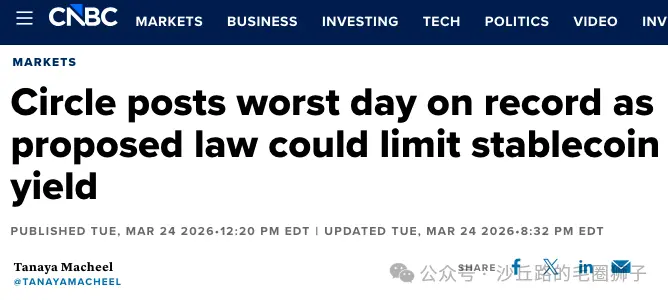
This is hinted at by Tether's global dominance: the vast majority of USDT's circulation is not in the U.S. but in the Middle East, Southeast Asia, and South America, representing the most typical unofficial version of offshore dollars. If the dominance of dollar stablecoins is held by offshore black-box systems rather than companies like Circle and Paxos that are bound by U.S. law, the U.S. will lose its voice in future global finance. Therefore, legalizing companies like Circle and Coinbase through the "2025 Stablecoin Act" is not a regulatory concession, but rather "incorporation"—creating an "on-chain version of Federal Reserve notes" through compliant stablecoins, allowing global users to unknowingly choose the dollar as their on-chain reserve asset.
Secondly, the U.S. capital markets pride themselves on their vast pools of equity and bond base assets, with their main export being not products, but trust in assets and systems.
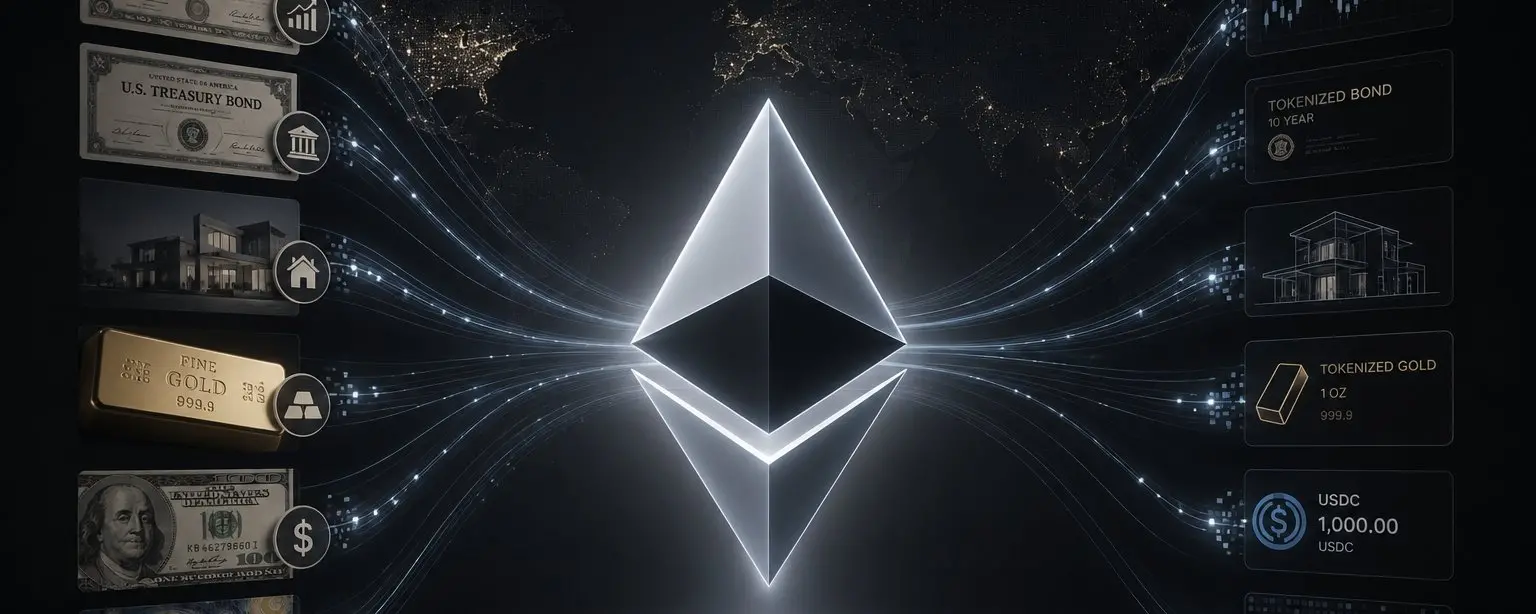
In today's rapidly expanding on-chain finance, the U.S. allows real financial assets like tokenized TSLA and tokenized T-bills to be legally mapped onto the blockchain, essentially to ensure that global funds can still "only mint, borrow, and settle around U.S. assets," thereby maintaining dominance over financial data and risk pricing systems. The regulatory authorities are certainly aware of the leverage nesting in DeFi and the regulatory voids in cross-chain, but they allow all of this to exist because the dollar remains the entry point for all bridges, the endpoint for all settlements, and the center for all valuation anchors. In this structure, even if the U.S. does not directly control every chain, it controls the "value language" of all chains.
In short, the U.S. government is doing this not because they believe on-chain is safe, nor because they wish for DeFi to thrive freely, but because this is their only realistic choice to ensure the dollar's dominance in the on-chain world: only by putting the dollar and U.S. stocks on-chain and making Circle and Coinbase the "Citibank of the DeFi world" can they qualify to sit at the main table of future financial order.
This is a high-dimensional financial strategic arrangement that allows you to go crazy, allows you to gamble, but all gambling tables must use dollar chips, bet on U.S. assets, and settle through the Federal Reserve route.
 Risk warning Risk warning