








Interpretation of Hong Kong's "Digital Asset Declaration 2.0": How to Compete for the Web3 Hub in Asia?

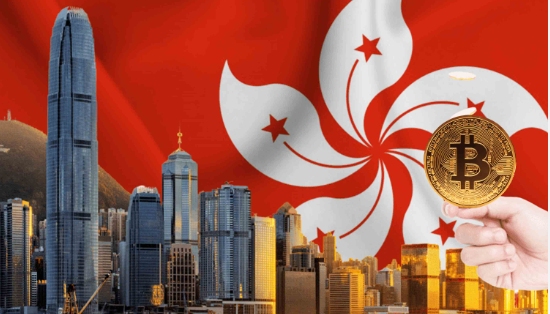
 On June 26, the Hong Kong Special Administrative Region Government released the "Hong Kong Digital Asset Development Policy Declaration 2.0," stating its commitment to building Hong Kong into a global leading digital asset center, a market where innovation can thrive in a controlled risk environment, bringing substantial benefits to the real economy and financial markets, and being trustworthy.
Original Title: Hong Kong Declaration Overview: Aspiring to Replace Singapore as the Cryptocurrency Hub of the Asia-Pacific?
Original Author: Wu Says Blockchain
On June 26, the Hong Kong Special Administrative Region government released the "Hong Kong Digital Asset Development Policy Declaration 2.0," expressing its firm commitment to building Hong Kong into a global leading digital asset center, a market where innovation can thrive in a controlled risk environment, bringing substantial benefits to the real economy and financial markets while being trustworthy.
The release of the Hong Kong Declaration coincides with Singapore's implementation of strict policies to drive out unlicensed institutions. Legend Trading CEO Hao stated that in the next 2-3 years, Singapore's influence on the Web3 industry will diminish. There are only 33 licensed companies in total, and about half of these companies have little competitiveness outside of Singapore. Some are merely subsidiaries of large groups in Singapore, with licenses that only allow them to serve the Singapore market and only for spot trading. Many founders stay in Singapore for family reasons, but their teams will be placed in other countries. Renowned analyst Zheng Di believes that the next Web3 hub will be Hong Kong, and he is very optimistic about Hong Kong. Due to Temasek's significant losses from investing in FTX, many people from Singapore do not need the crypto space, and Hong Kong will reclaim its status as the global center for Web3 because of Singapore's actions.
The Hong Kong Declaration states that to achieve this vision and goal, a digital asset ecosystem that deeply integrates with the real economy and financial markets and is future-oriented will be created, proposing a series of strategic policy directions and implementing corresponding measures. In formulating policy directions and measures, we strive to ensure they are not limited by current technologies and that they can adapt to the future development of digital assets while integrating into the real economy and financial system to achieve sustainable growth. These measures are framed under "LEAP," which stands for: Legal and regulatory streamlining; Expanding the suite of tokenized products; Advancing use cases and cross-sectoral collaboration; People and partnership development, to create a trustworthy, innovative, and vibrant digital asset ecosystem, reinforcing Hong Kong's leading position in the global financial landscape.
The declaration indicates that the next major step is to conduct public consultations on the licensing mechanism for digital asset trading service providers and digital asset custodians to meet investors' needs for high liquidity, large transactions, and secure custody of assets. The government suggests designating the Securities and Futures Commission (SFC) as the primary regulatory body for digital asset trading service providers, responsible for licensing and registration, setting standards, optimizing regulatory processes, and reducing potential regulatory arbitrage under different digital asset regulatory frameworks. The Hong Kong Monetary Authority (HKMA) will act as the frontline regulator for banks, overseeing their digital asset trading activities. The SFC will serve as the primary regulatory body for digital asset custodians, responsible for licensing and registration, as well as setting standards, while the HKMA will supervise banks' digital asset custody activities.
The declaration states: The Financial Services and the Treasury Bureau and the HKMA will lead the review of relevant laws and regulatory frameworks, referencing international experiences and practices to promote further application of tokenization in Hong Kong. The initial review will focus on the bond market that has passed the concept verification stage, and it is also expected to provide references for the tokenization of other real-world assets and financial instruments. We will comprehensively examine the issuance and trading processes of tokenized bonds, including but not limited to settlement, registration, and record-keeping requirements. The government will regularize the issuance of tokenized government bonds and explore different currency and term arrangements, as well as other innovative options. The government hopes to provide a stable and high-quality digital bond to the market through this initiative, further expanding accessibility and attracting a broader investor base. To further leverage the advantages of tokenization, the Financial Services and the Treasury Bureau and the HKMA will continue to communicate with industry experts to understand various market opinions, including those regarding the inclusion of digital currencies to enhance trading efficiency, secondary market trading application scenarios, and further expanding investor participation in the local bond market. The government aims to establish a global benchmark by being the first to issue and regularize tokenized bonds, enhancing market confidence in this technology while encouraging adoption by the public and private sectors.
The declaration states: Currently, all exchange-traded funds (ETFs) listed on the Hong Kong Stock Exchange are exempt from stamp duty when transferred. To promote the development of the tokenization market, the government will clarify that these stamp duty exemptions also apply to tokenized ETFs. Based on this exemption, the government welcomes market participants to explore the advantages of tokenizing ETFs, such as money market ETFs, including introducing them for secondary market trading on licensed digital asset trading platforms or other platforms. Looking ahead, the government will maintain an open attitude, considering factors such as fiscal impact and market development, to review the tax arrangements for other SFC-recognized funds after tokenization. The government will submit legislative proposals to include specified digital assets in the eligible transactions for profit tax exemptions for privately offered funds and family investment control tools. If the proposal is approved by the Legislative Council, the tax exemption will take effect from the 2025/2026 tax year.
The declaration states that it will support stablecoins and other tokenized projects, including exploring the use of stablecoins as payment tools. To fully realize the potential of stablecoins, the government and regulatory authorities will provide a favorable market environment and necessary regulatory guidance to promote licensed stablecoin issuers in Hong Kong to research and implement solutions for different application scenarios to address substantial pain points in economic activities. To demonstrate the government's support and lead by example, we welcome market participants to suggest how the government can experiment with and utilize licensed stablecoins, such as enhancing the efficiency of government payments.
The declaration states that Cyberport will also launch a blockchain and digital asset pilot funding program to provide funding for applications with future application potential, significance, and market impact. In addition to funding, Cyberport will also assist these companies and coordinate with relevant stakeholders to support the implementation of pilot projects as needed. The dedicated team of the Invest Hong Kong will welcome and is ready to support digital asset service providers in establishing and expanding their businesses in Hong Kong. Among the various support options available, Invest Hong Kong can connect potential digital asset service providers with banks and different professional and support services, facilitating their business establishment.
National Committee Member of the Chinese People's Political Consultative Conference and Hong Kong Legislative Council Member Wu Jiezhuang interprets that the declaration clearly replaces the term "virtual assets" with "digital assets," aligning with international standards and emphasizing its innovative leadership as an international financial center in the digital age; the goal is very clear: to balance innovation and risk control, attract high-quality institutions globally; and to enhance the efficiency of financial markets through technologies like tokenization to serve the real economy; it clarifies the division of labor, with the SFC leading the licensing of digital asset trading and custody services, and the HKMA regulating related banking activities to avoid functional overlap; it demonstrates the government's friendliness and recognition of digital assets, and the government will submit legislative proposals to include digital assets in the eligible transactions for profit tax exemptions for privately offered funds and family investment control tools. At the same time, the SAR government will take the lead in regularizing the issuance of tokenized government bonds; practically reducing the operational costs of the industry, striving to improve market liquidity, the government will clarify how the stamp duty exemption measures for ETF transfers also apply to tokenized ETFs, which has far-reaching implications for the digital asset industry; substantial cash support, improving the market ecosystem, Cyberport will launch a blockchain and digital asset pilot funding program, which can not only attract more talent to join the industry but also enhance the overall project pool in Hong Kong; in summary, Hong Kong has a great opportunity to become a benchmark for compliant innovation in digital assets in Asia within 3-5 years, providing a Hong Kong solution for the integration of global traditional finance and the digital economy.
Hong Kong Financial Secretary Paul Chan stated: Digital assets are an important and highly potential aspect of financial technology, empowering more efficient and lower-cost financial transactions through blockchain technology, making financial services more inclusive. The "Policy Declaration 2.0" showcases our vision for the development of digital assets and demonstrates the practical application of tokenization, promoting the diversification of application scenarios. By combining prudent regulation with encouraging market innovation, we aim to build a more vibrant digital asset ecosystem that integrates with the real economy and social life, bringing benefits to the economy and society while consolidating Hong Kong's leading position as an international financial center.
Hong Kong Secretary for Financial Services and the Treasury Christopher Hui stated: Hong Kong's unique advantages put us in a prime position to drive traditional finance into the digital asset era. The framework set out in "Policy Declaration 2.0" helps us move towards "LEAP" to form a trustworthy, sustainable, and deeply integrated digital asset ecosystem with the real economy. "Policy Declaration 2.0" also positions Hong Kong at the forefront of digital transformation, providing a clear roadmap for businesses and investors to navigate the robust and thriving digital asset market.
Hong Kong Financial Secretary Paul Chan, in an exclusive interview with Ta Kung Pao, stated that Hong Kong is further building a full-chain ecosystem for digital asset development through four strategies: optimizing laws and regulations, expanding product types, advancing application scenario cooperation, and talent cultivation and development, aiming to make Hong Kong a strategic hub connecting opportunities in China's digital economy with global financial innovation needs. He emphasized that digital assets are not only a breakthrough for financial technology but also a key lever for Hong Kong to consolidate its position as an international financial center. Hong Kong will advance the integration of virtual assets with the real economy through a dual-track approach of licensing management and scenario-based applications. "Regulation of stablecoins is a priority; we require their applications to be tied to real scenarios such as trade settlement and cross-border payments to eliminate speculation." Currently, Hong Kong has legislated to regulate the issuance of stablecoins, while the SFC has already issued licenses for virtual asset exchanges and is advancing the regulation of custody. At the same time, "sandbox regulation" provides the industry with innovative testing space.
HashKey Group Chairman Xiao Feng told PANEWS that this declaration has three key changes: stablecoins will be included in regulation: it is clear that the stablecoin licensing system will officially be implemented on August 1, 2025, making it one of the few jurisdictions globally to provide a "landing permit" for stablecoins; RWA tokenization is regarded as a key industry: the government is not only promoting the normalization of bond issuance but also plans to include assets like gold, green energy, and electric vehicles in the scope of tokenization; tokenized ETFs and digital asset funds will enjoy tax exemptions: if future legislation passes, tokenized ETFs will enjoy the same stamp duty exemption and profit tax exemption as traditional ETFs, which is a rewriting of the rules of the financial market. These reforms send a signal: Hong Kong is not just supporting Web3 but aims to make Web3 a part of the financial infrastructure through institutional means. The update of Hong Kong's Web3 policy also completes the "trinity" of institutional closure: regulatory certainty: Hong Kong will become the first jurisdiction globally to clearly license digital asset custody services independently; asset penetrability: allowing real-world assets (metals, energy) to be tokenized equally with financial instruments (bonds, ETFs), breaking the boundary between virtual and real; tax competitiveness: tokenized ETFs are tax-exempt + digital asset funds enjoy profit tax exemptions.
 Risk warning
 Risk warning


Popular articles





