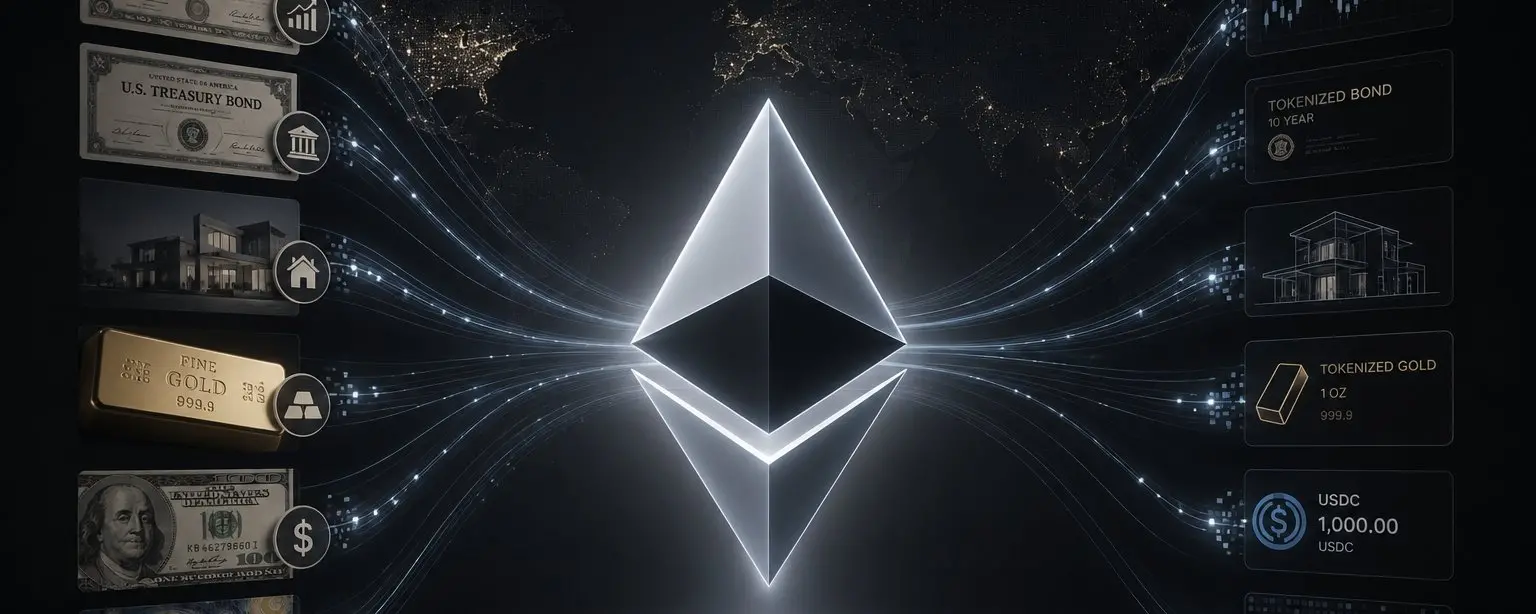
The renaissance of DeFi has come to an end

 DeFi enters the Baroque era, with a strange, grand, and vibrant market in sight.
Written by: Wajahat Mughal
Compiled by: Alex Liu, Foresight News
Last year, the call for a "DeFi Renaissance" spread widely, and the DeFi sector experienced a period of revival and renewed interest.
This was led by protocols such as AAVE, Uniswap, Lido, Maker, Ethena, Morpho, and Pendle, which continued to scale and contributed the vast majority of the total value locked (TVL) in the crypto space. Previously, DeFi had just gone through its toughest phase: the collapse of one of the largest stablecoins, UST, the bankruptcy of the leading centralized exchange FTX, and numerous attacks, exploits, and de-pegging events that plagued the DeFi sector during the last bear market. The situation has changed dramatically over the past few years, giving rise to the narrative known as the "DeFi Renaissance."
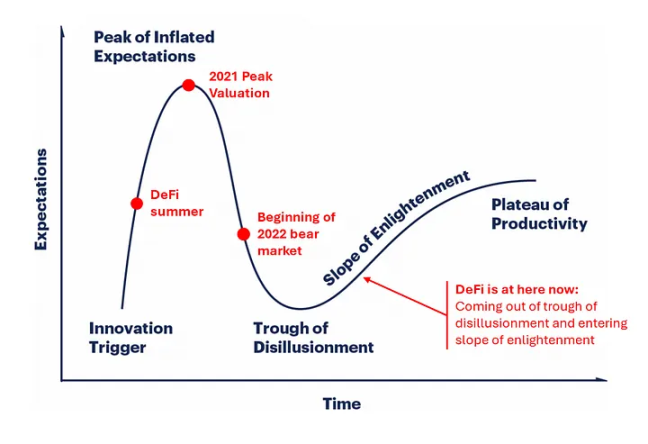
The Development History of DeFi - Excerpted from Arthur0x's article "DeFi Renaissance: Making DeFi Great Again"
These protocols survived the brutal bear market and continued to develop, improve, and innovate based on the decentralized exchanges (DEX), money markets, and staking areas they initially built.
There are several reasons for the resurgence of DeFi, including:
- Mainstream protocols tested in real-world scenarios: Applications have withstood multiple disaster tests from the last cycle, including USDC de-pegging, stETH de-pegging, complete boom-bust cycles, and high-yield/high-interest environments in traditional finance.
- Stronger product offerings: Whether it's high-yield stablecoins (Ethena), DEXs with higher capital efficiency (Fluid / Uniswap V4), or innovations in money markets (Euler, Morpho, AAVE, etc.).
- Shift towards sustainability: By generating income to reduce reliance on token emissions while optimizing the tokenomics of DeFi's native tokens.
- Growth of stablecoins: Currently totaling $267 billion, far exceeding the previous cycle's peak and setting a new historical high. Despite Tether and Circle's dominance, yield-bearing stablecoins are still growing.
One of the reasons for the thriving DeFi renaissance is that the aforementioned protocols can work together to create unique DeFi tools, highlighting the advantages of tokenization and the "Lego-like" nature of money. A typical case is the collaboration between Ethena, Pendle, and AAVE to create the PT-USDe collateral asset type.
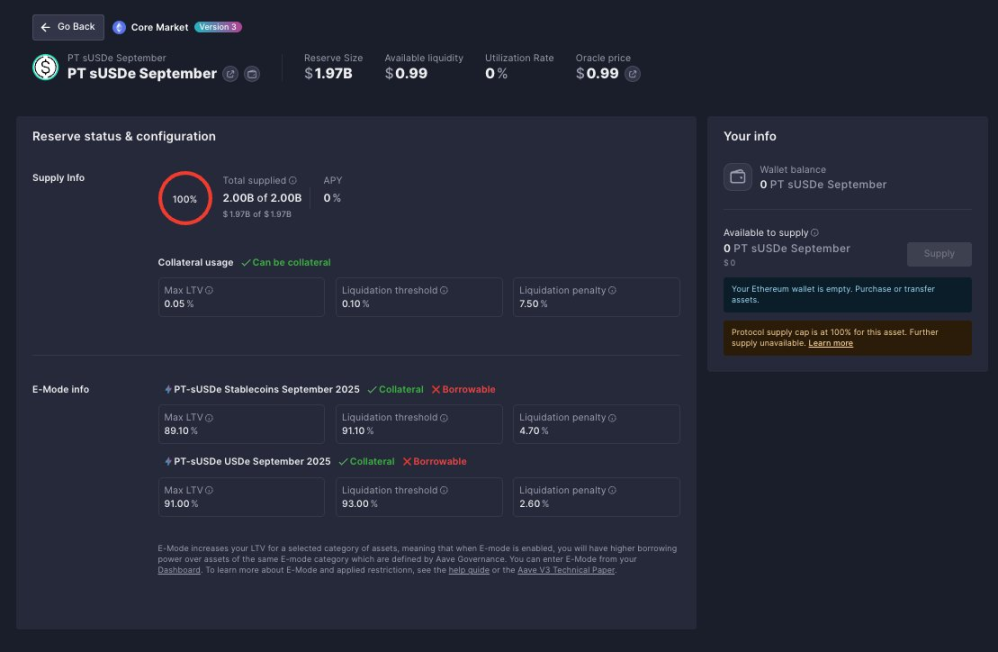
One of the three Ethena PT markets on AAVE reached a cap of $2 billion
In June of this year, the combined asset scale was $1.3 billion, and just months later, it has soared to over $3.3 billion—accounting for more than 2% of the existing DeFi total TVL, achieved through a single tool. And this is just the tip of the iceberg of DeFi's achievements over the past few years.

Overview of DeFi as of August 2025 - DeFillama
The current overall TVL of DeFi stands at $150 billion, only 15% lower than the previous peak. While some may argue that the previous data was inflated due to the peak ETH price of nearly $4,800 and the massive growth of now-defunct stablecoins like UST, excluding these two variables, DeFi would undoubtedly surpass the levels of the last cycle. With the DeFi renaissance firmly established over the past few years, I believe DeFi is entering a new chapter.
The Renaissance period has ended.
The DeFi Baroque Period
In European history, the 15th to 16th centuries marked a period characterized by art, science, literature, and culture, classified as the Renaissance, known for its balance and clarity. This was followed by the Baroque period, characterized by grandeur and complexity in cultural arts, with artistic styles aimed at evoking awe, suspense, and depth.
This is precisely the direction of the current evolution of the DeFi market: the era of minimalism is in the past, and a strange, grand, and vibrant market is on the horizon.

"Girl with a Pearl Earring" - also known as the Northern Mona Lisa
DeFi is innovating in specific categories across all fields, with its impact reaching every existing area—derivatives.
The nominal market size of traditional finance is $600 trillion, merely a marker of the scale of the derivatives space. For DeFi, derivatives are reshaping the sector, and many will ask: How is this achieved?
The following will introduce some pioneers leading the next iteration of the DeFi market.
Starting with Hyperliquid
Readers are familiar with Hyperliquid and its achievements, but some may not understand its future plans and the unique tools built on Hyperliquid.
CoreWriter - Unified Execution Layer
Hyperliquid has a dual-state execution environment above the consensus layer: HyperCore and HyperEVM. HyperCore is the high-performance engine we know, supporting perpetual contracts and order book spot markets. HyperEVM is a completely different environment that hosts the smart contract layer of Hyperliquid. Both share state, but previously HyperEVM smart contracts could only read HyperCore data. CoreWriter changes this completely.

Both HyperCore and HyperEVM are built on the HyperBFT consensus layer
This is the core innovation that distinguishes Hyperliquid from other chains. CoreWriter allows HyperEVM smart contracts not only to read HyperCore data but also to execute transaction instructions (including trade orders, staking, transfers, and vault management).
This opens the door for HyperEVM protocols to access the largest on-chain order book and its liquidity, creating an unprecedented unique DeFi mechanism.

CoreWriter integration examples:
- DEXs utilize AMM and order book liquidity to enhance capital efficiency
- Creating complex delta hedging strategies through perpetual contracts
- CLAMM hedging impermanent loss through perpetual contracts when funding rates are favorable
- Utilizing a combination strategy of options and perpetual contracts
- Tokenized funding rate strategies on HyperEVM
- Current liquidations are usually executed by AMMs, while CoreWriter allows money markets to utilize order book liquidations to enhance capital efficiency
- Non-custodial tokenized vaults containing HLP
Kinetiq is one of the cases that have applied this technology. Kinetiq uses a decentralized validator staking mechanism through a scoring system, with all operations automatically completed via smart contracts between HyperEVM and HyperCore. This enhanced trust makes liquid staking tokens (LST) like kHYPE more advantageous.

Kinetiq's TVL jumped to the top of HyperEVM applications within weeks of its mainnet launch
Another innovation is the introduction of new types of collateral assets—the felix protocol team (unconfirmed) is considering this direction. Specifically: enabling tokenized perpetual positions to be used as collateral for borrowing in money markets, creating DeFi mining yield opportunities fully backed by derivatives.

Felix's Morpho instance remains one of the most attractive money markets on HyperEVM
CoreWriter is just one of the innovations bringing DeFi into a stranger, more complex, and composable Baroque era. Another key innovation from Hyperliquid is as follows:
HIP-3: The Uniswap Moment for Perpetual Contracts
Hyperliquid's next innovation is the creation of permissionless perpetual markets through HIP-3. With 1 million HYPE (approximately $38 million at the time of writing) and an oracle, new types of permissionless perpetual markets can be deployed on Hyperliquid. This opens the door to a brand new market—what we can call "Perpetual Contracts as a Service" (PaaS).
The true "Uniswap moment" for perpetual contracts has arrived: any perpetual market can be created, including:
- Stock perpetual contracts
- Index perpetual contracts
- Forex market perpetual contracts
- Commodity market perpetual contracts
- Pre-IPO market perpetual contracts
- Real estate perpetual contracts
- Special new markets
This also means that if the tokens issued by a protocol are not listed on HyperCore perpetual or CEX, trading pairs can now be created permissionlessly on the most commonly used chain markets. Traditional financial indices, including the S&P 500, are expected to go live quickly after launch, forming Hyperliquid's largest market. Stocks like $NVDA, $HOOD, and $TSLA can all be "perpetualized," creating new tools for these tech giants. Market issuers can also earn 50% of the trading fees from their tools.

HIP-3 opens the door for new markets like stock perpetual contracts
For DeFi users, some special markets are particularly attractive—especially when perpetual positions are tokenized and used in other HyperEVM applications. Given time, we may witness bizarre markets like real estate perpetuals, prediction market perpetuals, or even orange juice futures. However, attracting market makers to such markets may be challenging. Therefore, mainstream markets are likely to emerge first.
Ventuals is one of the first teams to publicly promote the creation of a Pre-IPO market based on HIP-3. It uses industry-leading off-chain data sources to obtain accurate valuations, creating perpetual contracts around top global private companies like OpenAI, SpaceX, Stripe, and Anthropic.
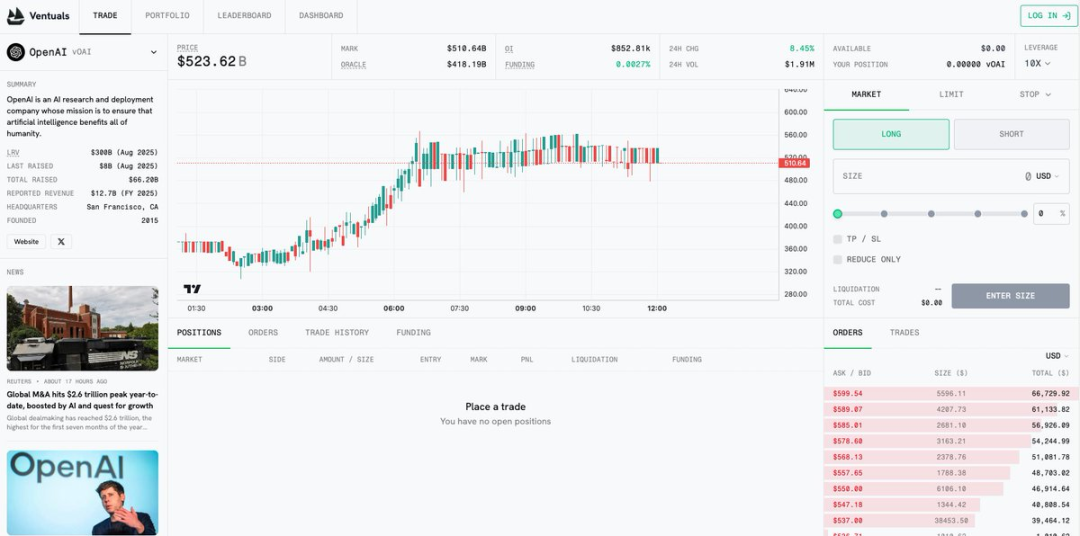
Ventuals testnet market page
Such special markets are driving DeFi innovation: one market, one oracle, and one dream.
Derivatives-Backed Stablecoins
Derivatives are also driving innovation in the stablecoin space—not through payment stablecoins (Tether and Circle operate independently), but through yield-bearing stablecoins.
This field is growing rapidly, with USDe being the best example of unique high-yield stablecoin development. We are tired of the explosion in quantity, offering only a mediocre 5% annualized return backed by government bonds.

Perpetual contracts have birthed some of the best delta-neutral strategies in recent years, with Resolv being another high-yield delta-neutral stablecoin case. Its tiered system allows users to choose yield levels based on risk preferences. Combined with protocols like Pendle, it can create more complex and unique tools—PT (Principal Token) particularly catches my attention, as it essentially creates a fixed-rate income product backed by derivative yields.
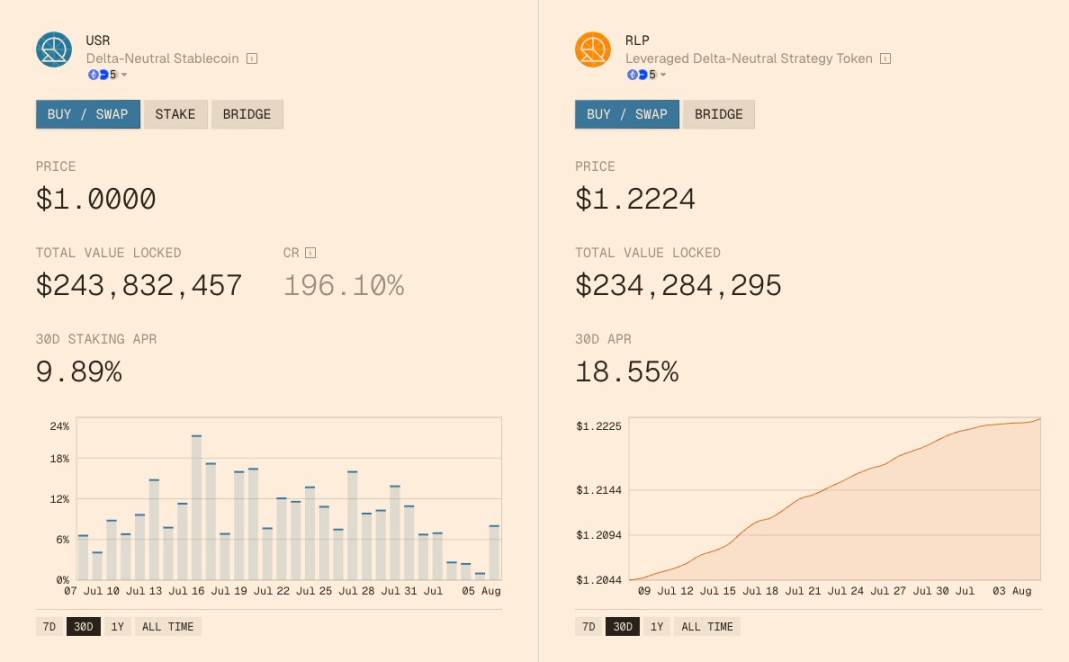
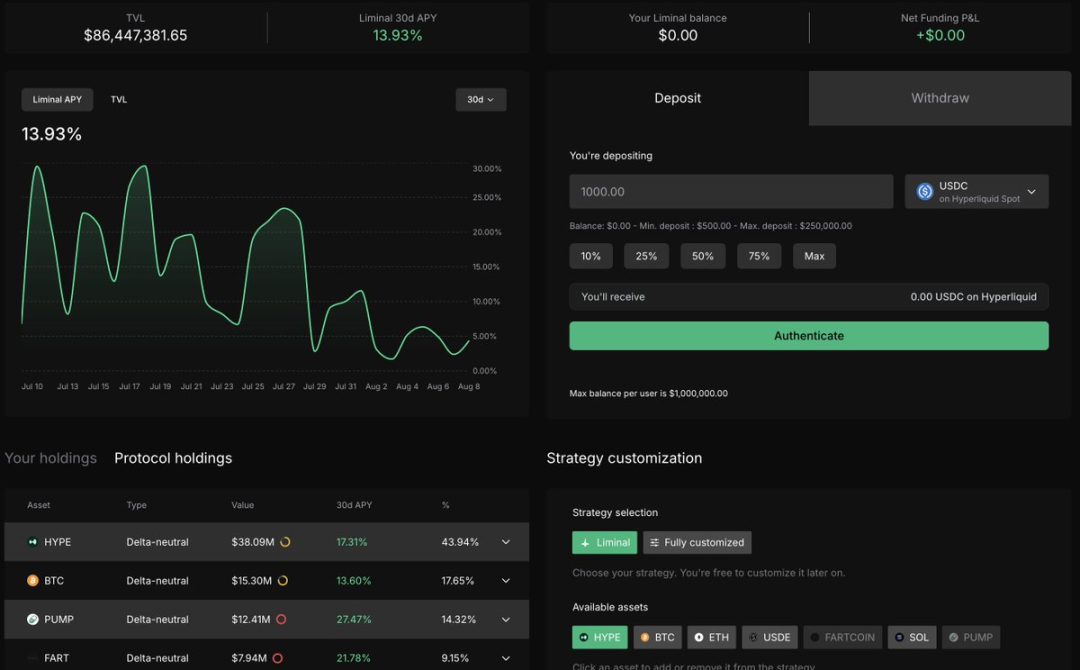
Liminal, built on Hyperliquid, offers funding rate strategy services in its application. Users can automatically earn funding rate income by depositing stablecoins. Although not stablecoins themselves, these derivative-backed products provide high yields priced in stablecoins that exceed those of real-world assets (RWA) like government bonds.
Stablecoins can sometimes be more imaginative: for example, Neutrl creates synthetic dollar products through OTC arbitrage and perpetual hedging, currently boasting a TVL of $40 million with an annualized return exceeding 30% (currently limited to private access).
How do they achieve this?
Neutrl obtains SAFT (Simple Agreement for Future Tokens) and token trades from foundations and investors seeking liquidity, with most trades at a significant discount to spot prices. Its advantage lies in acquiring trading opportunities through capital networks and partnerships, then hedging through perpetual contracts. Risk management includes diversified trades, backing by other stablecoins, additional buffers, and third-party custody.
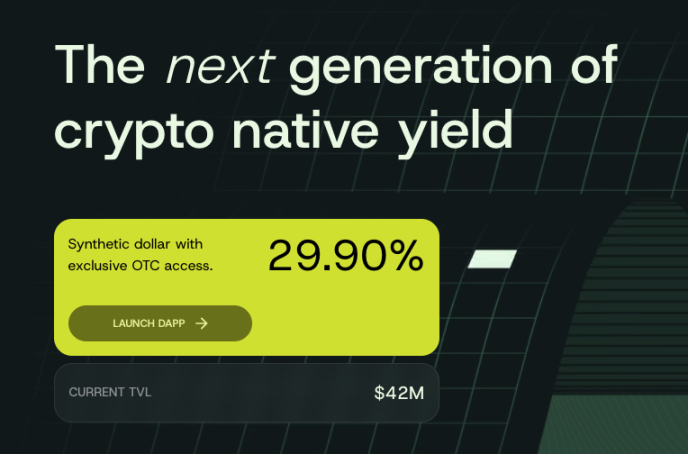
Such new markets allow users to access unprecedented high yields. OTC trading, once exclusive to a niche, now enables ordinary on-chain users to benefit through Neutrl.
Special stablecoin forms are diverse: GAIB's AI GPU derivatives, USD.AI's AI infrastructure debt-backed stablecoin, and Hyperbeat's tokenized stablecoin using USDT's DeFi strategies (technically classified as stablecoins).
New Derivative Tools Based on Options
For a long time, discussions about poorly designed options products have been endless. That era has ended—on-chain options tools provide unique vehicles for expressing exposure: from trade-oriented products and high leverage to yield-generating strategies.
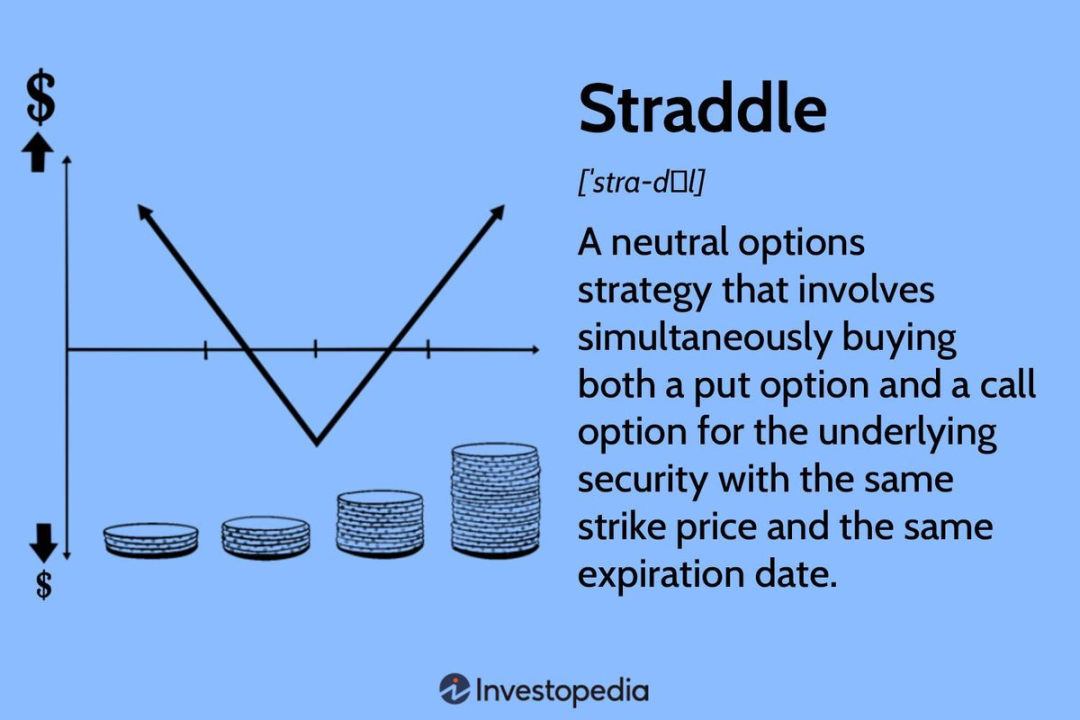
Straddle strategies essentially bet on volatility
Protocols have not fully opened the world of options but have focused on creating high-quality products in niche areas before expanding. As a result, a series of options protocols providing unprecedented on-chain products have emerged.
Last week, tools like 0dte (options expiring within 24 hours) saw record nominal trading volumes. Why are these tools useful? In short: the speculative space is astonishing.
- Ultra-high leverage (up to hundreds of times nominal leverage)
- Buying call/put options without liquidation risk
Traders can trade 0dte options markets for mainstream assets like BTC, ETH, SOL, and HYPE through the IVX protocol. These are among the best leverage tools available in today's market, including the highest leverage products for assets like HYPE.
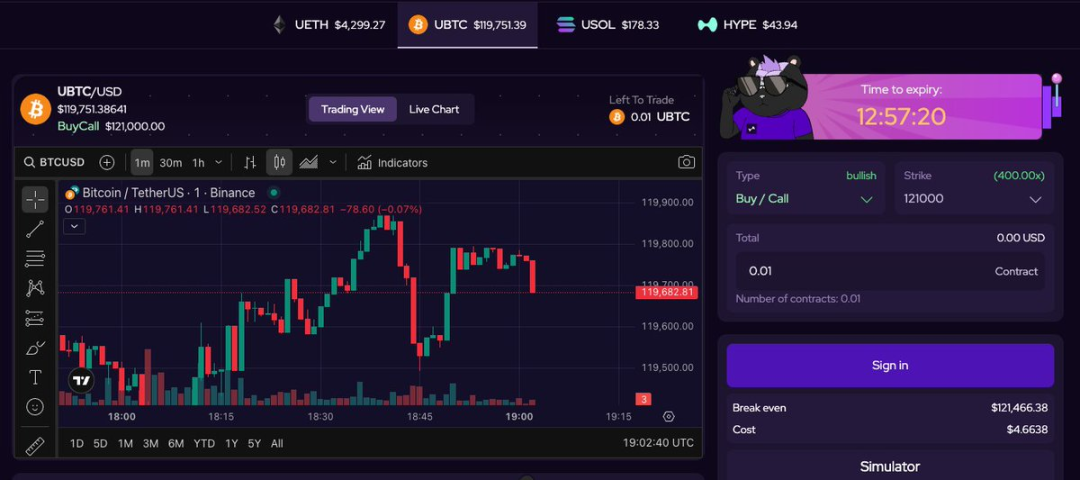
BTC 400x leverage with no liquidation and no funding rate
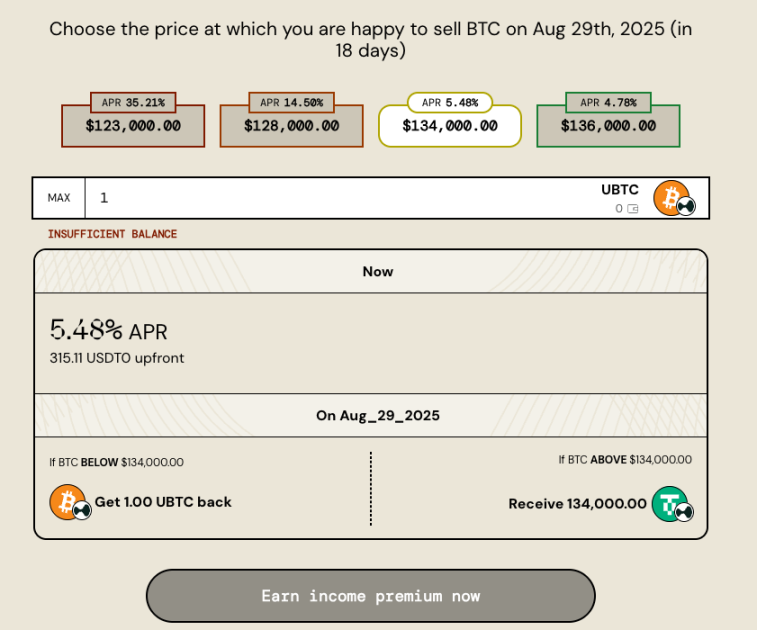
What excites me is that each protocol focuses on its own track: Rysk Finance also focuses on options yield strategies (covered calls), again pushing DeFi innovation through derivatives. While there have been options yield products, current applications have achieved a qualitative leap in user experience and sustainable mechanisms.
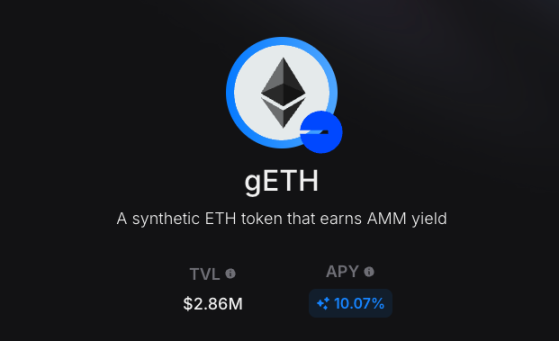
Gamma Swap's yield tokens are a newer product, creating unique derivatives on top of AMMs. Its new yield tokens symbolize the derivatives paradigm of DeFi's new Baroque era: utilizing borrowed Uni V3 positions, yield tokens have a similar underlying exposure to spot, unaffected by impermanent loss from AMM LP tokens.
These tools are about to unleash composability: through cross-application integration (such as listing on Euler or Morpho money markets), and the inevitable Pendle listing, we will have excellent unique vehicles for expressing ETH exposure.
Fixed-rate single-asset AMM V3 liquidity pools earning ETH collateral—indeed, the Renaissance has ended…
Options come in various forms: Time Swap's V3 also excites me—introducing time-bound tokens, providing extensive functionality for YT/PT (yield tokens / principal tokens) through tokenization of time periods. This has multiple advantages over the current yield tokenization systems: enhancing capital efficiency, reducing fragmentation, and increasing flexibility in yield trading.
Impermanent Loss Terminators
Regarding new tools, DeFi's next innovation on AMMs comes from Yield Basis—transforming crypto assets into productive yield-generating tools through unique leverage hedging.
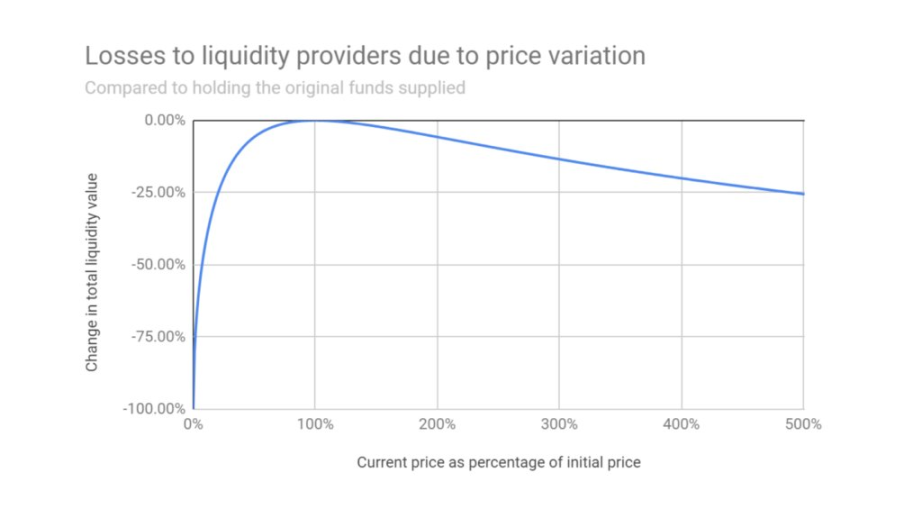
Impermanent loss is an inherent characteristic of the AMM mechanism
In a traditional AMM, if you provide $10,000 wBTC and $10,000 USDC, when the BTC price doubles, the final asset will not double (because the position grows according to the xy=k formula with the √BTC price ratio). However, if you collateralize wBTC to borrow $10,000 to form an LP position, and dynamically rebalance to ensure that the debt ($10,000) always accounts for 50% of the collateral ($20,000), and automatically adjust the debt according to a 50% collateral ratio when the BTC price changes, the total value of the position can grow proportionally with the BTC price.
Yield Basis uniquely employs crvUSD to enhance practicality, and more importantly, grants control over interest rates.
The key point lies in the rebalancing mechanism: re-leveraged AMMs offer LP tokens to arbitrageurs at a slight discount, allowing arbitrageurs to add crvUSD to reduce debt and adjust position size. Similarly, when prices rise, re-leveraged AMMs offer crvUSD to LP token depositors at a premium, enabling arbitrageurs to increase their BTC holdings to restore a 2x leveraged position.
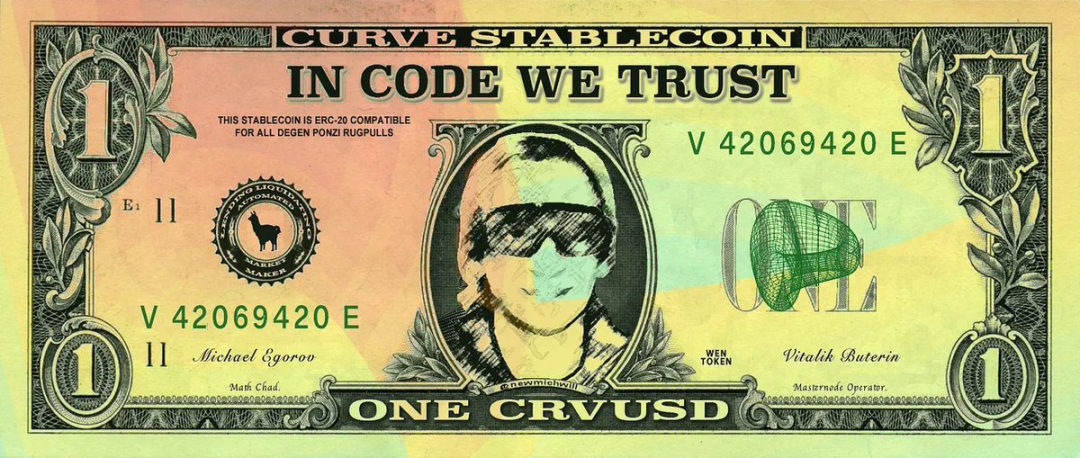
ybBTC brings much-needed innovative yield solutions for BTC, with simulations from Curve founder Michael Egorov indicating a bright future for ybBTC. For me, double-digit yields would be considered a success—though if deposits reach billions, the degree of yield dilution remains uncertain (it would then be a huge victory for Yield Basis, Curve Finance, and all on-chain BTC traders).
Funding Rate Products
Funding rates have become the most interesting tool for enhancing yields using delta-neutral positions. With the funding rates of altcoins soaring (especially high-demand assets like HYPE, FARTCOIN, PUMP, etc.), the basic trade of buying spot and shorting perpetuals has become one of the best opportunities of this cycle. The aforementioned Ethena, Resolv, and even Liminal are all leveraging this point to provide yield tools.
Boros, launched by Pendle, is another innovator in this field, introducing a new type of derivative tool for trading funding rate yields: going long on funding rates requires paying a fixed rate but receiving the market's floating funding rate, and vice versa for going short.
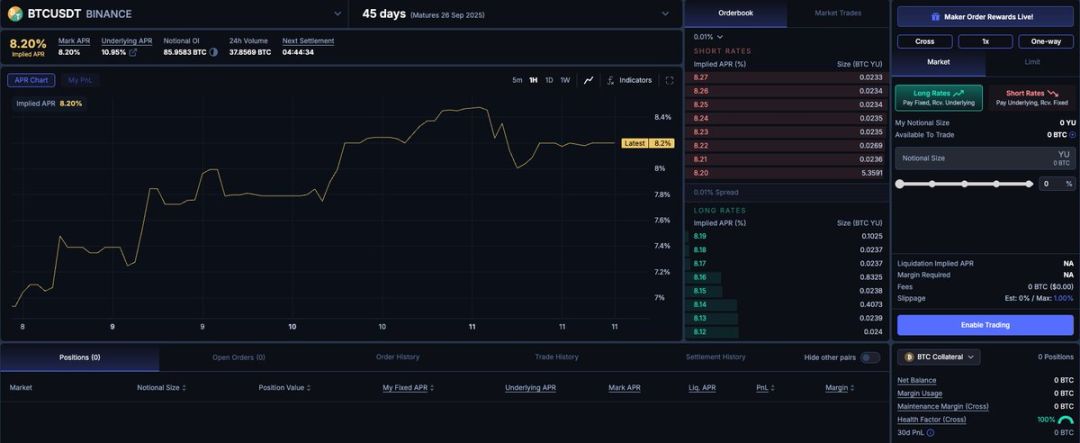
Boros opens up new possibilities: locking in fixed funding rates is significant for VCs, funds, traders, and protocols like Ethena/Resolv, as they can secure yields over a period of time. This will give rise to more composable strategies (including fixed-rate markets).
Where to Next?
The above is just a glimpse of some astonishing innovations present in today's DeFi world. The pace of development is unprecedented, with teams continually learning and evolving from industry challenges to create truly powerful products. The vast majority of these are driven by derivatives, once again highlighting the characteristics of the new era of DeFi. Derivatives will elevate DeFi to new heights—first breaking through the previous cycle's peak TVL and ultimately reaching trillions of dollars (seven times the current scale).
These protocols have only revealed the tip of the iceberg of their potential. In the next 6 to 12 months, they will stand shoulder to shoulder with existing giants (AAVE, Uniswap, Lido, etc.), pushing the industry to new heights.
As DeFi continues to evolve and mature, there are still many interesting markets to be developed: on-chain forex markets, Sharia-compliant DeFi, fixed-rate money markets, under-collateralized solutions, privacy schemes, and more. These areas will transition from niche to mainstream, while existing fields (especially derivatives) will move from mainstream to dominate the entire financial market.
It is certain: DeFi has entered the Baroque era, and the future will only be more exciting.
Click to learn about job openings at ChainCatcher
Recommended reading:
Vitalik's latest interview: The path of Ethereum's world ledger and development ideas in the AI era
Ten years since Ethereum's genesis: Major decisions of life and death
 Risk warning
 Risk warning