








Morning Report | Strategy invested $1 billion to increase its Bitcoin holdings last week; Aave passed a $25 million grant proposal; Coinone was shut down and fined for violating anti-money laundering obligations
 Overview of Important Market Events on April 13
整理:ChainCatcher
Important News:
- Polkadot bridge vulnerability exploited, 1 billion DOT minted and sold on the Ethereum network
- Chen Weimin: The timeline for the second batch of licenses has not yet been determined, and the total number of future licenses will be very limited
- Aave DAO passes Aave Labs $25 million grant proposal
- Circle signs comprehensive memorandum of understanding with Upbit's parent company Dunamu to collaborate in areas such as stablecoins
- Korean exchange Coinone partially suspended for 3 months due to violations of anti-money laundering obligations, fined approximately $3.56 million
- Strategy spent $1 billion last week to increase its holdings by 13,927 bitcoins
- BitMine increased its holdings by 71,524 ETH last week, raising total holdings to 4.875 million
What important events occurred in the past 24 hours?
Strategy spent $1 billion last week to increase its holdings by 13,927 bitcoins
According to ChainCatcher, Strategy bought back 13,927 BTC last week at an average price of about $71,900 per coin, costing approximately $1 billion, with a YTD BTC yield of 5.6% as of 2026.
As of April 12, 2026, Strategy holds a total of 780,897 BTC, with a total cost of approximately $59.02 billion and an average holding price of about $75,577 per coin.
According to ChainCatcher, Korean media Edaily reported that the Financial Intelligence Unit (FIU) of Korea determined that cryptocurrency exchange Coinone violated obligations under the Specific Financial Information Act after completing an on-site inspection, deciding to impose a 3-month partial suspension and a fine of approximately $3.56 million (5.2 billion Korean won), with the suspension period from April 29 to July 28. During the suspension, new customers are restricted from transferring virtual assets externally (deposits and withdrawals), while existing customers can continue trading normally. Additionally, the FIU issued a "warning reprimand" to Coinone's CEO, Cha Myung-hoon.
The FIU stated that Coinone assisted 16 unregistered foreign virtual asset businesses in completing 10,113 asset transfer transactions in violation of regulations, and failed to cooperate after being repeatedly requested by regulatory authorities to stop related transactions; there were approximately 40,000 violations in customer identity verification, including accepting unverifiable documents and reviewing incomplete address information; and approximately 30,000 violations in transaction restriction obligations, involving allowing transactions for users whose identity verification had not been completed. Coinone stated it takes this reprimand seriously and is working on rectification, and whether to file an administrative lawsuit will be decided after careful consideration by the board.
BitMine increased its holdings by 71,524 ETH last week, raising total holdings to 4.875 million
According to ChainCatcher, Bitmine announced today that its total cryptocurrency, cash, and "moon landing plan" holdings amount to $11.8 billion. As of 3:30 PM Eastern Time on April 12, 2026, the company's cryptocurrency holdings include:
- 4,874,858 ETH
- 198 bitcoins
- $200 million investment in Beast Industries
- $85 million investment in Eightco Holdings (NASDAQ: ORBS)
- And $719 million in cash.
Bitmine's ETH holdings account for 4.04% of the total ETH supply (120.7 million ETH).
Bitmine Chairman Thomas "Tom" Lee stated, "The Iran war has entered its seventh week, and this war remains the most important driver of the global market. ETH has risen 17.4% since the war began, outperforming the S&P 500 index by 1830 basis points, making it the best-performing asset. We believe ETH outperforms gold, proving that ETH is a wartime store of value."
"Ethereum continues to benefit from two major tailwinds: Wall Street's tokenization on the blockchain and the growing demand for public neutral blockchains from proxy AI systems," Lee continued. "Bitmine has maintained an accelerated pace of ETH purchases every week for the past four weeks, as our fundamental judgment is that ETH is in the final stage of a 'mini cryptocurrency winter.' In the past week, we acquired 71,524 ETH, the highest purchase rate since the week of December 22, 2025," Lee stated.
According to ChainCatcher, Circle CEO Jeremy Allaire stated that Circle would not freeze USDC wallets unrelated to legal proceedings.
At a press conference in Seoul, South Korea, on Monday, Allaire responded to ongoing online criticism regarding whether the company should freeze USDC funds in connection with the hacking and vulnerability incident. The controversy became more pronounced earlier this month: the decentralized finance protocol Drift suffered an attack of approximately $280 million, believed to be related to a six-month-long attack executed through complex social engineering, possibly involving a North Korean hacker organization.
Notable on-chain analysts, including ZachXBT, publicly criticized Circle for failing to freeze approximately $230 million in USDC funds, which were reportedly transferred from Solana to Ethereum via Circle's cross-chain transfer protocol.
According to ChainCatcher, News1 reported that stablecoin issuer Circle has partnered with Dunamu, the operator of South Korea's largest virtual asset trading platform Upbit, to collaborate in the field of digital assets, including stablecoins.
Dunamu stated that it has signed a comprehensive memorandum of understanding (MOU) with Circle and is discussing collaboration plans in the digital asset field, including jointly promoting educational projects. This move aims to enhance market participants' access to information, thereby increasing trust in South Korea's digital asset ecosystem.
In particular, Dunamu plans to promote "healthy innovation" in the South Korean digital asset market by collaborating with Circle, which has consistently complied with U.S. regulations and continues to expand its business.
Polkadot bridge vulnerability exploited, 1 billion DOT minted and sold on the Ethereum network
According to ChainCatcher, monitoring by the shield indicates that 1 billion DOT tokens were anomalously minted and sold on the Ethereum chain.
On-chain data shows that about an hour ago, attackers exploited administrator privileges to transfer contract control to a malicious address, subsequently minting 1 billion DOT and immediately selling it, causing the coin price to plummet from $1.22 to nearly zero.
The incident is still unfolding, and Polkadot officials have yet to respond. The attack targeted bridging assets on Ethereum, not the native Polkadot chain.
According to ChainCatcher, Josh Swihart, founder of the Zcash core development team Zcash Open Development Lab (ZODL), released the latest developments of Zcash, proposing a strategic direction centered on "post-quantum security, scalability, and user experience," using the Artemis II lunar mission as a metaphor to emphasize achieving seemingly impossible goals through technological breakthroughs. The ZODL team stated that Zcash is entering the "Zcash IV" phase, aiming to build infrastructure similar to a "moon base" to support the protocol and application security scalability to billions of users while promoting the vision of privacy transactions without large-scale financial surveillance.
On the product and technology front, ZODL continues to iterate, with its 3.3.x version now launched on iOS and Android, adding hardware wallet connection management, SDK upgrades, and multiple experience optimizations, while advancing key developments such as Keystone wallet functionality and address system upgrades (ZIP 316, UIVK/UFVK). Meanwhile, the Zcash core team has fixed multiple system issues and is advancing the development of the Zallet alpha version, while strengthening unified address standards and wallet interaction experiences to lay the foundation for future scalability and performance improvements.
Additionally, ZODL disclosed that its application data continues to grow and participated in the stablecoin privacy summit to strengthen industry collaboration. However, due to regulatory and network restrictions, ZODL has temporarily removed its application from Russian app stores. The team emphasized that privacy is not optional but a fundamental need in the digital age, and it will continue to accelerate delivery pace to promote ZEC adoption and ecosystem development.
According to ChainCatcher, Yi Lihua, founder of Liquid Capital (formerly LD Capital), stated that peace negotiations typically move from divergence to consensus, and the motivation for continued war among all parties is weakening under the current situation, with conflicts likely moving towards an end. "I still insist that the war will end; neither side has any reason to continue fighting. The moment an agreement is reached will be a bullish signal."
He pointed out that in the medium to long term, the market is generally waiting for a potential large-scale financial crisis, with signs of defensive positioning emerging on the funding side, such as large capital holding a high proportion of cash and sovereign levels increasing gold holdings. Against this backdrop, if a crisis occurs again, it will be a key moment to test whether Bitcoin possesses safe-haven asset properties, and it may also present significant low-position allocation opportunities.
Additionally, Yi Lihua believes that AI technology is bringing a new round of opportunities for outstanding entrepreneurs, allowing a few teams to create global products, reducing financing and organizational management costs, especially experienced serial entrepreneurs should seize this "AI Age of Exploration."
JPMorgan will expand JPM Coin to the Canton network this year through Kinexys
According to ChainCatcher, Cointelegraph reported that JPMorgan will expand JPM Coin to the Canton Network this year through Kinexys, which currently processes over $350 billion in U.S. Treasury repurchase settlements daily.
SoftBank, NEC, Honda, and Sony jointly establish a new company to develop domestic AI
According to ChainCatcher, Japanese media reported that four companies, including SoftBank, NEC, Honda, and Sony Group, have established a new company for artificial intelligence (AI) development. The company will utilize support from the Japanese government to create a domestic AI foundational model, with plans to provide the developed AI to Japanese companies.
The company is named "Japan AI Foundational Model Development," planning to gather about 100 AI developers, with the president's position held by an executive from SoftBank. In addition to these four, major banks such as Nippon Steel, Kobe Steel, Mitsubishi UFJ Bank, Sumitomo Mitsui Banking Corporation, and Mizuho Bank are also participating in the funding. SoftBank and NEC will handle development, while Honda will apply the results to autonomous driving. AI development company Preferred Networks (Tokyo) is also involved. The developed AI will also be widely available to Japanese companies outside of the funding enterprises, with future plans to venture into AI for controlling robots.
According to ChainCatcher, Tencent News reported that Chen Weimin, Vice President of the Hong Kong Monetary Authority, stated that the timeline for the issuance of the second batch of licenses has not yet been determined, as it needs to be "based on the operational status of the first two companies," and the total number of future licenses will be very limited.
Additionally, sources revealed that Chinese institutions that participated in the application submission have received "window guidance" from relevant departments, requesting them to postpone participation in this stablecoin license application, but some Chinese institutions have continued to communicate with the Hong Kong Monetary Authority over the past few months. After excluding Chinese institutions, the vast majority of proposed applicants have limited strength, and the number of qualified institutions that can fully meet the requirements of the Stablecoin Ordinance is not many.
Li Guankang, the head of Payme at HSBC, which received a license, stated that any Payme user can open a stablecoin account, where users can directly transfer to friends and family, transfer to merchants, or invest in stablecoin-linked products. Users in the HSBC app cannot open accounts directly and must wait for HSBC to screen eligible users before applying for a stablecoin account.
Payme account opening has required users to be local residents of Hong Kong, while users of the HSBC app also include mainland users. Under the existing management framework in Hong Kong, only local residents can participate in virtual asset trading, and mainland customers, even if they are mobile payment users of HSBC in Hong Kong, cannot apply for stablecoin accounts.
According to ChainCatcher, the consolidated audit report of NXC, the parent company of Korean gaming giant Nexon, shows that as of the end of 2025, NXC's holdings in crypto assets amounted to 147.6 billion Korean won, including 2,356 bitcoins and 22,400 ethers, a decrease of 15.2% from the previous year's 174 billion won. NXC has sold its shares in Bitstamp and excluded it from its subsidiaries.
Additionally, NXC decided to dispose of all its shares in Korbit through a board resolution in February this year. Meanwhile, NXC acquired shares in European industrial solutions company CLI Group through its subsidiary NXMH in February this year to promote business diversification.
Aave DAO passes Aave Labs $25 million grant proposal
According to ChainCatcher, Aave DAO passed Aave Labs' first binding proposal under the Aave Will Win framework on Sunday. The proposal received support from 522,780 AAVE and opposition from 175,310 AAVE, with a support rate of about 75%. According to the voting results, Aave Labs will receive a $25 million stablecoin grant, which includes an immediate allocation of 5 million aEthLidoGHO and a total of 20 million aEthLidoGHO liquidity payments distributed over 6 months and 12 months.
Additionally, Aave DAO will allocate 75,000 AAVE (approximately $6.8 million) from the ecosystem reserve, which will be unlocked linearly over 48 months. The Aave Chan Initiative cast 166,200 AAVE in opposition. Support votes came from addresses like ParaFi Capital (190,000 AAVE) and luggis.eth (123,580 AAVE). Fund execution is scheduled for Monday afternoon, at which point the funds will begin flowing to the Aave Labs controlled address.
According to ChainCatcher, in an interview, Mike Selig, Chairman of the U.S. Commodity Futures Trading Commission (CFTC), stated that the CFTC has "exclusive regulatory authority" over predictive markets, and states cannot replace federal derivatives regulation with state laws. Mike Selig emphasized, "Whether the underlying involves sports, politics, or other fields, as long as the products are legally provided by CFTC-regulated trading platforms, they fall under our jurisdiction." This statement comes as the CFTC sues Arizona, Illinois, and Connecticut to solidify its regulatory dominance over predictive markets.
Selig stated that the CFTC is clarifying the regulatory details of predictive markets through formal rule-making procedures and welcomes suggestions from all sectors regarding the evaluation process. In addition to predictive market disputes, Selig also mentioned the final draft of digital asset classification guidelines jointly released by the CFTC and SEC last month, which delineated clear boundaries between tokenized securities and commodities. In the future, if companies wish to self-certify digital asset futures products, regulatory agencies can directly determine the nature of tokens based on that classification framework, ensuring that the two agencies' positions are aligned.
Meme Popularity Rankings
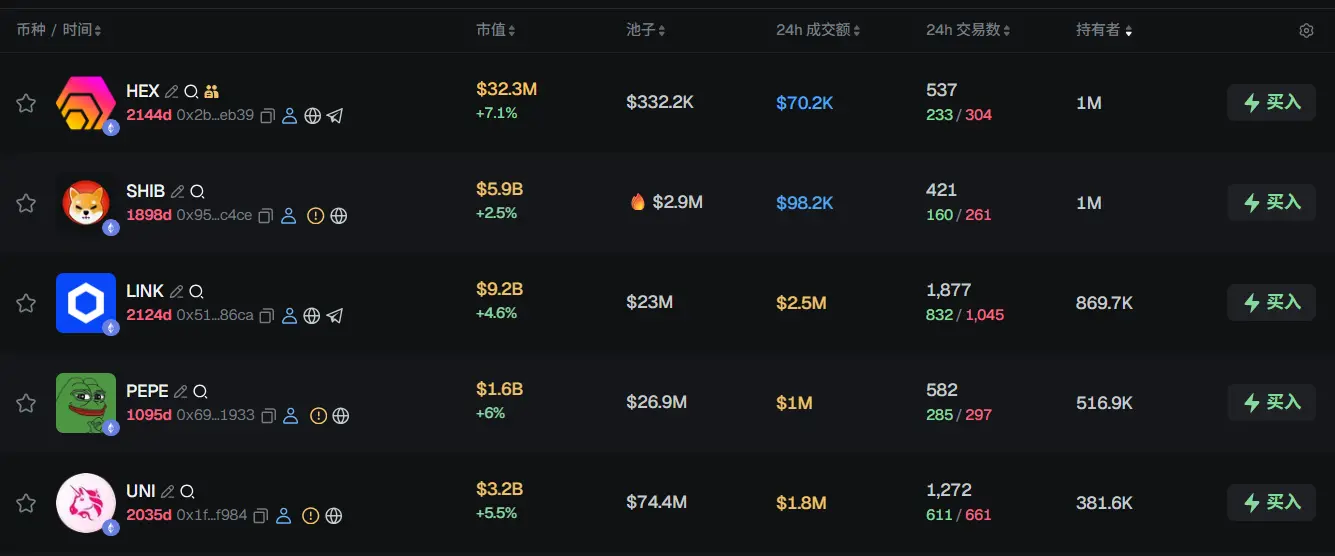
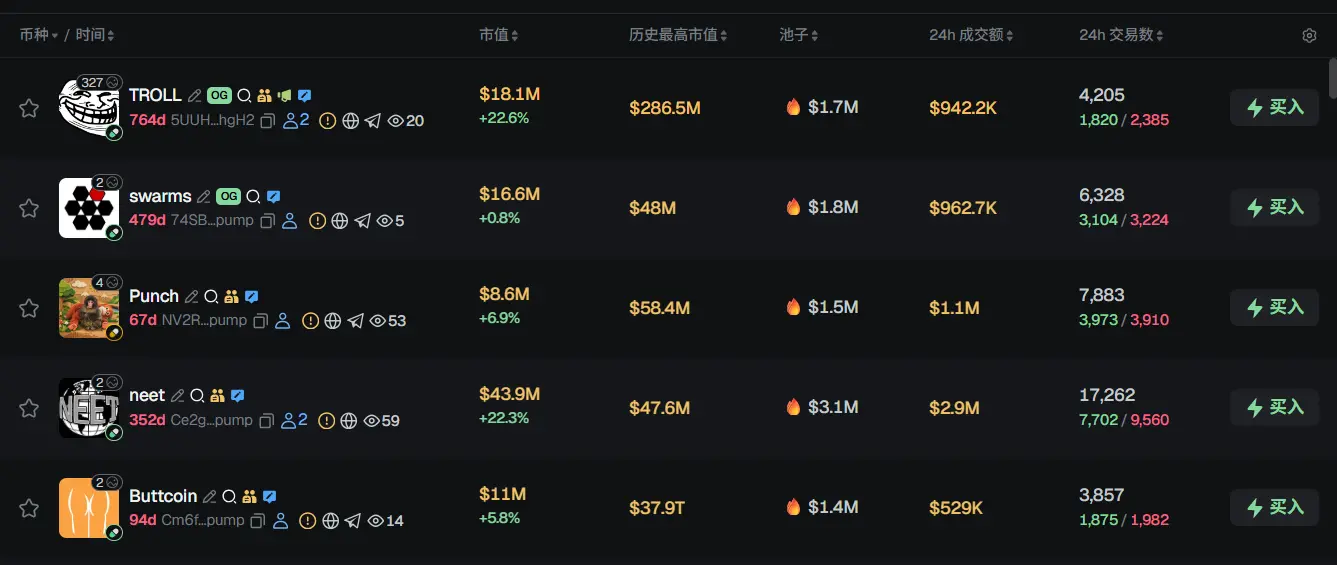
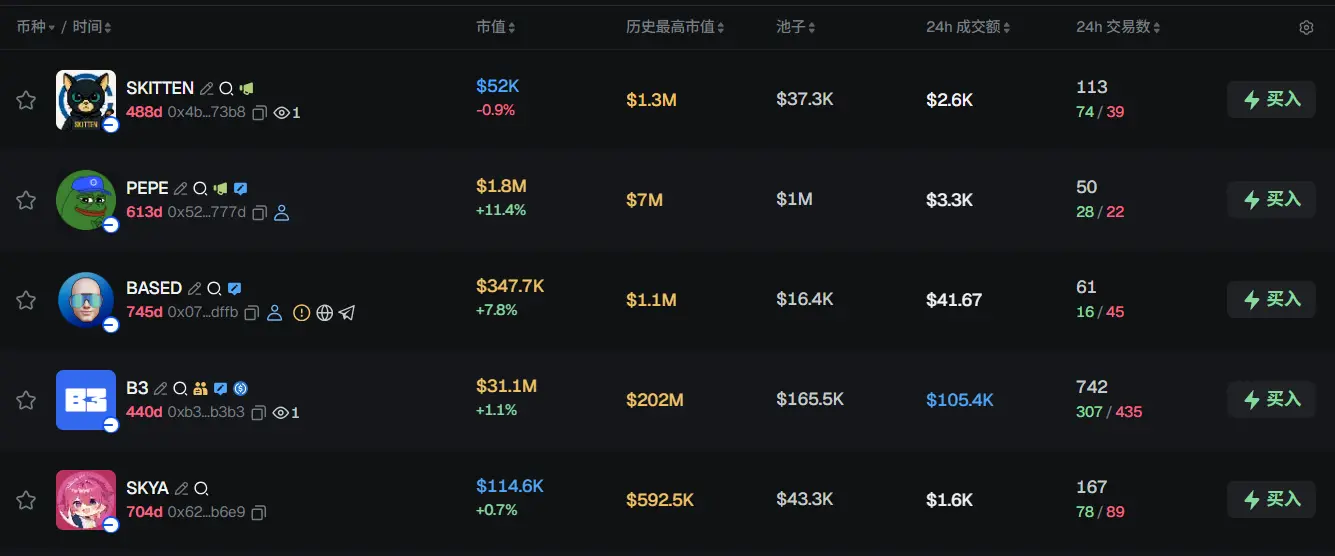
According to meme token tracking and analysis platform GMGN market data, as of April 14, 09:00,
The top five popular ETH tokens in the past 24 hours are: HEX, SHIB, LINK, PEPE, UNI
The top five popular Solana tokens in the past 24 hours are: TROLL, swarms, Punch, neet, Buttcoin
The top five popular Base tokens in the past 24 hours are: SKITTEN, PEPE, BASED, B3, SKYA
What are some interesting articles worth reading in the past 24 hours?
Reflections and Confusions of a Crypto VC
As the tide recedes, crypto VCs face a life-and-death test. The bubble of blindly inflated tokens has been burst, and the industry's valuation logic has returned to real revenue. Faced with increasingly savvy retail investors and dried-up liquidity, VCs that only throw money are destined to be eliminated. To stay at the table, venture capital firms must prove to founders: besides money, what else can you bring?
1 billion DOT minted out of thin air, but the hacker only made $230,000
On April 13, Beijing time, on-chain monitoring platforms issued alarms: abnormal minting of Polkadot bridging assets on the Ethereum network occurred.
According to CertiK analysis, the attacker submitted a carefully crafted cross-chain request to the Ethereum side's HandlerV1 contract via Hyperbridge's ISMP protocol, along with a historically accepted real MMR proof, successfully bypassing the verification mechanism.
BlockSec Phalcon subsequently issued a technical alert, characterizing the vulnerability as an MMR proof replay vulnerability. According to their analysis, the root of the vulnerability lies in the replay protection of the HandlerV1 contract, which only verifies whether a certain request's hash has been used before, but the proof verification process does not bind the submitted request payload to the verified proof.
The era of "mass distribution" in public chains has ended
The L1 Grant (ecosystem funding) model has failed. Not in the sense of "requiring fine-tuning," but in a complete failure structurally, conceptually, and in terms of motivational consistency.
The L1 teams running these projects are either "blinded by their own involvement" or too worried about the negative impact of halting to dare to admit it.
Surging 50 times, FDV exceeding $10 billion, why RaveDAO?
Amid ongoing fluctuations in the crypto market, a project named RaveDAO has created an atypical miracle for altcoins: its token RAVE surged nearly 50 times in a week, with FDV exceeding $10 billion, becoming one of the hottest topics
 Risk warning


Popular articles





