Global RWA Industry Development Analysis Report (August 2025)

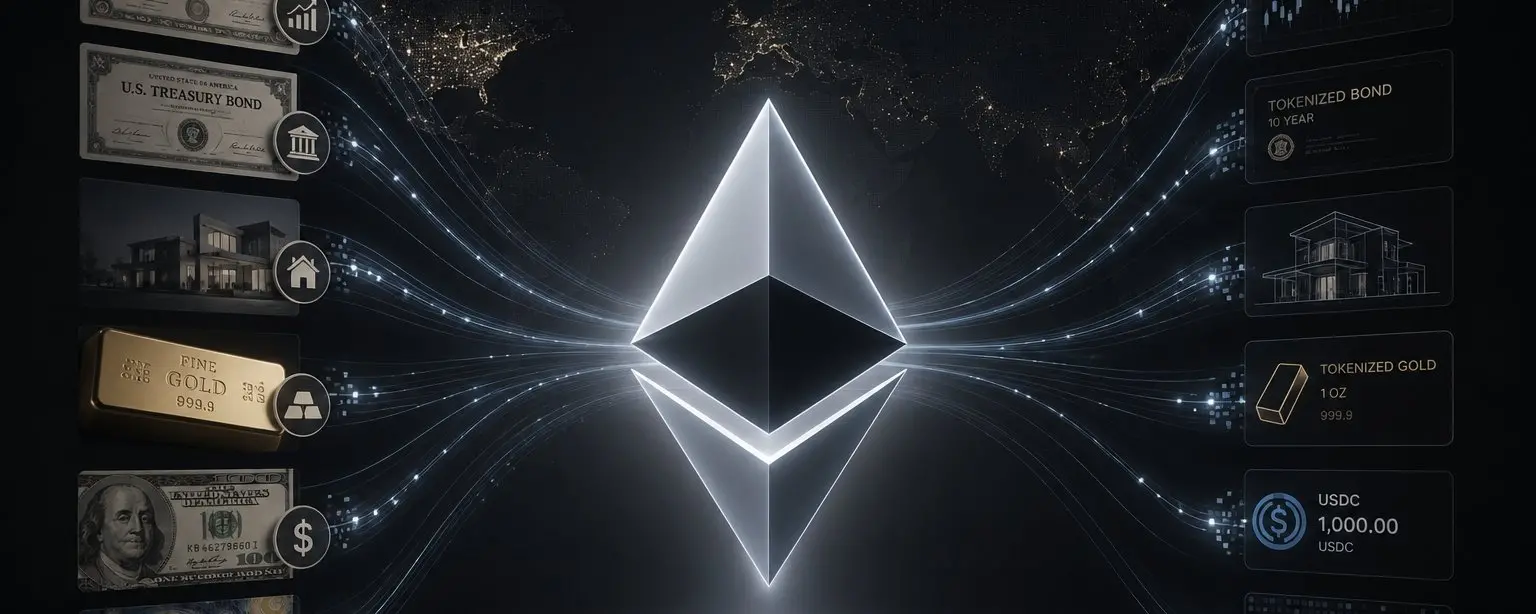
 This report was published by Synbo Labs in August 2025, focusing on the current status and trends of on-chain RWA (Real World Assets) tokenization.
Publishing Institution: Synbo Labs
Release Date: August 25, 2025
Data Period: Up to August 2025
Based on data from August 2025, monthly updates will be provided to ensure timeliness.
Abstract
This report, published by Synbo Labs in August 2025, focuses on the current state and trends of on-chain RWA (Real World Assets tokenization).
As of August 2025, the total scale of on-chain RWA is approximately $26.59B, with tokenized government bonds and money market funds contributing the main increments, becoming the "risk-free yield" anchor on the DeFi side. Leading products such as BlackRock (BUIDL), Franklin Templeton (Benji), and Ondo Finance dominate the market, pushing RWA into the "institutional adoption + regulatory evolution" phase.
In terms of the macro environment, the high interest rate cycle enhances the on-chain attractiveness of government bonds/money market funds, while regulations and infrastructure (such as MiCA, Hong Kong's digital green bond pilot, on-chain KYC, Chainlink oracles) are gradually maturing, reducing friction for institutional entry. At the same time, regulatory implementation and secondary liquidity remain key risk points for the industry.
The competitive landscape shows a "dual-driven" approach: traditional asset management giants promote standardized products, while native protocols explore new tracks such as private credit, receivables, real estate, and carbon credits. In the short term, tokenized funds/bills will form a deep coupling with stablecoins; in the medium term, it will expand to index and structured RWA; in the long term, it is expected to become the underlying asset and liquidity anchor of on-chain capital markets.
Synbo's viewpoint: RWA is not only about "asset on-chain," but also a combination of regulatory compliance + programmable finance, which will reshape the entire on-chain process of issuance, settlement, collateralization, and clearing. Its growth potential combines a high certainty base (government bonds/funds) + multi-track scalability (credit/real estate/securities/carbon credits), suggesting institutional allocation and continuous tracking.
1. Key Points Overview
- Market Snapshot (2025.08): The total scale of on-chain RWA is approximately $26.59B, with the quarterly increment mainly coming from tokenized government bonds and money market funds.
- Core Positioning: RWA is gradually becoming a key bridge between TradFi and DeFi. Under the "dual-driven" approach of traditional asset management giants and native protocols, TVL and product forms are expanding simultaneously.
- Main Tracks: Tokenized U.S. Treasuries and money market funds continue to serve as "risk-free yield" anchors; private credit is still in the stage of refining risk control and legal structures; sovereign bonds, stocks, and gold assets are steadily advancing, gradually penetrating DeFi as collateral and portfolio assets.
- Institutional Benchmark: BlackRock's BUIDL TVL is approximately $2.5--3.0B; its sBUIDL launched through Securitize has already accessed DeFi collateral scenarios, further strengthening "yield + composability."
- Regulatory Progress: The EU's MiCA is being implemented in phases; Hong Kong has completed the issuance of multi-currency digital green bonds and continues to promote tokenization pilots; discussions on institutional pathways for stablecoins and tokenized assets in Europe and the U.S. are accelerating. The resonance between regulations and infrastructure is reducing friction for institutional entry.
- Key Risks (to watch closely): Regulatory implementation and secondary liquidity are the two "lifelines" determining whether products can achieve institutionalization in the short term.
- Action Recommendations (Priority):
- Improve due diligence templates for issuers and custodians;
- Pre-set liquidity arrangements (such as market-making/repurchase mechanisms);
- Connect standardized data interfaces (disclosure and third-party tracking) to support compliance and institutional-level access.
2. Industry Overview and Market Size
2.1 Market Structure
RWA has transitioned from the "experimental phase" to the "institutional adoption" stage. Currently, on-chain yield-bearing assets (such as U.S. Treasuries, money market funds, short-term bond funds) have become the main entry points. The entry of BlackRock and Franklin Templeton, along with product upgrades (such as the "intraday yield" feature of the Benji platform), highlights the systemic investment of traditional asset management institutions.
2.2 Scale Observation
- According to DefiLlama data cited in some industry articles, the TVL related to RWA was approximately $11 billion in April 2025.
- Other research (excluding stablecoins) estimates that the total scale of RWA was approximately $24 billion in June 2025, representing a growth of +380% compared to 2022. The difference mainly stems from methodological variations (whether to include tokenized funds, whether to include money market-like/short-term bonds/certificates of deposit, etc.).
- Industry news indicates that leading single products hold a high market share, for example, BUIDL occupies the vast majority of the tokenized U.S. Treasury market.
2.3 Global Data Snapshot (as of August 22, 2025)
- The total scale of on-chain RWA (including stablecoins) is approximately $26.59B, with a month-on-month growth of +5.17%; the number of issuers is 267, and the number of holding addresses is 367,265 (data source: RWA.xyz real-time dashboard).
- The locked scale of tokenized government bonds/cash-like assets is approximately $7.43B, with a growth of about +2% over the past week.
- Progress of leading products:
- BlackRock BUIDL: As of July 2025, AUM is approximately $2.7B, and it has achieved multi-chain expansion.
- Franklin Templeton BENJI: AUM is approximately $706.73M (as of July 31).
- Ondo Finance: Total scale of USDY/OUSG exceeds $650M; OUSD TVL exceeds $1.3B; OUSG's market scale on the XRP Ledger is approximately $629--670M.
- Dominant Asset Type Proportions:
|-----------------------------|-----------|-----------| | Asset Type | Value (USD) | Proportion | | Private Credit | $14.7 B | 55% | | Tokenized Treasuries | $7.43 B | 28% | | Commodities | $1.3 B | 5% | | Tokenized Equities | $0.5 B | 2% | | Others (art, letters of credit, carbon credits, etc.) | $0.1 B small | Almost negligible in total |
2.4 Interpretation Summary
- Tokenized government bonds and money market funds continue to perform strongly, driving the overall growth of on-chain RWA scale.
- Star products like BUIDL, BENJI, and Ondo have accumulated significant AUM, dominating the government bond asset class and further increasing the proportion of this sub-class in the RWA market.
- Exchanges and brokerages are accelerating the testing of securities and equity tokenization products, laying the groundwork for richer product scenarios in the next quarter.
3. Historical Timeline
- 2023: Early tokenized short-term government bonds/money market products began to emerge, with multiple teams conducting technical and compliance experiments.
- 2024: Native platforms and traditional asset management began to launch more standardized tokenized money market fund/government bond products.
- 2024--2025: BlackRock, Franklin, Ondo, etc., are pushing the track into a scaling development phase (multiple AUM disclosures and expansion actions).
- Q1--Q2 2025: Short-term government bonds become the main growth driver; regional pilots (Dubai/Singapore) accelerate the demonstration.
- Q3 2025 (current): The industry enters a phase of "scaling and compliance," with regulatory and liquidity issues becoming core concerns.
 4. Macroeconomic Environment (PEST)
 - Policy / Regulation (P)
- The EU's MiCA has been phased in since its effectiveness in 2023, entering the implementation phase for stablecoin and service provider licensing, but still requires refinement in areas like DeFi and on-chain credit.
- Hong Kong issued approximately HKD 6 billion in multi-currency digital green bonds in 2024, achieving an end-to-end process of "tokenization + settlement," becoming a compliance model in Asia.
- At the international level, the legal framework for stablecoins and tokenized assets is still evolving, with regional competition and policy opportunities coexisting.
- Economy (E)
- In a high interest rate cycle, the attractiveness of risk-free yield assets has significantly increased. Tokenized government bonds and money market funds have become the main "parking space" for on-chain funds, while also receiving institutional supply support.
- Technology (S)
- Compliance issuance and KYC infrastructure (such as Securitize), reserve proof oracles (Chainlink), and the composability of the Ethereum ecosystem collectively build a "compliance + programmability" tech stack.
- Ethereum continues to dominate the non-stablecoin RWA space, while multi-chain ecosystems gradually supplement low-cost and cross-border applications.
- Society / Users (T)
- Institutional and qualified investors' acceptance of "on-chain programmable yields" continues to rise.
- Retail investors are more likely to access through secondary product packaging and tiered compliance thresholds, gradually forming a "driven by institutions + penetration by retail" dual structure.
5. Ecosystem and Competitive Landscape
In the on-chain RWA ecosystem, different roles collaboratively build a complete value chain: First, institutional issuers (TradFi) such as BlackRock (BUIDL), Franklin Templeton (FOBXX/BENJI), and other large asset management companies primarily issue tokenized government bonds, money market funds, and fund shares. Their core advantages lie in funding and compliance capabilities, typically bringing traditional assets on-chain through SPVs (special purpose vehicles) or custodial mechanisms.
Secondly, native tokenization platforms such as Ondo Finance, Securitize, and other specialized teams focus on tokenized U.S. Treasuries, short-term government bonds, and fund shares. Their key role is to provide one-stop support from issuance, custody to secondary trading and market-making, bridging traditional institutions and on-chain markets.
In terms of compliance and risk control, custodial, clearing, and auditing institutions (such as BNY Mellon and other bank custodians, the Big Four, and large law and auditing firms) play a foundational role. For institutional investors, reliable custodial arrangements and legal frameworks are prerequisites for participating in RWA.
At the same time, data and oracle providers (such as RWA.xyz, Chainlink, and other valuation and reconciliation service providers) offer transparency and reliability to the market through standardized data interfaces, multi-source valuation, and reconciliation mechanisms, directly affecting the valuation credibility and audit compliance of RWA products.
In the liquidity segment, secondary trading and market-making parties, including centralized exchanges, professional market makers, and decentralized trading protocols, determine the liquidity depth and redemption elasticity of tokenized assets, thereby influencing investors' willingness to participate.
Finally, regional promoters (such as local governments in the UAE and compliance agencies in Singapore) accelerate the tokenization pilot of real estate and fund assets through policy support and demonstration projects. The proactive promotion by these local governments significantly lowers the entry threshold and provides replicable compliance samples for the world.
|--------------------|---------------------------------------------------------|------------------|---------------------------| | Role | Representative Organizations / Projects | Typical Asset Types | Key Capabilities / Notes | | Institutional Issuers / TradFi | BlackRock (BUIDL), Franklin Templeton (FOBXX/BENJI), Large Asset Management | Tokenized Government Bonds, Money Market Funds, Fund Shares | Strong funding and compliance capabilities, tend to go on-chain through SPV / custodial | | Native Tokenization Platforms | Ondo Finance, Securitize, Other Specialized Platforms | Tokenized U.S. Treasuries, Short-term Government Bonds, Fund Shares | Provide issuance, custody, secondary trading, and market-making support | | Custody / Clearing / Auditing | Bank Custodians (BNY, etc.), Big Four/Large Law Firms, Audit Firms | Custody, Clearing, Legal Opinions, Auditing | Custody and legal frameworks are prerequisites for institutional participation | | Data and Oracle Providers | RWA.xyz, Chainlink, Other Data/Valuation Services | AUM Reports, Valuation Feeds, Reconciliation Interfaces | Data standardization and multi-source oracles determine valuation reliability | | Secondary Trading and Market-making | Centralized Exchanges, Professional Market Makers, Decentralized Trading Protocols | Secondary Liquidity | The maturity of the secondary market determines product attractiveness and redemption elasticity | | Regional Promoters | Local Governments in the UAE, Compliance Agencies in Singapore | Real Estate, Fund Pilots | Local policy promotion can significantly lower entry barriers and catalyze sample projects |
In the RWA track, leading and emerging participants are mainly divided into three categories:
The first category is the core promoters of tokenized U.S. Treasuries and funds. BlackRock (BUIDL/sBUIDL), Franklin Templeton (Benji and tokenized money market fund products), and Ondo Finance (OUSG, USDY, and has expanded to multi-chain such as XRPL and Sei) constitute the dominant force in this field. These products, based on low-risk, compliant, and replicable government bonds and money market funds, have become the main entry point for on-chain funds.
The second category is explorers in the credit and receivables track. Projects like Maple, Clearpool, Goldfinch, and TrueFi are working to build an on-chain private credit market. Their TVL and risk control frameworks are still evolving, attempting to solve transparency and recovery issues for credit assets through whitelisting, risk layering, and diversified collateral mechanisms.
The third category is infrastructure platforms providing underlying support. Representative projects include Centrifuge (integrated infrastructure covering issuance, management, and investment, with TVL exceeding $1 billion), Securitize (focusing on compliance issuance and KYC modules), and Chainlink (providing reserve proof and data feed services). These infrastructures provide indispensable support for asset on-chain, valuation reliability, and compliance implementation.
In the competitive landscape, the key points of the industry are mainly reflected in three aspects:
- Barriers to Entry: The design of legal structures (such as SPVs, trusts) and compliance issuance capabilities, as well as the closed-loop system of custody and clearing, constitute the basic threshold of the market.
- Substitution Threats: Traditional brokerages and asset management institutions directly promoting digitization may siphon off potential market share from on-chain protocols.
- Bargaining Game: A bilateral bargaining relationship forms between the upstream asset side (face interest rates and risk layering) and the downstream funding side (qualified investors and institutions), affecting the profit distribution and market positioning of protocols.
Latest Project Launch Statistics:
|--------------|-------|-------|---------|----------|----------|-----------------------| | Project Name | Country/Region | Asset Type | Launch Time | Current On-chain Scale | Main Chain | Notes | | Atlas Bonds | USA | Tokenized Government Bonds | July 2025 | $240 million | Ethereum | Issued in collaboration with Circle, targeting institutional investors | | GreenCarbonX | Brazil | Carbon Credits | August 2025 | $68 million | Polygon | Blockchain tracking of Amazon rainforest carbon sinks | | RealEstateFi | UAE | Real Estate | July 2025 | $110 million | Solana | Tokenization of commercial real estate in Dubai, allowing fractional investment | | LendAsia Pro | Singapore | Private Credit | July 2025 | $75 million | Ethereum | On-chain loans targeting small and medium enterprises in Southeast Asia | | CommodiChain | Australia | Commodities | August 2025 | $52 million | BSC | Tokenized iron ore trade settlement |
6. Regional Distribution
In terms of regional distribution, North America dominates the global RWA market, accounting for about 45%. The core asset types in this region are government bonds and private credit. The scale of tokenized government bonds in the U.S. continues to expand, while deep participation from institutions like Circle and Ondo further solidifies its leading advantage.
The European market accounts for about 25%, represented by carbon credits and real estate assets. Thanks to policies such as the EU ETS (Emissions Trading System), on-chain carbon credit products are accelerating growth, becoming a major highlight of RWA in the region.
The Asia-Pacific region accounts for about 20%, with dominant asset types including real estate and private credit. Singapore and the UAE are becoming regional demonstration centers, with rapid expansion of their on-chain real estate and loan businesses, attracting a large amount of compliant capital.
Latin America accounts for 7%, mainly focusing on the carbon credit market. Leveraging the Amazon rainforest carbon sink project, local on-chain carbon credit tokenization has made breakthroughs, forming a unique growth path.
Africa currently accounts for only 3%, with renewable energy bonds as the main pilot asset. The tokenization exploration of small-scale solar projects provides a preliminary sample for the region, demonstrating the potential of clean energy finance combined with blockchain, despite its limited scale. The specific distribution is shown in the table below:
|----|-----|----------|--------------------------------| | Region | Proportion | Dominant Asset Types | Growth Highlights | | North America | 45% | Government Bonds, Private Credit | The scale of tokenized government bonds in the U.S. continues to expand, with high participation from Circle and Ondo | | Europe | 25% | Carbon Credits, Real Estate | EU ETS policies promote the growth of on-chain carbon credits | | Asia-Pacific | 20% | Real Estate, Private Credit | Rapid growth of on-chain real estate and loan businesses in Singapore and the UAE | | Latin America | 7% | Carbon Credits | Growth driven by the Amazon rainforest carbon sink project | | Africa | 3% | Renewable Energy Bonds | Pilot tokenization of small-scale solar projects |
In terms of regional policies and infrastructure, different markets are showing their own characteristics and development paths.
The U.S. and Europe are promoting regulatory coordination for stock and fund tokenization. Due to the incomplete regulatory framework for licenses and information disclosure in the U.S., some platforms choose to launch related products in Europe first, taking advantage of the relatively clear rule system of the EU to test the waters.
In the Middle East, particularly in the UAE, the government's open attitude has made it an important pilot for tokenization practices. The rapid progress of tokenization for real estate and fund assets is exemplified by significant collaborations between DAMAC and MANTRA, covering integrated services for trading, clearing, and custody, driving the rapid formation of the regional ecosystem.
In Asia, Singapore continues to play a demonstrative role, leveraging its robust compliance infrastructure and deep institutional resources. Collaborations between emerging platforms like OpenEden and international banks like BNY further reinforce Singapore's position as a "compliance model" in the global RWA development.
7. Investment and Financing Dynamics
Institutional participation is continuously deepening. Traditional asset management companies and brokerages are constantly upgrading their tokenization tech stacks, while crypto-native funds are increasing their allocations to "RWA protocols + compliance infrastructure," gradually pushing the industry into a deeper stage of institutionalization.
In terms of typical cases:
- Ondo Finance's TVL has exceeded $1.3 billion and is continuously expanding its multi-chain layout while actively exploring collaborations with compliance channels;
- Centrifuge's TVL has surpassed $1 billion and has partnered with index institutions to launch tokenized index products, primarily targeting professional investors;
- Maple not only expanded its TVL in 2025 but also enriched its product matrix, attempting to conduct institutional credit experiments using crypto-native assets as collateral.
These cases show that the RWA track is gradually transitioning from "asset tokenization" to a new stage of "compliance, scaling, and diversification."
8. Business Models and Profit Logic
In the business model of RWA protocols, the core value proposition lies in combining "holding yields, liquidity, and programmability," providing investors with both returns and flexibility while significantly reducing settlement and operational costs.
In terms of revenue structure, the main sources of the protocol include three parts:
- Issuance, redemption, and management fees ------ Similar to traditional asset management businesses, fees are charged around fund inflows and asset custody;
- Protocol fees ------ Charged for management, redemption, and re-staking operations of the fund pool;
- Interest margin income ------ Especially in credit fund pools, income is generated through asset-side pricing and risk layering.
In terms of tokens and governance, some protocols (especially credit projects) capture protocol fees and re-staking income through governance tokens, while also assigning tokens a role in risk control and incentive mechanisms, making tokens not only a value capture tool but also an important governance vehicle for protocol operation.
9. Technology and Infrastructure
In terms of technology, the RWA track is showing several significant trends.
First, multi-chain deployment and cross-chain interoperability have become the norm. Many products operate not only on Ethereum but also deploy on low-fee chains (such as Polygon, Solana) to balance compliance access and user costs. This trend requires issuers to plan multi-chain custody, cross-chain exchange, and contract version unification and management from the design stage.
Second, standardized token interfaces are gradually being adopted by the industry. Contract templates represented by the ERC-4626 fund share standard are becoming the mainstream choice for tokenized funds and yield-bearing products. Adopting such standards not only helps improve composability but also reduces friction costs for auditing and compliance.
In terms of valuation and pricing, multi-source oracles and valuation mechanisms have become important components of the infrastructure. The valuation of RWA products often relies on multiple data sources and requires off-chain reconciliation support. Therefore, the industry is gradually forming a combination model of "multi-source price aggregation + anomaly circuit breaker mechanism + manual review process" to ensure price transparency and stability.
Additionally, on-chain KYC and identity management are also key modules for compliant products. By using technologies like Polygon ID and zero-knowledge identity (ZK-ID), products can bind off-chain KYC reviews with on-chain access permissions during the design phase, avoiding compliance and technical costs arising from later separations.
Finally, auditable data interfaces are gradually becoming a core requirement for institutionalization. Institutional investors prefer a transparent model that combines "on-chain reconciliation + off-chain auditing." Therefore, project parties need to provide standardized data interfaces covering core indicators such as AUM, redemption scale, and number of holders, compatible with third-party tracking platforms like RWA.xyz, while also providing auditable reports.
10. Investment Logic and Valuation Framework
In terms of investment logic and valuation framework, the core support points of the RWA track are mainly reflected in three aspects: First, the scale of assets such as bonds, credit, and commodities in traditional markets is enormous, providing significant "on-chain migration" space; second, in a macro high-interest rate environment, the market's demand for assets that combine "yield and liquidity" is stronger; third, as regulations and infrastructure mature, institutional willingness and participation have significantly increased, providing a solid foundation for market development.
In terms of valuation approaches, the main paths include:
- Forecasting based on the protocol revenue model (such as management fees, protocol fees) combined with growth rate assumptions;
- Conducting horizontal comparative analysis, benchmarking TVL, revenue, and user levels against industry representative projects (such as Ondo, Centrifuge, Maple);
- Examining the token value capture mechanism, investigating how protocol fees flow to the treasury or buybacks, and whether value is preserved through staking/ve models.
In terms of investment and financing trends, capital overall prefers "low-risk, dollar-pegged, auditable short-term fixed-income RWA," such as tokenized government bonds and money market funds. These assets have high compliance and controllable risks, making them the first choice for institutional investors. For private credit and real estate assets, although there is market interest, investment relies more on strict due diligence and compliance guarantees.
Based on this, this report recommends that fundraising and promotional materials should focus on three key elements:
- Compliance pathways ------ Including SPV structures, custodial arrangements, and legal opinions;
- Verifiable AUM interfaces ------ Enhancing transparency through standardized data disclosure and third-party tracking;
- Liquidity assurance measures ------ Such as market-making, repurchase, and redemption window mechanisms to alleviate investor concerns.
|-----------------|-------------------------------------------------|--------------------| | Time | Event | Impact/Key Points | | July 2025 | Franklin Templeton OnChain Monthly Disclosure (AUM approximately $706.73M) | Demonstration of traditional funds on-chain; enhances institutional confidence | | April 2025 | BlackRock BUIDL AUM report surpasses ~$1.7B and expands chains | Large asset management entry and promotion of scaling for short-term government bonds | | March 2025-July 2025 | Ondo Finance government bond products continue to expand (public reports) | Native platforms promote productization and liquidity construction | | 2024--2025 | Multiple regional pilots and government-enterprise collaborations (Dubai/Singapore) | Local policies promote demonstrative implementation, facilitating subsequent replication |
11. Risk Factors
In the process of RWA development, several types of risks still need to be closely monitored:
First is regulatory uncertainty. The significant differences in regulatory requirements across jurisdictions and compliance costs remain prominent, especially as the regulatory pathways for stablecoins and tokenized securities are still evolving. This means that the pace of institutional progress in different markets may vary, potentially hindering the cross-border issuance and compliance implementation of products.
Second is execution and risk control risks. The underlying assets of RWA are mostly sourced from off-chain, making their authenticity, default rates, recovery capabilities, and information disclosure quality crucial. Especially in private credit and receivables products, a lack of transparency and effective risk control frameworks will directly impact investor trust and fund security.
Third is market and liquidity risks. Fluctuations in the secondary market may transmit discounts through redemption prices to investors, compounded by liquidity pressures in the clearing phase, which can amplify market risks and weaken product stability.
Finally, there is competitive pressure. Traditional large financial institutions and brokerages are accelerating their own digitization and asset tokenization processes. This trend of "endogenous digitization" may compress the potential market space for on-chain protocols and pose ongoing challenges to native RWA protocols.
12. Industry Trends and Outlook
12.1 Current Trends
Currently, the RWA market is exhibiting several significant trends.
First, institutional capital is accelerating its entry. Reports from BIS (Q2 2025) and the IMF's digital asset research indicate that the tokenization of government bonds and cash-like assets has become the preferred channel for financial institutions to enter on-chain. According to RWA.xyz data, as of August 2025, the total scale of on-chain RWA has reached $26.6B, with government bonds and money market fund assets accounting for over 28%.
Second, the integration of carbon credits and RWA is emerging as a new direction. The World Bank's "Annual Carbon Credit Report" (2024) indicates that the global carbon market has exceeded $90 billion, with approximately 15% achieved through digital or tokenized transactions for transparency. The traceability and verifiability of blockchain make carbon credit assets naturally suitable for tokenization applications.
Third, multi-chain deployment has become the norm. According to reports from DeFiLlama and CoinDesk Research, approximately 65% of RWA products will be deployed on both Ethereum and low-cost chains (such as Polygon, Solana, BNB Chain) in 2025 to balance compliance access and user transaction costs.
Finally, compliance is gradually becoming a key threshold. The EU's MiCA has entered the implementation phase for stablecoin and asset service provider licensing; the Hong Kong Monetary Authority (HKMA) has cumulatively issued over HKD 6 billion in tokenized bonds, becoming a model in Asia; and Singapore's MAS has clearly stated in the "Tokenization Framework for Financial Markets" that compliance and transparency are prerequisites for institutional investors' entry.
12.2 Future Development Forecast
- Short-term (1--2 years): Stablecoins and RWA products will form a high degree of coupling, constructing a standardized combination of "tokenized funds/bills + whitelisted wallets + bank-grade custody." With improved multi-chain connectivity, the on-chain RWA market is expected to maintain an annual growth rate of 20--30%.
- Medium-term (3--5 years): According to OECD (2025) forecasts, the category of tokenized assets will further expand to carbon credits, insurance, and real estate revenue rights. During this phase, the secondary market and collateral ecosystem will gradually mature, and index and structured RWA products will enter the development phase.
- Long-term (5+ years): Cross-border settlement experiments by the BIS Innovation Hub (such as Project mBridge, Project Guardian) indicate that the application of RWA in cross-border payments and bond markets is gradually normalizing. In the future, RWA is expected to become the core foundational asset and liquidity anchor of on-chain capital markets.
12.3 Track Structure Observation
- Government Bonds and Money Market Funds: RWA.xyz data shows that this asset class has the highest proportion (approximately 28--30%) and the fastest growth rate. Its low risk, stable returns, and clear compliance pathways make it the most replicable.
- Private Credit and Receivables: The IMF's "Financial Stability Report" (2025) indicates that the scale of these products has grown more than threefold since 2023, but their information disclosure quality and secondary market liquidity remain major bottlenecks.
- Real Estate: A joint report by Dubai DIFC and Singapore MAS (2024) shows that the Middle East has formed a "government-enterprise collaboration" demonstration effect in real estate tokenization; while North America and the Asia-Pacific region are steadily advancing REIT and real estate revenue rights tokenization through qualified investor private pilots.
- Securities and Equity: The European Commission's "Securities Tokenization Study" (2025) indicates that U.S. and European equity tokenization is entering a "regulatory alignment phase," with more regions expected to gradually open up pilot programs for qualified investors.
13. Synbo Labs Viewpoint
- Advantages Summary
RWA has reached an inflection point for institutional adoption. As regulatory rules gradually take effect, compliance infrastructure and on-chain technologies (custody, KYC, oracles, cross-chain composability, etc.) are forming a synergy, providing a solid foundation for the market's continued expansion. At this stage, tokenized assets such as government bonds and money market funds have become the main entry points for capital inflows; at the same time, emerging asset types such as credit, equity, and carbon credits possess higher growth elasticity, which will bring structural upside potential to the market in the future.
- Risk Observations
- Cross-jurisdictional regulatory differences: There are significant differences in regulatory requirements across different jurisdictions, increasing compliance costs and legal uncertainties.
- Authenticity of off-chain assets: The due diligence and custodial verification of underlying assets rely on off-chain processes, with insufficient information transparency and operational complexity remaining major challenges.
- Credit and redemption mechanisms: In extreme market fluctuations, default rates, redemption stability, and liquidity gaps need long-term validation.
- Comprehensive Judgment
Overall, RWA belongs to a mid-to-high growth track: the certainty of the basic plate: government bonds and money market fund products provide stable returns in a high interest rate cycle, making them the most certain underlying assets; structural extension: emerging asset classes such as credit, equity, real estate, and carbon credits possess potential growth space and will become the expansion direction for the next stage.
Therefore, it is recommended that institutional investors adopt a "core + satellite" strategy in their allocations: using low-risk assets as core positions, and gradually expanding into higher-risk but potentially higher-return asset types under the assurance of compliance and risk control mechanisms.
- Strategic Significance
The value of RWA lies not only in "asset digitization," but also in reconstructing the entire link process from issuance, custody, settlement, collateralization, to clearing and re-collateralization through compliance modules + programmable finance. As regulations, custody, identity verification, and on-chain data interfaces mature, RWA is expected to become the foundational liquidity anchor of on-chain capital markets.
- Methodology and Implementation Recommendations
- Product Side: Prioritize the development of government bond and money market fund products, then gradually expand to credit, real estate, and other yield-bearing asset classes; establish dedicated risk control and due diligence templates for different asset classes.
- Compliance Side: Solidify SPV documentation, custodial agreements, transfer agency, KYC/AML controls during the product design phase, and coordinate with audits and legal opinions to reduce institutional entry friction.
- Liquidity Side: Promote multi-chain issuance and secondary trading support, combined with market-making mechanisms and valuation oracles; prioritize products pegged to dollar cash equivalents to ensure stable liquidity.
- Data Side: Standardize data interfaces to ensure the traceability and auditability of core indicators such as AUM, redemption scale, and number of holders, meeting institutional investors' requirements for transparency and compliance.
About Synbo Protocol
Synbo Protocol is a decentralized capital underlying protocol and a leader in the next-generation open capital market on-chain. It activates idle on-chain assets based on liquidity principles and achieves secure and efficient fund circulation through a verifiable position proof mechanism. Currently, it focuses on Alpha-level risk investment and financing and RWA-related on-chain capital market solutions, such as building transparent on-chain capital connections for early-stage quality projects and investors.
Disclaimer: This report is for reference only and does not constitute investment advice. Investing in digital assets carries high risks and may result in loss of principal.
 Risk warning Risk warning