Morning News | Nasdaq submits application to the U.S. SEC for listing tokenized stocks; ICBC Asia and HSBC may have applied for stablecoin licenses; Hyperliquid's USDH stablecoin issuance rights attract competition from multiple institutions

 Overview of Important Market Events on September 8
Organizer: liec, ChainCatcher
Important News:
- Last week, global listed companies net bought $260 million in BTC, Strategy increased its Bitcoin holdings by over $200 million in a week
- ICBC Asia and HSBC may have expressed their intention to apply for a stablecoin license to the Hong Kong Monetary Authority
- The issuance rights of USDH stablecoin under Hyperliquid have sparked competition among multiple institutions, with Paxos, Frax, etc. submitting bidding proposals, Ethena Labs hints at joining soon
- Nasdaq submitted an application to the US SEC for tokenized stock listings
- Binance Alpha will launch Zypher Network (POP) on September 10 and Linea (LINEA)
- Grayscale submitted an S-1 application for a Chainlink ETF to the US SEC
Key Data from Yesterday :
According to SoSoValue data, as of September 8, 2025, Eastern Time, global listed companies (excluding mining companies) had a total net purchase of $260 million in Bitcoin last week.
Strategy (formerly MicroStrategy) invested $217.4 million last week, acquiring 1,955 Bitcoin at a price of $111,196, bringing its total holdings to 638,460 Bitcoin.
Japanese listed company Metaplanet invested $15.2 million last week, acquiring 136 Bitcoin at a price of $111,666, bringing its total holdings to 20,136 Bitcoin.
Additionally, four other companies made new Bitcoin purchases last week. Japanese beauty service company Convano invested $17.1 million, acquiring 155 Bitcoin at a price of $110,219, bringing its total holdings to 519.93 Bitcoin; Swedish medical company H100 invested $5.3 million, acquiring 47.16 Bitcoin at a price of $112,138, bringing its total holdings to 1,004.56 Bitcoin; French wafer manufacturer Sequans, listed in the US, invested $3.8 million, acquiring 34 Bitcoin at a price of $111,374, bringing its total holdings to 3,205 Bitcoin; Brazilian fintech company Meliuz invested $1.01 million, acquiring 9.01 Bitcoin at a price of $112,172, bringing its total holdings to 604.69 Bitcoin.
On September 2, Japanese listed company Metaplanet announced plans to raise up to $3.8 billion through the issuance of preferred shares to increase its Bitcoin holdings. On September 5, Web3 investment company Sora Ventures announced the launch of a $1 billion Bitcoin treasury fund, having secured an initial commitment of $200 million, with plans to complete BTC allocation within the next six months.
As of the time of publication, the total amount of Bitcoin held by the listed companies included in the statistics (excluding mining companies) is 849,420 Bitcoin, with a current market value of approximately $9.51 billion, accounting for 4.26% of Bitcoin's circulating market value.
Project Updates from Yesterday :
Binance Alpha will launch Zypher Network (POP) on September 10 and Linea (LINEA)
According to the official announcement, Binance Alpha will be the first to launch Zypher Network (POP) on September 10. Binance Alpha will also be the first platform to launch Linea (LINEA) on September 10, 2025.
Binance Alpha launches Black Mirror (MIRROR) and OpenLedger (OPEN)
According to official news, Binance Alpha launched Black Mirror (MIRROR), with Alpha trading starting at 20:00 (UTC+8) on September 8, 2025.
According to official news, Binance Alpha launched OpenLedger (OPEN), with Alpha trading starting at 19:00 (UTC+8) on September 8, 2025.
According to the Hong Kong Economic Journal, citing unnamed sources, ICBC Asia and HSBC have expressed their intention to apply for a stablecoin license to the Hong Kong Monetary Authority. It is still unclear whether HSBC will formally submit an application by the end of this month.
Previously, according to the Hong Kong Economic Daily, a spokesperson for the Hong Kong Monetary Authority stated that as of August 31, there were 77 cases expressing intent to apply for a stablecoin license, including banks, technology companies, securities/asset management/investment companies, e-commerce, payment institutions, and startups/Web3 companies. The spokesperson reiterated that only a few stablecoin licenses would be approved in the initial phase of the regulations.
Grayscale submitted an S-1 application for a Chainlink ETF to the US SEC
According to the US SEC's official website, Grayscale submitted an S-1 application for a Chainlink ETF to the US SEC.
Circle announces USDC and CCTP V2 will soon launch on Hyperliquid
According to Circle's official website, native USDC and CCTP V2 will be deployed on the Hyperliquid blockchain, supporting USDC access in HyperCore and HyperEVM applications.
Users can achieve institutional-level deposits and withdrawals through Circle Mint, and developers can use CCTP V2 to enable secure cross-chain transfers of USDC between Hyperliquid and other supported blockchains. USDC will serve as the core stablecoin for financial applications and trading within the Hyperliquid ecosystem.
The issuance rights of USDH stablecoin under Hyperliquid have sparked competition among multiple institutions, with Paxos, Frax, etc. submitting bidding proposals, Ethena Labs hints at joining soon
Stablecoin issuers Paxos, Frax Finance, Agora, and others are competing for the issuance rights of the upcoming USDH stablecoin from Hyperliquid. Hyperliquid announced this plan last Friday, stating that the goal is to launch a "USD stablecoin that prioritizes Hyperliquid, aligns with Hyperliquid's philosophy, and is compliant," and has reserved the USDH token code for this purpose.
Ethena Labs, the issuer of the third-largest USD stablecoin USDe, has hinted at joining the competition for the USDH stablecoin issuance rights under Hyperliquid. Ethena Labs posted this morning, "Dear Jeff (co-founder of Hyperliquid), I wrote to you, but you haven't called back. I sent two USDH proposals last fall, and you must not have received them. Maybe there was a problem with Discord or something else; sometimes I write the deployment address too hastily."
The Arbitrum ecosystem modular trading platform Kinto announced it will shut down on September 30 after suffering a smart contract attack in July that resulted in a loss of 577 ETH, approximately $1.55 million.
HashKey Group announced plans to launch Asia's largest multi-currency DAT ecosystem fund, with an initial fundraising target of over $500 million, focusing on DAT projects within the Ethereum (ETH) and Bitcoin (BTC) ecosystems.
CoinShares plans to go public in the US and aims to raise approximately $50 million
According to GlobeNewswire, digital asset management company CoinShares announced plans to merge with the special purpose acquisition company Vine Hill Capital Investment Corp, listed on the Nasdaq stock market, and the Jersey entity Odysseus Holdings Limited, to facilitate the relocation of CoinShares' common stock listing from Nasdaq Stockholm to the US Nasdaq stock market.
Additionally, the company plans to privately issue 5,000,000 shares of common stock to private investors at a price of $10.04 per share, raising approximately $50 million.
According to market news, Eightco Holdings announced a $250 million private placement and secured a $20 million strategic investment from BitMine to initiate the world's first Worldcoin (WLD) treasury strategy.
Forward Industries announces a $1.65 billion private placement to launch a Solana financial strategy
According to Businesswire, global design company Forward Industries, Inc. (NASDAQ: FORD) announced a private equity investment ("PIPE") issuance of $1.65 billion in cash and stablecoin commitments, led by Galaxy Digital, Jump Crypto, and Multicoin Capital, to launch a digital asset fund management strategy focused on Solana, aligning the company with the rapidly growing Solana ecosystem.
South African listed company Altvest plans to raise $210 million to purchase Bitcoin
According to Bloomberg, South African listed company Altvest Capital Ltd. plans to raise $210 million to purchase Bitcoin and establish a crypto treasury reserve, hoping to benefit from the nearly doubling of digital asset prices over the past year.
Investment and Financing Updates from Yesterday
Blockchain-focused private equity firm Inversion Capital announced the completion of a $26.5 million seed round financing, led by Dragonfly Capital.
According to Businesswire, digital asset infrastructure provider Tetra Digital Group announced the completion of $10 million in financing, with participation from Urbana Corporation, Wealthsimple, Purpose Unlimited, Shakepay, ATB Financial, National Bank, and Shopify.
The new funds are intended to support the launch of a Canadian fiat-backed stablecoin. It is reported that Tetra's stablecoin will utilize Tetra Digital Group's institutional-grade custody infrastructure to provide stable, secure, and fully compliant digital currency for businesses and consumers, backed 1:1 by Canadian dollar reserves.
ETHZilla reaches an $80 million OTC deal with Cumberland DRW for stock buybacks
According to official news, Ethereum treasury company ETHZilla announced it has reached an OTC deal with Cumberland for up to $80 million in financing, with net proceeds to be used for stock buybacks. Previously, ETHZilla had repurchased 2.2 million shares of its stock at an average price of $2.50.
According to GlobeNewswire, Nasdaq-listed company Rectitude Holdings announced it has signed a $32.6 million standby equity purchase agreement to initiate a Bitcoin treasury strategy, with the funds raised to be used for purchasing and holding Bitcoin long-term.
According to Businesswire, Nasdaq-listed company Empery Digital announced it has signed a non-committal revolving credit agreement with Galaxy Digital LLC to obtain up to $75 million in additional financing. The company had previously secured a $25 million committed loan facility.
Additionally, Empery Digital announced it has repurchased 1,626,007 shares of common stock under its $100 million share repurchase plan, at an average repurchase price of $7.23 per share (including all fees and commissions).
Regulatory & Policy Updates from Yesterday
Nasdaq submits an application to the US SEC for tokenized stock listings
According to CoinDesk, Nasdaq has submitted an application seeking approval from the US Securities and Exchange Commission for tokenized stock trading.
If the application is approved by the US Securities and Exchange Commission, the exchange will allow customers to choose between traditional stock trading methods or trading through on-chain tokenized stocks—this option will have equal priority with traditional methods.
Astana Times reported that Kazakhstan's President Kassym-Jomart Tokayev proposed establishing a national digital asset fund under the National Bank's investment company, which will accumulate strategic cryptocurrency reserves.
Meme Popularity Rankings
According to the meme token tracking and analysis platform GMGN, as of September 8, 09:30:
The top five popular Ethereum tokens in the past 24 hours are: Xiaobai, MHRD, MEMELESS, HYPER, DOGENARII

The top five popular Solana tokens in the past 24 hours are: LILPEPE, CR7, MOODENG, pipop, CR7

The top five popular Base tokens in the past 24 hours are: SINGULARITY, VIRTUAL, ZORA, ELI5A, OWLS

"What are the exciting articles worth reading in the past 24 hours?"
Why are crypto VCs betting on prediction markets now?
The data tells the same story. According to The Block Pro's financing dashboard, 2025 is the strongest year for prediction markets to date: 11 transactions totaled over $216 million in financing. This surge continues from $80 million in 2024 and nearly $60 million in 2021, while earlier years saw only sporadic activity.
Crypto Distribution Strategy Guide: On the DeFi's "Big Fish"
Every few years, cryptocurrency has its shining moments. For most of its life, these moments follow a predictable four-year cycle: prices soar (often absurdly), people flock in, most lose their investments, and a few remain. Cryptocurrency has grown through this "boom and bust" cycle, and what remains after each shakeout are true believers.
Traditional institutions seem to be playing the same game—they allocate Bitcoin on their balance sheets, launch ETF funds, or allow clients to trade cryptocurrencies. Each time such moves occur, they are hailed as turning points. But institutional entry often marks the peak of the market rather than the beginning of a new growth cycle. "The institutions are here" has even become a meme. They have never brought in a billion new users because they have never truly embraced cryptocurrency, merely dipping their toes in.
Ethereum's income plummets, sparking community debate: Is the warning bell ringing?
Why is there so much focus on discussing Ethereum's fundamentals now?
The timing is indeed delicate. ETH is currently at the peak of a bull market, with prices hitting new highs, but the underlying network activity and Ethereum's own positioning are quietly changing. After the Dencun upgrade in 2024, L2s like Base and Arbitrum have become prominent, significantly reducing main chain transaction fees, leading to a shift in income to these scaling layers; this year, with the popularity of coin-stock play, SBET and BMNR are competing to accumulate ETH, and mainstream finance and Wall Street are beginning to turn ETH into a tool for leveraging finances.
And now, Ethereum itself seems more like an altruistic banner, waving in response to market winds, guiding others, but itself riddled with holes?
Hyperliquid's stablecoin USDH becomes a "hot commodity," giants clash over distribution rights
As the US stablecoin regulatory bill "GENIUS Act" is about to be implemented, the stablecoin sector is set to welcome a new round of explosions, and the emergence of USDH provides a new piece of cake for major stablecoin issuers.
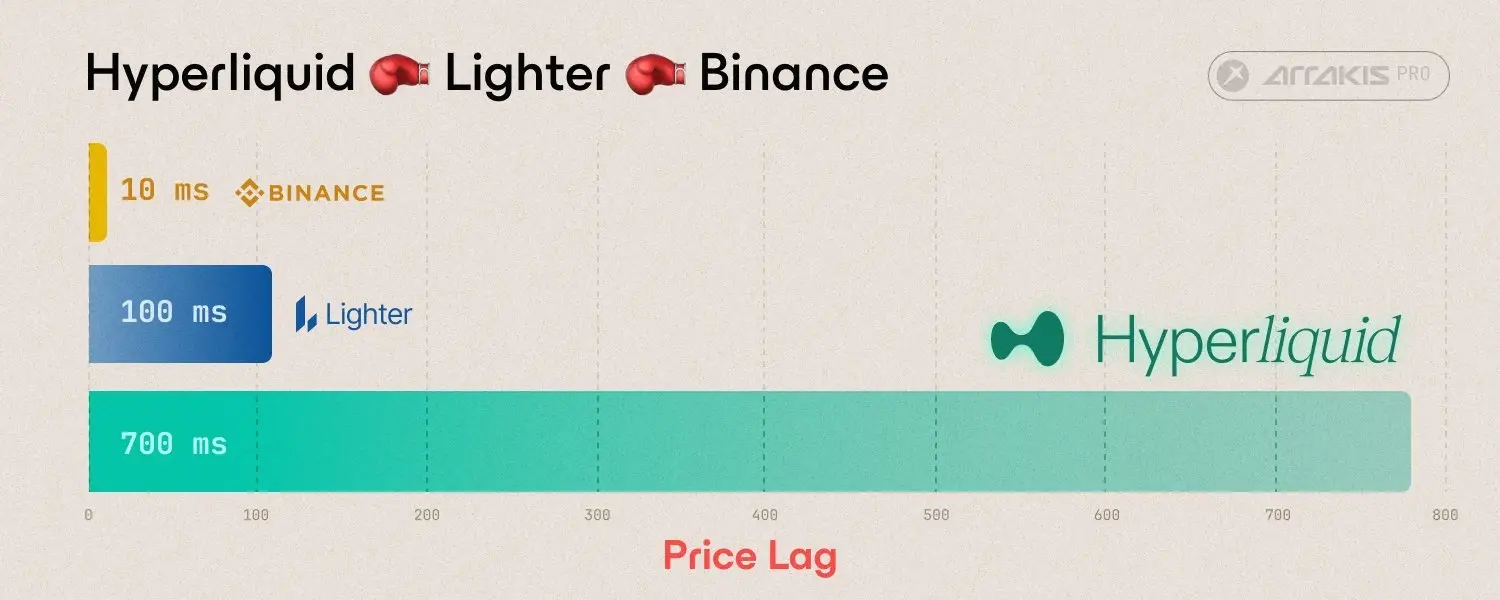
For the currently somewhat saturated stablecoin market, Hyperliquid, with hundreds of thousands of high-frequency trading users and monthly trading volumes in the trillions, will undoubtedly bring significant incremental growth to the stablecoin market, which is why many issuers are rushing to compete for the USDH codename deployment rights. BitMEX co-founder Arthur Hayes previously pointed out that the key to stablecoin success lies in distribution channels.
 Risk warning
 Risk warning