








Will AI really accelerate the economic crisis?
 Core Viewpoint

 The market is in a panic over the doomsday scenario of AI, but the obvious consensus often hides traps.
Author: The Kobeissi Letter
Compiled by: Jiahua, ChainCacther
The stock market has just wiped out $800 billion in market value as the consensus that "AI is taking over the world" becomes more apparent. But this viewpoint is too obvious. And such "obvious" trades often do not win.
The doomsday narrative is favored because it taps into an instinctual fear. It does not view AI as a productivity tool but rather as a destructive force that could trigger macroeconomic negative feedback loops: unemployment leads to weak consumption, which in turn prompts more automation, ultimately accelerating unemployment.
It is evident that AI is not just another software feature or efficiency improvement. It is a general capability shock that impacts the workflow of every white-collar job. Unlike any revolution in history, AI is "getting better in all aspects" simultaneously.
But what if the doomsday scenario is wrong? It assumes that demand is fixed. It assumes that productivity gains will not expand the market. It assumes that the system's adaptation speed cannot outpace the speed of the shock.
We believe the market is severely underestimating the second path. The signs of a seemingly systemic collapse triggered by Anthropic's "shock event" could ultimately herald the largest productivity expansion in history. Bookmark this analysis and revisit it in 12 months. This projection is not a guaranteed outcome, but remember: humanity always adapts, and free markets always adjust.
The Shock from Anthropic is Real
We cannot ignore the market's reaction. Anthropic is disrupting various industries through Claude, leading to losses of hundreds of billions in market value for Fortune 500 companies. The script for 2026 has played out multiple times: Anthropic releases new tools → Claude significantly enhances programming and automation capabilities → related industry stocks plummet within hours.
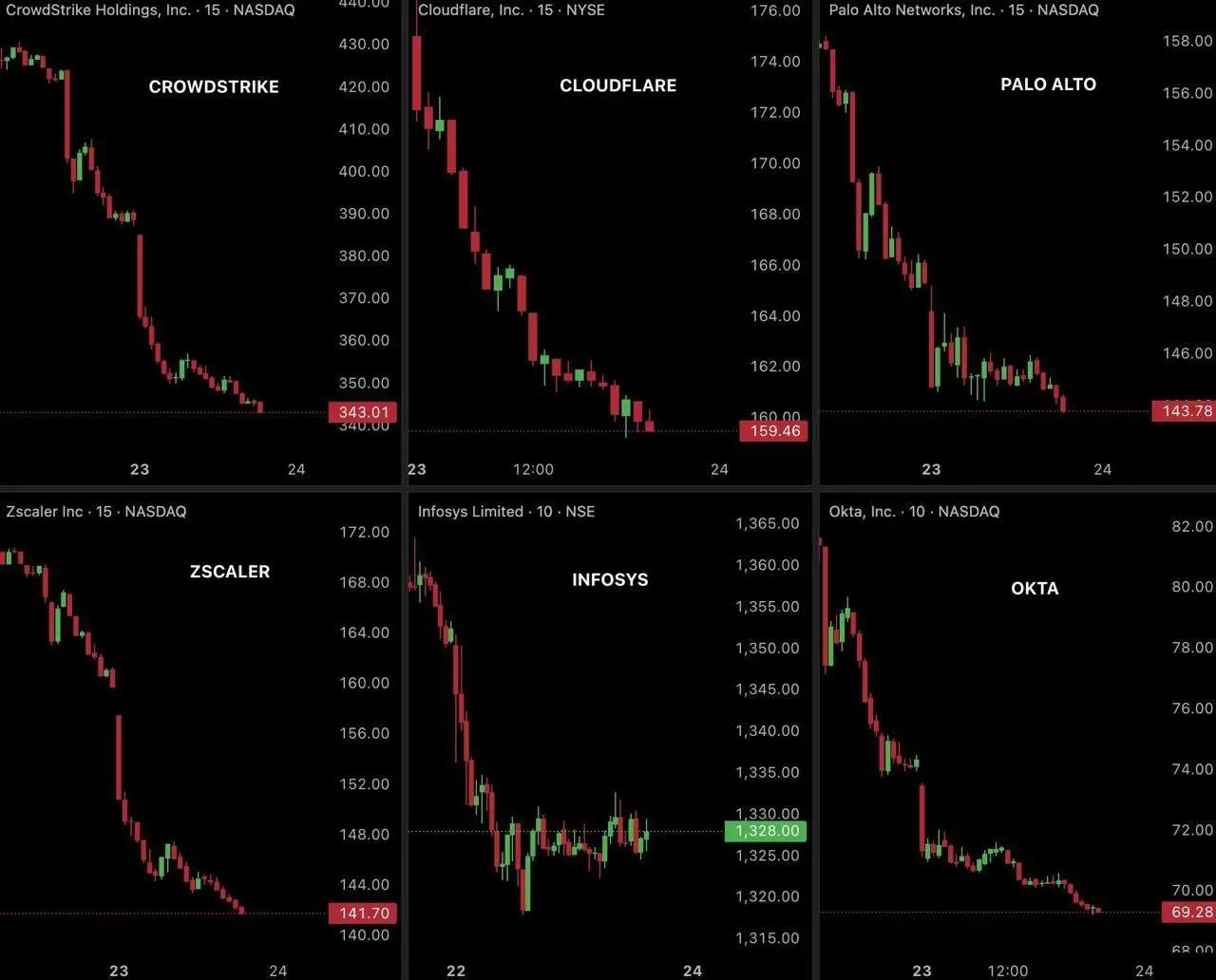
Examples:
As Claude optimizes COBOL code, IBM experiences its largest single-day drop since October 2000.
Due to generative capabilities compressing creative workflows, Adobe has dropped 30% year-to-date.
After the release of "Claude Code Security," cybersecurity stocks plummeted.
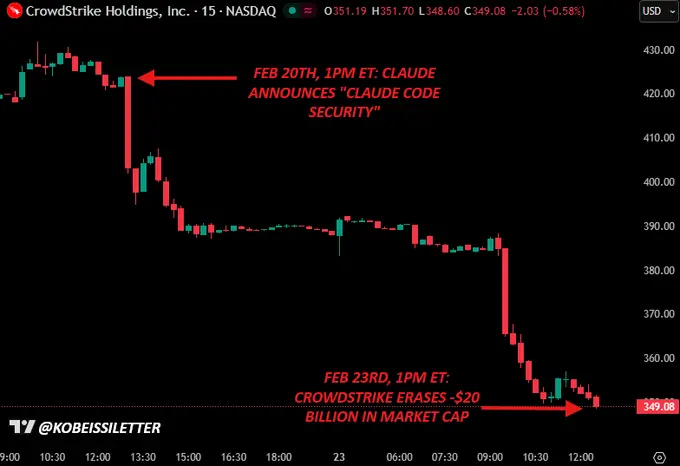
At 1 PM EST on February 20, Claude announced the launch of "Claude Code Security"—an AI tool that automatically scans for code vulnerabilities. Within two trading days, CrowdStrike's market value evaporated by $20 billion.
These reactions are not irrational. The market is pricing in the risk of margin compression in real-time. When AI can replicate human work, pricing power shifts to the buyer. This is a first-order effect and very real.
But "commoditization" does not equal "collapse." Technology drives growth by lowering costs and increasing accessibility. Personal computers commoditized computing power, the internet commoditized distribution, cloud computing commoditized infrastructure, and AI is commoditizing cognition.
The question is not whether certain processes will compress margins. The question is: will the reduced cognitive costs lead to economic collapse or large-scale expansion?
Underestimated Dynamic Demand and Incremental Markets
Pessimistic model: AI advancement → layoffs and wage declines → consumption declines → more AI investment → worsening cycle.
This assumes a static economy. History shows that when production costs decline, demand typically expands. The price of computers has dropped by 99.9% since 1980, but we have not merely consumed the same amount of computing power—we have consumed it at an exponential rate.
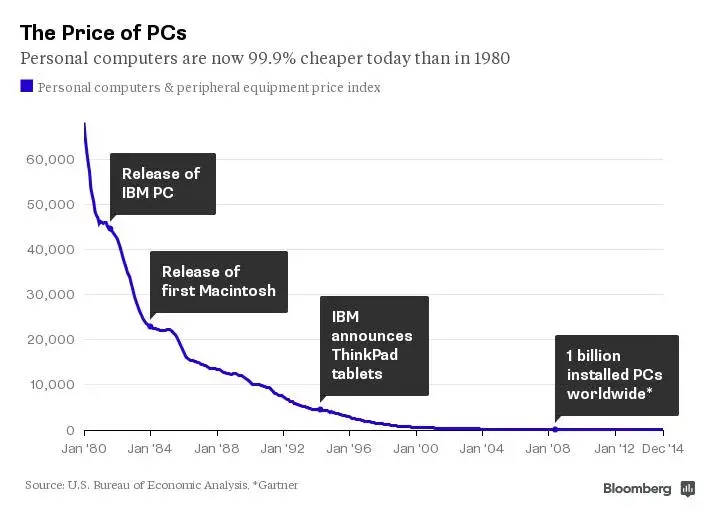
If AI lowers costs across various industries, even if wage growth slows, real purchasing power will rise. The pessimistic scenario only holds if AI replaces labor without expanding demand. The optimistic scenario is that cheaper productivity will create new markets.
Service Prices Will Plummet
Layoffs dominate the headlines, but a more significant event is the compression of service prices. Medical management, legal document drafting, tax filing, compliance review, marketing production, basic programming, customer support, coaching—these services are expensive because knowledge is scarce.
When the supply of knowledge becomes abundant, the price of knowledge work will naturally decline. The service sector accounts for nearly 80% of the U.S. GDP. If operating costs decrease, starting small businesses will become easier; as service prices drop, household participation will increase.
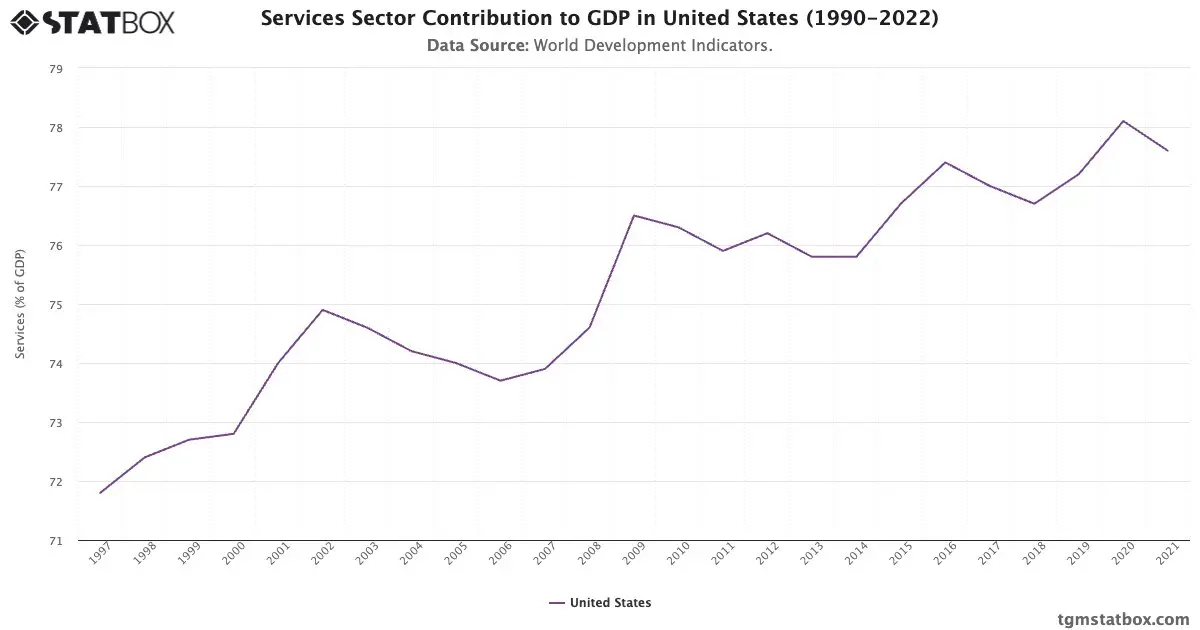
In many ways, AI acts like a hidden tax cut. Companies reliant on high-cost cognitive labor may face margin pressure, but the broader economy will benefit from lower service inflation and higher real purchasing power.
From "Phantom GDP" to "Abundant GDP"
The bearish logic relies on "phantom GDP," which is output reflected in data but does not benefit households. The optimistic counterpoint is what we call "abundant GDP," where output growth accompanies a decrease in the cost of living.
Abundant GDP does not require a surge in nominal income; it requires prices to fall faster than income declines. If AI lowers the costs of essential services for many, households can achieve real gains even if wage growth slows. Thus, productivity gains do not vanish but are transmitted through lower prices.
Perhaps this is why productivity growth has consistently outpaced wage growth over the past 70 years:
The internet, electricity, mass manufacturing, and antibiotics have all provided new ways to expand output and reduce costs, even though they remain disruptive and volatile. However, looking back, these changes have permanently improved living standards.
A society that wastes less time navigating systems and paying for redundancy is, in essence, more affluent.
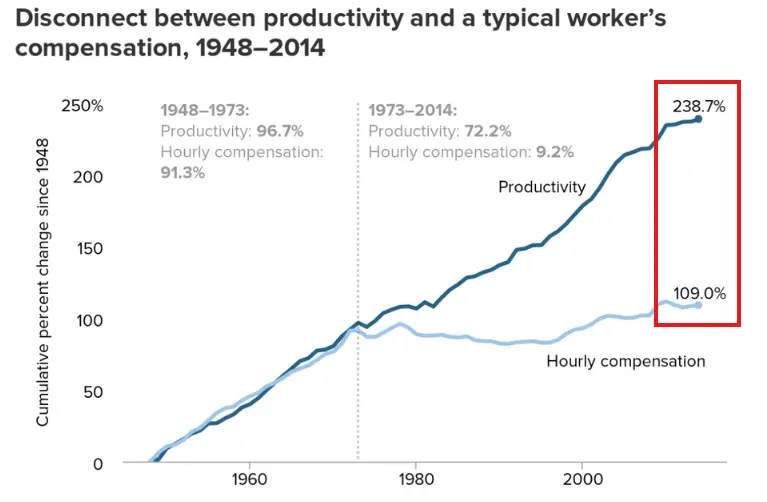
If prices fall faster than income declines, households will become wealthier in real terms. Productivity gains will be transmitted through lower prices. The internet, electricity, mass production, and antibiotics were initially seen as disruptive, but they permanently improved living standards.
The Rise of Super Individuals and the Autonomous Economy
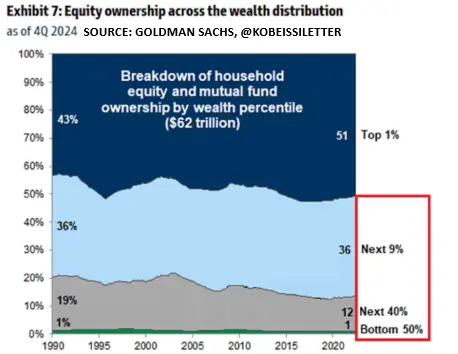
A major concern is that AI will disproportionately affect white-collar jobs that drive discretionary consumption and housing demand. This is true and a reasonable concern, especially given the already vast wealth gap.
However, AI faces more challenges in the physical world and human identity. Skilled trades, hands-on healthcare, advanced manufacturing, and experience-driven industries still maintain structural demand. In many cases, AI complements these roles rather than replaces them.
More importantly, AI lowers the barriers to entrepreneurship. When a person can automate financial, marketing, customer service, and programming tasks, starting a small business becomes easier. We are optimistic about small businesses.
In fact, eliminating barriers to entry through AI may be the solution to leveling the wealth gap we currently face.
The internet killed some job categories but also created entirely new ones. AI may follow a similar pattern, compressing certain white-collar functions while expanding autonomous economic activities in other areas.
SaaS is Not Dying
AI clearly puts pressure on traditional SaaS business models. Procurement teams find negotiations more challenging, and some long-tail software products face structural headwinds. But SaaS is a delivery mechanism, not the endpoint of value creation.
The next generation of software will be adaptive, agent-driven, outcome-oriented, and deeply integrated. The winners will no longer be static tool providers but those who can best adapt to change.
Every technological evolution reshapes the tech landscape, and companies that price static workflows will inevitably struggle. Companies with data, trust, computing power, energy, and validation capabilities are poised to thrive.
A compression of margins in one segment does not signify the collapse of the entire digital economy. It marks a transformation.
AI Will Restructure Business Models
The bearish narrative suggests that agent-based business will destroy intermediaries and eliminate fees. To some extent, this is true. As friction decreases, extracting fees becomes more challenging.
As shown, the trading volume of stablecoins has exploded, even before AI reached its current level of development. Why? Because the market always favors efficiency.
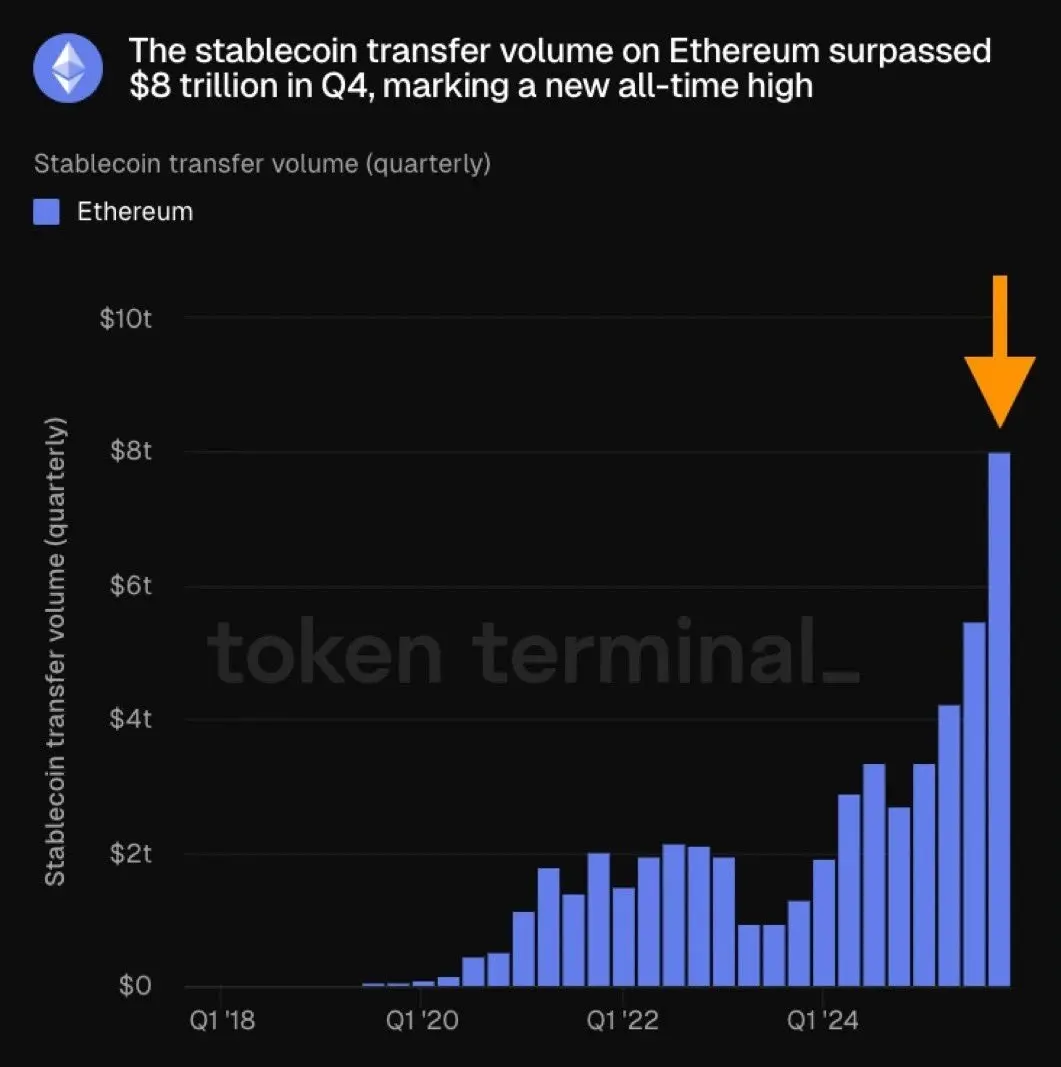
Lower systemic friction will also expand trading volumes. When price discovery improves and transaction costs decline, more economic activity occurs. This is a bullish trend.
Agents acting on behalf of consumers may compress the margins of platforms built on user habits. However, they can simultaneously increase total demand by lowering search costs and improving efficiency.
Productivity is the Key Variable
The ultimate determinant of optimistic outcomes is productivity. If AI can deliver sustained productivity growth in healthcare, government administration, logistics, manufacturing, and energy optimization, the result will undoubtedly be extreme abundance and a significant enhancement of resource accessibility for all.
Even a sustained 1-2% incremental productivity improvement over a decade can yield astonishing compounding effects.
The AI-driven transformations we currently see in the macroeconomy have already birthed some of the best investment opportunities in history. We have devoted countless hours to this and remain committed to staying at the forefront of the times. If you are interested in obtaining our premium analysis reports and learning about our investment positioning during this disruptive period, please visit thekobeissiletter.com for more research content.
As shown, productivity has begun to surge due to AI. In Q3 2025, U.S. labor productivity accelerated to its fastest growth in two years:
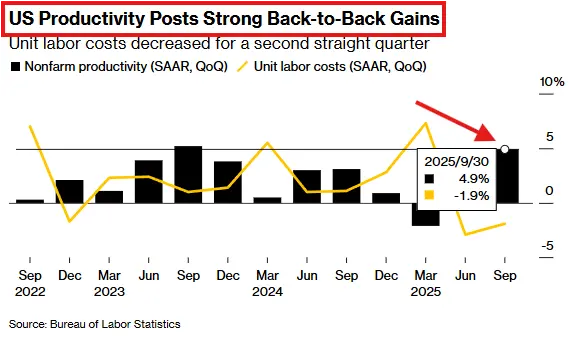
The pessimistic view holds that productivity gains will entirely accrue to those building AI models and will not translate into broader benefits. The optimistic view believes that price compression and the formation of new markets will disseminate these gains more widely.
Prosperous Productivity Will Reduce Conflict
One of the most under-discussed impacts of AI-driven abundance is at the geopolitical level.
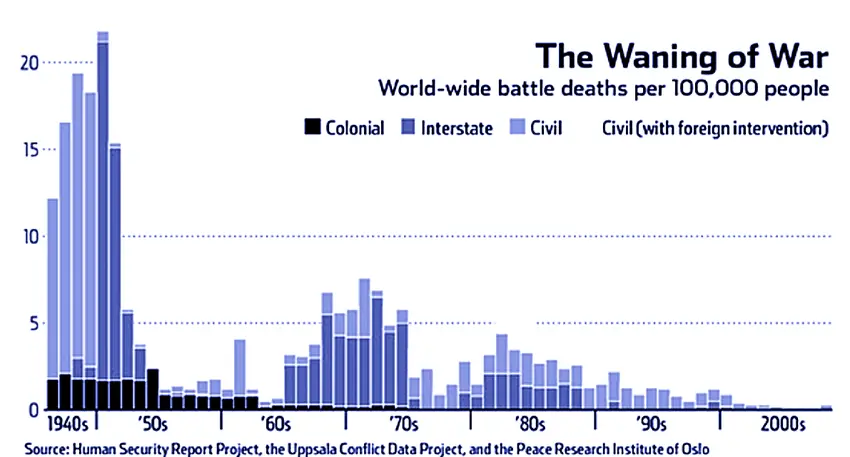
For most of modern history, wars have erupted over scarce resources: energy, food, trade routes, industrial capacity, labor, and technology. When resources are constrained and growth feels like a zero-sum game, competition arises between nations. But abundance changes everything.
If AI significantly lowers production costs in energy, manufacturing design, logistics, and services, the global pie will grow. When productivity rises and marginal costs decline, economic growth will no longer rely on gaining advantages over others. This will end wars and may usher in the most peaceful period in human history.
Economic warfare is similar, such as the year-long trade war we are currently mired in.
In a world where domestic industries struggle to compete on costs, tariffs serve as protective tools. But if AI drastically reduces production costs everywhere, why do we still need tariffs? In a highly abundant environment, protectionism will become economically inefficient.
History shows that periods of accelerated technological advancement typically reduce global conflict in the long run. The industrial expansion after World War II diminished the motivation for direct confrontation between major powers.
What If the World Does Not End?
AI amplifies outcomes. If institutions fail to adapt, it will magnify vulnerabilities; if productivity gains exceed disruptive destruction, it will amplify prosperity.
The crash triggered by Anthropic signals that workflows are being repriced and cognitive labor is becoming increasingly cheap, marking a clear transformation.
But transformation does not equate to collapse, as every major technological revolution initially appears destructive.
The most underestimated macro outcome today is not dystopia but comprehensive prosperity following a leap in productivity.
AI may compress rents, reduce friction, and restructure labor markets, but it could also bring about the largest real productivity expansion in modern history.
The difference between a "global intelligence crisis" and "global intelligence prosperity" lies not in capability but in adaptation.
And the world always finds ways to adapt.
Ultimately, those who can remain objective and follow processes during this disruptive period are entering the best trading environment in history.
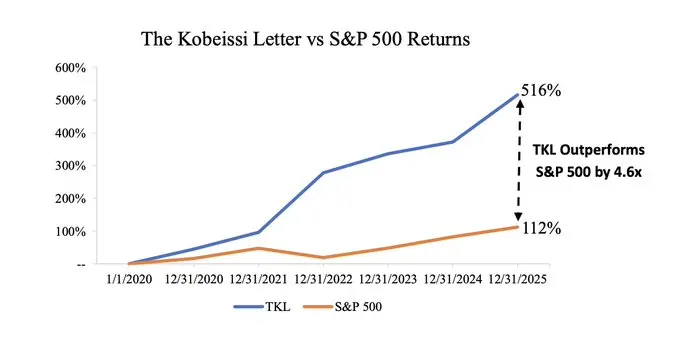
An objective and systematic approach is precisely why we outperform market benchmarks. As shown, since 2020, our investment strategy has returned nearly five times that of the S&P 500 index.
 Risk warning


Popular articles





