Multicoin Partner: AI can write agreements, but cannot create a DeFi moat
 Core Viewpoint


 Spencer Applebaum believes that AI is significantly reducing the cost of building DeFi software, but customer relationships, capital, and proprietary data are still difficult to replicate. Projects with distribution, balance sheet, or underwriting capabilities will hold pricing power, while pure software protocols will be commoditized. Startups can first enter markets that giants are unwilling to touch, and then solidify their risk appetite into a long-term moat.
Author: Spencer Applebaum, General Partner and Co-Head of Venture Capital at Multicoin Capital
Compiled by: Gu Yu, ChainCatcher
Five years ago, building a DEX or lending protocol meant raising $3 million, hiring five engineers, and spending six months to create an MVP. Now, founders can leverage Claude Code to build most of it over a weekend. With a cutting-edge AI model constructing a perpetual contract exchange, you can get a matching engine, risk engine, trading interface, API, and most of what you need out of the box.
AI is making competition in almost every aspect of the software industry easier, but financial services will be one of the hardest businesses to commoditize. This is because the most valuable parts of financial businesses have little to do with the software itself. Building a loyal customer base, accumulating a large balance sheet, and developing proprietary data and underwriting capabilities all take years to establish relationships, build a track record, and earn trust. AI can significantly reduce the cost of building software, but it does not make these aspects particularly easy to replicate.
In other words, a model can write a lending protocol in an afternoon. What it cannot do is conjure up $10 billion in stablecoin deposits into the contract or sign up 28 million customers for a new neobrokerage.
We believe this is extremely beneficial for DeFi. In the next decade, trillions of dollars in financial activity will shift on-chain, and AI will significantly reduce the cost of building products to service these activities. However, the elements that give financial businesses value and defensibility have not become easier to replicate.
New Pillars of Our DeFi Value Capture Framework
We have spent years thinking about value capture in DeFi, and our views have evolved as the market has grown. Early on, we examined how application tokens capture value through models like work tokens and burn-and-mint equilibrium (BME). Later, we focused on the defensibility and non-forkable state of DeFi. The idea is that anyone can fork open-source code, but they cannot replicate liquidity or network effects. Recently, we argued that DeFi protocols capture the most value when there is some risk that needs to be managed. These arguments have been validated to some extent, and this article represents the next iteration of our thinking.
Before we begin the rest of the article, we want to state a fact: we believe DeFi will continue to consume CeFi and eventually engulf all traditional finance. The market share of DEXs relative to CEXs is at an all-time high and still climbing:
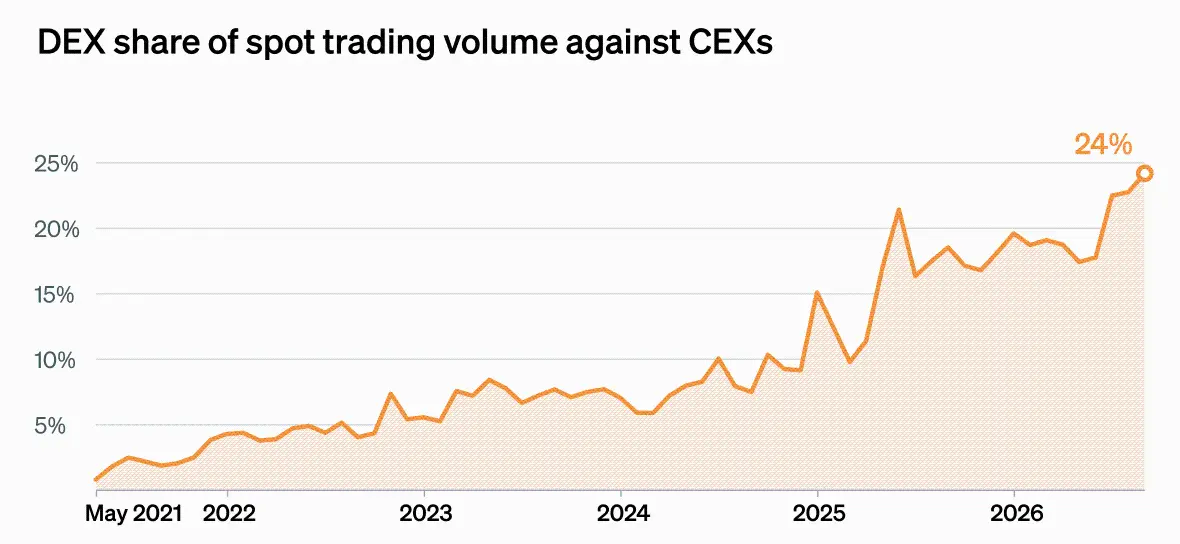
Source: The Block, DefiLlama
We are also seeing real adoption of tokenized assets, whether they are government bonds, private credit, or stocks. Importantly, the growth is not driven solely by crypto-native users. Existing institutions, fintechs, institutional asset managers, and traditional brokers are building products on-chain and bringing their customers along.
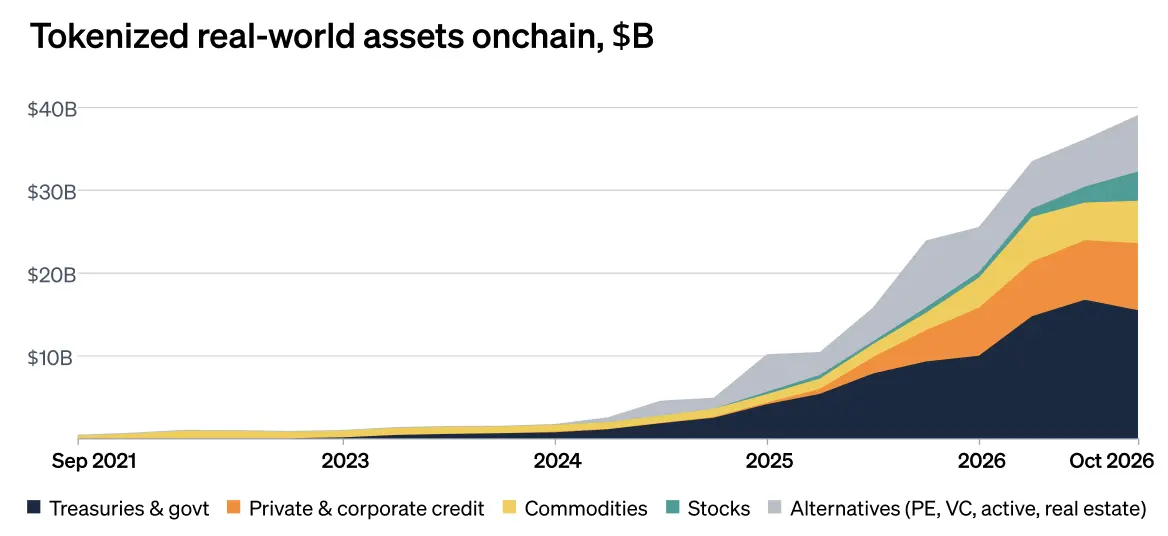
Source: rwa.xyz
The problem is that today’s blue-chip DeFi protocols may not necessarily be the ones capturing this growth. As software and data analytics become cheaper, value will flow to the party that controls scarce inputs that software cannot create.
We see three main moats in DeFi: 1) Distribution, 2) Capital, and 3) Proprietary Data. There is a fourth, risk-bearing capacity, which operates differently and is essentially a wedge, which we will discuss at the end of the article.
Moat 1 - Distribution
One of the most groundbreaking arguments in the early crypto space is the concept of "Fat Protocols," written by Joel Monegro in 2016. The idea is that while the internet created tremendous value at the application layer (Google, Facebook, Amazon, etc.), blockchain will reverse this relationship, allowing most of the value to accrue to the underlying protocols.
Evidence points in the opposite direction, and this trend is accelerating. As the startup costs of protocols decrease, value will flow to the party that has customer relationships. This business can route users and balances to the highest bidder. Sometimes that is an application, and sometimes, like Hyperliquid, it is a chain that is also an application.
Our definition of distribution is simple: it concerns controlling the flow of order flow or balances. It is important to note that not all distribution is equally sticky. Hard-to-move funded accounts create real barriers, while mere interfaces are more susceptible to competitive pressure. We will discuss this further below.
Exchanges and Other Stablecoin Distributors
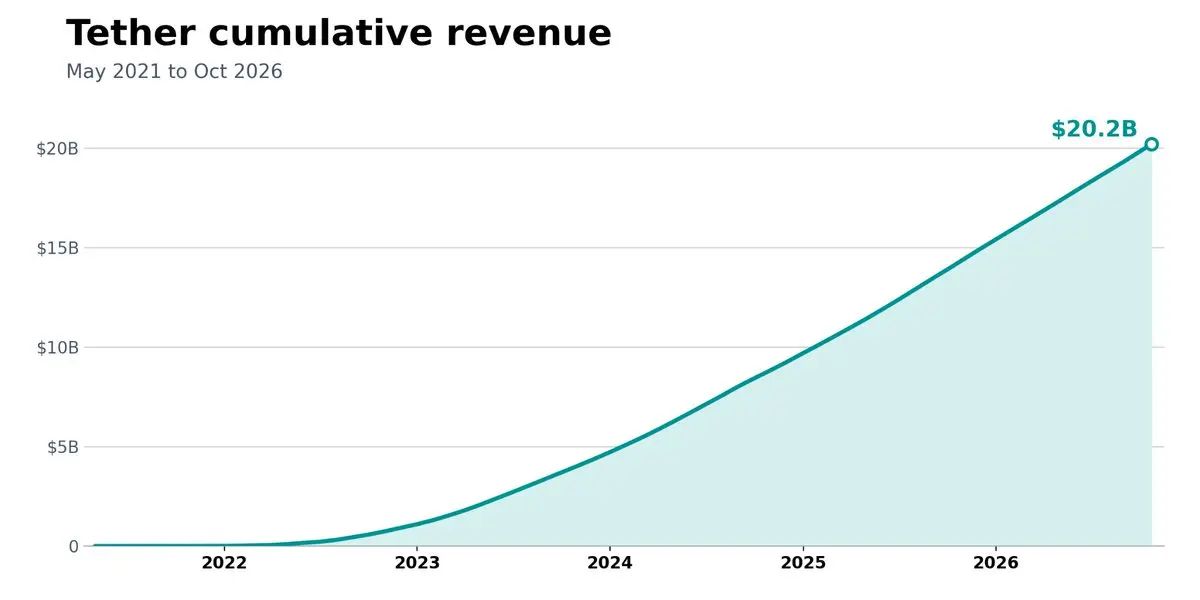
The clearest manifestation of distribution is in the stablecoin value chain. Issuance has historically been a great business, provided you reach scale and interest rates are not close to zero. Tether and Circle hold dollar reserves, earning interest from them, and in most cases, do not pay anything to holders. Since 2021, Tether alone has earned over $20 billion in interest income through this method, with margins close to 100%:
Source: DefiLlama
Take Hyperliquid as an example, its platform has over $6 billion in USDC as collateral for derivatives. These balances generate substantial reserve income for Circle and its distribution partners. At some point, Hyperliquid realized that the reason these balances exist is because of itself, thus it has leverage: if Circle is unwilling to share economic benefits, Hyperliquid can replace USDC with stablecoins willing to share or theoretically create its own stablecoin.
Earlier this year, Hyperliquid struck a deal with Coinbase using its Aligned Quote Asset (AQA) framework. According to the deal, about 90% of the USDC reserve yield on Hyperliquid flows to the protocol's Assistance Fund, which uses it to purchase HYPE, rather than flowing to Circle or Coinbase. The treasury holds $5.5 billion in USDC (that 90% flowing to HYPE), which today constitutes about $185 million in revenue for Hyperliquid.
Hyperliquid does not maintain any of the pipelines here, whether for minting/redemption, treasury management, or regulatory licenses. It has distribution, which is enough to demand more economic benefits.
Wallets and Frontends
Wallets and frontends are another side of this issue. Early on, non-custodial wallets struggled for monetization. They eventually realized that the most profitable business in crypto is trading, and a few years ago made it a first-class product here. On trading, MetaMask charges a fee of 0.875%, while Uniswap's average trading fee over the past 12 months was 0.13%. Moreover, most of that value flows to liquidity providers (LPs), rather than the Uniswap protocol itself.
In short, wallets earn far more than the venues executing trades. On the other hand, exchanges must attract LPs, maintain complex infrastructure, and compete on execution; MetaMask must win and retain customer relationships. If a DEX does not offer a good price, MetaMask can route trades elsewhere. Over time, if they gain enough order flow, they can internalize a significant portion of it and retain more economic benefits.
We are also starting to see this dynamic on the perpetual contract side. Phantom allows users to trade perpetual contracts on Hyperliquid and charges an additional 5 basis points on top of Hyperliquid's 4.5 basis points fee. Hyperliquid operates risk engines, matching, and liquidity, but Phantom earns more simply because it has the interface and users.
However, there is a limit here. Among the Hyperliquid builders, there is currently a new red ocean market that is already engaged in a price war, with various teams lowering fees to improve retention. In other words, even the front-end layer cannot escape commoditization.
More generally, crypto wallets are somewhat fragile because the switching costs are very low. Users can easily connect their private keys or mnemonic phrases to another wallet and access the same funds through a new interface within minutes. Switching banks or fintechs is much more complicated. Users need to open new accounts, complete KYC, transfer funds through traditional channels, reconnect payroll, and possibly update other connected services.
Fintech and Neobank
To illustrate an example of fintech, take Robinhood, which has 28 million funded accounts. Currently, Uniswap is the main DEX on the Robinhood Chain, and Robinhood has no objections to this. However, as AI drives down the cost of building financial software, nothing can stop Robinhood from building and launching its own DEX protocol and directing users there. With their reach and cutting-edge coding tools, they could almost build one of the largest Layer 2 DEXs in DeFi overnight. By the way, we are not saying Robinhood will definitely do this, as historically, having liquidity has not been Robinhood's primary goal (although they have started routing significant traffic to their own prediction market Rothera instead of Kalshi). We are merely pointing out that building protocols is no longer the difficult part. Attracting users, capital, and proprietary data is.
You can see a waterfall value chain forming in DeFi. The front-end (Phantom) is capturing more economic benefits from trading venues, while trading venues (Hyperliquid) are capturing more from stablecoin issuers (Circle). In all cases, businesses that own distribution have pricing power over the underlying infrastructure.
But how much each layer can retain depends on how easy it is for its users to leave. Hyperliquid has captured about 90% of reserve revenue, while the front-end on Hyperliquid has pushed fee competition down to low single-digit basis points.
Moat 2 - Capital
The natural conclusion from the previous section is that headless protocols and back-end infrastructure are at a disadvantage. Yes, this is indeed the case in some instances. But there are other moats besides distribution, one of the most important being capital.
Capital is the lifeblood of financial markets. Traders need it to leverage, market makers need it to provide continuous quotes, and lending protocols need deposits to issue loans. AI can help write code and automate workflows, but it cannot create money out of thin air, which is what these systems rely on. When something goes wrong (such as the Aave KelpDAO incident or MakerDAO's Black Thursday), someone has to bear the losses.
Before discussing further, let's talk about liquidity. There is a log(n) network effect: traders go where the liquidity is, and liquidity follows them. Hyperliquid's open interest is a real advantage, but that capital belongs to users who can move it elsewhere. We have seen liquidity in DeFi shift from one protocol to another, often driven by token incentives and vampire attacks. And when those incentives dry up, liquidity often leaves as well.
The two forms of capital below can actually create defensible long-term value.
DeFi Prime Brokers
Prime brokers (PB) are key market participants in traditional financial markets. They provide leverage, finance trades, and allow hedge funds to use a single pool of capital across different markets and strategies instead of posting collateral separately at each venue.
This is an absolutely massive business. The entire industry's PB revenue grew from about 15 billion dollars in 2020 to about 27 billion dollars in 2024, driven by the growth of the hedge fund industry and a large number of multi-manager pod shops that rely heavily on financing.
We believe the opportunity in DeFi may be even greater. Traditional PBs primarily serve large institutions because dealing with smaller clients is operationally expensive. Smart contracts can automate much of this work and offer it to anyone, from someone trading 500 dollars to a pod managing hundreds of millions at Millennium.
Today, traders typically have to post collateral separately on Hyperliquid, Aave, Lighter, Morpho, Variational, and Kamino. This is extremely capital inefficient, and as tokenized stocks, government bonds, private credit, and other RWAs move on-chain, the problem will only worsen. A fund going long on tokenized stocks at one venue and shorting perpetual contracts on an index at another should not have to provide full collateral for both positions if some of the risks offset each other.
Building software to manage all of this is becoming increasingly easier, while the difficult part is having a balance sheet to finance these positions, lower capital costs, and the risk management know-how to avoid liquidation. Over time, PBs with cheaper capital can offer better financing terms, attract more clients, and leverage that scale to obtain cheaper financing. In summary, this business should have good scale returns.
Providing Backing for Risks of DeFi Protocols
The second way capital serves as a moat is by providing backing for risks. This directly relates to our previous article on DeFi DAO risk management, where we argued that tokens associated with protocols that do not manage risk are more easily forked out than those that do.
For example, look at Hyperliquid's HLP vault, which provides liquidity by market-making and taking over liquidated positions. Depositors share profits but also absorb losses. In March 2025, HLP lost about 4 million dollars when closing a large ETH position, and the subsequent JELLYJELLY incident exposed it to further risks. Both situations illustrate why derivatives DEX insurance funds are so important. Aave's Umbrella serves a similar purpose, allowing users to earn returns in exchange for backing bad debts.
Anyone can fork the HLP or Umbrella contracts, but they cannot fork the capital within them. The issue is that this is third-party capital, and if depositors find better yields, they may leave. The counterargument is that some capital is sticky because there may be overlap between token holders and depositors. For example, HYPE holders may retain some dollars in HLP to make the exchange safer and protect their token investments.
The most enduring version of this strategy is a protocol's own balance sheet, built from retained earnings. This capital will not walk out the door in pursuit of newer, shinier yields or points programs.
Binance recently explained why this approach is important. After losing $6.3 billion in a hack on October 29, it used SAFU reserves and company funds (primarily the latter) to cover the losses, reopened withdrawals within days, and only a net 3% of assets left. It's still early, but the interpretation so far is that its perceived balance sheet helped prevent a bank run.
As DeFi enters private credit, tokenized stocks, and other RWAs, the demand for insurance and venture capital will continue to grow. The net result is that protocols that truly provide and manage capital will capture much more value than those that only deliver software.
Moat 3 - Proprietary Data
The third moat is information, but with a caveat. DeFi is built on the idea that financial data should be public, which works well for scenarios like crypto asset collateralized lending and spot trading. However, as more RWAs go on-chain, we will see more businesses built around non-public information. This moat combines proprietary data with the ability to underwrite risks using that data.
Credit Curators
Lending is the most obvious area where this is first evident. Curators on platforms like Morpho, Kamino, and Euler represent depositors' funds to assess risk, currently amounting to $9.5 billion:
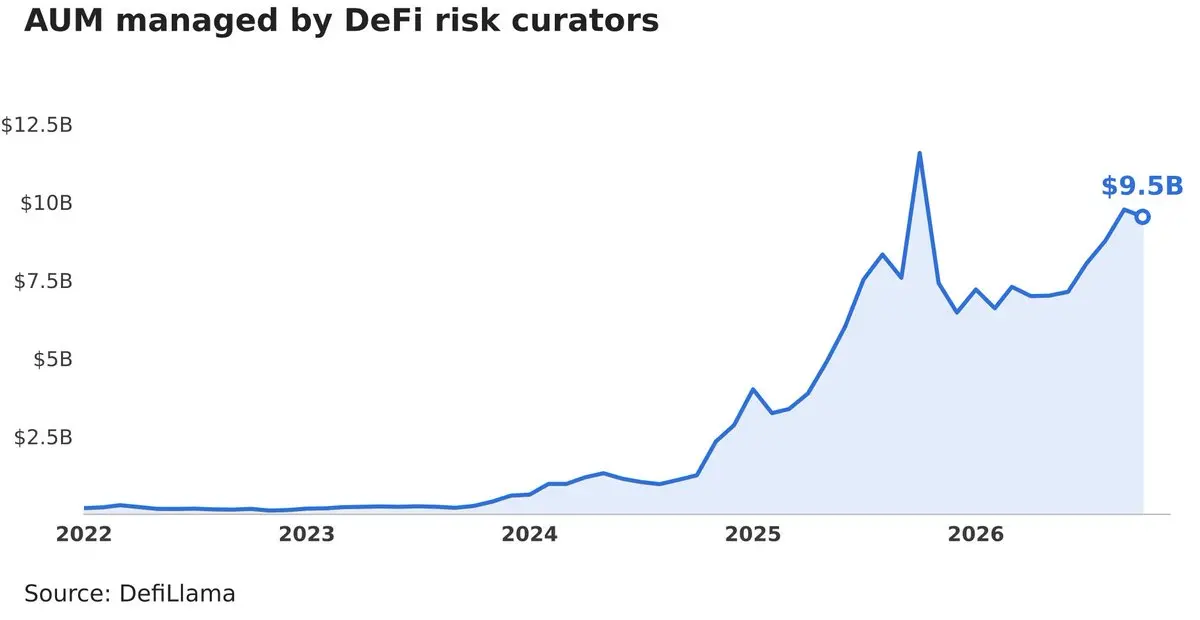
These curators are granted limited control within treasury smart contracts to adjust fund allocations to various lending markets, set risk parameters, and monitor collateral positions. Despite managing a total of $9.5 billion, the revenue generated is very low, especially compared to traditional asset management firms that have greater discretion and responsibility. In fact, many curators charge no fees at all. Steakhouse Financial is the largest DeFi risk curator by AUM, with a management fee of 22 basis points on the assets it manages, while the average curator fee is 19 basis points.
Part of the reason is that risk-adjusted yields in DeFi are currently unappealing (likely partly due to idle capital stuck in Aave). Another reason is that Morpho and Kamino have homogenized the treasury layer and are positioned between curators and depositors, which brings us back to our argument about distribution.
But the bigger issue is that curators mostly work off the same data. If you are borrowing against ETH or BTC as collateral, the price, liquidation rules, and collateral are all public. AI has made replicating risk modeling easy, allowing curators to compete only on judgment (for example, taking on risk, a large part of which is predefined by algorithms) and performance records. Over a long enough time span, this will inevitably put pressure on fees.
Compare this with OnRe, a chain-based reinsurance company that raises funds from investors to underwrite real-world insurance risks. To do this, it needs historical claims data, loss probabilities, and the insurance contracts themselves. Not to mention, it also needs people who understand this data. None of this is on the block explorer, and a cutting-edge model that cannot access the reinsurance ledger, no matter how smart, cannot underwrite it.
This is why OnRe can charge a 75 basis point management fee plus 20% of the returns. Based on current returns, this is roughly equivalent to 3% per year, which is 16 times higher than the average DeFi risk curator.
These are different businesses with different risks, and part of the fee premium reflects illiquidity and the potential for losses. But that is part of the point; businesses that have proprietary data, underwriting expertise, and relationships can charge much higher fees. If you have the same data and tools as everyone else, you will likely end up as a commoditized product.
What Does All This Mean for Value Capture?
L1 and L2
One cynical interpretation is that infrastructure tokens like L1 and L2 are in a tough spot. The reason is that blockchains have historically provided two of the three moats for new DeFi applications: distribution and capital.
Historically, blockchains have had a distribution advantage because DeFi users put assets on the chain where they are most active. If you build on Ethereum, you can reach Ethereum users. If you build on Solana, you can reach Solana users. This is crucial if you are starting from scratch with Uniswap, Compound, Aave, Kamino, or MakerDAO. You have no existing customers, no assets, and no financial relationships, so launching in the ecosystem where users are already present makes it much easier to get started.
However, improvements in interoperability are weakening this. Nowadays, a fomo user can complete onboarding through their app and trade any asset on any chain without even thinking about it. Moreover, an increasing number of new users will enter DeFi through fintech companies like Revolut, Nubank, and Robinhood, which already have tens of millions of customers and do not require an already funded wallet to access.
L1 also provides capital through ecosystem wealth effects. As SOL and ETH prices rise, users have more funds to deploy into applications on these chains. After that, capital tends to stick around because using cross-chain bridges is painful, and users often have tribal attributes. However, it is now easier to use cross-chain bridges, and capital is entering through stablecoins/tokenized assets/institutions, thus reducing new protocols' reliance on any single token's wealth effect. RWA issuers also want to launch on every chain, as we have seen from Securitize, Superstate, and Ondo.
In terms of data, there has never been much of a moat. Almost all on-chain financial information is public, so chains and applications have never had much proprietary data to defend.
AI is also eroding another historical advantage of blockchains: their developer ecosystems. One of Ethereum's biggest advantages over newer chains like Solana or Aptos is its mature tools, audited libraries, and integrations. However, as AI makes it easier to port applications between different VMs, the importance of this advantage is diminishing.
More broadly, general-purpose chains are losing their advantages in distribution and capital, and there has never been much of a data moat to begin with. This means they primarily compete on execution and settlement, where block space is abundant and fees are continuously declining.
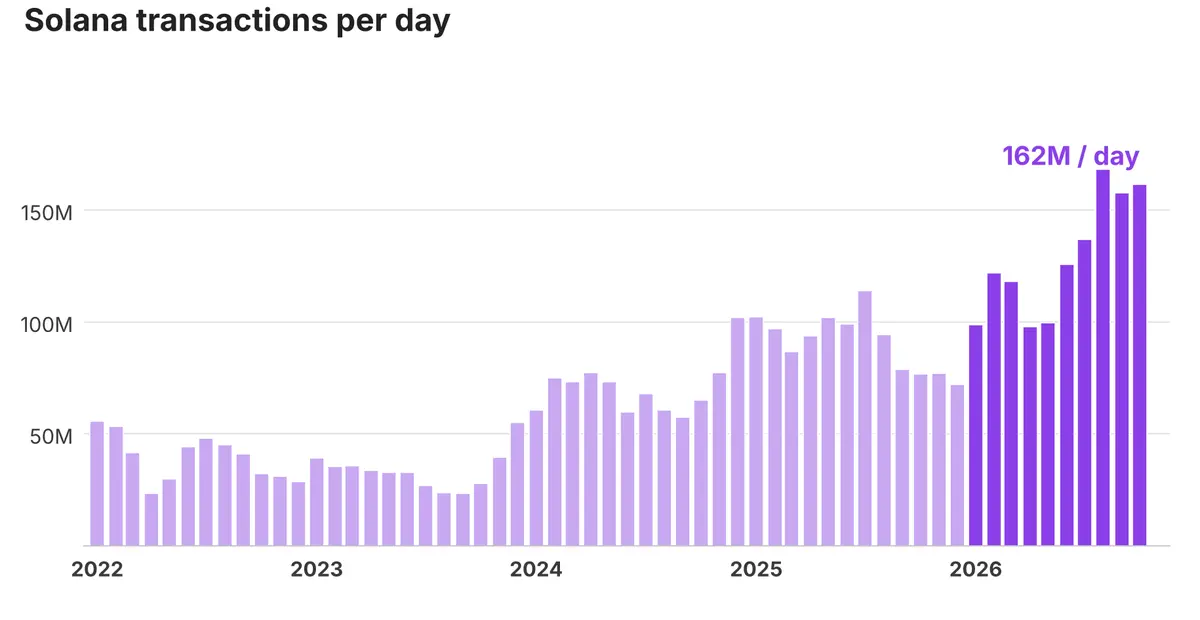
However, this does not mean chains cannot have value. As Tushar articulated in a summit talk a few years ago, L1 tokens are capital assets, commodity assets, and stores of value. If Solana ultimately processes 1 billion payments a day at a fee of 1 cent per transaction, that would amount to $3.65 billion in fees per year. As shown in the chart below, transaction volume continues to grow:
Source: Blockworks Research
The conclusion is that the reasons they have value may be very different from what investors initially expected.
Applications and Protocols
For applications, the businesses that capture the most value will be those that have at least one of the three moats: achieving distribution through difficult-to-migrate direct customer relationships (like Robinhood or Hyperliquid); achieving capital through a balance sheet capable of absorbing losses; or achieving information through the ability to underwrite risks that others cannot. No matter how excellent the model becomes, these three are much harder to replicate than software.
We do not think it matters whether value flows to equity or tokens; our view is that value will flow to both. Recent SEC guidance and rule proposals have laid out a compliant path for tokens to capture value, and we fully intend to invest in these opportunities. What truly matters is whether a business (token or equity) controls some form of scarcity, whether it thus has pricing power, and whether it can convert that into returns for investors, regardless of the form of the tool.
As more financial activities go on-chain, the gap between protocols with moats and those with only software will widen. As one of the largest investors in the space, we spend a lot of time figuring out which projects in the tech stack have these moats and can maintain them.
Doesn't This All Favor the Incumbents?
A reasonable conclusion drawn from all of the above is that incumbents will win. Robinhood has customers, Goldman Sachs has more capital than any DeFi PB might ever have, and Moody's has data and licenses. If software is becoming free while moats are the expensive part, then companies that already have these moats should have an advantage.
But startups still have an advantage: they are willing to take on risks that incumbents are not. Part of the reason is that AI plays a dual role here. It enables Robinhood to launch a DEX with the same set of tools over a weekend, and it allows a three-person startup to do the same. As the cost of building credible products decreases, the real opportunity for startups lies in pursuing markets and customers that incumbents are unwilling to pursue.
There are already several compelling case studies here.
Ethena built a synthetic dollar product around delta-neutral hedging, a strategy that traditional companies clearly understand (basis trading), but they are unable or unwilling to bring it to crypto exchanges. They have now scaled it to $5.4 billion in AUM.
Pump.fun and fomo emerged, creating a brand new trading experience in a novel asset class (memecoin) and establishing significant distribution around this wedge. They are now two of the biggest success stories in this crypto cycle.
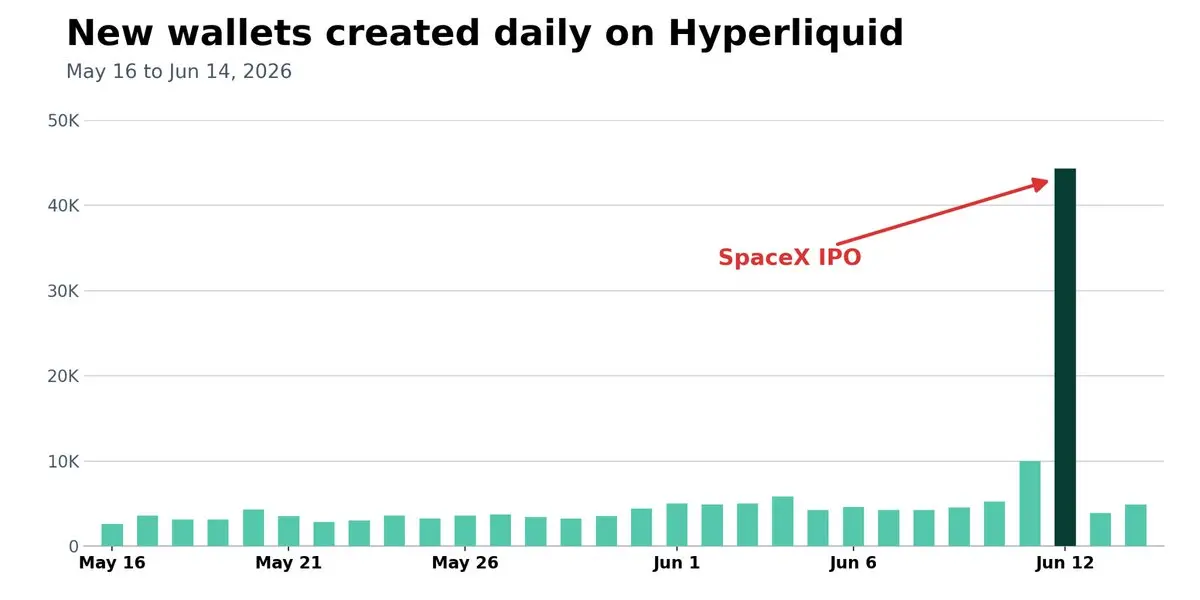
Hyperliquid entered a derivatives market dominated by Binance, Bybit, and OKX, and quickly captured market share. It is also launching perpetual contracts for pre-IPO companies like OpenAI and Anthropic, which traditional exchanges would not do. These markets attract new traders and liquidity, as you can see in the wallet created on SpaceX IPO day:
Source: HyperTracker
In terms of capital, Project 0 provides financing for DeFi collateral that traditional private banks are unwilling to accept as lending collateral. In terms of proprietary data, USD.ai can underwrite GPU-backed loans, an asset class that banks have little experience with.
The commonality is that these businesses are pursuing markets that incumbents do not serve, whether due to regulation, operational complexity, reputational risk, or simply because the opportunity seems too small. For startups, there will always be openings to compete asymmetrically, as we have seen throughout crypto history and expect to continue seeing.
This is why the combination of AI and DeFi is so compelling. AI is significantly lowering the cost of building financial products, while DeFi enables startups to reach customers and access capital without having to rebuild the entire financial stack.
Of course, risk tolerance itself is not a lasting moat. Regulation will catch up, and once a market is proven, incumbents will follow (see the BTC spot market). But startups do not need to have a moat on day one. They just need an opening that an incumbent will not pursue, and enough time to turn it into one (or several) of the three moats, and then they can start compounding growth from there.
Summary
We believe that in the next decade, trillions of dollars of financial activity will be on-chain, and AI will make it easier than ever to build products that serve these activities.
However, while software is becoming commoditized, what makes financial businesses valuable is not. Customers, capital, and proprietary data remain difficult to acquire, and companies that control them will have pricing power.
This is why we are so optimistic about the next generation of DeFi companies. With the proliferation of AI developer tools, startups can now compete with incumbents faster and cheaper than ever before. Once a new company establishes one of these moats, it can create an extremely durable business.
Ultimately, you can fork code and generate it with the latest and most powerful AI models. But you cannot simply generate any of these moats, and that is where our opportunity lies as crypto investors.
 Risk warning Risk warning




Popular articles