The real users of RWA are not in the crypto circle
 Core Viewpoint


 Zeus believes that RWA does not lack good products, but rather lacks marketing methods that can establish trust. The team should first explain to users why they should care, clarify the actual benefits brought by on-chain, target traditional investors rather than just Crypto Twitter, and let blockchain be hidden behind better financial products through education, collaborative distribution, and honest disclosure of risks.
Author: Zeus, RWA Foundation practitioner, long-term focus on tokenization, stablecoins, and RWA
Compiled by: Gu Yu, ChainCatcher
I have been in the RWA field for several years, and one thing I have consistently noticed is that we do not lack good products. There are some outstanding teams building products backed by real assets that solve real problems, but almost no one outside the crypto circle knows of their existence. I believe a significant part of the reason lies in their marketing approach.
Marketing an RWA product is not the same as marketing an L1, an AI token, or the latest memecoin. You are dealing with real assets and real money, and most importantly, people's trust. Therefore, you cannot just throw out a bunch of big numbers and promise outrageous APYs, expecting people to rush in. You need to educate people, explain the value, and give them a reason to care.
If I were to build an RWA product today, I would do it this way.
1. Start with why, not technology
Resonate, speak like a human
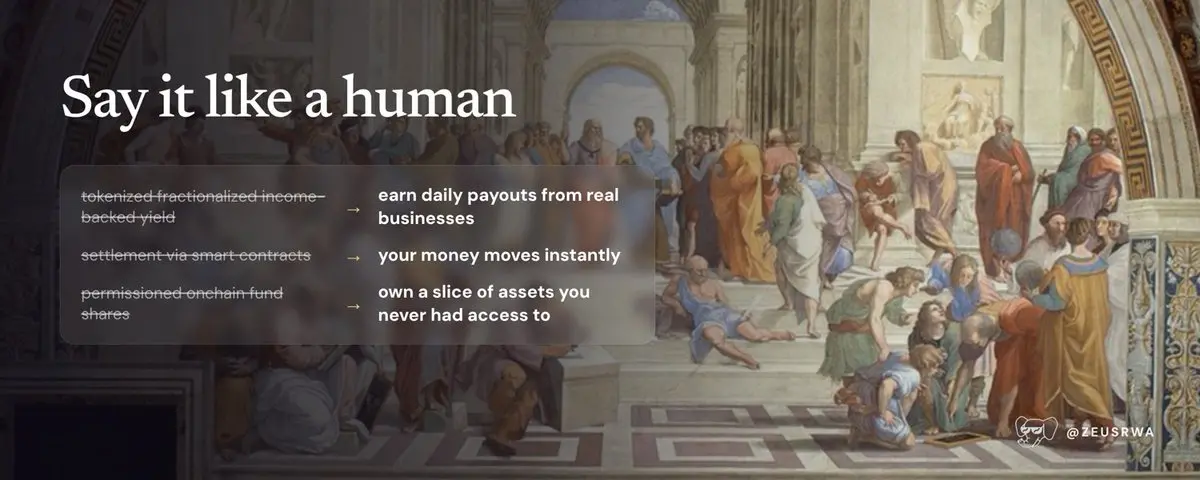
This may be the biggest mistake I see. Teams are too focused on explaining what they have done and forget to explain why anyone should really care. You see this everywhere: a lot of technical jargon, complex descriptions, and paragraphs that sound impressive in the crypto circle but mean nothing to the average person.
I understand that founders want to showcase how smart their product is and why it is different, but you do not need to convince others that you are smart; you need to convince them that your product is worth using.
So simplify it. What can it do, who does it help, what problem does it solve, and why would someone use it instead of continuing with what they are already using?
No one wakes up thinking they need tokenized income streams or blockchain-based settlements. They wake up thinking about earning more from their money, getting better investment opportunities, or having more control over what they own, so start from there.
2. Explain what going on-chain actually adds
Explain what going on-chain actually adds
I have always said this, but everything that goes on-chain should ultimately return to why.
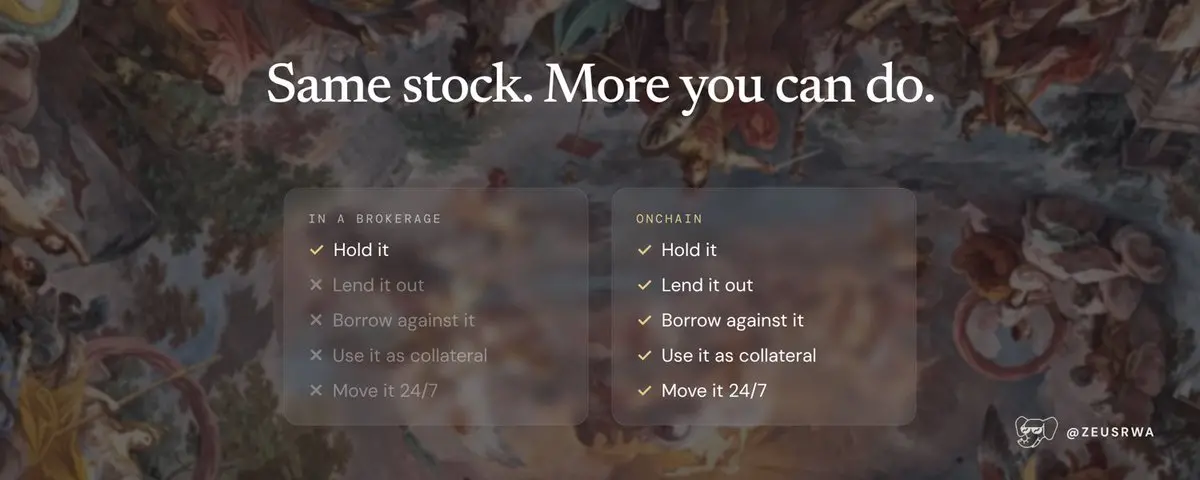
Why would your brother buy a tokenized stock instead of buying regular stocks directly through a broker? What does he actually get from it? Maybe he can access markets he couldn't before, maybe he can use that stock as collateral, lend it out, borrow against it, or transfer it between different applications. That is the conversation you should be having because technology is just the track; what people care about is the benefits.
An asset should not just go on-chain for the sake of going on-chain. It must have a reason to become better, more accessible, more useful, or cheaper to use; if not, you need to ask yourself why you are doing this in the first place.
3. Market the problem, not the solution
No one cares about tokenization
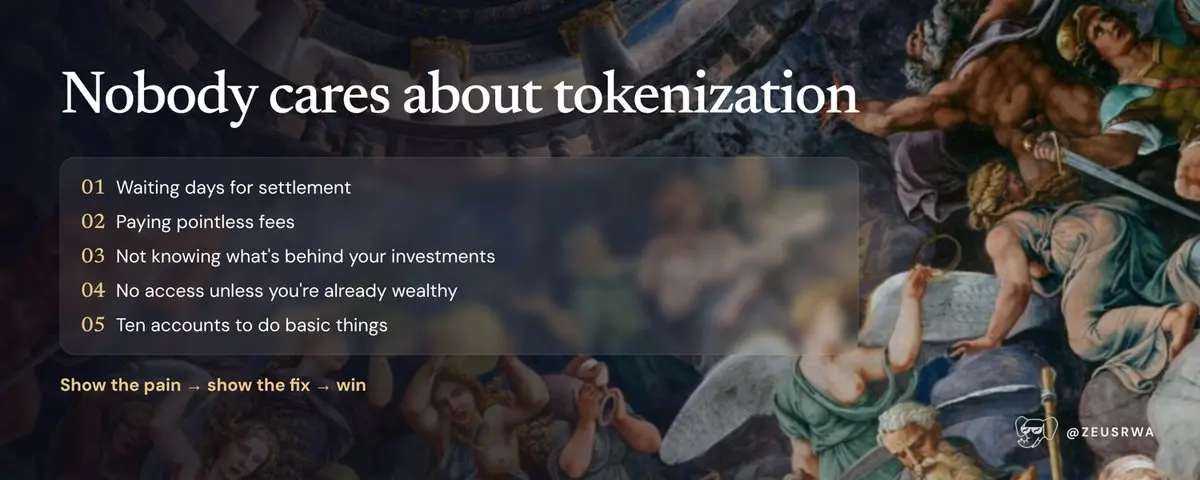
Most people do not care about tokenization; in fact, most people cannot even articulate what it means, and that is perfectly fine.
What they really understand are the problems they encounter with money and investments, such as not being able to access certain assets, high fees, slow settlements, markets closing, complicated registration processes, and having to jump between five different applications just to manage their money. These are the things that people can truly resonate with, and your job is to connect these problems with what your product does.
Do not start by explaining how your blockchain works; start with why someone should care about the problem you are solving, and you will go much further.
4. Don’t just market to Crypto Twitter
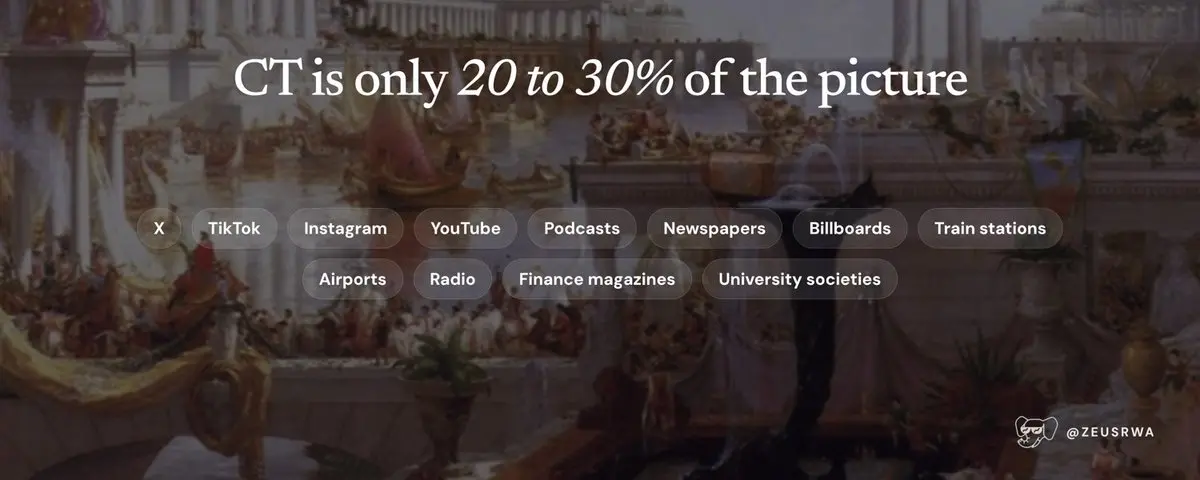
Market your product to the world
Crypto Twitter is great; many of us have built communities here, met founders, discovered new products, and supported the industry. But to be honest, it is a relatively small circle. You can post about your product all day and get thousands of impressions, yet hardly reach anyone who will actually become a long-term user.
The real opportunity lies outside the crypto circle, among those who are already using Revolut, buying ETFs, investing in stocks, watching personal finance content, or looking for ways to make their money work. They already understand investing; they just do not know why putting some of it on-chain might be better, and that is your audience.
So go where they are: YouTube, Instagram, TikTok, finance podcasts, traditional media, and those creators who are already talking about investing, real estate, personal finance, and wealth accumulation. You do not need to turn everyone into crypto enthusiasts; you just need to show them why your product makes sense.
5. Collaborate with those who already have distribution channels
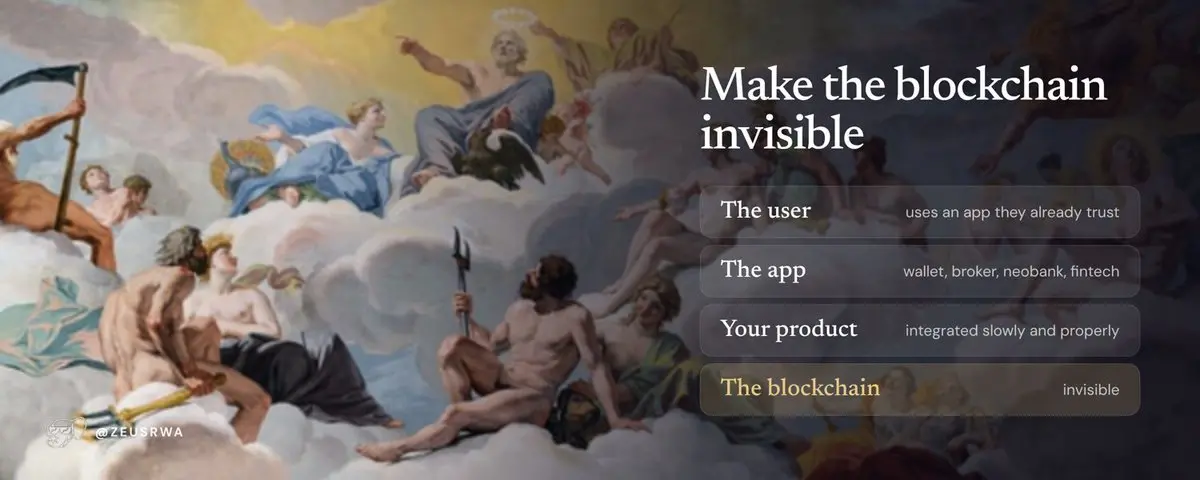
Make the blockchain layer invisible
I think one thing that is overlooked is that you do not need to acquire every user from scratch. There are already fintech apps, neobanks, brokers, wallets, and financial platforms with millions of users; why not collaborate with them?
Instead of making others download another app, set up another wallet, and learn a whole new world, put your product in front of them where they are already spending their time. The importance of distribution channels is immense.
The ultimate goal should be for someone to open an app they already trust, purchase an asset, or use a financial product without even thinking about the blockchain behind it. No one needs to understand how the internet works to send an email; I believe finance should ultimately feel the same way.
6. Center education in your content
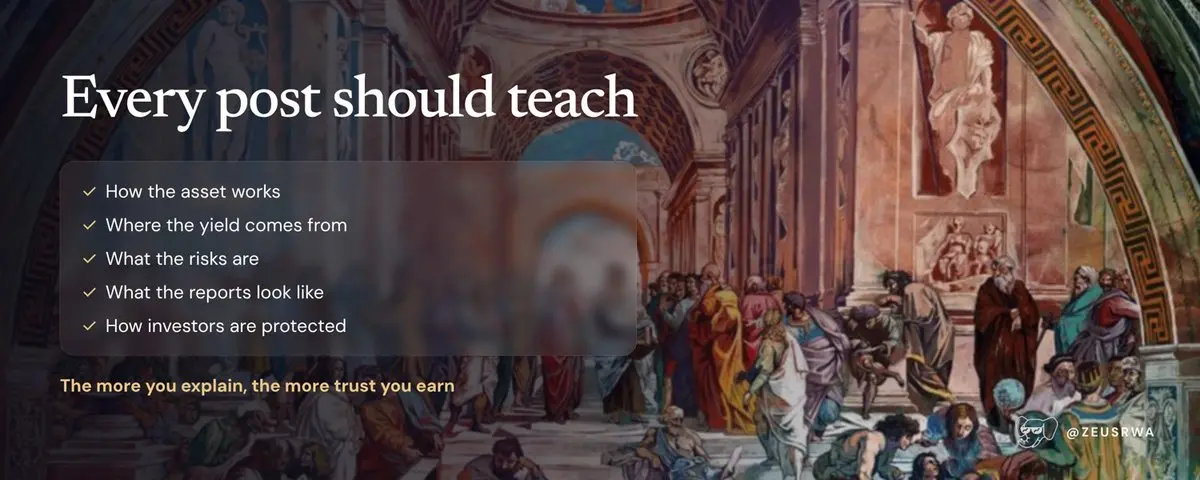
Educate the public about tokenization
This may be the part I understand best. At RWA Foundation, we publish hundreds of posts every week covering companies, assets, products, and everything happening in the industry, and one thing I repeatedly notice is that people want to understand things, not just read another post with APYs or huge TVL numbers.
Explain where the returns come from, what the underlying assets are, how the structure works, what the risks are, what rights holders have, and what happens if things go wrong. Show people the evidence.
Do not hide the negatives, and do not pretend every product is perfect. If you are marketing real financial assets, you need to talk about risks as honestly as you talk about upside potential because trust is not built on a viral post; it is built through consistent appearances, teaching people to understand, and being honest about what you offer, and that takes time.
7. Make your marketing relatable to real life
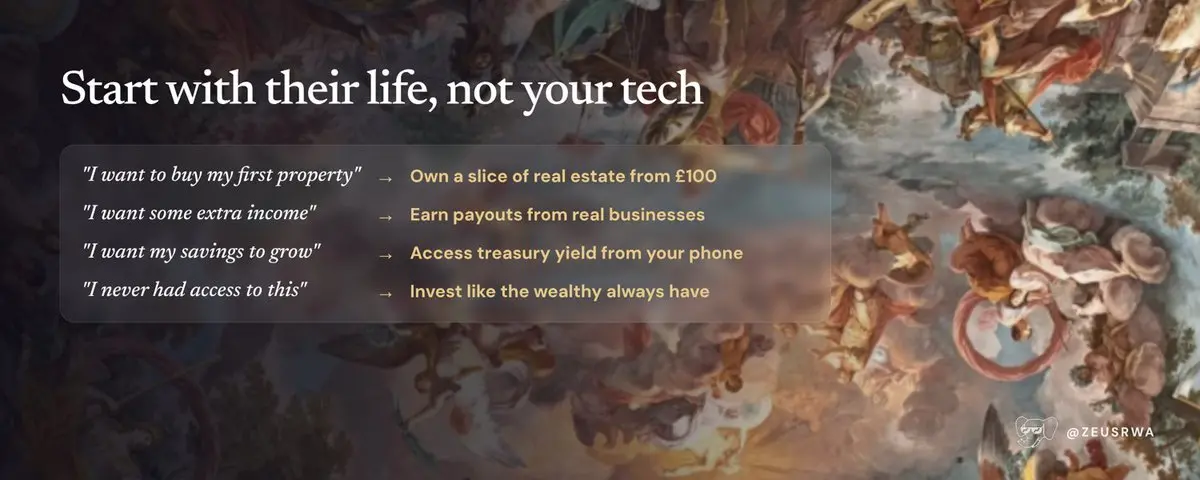
Start from their lives, not from your technology
This point relates to everything above. Most people are not sitting there thinking about how to gain exposure to tokenized real-world assets; they are thinking about buying their first home, earning a little extra income, growing their savings, or accessing investments they could not afford before. Your marketing should start from here.
Give people examples they can truly understand, show how someone might use this product, walk through real scenarios, and explain how it compares to what they are currently doing. Do not just tell people your product is the next big thing; show them how it fits into their lives.
Also, please do not assume everyone understands the terms we use in crypto every day. They do not understand, and they should not be expected to.
8. Build trust before trying to sell
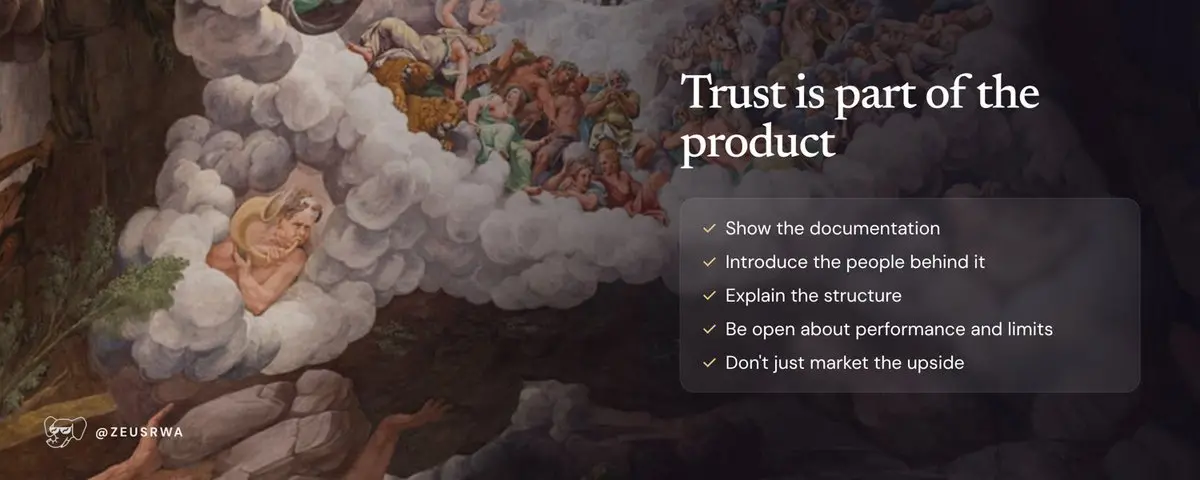
Trust is part of the product
This is even more important in RWA. You are asking people to put money into products tied to real-world assets, legal structures, issuers, and sometimes third-party custodians, which is a different level of responsibility.
People need to understand what they are buying, what is backing it, who is responsible for it, what rights they have, and what risks they are taking. So show the documentation, introduce the people behind the product, explain the structure, and be candid about performance and any limitations.
Do not just market the upside potential. A product can have the best APY in the world, but if no one understands where the returns come from or whether the structure can be trusted, it will be hard to build something that can last. Trust is part of the product.
9. Remember, we are still early
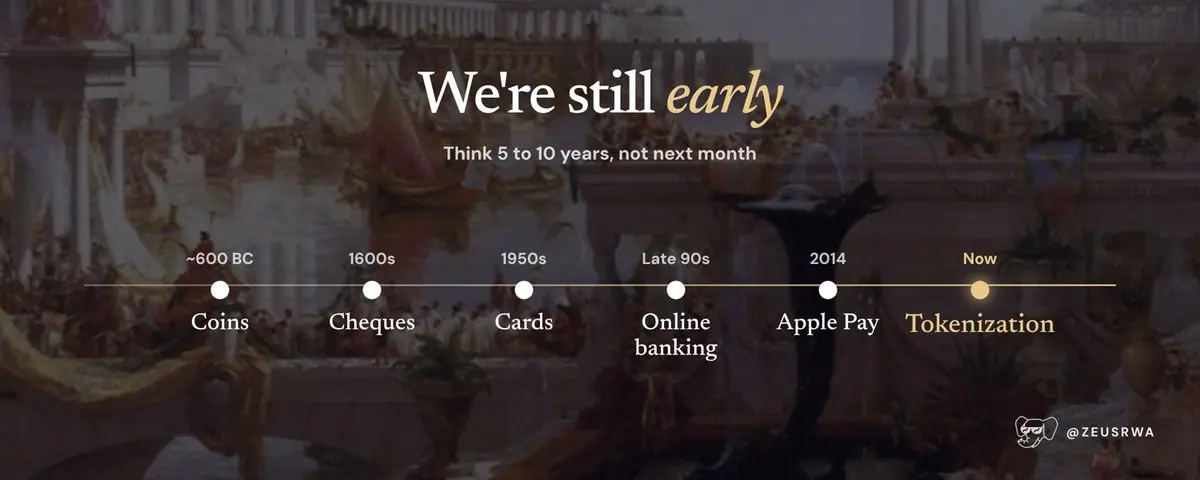
You are still very early
You will hear me repeat this like a broken record, but we are still very early. It is easy for people to get caught up in this week's numbers or next month's launches, but sometimes you have to take a step back and think about where this will be in 5 to 10 years, not just where it is today. This is a generational shift and a generational opportunity.
Look at how long it took for currency itself to change. Coins have existed for over 2,500 years, checks appeared in the 17th century, credit cards did not come until the 1950s, online banking did not really take off until the late 1990s, and Apple Pay was not launched until 2014. These changes seemed slow when they were happening, and now each one has become completely normalized.
Tokenization is the next step in this story. It won't happen overnight, and that's okay. The teams that continue to build, teach, and show up even when it feels slow will still be there when it becomes the norm.
Final Thoughts
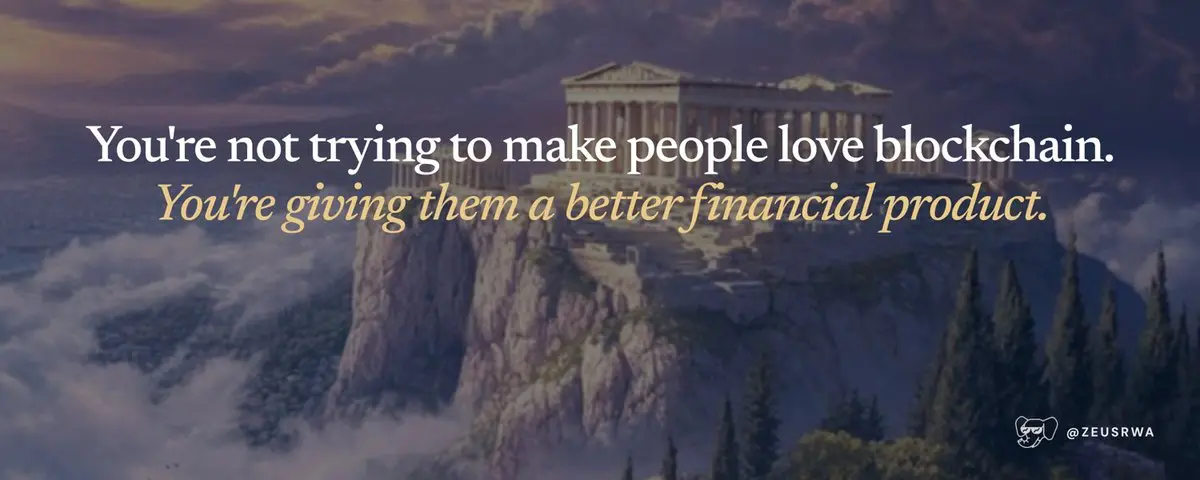
Give them a better financial product
I truly believe that one of the biggest opportunities in this industry lies in how we talk about what we are building. There are some great products out there, but if we continue to communicate in a language that only those already in crypto understand, we can't expect the rest of the world to grasp them.
So simplify things. Explain why, showcase the benefits, be honest about the risks, make it relatable, keep teaching people, and put your product in front of those who might actually use it.
And remember, you are not trying to make everyone fall in love with blockchain; you are giving them a reason to use better financial products. That’s the difference.

ChainCatcher reminds readers to view blockchain rationally, enhance risk awareness, and be cautious of various virtual token issuances and speculations. All content on this site is solely market information or related party opinions, and does not constitute any form of investment advice. If you find sensitive information in the content, please click , and we will handle it promptly.




Popular articles