BTC $64,155.52 -0.09%
ETH $1,785.26 -1.50%
BNB $587.71 +0.39%
XRP $0.9659 +1.80%
SOL $72.81 +3.21%
TRX $0.3081 +0.96%
DOGE $0.0585 -0.17%
ADA $0.1524 +0.67%
BCH $208.25 +1.47%
LINK $9.14 +0.45%
HYPE $67.87 +2.12%
AAVE $112.69 +4.64%
SUI $0.7231 +1.36%
XLM $0.1383 +1.68%
ZEC $938.00 +8.44%
AAPL $352.23 -0.75%
AMZN $255.95 -2.21%
GOOGL $280.69 -2.63%
MSFT $500.44 -4.51%
META $618.53 -1.68%
NVDA $155.13 -2.54%
TSLA $379.99 -0.33%
SNDK $771.04 -6.60%
INTC $53.97 -3.21%
SPCX $140.96 +3.19%
MU $691.92 -5.98%
AMD $494.53 -3.10%

eva

All
Article
Flash

AI infrastructure stocks have evaporated $4.2 trillion since June

Since June of this year, the combined market value of global manufacturing, utility, and mining companies has evaporated by $4.2 trillion, nearly wiping out half of the $9.4 trillion increase in these sectors over the previous year. Companies that previously benefited from the AI data center construction boom, known as "shovel sellers," are now facing concentrated sell-offs. The industrial sector has become the second worst-performing sector of the S&P 500 index this summer, only behind the technology sector.Among them, data center gas power equipment supplier Caterpillar has fallen 44% since its historical high at the end of June, with a market value loss of about $21.4 billion; nuclear power company Oklo's stock price has dropped by 49%. HVAC manufacturer Comfort Systems and fiber optic manufacturer Corning have also lost about half of their market value during the same period.Analysts believe that a large influx of institutional funds into AI infrastructure transactions previously inflated the valuations of some traditional industrial companies, with investors pricing them as semiconductor growth stocks. The uncertainty of regulatory policies for data center construction after the U.S. midterm elections has also intensified selling pressure. Caterpillar's backlog of orders has reached a record $78 billion, with power generation sales up 75% year-on-year; Siemens' backlog of orders for data center electrical equipment has increased by 60%, reaching €7 billion; Eaton's related orders have doubled year-on-year. Some companies expect that the existing backlog of orders can at least support revenue growth until 2027, while some analysts simultaneously warn that companies may have duplicate orders and oversubscriptions, and the order data may not fully reflect real demand.

Viewpoint: After Jensen Huang's absence, customers accelerate the evaluation of AMD and Google chips

Semiconductor analyst Jukan forwarded a report from The Information and commented that an executive from a cloud provider purchasing NVIDIA chips stated that the uncertainty surrounding Jensen Huang is prompting the company to seriously evaluate other chip options, including products from Google and AMD. The executive mentioned that the company had previously considered diversifying to reduce dependence on NVIDIA hardware but refrained due to concerns about offending Jensen Huang; now there is greater worry that his absence could affect the quality and roadmap of future generations of NVIDIA chips, as he plays a crucial role in the company's technology and customer relationships.Jukan pointed out that preventing major customers from further diversifying to other chip manufacturers' AI servers will be one of the key challenges faced by interim CEO Colette Kress and her future official successor. Several customers also indicated that, at least in the short term, NVIDIA chips are still expected to be in short supply, and changes in the management team will not alter the market's perception of its AI server chips as "industry best." Additionally, Kress will need to manage the company's relationships in Washington, where Jensen Huang previously had a close relationship with Trump and actively promoted adjustments to export restrictions to China, but at the same time, he also made enemies in Washington, with some describing his style as combative and feeling pressured. Jukan believes that the uncertainty in leadership is beginning to loosen NVIDIA's lock-in effect on the customer side.

first_img The United States sanctioned 8 Canadian currency exchange companies, accusing them of facilitating Iran's evasion of sanctions

The U.S. Department of the Treasury has imposed financial sanctions on eight Canadian currency service companies, stating that these companies have business dealings with sanctioned Iranian entities. The Treasury Department's statement indicated that the aforementioned companies facilitate the exchange of Iranian rials and other currencies and digital assets, enabling them to conduct international transactions. The related sanctions will isolate these companies from the U.S. dollar financial system.The U.S. Treasury stated that these businesses handle transactions for sanctioned Iranian digital asset exchanges and digital asset addresses associated with the Iranian Islamic Revolutionary Guard Corps. Treasury Secretary Scott Bessent stated that Canada cannot become a haven for illegal financial practitioners providing sanction evasion services to the Iranian regime and its proxies, and the Treasury will pursue and cut off financial channels for the Iranian regime globally. This action was coordinated with Canada's financial intelligence agency FINTRAC, as some sanctioned entities have attempted to evade scrutiny by changing their names and addresses.On the same day, the U.S. "Rewards for Justice" program offered a reward of up to $20 million and possible relocation arrangements for information regarding Iran's nuclear program, including its facilities, equipment, and personnel. The statement noted that Iran has not complied with the International Atomic Energy Agency's safeguards oversight, resulting in the agency losing "knowledge continuity" regarding Iran's production of enriched uranium and centrifuge components.

The seven sisters of the U.S. stock market evaporated about 1.04 trillion U.S. dollars in a single day, and the cloud giants experienced negative cash flow

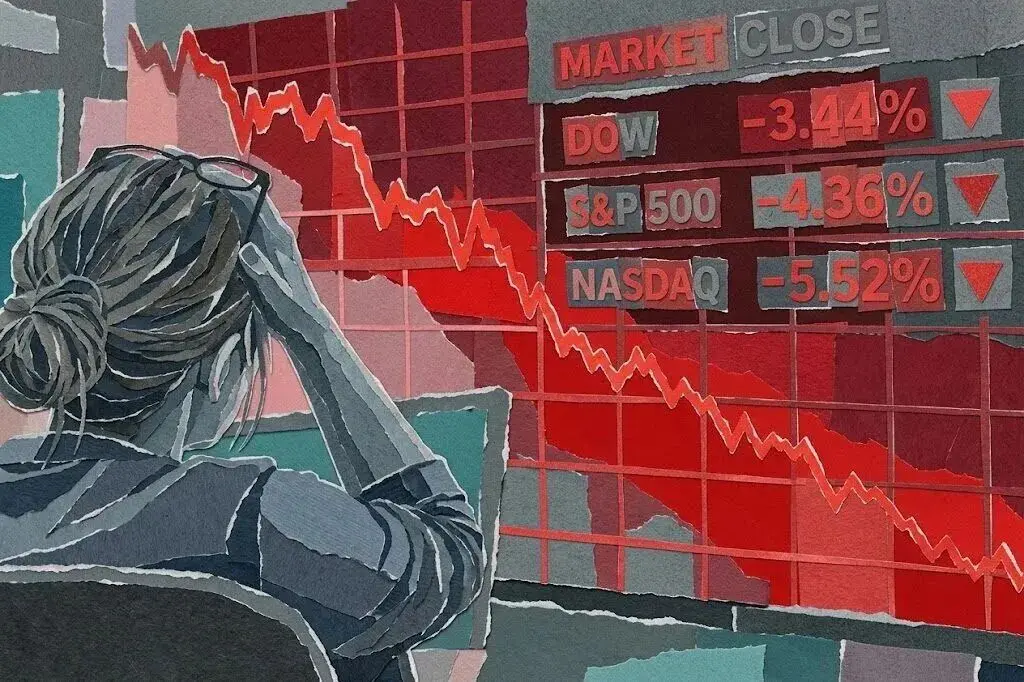
After the U.S. midterm elections, concerns about tightening AI regulations and slowing data center construction have intensified, leading to a significant sell-off in U.S. tech stocks. On November 5, the "Seven Sisters" of U.S. stocks lost approximately $1.04 trillion in market value in a single day, with Nvidia dropping 9.26%, resulting in a loss of over $440 billion in market value, which is 2 to 4 times the decline of core clients like Microsoft, Google, and Amazon.The financial pressure on AI infrastructure investment is increasing. In the third quarter of this year, the combined operating cash flow of Microsoft, Google, Amazon, and Meta was no longer sufficient to cover fixed asset expenditures, with a funding gap of about $26.4 billion, whereas a year ago, the four companies still had a cash flow surplus of about $61.7 billion. Amazon's free cash flow turned from $14.8 billion in the past 12 months to a net outflow of $42.4 billion, while Meta's free cash flow turned negative for the first time in over a decade, and Google's long-term debt increased from about $20 billion to $125 billion.On Election Day, out of 41 local propositions related to data centers in 10 U.S. states, 40 of the voting results leaned towards restricting development, with 27 restrictive or oppositional propositions being passed. Research firm SemiAnalysis predicts that the impact of related policy changes on projects already underway by 2027 will be limited, but it may affect computing power expansion plans for 2028 and beyond. More than 90% of Nvidia's revenue comes from data center business; during the same period, Google Cloud's operating profit in the third quarter reached three times that of the same period last year, AWS's operating profit increased from $11.4 billion to $17.8 billion, and Microsoft Azure's revenue grew by 48%.

Analysis: The seven giants of the US stock market are trapped in a "the more you spend, the more you fall" paradox. This year, for every 1 dollar spent on AI, approximately 6.33 dollars in market value evaporates

The Macro Paper account published on platform X, stating that according to the data compiled by the company, the seven tech giants in the US stock market (Alphabet, Nvidia, Meta, Tesla, Amazon, Microsoft, Apple) have invested approximately 766 billion dollars this year, corresponding to a total market value evaporation of about 4.85 trillion dollars since the peak in 2026, which translates to approximately 6.33 dollars in market value evaporated for every 1 dollar invested.Breaking it down, Alphabet invested about 200 billion dollars, with a market value evaporation of approximately 1.62 trillion dollars; Nvidia invested about 7.4 billion dollars, with a market value evaporation of approximately 1.49 trillion dollars; Meta invested about 140 billion dollars, with a market value evaporation of approximately 501 billion dollars; Tesla invested about 20 billion dollars, with a market value evaporation of approximately 475 billion dollars; Amazon invested about 220 billion dollars, with a market value evaporation of approximately 378 billion dollars; Microsoft invested about 170 billion dollars, with a market value evaporation of approximately 197 billion dollars; Apple invested about 9 billion dollars, with a market value evaporation of approximately 194 billion dollars.Editor's note: The above investment criteria and market value drawdown starting point are as stated by the account, and independent third-party comparison criteria have not yet been disclosed.
app_icon
ChainCatcher Building the Web3 world with innovations.