BTC $64,275.91 -0.85%
ETH $1,802.66 -0.69%
BNB $589.49 -0.51%
XRP $0.9843 +1.81%
SOL $74.51 +1.90%
TRX $0.3096 +1.34%
DOGE $0.0593 +0.42%
ADA $0.1531 -0.71%
BCH $208.08 -1.07%
LINK $9.14 -0.87%
HYPE $68.56 -1.20%
AAVE $111.62 -1.42%
SUI $0.7251 -1.10%
XLM $0.1402 +0.47%
ZEC $936.86 -0.71%
AAPL $351.13 -0.20%
AMZN $259.68 +0.03%
GOOGL $283.08 -0.42%
MSFT $507.73 -1.66%
META $618.23 -1.01%
NVDA $161.00 +2.10%
TSLA $383.98 +0.69%
SNDK $824.40 -0.61%
INTC $55.76 +0.43%
SPCX $142.58 +2.68%
MU $733.48 -0.40%
AMD $515.08 -0.39%

evaporated

All
Article
Flash

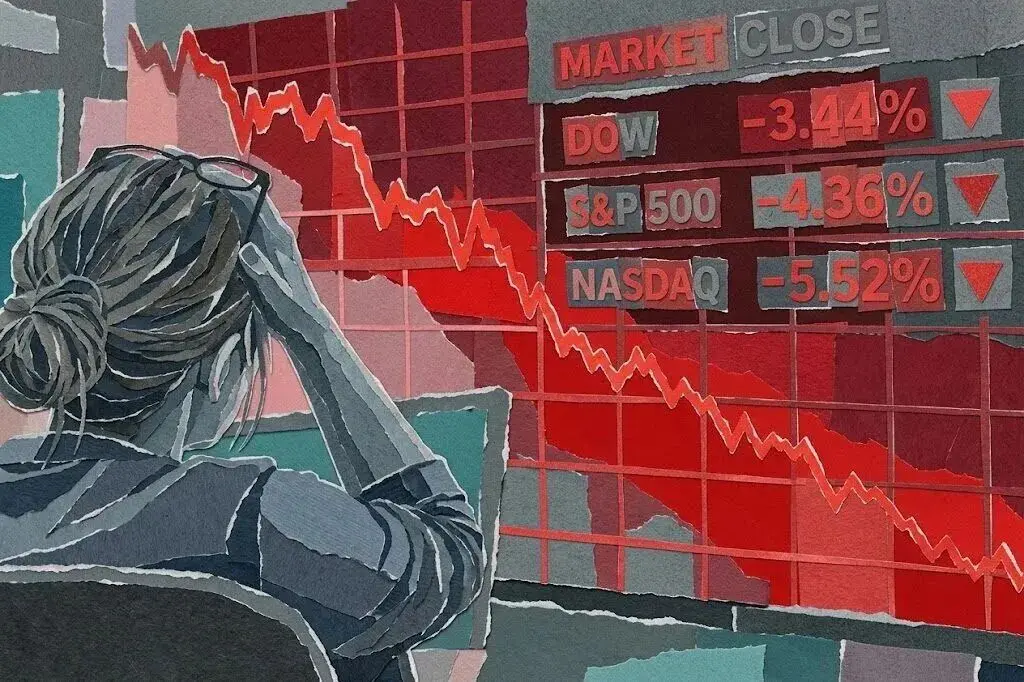
AI infrastructure stocks have evaporated $4.2 trillion since June

Since June of this year, the combined market value of global manufacturing, utility, and mining companies has evaporated by $4.2 trillion, nearly wiping out half of the $9.4 trillion increase in these sectors over the previous year. Companies that previously benefited from the AI data center construction boom, known as "shovel sellers," are now facing concentrated sell-offs. The industrial sector has become the second worst-performing sector of the S&P 500 index this summer, only behind the technology sector.Among them, data center gas power equipment supplier Caterpillar has fallen 44% since its historical high at the end of June, with a market value loss of about $21.4 billion; nuclear power company Oklo's stock price has dropped by 49%. HVAC manufacturer Comfort Systems and fiber optic manufacturer Corning have also lost about half of their market value during the same period.Analysts believe that a large influx of institutional funds into AI infrastructure transactions previously inflated the valuations of some traditional industrial companies, with investors pricing them as semiconductor growth stocks. The uncertainty of regulatory policies for data center construction after the U.S. midterm elections has also intensified selling pressure. Caterpillar's backlog of orders has reached a record $78 billion, with power generation sales up 75% year-on-year; Siemens' backlog of orders for data center electrical equipment has increased by 60%, reaching €7 billion; Eaton's related orders have doubled year-on-year. Some companies expect that the existing backlog of orders can at least support revenue growth until 2027, while some analysts simultaneously warn that companies may have duplicate orders and oversubscriptions, and the order data may not fully reflect real demand.

The seven sisters of the U.S. stock market evaporated about 1.04 trillion U.S. dollars in a single day, and the cloud giants experienced negative cash flow

After the U.S. midterm elections, concerns about tightening AI regulations and slowing data center construction have intensified, leading to a significant sell-off in U.S. tech stocks. On November 5, the "Seven Sisters" of U.S. stocks lost approximately $1.04 trillion in market value in a single day, with Nvidia dropping 9.26%, resulting in a loss of over $440 billion in market value, which is 2 to 4 times the decline of core clients like Microsoft, Google, and Amazon.The financial pressure on AI infrastructure investment is increasing. In the third quarter of this year, the combined operating cash flow of Microsoft, Google, Amazon, and Meta was no longer sufficient to cover fixed asset expenditures, with a funding gap of about $26.4 billion, whereas a year ago, the four companies still had a cash flow surplus of about $61.7 billion. Amazon's free cash flow turned from $14.8 billion in the past 12 months to a net outflow of $42.4 billion, while Meta's free cash flow turned negative for the first time in over a decade, and Google's long-term debt increased from about $20 billion to $125 billion.On Election Day, out of 41 local propositions related to data centers in 10 U.S. states, 40 of the voting results leaned towards restricting development, with 27 restrictive or oppositional propositions being passed. Research firm SemiAnalysis predicts that the impact of related policy changes on projects already underway by 2027 will be limited, but it may affect computing power expansion plans for 2028 and beyond. More than 90% of Nvidia's revenue comes from data center business; during the same period, Google Cloud's operating profit in the third quarter reached three times that of the same period last year, AWS's operating profit increased from $11.4 billion to $17.8 billion, and Microsoft Azure's revenue grew by 48%.

After the release of Google's financial report, its market value evaporated by nearly 500 billion dollars, and analysts expect the stock price to maintain a range-bound fluctuation in the short term

According to CNBC, after the release of Alphabet's third-quarter financial report, the stock price fell more than 12% to $285, with a market value shrinking by nearly $500 billion. Despite Google Cloud's revenue growing 103% year-over-year, the market is still focused on earnings per share falling short of expectations and the negative free cash flow amid ongoing investments in AI infrastructure.Mike Khouw stated in a CNBC column that the fundamentals of Alphabet's core business remain intact, but a short-term rapid rebound faces two obstacles. First, multiple institutions have downgraded ratings, target prices, or future earnings forecasts. He pointed out that historically, stocks that have experienced concentrated downgrades tend to underperform the market or trade sideways in the following 30 days, and institutional rebalancing can also limit upward momentum. Second, the gap down after the earnings report further damaged the technical pattern.In terms of technical indicators, Alphabet's RSI has dropped to just over 20, and the MACD sell signal has strengthened. However, Khouw believes that with the stock price close to the 52-week low of $270.70, combined with an extremely oversold condition, further declines may be limited.In terms of trading strategy, Khouw suggested using a sell wide strangle options strategy to cope with the anticipated range-bound fluctuations. He believes that continued selling in the overall market poses the main downside risk, while unexpected positive news driving the stock price up rapidly could threaten the bullish call option selling side of the strategy.

Data: Bitcoin treasury company’s market value has evaporated by over 100 billion USD, while the holdings have increased to 1.14 million coins

Analyst Darkfost pointed out that since October 2025, the total market value of global Bitcoin treasury companies has shrunk from $396 billion to $272 billion, evaporating over $100 billion. During the same period, the total amount of Bitcoin held by these companies increased from 953,000 to 1.14 million—this decline in market value is entirely driven by the drop in coin price, rather than selling off.However, it is worth noting that since Bitcoin entered a significantly undervalued range in May of this year, the pace of accumulation has sharply slowed, nearly coming to a standstill. The most intensive buying period for these companies was concentrated between November 2024 and October 2025, with the holdings tripling in less than a year, and the buying price range was approximately $75,000 to $125,000—right in the historical high price range of Bitcoin.The current question is: since these companies have built up significant positions in the top range, will they sell at lower levels? Strategy has recently taken the lead in selling Bitcoin; will this behavior be emulated by other treasury companies, becoming a new source of selling pressure in the market? With the current total holding of 1.14 million coins, if more companies are forced to reduce their positions in a sluggish market to alleviate financial pressure, it could pose additional downside risks to Bitcoin prices.
app_icon
ChainCatcher Building the Web3 world with innovations.