








Finance × Metaverse: A Financial System Advancing Through the Integration of Virtual and Real Worlds

 This article discusses the rich possibilities and related challenges of the integration and development of the financial system and the metaverse from a practical perspective.
Author: CICC
In recent years, "DeFi," cryptocurrencies, and other related concepts have rapidly developed in some overseas countries, sparking many controversies. Some viewpoints suggest that with the gradual maturation of the metaverse concept, a financial system based on cryptocurrencies and "DeFi," integrating decentralized ideas, may emerge. Others argue that cryptocurrencies are a worthless bubble and that the integration of the metaverse and financial systems must be grounded in reality. This article discusses the rich possibilities and related challenges of the integration of financial systems and the metaverse from a practical perspective.
Abstract
Two paths for the integration of the metaverse and financial systems: "Metaverse Finance" vs. "Financial Metaverse." The metaverse is a digital world built on technologies such as mixed reality and digital modeling, characterized by a new economy, identity, and institutional system based on decentralized ideas. Since "the virtual world of the metaverse" represents our desire for a "new life" and our infinite imagination of the unknown world, we envision it to be all-encompassing to meet everyone's expectations. However, for traditional financial institutions wishing to participate in the construction of the metaverse, such a virtual world may seem too distant and the entry points too vague. From a realistic perspective, we believe that the integration of financial systems and the metaverse is more rooted in the development of underlying technologies of the metaverse and the extension of scenarios, bringing new development opportunities to the financial system based on technology and scenarios, with two development paths: "Metaverse Finance" and "Financial Metaverse."
"Metaverse Finance": Supporting economic activities in the metaverse within a decentralized narrative framework. Based on our definition of the metaverse, we believe that the financial system within the metaverse will be founded on decentralized ideas and distributed ledger technologies (such as blockchain), starting with payments and gradually developing into various subfields of financial activities such as lending and trading, and further expanding into dimensions like asset rights confirmation and social organization, thereby supporting economic activities in the metaverse under a decentralized framework. Currently, due to varying degrees of acceptance of "Metaverse Finance" in different countries and regions, its development faces challenges and risks from multiple aspects, including technology, market, operations, and regulation. Looking ahead, we believe that under the current national sovereignty and social structure, a fully decentralized metaverse financial system is unlikely to exist widely; however, its decentralized concepts, blockchain and smart contract technologies, and some innovative models can still provide beneficial references for the development of the financial system.
"Financial Metaverse": The metaverse concept and technology provide imaginative space for the digital transformation of financial institutions. On one hand, as the metaverse gradually advances, the application of its underlying technologies, such as modeling and rendering, interaction technology, the Internet of Things, network computing power, blockchain, and artificial intelligence, is expected to accelerate, and we believe that financial institutions will benefit from the rapid development of these technologies to better achieve their digital transformation goals, including business innovation, process reengineering, and organizational change. On the other hand, the metaverse paints a picture of a virtual world with digital native capabilities and even a complete economic and social system. We believe that the immersive experience and the realism of virtual elements brought by the metaverse will provide richer imaginative space for financial institutions in aspects such as online collaboration, online business development, and customer experience upgrades.
Risks: Uncertainty in industry policy regulation; technology development not meeting expectations; commercialization process not meeting expectations.
Main Text
Two paths for the integration of the metaverse and finance: "Metaverse Finance" vs. "Financial Metaverse"
Referring to the CICC TMT group's report "Metaverse: Spatial Elevation, Temporal Extension, Social Reconstruction," the metaverse is a digital world built on technologies such as mixed reality and digital modeling, characterized by a new economy, identity, and institutional system based on decentralized ideas. Since "the virtual world of the metaverse" represents our desire for a "new life" and our infinite imagination of the unknown world, we envision it to be all-encompassing to meet everyone's expectations. However, for traditional financial institutions wishing to participate in the construction of the metaverse, such a virtual world may seem too distant and the entry points too vague. From a realistic perspective, we believe that the integration of financial systems and the metaverse is more rooted in the development of underlying technologies of the metaverse and the extension of scenarios, bringing new development opportunities to the financial system.
In recent years, decentralized financial systems represented by cryptocurrencies have rapidly developed in some overseas countries, but they have also sparked many controversies. Some viewpoints suggest that with the gradual maturation of the metaverse concept, a financial system based on cryptocurrencies and "DeFi," integrating decentralized ideas, may emerge. Others argue that cryptocurrencies are a worthless bubble and that the integration of the metaverse and finance must ultimately be grounded in real-world development. At the same time, we also see an increasing number of financial institutions treating the metaverse as one of the levers for digital transformation, exploring new financial services around the development of the metaverse while focusing on leveraging relevant technologies and scenarios of the metaverse to empower their digital transformation and expand new channels.
Therefore, we believe that the integration of finance and the metaverse can be divided into two paths: 1) "Metaverse Finance": Based on our definition of the metaverse, we believe that the financial system within the metaverse will be founded on decentralized ideas and distributed ledger technologies (such as blockchain), starting with payments and gradually developing into various subfields of financial activities such as lending and trading, and further expanding into dimensions like asset rights confirmation and social organization, thereby supporting economic activities in the metaverse under a decentralized framework; 2) "Financial Metaverse": Against the backdrop of the ongoing acceleration of digital transformation in financial institutions, the maturity of underlying technologies of the metaverse and the continuous extension of its scenarios are expected to further promote the digital transformation of financial institutions, bringing more possibilities for their digital transformation paths and ultimate forms.
"Metaverse Finance": Supporting economic activities in the metaverse within a decentralized narrative framework
Overall, Metaverse Finance has developed rapidly in recent years, characterized by a rapid expansion of user scale, continuous innovation of product functions, and ongoing expansion of service dimensions. However, compared to traditional financial systems, its scale remains relatively small, and its penetration into the real economy is still low, currently unable to widely serve the financial needs in reality, leaving its future prospects somewhat uncertain.
At the same time, Metaverse Finance also faces challenges and risks from multiple aspects, including technology, market, operations, and regulation, such as: 1) Defects in technology application leading to structural problems within Metaverse Finance; 2) Over-centralization of power and inefficiency in operational governance causing Metaverse Finance to lose competitiveness and attractiveness; 3) Excessive speculative trading and high leverage in market structure potentially triggering systemic risks, impacting the trust and consensus of Metaverse Finance; 4) Significant differences in regulatory policies across countries leading to fragmentation in the development of Metaverse Finance.
Looking ahead, we believe that under the current national sovereignty and social structure, a fully decentralized Metaverse financial system is unlikely to exist widely; however, its decentralized concepts, blockchain and smart contract technologies, and some innovative models can still provide beneficial references for the development of the financial system.
At the same time, we believe that the future of Metaverse Finance may be built on the foundations of central banks and other regulatory agencies, with centralized and decentralized financial institutions as operational entities, creating a more transparent, efficient, and inclusive financial system. In the process of the metaverse and traditional financial systems merging and advancing together, we expect that Metaverse Finance may gradually be incorporated into regulatory frameworks, establish compliant entry points, enhance the stability of the financial system, and empower the traditional financial system, continuously optimizing the efficiency and experience of traditional financial services, reducing intermediary issues, lowering operational costs, and decreasing user entry barriers.
"Financial Metaverse": The metaverse technology and scenarios provide more possibilities for the digital transformation of financial institutions
From a practical perspective, as the digital transformation of financial institutions continues to accelerate, we believe that the "metaverse" holds more realistic significance for traditional financial institutions, stemming from the continuous maturation of its underlying technologies and the imaginative potential brought by the extension of its scenarios, which is expected to further promote the digital transformation of financial institutions and bring more rich possibilities and imaginative space for their digital transformation paths and ultimate forms.
On one hand, as the "metaverse" gradually advances, the application of its underlying technologies, such as modeling and rendering, interaction technology, the Internet of Things, network computing power, blockchain, and artificial intelligence, is expected to accelerate, and we believe that financial institutions will benefit from the rapid development of these technologies to better achieve their digital transformation goals, including business innovation, process reengineering, and organizational change; on the other hand, the "metaverse" paints a picture of a virtual world with digital native capabilities and even a complete economic and social system. We believe that the immersive experience and the realism of virtual elements brought by the metaverse will provide richer imaginative space for financial institutions in aspects such as online collaboration, online business development, and customer experience upgrades.
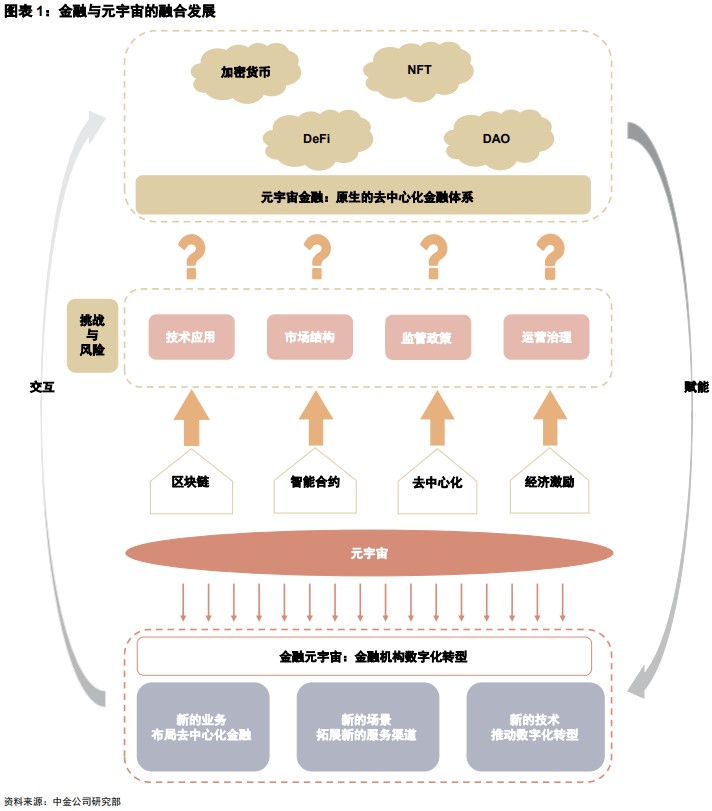
Metaverse Finance develops rapidly but still faces many challenges; in the future, it may integrate with centralized systems.
The development of the Metaverse financial system is rapid, but there is a trend of "detaching from reality" and asset bubbles.
Within the decentralized narrative framework, the Metaverse financial system starts with basic payments, gradually developing into various subfields of financial activities such as lending and trading, and further expanding into dimensions like asset rights confirmation and social organization. Overall, Metaverse Finance has developed rapidly in recent years, but compared to traditional financial systems, its scale remains relatively small, and its future prospects are still somewhat uncertain.
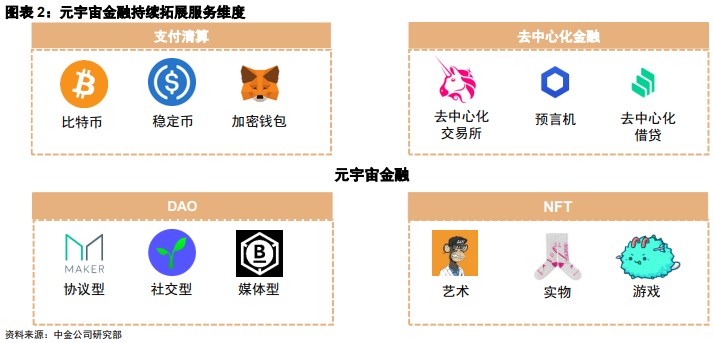
Payment and settlement: "Detaching from reality" in cryptocurrencies
Bitcoin, as the starting point of cryptocurrencies, was designed at its inception to operate as a peer-to-peer electronic cash system that could function without intermediary institutions. However, although the number of cryptocurrencies has exploded over the past decade, with the overall market value growing to $2.37 trillion by the end of 2021, their use has primarily been concentrated in speculative trading within the crypto economy, with little empowerment of the payment and settlement processes in the real economy, presenting a trend of "detaching from reality" and forming a significant price bubble.
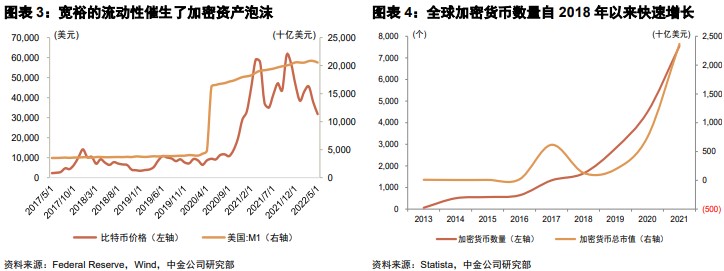
We believe that the decoupling of cryptocurrencies from payment and settlement activities is primarily due to: 1) The lack of intrinsic value and the absence of a centralized institution's endorsement make it difficult for them to fulfill monetary functions; 2) The decentralized payment and settlement system faces a "trilemma," making it challenging for cryptocurrencies to simultaneously ensure security and achieve scalability; 3) The current digital payment and settlement system is already quite efficient, having established a solid bilateral network and user habits, making it difficult for cryptocurrencies to compete.
First, cryptocurrencies exhibit significant price volatility, and most lack intrinsic value, making it difficult to fulfill basic monetary functions. Cryptocurrencies primarily rely on unstable "consensus" without the endorsement of intermediary institutions to form prices. However, since most cryptocurrencies are decoupled from the real economy and lack intrinsic value, the "consensus" of their investors is difficult to maintain, leading to significant price fluctuations and making it challenging for cryptocurrencies to fulfill basic monetary functions. The subsequent influx of speculative investors further drives speculative trading, creating a vicious cycle that detaches cryptocurrencies with peer-to-peer decentralized payment functions from real payment and settlement needs.
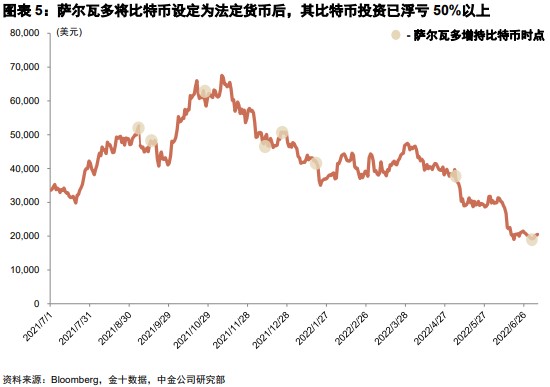
Second, based on decentralization, cryptocurrencies currently face challenges in ensuring security while achieving scalability. Cryptocurrencies built on public chains require reasonable incentives to attract participants (such as "miners") to support the operation of the public chain. As the scale of the public chain expands and performance improves, transaction costs may decrease, leading to a decline in economic incentives. Therefore, to achieve further scalability, decentralized public chains need to establish economic mechanisms that can support both scale expansion and performance upgrades while continuously providing high incentives. Although cross-chain protocols can enhance interoperability between blockchains and increase the upper limit of blockchain transaction scales, there is still room for improvement in security guarantees.
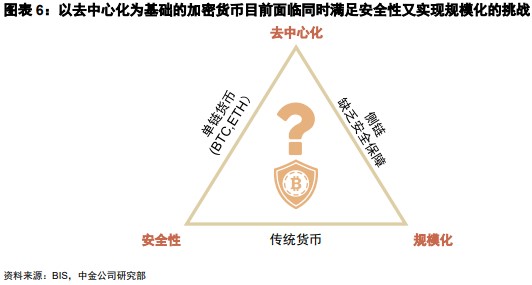
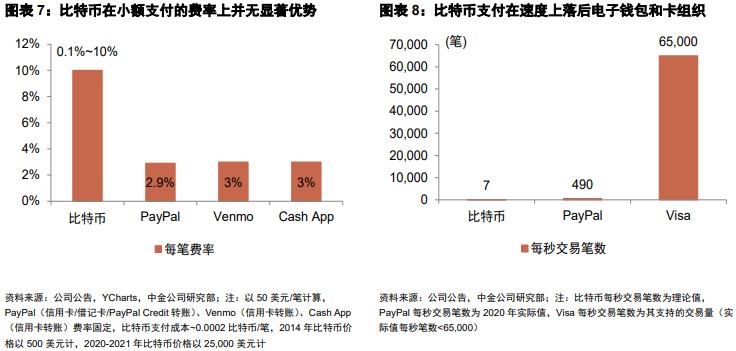
Finally, the existing digital payment and settlement systems are already quite efficient, making it difficult for cryptocurrencies to achieve disruption in the payment field. 1) In terms of payment performance, since cryptocurrencies are designed primarily to ensure decentralized consensus and security, they still lag behind leading electronic payment companies; 2) In terms of bilateral network scale, the current penetration of cryptocurrencies into the real economy remains low, relying more on electronic payment companies (such as Shopify, Visa) for support, with payment transactions still operating within centralized systems; 3) In terms of user habits, bank cards and electronic wallets remain the preferred digital payment methods, making it difficult for cryptocurrencies to disrupt established user habits even if the user experience is similar.
DeFi: An incomplete mapping of the traditional financial system
The concept of decentralized finance (DeFi) emerged in 2018, with Brendan Forster announcing the birth of the DeFi concept in "Announcing De.Fi, A Community for Decentralized Finance Platforms": a financial system built on decentralized blockchain technology, fully open-source, and with a stable developer platform.
Overall, DeFi does not rely on centralized intermediaries such as brokers, exchanges, or banks, but instead utilizes smart contracts on the blockchain to complete financial transactions. The core feature of "idealized DeFi" is that no participant can unilaterally perform: 1) Control of accounts; 2) Review of transaction execution; 3) Review of protocol execution.
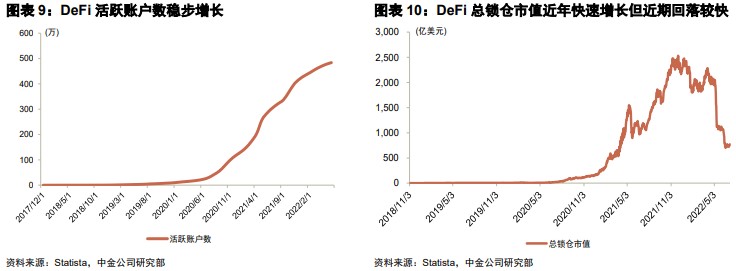
As of the end of June 2022, according to Statista, the total locked value (TVL) of DeFi reached $77.05 billion, with a total of 4.825 million active accounts. However, its penetration into economic activities and financial services remains relatively low, with TVL accounting for about 0.08% of last year's global GDP and 0.3% of the off-chain financial services system (approximately $26 trillion according to Business Research Company).
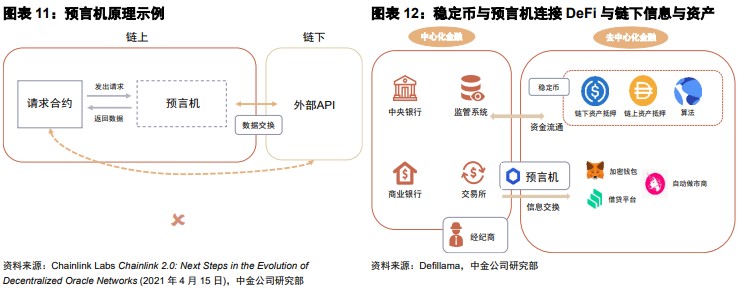
In terms of operational mechanisms, DeFi is not completely independent of the real world. It connects with off-chain financial systems through stablecoins and oracles, allowing on-chain assets to effectively communicate with off-chain and respond to various variables in the real world.
► Stablecoins: Funding channels and value scales connecting the real economy and the crypto economy. Stablecoins serve as a medium of exchange between fiat currencies and cryptocurrencies, avoiding the limitations of direct conversion between cryptocurrencies and fiat currencies, facilitating the flow of funds on-chain and off-chain, while also relying on relatively stable values to become a "safe haven" for assets in the crypto economy. Based on the objects they are pegged to and their operational mechanisms, stablecoins can be divided into the following three types:
Stablecoins backed by off-chain assets: These stablecoins typically use fiat currencies, precious metals, and other off-chain assets as collateral. A representative example is USDT issued by Tether. USDT is currently the largest stablecoin by market share, accounting for 43.64% of the total market value of all stablecoins as of the end of June 2022. For every unit of USDT issued, the company deposits $1 in its bank account, allowing users to exchange USDT for USD at a 1:1 ratio at any time. Issuers usually hire independent auditing firms to regularly verify the supporting assets in the custodial accounts. Other high-market-cap off-chain-backed stablecoins include USDC, BUSD, etc.
Stablecoins backed by on-chain assets: These stablecoins use cryptocurrencies like ETH as collateral, with the collateral held by smart contracts. Users can deposit cryptocurrency collateral and receive stablecoins or redeem collateral by depositing stablecoins. Because the value of crypto assets often fluctuates more than fiat currencies, users typically need to over-collateralize at a ratio greater than 1:1. Examples of such stablecoins include DAI.
Uncollateralized algorithmic stablecoins: These stablecoins adjust the total market currency supply based on algorithms, increasing market supply when the stablecoin price is above the pegged price and reducing supply when the stablecoin price is below the pegged price, or balancing the stablecoin price based on arbitrage trading, but they carry relatively high implicit risks.
► Oracles: Information channels connecting the real economy and the crypto economy. The blockchain itself is a closed-loop system, and smart contracts cannot actively obtain external data. Oracles can write external information into the blockchain, allowing smart contracts to respond to information from the real world, thus completing data communication between the blockchain and the real world.
Compared to the current centralized financial system, DeFi theoretically has advantages in cost, efficiency, transparency, security, openness, inclusivity, and privacy protection. However, the current DeFi ecosystem is still in its early stages, and the financial system is not yet完善, carrying significant risks.
First, the DeFi ecosystem has relatively few restrictions on leveraged trading, and excessive leverage can trigger a chain of liquidations during significant price fluctuations in cryptocurrencies, potentially leading to systemic crises in DeFi. For example, during the significant drop in ETH in May 2021 and the Luna crash in 2022, the total locked value of DeFi shrank by -37.5% and -46% in a single day, respectively.
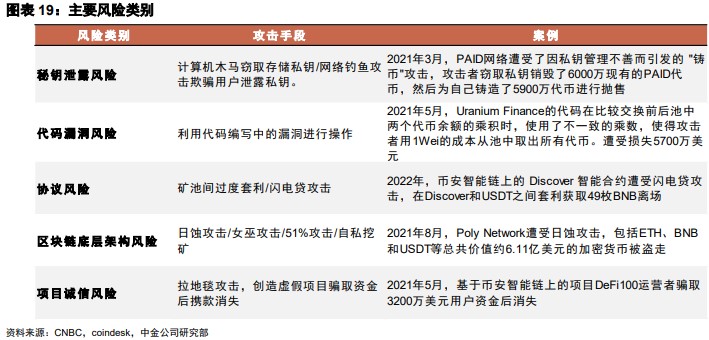
Second, malicious vulnerabilities and hacker attacks have repeatedly challenged the security and trustworthiness of the DeFi ecosystem. For instance, in March 2022, the underlying cross-chain bridge of the popular game Axie Infinity was attacked, resulting in losses of $625 million, while a report by Elliptic indicated that the DeFi ecosystem lost $1.55 billion due to theft throughout 2021.
Non-fungible tokens (NFTs): The underlying infrastructure for asset rights confirmation and value empowerment
NFTs refer to digital tokens that record corresponding asset rights information on the blockchain using smart contracts. NFTs are characterized by immutability and traceability, but unlike fungible tokens like Bitcoin and Ethereum, each NFT is unique and cannot be exchanged or divided. Based on this, NFTs can carry functions such as asset rights confirmation, scarcity construction, identity identification, and transaction circulation.
NFTs have developed rapidly in recent years. According to BlockBeats data, as of the end of June 2022, the total market value of NFTs was approximately $23 billion. Among them, NFTs can be categorized based on application scenarios and functions, including collectibles, gaming, art, utility, and virtual worlds. According to Nonfungible statistics, in Q1 2022, NFT transactions were primarily concentrated in the collectibles sector, accounting for over 76%, followed by the art and gaming sectors, each accounting for 8%.
Currently, the NFT market is mixed, with a significant head effect. NFT projects issued by well-known artists often generate high interest and receive market value recognition. For example, "Everydays: The First 5000 Days" was auctioned for $69.35 million at the beginning of 2021. In contrast, low-quality NFT projects often have short lifespans and struggle to sustain operations, with prices typically declining after the initial sale.
In terms of trading platform models, NFT trading platforms can be divided into gallery-style and open-style. Gallery-style platforms require a selection process for listing works, have higher entry barriers, and mainly connect with high-value artworks, represented by SuperRare. In contrast, open-style platforms allow any creator to publish content, resulting in a wider variety of works but with relatively more varied quality, represented by OpenSea.

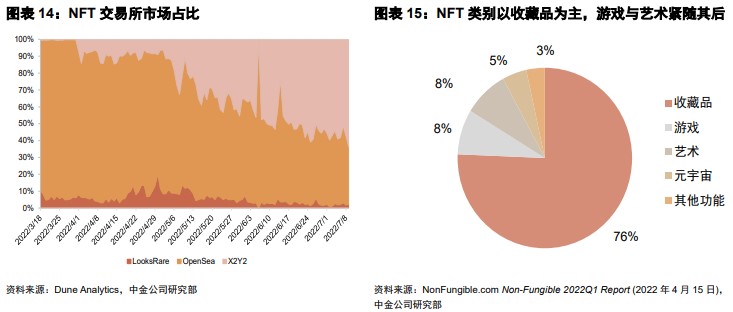
Based on the characteristics of NFTs, they can provide participants with value in four dimensions:
► Asset rights confirmation: Based on the immutability of the blockchain and the non-fungibility of NFTs, NFTs can record asset ownership and historical transaction flow information. For creators, they can trace copyrights during the circulation of NFTs to prevent infringement and continue to receive royalties in subsequent transactions, which helps incentivize their creative efforts.
► Scarcity construction: In the digital world, anyone can freely copy and share digital content, with no distinction between originals and copies. NFTs, by recording the ownership of original digital content on-chain, differentiate the true owner of a digital content from the holder of a copy, artificially constructing digital scarcity.
► Identity identification: Due to the uniqueness and limited nature of NFTs, holding a certain type of NFT can itself serve as a form of identity identification. For example, the NFT avatars of the Bored Ape Yacht Club (BAYC) are not just artworks; they can also serve as membership cards for the "Yacht Club," granting exclusive access and participation rights to certain Ethereum dApps (decentralized applications) and offline BAYC events. In the future, NFTs could mark individuals' unique information, such as resumes and health statuses.
► Transaction circulation: Compared to traditional auction and private negotiation channels, the secondary market for NFTs is more transparent, allowing participants to trade and transfer NFTs more conveniently and customize profit-sharing rules, thereby enhancing the liquidity of the assets anchored by NFTs. However, excessive secondary trading has also contributed to the emergence of NFT price bubbles. In the future, we believe that the secondary market for NFTs will require more platform rules for protection or regulatory intervention.
DAO: Decentralized organizational structure
DAOs (Decentralized Autonomous Organizations) are a form of decentralized organization that coordinates self-governance through a set of shared rules executed on the blockchain. Compared to the traditional pyramid structure of corporate governance, DAOs adopt a more egalitarian structure, allowing everyone in the organization to vote on issues that affect their interests, thus influencing decision-making.
The governance of DAOs is divided into on-chain governance and off-chain governance. On-chain governance involves coding organizational rules and making voting decisions based on the number of governance tokens held by participants; off-chain governance occurs outside the blockchain, where the organization discusses and votes on non-binding common intentions through social platforms.
In the early stages of development, the on-chain token holdings and corresponding voting rights of DAOs were concentrated among project teams, so they typically reached more potential users through off-chain governance. As projects mature and the distribution of token holdings becomes more decentralized, DAOs gradually shift towards on-chain governance as the main body, truly achieving decentralized self-governance under code constraints.
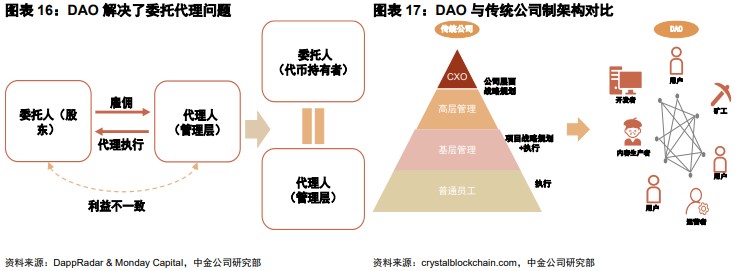
Based on their decentralized structure, DAOs have the following advantages:
► Greater transparency: The organizational rules, rights and obligations of participants, and reward and punishment mechanisms of DAOs are all publicly transparent and cannot be altered without obtaining a majority vote. Additionally, every transaction and decision in DAO projects is recorded on the blockchain, allowing for historical record tracing.
► More consensus: Since DAOs operate under organizational rules determined by participant voting, they can significantly reduce friction within the organization, making it easier to build consensus and trust.
► More openness: DAOs are typically built on public chains, allowing anyone holding governance tokens above a certain threshold to participate in governance, with no entry barriers based on various identities. Therefore, compared to traditional companies, DAOs are more likely to achieve global expansion.
Intrinsic issues constrain the development of Metaverse Finance, while external regulatory pressures impact decentralized principles.
We believe that Metaverse Finance faces risks and challenges from four major aspects: technology application, operational governance, economic systems, and regulatory policies. Among them: 1) Defects in technology application will lead to structural problems within Metaverse Finance; 2) Over-centralization of power and inefficiency in operational governance may cause Metaverse Finance to lose competitiveness and attractiveness; 3) Excessive speculative trading and high leverage in market structure may trigger systemic risks, impacting the trust and consensus of Metaverse Finance; 4) Significant differences in regulatory policies across countries may lead to fragmentation in the Metaverse financial system.
Technology application aspect: Constraints from underlying mechanisms
First, the underlying consensus algorithm has certain issues regarding transaction costs. Currently, major cryptocurrencies use proof-of-work (PoW) consensus algorithms, which consume a lot of electricity and have high transaction costs. For instance, a single Bitcoin transaction consumes approximately 2,000 kilowatt-hours of electricity, and during periods of significant market volatility, on-chain transactions may become congested. To prioritize transaction verification, initiators must pay higher costs.
Second, the decentralized underlying consensus algorithm also limits transaction throughput and scalability. In the short term, developers have shifted the transaction computation process from the main chain to side chains through Layer 2, reducing the load and limitations on the main chain, theoretically increasing throughput to 2,000-4,000 transactions per second. However, Layer 2 upgrades also introduce more security risks. In the long term, transitioning from proof-of-work (PoW) to proof-of-stake (PoS) consensus mechanisms and introducing sharding technology may enhance throughput limits and reduce transaction energy consumption. However, PoS may exacerbate inequalities in incentive distribution and lead to excessive centralization of token distribution.
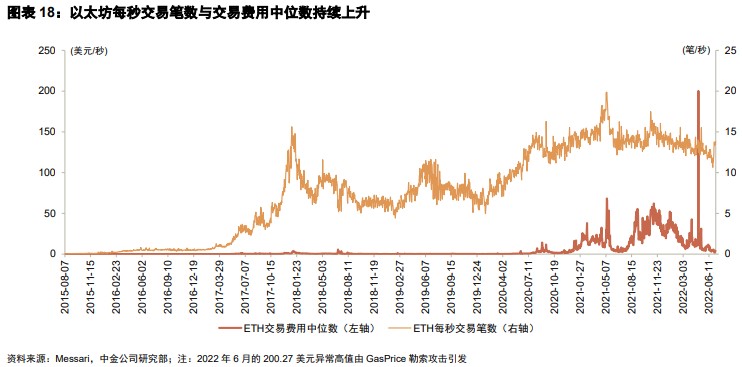
Finally, Metaverse Finance carries significant security risks. In 2021 alone, losses in the crypto economy due to hacker attacks exceeded $1 billion. To mitigate this risk, investors can hire professional auditing and due diligence firms to reduce potential vulnerabilities, but this approach not only increases investment costs but also contradicts the original intention of Metaverse Finance to reduce credit costs.
Market structure aspect: High-leverage speculative trading brings higher market risks
The economic system based on decentralized blockchain technology struggles to simultaneously meet the requirements of security and scalability, making it difficult for Metaverse Finance to widely serve the real economy, leading to its main activities being concentrated in speculative fields and bringing higher market risks.
Currently, the leverage ratio in the Metaverse financial system is far higher than that in off-chain financial systems, exacerbating its pro-cyclical characteristics. When the prices of cryptocurrency assets decline, investors undergo a passive deleveraging process, and the subsequent asset sell-off further drives down cryptocurrency prices, triggering a vicious cycle.
Moreover, we believe that the current Metaverse financial system lacks a role for a lender of last resort, making it more vulnerable to liquidity crises than centralized financial systems. The characteristics of circular collateral and the ability of DeFi assets to be combined increase the correlation of prices among various underlying assets in DeFi, further exacerbating the transmission of market risks. For example, after the LUNA-UST crash, lending protocols like Anchor, synthetic asset platforms like Mirror, and the compensation-focused Ozone all faced severe impacts.
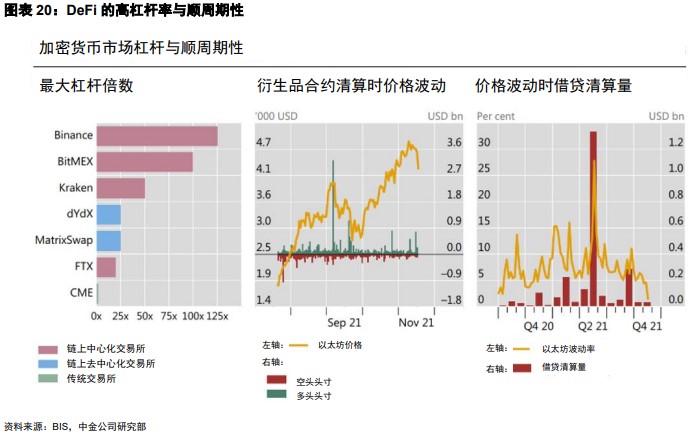
Operational governance aspect: Power concentration and chaotic inefficiency caused by irregular governance
In terms of operational governance, due to being in the early stages of industry competition, some projects in the current Metaverse financial landscape have underlying distribution mechanisms that lead to excessive concentration of power and chaotic inefficiency in governance, causing issues with the distribution of governance rights and governance efficiency. Users tend to view governance tokens as profit tools rather than voting tools, focusing more on financial returns than on participating in governance, making it easier to sacrifice the long-term development of projects in pursuit of short-term gains.
In terms of governance rights distribution, although the goal of Metaverse Finance is to establish a decentralized financial system, in many projects, founding teams and early investors hold a high share of governance tokens, giving project parties and investors control over overall decision-making, allowing them to unilaterally modify project protocols based on their own interests, violating the principles of decentralization. For example, when Uniswap faced scrutiny from the SEC, its management team directly removed trading support for 129 tokens, including Mirror products, without a vote.
In terms of governance efficiency, some voters face information asymmetry regarding the strategic development plans of projects, hindering project development. Additionally, some participants hold tokens solely for speculative trading, and their choices may not necessarily benefit the long-term development of the project. Furthermore, the process of voting to modify smart contracts is relatively lengthy, making it difficult for early-stage projects to flexibly change their development strategies.
Regulatory policy aspect: Impact on decentralized models
Decentralized Metaverse Finance, to some extent, breaks through the concept of territorial regulation, transcending judicial jurisdictions between countries and regions. On decentralized blockchains, protocols, accounts, and assets lose their territorial concepts, making it difficult to correspond with existing regulatory systems. Therefore, regulatory focus is currently concentrated on the exchange of fiat currencies and cryptocurrencies and the relevant exchanges providing exchange functions.
In June 2022, the cryptocurrency exchange Binance faced further investigation by the U.S. Securities and Exchange Commission. As early as September 2019, Binance was limited by regulatory restrictions and could only launch a limited-function exchange, Binance.US, within the United States, requiring KYC verification. In the context of ongoing regulatory tightening, some exchanges have chosen to actively communicate and cooperate with regulators, such as Coinbase collaborating with the U.S. Internal Revenue Service to provide user transaction records and striving to obtain cryptocurrency licenses at the state level.
However, as cryptocurrency exchanges move towards compliance, they effectively become part of the centralized financial system, fundamentally impacting the decentralized ideals of Metaverse Finance. Exchanges that refuse to cooperate with regulators face significant compliance pressures, making it difficult to stabilize and expand their business scale. Additionally, without regulatory scrutiny, there may be issues such as insider trading within exchanges, and investors on the platform may struggle to protect their rights through legal and compliant channels.
Moreover, in recent years, major economies have exhibited significant differences in their regulatory philosophies regarding cryptocurrency trading and other Metaverse financial activities, positioned differently on the spectrum of encouraging technological innovation, preventing systemic risks, and protecting investor rights. Ultimately, these regional regulatory policy differences may constrain the development of Metaverse Finance.
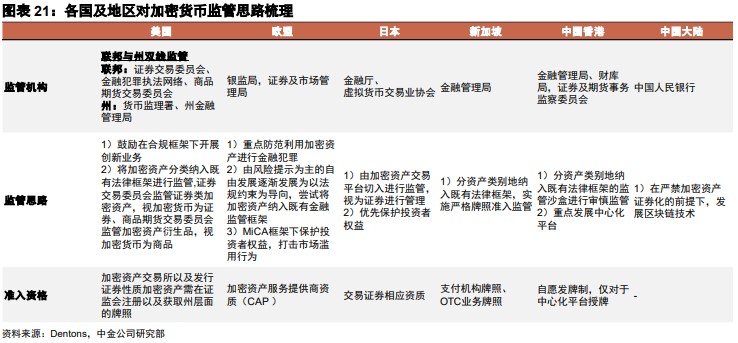
Integrating with centralized financial systems, Metaverse Finance may provide beneficial references.
Under the current national sovereignty and social structure, a fully decentralized Metaverse financial system is unlikely to exist widely. We believe that the future of Metaverse Finance may be built on the foundations of central banks and other regulatory agencies, with centralized and decentralized financial institutions as operational entities, creating a more transparent, efficient, and inclusive financial system.
In the process of Metaverse Finance merging and advancing together with traditional financial systems, we expect that Metaverse Finance may gradually be incorporated into regulatory frameworks, establish compliant entry points, enhance the stability of the financial system, and empower the traditional financial system, continuously optimizing the efficiency and experience of traditional financial services, reducing intermediary issues, lowering operational costs, and decreasing user entry barriers.
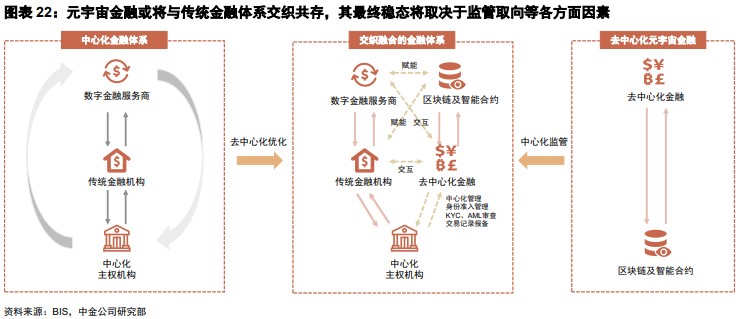
Taking central bank digital currencies (CBDCs) as an example, they are, on one hand, fiat currencies backed by national sovereignty, with operational frameworks and monetary policies set by central banks and relevant regulatory agencies. On the other hand, they incorporate technologies such as distributed ledgers and smart contracts into their operational mechanisms and functions, absorbing decentralized ideas to some extent, focusing on protecting user privacy and enhancing service accessibility.
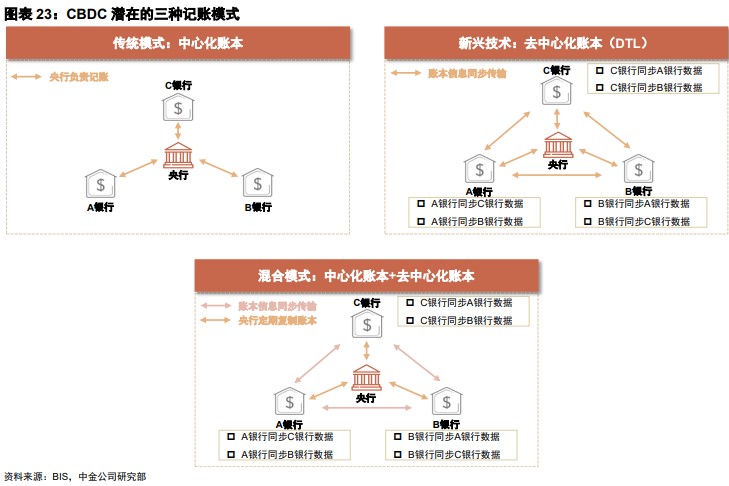
Currently, retail CBDC projects dominate globally. Among them, China's digital yuan (e-CNY) ranks among the top in transaction scale and user numbers. Additionally, countries like Japan, South Korea, and Russia have begun CBDC pilot programs, while developed countries represented by Europe and the U.S. are still in the early stages of research and development.
We believe that CBDCs are expected to become important infrastructure for the payment systems of Metaverse Finance, potentially applying features such as smart contracts and payment settlement to various scenarios, enhancing payment system efficiency, promoting the integration of digital and real economies, and empowering the real economy.
The concept of "metaverse" provides imaginative space for the digital transformation of financial institutions.
From a realistic perspective, the original intention of the "Financial Metaverse" is the digital transformation of financial institutions.
In the previous chapter, we described the "Metaverse Finance" system and discussed the risks and challenges it faces in technology application, operational governance, economic systems, and regulatory policies. Due to various limitations such as regulatory environments and technological maturity, different countries and regions around the world exhibit varying degrees of acceptance of "Metaverse Finance," represented by "cryptocurrencies," "DeFi," "NFTs," and "DAOs." Therefore, in this chapter, from a practical perspective, as the digital transformation of financial institutions in our country continues to accelerate, we believe that the "metaverse" holds more realistic significance for traditional financial institutions, stemming from the continuous maturation of its underlying technologies and the imaginative potential brought by the extension of its scenarios, which is expected to further promote the digital transformation of financial institutions and bring more rich possibilities and imaginative space for their digital transformation paths and ultimate forms.
The continuous improvement of concepts and underlying technologies related to the "metaverse" can provide richer possibilities and imaginative space for the digital transformation of financial institutions in our country. On one hand, as the "metaverse" gradually advances, the application of its underlying technologies, such as modeling and rendering, interaction technology, the Internet of Things, network computing power, blockchain, and artificial intelligence, is expected to accelerate, and we believe that financial institutions will benefit from the rapid development of these technologies to better achieve their digital transformation goals, including business innovation, process reengineering, and organizational change; on the other hand, the "metaverse" paints a picture of a virtual world with digital native capabilities and even a complete economic and social system. We believe that the immersive experience and the realism of virtual elements brought by the metaverse will provide richer imaginative space for financial institutions in aspects such as online collaboration, online business development, and customer experience upgrades.

Overseas "Metaverse Finance" and "Financial Metaverse" are both developing, while domestic focus is on digital transformation.
Observing overseas: The innovation of financial institutions in the "metaverse" presents three levels.
Overseas financial institutions are actively exploring the metaverse, which can be categorized into three levels based on two judgment factors: whether business channels expand to metaverse platforms and whether business innovations are related to decentralized finance. The decision tree is illustrated below. Due to differences in regulatory environments, financial systems, and the maturity of "metaverse" scenarios, we believe that the exploration of Level 3 by overseas financial institutions holds more reference value for the initial "metaverse" exploration of financial institutions in our country.
► Level 1: Exploring and laying out decentralized financial businesses in the metaverse. For example, the head of JPMorgan's Onyx project stated in June 2022 that they plan to engage in institutional-level DeFi business by tokenizing U.S. Treasury bonds or money market fund shares to potentially serve as collateral in DeFi pools. JPMorgan is currently participating in the Monetary Authority of Singapore's Project Guardian pilot and conducting related exploratory work. The National Bank of Korea is also exploring a hybrid digital wallet (which can store multiple tokens, NFTs, and central bank currencies) that has completed testing.
► Level 2: Using metaverse platforms as new channels for existing financial businesses. In this development direction, financial institutions enhance their customers' service experiences based on existing "metaverse" scenarios. For instance, HSBC opened a virtual sports field in the Sandbox to create a novel brand experience for new and existing customers; Fidelity Investments launched "Fidelity Stack" in Decentraland to provide investment education; JPMorgan launched the Onyx lounge in Decentraland to showcase its blockchain business development history.
► Level 3: Utilizing metaverse-related technologies to promote digital transformation. Financial institutions leverage XR, digital twins, 3D modeling, artificial intelligence, and other metaverse-related technologies to further drive digital transformation. The maturity of these technologies and the extension of scenarios develop alongside innovations in the "metaverse." For example, New Zealand's ASB Bank released a virtual employee named Josie; BNP Paribas has applied VR technology in retail banking, real estate, and insurance since 2017 and further iterated its digital twin real estate project WIRED in 2022, providing clients with historical reconstructions and future predictions of communities across Europe to assist in decision-making; Fidelity Investments continues to explore how VR can promote service innovation; Citibank released a proof of concept for a holographic virtual financial trading workstation using Microsoft's HoloLens in 2016; Mastercard launched an AR app in 2020 to help users understand their rights; Bank of America uses VR technology for employee training; the National Bank of Korea has opened an employee office area on the metaverse platform Gather; and Hanwha Life Insurance in South Korea launched a virtual training platform called "Lifeplus Town."


Observing domestically: Development of "Metaverse Finance" is limited; "Financial Metaverse" has achieved preliminary exploration.
Our regulatory authorities maintain a cautious attitude towards financial institutions' exploration of metaverse-related developments to prevent financial uncertainties. The development of the metaverse has raised issues regarding information protection and asset protection, such as the risk of investors suffering losses due to hacker attacks leading to private key leaks and the instability of cryptocurrency asset prices, with the high leverage characteristics of DeFi further amplifying market risks. Therefore, activities involving "Metaverse Finance" (i.e., represented by cryptocurrencies, DeFi, NFTs, DAOs, etc.) face limited development space in our country. Some policies have explicitly regulated financing/trading/mining activities, the nature of native coins/fungible tokens, NFT products, and the application of metaverse-related technologies, primarily aimed at addressing risks, protecting investors' personal property and information security, and preventing financial uncertainties.
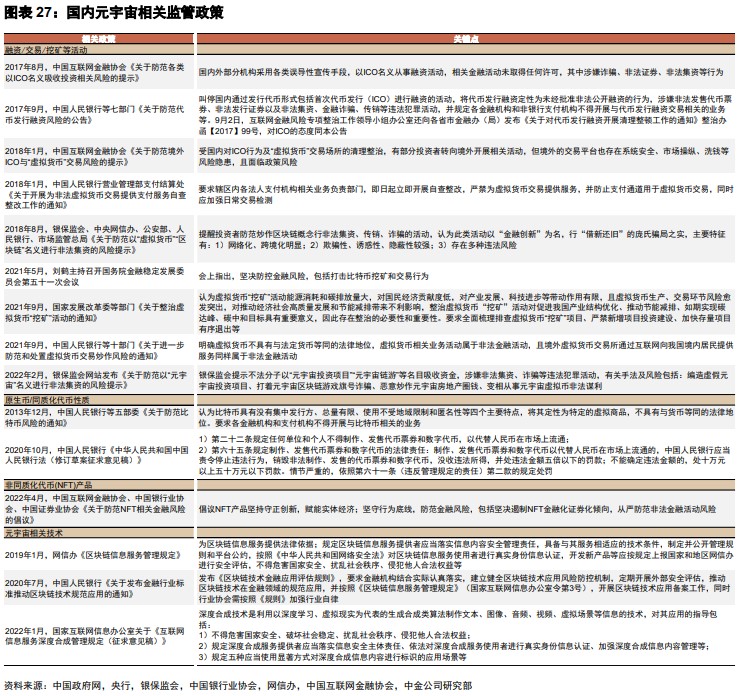
Under the cautious regulatory attitude, leveraging "metaverse" related concepts and technologies to enhance digital transformation is currently the main innovative direction for financial institutions in our country to conduct preliminary exploration of the "metaverse." In addition to the already deeply applied "ABCDI" technologies, financial institutions have made certain breakthroughs in interactive and modeling technologies represented by virtual humans, digital twins, and XR through the concept of the "metaverse." Additionally, we believe that the emergence of NFTs is also expected to help financial institutions further apply blockchain to empower supply chain finance.
► Virtual humans: Virtual humans integrate AI technologies such as NLP, intelligent voice, computer vision, and professional knowledge graphs to build interactive capabilities and expertise, shaping their appearance through modeling and motion capture technologies. They maintain a friendly service attitude and intelligent guidance in online and offline customer service channels, while also assisting in business processing and helping enterprises establish trendy brand images. Virtual humans connect with data platforms, and the front-end business data collected can help financial institutions analyze high-frequency issues and business needs at various branches, further enhancing operational capabilities. Although as early as 2019, Nanjing Bank, China Everbright Bank, and Shanghai Pudong Development Bank launched virtual human digital employees, domestic applications of virtual humans have concentrated in the second half of 2021.
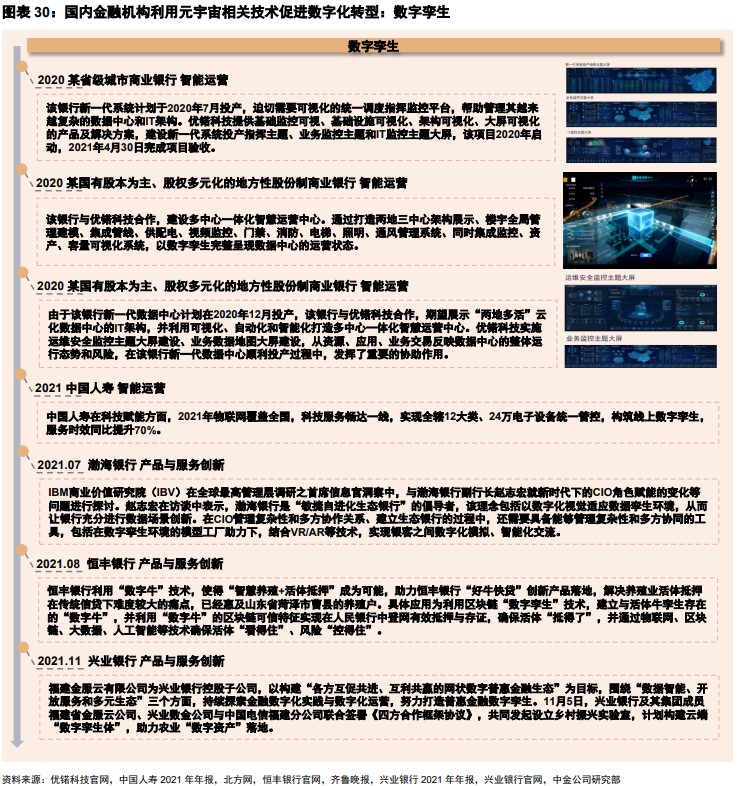
► Digital twins: Digital twin technology can help financial institutions enhance operational capabilities and innovation capabilities. In the field of intelligent operations, digital twins can provide services such as data center visualization, IT architecture visualization management, digital smart parks, digital operations, enterprise architecture asset management, financial technology information reporting systems, integrated financial operations, and financial security visualization. Between 2021 and 2022, plans utilizing digital twin technology to assist rural revitalization, bank-enterprise connections, and banking ecosystem construction have emerged, along with cases of credit product innovation. As technology continues to develop and apply, we believe that the driving force of digital twins for business innovation is promising for the future.
► XR: XR refers to extended reality technologies, including VR/AR/MR/holography, which can help financial institutions build online channels with stronger experiential, immersive, and engaging qualities. Among them, AR technology has been applied earlier, focusing on credit card promotions, enriching online app experiences, data aggregation and display, and marketing during major holidays. The application of VR technology can be distinguished based on whether VR headsets are required. Without VR devices, VR displays on mobile devices can provide 3D spaces such as conference rooms and reception areas, integrating various online service and marketing methods. In contrast, services using headsets primarily appear in immersive experiences at smart bank branches.



What value can concepts and technologies related to the "metaverse" bring to the digital transformation of financial institutions?
The year 2021 marked the conclusion of the central bank's "Fintech Development Plan (2019-2021)." From the perspective of traditional financial institutions' "digital transformation" efforts, their technological development paths primarily focus on 5G + "ABCD," while some leading institutions have gradually begun to explore innovative applications in niche technology fields. Looking ahead, we believe that the digital transformation of traditional financial institutions will primarily present three major trends: 1) Improving quality, increasing efficiency, and reducing losses; 2) Building a supporting foundation for digital transformation; 3) Technology for good. (For details, see the CICC Non-Bank Group's report "Seeing the Micro and Knowing the Macro: Digital Transformation of Financial Institutions - Original Intentions Remain Steadfast, Seeking Progress Amid Stability")
We believe that against the backdrop of accelerating digital transformation in traditional financial institutions in our country, the development of concepts and technologies related to the "metaverse" is expected to bring new directions for digital transformation in traditional financial institutions in areas such as human resources, digital marketing, and operations, while also providing users with richer digital experiences.
In terms of human resources, there is potential to enhance employee work experiences and training efficiency: 1) Enhancing the atmosphere of online work: The KB Financial City launched by the National Bank of Korea on the metaverse platform Gather provides a virtual office space displayed on a two-dimensional plane, allowing employees to feel the atmosphere of offline work and face-to-face communication despite being in different locations; 2) Improving employee work efficiency: Virtual digital employees utilize AI, one of the underlying technologies of the metaverse, to free up employee productivity. For example, digital employees at Waterdrop Company can use RPA and AI technologies to assist employees in handling routine tasks. 3) Enhancing the fun and knowledge retention of training: Bank of America built a VR training point in 2021, allowing employees to simulate customer interactions in various scenarios using VR headsets. The embedded real-time analysis technology enables supervisors to analyze training results, facilitating subsequent personalized guidance. According to Bank of America, among the 400 employees piloting the program, 90% found VR training to be an enjoyable experience, and 97% felt more confident in their work after VR training, believing it effectively enhanced knowledge retention.
In terms of marketing, it helps improve the service capabilities and user experiences of financial institutions.
► Enhancing service capabilities: On one hand, financial institutions can leverage metaverse-related technologies to improve their service methods and quality in areas such as data presentation and display, online user interaction, and providing 24/7 service through virtual employees. On the other hand, traditional institutions can also utilize interactive and modeling rendering technologies related to the "metaverse" to create richer and more realistic images and webpages during service, effectively enhancing service quality.
► Enhancing user experiences: 1) Attracting young users with trendy UI designs: Currently, young users show a preference for obtaining financial services through online channels. The financial metaverse is expected to use virtual humans/XR and other interactive, modeling, and rendering technologies to create trendy UI designs that attract young users' interest. According to a survey by iResearch, younger bank users in China visit offline branches less frequently; 2) Reducing users' overall costs: Financial institutions can use virtual humans for intelligent guidance online and offline, and VR/AR technologies can enrich the presentation of abstract data, potentially further reducing users' time costs related to waiting and understanding deliverables; 3) Enhancing interaction experiences and service accessibility: Currently, financial institutions are focusing on the "personality" of virtual humans, aiming to create friendly service personas that can foster a relaxed and pleasant atmosphere for users during online and offline interactions. Additionally, metaverse technologies can provide users with "offline-like" experiences through online channels, enhancing convenience. For instance, an immersive online VR platform for insurance aims to replicate the offline insurance process, allowing users to access related services from the comfort of their homes.
In terms of operations, it helps enhance monitoring capabilities, analytical capabilities, and information protection capabilities. Among the technologies related to the "metaverse," digital twin technology can assist financial institutions in real-time monitoring of resource distribution and usage through charts and 3D models, overcoming the inefficiencies of traditional ledgers and asset management systems that lack real-time and intuitive display capabilities. It enhances the understanding and analysis of increasingly complex IT and enterprise architectures, improving standardized management and cross-departmental collaboration. Additionally, through digital twins of infrastructure such as electricity, pipelines, power supply, lighting, elevators, and security systems, it enables real-time monitoring of the operational status of buildings like data centers, quickly identifying anomalies and enhancing the ability to protect information security, employee safety, and property security.
(This article is excerpted from the report "Finance × Metaverse: The Financial System Under the Integration of Reality and Virtuality" published on July 15, 2022.)
[1]https://www.coindesk.com/business/2022/06/11/jpmorgan-wants-to-bring-trillions-of-dollars-of-tokenized-assets-to-defi/
[2]https://www.ccvalue.cn/article/1389557.html
[3]https://www.ledgerinsights.com/hsbc-buys-nft-land-in-sandbox-metaverse-game/
[4]https://www.businesswire.com/news/home/20220421005259/en/FIDELITY-OPENS-%E2%80%9CTHE-FIDELITY-STACK%E2%80%9D-IN-DECENTRALAND-BECOMES-FIRST-BROKERAGE-FIRM-WITH-IMMERSIVE-EDUCATIONAL-METAVERSE-EXPERIENCE
[5]https://www.youtube.com/watch?v=54zs_mbUa1I
[6] "2022 Virtual Human Industry Research Report": SuTu Metaverse Research Institute, June 6, 2022
[7]https://www.uino.com/solution/finance/
[8] Lee, L-H., Braud, T., Zhou, P., Wang, L., Xu, D., Lin, Z., Kumar, A., Bermejo, C., & Hui, P. (2021). All One Needs to Know about Metaverse: A Complete Survey on Technological Singularity, Virtual Ecosystem, and Research Agenda. https://doi.org/10.13140/RG.2.2.11200.05124/8
[9] https://trainingindustry.com/articles/learning-technologies/how-bank-of-america-deployed-and-scaled-vr-to-advance-workplace-learning-a-case-study/
[10] https://report.iresearch.cn/report_pdf.aspx?id=3881
[11] https://www.koreatimes.co.kr/www/biz/2021/08/126_314385.html
 Risk warning
 Risk warning



Popular articles





