








With the Bitcoin halving approaching, can the inscription ecosystem rise to the occasion? Will it lead a new round of bull market in the cryptocurrency space?

 The highly anticipated Bitcoin halving is approaching, and many people are looking forward to it, hoping that this Bitcoin halving can serve as an opportunity to trigger a surge in the market.
Author: Xiao Yan
Editor: Chris
The much-anticipated Bitcoin halving is approaching, and many people are looking forward to it, hoping that this Bitcoin halving can serve as an opportunity to trigger a surge in the market.
And indeed, this has been the case. On March 12, virtual currencies, led by Bitcoin, experienced a "highlight moment," with prices reaching as high as $72,890 per coin, approximately 523,000 RMB per coin, rising over 5% within the day, setting a new record. This upward trend has been ongoing for a while; since Bitcoin entered the rising range on January 23, it has soared, with an increase of over 86% by March 12.
However, the strong upward momentum did not last. On March 15, Bitcoin's price experienced a "high-altitude dive," falling below the $67,000 mark. In just 24 hours, 170,000 people were liquidated, and $710 million (approximately 5.1 billion RMB) evaporated instantly.
The unstable Bitcoin price has caused investors to feel a subtle anxiety, leading them to make various predictions about the market after the Bitcoin halving.
What have been the outcomes of previous Bitcoin halvings? What impact will it have on miners? Will it drive the rise of the inscription ecosystem? Today, we will discuss these topics in detail.
Bitcoin has gone through three halvings, and each time it has seen an increase in price.
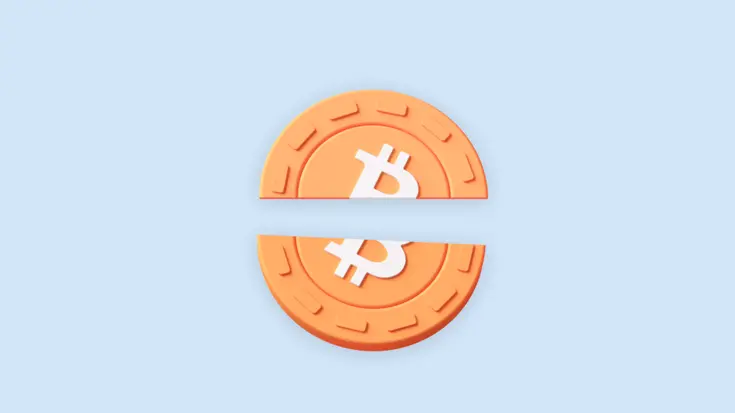
The so-called Bitcoin halving is actually an important mechanism in the Bitcoin ecosystem, aimed at reducing the number of newly generated Bitcoins to slow down the supply of new coins. This event occurs every four years, and after every 210,000 blocks are mined, the mining reward is halved. This mechanism ensures that the total supply of Bitcoin is capped at 21 million, mimicking the scarcity of natural resources like gold, thereby increasing Bitcoin's potential value.
We are currently in the cycle of the fourth Bitcoin halving, and we will soon welcome the fourth halving of Bitcoin. The previous three halvings occurred on the following dates:
- November 28, 2012 (reward reduced from 50 BTC to 25 BTC)
- July 9, 2016 (reward reduced to 12.5 BTC)
- May 11, 2020 (reward reduced to 6.25 BTC)
November 28, 2012
This was Bitcoin's first halving. This period can be seen as the era of retail investors in Bitcoin, as it was just emerging, with low recognition and a small economic scale. After the first halving, Bitcoin's price began to rise, reaching a historical high of $1,200 in November 2013. This cycle exhibited a clear symmetry, with an overall upward trend in the 12 months before and after the halving.
After reaching the peak of $1,200, Bitcoin experienced a 14-month deep recession, with prices dropping over 80%, hitting a low of $200. In the following 10 months, Bitcoin's price remained between $200 and $300.
July 9, 2016
On July 9, 2016, Bitcoin's second halving occurred, marking the era of venture capital investment in Bitcoin. During this period, several venture capital firms and hedge funds had observed Bitcoin's first cycle and chose to participate.
Bitcoin's price began to rise significantly from November 2015, initiating the second price halving cycle, which occurred about 8 months earlier than the official halving in July 2016. After the halving, Bitcoin continued to rise. The entire cycle lasted about 24 months, reaching a historical high of $19,000 in December 2017. Subsequently, Bitcoin experienced a 12-month recession, with prices again dropping over 80%, hitting a low of $3,000, but in the following 4 months, Bitcoin hovered between $3,000 and $4,000.
May 11, 2020
Bitcoin's price surged above $5,000 in April 2019, and thereafter, it continued to rise, marking the beginning of the next cycle. At this time, more and more large institutions recognized the benefits of Bitcoin halving and began to participate in this cycle, which we can consider as the institutional era.
With the fourth halving approaching, what impact will it have on miners? Will inscriptions become a new avenue for everyone?
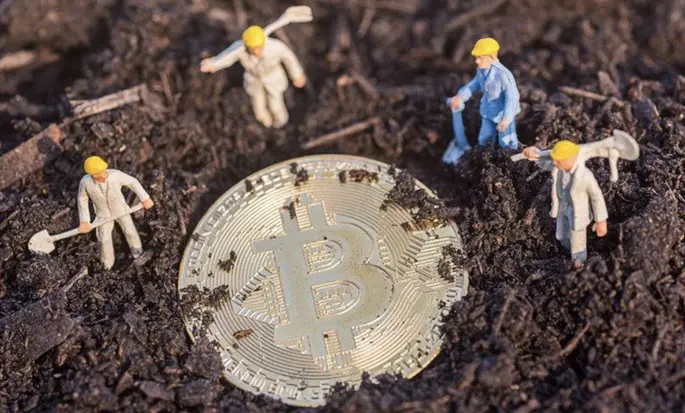
By summarizing, we seem to grasp the general pattern of market trends after Bitcoin halving.
Generally speaking, Bitcoin's price tends to rise after halving, but the extent of the increase will depend on various economic factors, including market sentiment, the global economic environment, and investor expectations.
However, when it comes to who will see a decrease in profits due to Bitcoin halving, the first to be affected will undoubtedly be the miners.
Miners' profits mainly come from two aspects: Bitcoin block rewards and transaction fees on the chain. Among these, block rewards have always been the primary source of income for miners. However, Bitcoin halving is an event that occurs in every cycle, which means that the rewards miners can earn from mining will gradually decrease.
As the proportion of rewards from mining significantly declines, transaction fees on the chain are likely to become the main source of profit for miners in the future.
The activities on the Bitcoin chain mainly revolve around Bitcoin inscription activities, which provide miners with a new and important source of fee income.
Grayscale pointed out in its research report on Bitcoin halving that the success of ordinals has had a significant impact on the Bitcoin network. As block rewards decrease over time, the incentive for miners to protect the network becomes more urgent, and ordinal activities will become a new way to maintain network security by increasing transaction fees. Thus, it can be seen that Bitcoin inscriptions are not only a way to issue assets on the Bitcoin chain but can also increase miners' income by providing more on-chain transactions, thereby better assisting miners in their transformation and coping with the various challenges and crises during the halving period.
Can the leading project ORDI, which has launched on Coinbase, bring back the glory of the inscription ecosystem?
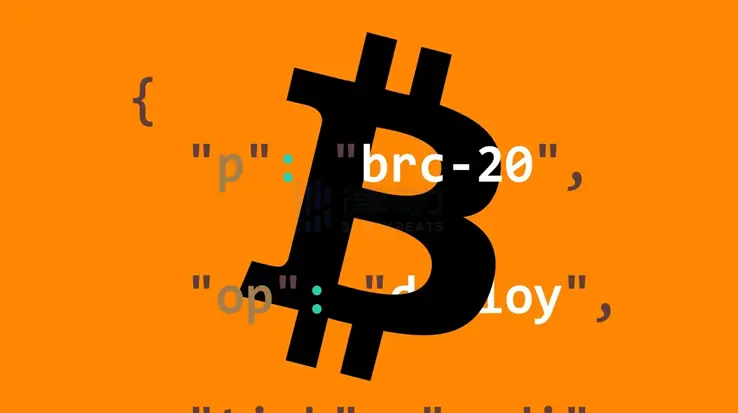
According to data provided by Google and Dune, the overall heat of inscriptions is showing a downward trend, at least in the short term, with data growth appearing somewhat fatigued.
Although the current Bitcoin inscription sector is relatively sluggish, there are still some established projects that are steadily growing, with ORDI being a typical representative.
ORDI is the first BRC-20 token issued on the Bitcoin blockchain, with a total supply of 21,000,000 tokens. If we trace back, we find that the birth of ORDI was itself a "joke"; it was created merely as an experiment to test whether it was possible to deploy fungible tokens similar to ERC20 issued on Ethereum using the Ordinals theory.
Unlike the Ethereum ERC-20 token standard, Bitcoin does not support smart contracts, and BRC-20 is not a smart contract token; there is no technology behind the token, no project team, no actual project support, and no application scenarios. The price fluctuations depend entirely on community consensus and market enthusiasm. In other words, ORDI is a pure meme. Because of this, some people hold a critical attitude towards the Ordinals protocol, believing that a large amount of inscription information being written into the blockchain will lead to increased network transaction fees, thus affecting ordinary users. Additionally, the rapid growth of transaction information will increase the hard drive size occupied by blockchain nodes, raising the hardware requirements for running Bitcoin nodes, which in turn affects the number of full nodes and harms decentralization.
However, the positive impact brought by ORDI is very real. The emergence of the Ordinals protocol has increased the transaction fees received by Bitcoin miners. Transaction fee income is crucial; it will fill the security budget of the Bitcoin network in the future as Bitcoin halving occurs and rewards continue to decrease. Furthermore, the increase in miners' earnings will attract more miners to join, expanding Bitcoin's overall hash power and security.
Essentially, meme coins have no substantial utility. However, a successful meme coin can meet a real and significant demand in the cryptocurrency market—creating a speculative target that is full of imaginative space and sufficiently fair.
Not every meme token is filled with endless imaginative space, nor does every meme provide speculators with a fair opportunity to gamble, but it is clear that ORDI has this potential.
P.S. This article does not constitute any investment advice.
 Risk warning Risk warning


Popular articles





