








SignalPlus Macro Analysis Special Edition: Deal No Deal

 After announcing a suspension of additional tariffs on China, President Trump suddenly posted on social media that the EU trade negotiations were "making no progress," and therefore he "suggested imposing a 50% tariff on the EU starting June 1, 2025." Trump pointed out that the EU has "strong trade barriers, value-added taxes, ridiculous corporate fines, non-monetary trade barriers, currency manipulation, and unfair and unreasonable lawsuits against American companies."

After announcing a postponement of additional tariffs on China, President Trump suddenly posted on social media that the EU trade negotiations were "making no progress," and therefore he "suggests imposing a 50% tariff on the EU starting June 1, 2025." Trump pointed out that the EU has "strong trade barriers, value-added taxes, ridiculous corporate fines, non-monetary trade barriers, currency manipulation, and unfair and unreasonable lawsuits against American companies," believing these measures result in an "unacceptable" trade deficit of over $250 billion for the U.S. each year.
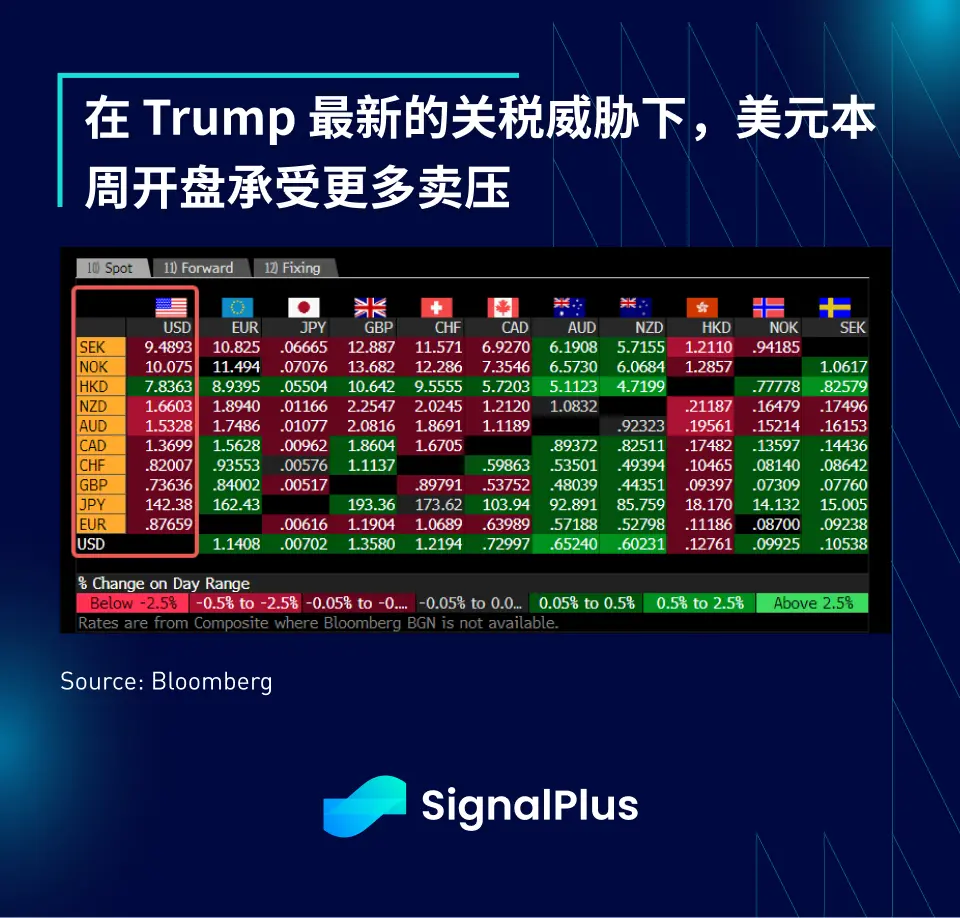
Just as the market was preparing for EU retaliation, Trump quickly changed his stance after a call with the President of the European Commission, announcing that the tariff implementation date would be postponed to July 9. Now we are back to square one, yet the dollar is already facing greater pressure as the week opens.
To simplify the overall logic, if the U.S. goal is to eliminate the trade deficit with its trading partners, it essentially demands the EU to pay about $200 billion annually as an "entry fee" to access the U.S. market, which is clearly an unacceptable cost for most.
In fact, according to Citigroup's analysis, under the framework of game theory, the "Nash Equilibrium" outcome that both the U.S. and EU ultimately reach is likely to be mutual imposition of 50% tariffs.

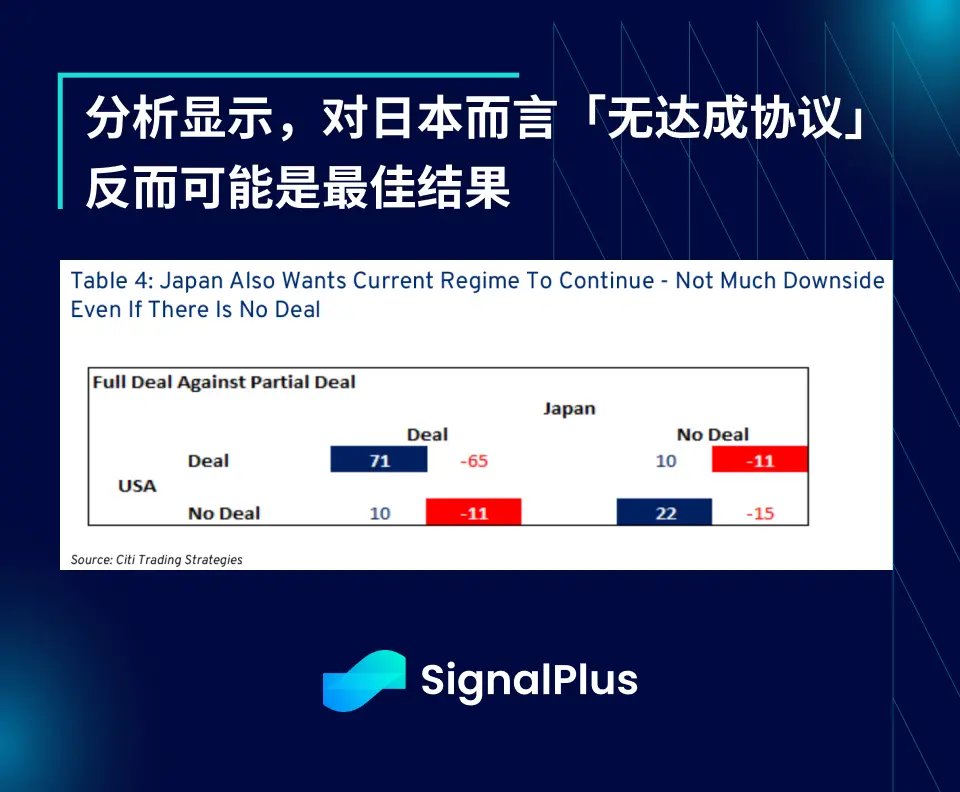
As for Japan, based on the same analysis, considering the limited impact on its net exports, a "no agreement" state may actually be most beneficial for Japan. Ironically, reaching a "comprehensive agreement" with the U.S. under current conditions could be the worst outcome, so it is not surprising that future negotiations between the two sides may become stalled.
Of course, there are many dynamic factors that market participants and economists have not yet grasped (such as dependence on rare earths, etc.). Similar to the situation with China, the U.S. side seems to ultimately choose to make comprehensive concessions, accepting a result that is not ideal. Like Japan, economists generally believe that China is likely to reach a comprehensive agreement with the U.S., and the best approach is to delay the negotiation process to gain more concessions from the U.S., which are indeed happening.
For the global macro market, this is also the "optimal solution": the U.S. withdraws policies that force a synchronized slowdown of the global economy, with the dollar becoming the main object of pressure, while the strong performance of overseas stock markets somewhat offsets the impact.

Returning to the market level, aside from the dollar, the biggest loser is global fixed income assets. Recent credit rating downgrades, disappointing budget results, and a series of weak U.S. Treasury auctions have pushed bond yields back to the upper range.
The surge in bond yields, coupled with concerns over the fiscal budget, has caused the SPX to lag behind other global markets and macro asset classes, experiencing its largest weekly decline since early April (-1.6%), with all sectors facing selling pressure.

The recent pullback in U.S. stocks occurred as overall market sentiment had risen to overheated levels, especially in the U.S., China, and European markets.

Although growth stocks and real estate are most sensitive to yields, as geopolitical and economic recession tail risks have gradually dissipated over the past month, higher term premiums have also dragged down spot gold prices.

In the short term, we believe that the current market concerns over U.S. budget and spending issues may be overstated, similar to the previous panic over economic recession. As the government's tariff measures are gradually implemented, it is expected to bring considerable revenue to the treasury in the future, which should help offset some short-term deficit pressures.

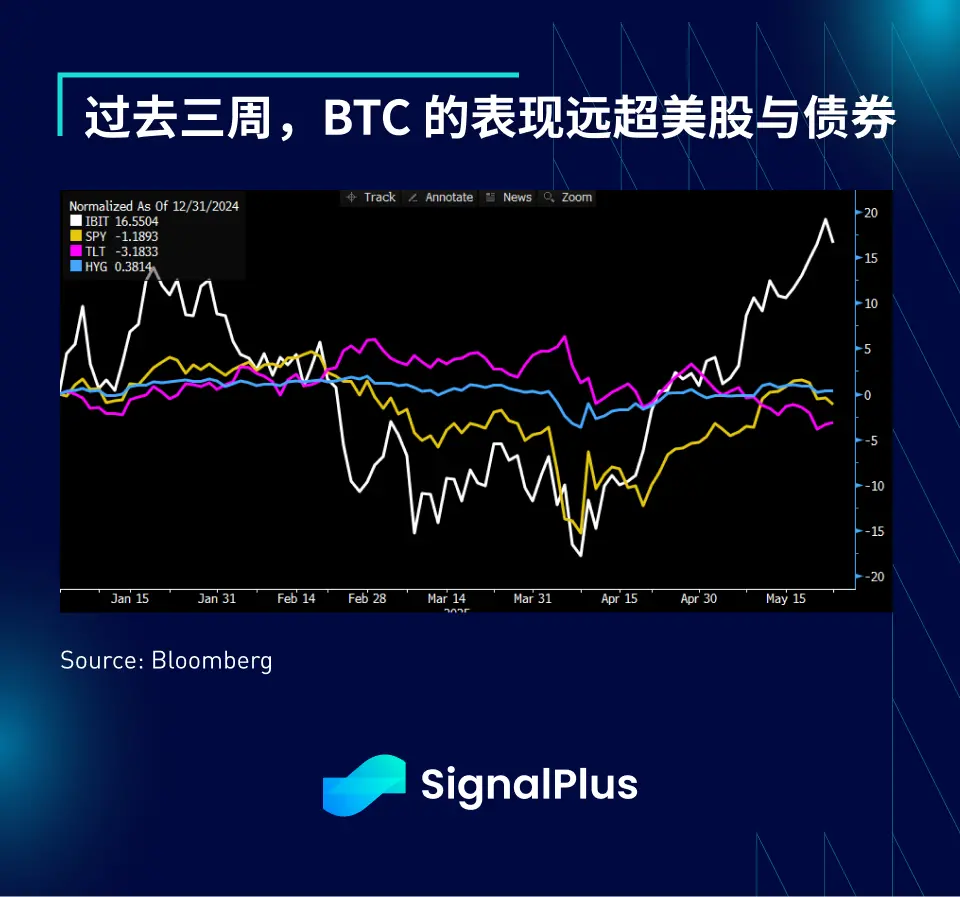
In contrast, cryptocurrencies have shown remarkable resilience over the past two weeks, with BTC prices outperforming U.S. stocks and Treasuries by about 15% over the past three weeks.
In terms of ETF fund flows, the net inflow for the week reached $2.75 billion, the third highest in history, with ETH also attracting a net inflow of $248 million.

The passage of the GENIUS stablecoin bill is widely seen as an important milestone in the development of the cryptocurrency industry, although the cost is an increase in monitoring and regulatory intervention of institutions, moving further away from the originally emphasized decentralized spirit of cryptocurrencies.
The volatility skew of BTC and ETH has returned to a more normal level, leaning upwards, and overall implied volatility has also rebounded, indicating that investors are no longer shorting the rebound but are shifting towards positioning for a more sustained upward breakout.

Meanwhile, MicroStrategy announced the launch of its latest $2.1 billion market-priced preferred stock issuance plan to increase its BTC holdings. The current macro environment still provides tailwinds, and momentum seems to favor the cryptocurrency side. Additionally, the recent price trend is structurally healthier, with chasing high sentiment significantly weakened, which is conducive to sustained upward breakthroughs in prices and setting new highs in the coming weeks.
Good luck to everyone, and happy trading!


 Risk warning Risk warning




Popular articles





