In-depth discussion on stablecoins, is Stablecoin still a blue ocean?

 Teacher Mindao has previously discussed many topics with us, including US stocks on the blockchain and DeFi. The topic we want to discuss this time is a recent policy hotspot, which is stablecoins, and this may also be one of the most widely adopted products in the blockchain field.
Author: "WEB3 MINT TO BE", Mint Ventures
Host: Alex, Research Partner at Mint Ventures
Guest: Mindao, Founder of dForce
Recording Date: 2025.5.21
Disclaimer: The content discussed in this podcast does not represent the views of the institutions of the guests, and the projects mentioned do not constitute any investment advice.
Hello everyone, welcome to WEB3 Mint To Be initiated by Mint Ventures. Here, we continuously question and deeply think, clarifying facts, exploring realities, and seeking consensus in the WEB3 world. We aim to clarify the logic behind hot topics, provide insights that penetrate the events themselves, and introduce diverse perspectives.
Alex: In this episode, we have invited our old friend, Teacher Mindao. Teacher Mindao has previously discussed many topics with us, including US stocks on-chain and DeFi. This time, we will talk about a recent policy hotspot, which is stablecoins, possibly one of the most widely adopted products in the blockchain field. Let's first have Teacher Mindao greet us.
Mindao: Hello everyone, I am Mindao. I am very happy to be here today to share some insights about stablecoins.
Differences in Stablecoins in This Cycle
Alex: Alright, let's get into the main topic of today. We know that stablecoins have crossed many cycles, and in each cycle, core business metrics and scale have reached new highs. In your view, what are some particularly noteworthy differences in the development of stablecoins in this cycle compared to the previous one, aside from the regulatory policies that we will discuss later?
Mindao: We know that during the DeFi summer of 2021 and 2022, there were actually many types of stablecoins, especially on-chain stablecoins, like TERA, and many algorithmic stablecoins completely based on the chain.
However, after the collapse of TERA in 2022, we saw a significant structural differentiation in the stablecoin sector from the supply side. The dominant ones are, needless to say, still fiat-backed stablecoins. We saw that the minting volume of stablecoins actually dropped from about 180 billion USD in 2022 to around 130-140 billion after the Luna collapse, and then gradually stabilized and started to rebound. Recently, I saw data indicating it should be around 250 billion USD. So, while the total value locked (TVL) in DeFi has not yet reached new highs, we see that the minting volume of stablecoins has already surpassed previous levels.
The driving force behind this minting of stablecoins is not what we refer to as native on-chain stablecoins, such as algorithmic or over-collateralized types. The only highlight in this cycle might be Ethena's USDE.
We just mentioned that USDT and USDC are fiat payment types, while Ethena should be considered a wealth management type, which is a yield-generating and wealth management stablecoin based on native crypto assets. Strictly speaking, it cannot be called a stablecoin because, for example, when I participate in Ethena's mining, most of the risk I bear is its price volatility risk, as it cannot achieve a one-to-one redemption.
Its entire redemption mechanism is not linked to the USD stablecoin but is based on its exchange's pricing arbitrage positions. Of course, recently it has undergone a transformation; I saw that about several billion USD has been invested in T-Bill assets. But purely from the perspective of the previous cycle, we see a clear differentiation in stablecoins, with payment types being very obvious, still dominated by fiat currencies. Although DAI is considered the oldest decentralized stablecoin, its entire minting volume has basically remained at around 5-6 billion USD, without further breakthroughs.
I think one relatively certain thing after the DeFi summer is that many narratives around stablecoins, at least at this stage, seem to be falsified, such as algorithmic types. With the clarity of regulations, I believe many such types of stablecoins may gradually be eliminated.
We can also see that many new stablecoins emerging in the market are driven by channels, such as PayPal's. USDT and USDC are theoretically also channel-driven stablecoins, both backed by exchange backgrounds. USDT was previously backed by Bitfinex, while USDC is backed by Circle.
However, even with the support of these two major exchanges, it has not been easy for them to develop. Binance has also supported several stablecoins, and despite having such good resources, none have succeeded. So I believe each cycle has its timing. From this timing perspective, I think in the future, we will see more channel-driven stablecoins being launched, especially from compliant channels.
The Most Impactful Regulatory Policies
Alex: Understood. You just mentioned a significant change regarding timing. In the past year, the legislation around stablecoins, especially in the US, has progressed quite rapidly. For instance, just yesterday, the US Senate further advanced a bill called Genius in a procedural vote, which will subsequently enter full chamber discussions and formal voting in the Senate. In your view, what are the legislative or regulatory policies that may have the most significant impact on the industry? How do they affect the current and future stablecoin industry?
Mindao: I think the entire regulatory landscape consists of two major markets: the EU and the US.
In the EU, MiCA, which is the regulation on crypto asset markets, is relatively strict in terms of regulatory framework. On the US side, there was also a widely discussed bill last year called FIT21, the so-called Financial Innovation Technology 21st Century Act. This has already passed in the House of Representatives and should be reviewed in the Senate this year.
The Genius bill you just mentioned was further advanced in the Senate yesterday. The difference between the Genius bill and the previous FIT21 is that Genius mainly focuses on stablecoins, guiding and establishing the entire regulatory framework for stablecoins in the US, so its emphasis is more on the stablecoin side.
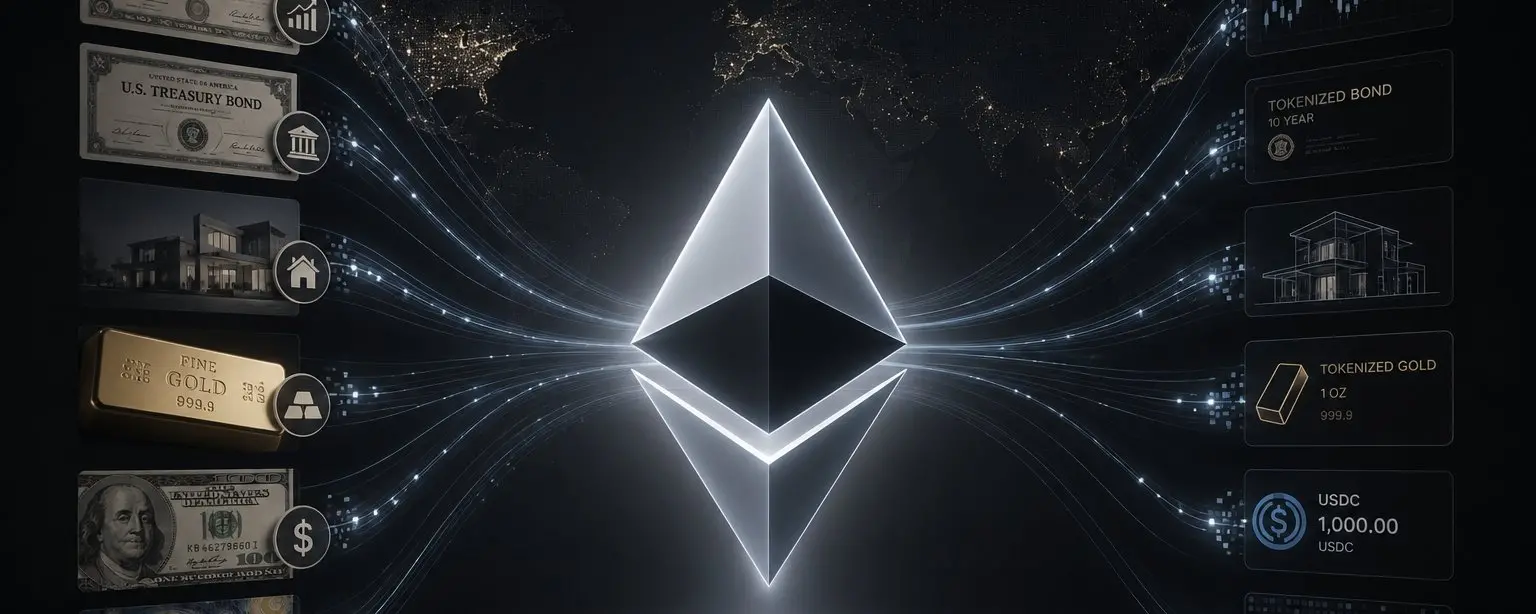
Recently, as we know, the RWA (Real World Assets) sector has become particularly hot. Stablecoins, as the vanguard of RWA, are also the tokenization of USD deposits and government bonds. So I think this has very significant symbolic meaning. One key point is that it clarifies and confirms the identity of the issuing entities, such as financial institutions and non-financial institutions, but if they apply for a license, it is not entirely defined whether tech companies can be stablecoin issuers.
There are restrictions on some large tech companies, but for example, whether Facebook or Google counts, or whether their subsidiaries can issue, there is no clear statement on this. But basically, the spirit of the legislation encourages compliant financial institutions, and also includes some non-financial institutions, but not large tech companies to enter this field. Another important point is the layered regulation.
At the federal level, those with a scale of over 10 billion USD fall under federal regulation, while the rest are under state regulation. So I believe the implementation and clarification of regulations will play a significant role in promoting the issuance of stablecoins in the future.
Additionally, we refer to the US as a so-called legislative lighthouse country, and many other countries and regions are modeling their frameworks after the US. For example, we see that Hong Kong has recently been aggressively promoting a so-called stablecoin sandbox, including a Hong Kong dollar stablecoin.
During my recent trip to Hong Kong, I also saw many teams working on offshore RMB stablecoins in addition to the Hong Kong dollar stablecoin. So I believe that US legislation is not just a domestic matter but serves as a model for other places, including Hong Kong, Singapore, and Dubai.
USDT Vs. USDC
Alex: Understood. When we observe the market share of stablecoins, we find that during the previous cycle, Tether, or USDT, faced significant challenges in its market share. Including during the last DeFi Summer, Circle's USDC saw rapid growth in its share.
However, entering this cycle, we find that USDT's overall growth rate is much faster than that of its competitors, including its total scale, which I checked is about 80 billion USD from the previous peak, and it has nearly doubled to around 150-160 billion USD.
But looking at USDC's current market cap, it has only grown by about 20% from its peak in early 2022. Other stablecoins you just mentioned also did not see rapid growth during this cycle. What might be the reasons for this situation?
Mindao: Yes, this is a very interesting comparison. Because people have always compared USDC and USDT, saying that both are the biggest beneficiaries after the stablecoin market took off. However, Circle recently disclosed its financial report, revealing many aspects of its business model that people might not see, including that many overestimated USDC's profit margins, as a significant portion of costs are channel costs.
Additionally, many people treat USDT and USDC as equivalent or identical stablecoins. In fact, these two are different. USDT is closer to a shadow dollar, while USDC is what we traditionally refer to as a stablecoin. The difference in their minting volume growth over the past few years, I believe, mainly lies in the fact that if we view stablecoins as a river, the downstream storage capacity depends on how many tributaries there are upstream.
The tributaries of USDC, in terms of use and use cases, are one aspect of wealth management, and another is inflow and outflow. The inflow and outflow might be USDC's biggest competitive advantage among stablecoins, as it can be exchanged one-to-one from exchanges and issuers to USD.
But I believe the market structure of USDT and USDC is completely different. For example, in terms of wealth management, there may be various exchanges accepting it for wealth management. The usage scenarios for USDT in trading are far more numerous than those for USDC. For instance, perpetual contracts on various exchanges mostly use USDT as collateral;
Moreover, in terms of OTC circulation, the volume of USDT may be dozens or even hundreds of times that of USDC in the secondary market. So we see, if we consider it a river, USDT has too many tributaries, and its downstream storage capacity is far greater than that of USDC. Therefore, I believe this distinction entirely depends on their respective usage scenarios.
USDT is closer to a shadow dollar or underground dollar, aligning more with our definition of money, rather than just being a stablecoin pegged one-to-one with the USD. Because you see, the price of USDT most of the time does not align one-to-one with the USD; it fluctuates with the market. For example, in some offshore markets, there may be premiums or discounts.
Of course, one advantage of the shadow dollar is that it has a very large number of counterparties, and its acceptance as a general equivalent is far greater than that of USDC, with a much larger moat. Another key point is that from Circle's disclosed financial report, we can see that its channel fees for Binance and Coinbase are very high, but USDT has completely eliminated the need to pay channel fees; many exchanges actively list it.
So in terms of usage scenarios and utility, I believe USDT is much larger than USDC.
Alex: OK. Given that USDT occupies such a dominant position now, I believe this is also a hope for USDC and many institutions that will issue their own stablecoins in the future, aiming to develop towards USDT's current position.
In your view, do you think they have a significant possibility of reaching a scale close to USDT and achieving a similar channel effect? For example, taking USDC as an example, do you think it currently has this potential?
Mindao: I actually think USDC may find it quite difficult in this regard, mainly because the competitors that come later are basically taking USDC's market. For example, if a bank or financial institution wants to issue a stablecoin, they have a natural advantage in terms of fiat inflow and outflow channels, which I believe USDC cannot compete with.
For instance, PayPal's inflow and outflow channels, trade or payment channels, are actually far stronger than USDC. So if stablecoins really become law this year through the House of Representatives, I believe it will open the entry for compliant stablecoins, and the new players entering will be particularly strong in traditional channels.
USDC relies on Coinbase and Binance, having a first-mover advantage, but this moat is relatively low. For example, Facebook, although now large tech companies may not be allowed to issue directly, what if they do so through partnerships or other means?
I see they have recently expressed an intention to possibly restart the Libra project. Including Twitter's X, which also has great ambitions in the payment and stablecoin space. If they enter, I believe their channels will completely overshadow the ones USDC currently partners with.
The Possibility of Traditional Financial Institutions Entering the Stablecoin Space
Alex: So, do you think these traditional financial institutions, including those with their own channel advantages in the internet space, also have ambitions for Tether's on-chain operations, including scenarios beyond their existing traditional inflow and outflow businesses? What are the possible pathways or methods for them to enter this field?
Mindao: Yes, for example, JD.com is also preparing to issue a Hong Kong dollar stablecoin, and Alibaba is also making arrangements in this area, using their e-commerce business as a touchpoint. However, I think Tether's current positioning is quite clever.
First, it has a network effect, and I mean a real network effect, not like USDC, which is largely subsidized and maintained through high channel costs. Tether exemplifies a true natural network effect. This network effect will continue to strengthen and is not easily replaced by a single channel.
For example, if JP Morgan issues a stablecoin, it may be more convenient for interbank inflow and outflow. However, in terms of secondary trading or OTC circulation, it may not be able to compete with Tether's current network effect. So from this perspective, I believe Tether has a unique competitive advantage in the current compliant environment. Because the market it occupies is one that other compliant stablecoins cannot easily enter, or other channels cannot fully cover.
Moreover, it is not only used in trade, payment, and OTC; it basically covers all scenarios that compliant stablecoins can cover. Aside from the one-to-one exchange channel with banks, which cannot be directly opened in the US and Europe, it has already covered other secondary circulation and payment aspects. Therefore, I believe that compliant stablecoins will find it challenging to compete with Tether.
In fact, Tether has many challengers. When it emerged in 2015, people didn't take it seriously, but later you saw Huobi's stablecoin HUSD, OKX has a stablecoin, and Binance has already launched a third stablecoin, but none have surpassed it, nor have they even reached the scale of USDC. This shows that the network effect and the channel costs required to push it are very high.
Alex: Understood. I saw that during the discussions on the Genius bill, a major opponent from the Democratic Party, Elizabeth Warren, mentioned a risk point. She believes that if this bill passes, the market size for stablecoins could grow from the current over 200 billion to several trillion within a few years.
Although she is not satisfied with the current bill, believing that the regulatory measures are not strong enough, she has made this prediction. Do you think this prediction is credible? Is it really possible for the scale to expand tenfold to several trillion in a few years?
Additionally, will this new market share more likely go to established players like Tether, or could it also be occupied by new entrants, including stablecoins issued by JP Morgan or large internet companies?
Mindao: Yes, Elizabeth Warren has always been anti-Crypto, and I think her view on this matter is biased and unfair. If we set aside domestic political issues in the US, for example, when this stablecoin bill was opened, there was another hearing by US lawmakers disclosing the so-called Trump family's involvement in the crypto industry, which I think is heavily political.
For instance, there is significant opposition to the stablecoin bill because the Trump family has also issued a stablecoin called USD1, so I think there are many political issues involved. But putting politics aside, the current stablecoin market is about 180 billion USD, primarily invested in US Treasury bonds, making it one of the top ten holders of US debt. If we see this market continue to grow, the amount of US debt will undoubtedly increase proportionally.
Of course, I think ten trillion is a very ambitious target. The general estimate is that it might reach a trillion USD by the end of next year. I think people may still have a vague understanding of the growth of stablecoins.
For example, when we were doing DeFi at the beginning of 2019, the entire TVL in DeFi was less than 100 million USD, around 60-70 million USD. By the peak of the DeFi summer in 2020, it reached about 250 billion USD, an increase of two to three thousand times. The minting volume of stablecoins has also roughly followed the same trajectory, from a few billion to over 200 billion today, a growth of several hundred times. Of course, I think achieving such exponential growth purely based on the current two is quite difficult.
However, we have seen that BlackRock's on-chain T-bill volume has recently surged to around two to three billion USD. So I believe if compliant institutions enter, it won't be a slow growth; it could double within six months to a year. Therefore, I believe Tether will also see significant growth within this compliant framework.
However, the larger growth may come from the issuance of stablecoins by other new compliant institutions or tech companies. This proportion will gradually increase. There is a very large payment Web2 company called Stripe; its founder shared in a speech that over the past six months, it acquired a stablecoin payment platform or technology integrator called Bridge, and after the acquisition, the data saw dozens to hundreds of times growth compared to traditional Web2 data.
So I believe that in the future, stablecoins will greatly replace the existing interbank settlement and payment infrastructure, and the speed of this transition will be very fast, potentially being fully established within the next two to three years. When you consider how many stablecoins will be needed to support the replacement of this new infrastructure, the volume will certainly be substantial.
I think we should not understand this purely based on past DeFi cycles or cryptocurrency cycles because the development of stablecoins has become less related to the crypto cycle. This is also why, after the collapse of the DeFi summer, stablecoins still reached new highs; in fact, the changes in the entire crypto asset itself are not significant. Because a large amount of capital is coming in, it doesn't necessarily mean it will seek arbitrage opportunities in crypto; there may be many opportunities to buy US Treasury bonds on-chain.
So I think its growth curve is difficult to compare with the growth of DeFi or crypto assets. I believe that if opened up, it could be a leapfrog growth.
Possible Measures by Various Countries on Stablecoins
Alex: Understood. Now, looking at the rapid growth of USD stablecoins, with so many institutions entering, it is indeed very helpful for the circulation of the USD globally and covering more scenarios.
On the other hand, many international markets are questioning the fundamental value of the USD and US debt. A few days ago, it was Moody's that downgraded the rating of either the USD or US debt. There seems to be a strong comparison between these two sides. The US has begun to promote the global deployment of USD stablecoins. In contrast to the USD, do other countries feel a sense of crisis regarding stablecoins? Or what measures are they taking? Please share your observations on this.
Mindao: I think the sense of crisis is very strong. Including the current US, we talk about MAGA; the only hypothetical enemy of MAGA's AI and crypto policies, in my view, is China.
All discussions about promoting USD stablecoins or the USD crypto market are benchmarked against China. For example, if the US does not promote USD stablecoins, China's Belt and Road Initiative will do currency swaps, and China is also very actively promoting the development of the digital RMB.
I believe the US has a very clear understanding of the continuation of USD hegemony, not just in the crypto market. The current US Treasury Secretary has worked at Soros Fund for many years, so he is the most knowledgeable among past Treasury Secretaries regarding the currency market. When he was at Soros Fund, he also shorted the British pound, so he has a deep understanding of the currency market.
At the same time, the Secretary of Commerce is also one of Tether's shareholders. I believe they have a very good understanding of the relationship between business logic, USD hegemony, and stablecoins. It is not a superficial understanding of "I know this," but a very deep understanding of this mechanism. I think a fitting analogy is that USD stablecoins are a so-called room-temperature superconductor for the USD.
In the traditional world, there are many electronic settlements, SWIFT, and various transfers, but there is a lot of friction, with regulations in various places and different infrastructure systems. When you realize this through stablecoins using a ledger, you find that the efficiency is very high. So I think this analogy is very apt; it is a room-temperature superconductor with very little friction, and it is not particularly high in terms of barriers to entry. Now, as long as you connect, as a payment institution, you do not need to touch the traditional banking infrastructure at all.
From this perspective, I believe it will greatly accelerate the hegemony of the USD. For example, previously, interest rate fluctuations in DeFi were very large. Recently, we see that on-chain interest rates cannot be said to be completely anchored to US Treasury bonds, but the liquidity of US Treasury bonds has become very strong in the transmission of interest rates in the stablecoin market. This will only become stronger as more underlying protocols integrate T-Bill assets.
This means that it will become the USD's interest rate policy. Previously, it was very difficult for USD interest rate policies to synchronize globally; each bank might have different rates. However, on-chain, in the stablecoin market, I believe it will make the transmission of interest rates very efficient. In fact, I am not particularly optimistic about the so-called stablecoins from small countries. Because it is not just about turning a fiat currency into a stablecoin; the strength, efficiency, and liquidity of that stablecoin still depend on the economic strength of the country.
So in the end, it may only be the US, China, the EU, and Japan—these few large countries that already have a market position in the foreign exchange market and have underlying economic support—that will enter what I believe will be a very important competitive market for stablecoins. Because if you do not enter, you will gradually be dollarized. The sustained high monopoly of USD stablecoins may lead to dollarization in regions like the EU and even in China. Because the difference between this and traditional dollarization is that on-chain assets have much lower friction costs when switching with local currencies. This will lead to the situation that if you want to maintain USD's continuous monopoly, I believe regions like the EU will also feel that this is a significant challenge to their currency sovereignty. Therefore, I believe this will intensify the competition between major powers in the stablecoin space.
Alex: Understood. Given the current situation, I believe all countries should see the trend of the USD. Therefore, accelerating their own national currency stablecoin practices should also be a high-probability event, right? Can we understand it this way?
Mindao: Yes, in fact, everyone has realized how to do the stablecoin business. Essentially, the underlying logic of stablecoins is still to help sell government bonds. Think about it; what are we stablecoin holders ultimately doing? We are essentially becoming the purchasing power of US debt. Whether it is Tether or USDC, or our on-chain purchases, they will ultimately convert into the purchasing power of US debt.
In this way, you are effectively lowering the financing costs of the USD. So ultimately, whether it is consumers, financial institutions, or the government in the US, they may be the biggest beneficiaries. For example, the promotion of RMB stablecoins will certainly lower the financing costs of the RMB.
I think everyone has realized this. It is not simply about maintaining a monopoly position in the clearing and settlement of a certain currency; it is actually about pricing power, capital circulation, and funding costs, which are completely interconnected.
Centralized Stablecoins Vs. Decentralized Stablecoins
Alex: In the previous cycle, there were quite a few algorithmic stablecoins and many decentralized stablecoins you just mentioned. However, the stablecoin projects emerging in this cycle, like Ethena and PayPal's PYUSD, are actually more closely associated with centralized institutions.
So, does this currently mean that institutionalized, centralized stablecoins are actually more suitable for the stablecoin product? Or can we basically conclude that the exploration of decentralized stablecoins is very difficult to succeed under the current circumstances?
Mindao: In DeFi, stablecoins have been around since around 2014 or 2015, starting with Bitshare, which already proposed RMB stablecoins and USD stablecoins. By 2015, MakerDAO emerged as the first large-scale decentralized stablecoin.
I have also been involved in the stablecoin space since 2019, mainly focusing on decentralized stablecoins. I see that the positioning and narrative of decentralized stablecoins have changed significantly over time. Many of these have been falsified. For example, earlier decentralized stablecoins emphasized trading mediums and payments as very important application scenarios.
Without this, the logic of decentralized stablecoins would be hard to establish. However, we see that the stablecoins emerging in this cycle mainly focus on wealth management yields. For instance, Ethena's minting volume surged quickly, primarily based on arbitrage yield.
For example, at that time, we saw mining yields were around 10%, and with incentives like points and Pendle's PT, it could reach yields of 20-30%. At that time, sUSDE's yield was very high. However, we saw that towards the end of the last cycle, its underlying yield had already fallen below that of T-bills.
So, I believe that in the decentralized stablecoin space, there may ultimately be one or two competitive players left, and their appeal points are significantly different from fiat-backed stablecoins. For example, DAI still has many holders because its biggest point is that it does not have a blacklist function on-chain. Moreover, DAI cleverly solves several problems: one is that its underlying yield mainly comes from government bonds; the other is that it has a reserve on-chain that can be exchanged one-to-one with USDC.
Of course, this reserve has a limit; when the amount is low, it will sell government bonds and convert them into on-chain reserves. So there was a saying that all decentralized stablecoins, regardless of how they are designed, ultimately become a wrapper for USDC, referring to DAI's model.
Although in some sense, it is a token encapsulated from USDC, it has characteristics such as no blacklist function and anti-censorship, along with some collateralization options that differ from traditional fiat currencies, which gives it a certain existence and necessity in the crypto world. You can see that over the past few years, its minting volume has not changed much.
In the future, I believe the decentralized stablecoin space may split into two categories: payment types, which I think will be very difficult to achieve, and it seems that this model cannot emerge like USDC. The other category will find specific scenarios. For example, as I just mentioned, wealth management types can gather various yield sources.
For instance, Ethena has now moved beyond a single arbitrage strategy; its underlying yield also includes T-bill yields, so it is a mixed yield product. DAI is similar; it also incorporates many Ethena strategies. Therefore, from DAI's perspective, it is also a mixed strategy. However, it is hard to imagine a centralized stablecoin doing this.
For example, the recent GENIUS Act in the US explicitly prohibits interest-bearing stablecoins. Therefore, wealth management-oriented decentralized stablecoins have opportunities, especially as they can combine and assemble strategies very well. This is much more flexible than traditional fiat-backed stablecoins. I think starting from the wealth management side is a very good point.
Another aspect is as an internal accounting system for DeFi protocols. For example, we have an sUSX, which is an internal lending protocol that serves as an accounting voucher between different lending protocols. For instance, Aave has something called GHO, which is not strictly a stablecoin, but serves as an accounting system for liquidity between protocols.
The benefit here is that I can use this stablecoin to allocate liquidity across different chains, somewhat like a dollar-equivalent for interbank internal accounting. I believe this aspect has a necessary existence in protocol settings. This includes Curve's crvUSD, which also hopes to make it a unified liquidity allocation point within the entire Curve DEX pool, thereby improving capital efficiency.
So I believe that in decentralized stablecoins, the focus may gradually shift from "competing with fiat currencies" to specific scenarios, such as wealth management types and equivalence between protocols. This way, the entire positioning and market will be difficult to compare with fiat currencies in the future.
The Impact of Stablecoin Legislation on Leading DeFi Businesses
Alex: I see that there is also a saying that as the market size of stablecoins gradually increases, despite what you just mentioned, many stablecoins may not flow into the crypto scene, but there will still be some TVL flowing into our industry, potentially boosting the TVL of projects like Pendle and Aave.
Therefore, some voices believe that if the stablecoin legislation passes, it will be beneficial for some leading DeFi businesses. What do you think of this viewpoint? If you agree, which projects do you think will see significant improvements in their fundamentals?
Mindao: I think we should look at it from two aspects. I saw the market reacted yesterday, and Aave rose by 20-30%. But I believe Aave's rise is not because it has stablecoins. I think it is because, as a DeFi bank, the more stablecoins there are, the better the liquidity, and more fiat-backed stablecoins can come in.
From this perspective, I believe protocols like Aave or those in the lending market will definitely benefit, as it means more liquidity is coming in. Moreover, when stablecoins come in, they ultimately need to leverage crypto and RWA assets. So I think the ones that benefit more are those protocols that are not directly related to decentralized stablecoins.
For example, lending protocols, DEXs, like Uniswap, need pools for stablecoins, or there needs to be a swap pool between it and the euro, including RWA assets. However, for native stablecoin protocols, like Ethena's stablecoin protocol, it may face significant challenges. Because first, Ethena, if it solely relies on basis arbitrage, this business has now largely been taken over by traditional Wall Street financial institutions.
They no longer need to go to centralized exchanges or offshore exchanges for arbitrage; now, most Wall Street hedge funds directly trade in ETFs and CME, washing away those yields. There may be hundreds of billions of dollars involved in this. Therefore, I believe that in the long run, the basis arbitrage will definitely be increasingly squeezed, ultimately aligning with government bond yields or possibly even lower.
Even in a large bull market, the efficiency of traditional capital entering this market is increasing, which will significantly compress the basis. Therefore, if you purely rely on arbitrage strategies to scale up, I think it will be very difficult, and it is basically unimaginable to reach the scale of USDC or USDT. Thus, I believe that wealth management-oriented stablecoins will face significant challenges.
This is also why Ethena later converted a portion of its assets, about several billion USD, into T-bills. Whether it will convert more to that side may depend on the returns from its basis arbitrage. As for DAI, it is not purely wealth management-oriented; many holders of DAI do not earn interest and hold it on-chain.
I think this kind of stablecoin can only be considered a neutral to slightly bearish news; it cannot be said to be entirely positive. However, I believe it is a significant benefit for Bridge, lending protocols, and DEXs. Moreover, as stablecoins come in, we just mentioned that stablecoins are merely the vanguard; there are still RWA assets to consider.
Recently, I traveled around Hong Kong, and all my friends from traditional financial institutions are particularly excited about RWA. I don't know why, but it feels a bit like the NFT market breakout. Every traditional institution person is discussing how to engage with RWA. I believe this is definitely related to the overall clarity of regulations in the US and the development of stablecoins.
Alex: Currently, stablecoins represent a business category with very strong network effects or Matthew effects, with Tether occupying a very large market share. Now that the market's regulatory policies are becoming clearer, many institutions want to enter the field. Do you think that, at this current market juncture, both centralized and decentralized stablecoins can be classified as a blue ocean?
Mindao: Yes, I believe stablecoins are still a blue ocean, but although this table is still a blue ocean, the players have changed. I think for native crypto teams, it is no longer a blue ocean, but for traditional financial institutions and large traditional Web2 companies, it is still a blue ocean. To put it bluntly, no one has really entered yet; PayPal has made an attempt, but it cannot be said to be very successful.
However, for these native entrepreneurial teams, I think they may not even be able to sit at the table. This is a significant issue I see; in the future, they may focus on what I just mentioned, moving from other niche tracks, rather than purely competing with fiat currencies in payments and trading mediums.
The Chemical Reaction Between DeFi, AI, and Stablecoins
Alex: Well, let's look at a cross-domain issue. As you just mentioned, the US is eager to innovate and promote two industries: crypto and AI. In this round, we have seen many so-called AI projects emerge, but there are actually not many projects with real product demand and market fit.
Many people mention a viewpoint or define a new track called Payfi, which they believe has great potential. What do you think about the relationship between this Payfi definition and stablecoins? Will there be any chemical reactions between AI and stablecoins?
Mindao: I think Payfi is a concept created by public chains and project parties to tell stories, similar to SocialFi or GameFi. Whether this thing can logically hold or be implemented still raises questions.
Currently, typical Payfi projects in the market mainly focus on two narratives: how to combine wealth management and payments? How can we achieve better yields while making payments? But isn't this perspective essentially the business of stablecoins? If stablecoins penetrate various channels, for example, USDT or USDC in various payment systems, they can also be deposited into various DeFi protocols to earn interest.
For Payfi companies, how many of these opportunities can they capture? There may be some particularly niche asset categories, such as accounts receivable, which might have specific scenarios for solving funding turnover, but I think it may be able to push forward. However, the concept itself is difficult to establish as an independent large category. Of course, the combination of AI and crypto is another matter; it may overlap with Payfi but is not entirely the same.
Because we know that AI agents in DeFi have a significant convenience in that AI agents still need the intervention of payment systems. The integration of traditional payments has not been as seamless as stablecoins or native DeFi protocols.
So I think in this regard, I am quite optimistic about the future development of AI in automating capital aggregation and investment decisions. We ourselves are also working on combining AI and DeFi; I believe that a significant barrier to the development of traditional DeFi is that all previous DeFi required 100% of the logic to be written into the contracts, making scalability particularly difficult.
This is also why from 2019 to now, the foundational protocols of DeFi have not changed much; they are still those few AMMs, DEXs, lending protocols, and stablecoins. Although recently there have been contract types, no player has truly captured market share like Uniswap in AMMs or DEXs.
The evolution of DeFi has been slow over the past few cycles, and one of the biggest reasons is that all DeFi is static logic, while business changes are dynamic. Today, we need to expose this strategy, and tomorrow we need to expose another strategy; this is dynamic. Therefore, I believe AI agents are particularly suitable for extending many dynamic logics. Previously, when we developed AI, we had to exhaustively enumerate every rule.
But now, many reasoning models do not require exhaustive rules and situations. For example, when we talk about cross-chain cost issues, it can understand how to allocate gas fees over how many days and how it affects APY, without us needing to redefine a very detailed rule.
So I believe that in the future, aside from the on-chain aspects involving the inflow and outflow of funds, most of the logic can be implemented through agents. This is the biggest difference between traditional CeFi and Binance; in the latter, a team is needed to optimize and intervene, or the business will not run.
So I believe that in DeFi, some relatively simple logical businesses can be optimized and implemented by agents without team intervention. The next step may gradually expand from yield aggregation to lending and swaps; I believe that in the future, this will slowly be realized by agents.
In fact, in this cycle, we also see projects like Ethena, which are hard to classify as DeFi projects, as all funds are controlled by the team to run arbitrage strategies in exchanges. However, I believe that in the future, all underlying DeFi protocols will be transformed using AI, gradually replaced by agents. This trend is very evident. If the next cycle sees so-called DeFi products, they will not be traditional DeFi products based entirely on on-chain contract logic.
Alex: Understood. Now, regarding these next-generation DeFi products with AI modules, if AI accounts for 80% of the execution logic, how should the verifiability of this AI module or the certainty of its output results be ensured?
Mindao: Yes, I think this is currently the biggest problem. The hallucination in AI models is still quite evident. For example, with the same request, if I provide you with funds, data, and APIs, you give me a strategy.
Currently, most AI models will give you different strategies if you ask the same question ten times. There are definitely some issues that need to be resolved here. However, I believe that compared to three months ago when I tested these models, the progress has been very rapid, and the reduction in hallucinations has been significant.
You will find that its strategies still align with what we can cross-verify, although its consistency is still problematic, and it is difficult to ensure that 100 requests yield the same result. But at least I think it is close enough, and it can clarify arithmetic issues. One way to solve this problem is to refine the workflow of the agent for each task, reducing the frequency of hallucinations.
I believe that as reasoning models improve, this issue does not need to be overly concerning. Perhaps in a year's time, including Grok's recent version 3.5, if it truly bases its reasoning on first principles or physical principles, many hallucination issues may gradually be resolved. In the future, it may just take one large prompt to output very high-quality results.
So the benefit of this problem lies in the improvement of foundational models. We see that many projects in DeFi are also slowly developing MCPs (Modular Control Protocols). Once MCPs are established, it essentially segments the workflow. I believe that more specialized MCPs will emerge in the future. For example, if you ask me for a strategy, this MCP is specifically designed to run lending arbitrage strategies, and it can provide you with an executable strategy that has been validated.
So I think the interesting point in the future is that previously, we talked about modularity or composability in DeFi; you could use AAVE's code or Uniswap's code to combine into another AMM. In the future, from the perspective of AI and DeFi development, many specialized MCPs will emerge. MCPs themselves are modules, and when combining different MCPs, many new functions can be realized.
I believe modularity will develop very rapidly at the MCP level. Of course, this will raise new security issues, such as whether the AI environment has been poisoned, leading to various risks. However, I believe that compared to scaling, these are minor issues. Because the security of DeFi has also evolved over the years.
Alex: Understood. The last small question, also extending from what you discussed. You mentioned that many codes previously needed to be audited by auditing firms. Based on your observations, with the progress of AI, is the security cost of a DeFi project increasing or decreasing? Has there been a noticeable decline in security costs over the past year or two?
Mindao: I think we need to look at several factors regarding cost reduction. One major issue in DeFi is that all audits struggle to cover all possibilities, not just code audits but also formal verification, which is also difficult to exhaustively cover all security boundary logics. This is why in traditional DeFi, people are reluctant to create overly complex products; if they do, logical vulnerabilities or various edge cases will emerge.
For a DeFi product and a DeFi product with AI, I believe the latter's security audit costs and security boundaries will be much more controllable. I don't have specific numbers because this is still very early, but my feeling is that DeFi AI products can implement more logic without needing to spend as much on audits. Their capabilities and the logic of what they can do are quite different.
Alex: Understood. Today, we have discussed a lot, starting from stablecoins and extending to the intersections of stablecoins with DeFi, as well as DeFi with AI, and AI with stablecoins. I want to thank Teacher Mindao for being a guest on our program today and sharing so many insights and perspectives with us. Thank you.
Mindao: Thank you.
 Risk warning
 Risk warning