








We and Labubu are both children picked up by others
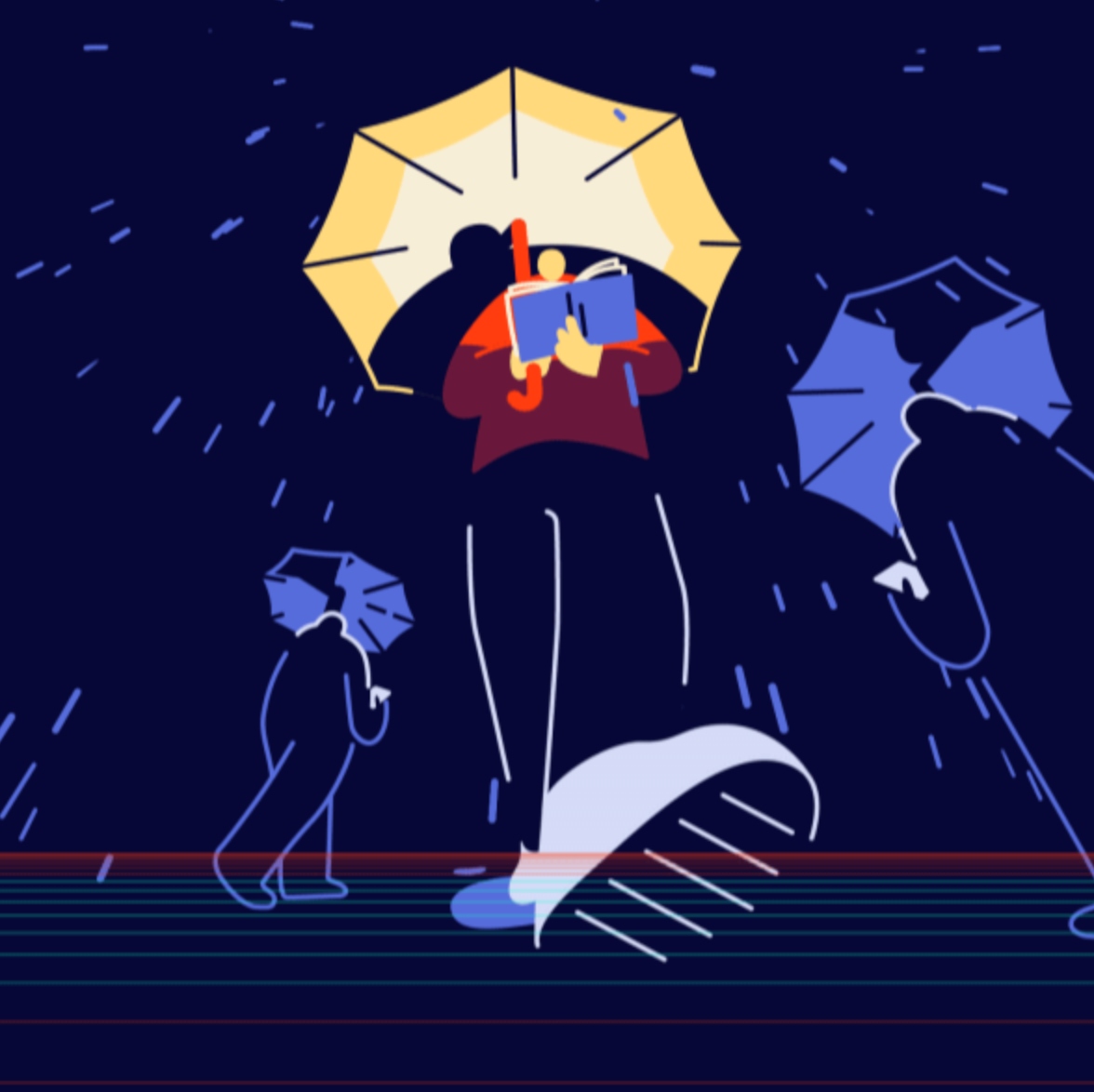
 In recent years, there have been more and more "blank IPs" like Labubu.
Author: Sleepy Not Found, 404 Youth
You must have noticed that Labubu has become incredibly popular recently.
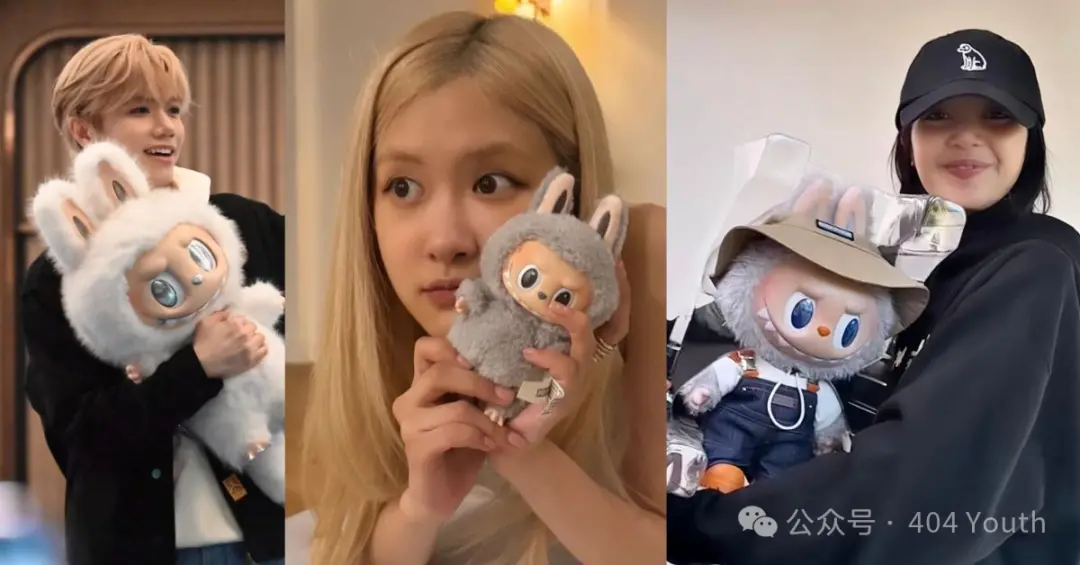
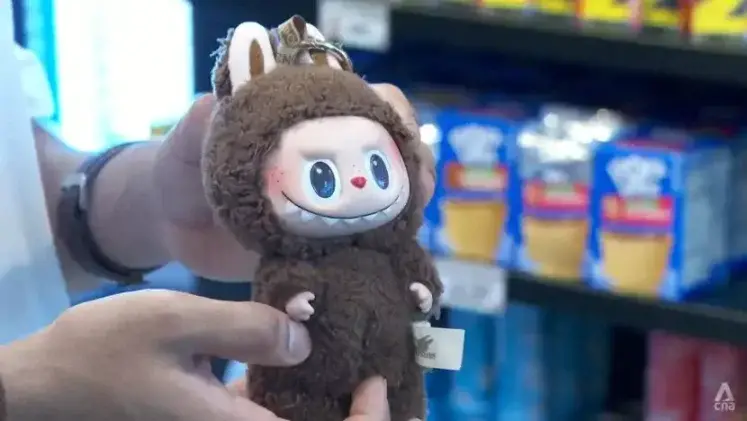
On backpacks in the subway, on office desks, and in selfies on social media, it always appears in some form, grinning and looking a bit silly.
This seemingly strange little creature is being placed in the most prominent corners of life by more and more young people.
It’s not the most expensive, nor the rarest, and it doesn’t even have a clear backstory. But the popularity of Labubu is clearly not as simple as "blind boxes" or "luck."
You will find that people who like Labubu do not just "buy it to display."
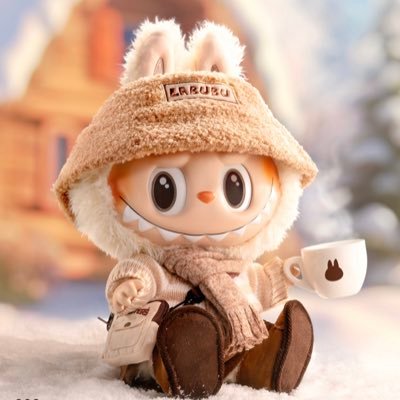
They make outfits for it, and even stick false eyelashes and tooth gems on it. Young people buy this little doll not to show off, but to care for it like a little friend with a bit of attitude, creating a participatory emotional companionship.
In recent years, there have been more and more "blank IPs" like Labubu. Without a clear worldview or grand biographies, they allow people to project emotions and weave stories more willingly.
Labubu doesn’t make noise or advocate anything; it’s just there when you’re willing to pause and take a breath.
The Popularity of Labubu Lies in "Sense of Connection"
The explosive popularity of Labubu is not a coincidence or a stroke of luck.
In many seemingly "companion economy" sectors, it has hit a particularly precise point: it doesn’t just talk to you or help you relieve boredom, but accompanies you in portraying an ideal intimate relationship: controllable, non-intrusive, pressure-free, and customizable.
Through it, we can experience a unique intimate imagination belonging to contemporary people:
I can approach it freely, but it doesn’t require any response from me;
It’s there when I want to express myself, and it won’t ask a single question when I don’t want to talk.
This is an increasingly common phenomenon today: projecting emotions onto "non-human objects" to gain a lightweight, controllable sense of intimacy.
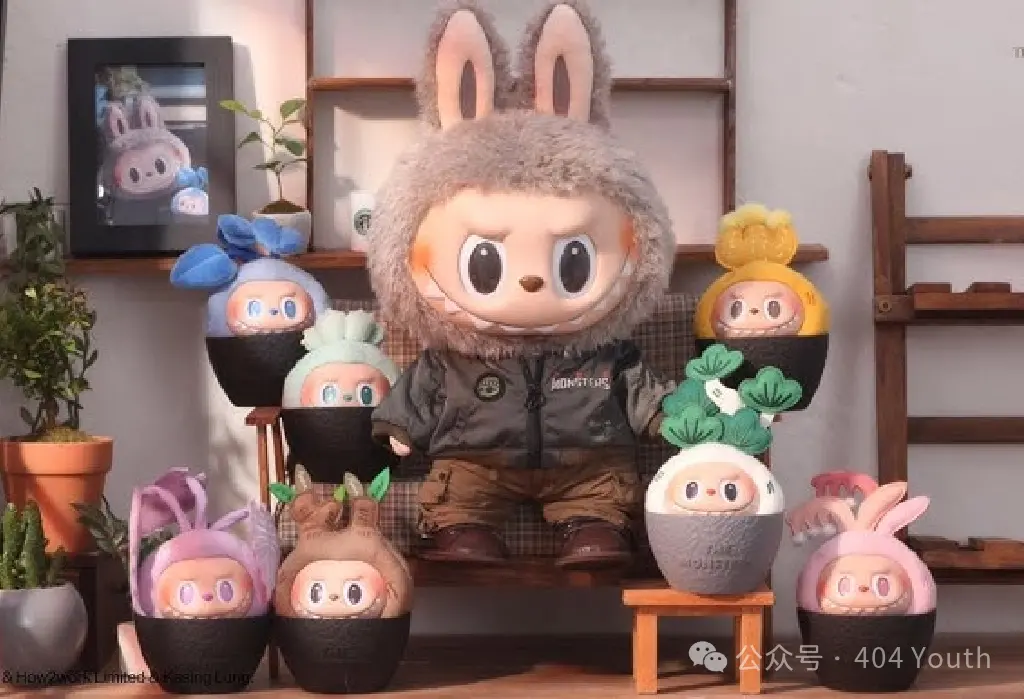
You will find that Labubu's "transformations" increasingly resemble caring for a digital child: dressing it up, putting on makeup, decorating its room, taking photos—each action is not purely a hobby, but a form of "projection-feedback" light emotional interaction.
This is essentially the same logic as the recent popularity of nurturing characters in otome games, two-dimensional culture, and "pain bags":
It’s not about satisfying "being understood," but about gaining "emotional sovereignty."
In these relationships, we are no longer individuals trying to meet others' expectations, but emotional directors who say, "I’m in charge." Labubu is like a gentle blank canvas where you can write your own story.
This is also the biggest difference between Labubu and traditional trendy toys.
Classic figures or IP peripherals pull you into someone else’s world; you have to understand character settings and story backgrounds to feel immersed.
But Labubu is the opposite; it doesn’t tell a story, only provides a cute outline, a shell with a bit of expression, inviting you to write your own emotions into it.
It is much freer than many "fully established IPs."
And "freedom" is precisely what young people currently lack in real social interactions.
It’s not expensive, its image is approachable and malleable, finding a precise balance between popular culture and niche expression. You won’t feel it’s vulgar because it’s too popular, nor will you feel it’s marginal because it’s too niche.
It is the kind of community symbol that says, "You like it, and I happen to like it too," like a collective tacit understanding that doesn’t require words.
So we say that the popularity of Labubu is fundamentally not just about "IP," but about a "sense of connection" between people that has long been on the verge of disappearing; it preserves this sense of connection in the form of a toy.
In the rhythm of the city, we have begun to get used to not disturbing each other, yet still yearn for a presence that can be treated gently. Labubu just fills that gap of "wanting closeness but not wanting to be disturbed"; it’s not a cure for loneliness, but a co-conspirator in it.
Pop Mart's Blank Strategy: Half-Told IPs Are More Complete
Labubu has almost no setting. You don’t even know what kind of creature it is, and no one tells you what its "mission" is. Its emotions are clear, but its background is almost a blank slate.
This is not a flaw; it’s a carefully designed feature.
This is actually Pop Mart's killer move; they have long abandoned the old method of "creating a complete character" and instead built an IP narrative that aligns more with contemporary psychological structures: not telling everything, but only half.
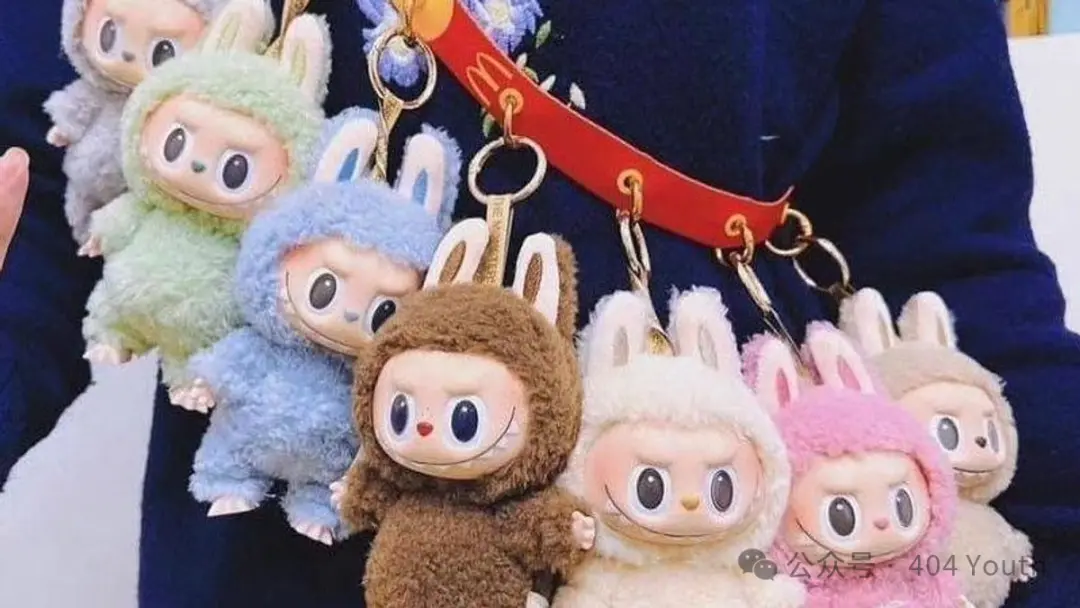
Traditionally, for an IP to survive, it relied on settings, plots, and complex character relationships. But today, a complete setting has become a psychological burden.
Young people are increasingly impatient with stories.
In an environment of limited attention, severe social anxiety, and information overload, more and more young people actually prefer this kind of relationship where "I can get close when I want, and participate a little when I want," rather than a complete story filled with settings and immense pressure.
In other words: we have moved from an "immersive narrative" to an "episodic identification" era.
You don’t need to fully understand Labubu’s past, nor do you need to know its future direction. You just need to, at a certain moment, lock eyes with one of its expressions, and that’s enough.
This is actually a transfer of narrative power in contemporary storytelling: the initiative of storytelling has shifted from creators to audiences.
You can assign it a setting, saying it’s "a somewhat irritable urban worker"; you can also say it "is the misunderstood version of myself from childhood"; or you can say nothing at all, just change its outfit and let it sit with you for a while.
The biggest difference from traditional narrative logic is that we don’t need a character that "waits for us to understand," but rather want a vessel that can hold our emotions.
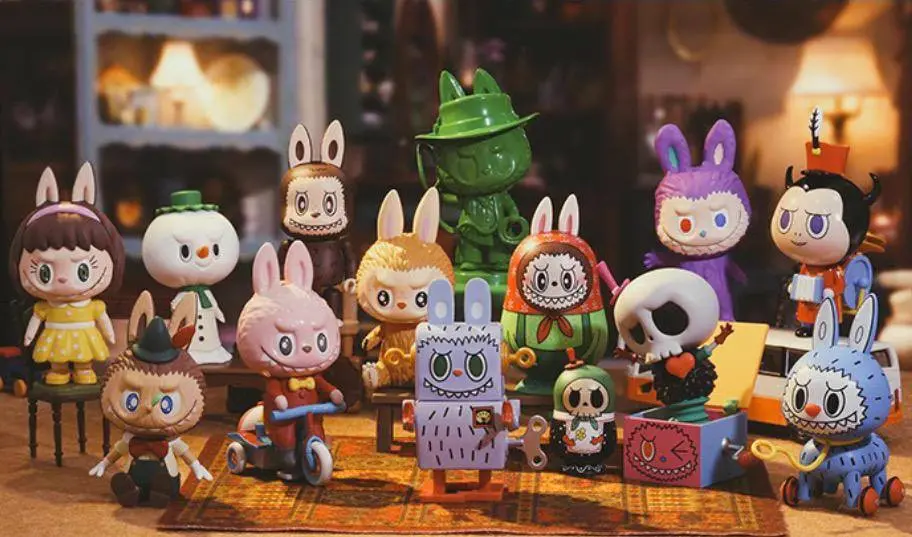
This also explains why blank IPs have become increasingly popular in recent years; most of Pop Mart's IPs tend to blur backgrounds and dilute settings, leaving more space for the audience to fill in.
It’s not that they don’t want to tell stories, but because they know: in an era where everyone wants to express themselves but no one wants to be defined, the blank itself is the strongest setting.
It satisfies a core emotion of the "cultural uncertainty era": I don’t need you to give me answers; I just want to decide for myself where to speak and where to be silent.
The success of Labubu lies in the fact that, although it hasn’t constructed a complete world, it has provided everyone with a way to approach it. This is a new cultural structure: decentralized, anti-setting, participatory emotional completion.
It’s not a character but a position; not a story but a way to open up.
Because of this, it can quietly occupy so much "blank space" on young people's desks, backpacks, and bedside tables.
A "Slightly Risky but Not Too Risky" Light Trend Product
Blind boxes are something many people say "are just a cash grab," yet their bodies are quite honest.
Its charm, to put it simply, is a sense of stimulation within a controllable range: the uncertainty of unboxing, the little surprise of getting a hidden version, and the small trades of "you give me, I exchange with you" with friends—all these constitute the psychological reality of contemporary young people who want a bit of surprise but cannot bear significant risk.
Labubu actually hits this point: it has a bit of "gambling" involved, but it doesn’t make you feel cheated.
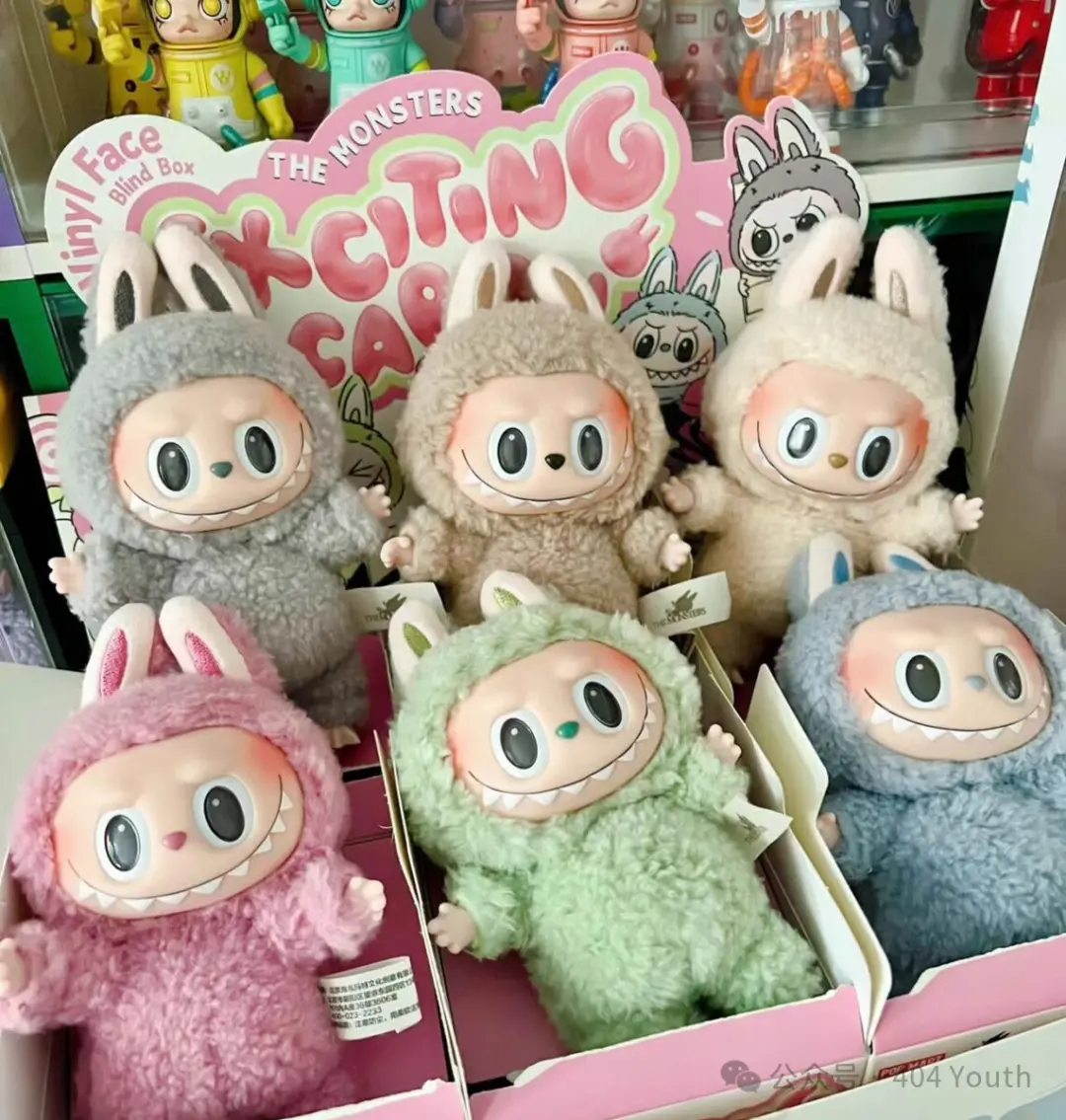
It’s not like NFTs or sneakers that can be inflated to thousands or tens of thousands. The current secondary market price of Labubu is acceptable for most people. Moreover, even if you don’t get a hidden version, there are many "cute versions" to enjoy, so the gap isn’t too large.
This combination of "lightly gambling + visually pleasing" perfectly fits the comfort zone of young people's emotional consumption.
Furthermore, buying blind boxes doesn’t rely heavily on knowledge thresholds like some trendy cultures do.
You don’t need to understand the trendy toy circle, nor do you need to study the background settings, wait all night, build connections, or scramble for a lottery. You just need to walk through a mall, see it and like it, buy one to try, and the entire "entry" threshold is completed.
This is actually Labubu's and Pop Mart's product philosophy: not creating anxiety but generating the impulse to own.
It’s like a "low-pressure trend": you can participate, become addicted, share, and discuss, but you won’t feel excluded from this circle just because you missed out on one item, creating a "disconnection." Even its design language leans towards "fuzzy cuteness," making it neither too refined nor making you feel like a "social media expert."
It’s a trend that can be integrated into life without requiring you to declare yourself a trendy person. You can place it on your desk as decoration, take a photo of it as an expression, or put it in your bag to become a social topic; it has social attachment but no social pressure.
This positioning perfectly intersects with contemporary young people's threefold needs for "social + trend + emotional consumption":
Want to buy something to make myself "different today";
Want to post something to let others "know I’m living";
Want to gamble a little but not really let my wallet bleed.
The product logic of Labubu is like a disassemblable trend experience package: controllable price, immediate feedback, low participation threshold, and high psychological satisfaction. It’s a clever form of "daily stimulation," not obsession or financial investment; it’s a small excitement that you can control.
More importantly, although Labubu can indeed circulate in the secondary market, its price has always been controlled within the range of "affordable if you like it," preventing it from being inflated into a financial product. Its value growth is not based on scarcity creating anxiety but on social and emotional circulation generating consensus.
This value system based on cultural recognition is more enduring and healthier than those purely reliant on scarcity as "financial speculative products" (yes, I’m talking about NFTs).
The Trend Manipulation Technique: Designed Frenzy, Reasonable Sense of Participation
Any trend is precisely manipulated, and Labubu is no exception; it’s not loud but omnipresent.
We can certainly say it’s "cute," "healing," and "has character," but without strong operational strategies and content investment, Labubu could not have stood out from the many trendy toy brands. Its rise to fame must have been designed.
More specifically, I believe Labubu's popularity has hit three key points: controllable scarcity, circulating price structure, and just the right social heat.
It doesn’t pursue a "sold-out myth" of frenzy across the internet; it definitely lets you know "someone got it." It doesn’t make you feel like you can’t buy it, but it certainly makes you feel that "to get that version, you do need a bit of luck." This sense of participation that has thresholds but isn’t unattainable, has expectations but doesn’t drive you to despair is what many trendy brands find most difficult to balance today.
From sneakers, trading cards, to CS2 skins and NFTs, the trend consumption of the past few years has increasingly moved towards "financialization." You’re not buying an item; you’re betting on whether it will appreciate in the future.
It gets people hooked, but it compresses what originally belonged to "interest" into a financial operation of "who understands it earlier, buys it faster, and hoards more."
In a certain sense, Labubu represents a "light rebellion" after all this.
It hasn’t turned "scarcity" into a tool for a hierarchy of contempt. It maintains its popularity with extremely restrained strategies: it’s definitely not something everyone can buy the hottest version, but as long as you’re willing to buy, the secondary price is acceptable; not every piece will appreciate, but every piece is cute enough that you won’t regret placing it on your desk.
This is its brilliance: keeping financial attributes under cultural attributes.
You can exchange, sell, or showcase it, but these actions are not for arbitrage; they are for participation, a way to make people "feel like they are in the trend."
It doesn’t tell you "how you should be"; it provides a cultural rhythm that you can join, exit, and participate in repeatedly.
What’s even more remarkable is that its underlying manipulation logic is not "inflating prices" but "maintaining enthusiasm."
This is actually a very new trend operation concept: not creating authority but generating replicable enthusiasm.
It doesn’t rely on elites to define aesthetics but empowers users; it doesn’t create desire through "limited anxiety" but cultivates relationships through "low-pressure participation." Trendiness is no longer a symbol of identity that requires a significant investment of time and money but has become a lightweight social cultural space that everyone can enter.
This "gentle trend" actually reflects a subtle shift in values:
Trendiness used to be a threshold, a matter of "whether you understand"; now, it feels more like companionship, a matter of "whether you are willing."
You don’t need Labubu to prove you’re a trendy person. You just want to leave a small corner for yourself in the fast-paced life, to be accompanied by it, to dress it up, without needing to explain.
This is not anti-trend but a redefinition after cooling down the trend.
Labubu never explains who it is. It just sits there, grinning, fluffing up, quietly accompanying you.
But because of this, it has become an emotional outlet, a practice of intimacy, a participatory trend sample. You can dress it up, showcase it, or do nothing at all, just occasionally glance at it and then continue with your life.
We have become accustomed to too many "response-required" relationships and too much "investment-required" enthusiasm. But Labubu is not that kind of existence. It doesn’t make noise, doesn’t teach you anything, and doesn’t require your feedback.
It simply stays there, letting you know that in this era where everything is filled with narratives, there are still things willing to leave a little blank for you.
And that little blank might just be what we need the most.
 Risk warning
 Risk warning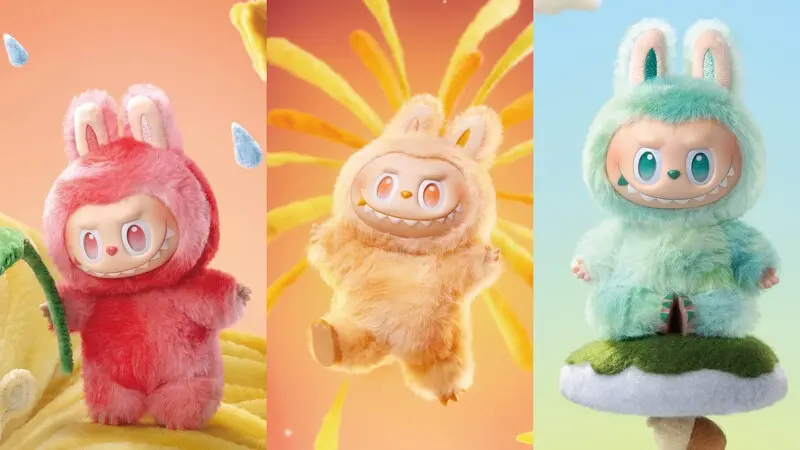

Popular articles





