Dialogue with the founders of Frax Finance and Aave: Despite competition, it's a positive-sum game; stablecoins will become the largest asset class on-chain

 This article will share the views of the founders of Frax Finance and Aave on the rapid growth of the stablecoin industry, the innovative journey of their own projects, and their perspectives on the upcoming regulatory changes.
Original Title: "How The Genius Act Could Change The Dollar Forever - Sam Kazemian & Stani Kulechov"
Original Text: The Rollup
Translation by: Yuliya, PANews

In the rapidly evolving era of cryptocurrency and blockchain technology, Sam Kazemian, founder of Frax Finance, and Stani Kulechov, founder of Aave, are undoubtedly two leading figures in the stablecoin space. In a recent special conversation with The Rollup, they shared insights on the rapid growth of the stablecoin industry, the innovative journey of their projects, and their views on the upcoming regulatory changes, particularly how stablecoins have become the focus of the industry following the volatility in the crypto market in 2022.
Today, their attention is on the GENIUS Act, a landmark piece of legislation that could elevate stablecoins to the status of legal tender, fundamentally altering the global landscape of the dollar. This article will delve into Sam and Stani's insights on the stablecoin market, their expectations for the bill, and the prospects of how stablecoins will shape the future financial ecosystem. PANews has compiled the text of this dialogue.
The Stablecoin Boom and Legislative Opportunities
Host: The stablecoin industry is currently booming, with multiple versions of legislation advancing in both the House and Senate. Although its market share is only 1.1% of the M1 supply of the dollar, it seems the entire industry believes "this is just the beginning." As core players in the industry, what are your thoughts on this moment?
Sam Kazemian:
To be honest, I can hardly contain my excitement. Every day I read investment reports and ETF briefs, and without exception, "AI" and "stablecoins" are listed as the two hottest fields in the world today, with no other industry coming close. As a founder of a stablecoin protocol, it feels amazing to see this industry finally understood and accepted by the world.
We spent years researching and building Frax, which started as an experimental "hybrid model" and has now transformed into a "legal digital dollar" path that policymakers are willing to legislate in support of—this leap is monumental.
Stani Kulechov:
I completely understand Sam's feelings. Stablecoins are very intuitive tools, especially in regions with financial turmoil and currency devaluation—such as Argentina, certain African countries, and parts of the Middle East—where the financial stability provided by stablecoins is far more attractive than their local currencies.
But even in Western countries, the value of stablecoins lies not just in their "stability" but in their ability to make the yield of DeFi understandable and usable for mainstream users. This is a natural evolution of fintech from "paper money → digital currency → on-chain assets." It truly opens up a new paradigm for cross-border value transfer.
Do Stablecoins Threaten the Dollar?
Host: You mentioned the value of stablecoins expanding into markets with limited access to good currencies, such as Argentina, African countries, and some regions in the Middle East and Asia. Regarding how stablecoins affect the dollar's position in the global monetary system, some believe stablecoins threaten the dollar's dominance, while others argue they actually expand the dollar's global influence. What are your thoughts on this issue?
Sam Kazemian:
I think this completely misunderstands the role of stablecoins. The truth is quite the opposite: stablecoins are an "extension" of the dollar, a global extension of the dollar's influence.
We can look at stablecoins from two historical phases:
The first phase is the ideal of "decentralized algorithmic stablecoins"—like Terra, which relied purely on market mechanisms for stability and ultimately ended in collapse;
The second phase is the realism phase we are now entering: if you are pegged to the USD, then the "perfect" design of a stablecoin is actually to gain recognition from the U.S. government—allowing it to directly acknowledge that your token is "dollars."
This is the revolutionary aspect of the GENIUS Act. It allows stablecoins to have "legal tender status" as dollars for the first time, meaning when the U.S. Treasury says "this compliant token equals dollars," it can truly be accepted by all banks receiving dollars globally—it is no longer just an on-chain "digital asset," but legally recognized as "dollars."
Stani Kulechov:
The dollar is simple and effective as a transaction settlement tool, and the proliferation of the internet has actually expanded global dollar trade. In the future, we expect stablecoins to experience a similar situation, as the internet's reach will be broader. Achieving a more decentralized system requires time and widespread adoption; it's a long-term process. Currently, the scale of technology is reflected in the expansion of existing value.
In the next 2-3 years, stablecoins will become the largest asset class on-chain, and within 5-7 years, security tokens will surpass the total of stablecoins and native crypto assets. Traditional assets being tokenized as RWAs (real-world assets) will benefit, mostly priced in dollars, reinforcing the concept of dollar-settled transactions, but this may not necessarily be the final form of the future financial system. The next 10-15 years will witness a shift in transaction mediums towards new mediums with unique security and interoperability, enhancing liquidity and creating more ecosystem interest, establishing new ways for future stablecoins and transaction value.
Are Security Tokens the Ultimate Form of On-Chain Assets?
Host: Stani, you just mentioned that in the long run, stablecoins are merely a transition, and security tokens will become the largest asset class on-chain, even surpassing stablecoins and native crypto assets. What specific assets are you referring to? What is the logic behind this judgment?
Stani Kulechov:
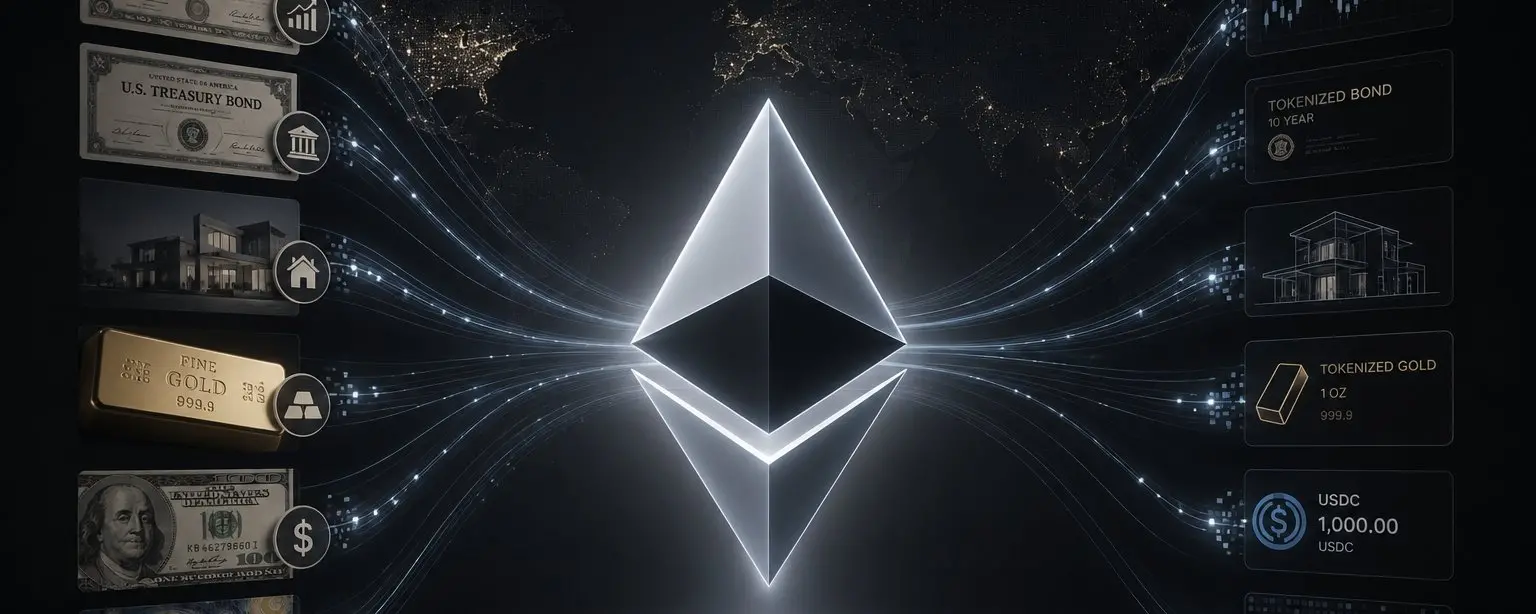
This is a broad concept; what we commonly refer to as RWAs (Real World Assets) actually encompasses security tokens as well. The range can include publicly traded company stocks, private equity, debt instruments (such as government bonds, corporate bonds), and potentially structured financial products in the future.
Currently, many stablecoin reserves are backed by short-term U.S. Treasury securities, and these assets are already functioning on-chain. However, as on-chain interest rate tools mature, we will see higher-yield, more complex risk-tiered traditional assets also being brought on-chain—which is the backbone of the financial system.
In the past, many high-quality assets had poor liquidity, not because they were unattractive, but due to high entry barriers and limited distribution channels. DeFi provides a globally accessible liquidity network that can liberate these assets from "closed" financial structures, allowing them to be priced and traded directly on-chain. This will reshape the entire capital market structure.
Core Impact of the GENIUS Act: Who Can "Print Dollars"?
Host: Sam, you talked about your conversations with Senator Hagerty and other legislators. Can you discuss what new opportunities the GENIUS Act will open once it takes effect?
Sam Kazemian:
The dollar has multiple definitions in the financial system, with the Federal Reserve distinguishing different types of dollar assets through classifications like M1, M2, and M3. M1 money refers to currency that can be used immediately in the economy, including bank deposits, demand deposits, and money market funds that can be quickly converted to cash. M2 money forms are riskier, such as bank debts denominated in dollars but not insured by the FDIC (Federal Deposit Insurance Corporation); these assets resemble dollar-denominated investments rather than traditional currency.
Since the 19th century, the issuance of M1-type money has been an exclusive privilege of federally chartered banks. They can create "immediately available" money, such as demand deposits and money market funds. Now, the GENIUS Act grants this ability to stablecoin issuers, allowing some entities that are not chartered banks to flexibly and innovatively issue M1 money. This is why some banks seem poised to support this bill now, despite having previously opposed it, as they prefer to maintain their monopoly on issuing M1 money.
The GENIUS Act and payment stablecoins are historically significant because it allows non-chartered banks to issue M1 money under strict regulations for the first time. These regulations require that stablecoins must be backed by high-security assets, such as money market fund securities, Treasury bills, Federal Reserve reverse repos, and FDIC-insured deposits. Currently, FRXUSD is striving to become the first payment stablecoin chartered entity. This development has not yet been fully priced into the market, but it may gradually be recognized in the coming months as more news about banks issuing legal stablecoins emerges.
Stani Kulechov:
While intuitively, regulatory approval for areas like stablecoins seems reasonable, the key lies in the restrictions these regulations may impose, especially regarding innovation. Before entering DeFi, I also worked in fintech, where P2P lending and crowdfunding platforms were initially very active, but later regulatory frameworks forced many small startups to exit because they couldn't bear the high compliance costs.
So, the key is— the GENIUS Act must set clear yet inclusive rules. We cannot let excessive caution drive innovators away. Fortunately, there is now a group of very professional legislative representatives in the crypto industry working hard to push this process forward.
Will Multiple Entities Issuing Dollars Compete with Each Other?
Host: Traditional banks like JP Morgan and Citibank plan to issue their own stablecoins. Will there be competition among stablecoins in the future, even leading to "dollar inflation"?
Stani Kulechov:
Actually, we don't see this as "competition." To us, stablecoins are more like "payment channels" or "tracks"—each user chooses the most suitable track based on the scenario, such as USDC, GHO, frxUSD, etc. In the Aave ecosystem, many users hold stablecoins for over six months, indicating that they are not just mediums of exchange but also long-term store of value.
In Aave V4, we have also designed the "GSM" (GHO Stable Module: an important functional module aimed at ensuring Aave's native stablecoin GHO maintains 1:1 convertibility with other assets) to accept these stablecoins as underlying collateral, such as USDC and USDT, which are already integrated. In the future, Frax could also be included through governance processes, enhancing the overall flexibility and risk resistance of the protocol.
Sam Kazemian:
I completely agree. The digital dollar is a positive-sum game. The global M1 market is worth $20 trillion, while the total market cap of on-chain stablecoins currently only accounts for 1%. This means the penetration rate of the entire industry is still extremely low.
frxUSD has only been launched for three months and is currently applying for integration into the Aave ecosystem. I believe that more and more compliant stablecoins will join DeFi in the future, making the entire digital dollar system more diverse and robust. Frax's goal is to become the "base digital dollar" in this system.
The New Landscape of Digital Dollars: Frax and Aave
Host: Sam, you recently transitioned Frax from L2 to L1 and even restructured the original governance token FXS. Is this a preemptive layout for "stablecoin compliance"?
Sam Kazemian:
Absolutely correct. Our overall architecture has transformed from an "algorithmic stablecoin protocol" to a "digital dollar issuance + settlement network." The original Frax Share (FXS) has been renamed to Frax, becoming the gas and governance token; while frxUSD is a new, legally compliant payment stablecoin.
We like to call it "the correct version of the Libra blueprint." Libra initially attempted to build a globally universal digital currency but failed due to political resistance. Now, with the timing being right and policy support, we choose to aim for "compliant issuance of dollars," realizing stablecoin issuance, cross-chain settlement, and value transfer on the high-performance EVM chain, Fraxtal.
Host: Stani, Aave chose not to launch L1 or L2 but instead built the V4 "Unified Liquidity Architecture." Why did you choose this path?
Stani Kulechov:
Although V4 has not yet launched, the relevant proposal was passed last year, and development is nearing completion. We believe that the variety of asset types on-chain will become extremely diverse, and the risk curve will also extend. Therefore, V4 introduces the design of "Liquidity Hubs + Spokes." Different asset classes (such as RWAs, high-risk DeFi assets, etc.) can be allocated to different "branch markets," but liquidity is still centrally managed through the "hub."
This way, the user experience is simpler, capital utilization is more efficient, and systemic risks are effectively isolated. We have also introduced a "risk premium mechanism," where high-risk collateral will pay higher interest rates, thus optimizing the overall borrowing cost structure.
Collaboration Concept Between Frax and Aave: Allowing "Digital Dollars" to Directly Participate in DeFi Yields
Sam Kazemian:
Then I will "publicly propose" once. We plan to launch the FraxNet reward program in the Frax fintech app, where users holding frxUSD can earn risk-free yields at Treasury levels in non-custodial wallets.
But I want to go further—allowing frxUSD holders to directly deposit assets into Aave to earn yields through the real borrowing market. This will make the combination of "digital dollars + on-chain yields" a reality and make Aave the first DeFi yield platform connected to legal dollars.
Stani Kulechov:
This idea is fantastic and showcases the modularity and composability of Aave V4. We look forward to Frax's assets joining the governance proposal process and are willing to provide relevant support to make this "on-chain dollar yield" a reality.
 Risk warning
 Risk warning