








1 billion dollars in liquidation, how have previous international wars affected Bitcoin?

 Whether it touches the threshold of systemic risk and whether it triggers a reassessment of global liquidity and confidence.
Author: shushu, BlockBeats
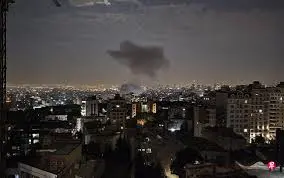
On June 13, alarms sounded across Israel as it launched a preemptive strike against Iran. Israeli Defense Minister Katz announced a nationwide state of emergency, stating that following Israel's attack on Iran, missile and drone strikes targeting Israel and its civilians are expected in the near future.
After the outbreak of conflict, Bitcoin briefly fell below $102,000, with a 24-hour decline of 5%; Ethereum briefly dropped below $2,500, with a 24-hour decline of 9%.
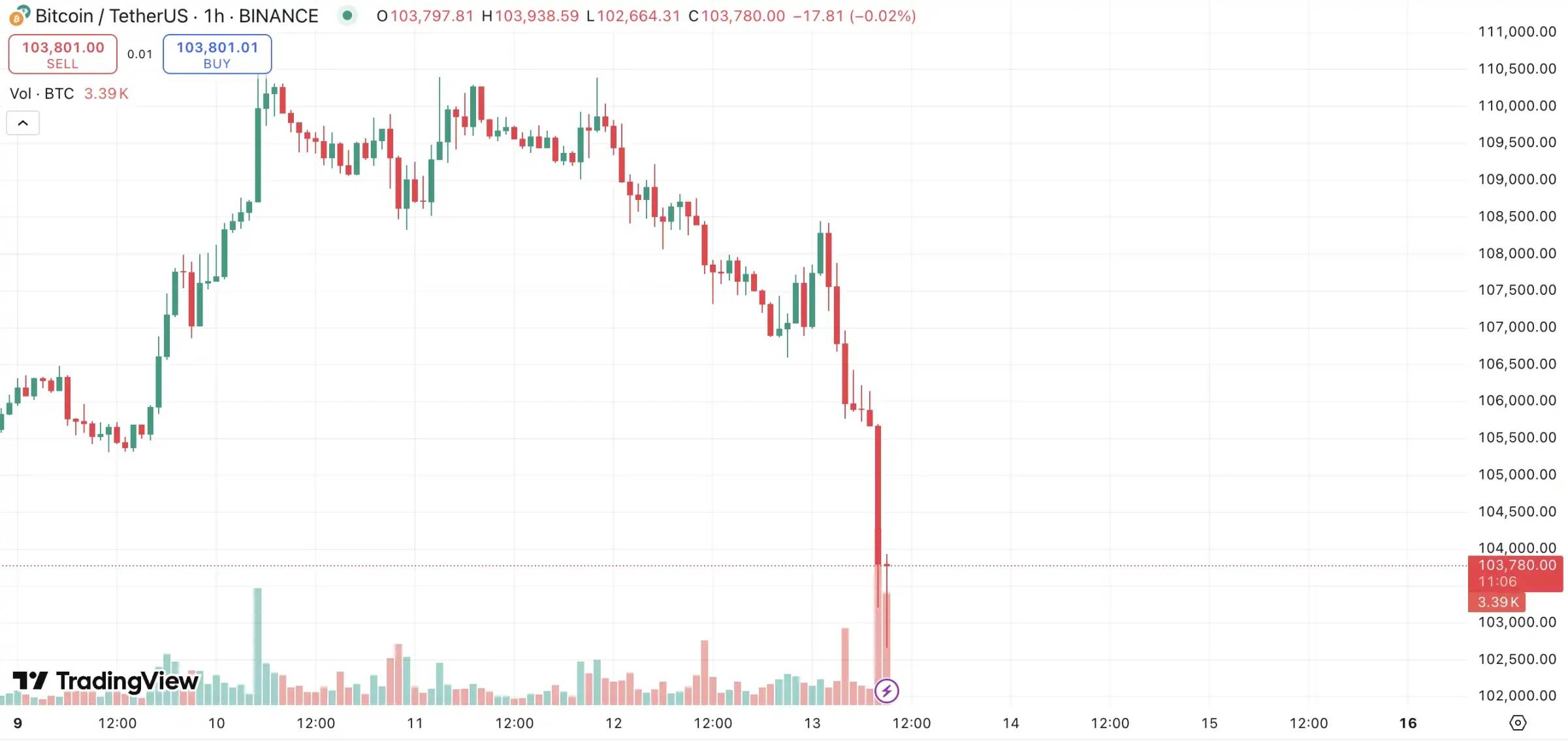
According to Coinglass data, after Israel's attack on Iran, $1 billion was liquidated across the network in the past 12 hours, with long positions liquidating $937 million and short positions liquidating $67.71 million.
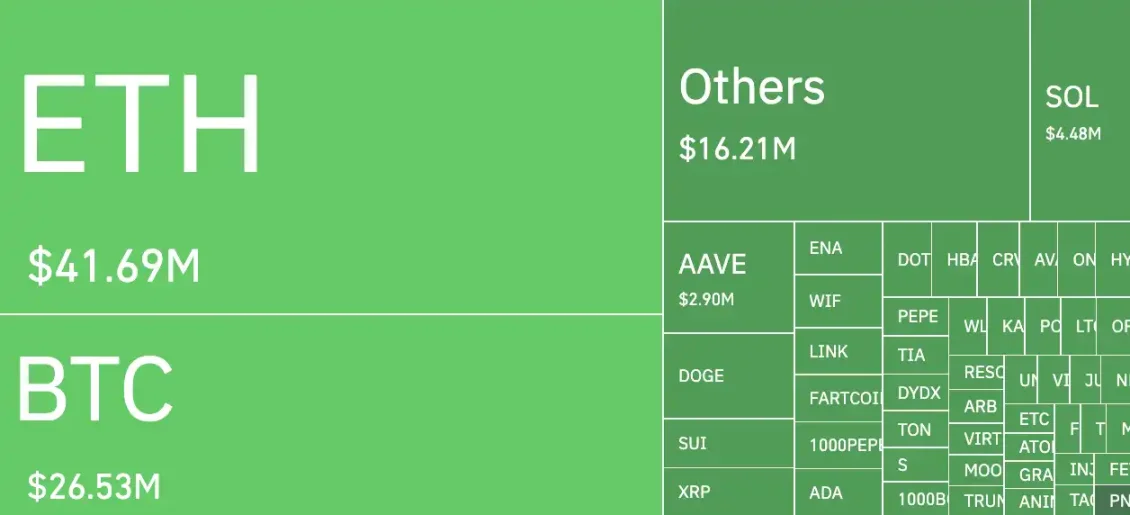
War has once again erupted in the Middle East, and the cryptocurrency market has also experienced severe turbulence. In recent years, localized wars have occurred frequently, and for Bitcoin, each conflict represents a test of its safe-haven properties and significant fluctuations in market sentiment.
Russia-Ukraine War
At the outbreak of the Russia-Ukraine war in 2022, the role of cryptocurrency as a safe-haven asset, a value transfer tool, and a means of political fundraising was greatly amplified.
On February 17 of that year, prior to the conflict with Russia, Ukraine announced the legalization of Bitcoin.
On February 24, Putin announced a "special military operation" against Ukraine, causing Bitcoin's price to plummet, and global stock markets and cryptocurrencies faced a black Thursday. By 6 PM on February 24, Bitcoin had crashed from about $39,000 to $35,094.2, with a 24-hour decline of 10% and a 7-day decline of 20.4%.
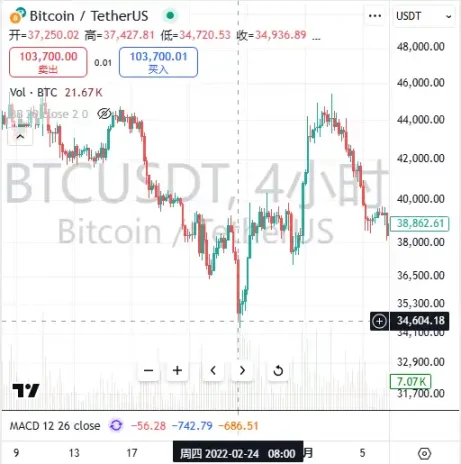
Amid market expectations that sanctions would push Russian funds into cryptocurrency, Bitcoin briefly rose above $45,000 after the sharp decline. However, after reports emerged of an attack on a Ukrainian nuclear power plant, Bitcoin fell back to around $41,000.
At that time, Bitcoin's hash rate and trading volume in Ukraine and Russia accounted for a very small proportion of the global total. There were rumors that Ukraine's largest Bitcoin mining farm was hit by a Russian missile, causing the farm to go offline and a 33% drop in hash rate. However, according to data from OKLink, there was no significant change in Bitcoin's overall hash rate at that time. Therefore, the Russia-Ukraine war itself was not sufficient to technically cause significant fluctuations in Bitcoin's market; more factors were related to the market itself.
Russia's invasion of Ukraine has been called "the world's first crypto war," as both sides discovered the advantages of a borderless, unregulated currency. In this Russia-Ukraine crisis, cryptocurrency became an important highlight as a means of donation and payment, generating significant support on Twitter.
On February 26, just two days after the war began, the Ukrainian government announced official donation addresses for BTC, ETH, and USDT, stating that it would accept cryptocurrency donations. Thousands of people donated millions of dollars in cryptocurrency to help Ukraine fight against Russia. Crypto Twitter also mobilized to raise funds for Ukraine, with Pussy Riot founder, Trippy Labs, and PleasrDAO members launching "Ukraine DAO" to help those affected by the invasion.
Israel-Palestine Conflict
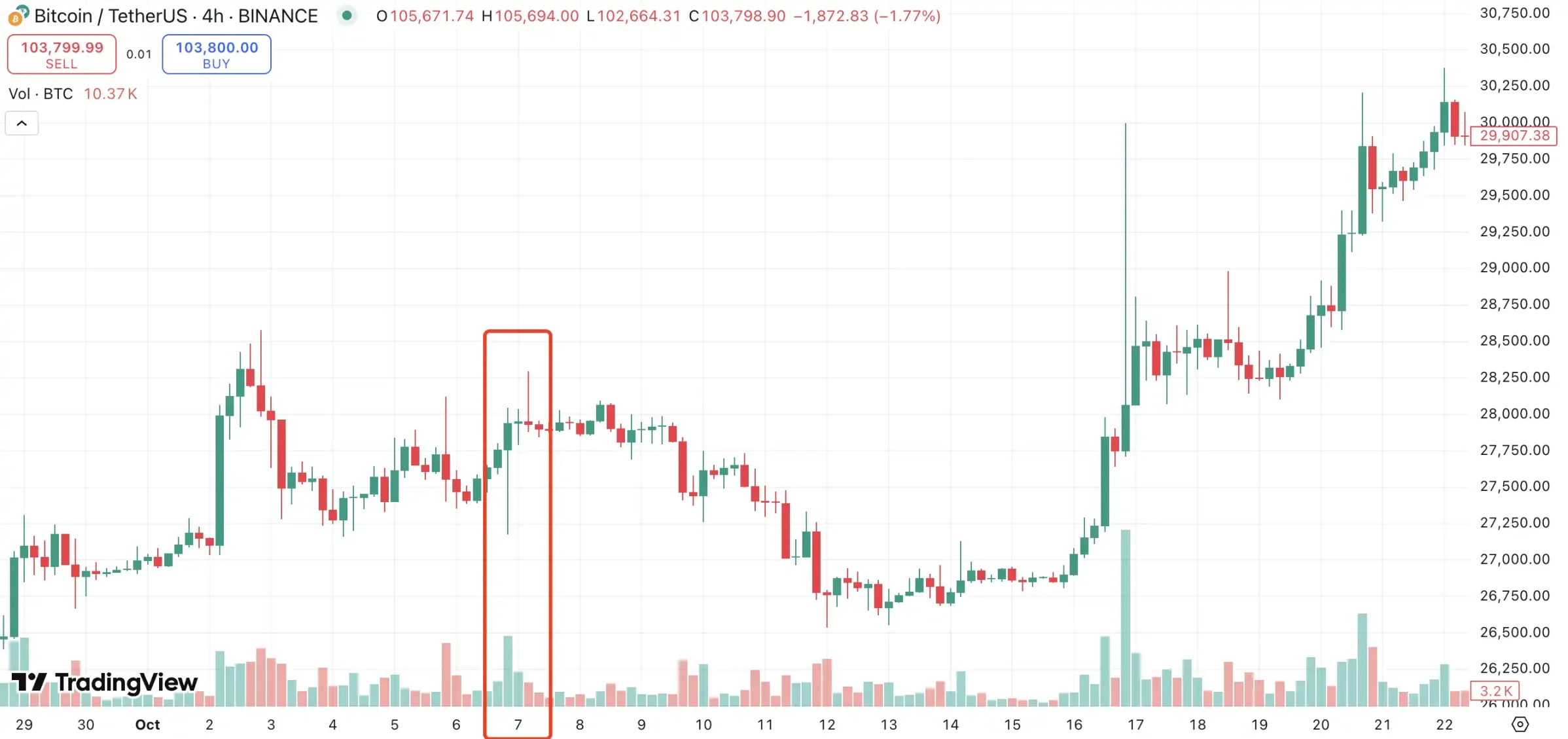
On October 7, 2023, the Palestinian armed group Hamas clashed with the Israel Defense Forces, marking the official start of military conflict between Israel and Palestine. After the outbreak of conflict, Bitcoin's price briefly plummeted to $27,000. As of October 15, the Israel-Palestine conflict had resulted in over 4,000 deaths.
After the outbreak of war, both sides attempted to raise funds through cryptocurrency for military expenses and aid. The Israeli crypto community established Crypto Aid Israel, while the Palestinian side also raised funds through cryptocurrency.
Bitcoin's price continued to decline until a week later when it began to recover, primarily due to a false tweet from crypto media Cointelegraph on the evening of October 16, claiming that the U.S. SEC had approved BlackRock's iShares Bitcoin spot ETF.
Throughout October, armed conflict continued, but Bitcoin's price oscillated upward during the escalation of the conflict. The main reasons behind this were reflected in three aspects. First, the market gradually formed an "immunity" to regional conflicts; Bitcoin is a global asset, and historically, its response to regional conflicts has often been limited unless the war escalates into a global crisis (like the early stages of the Russia-Ukraine war). Although the Israel-Palestine conflict is intense, its geographical scope is relatively small, and the market views it as a "non-systemic risk."
Second, the Middle East has long been in an environment of financial instability and restricted capital flows; the escalation of conflict instead stimulated regional funds to seek safe-haven transfers through USDT or BTC, providing actual buying support for Bitcoin.
Finally, October 2023 coincided with a decline in U.S. inflation and heightened expectations of peak interest rates, while the anticipation of spot Bitcoin ETF approvals continued to heat up, becoming the main macro backdrop driving the market upward. Even if localized risk events occur, the liquidity environment remains loose, and the logic of institutional accumulation has not changed; for instance, during the period of BlackRock's ETF application news, market risk appetite had already increased.
Looking back at the market performance during the last two geopolitical conflicts, a clear pattern can be observed. Sudden war news often first triggers panic selling, which then leads to on-chain leveraged liquidations, creating a resonance decline in both technical and emotional aspects; however, after the liquidations are cleared, the market may gradually stabilize or even rebound due to safe-haven demand returning and improvements in macro liquidity expectations. The current conflict between Israel and Iran may also follow a similar path.
Unlike traditional financial markets, the role of crypto assets in the face of war is more complex. On one hand, it is a highly volatile risk asset, primarily impacted by emotional shocks. On the other hand, it is also a borderless, censorship-resistant financial tool, often becoming the last free channel for funds in extreme events. For this reason, each geopolitical sudden event is not only a test of market sentiment but also a stress test of the real functions of crypto assets.
Whether war will trigger similar reactions may not depend on the intensity of the conflict itself, but rather on whether it touches the threshold of systemic risk and whether it leads to a reassessment of global liquidity and confidence. However, we hope for world peace, and that war will never again become a regular variable in market fluctuations.
 Risk warning
 Risk warning



Popular articles





