








From "Standard Configuration" to "Burden": The Foundation Model is Approaching Its Twilight Period

 The realistic dilemmas of this idealized structure are gradually being exposed, and the halo of the foundation is quickly fading.
Author: Fairy, ChainCatcher
Editor: TB, ChainCatcher
Eleven years ago, the Ethereum Foundation was registered in Switzerland, establishing an early paradigm for governance structures in crypto projects. By the time of the "multi-chain era," foundations became the "standard configuration" for Layer 1 projects—decentralized, non-profit, and community-serving. These labels were once hailed as the "gold standard of governance" for blockchain projects.
However, a recent article by a16z titled "The End of the Cryptocurrency Foundation Era" has reignited discussions about foundations. The real dilemmas of this idealized structure are gradually being exposed, and the halo surrounding foundations is quickly fading.

When Ideals Meet Reality: Examples of Foundation Model Loss of Control
The ideal foundation carries a strong moral halo and is seen as an indispensable bridge between the early stages of a project and autonomous governance. However, as many projects enter maturity and scaling phases, this mechanism has begun to show structural fatigue. Internal struggles, resource misallocation, and weakened community engagement… More and more project foundations are experiencing governance imbalances in practice, amplifying the gap between ideals and reality.
The Arbitrum Foundation once allocated a large amount of ARB without DAO approval, provoking strong community backlash, with the foundation citing poor communication as an explanation; the Kujira Foundation faced a series of liquidations and a plummeting token price due to using KUJI tokens for leveraged operations, ultimately handing over the treasury to the DAO; the Ethereum Foundation has been criticized multiple times for selling ETH at high prices and inefficiency, and although it has begun reforms recently, doubts remain.
In terms of power structure, the early Tezos project fell into prolonged internal strife due to power struggles between the foundation and the founding team, delaying the token issuance process and leading to investor lawsuits. A similar situation occurred with the Cardano Foundation, which was accused of marginalizing founder Charles Hoskinson and lacking proactive involvement in key matters such as on-chain governance and charter drafting.
Thus, it is evident that some foundations currently face issues such as opaque governance processes, unclear power structures, weak fund management and risk control, and insufficient community participation and feedback mechanisms. In the context of a friendlier regulatory environment and rapid industry changes, does the role and governance model of foundations need to be re-examined and upgraded?

Invisible Networks of Interests and the Fate of Tokens
In the actual operation of crypto projects, the division of roles between foundations and Labs has gradually formed a structural paradigm: foundations are responsible for governance coordination, fund management, and ecological funding, while technical development is usually undertaken by independent Labs or Dev companies. However, there may also be an increasingly complex reality of intertwined interests behind this.
According to crypto KOL "Crypto Fearless," a professional foundation "architecture output group" composed of lawyers and traditional compliance advisors has formed behind North American projects like Movement. They provide projects with standardized "Labs + Foundation" templates, helping them comply with regulations for token issuance, design governance structures, and deeply participate in key matters such as airdrop rules, ecological fund allocations, and market-making collaborations.
However, these directors are often not original members of the projects but hold key positions in the foundation with annual salaries in the hundreds of thousands of dollars, wielding substantial "compliance veto power" without deep involvement in product development, and even influencing the flow of key resources.
We have compiled a list of public chain projects that have been active and highly participatory in the past year and analyzed their token market performance over the past three months and one year:
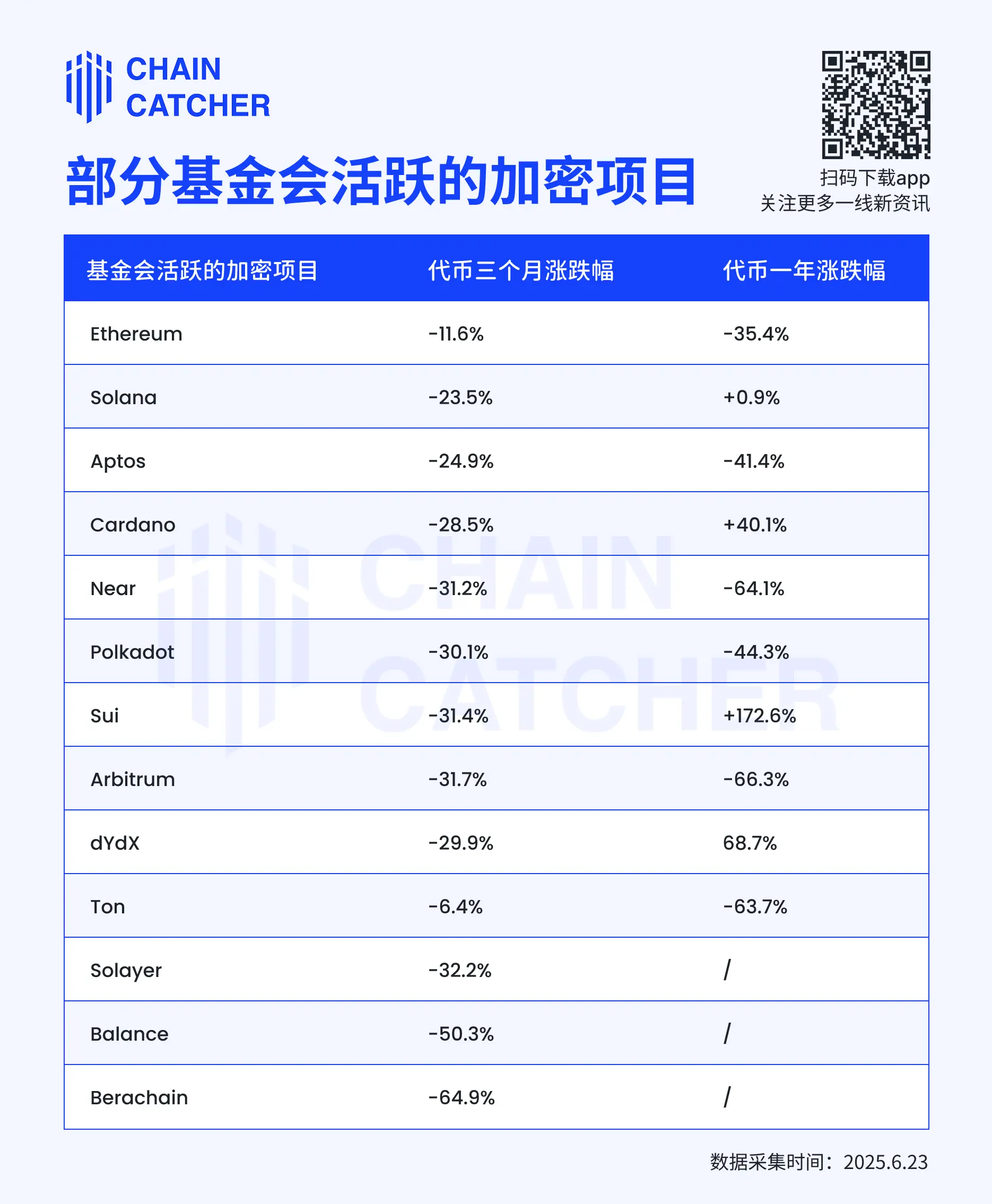
From the overall data, most tokens of projects led by foundations have experienced varying degrees of decline over the past three months, with annual performance also being lackluster. However, this trend is also influenced by the overall downturn in the altcoin market.

According to crypto KOL "Crypto Fearless," two projects ranked in the top 200 by market capitalization plan to abolish their foundation structures in the second half of this year and merge directly into Labs. As two mainstream organizational forms in crypto projects, foundations and corporate structures each have their focus: foundations emphasize non-profit, decentralization, and ecological governance, while corporate structures are efficiency and growth-oriented, pursuing business development and market value growth.
Meanwhile, a16z also stated in the article that the development company model can more accurately mobilize resources, attract talent, and respond quickly to changes. With the surge in U.S. stock listings and increased correlation between crypto and stocks, governance structures led by companies seem to have an advantage.
So, is the countdown to the exit of some foundations already underway?
 Risk warning
 Risk warning




Popular articles





