Is pump.fun worth 4 billion dollars now?

 Can pump.fun's survival path to transform into "Kuaishou" during the bear market lead to a resurgence?
Author: Cookie, BlockBeats
The industry's largest meme issuance platform, pump.fun, is set to publicly raise $1 billion at a valuation of $4 billion, which can no longer be considered news. As the meme coin frenzy fades and the once-flourishing golden dog era comes to an end, there are many voices of concern in both the Chinese and English circles that pump.fun's issuance of tokens will siphon off a large amount of liquidity, believing this will mark a temporary end for the meme coin sector.
As a phenomenon-level application leader in the crypto space, pump.fun has been a money printer for the industry for quite some time. However, with the retreat of liquidity and narrative, pump.fun is also looking for ways to transform, such as learning from traditional internet platforms to create native internet celebrities for traffic. So, is pump.fun still worth a $4 billion valuation now?
Is a $4 billion valuation justified?
Pump.fun's total historical revenue is currently about $758 million, making it one of the most profitable projects in the Web3 space. According to DefiLlama data, pump.fun's revenue over the past 30 days is $41.61 million. Projects with revenue above this are either stablecoins and their related entities (Tether, Circle, and Tron) or DEXs (PancakeSwap, Hyperliquid), and there are no Solana ecosystem projects that can compete with it.

Annualized revenue calculated from the last 30 days' revenue multiplied by 12 is approximately $500 million, which corresponds to a price-to-sales ratio of 8 times at a $4 billion valuation, which is not very outrageous. Of course, the market's skepticism is more about "the current pump.fun can't support this valuation," rather than "the glorious pump.fun couldn't support this valuation."
Pump.fun's revenue fluctuates based on the overall market conditions of meme coins. In mid to late November last year and mid-January this year, pump.fun's new token "graduation rates" peaked, reaching 1.67% and 1.62% respectively, which is currently double.
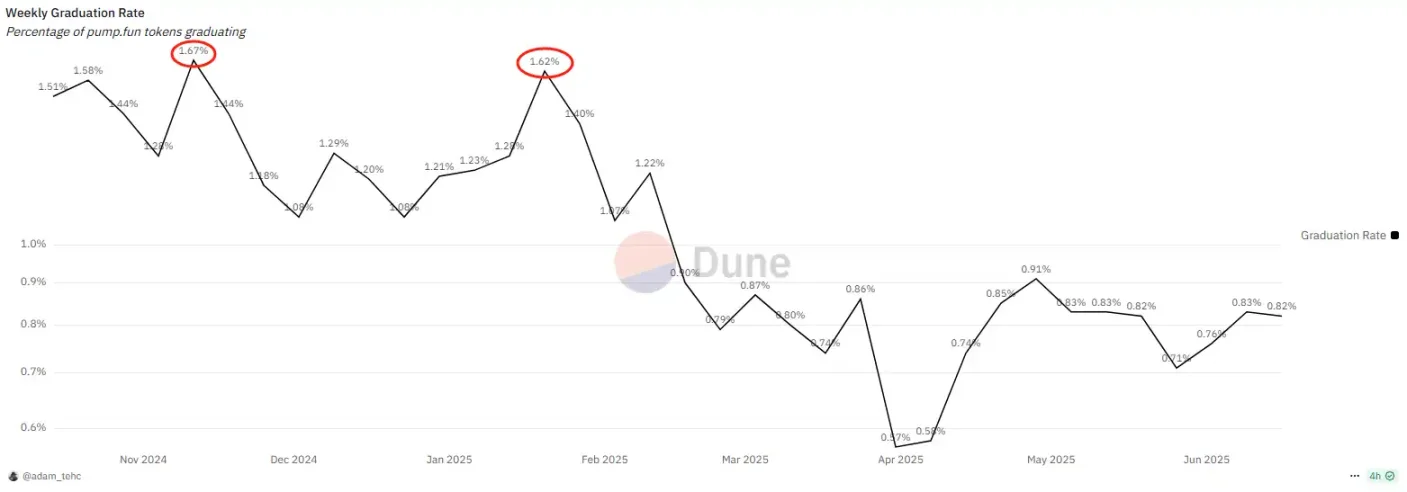
Correspondingly, the average daily revenue during these two periods was at least above $4 million, basically 3-4 times the current level, with some days even exceeding $10 million in revenue. The number of new tokens issued daily was also at least over 50,000, which is double the current amount.
Whether pump.fun chooses to issue tokens during its peak or now, it is bound to be criticized. If during the peak, it wouldn't be at this valuation, and people would accuse them of ruining the meme coin bull market. If now, people would criticize them for adding fuel to the fire, extracting liquidity, and exacerbating the already low meme coin market. But if we consider it from another angle, will meme coins ever see the same kind of fervor again? Or will they fall flat like inscriptions? Moreover, bull markets have their ways, and bear markets have theirs. As the project party, pump.fun's actions in the current poor market environment show us that they still have hope for revitalizing the meme coin market and maintaining their leading position with some kind of moat when a potential meme coin bull market returns.
Divergence in understanding between Chinese and English circles
In the Chinese circle, aside from the current hot topic of "issuing tokens" surrounding pump.fun, there is generally either a focus on how pump.fun's token issuance will drive up some "platform concept" meme coins, such as $alon related to founder @a1lon9 or the "mascot" $cupsey, or more attention on new platforms like letsbonk.fun.
There are two particularly interesting viewpoints. One comes from KOL Crypto韋馱 @thecryptoskanda, who believes that pump.fun's "mass media" attribute is unique, and when capturing the attention of the short-duration young generation users, pump.fun is the king.
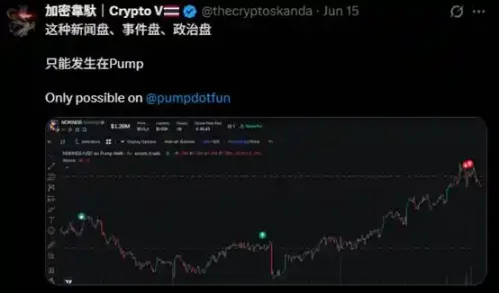
Although @thecryptoskanda's viewpoint is somewhat controversial, there has indeed formed a very interesting phenomenon between meme players and traditional media. Players trading meme coins, in their pursuit of profit, have inadvertently become one of the world's most efficient "news reporters." Meanwhile, traditional media reporters, who may not trade coins at all, always report on various happenings in the crypto space, unintentionally becoming "promotional ambassadors" for meme coins.
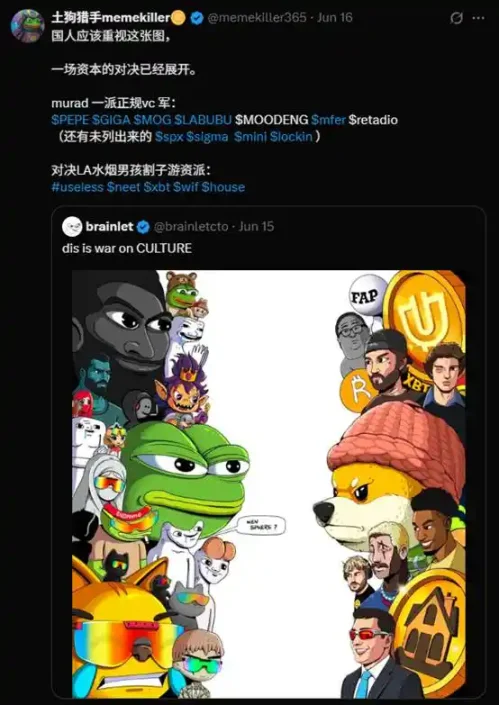
The second viewpoint comes from @memekiller365 regarding a recent "meme war map" posted by @brainletcto. With $SPX continuously rising from the bottom over the past month and recently hitting a historical high, there is a competitive situation between old meme coins and new meme coins born from platforms like pump.fun and letsbonk.fun, with each side operating independently.
So what about the English circle? The English circle doesn't have a very distinct version of understanding; they still play and have fun, with the show going on. However, they have paid more attention to pump.fun's live broadcasts, and some of pump.fun's community coins also give the impression that, in the current market environment, pump.fun has slowed down.
From "fast-paced casino" to "slow-paced media"?
Gainzy, an Israeli, is currently the hottest streamer on pump.fun, who recently had to frequently hide in bomb shelters due to the ongoing conflict.
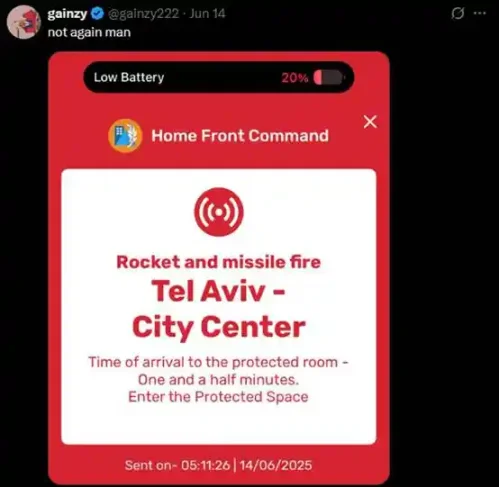
In the past month, more and more clips of Gainzy's live streams have gone viral in the English circle. As the heat rises, the price of the live tokens he issues has also been increasing.

In May, pump.fun founder Alon commented on Gainzy, saying, "He single-handedly revived Ethereum, pump.fun live broadcasts, and hair removal clinics," calling him "the ansem of the last bull market."
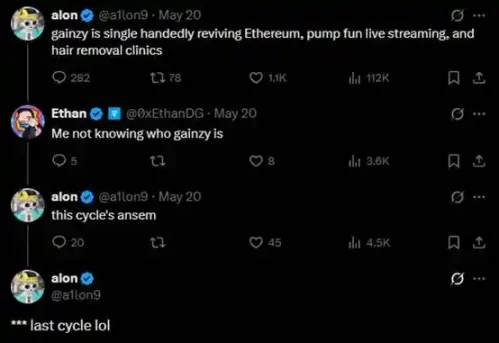
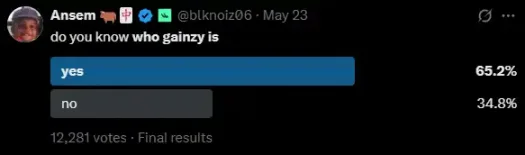
So Ansem jokingly asked, "Do you know who Gainzy is?" With over 12,000 votes, 34.8% of voters still chose "don't know." Even now, the Chinese circle may still be more familiar with pump.fun's ecological stars at the Ansem stage and indeed not very familiar with Gainzy.
Who is Gainzy? According to a tweet by @StarPlatinumSOL, Gainzy quit his job in 2017 to work full-time in the crypto space, first getting involved in controversy as a dev of a Rug project called Obsidian during the ICO bull market. Later, he created a trading bot and sold it in 2018.
Gainzy was also one of the earliest KOLs to promote FTX, earning up to $50,000 in commissions in a month at his peak. Before his time on pump.fun, he was a sponsored streamer for Rollbit, where he faced controversy again for promoting $RLB while secretly dumping it.
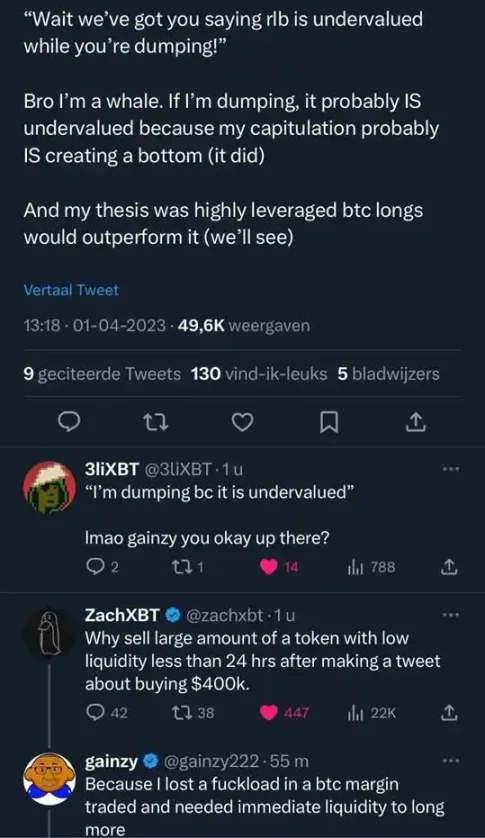
ZachXBT also criticized Gainzy at the time, "Why did you tweet about buying $400,000 of $RLB and then go on a massive dump less than a day later?"
Gainzy initially rose to fame after he was completely caught off guard by ETH and then went on a live stream to rant that Vitalik and the entire Ethereum Foundation were SBs, which happened on May 8. Following this live stream, ETH began to rise, and the English circle jokingly said Gainzy helped solidify ETH's bottom and saved Ethereum.
His live streams do not involve chain scanning or dog fighting; he simply smokes one cigarette after another while sharing his views on cryptocurrencies. From his live streaming style, he resembles a "CSGO streamer who made money but still streams like a grassroots." As his popularity grew, figures like Pudgy Penguins CEO Luca Netz and Yuga Labs co-founder Garga.eth joined him for live collaborations.
The latest star of pump.fun's live streams is @rasmr_eth. Like Gainzy, he is also a major KOL, with nearly 110,000 followers on Twitter and over 10,000 followers on Twitch. He kicked off his appearance with a presentation like Steve Jobs, explaining in detail why he wanted to bring his talents to pump.fun.
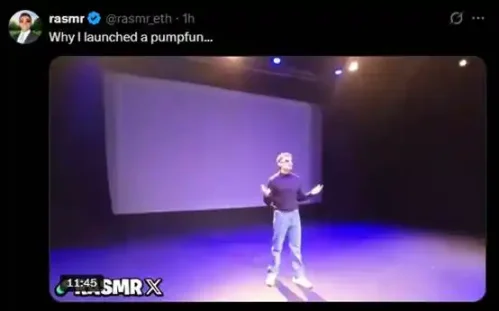
$rasmr briefly surpassed a market cap of $15 million after its launch but has now dropped below a market cap of $6 million.

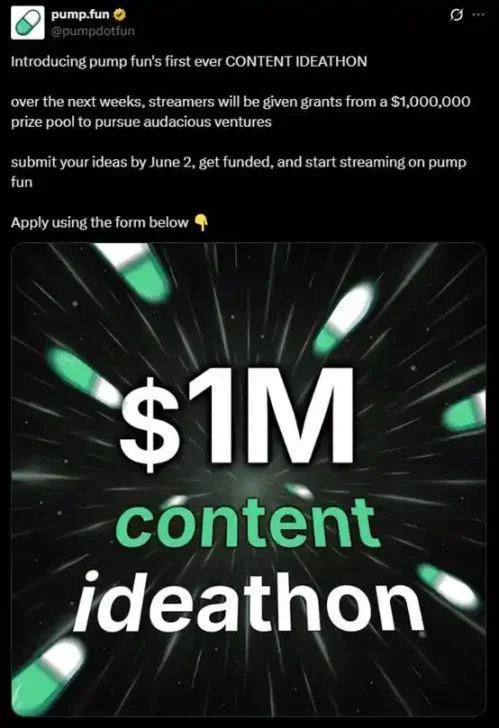
There are rumors that pump.fun paid Gainzy and rasmr to have them stream on pump.fun. This rumor cannot be confirmed, but pump.fun's emphasis on live streaming can also be seen from the $1 million streamer incentive that started at the end of May.
In addition to these live streaming stars, the $HOUSE token, which surged significantly at the end of April, has also brought forth new influencers like @Fapital3, @bigtonebigtone, and @Primed25. In the aforementioned "meme war map," $neet, a small coin currently valued at less than $5 million, was included precisely because of the strong support from these three individuals. The coin once surged to nearly a $25 million market cap.
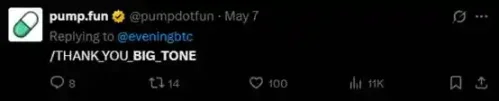
“TYBT,” an abbreviation for “Thank You Big Tone,” was one of the hottest memes on pump.fun last month. However, recently Big Tone has taken a break, only appearing in small groups and occasional Twitter Spaces.
Since the beginning of this year, many platforms for Web3 live streaming have emerged, but pump.fun is undoubtedly the most internet-savvy among all Web3 live streams. Although people's impressions may still linger in the chaotic pump.fun live streaming era, the current pump.fun seems to be striving to move away from the early chaotic growth phase, specifically cultivating its own traffic matrix system. Even now, pump.fun can give a vague impression of a PVE environment, with large coins like $FARTCOIN exceeding a $1 billion market cap, down to small coins like $neet and $chillhouse with market caps below $10 million, where there is no conflict between communities, frequent interactions, and a tight-knit unity.
(As of the publication of this article, the market cap of $chillhouse has surpassed $10 million, peaking at nearly $18 million.)
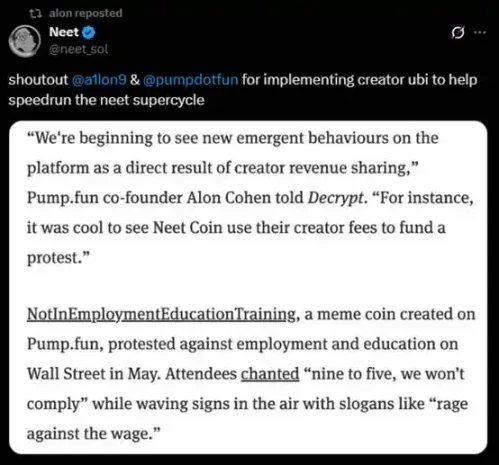
Pump.fun founder Alon also seems to be paying considerable attention to these small coins that showcase different facets. In an interview with Decrypt, he specifically mentioned $neet, as this coin organized an offline "no work" protest on Wall Street using creator incentives provided by the platform. After the coin's official Twitter account expressed gratitude in a tweet, Alon retweeted it.
$chillhouse has taken the viral slogan "Thoughts on chillhouse?" by storm across various pump.fun live streams and KOLs' Twitter DMs, becoming one of the hottest memes in the pump.fun ecosystem recently. It's nothing more than absurdity, like a bunch of drunk people scribbling on the street. Alon also retweeted related tweets about $chillhouse.

The "no work" $neet and the viral absurdity of $chillhouse both resonate strongly with young people. Pump.fun still has the best sense of the Z generation subculture in the crypto circle, which serves as a "soft moat" for them.
Of course, from creator incentives to streamer incentives, the criticism of pump.fun in the market has never ceased. Many players believe that pump.fun is struggling to do business and has finally started to loosen its purse strings to offer some money for support. However, from the perspective of the project party doing business, having a hot market for golden dogs every day is certainly the best, but in quieter times, they must think of strategies. Recruiting influencers, promoting newcomers, and building their own traffic matrix are essential to spark the next wave of market frenzy. After all, a market filled with golden dogs always starts with one or two leading golden dogs. As meme coins have developed to this point, a catchy meme or directly transporting memes from Web2 has limited stimulation for players' consumption desires, making it hard for players to envision much space (it's become cramped).
So what to do? Pump.fun's current answer is to capture the identity of young people ($house, $neet), not solely relying on hot topics or fleeting meme coin outputs, and to attempt supporting some memes that resonate with young people's interests through continuous memes ($chillhouse) and live streaming that caters to the tastes of crypto degens.
Conclusion
I do not believe that pump.fun's token issuance will be the end of meme coins; it may be a temporary end, but it will never be the end of meme coins. Throughout, we seem to like to attribute the failure of a sector to a specific project, like how Blur destroyed NFTs. However, if a sector can be destroyed by a single project, it indicates that the sector was already dead long ago.
There are countless young people in the world wanting to change their destinies, and cryptocurrency is so far the most enduring and relatively attractive place for young people. The stock market is not lacking in narratives; people naturally tend to believe the stories written by elites. Meme coins will not die because grassroots individuals also need their own stories to change their destinies.
After the tide recedes, I hope pump.fun's "media" can go further. As "coin stocks" draw attention away from the crypto circle and become a playground for elites, the wild yet youthful crypto flavor of pump.fun has become much more relatable.
 Risk warning
 Risk warning