U.S. stocks don the "token" vest, good or bad?

 The financial industry seems to be looking for a way to abolish the information disclosure and trading rules of the stock market, making the stock market more like cryptocurrency, rather than making cryptocurrency more like a regulated stock market.
Author: Matt Levine
Compiled by: BitpushNews
First, let me briefly summarize the history of the U.S. public stock market:
In the early days, anyone could raise funds for a project by selling shares to the public, and many did so, often accompanied by false promises.
This phenomenon peaked in the 1920s, when people rushed to buy stocks and borrowed money to speculate. Then the stock market crashed, leading to the Great Depression. To restore market confidence, Congress passed a series of laws (notably the Securities Act of 1933 and the Securities Exchange Act of 1934) to regulate the public stock market. From then on, if a company wanted to sell shares to the public, it had to disclose business details, publish audited financial statements, and disclose significant events to ensure investors were informed.
Of course, this only applies to publicly traded companies, with exceptions for companies that do not raise funds from the public. If your father-in-law gives you some startup capital to open a local hardware store, the federal government clearly won't require you to submit audited statements.
Over time, these exceptions have become increasingly important. In the 1920s, the best way for businesses to raise funds was to issue shares to thousands of retail investors; by the 2020s, the best way to raise funds might be to directly call Masayoshi Son at SoftBank and ask him for $10 billion—he's likely to agree, and you wouldn't need to disclose financial reports or deal with retail investors.
"I often say that the private market has become the new public market." In the past, the main benefit of going public was the ability to raise large amounts of capital, as public markets had more abundant funds. Today, the private market holds trillions of dollars, making going public no longer necessary. Star tech companies like SpaceX, OpenAI, and Stripe can raise billions at valuations in the hundreds of billions without going public.
And they indeed do this, because going public is quite troublesome: you must disclose financial reports, update business progress (and could be sued if the information is incorrect), and may attract unwanted shareholders. Additionally, the public fluctuations in stock prices can be a headache for management. For hot private companies, this is actually convenient—they can raise funds while avoiding the complexities of going public.
But for the public, this may not be a good thing. Retail investors want to invest in companies like SpaceX but have no access, having to buy fragmented shares at high prices through gray channels. Over the past decade, a narrative has gradually gained traction: "Modern economic growth is largely driven by private companies, and the most exciting companies are private, yet ordinary investors cannot participate; this must change."
How to change it? My previous discussion indicates that this is quite difficult. Many large private companies simply do not want to go public because the public market is both annoying and expensive. The reason the private market can replace the public market is that global capital has become highly concentrated in private equity funds, venture capital, family offices, and people like Masayoshi Son—they simply do not need retail investors' funds (at least SpaceX does not; perhaps some private companies do need retail investors, but they may not be high-quality targets).
Nevertheless, people still want to try. Conceptually, here are some ways to address the issue:
Make going public easier. Cut down on expensive disclosure regulations. Make it harder for shareholders to sue companies, make it harder for activists to win proxy fights, and make it harder for short sellers to criticize companies. Clearly, there are trade-offs here, but it may be worth it. If going public is no longer more troublesome or expensive than staying private, perhaps SpaceX, Stripe, and OpenAI would shrug and say, "Sure, let's go public." Historically, this is something people often say when discussing solutions.
Make being private harder. Increase the expensive disclosure regulations for private companies. Through legislation, stipulate that "if you have more than X dollars in revenue, you must publish audited financial statements, and if any errors are found, anyone can sue you." You occasionally see efforts in this direction; in 2022, the SEC began "developing a plan to require more private companies to regularly disclose their financial and operational information."
Restructure the economy and wealth distribution so that large institutional capital pools decrease, and the only way to obtain significant capital is to sell shares to the public. This seems quite difficult.
But there is a more radical way: directly abolish the rules for public companies. Allow any company to sell shares to the public without disclosure or auditing. The public can judge the risks themselves—if a company refuses to provide financial reports, you can choose not to buy (but you can also buy!). Fraud would still be illegal, but mandatory disclosure would become voluntary. Companies that believe disclosure helps with fundraising could still follow existing securities laws; if they do not want to, they could sell shares directly to the public.
Few openly support this proposal. After all, over the past century, U.S. securities regulation has generally been viewed as successful—markets are deeper, valuations are more reasonable, and there is less fraud, all due to the mandatory disclosures for public companies.
However, the cryptocurrency industry has found a "shortcut": raising funds by issuing "tokens" (a type of economic rights certificate similar to stocks) without having to comply with securities laws. This theoretical outcome is mixed, but there seems to be a resurgence in recent years.
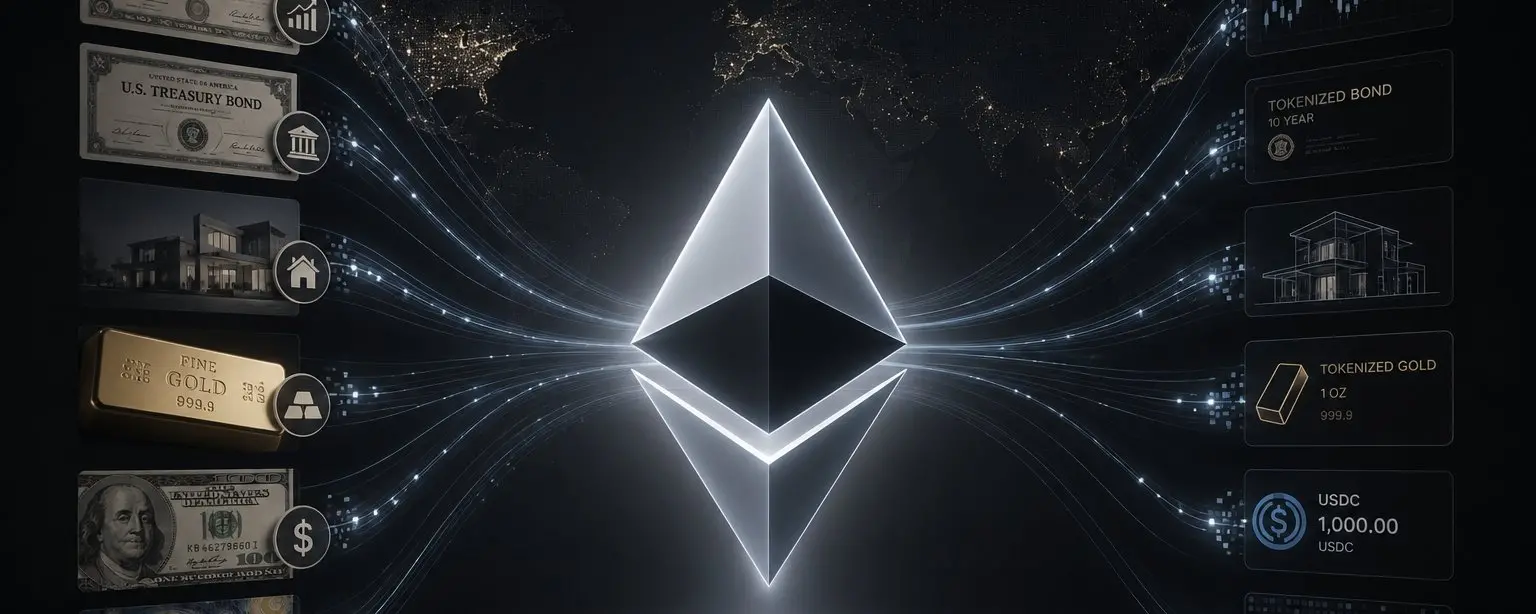
Today, most companies still issue stocks rather than tokens. But tokenization offers a new idea: rebranding private company stocks as tokens and then selling them to the public. You could call it "stock tokenization" and put it on the blockchain. In 2015, I wrote, "Muttering the words 'blockchain' won't make the illegal legal," but that no longer seems obvious.
Tokenized stocks also have other advantages: stocks on the blockchain could enable self-custody, high-leverage loans on DeFi platforms, 24-hour trading, and more. But the real temptation lies in the fact that, as long as it is labeled "tokenized," private company stocks could bypass U.S. disclosure rules when sold to the public. This means that the securities law framework established in the 1930s could be undermined.
Of course, the U.S. has not reached this point yet, but that is the goal. This week, Robinhood announced it would launch tokenized stocks (initially limited to non-U.S. users and primarily focused on U.S. stocks):
Robinhood Markets Inc. joins the wave of blockchain stock trading, offering tokenized U.S. stocks to 150,000 users in 30 countries with 24/5 trading.
The structural details show that the underlying assets are held by licensed U.S. institutions (theoretically, tokenization could allow for naked short selling of stocks, but Robinhood's tokens are fully collateralized).
More notably, Robinhood is also giving away private company tokens as a promotion:
To celebrate the launch, Robinhood is giving EU users who registered before July 7 tokens worth 5 euros for OpenAI and SpaceX, totaling 1 million dollars in OpenAI tokens and 500,000 dollars in SpaceX tokens.
Robinhood's head of crypto, John Krebriat, stated: "We want to address historic investment inequality—now everyone can buy these companies."
Although currently limited to Europe, the goal is clear: to allow the public to purchase OpenAI and SpaceX stocks through brokerage apps without requiring the companies to disclose financial reports.
Robinhood CEO Vlad Tenev stated plainly in a podcast:
"The argument against allowing retail investors in private companies is fundamentally flawed. People can buy depreciating goods on Amazon, can buy meme coins, yet cannot buy OpenAI stock? That doesn't make sense."
This is true! The public can speculate in the stock market (zero-date options), the crypto space (meme coins), and the lottery (Robinhood once promoted Super Bowl bets). In contrast, SpaceX or OpenAI are actually higher-quality targets. The distinction between public and private does not necessarily correlate with risk—there is junk in the public market, and there are gems in the private market.
But it is essential to recognize the essence: "The public should be able to invest in private companies" is itself a paradox.
The core characteristics of private companies are:
(1) Not open to the public,
(2) Not subject to the disclosure constraints of public companies.
Therefore, "allowing the public to invest in private companies" is equivalent to "permitting companies to sell shares to the public without disclosing information." This is not necessarily absurd—perhaps you believe disclosure rules are outdated and hinder innovation, but that is the essence of tokenization.
Tenev is not alone in this. BlackRock CEO Larry Fink also advocates for tokenization and explicitly states that the goal is to circumvent disclosure rules. In his letter to shareholders this year, he wrote:
"Tokenization democratizes investment… High-return investments are often limited to large institutions, primarily due to legal and operational friction. Tokenization can eliminate barriers and allow more people to access high returns."
Here, "legal friction" refers to some companies being private because they do not want to comply with securities disclosure rules, and the solution of tokenization is that they can sell shares to the public without adhering to these rules.
Once again, this solution has not yet worked in the U.S. You still cannot directly sell "tokens" of private company stocks (or private credit loans, private equity funds, etc.) to the U.S. public without disclosure. But many major players in finance are advocating for this, and the regulatory environment seems quite receptive, which you can understand. The public wants to buy private investments, intermediaries want to sell, but disclosure rules are hindering all of this. Saying "we should abolish disclosure rules" sounds terrible, regressive, and greedy. Saying "tokenization" sounds good, modern, and cool.
A bit of old-fashioned history.
Around 2020, crypto projects raised funds from the public through false promises. People leveraged to speculate, and then the bubble burst, leading to the "crypto winter." By the end of 2022, you might have envisioned various possible outcomes, including:
1) Crypto permanently fading into silence;
2) Congress regulating crypto like it did in the 1930s with the stock market, possibly creating new rules to restore confidence in the crypto market, requiring disclosure of information, regulating conflicts of interest, and imposing capital requirements. (We have indeed seen some of this; the "Genius Act" imposed capital requirements on stablecoins.)
But the reality has been a third path (which I personally did not predict), as the financial industry seems to be looking for a way to abolish the information disclosure and trading rules of the stock market, making the stock market more like cryptocurrency, rather than making cryptocurrency more like a regulated stock market.
Recommended reading:
U.S. listed companies flock to "buy coins," what is the effect of the second growth curve?
From "Standard" to "Burden": The foundation model is heading towards twilight
 Risk warning Risk warning