Stablecoins, a cashless payment revolution for 5 billion people

 The appearance of money is quietly changing.
Author: Kaori, 0x13, BlockBeats
"I really didn't expect that stablecoins could be spent directly, just like using Alipay."
Ella said with some surprise, her tone carrying a sense of "the era suddenly catching up with me."
Her husband is a somewhat well-known KOL in the Web3 circle, and he has opened no less than five overseas bank cards to convert cryptocurrencies into fiat currency. They even made a special trip to Hong Kong to exchange USDT for Hong Kong dollars through a narrow window.
On the first morning of their trip to Vietnam, they walked into a chain café in Ho Chi Minh City, ordered lattes and baguettes, and the staff pointed to a QR code on the cash register screen, saying it could be paid with "USDC." Ella took her husband's phone, tried to use the wallet to scan the code, and the payment interface popped up, completing the payment in less than five seconds.
In that moment, for the first time, she felt with her own fingers that stablecoins had truly become a part of daily life, rather than just hearing people talk about how great they are.
Before 2025, no one had thought that the next large-scale breakout of the Crypto industry would be due to stablecoins.
Looking back at the previous two instances, Bitcoin was about decentralized value consensus, and NFTs were about a new generation of digital cultural symbols and identities. But they seemed more like symbols belonging to specific circles, returning to the wallets of a few after passing through trending searches and social media.
But this time, stablecoins are different.
For us, stablecoins may still be a concept, a piece of policy news, or a stock price chart; but for people on the other side of the world, stablecoins have long been an indispensable part of their lives.
Stablecoins are about life, about reality. They enable a person working abroad to smoothly remit their salary back home, allow digital nomads to pay with USDT at a tavern, and give young people without bank accounts access to the world and the ability to participate.
Latin America | Young People Escaping the Peso
The afternoons in Buenos Aires are always hot. In a convenience store on the street, Federico is leaning against the counter with his phone, exchanging his recently received salary from pesos to USDT. He operated a few steps on the Lemon Cash interface, and a few seconds later, the screen displayed: "Saldo: 873 USDT."
Federico, 26, is a UI designer at a local gaming company. This is his entire salary for the month. He didn't go to the bank or an ATM; instead, he immediately converted his pesos into dollars through stablecoins as usual.
Federico said that when he was a child, his family used glass jars to store dollars, which was his earliest impression of "saving money." Later, the jars were replaced with shoeboxes under the bed and compartments above the kitchen ceiling. His father even hid a few dollar bills behind the cover of the range hood. Back then, it was relatively easy to exchange dollars. Now, to get cash in dollars, one not only has to wait in long lines but also risks being robbed.
"None of my friends keep pesos anymore; who knows if they'll still be worth anything tomorrow?" He shrugged, looking as if he had long since gotten used to it.
In 2023, Argentina's annual inflation rate reached 211%, and the peso depreciated by 74% against the dollar. Over the past few years, inflation has turned the cost of living here into continuously refreshing, ceiling-less numbers.
Sun is the founder of the-mu, where they build local entrepreneur communities around the world. They came to Argentina in 2024 to establish a Web3 entrepreneur community and organized several offline events.
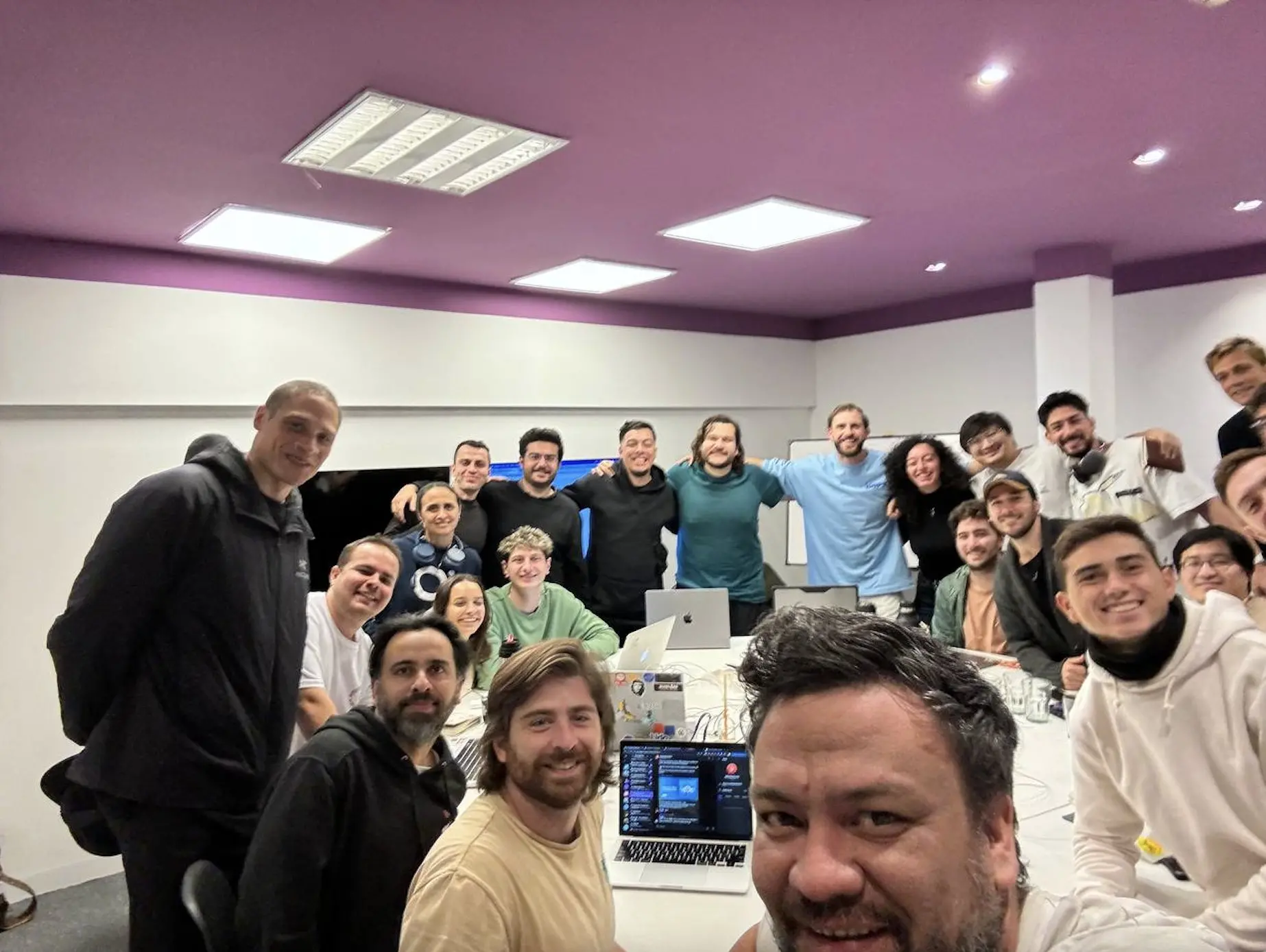
The-mu's offline event in Argentina, source: Sun
Sun mentioned something very interesting. When he and his team visited Argentina at the end of 2023, the price of a lunch in Buenos Aires was about 50 RMB; by March 2024, when they held an event, the price had risen to 100 RMB; and by the end of 2024, it continued to rise to 130 RMB. Here, currency has long lost its function as a measure.
Meanwhile, the official exchange rate hangs on the wall, deceiving itself, while the black market rate not only differs greatly from the official rate but is also astonishing.
"Do you know we have seven or eight exchange rates here?" Federico said with a bit of helpless laughter, "Even Coldplay coming to hold a concert can create a temporary exchange rate."
He was referring to an event in 2022 when the Argentine government indeed introduced a special exchange rate policy for international concerts, which was much more expensive than the normal rate, to cope with the sharply depreciating peso and ensure that the performers received enough dollar revenue. This is a country where absurdity has become the norm.
In such an unreliable system, USDT, USDC, and other stablecoins began to emerge like ice floes rising from the water. Initially, people exchanged them secretly; the black market dollars were unsafe, and hiding them under the bed was also risky. Later, people discovered that the wallet addresses on their phones might be a safer way to save.
In 2024, Latin America became one of the fastest-growing regions for global crypto expansion, receiving over $415 billion in cryptocurrency, with its global share rising from 7.3% to 9.1%, and an annual growth rate of 42%. Among users opening crypto apps in Latin America, 40% are from Argentina. In that year, Argentina's total cryptocurrency trading volume reached $91.1 billion, with nearly 10% of Argentinians using stablecoins monthly, peaking at nearly 25% activity.
Local stablecoin platforms like Lemon Cash and Belo sprang up like mushrooms after the rain, absorbing the entire country's disappointment with fiat currency.
"Our fiat currency is just an extremely worthless memecoin," Sun said, which is the consensus among all local Web3 entrepreneurs in Argentina.
Argentinians have long been accustomed to resisting the government and the financial system. For many young people, the first important decision they make after reaching adulthood is not which university to attend or what career to choose, but how to prevent their limited money from continuing to lose value. They no longer wait for a better peso policy; instead, they choose not to wait any longer.
These young people are gradually establishing a new order. They still keep a little peso for daily small expenses, while more valuable items, such as phones, computers, and rent, are settled directly in dollars and stablecoins. Life experiences force people to constantly seek the most feasible solutions.
"You can walk down the streets of Buenos Aires, and maybe two or three out of ten shops will accept stablecoins," Sun said. "You can also use Lemon Cash's U card, which allows you to spend stablecoins at almost all merchants."
Lemon Cash has now become Argentina's largest centralized trading platform, peaking at 5 million monthly active users, and even at its lowest, it still maintains a level of one to two million. In 2024, the platform processed a total trading volume exceeding $5.9 billion, with the fourth quarter alone surpassing $2 billion. The total amount of crypto deposits on the platform nearly doubled, with 78% of those deposits being stablecoins. Behind this pool of funds are millions of people who have abandoned banks and opted for stablecoins as their "digital piggy bank."
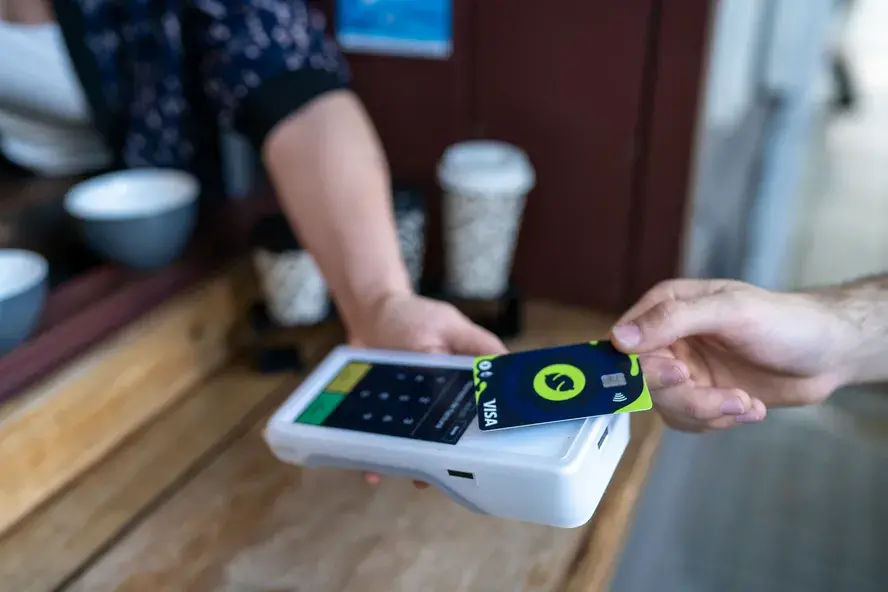
Users using Lemon Cash's physical U card, source: Lemon Cash
You can see an elderly person earnestly learning how to exchange on the Lemon Cash interface; a taxi driver asking peers in a group how to convert USDT to cash; a high school teacher telling her students, "Saving USDT is a bit safer than keeping cash in a drawer."
They use stablecoins for saving, transferring, and hedging against inflation; Lemon Cash has also embedded stablecoin wealth management into the platform, and some people even start to try the wealth management features on the platform for some annual returns. Federico said he doesn't have the guts for that; too many "high-interest scams" have made him wary of any investment.
Sun mentioned that a considerable number of the developers who once propelled the rise of DeFi protocols actually come from Argentina, such as the security team of OpenZeppelin, researchers from Lambda Class, and the "Head of Smart Contracts" at MakerDAO.
Now, their compatriots are using stablecoins to bring that financial ideal into real life.
"We don't want to distrust the country; it's just that we've trusted before, and the cost was too high," Federico repeatedly said during the interview.
And that distrust completely collapsed after the Milei memecoin incident. This new president, originally seen as a symbol of hope in Argentina, was unwittingly drawn into a crypto farce. Although he quickly dismissed the involved personnel, the social sentiment could not return. The pride of the Pampas people regarding blockchain has once again dropped to freezing point, and Web3 entrepreneurs have been forced back underground, with many starting to avoid publicly identifying as Argentinians just to protect themselves and their families.
Yet even so, stablecoins have slowly seeped in. In Argentina, starting from young consumer scenarios, merchants have gradually begun to accept stablecoin payments. Although it cannot yet be called the mainstream payment method here, once people learn how to use it, it will become the most natural choice.
The peso is still legally the "legal tender," but in people's lives, it has gradually been neglected. It is no longer a measure of value but more like an obstacle that must be circumvented.
In this country where the government frequently defaults and the economy continues to decline, people are starting to use USDT to continue saving and build a daily life that won't be dragged down. Their financial lives no longer depend on the state, nor do they rely on banks. Their trust has shifted from the state apparatus to individual blockchain addresses.
People no longer wait for the system to bring redemption; instead, they have found ways to survive on their own. In an era when the currency of a country has failed, crypto has become another form of trust.
Southeast Asia | Young People Connecting to the World Through Cryptocurrency
At six in the morning, Ho Chi Minh City is still shrouded in a thin mist. The street-side café has just opened, and the staff skillfully places a QR code sign that reads "USDC Accepted" on the counter, wiping the moisture off the touchscreen with their sleeve.
Alex orders an Americano, stands by the counter, opens his Bitget wallet, scans the code, confirms, and "ding," it’s done in one go. He didn't bring a physical wallet and didn't inquire about the exchange rate; using USDC to pay is as natural as brushing his teeth every day.
He is Ukrainian and has been traveling in Southeast Asia with his wife for the past year. From Chiang Mai to Bali, then to Kuala Lumpur and Ho Chi Minh City, they are always on the move. They belong to a borderless group, digital nomads. They don't need a fixed address but must have a financial system that can cross borders without restrictions. For Alex, that is USDC.
"I don't go to banks," he said calmly, as if stating an obvious fact. Salary payments, daily expenses, and savings are all solved on-chain, unaffected by the local banking system, and without worrying about account freezes. "The wallet is my real bank."
This is not an exception.
Southeast Asia has a rare financial structural misalignment: bank cards have not penetrated the population, but QR code payments are ubiquitous.
In Indonesia, nearly half of adults do not have savings accounts; in the Philippines, 44% of wage earners still bring their salaries home in paper bags; while in Vietnam, the credit card ownership rate is only 4%, and card payments are still a rarity for most people. Yet at the same time, QR codes on mobile phones have long become the main payment method, with almost everyone accustomed to scanning codes, from street vendors to massage parlors and bubble tea shops.
Indonesia's nationwide QRIS payment network has covered over 32 million merchants in just a few years, with over 50 million users, and an annual transaction growth rate of 226%. The Lowy Institute describes this wave as "payments completed silently, from night market skewers to the tail lights of tuk-tuks."
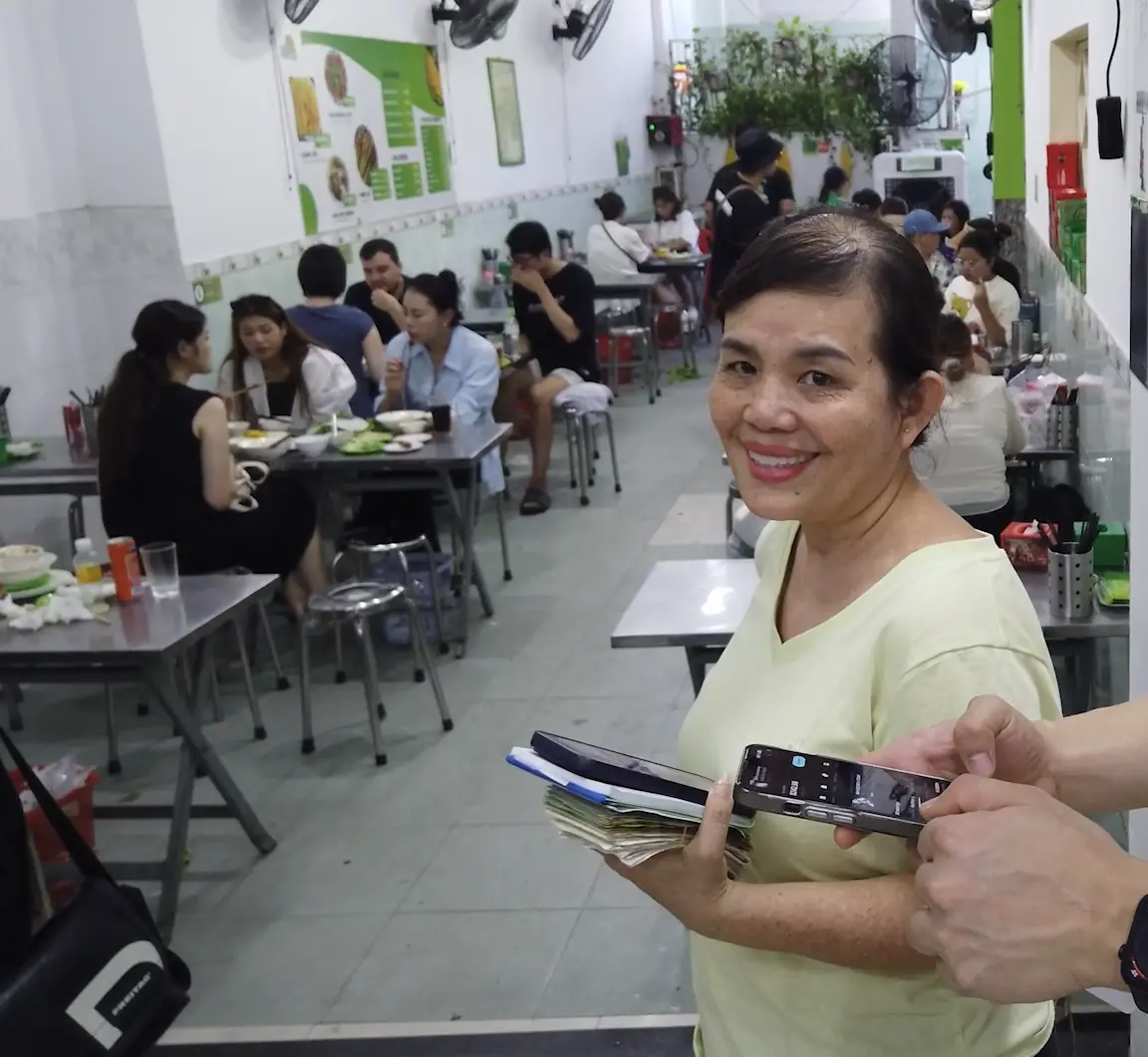
Using stablecoins for offline payments in Vietnam, source: Bitget Wallet
This reality of "difficult card penetration but booming QR code usage" provides a natural entry point for stablecoins.
Bitget Wallet was one of the earliest attempts to open this path. They partnered with local licensed fiat currency exchange operators to build a complete backend settlement mechanism: users scan to pay at the front end, while the backend completes the conversion and settlement from stablecoins to local fiat currency in real-time. Karry, CEO of Bitget Wallet, said, "We processed thousands of transactions daily within less than half a month of launching."
Among these stablecoin users, many do not even "trade coins."
Kari, a video editor in Bangkok, mostly has clients from Europe and the US. She used to receive payments through Wise or SWIFT until one time her account was frozen for three days due to risk control. Since then, she has switched to using USDC, saying, "I don't understand blockchain, but I know stablecoins are convenient and don't require dealing with platform disputes."
Q is another digital nomad who has lived in Chiang Mai for years. She used the U card launched by Infini for everything: dining, hailing rides, booking hotels, and even grocery shopping. It wasn't until Infini stopped its service that she realized she had already bet her life on this "on-chain to offline" payment system.
"I'm still looking for a replacement card," she said.
She has visited several local exchange points in Chiang Mai and saw signs for "USDT/USDC exchange" at the counters, along with WeChat and Alipay listed as payment methods. However, the exchange rate is not friendly, with USDT trading at only 32.6 Thai baht. But she is still willing to exchange, saying, "The process is much simpler than at the bank."
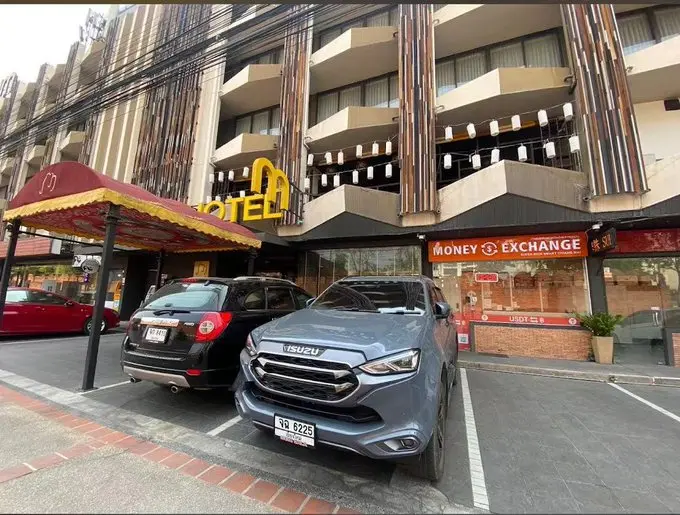
Local stablecoin exchange point in Chiang Mai; source: Q
She added with a smile, "When I go out to eat with friends, we split the bill and use USDC to transfer; that's also a form of stablecoin payment, right?"
These details piece together a shadow financial system. It does not rely on banks, does not require credit history, and bypasses regulatory narratives and definitions. The people using it are freelancers, workers, tourists, and vendors, building their financial lives with a string of blockchain addresses.
This "invisible infrastructure" may be the true form of Mass Adoption.
Regulators have also sensed the direction of the tide. In 2023, the Monetary Authority of Singapore introduced a compliance framework for stablecoins, explicitly requiring 1:1 reserves, redeemable mechanisms, and transparent audits. The demand from the public and official policies began to converge at a certain wonderful moment.
Looking across Southeast Asia, the popularity of stablecoins has never been something that just waited to happen; it has already quietly integrated into everyday life: a salary remittance, a split bill for a meal, a cash exchange transaction. For young digital nomads, it is a foundational asset system for free migration; for local freelancers and blue-collar workers, it is a better solution for remittances, savings, and payments.
These people may not know what blockchain is, nor do they necessarily care about regulatory trends. But stablecoins have already seeped into their daily lives, slowly permeating through the cracks of life like water.
Africa | Young People Abandoned by the Banking System
"We paid for our trip to see the great animal migration directly with stablecoins."
Joy recalled her journey that she just completed a few days ago.
She is a Chinese entrepreneur doing business in Africa. She said that when doing business here, receiving dollars takes too long, and using RMB requires a complicated exchange process.
Joy spent five minutes teaching the travel agency how to receive stablecoins with a wallet; once USDT was sent, it arrived in seconds. Then, during the trip, they immediately started providing various services.
"Many people already know about this," she said with a smile, "they just don't know how to start."
In Africa, such "first times" happen every day. According to Chainalysis, in the past year alone, 43% of on-chain transactions in Sub-Saharan Africa came from stablecoins, some originally excluded from the system.
This continent is vast and young. According to UN data from 2025, the median age of Africa's population is 19.3 years, with 60% under 25. Yet on the map of the financial system, it has always been depicted as sparse and blurry. Out of 54 countries, 33 are classified by the UN as "least developed countries." For many people here, a "bank account" is not the starting point of finance but a door that they can never enter.
You need identification, a fixed address, a stable income, and a credit history, which are all unattainable for most people.
So they changed direction and built their own financial system along the gaps.
Stablecoins are not high-concept cryptocurrencies; they are more like blunt but reliable tools. They provide young people on this continent with the ability to receive money, save money, and spend money. Nigeria is a microcosm, with cryptocurrency trading volume reaching $59 billion in the past year, of which 85% were small remittances of less than a million, each a fragment of daily life.
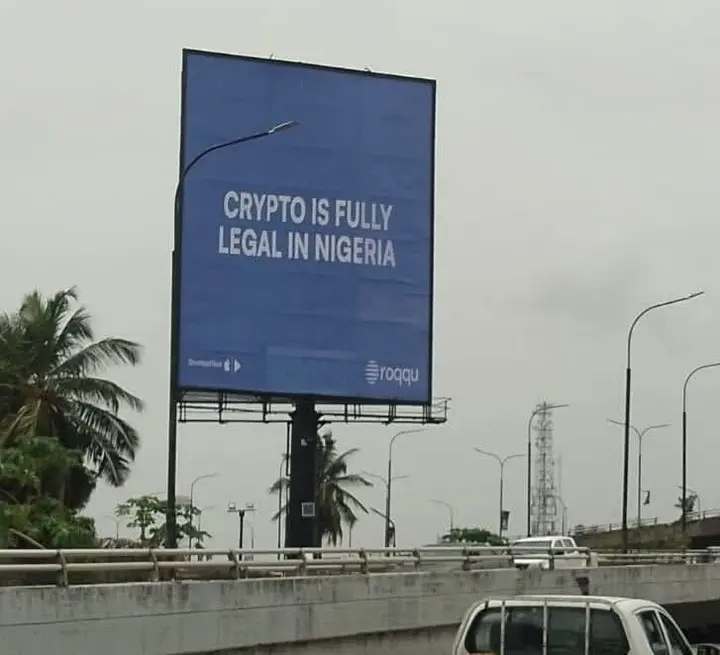
Billboard in Nigeria, source: Martin
Joy is the founder of Gimlet, a stablecoin payment platform. They build on-chain settlement systems for local merchants, where B-end clients pay with USDT, and merchants confirm orders, receiving payments within seconds, much faster than before.
When she spoke, her tone was calm, as if discussing a very normal improvement in metrics. But you can sense the relief behind it, as the previously difficult flow of funds suddenly became controllable.
"You can now travel in Africa, drink coffee, and sometimes see small shops accepting cryptocurrency payments," she said. "Of course, it's not yet at a very widespread level, but it's much more common than a year ago."
Currently, most of the merchants accepting stablecoin payments are medium to large businesses or hotels, travel agencies, and wholesalers that frequently deal with cross-border clients. Not everyone is using it, but you can see this system gradually penetrating into daily life. It is no longer "novel"; it just isn't "ubiquitous" enough yet.
Joy recalled that when their company was hiring locally, many highly educated young people would proactively ask, "Can we be paid directly in USDT?" On one hand, it is to combat inflation, and on the other, it is also for tax avoidance considerations. In these people's growth paths, banks and modern finance have never truly stood by their side. It’s not surprising, as 70% of African countries face foreign exchange shortages, and sometimes even companies have to wait weeks to exchange some dollars to buy machinery. Being able to receive stablecoins directly has become a more reliable path. According to Michael, the founder of Interlace, banks in some developing countries typically allocate a certain amount of dollars to companies each month, and when the allocation is insufficient, many companies choose to exchange local currency for USDT through over-the-counter methods.
Tether CEO Paolo Ardoino said at the 2025 Bitcoin conference, "They have already been abandoned by the traditional financial system." This is not an exaggeration.
Western Union often takes 10% to 15% and can take days to arrive; bank wire transfers seem professional but often require auxiliary verification, local intermediaries, and clearing agencies, with unpredictable arrival times and high chances of interruption.
"The banking system there is quite exclusive," Martin said with a hint of helplessness when talking about a colleague's experience. "The account was frozen without warning, and to unfreeze it, you have to pay a 'protection fee.' This situation has been going on for several years."
Martin is the representative of Noones in China. This cryptocurrency trading platform supports various payment methods, including gift cards and bank transfers, and has rapidly accumulated a large user base in Nigeria and Ghana in recent years.
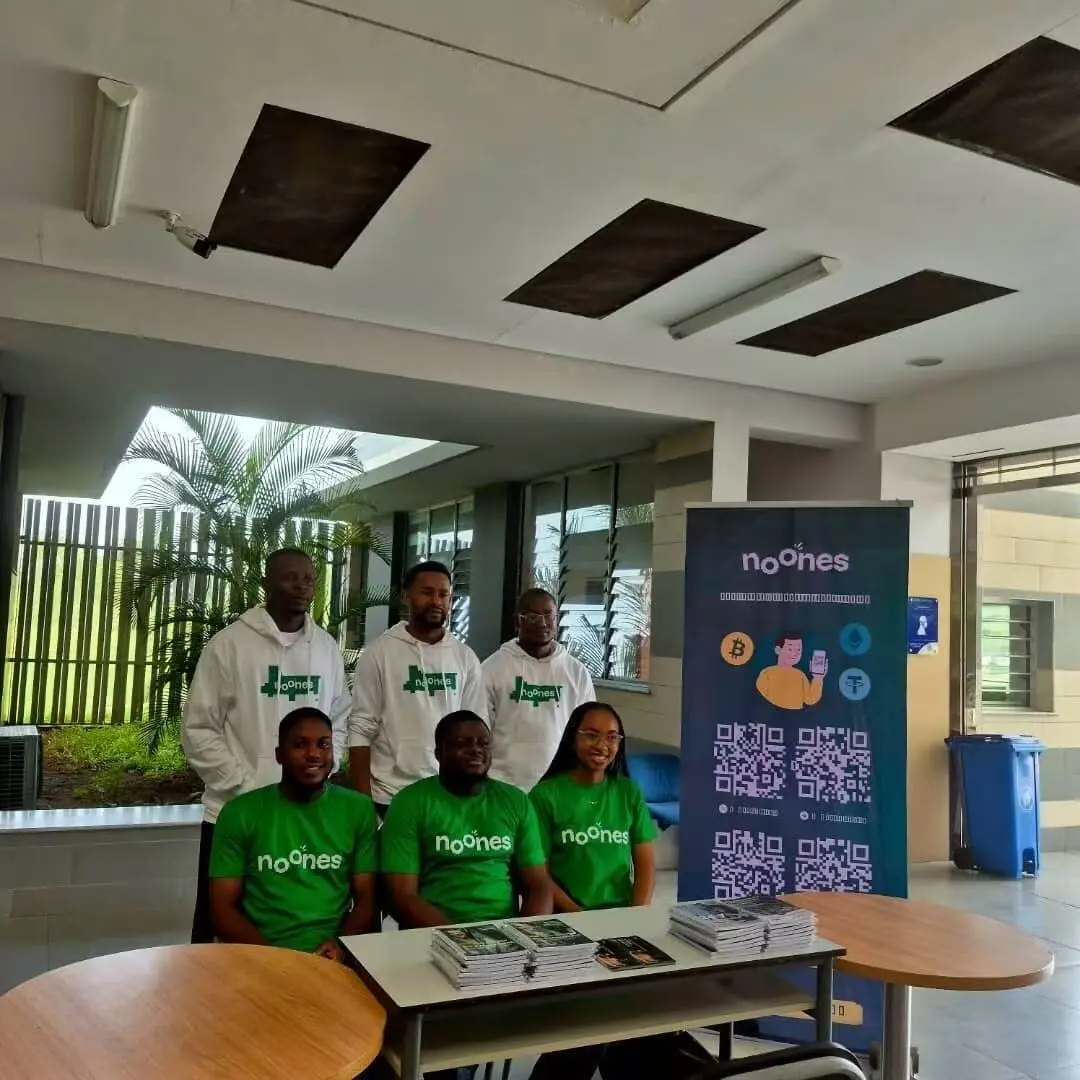
Noones at an exhibition in Africa, source: Martin
In contrast, on-chain stablecoin transfers are fast, cheap, visible, and verifiable. Data estimates that sending $200 out of Sub-Saharan Africa using stablecoins can reduce costs by about 60%. That crypto wallet is the first real account that many people have ever owned.
However, only a small portion of young people engage in trading coins; more people are not in a hurry to use stablecoins for on-chain adventures. Joy said that most people simply leave their USDT sitting there. They do not participate in DeFi, do not engage in wealth management, and do not fuss around.
"They only recognize the Tron chain and basically all use USDT," Martin said with a smile when talking about platform user habits. "They haven't even heard of Solana or TON. Among mainstream coins, they only know Bitcoin; even Ethereum doesn't do well there."
They have experienced how inflation can turn cash into worthless paper in three months, and stocks, bonds, and gold are out of reach. For them, stablecoins can retain value and not depreciate, which is already excellent.
"They are only doing small transfers, usually just a few hundred U; over a thousand U is already a large amount, which is almost a month's living expenses for a family," Martin said.
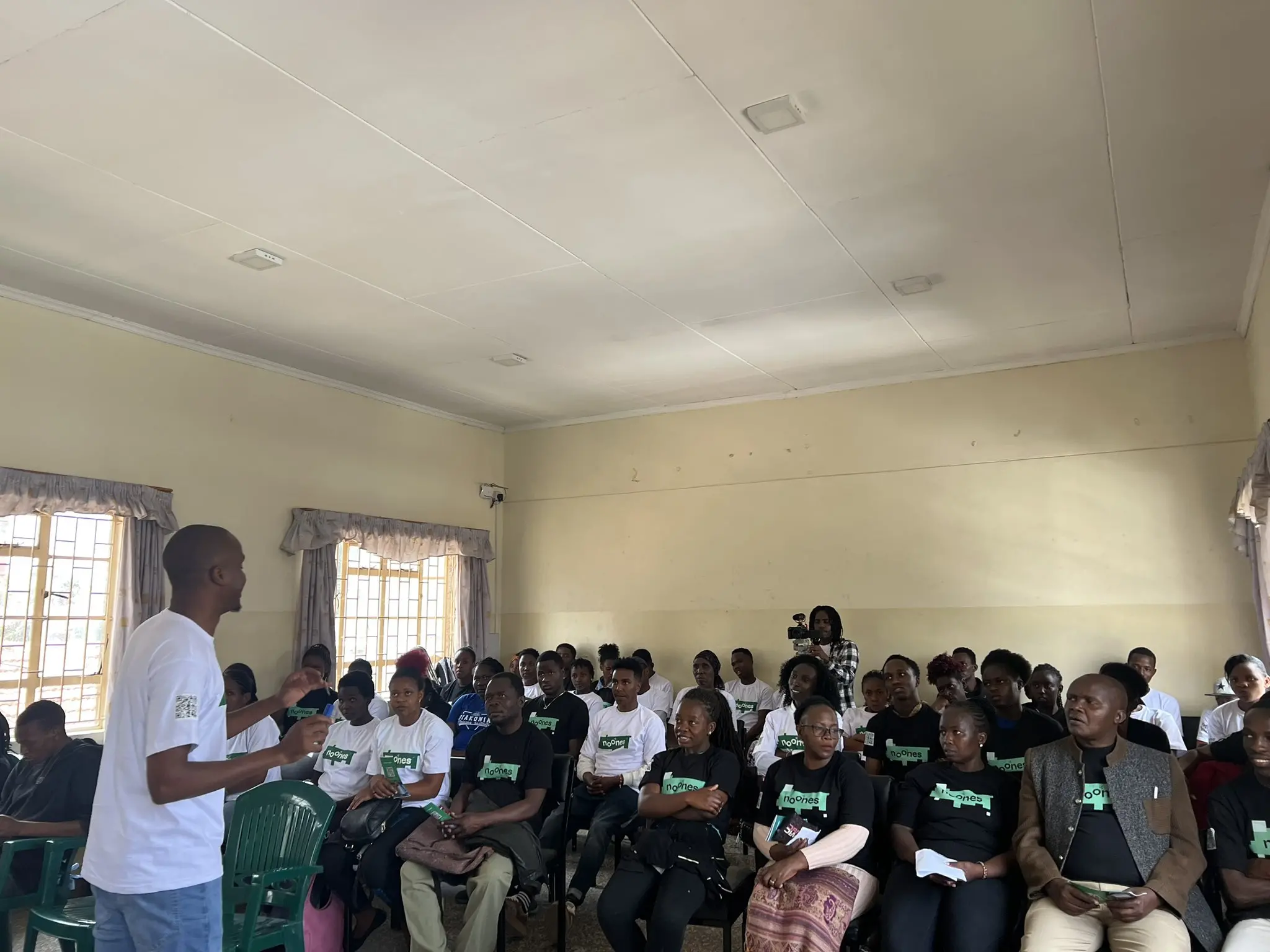
Noones offline presentation in Nairobi, Kenya, source: Noones Africa
The total stablecoin trading volume across the African continent has exceeded $30 billion, and the adoption rate in Sub-Saharan Africa has reached 9.3%. This is a future that is happening, not just an imagination of the crypto circle.
In terms of cross-border trade, stablecoins have become the default tool for more and more Chinese companies doing business in Africa. They offer high payment efficiency, avoid exchange difficulties, and eliminate the uncertainties of intermediaries. The 2025 China-Africa Economic and Trade Expo signed 176 cooperation projects, totaling over $11.3 billion. This systemic flow of funds is essentially building use cases for stablecoins. Joy believes that once the Hong Kong dollar stablecoin is launched, it will quickly open up opportunities in Africa.
Cryptocurrency is rewriting the financial map of Africa. Nigeria has ranked second in the global adoption index, with Ethiopia, Kenya, and South Africa also entering the top 30. The popularity of stablecoins in Africa is gradually emerging, and Joy said, "Once the 2027 elections come and inflation pushes again, stablecoins will enter more people's daily lives."
In Africa, money has not left them; rather, banks have disappeared from their lives. There are no counters, no receipts, no credit history. The people here have never belonged to the coordinate system of traditional finance; this time, the coordinates have turned to fall upon them. Here, not everyone understands cryptocurrency, but more and more people use stablecoins to receive salaries, save living expenses, and bypass banks.
Epilogue | The Form of Money is Slowly Changing on the Other Side of the World
In our daily lives, money is a line of numbers on a bank app, the sound of scanning at the cash register, and the text message received when a salary is credited.
But in a broader world, "money" is often absent, a Western Union with its doors closed, the only bank branch within dozens of kilometers, the fan that cannot be waved in a long line, and skin cracked from the sun.
USDT, USDC, and other stablecoins are not just codes and consensus; they are more like wooden boats carrying people across the river in a storm of currency.
One day, you might encounter such receipts around the world:
"3.7 USDC Received" flashing across a QR code lightbox on a street corner in Vietnam;
"0.85 USDT Confirmed" reflected in the silhouette of a coffee cup in Kenya;
"Rent Paid 350 USDT" written on a memo in a shared apartment in Argentina.
These numbers quietly rewrite the meaning of "money." They change the face of currency from presidential portraits to hexadecimal, moving trust from paper bills and ink to the blockchain.
Stablecoins quietly catch those abandoned by traditional finance, with countless small payments completed by fingertips stitching together the future financial system day by day.
The form of money is quietly changing on the other side of the world.
Recommended Reading:
“The Beautiful Big Bill” narrowly passes, a look at the power struggles behind the 869-page text
OpenAI "Debunks" Robinhood: Unveiling the Four Major Controversies Behind Stock Tokenization
 Risk warning
 Risk warning