








Where does the money of institutions flow? Unveiling the five major golden tracks of the potential "shanzhai season" this round

 The investment logic of imitation in the new cycle: Follow closely the footsteps of institutions.
Author: Dingdang, Odaily Planet Daily
As Bitcoin breaks through $120,000 and Ethereum reclaims $3,400, discussions in the market about the return of altcoin season are gradually heating up.
Whether altcoin season has truly arrived remains uncertain, but if a new round of capital inflow begins, what investment opportunities should we focus on? This article discusses five tracks: asset reserves, ETF candidates, RWA, DeFi, and stablecoins, from a subjective perspective. The projects mentioned in this article are not short-term speculative targets but are directions that the author believes may attract more structural attention in the future based on current market trends. The cryptocurrency market is highly volatile, with risks and opportunities coexisting; investments should remain rational and combine independent judgment. This article is for reference only and does not constitute any investment advice.
How is this round of "altcoin season" different from the past?
In the past, when mentioning "altcoin season," people often envisioned a series of rising sectors, with small and medium market cap coins significantly outperforming Bitcoin. However, this time, the dominant logic in the market may be different.
First, the macro environment has changed significantly. With the GENIUS Act and the CLARITY Act making breakthrough progress, regulatory boundaries are becoming clearer, and the entry barriers for traditional financial institutions are being cleared. Unlike the previous "wild growth" driven by retail investors and speculative sentiment, the participation of institutional funds will change the ownership of market pricing power. Their capital scale is much larger, their investment logic is more rigorous, and they place greater emphasis on compliance and fundamentals, possessing stronger market influence. This means that areas capable of attracting large institutional funds are likely to become market hotspots.
This is evident in the current market trend, which has shown clear differentiation. Although Bitcoin's price has reached an all-time high, most altcoins have generally recovered less than 50% of their prices since the sharp decline at the beginning of the year, with some even recovering less than 30%. Market liquidity continues to concentrate on Bitcoin, while liquidity for altcoins has significantly tightened. The driving forces behind this differentiation mainly come from the following two aspects:
1. Institutional Drive of Bitcoin Spot ETF
The liquidity trend of Bitcoin spot ETFs clearly reflects the profound impact of institutions on the market. According to data, the large-scale net inflow of Bitcoin spot ETFs has been largely synchronized with Bitcoin's three-phase structured rise, and institutional funds have become an important driving force behind Bitcoin's price movements.
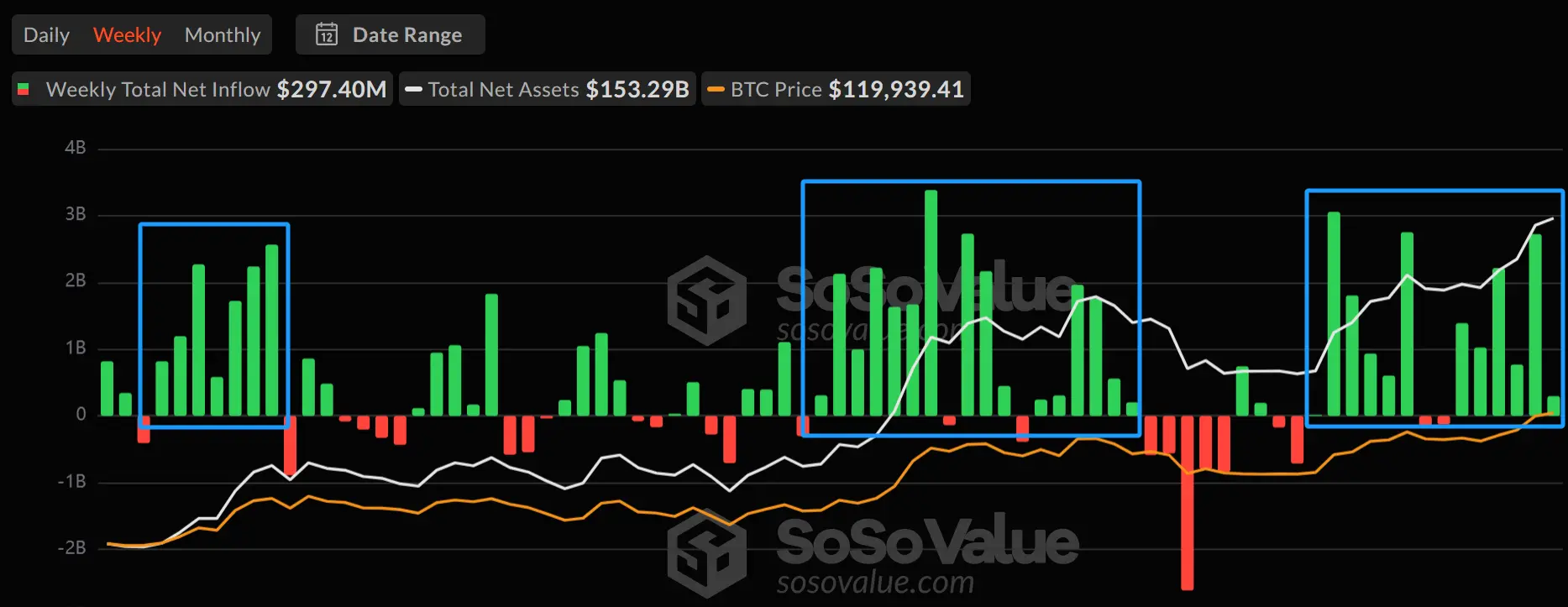
Net inflow and outflow of Bitcoin spot ETF
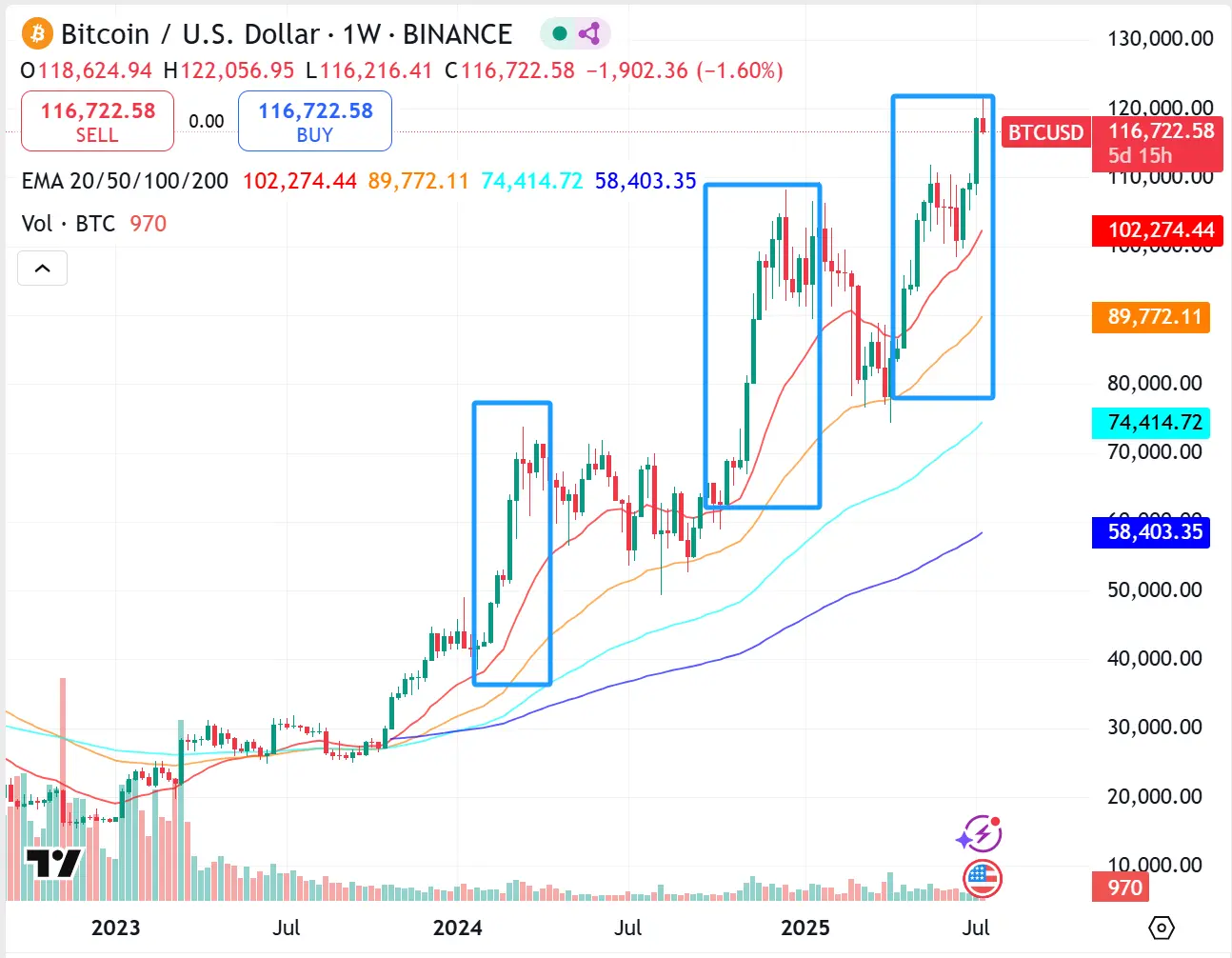
Bitcoin price trend (weekly)
2. The Siphoning Effect of Public Companies Hoarding Coins
The accelerated accumulation of Bitcoin by publicly listed companies has further amplified the capital siphoning effect. On one hand, the increased holdings of Bitcoin by public companies directly boost market demand and reinforce the narrative of Bitcoin's scarcity; on the other hand, hoarding behavior has become a "traffic code" to attract market attention, driving up the stock prices of related companies. In the past six months, the speed at which public companies have increased their Bitcoin holdings has significantly accelerated, with an increase of up to 40%. As of July 2025, the total amount of Bitcoin held by public companies is approximately 673,000 coins, accounting for 3.2% of the total Bitcoin supply. Among them, Strategy Company holds a dominant share of 2.8%.
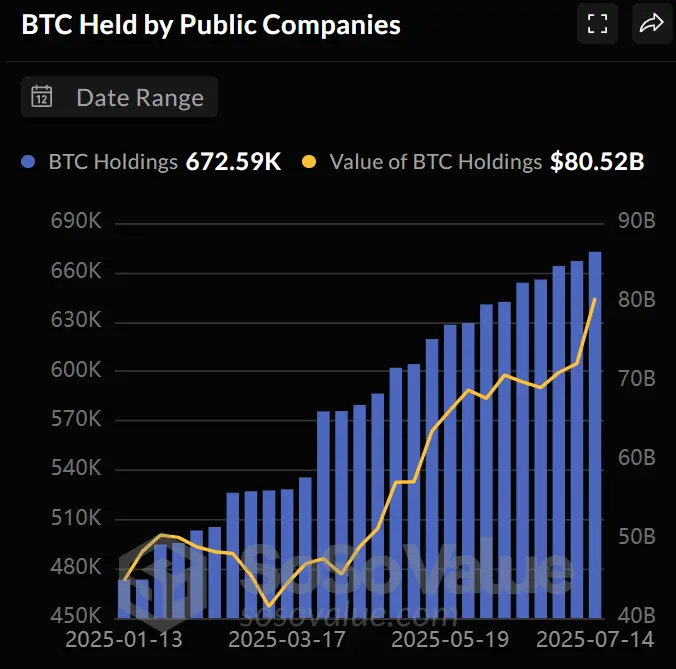
Trend of Bitcoin holdings by public companies
Looking at Ethereum, its recent rise also demonstrates a trend dominated by institutional funds. First, the continuous net inflow of Ethereum spot ETFs for nine weeks has brought total holdings to $13.4 billion, completely reversing Ethereum's previous downturn.
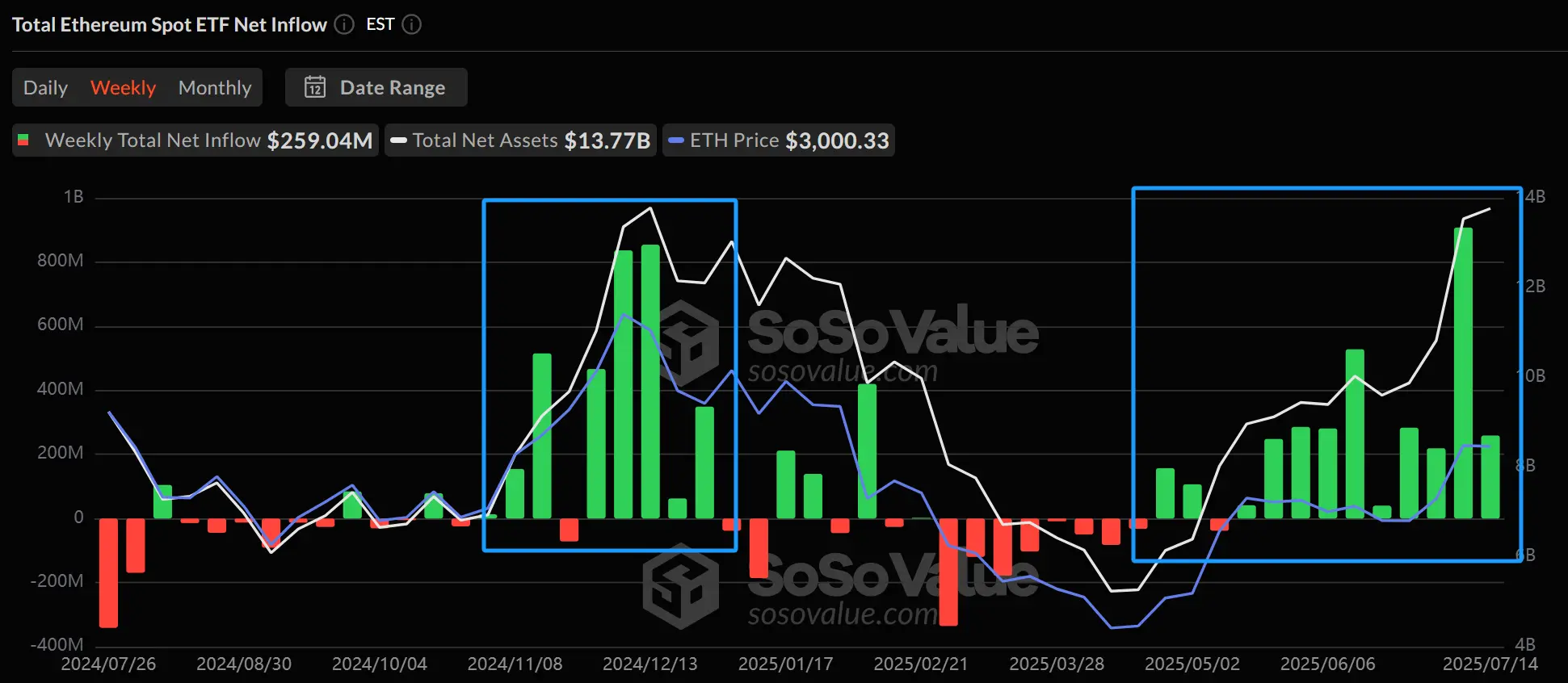
Net inflow and outflow of Ethereum spot ETF
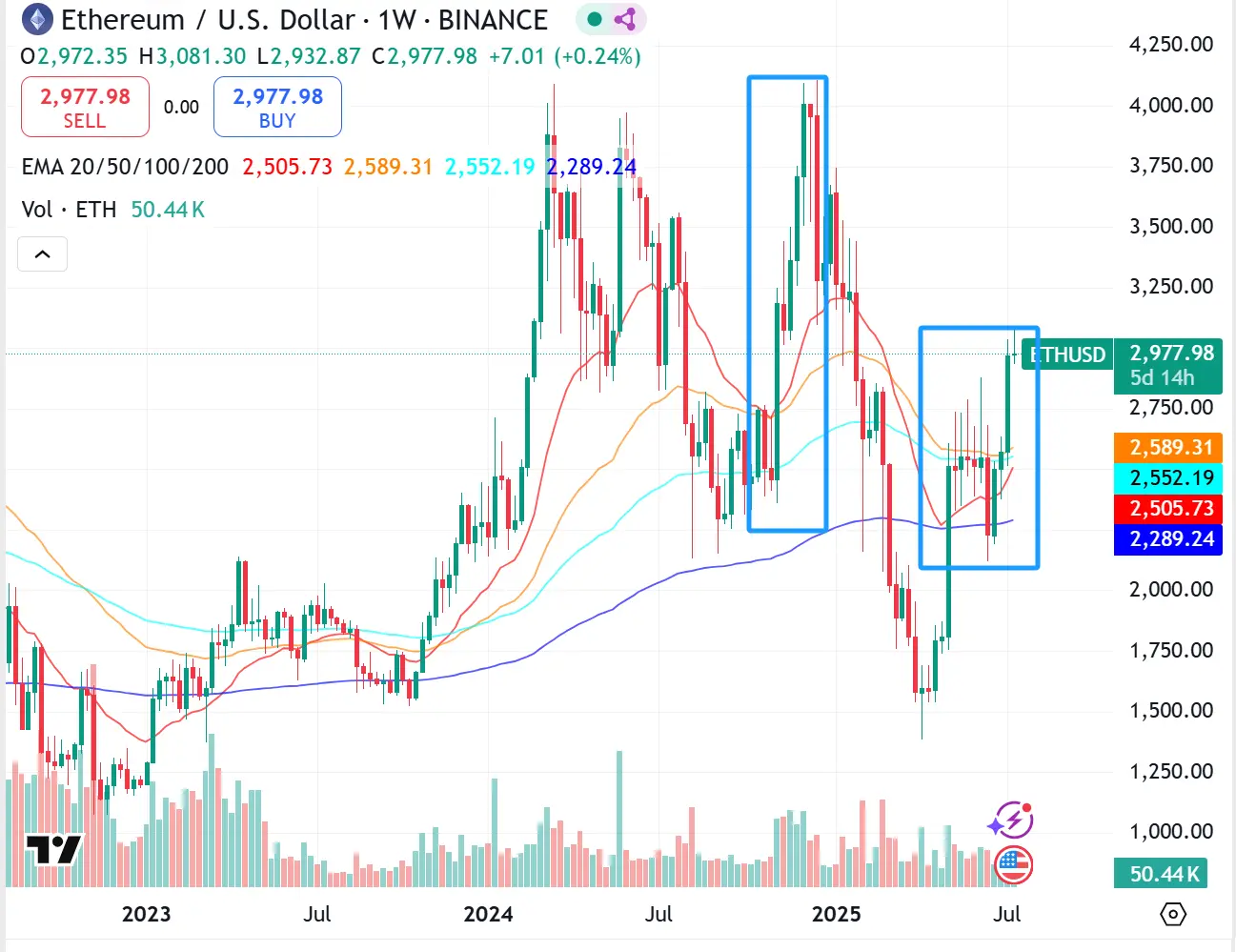
Ethereum price trend (weekly)
Secondly, a new narrative of Ethereum as an asset reserve is forming. Since SharpLink Gaming first announced the inclusion of ETH in its asset reserves, several public companies, including Bitmine Immersion, Bit Digital, and BTCS, have followed suit. Currently, the Ethereum reserves held by public companies account for 9.6% of the total ETH supply, with SharpLink Gaming alone holding 3%, surpassing the Ethereum Foundation to become the largest holding address, and continues to increase its holdings.
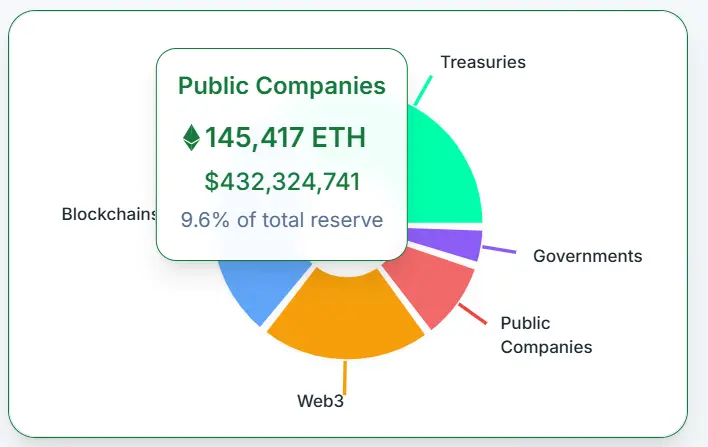
Proportion of Ethereum holdings by public companies
This trend indicates that the narrative of Ethereum as an institutional asset reserve is rapidly gaining traction. The support from institutional funds is shifting Ethereum's market positioning from a purely "technical asset" to a dual role of "value storage" and "technical empowerment."
From Bitcoin to Ethereum, both point to a core trend: where institutional funds are, market hotspots will be. This means that if this round of "altcoin season" begins, it may be more driven by institutional funds rather than traditional sector rotations or speculative frenzies. In other words, tracks that can accommodate large amounts of capital or sectors where institutional funds overflow may be more attractive. Moreover, the participation of institutional funds not only brings more stable capital flows but may also push the market towards a more mature and rational direction.
It should be noted that the tokens recommended in this article primarily focus on large-cap projects, as they align better with institutional investors' preferences. These projects have typically been validated through multiple market cycles, possess strong fundamental support and user bases, and meet institutions' preferences for long-term value. Additionally, institutional investors are constrained by strict compliance requirements, and large-cap tokens, due to their higher market transparency and widespread recognition, are more likely to pass regulatory scrutiny, possessing a "compliance advantage." This leads institutions to prefer such tokens over small-cap projects that are more speculative in nature.
Although large-cap tokens have advantages in the trend towards institutionalization, the cryptocurrency market is full of uncertainties, and changes in the macro economy, regulatory policies, or market sentiment may all affect capital flows. Investors should remain cautious, conduct independent research, and comprehensively assess opportunities and risks to make rational investment decisions.
Asset Reserve Track: Which Coins Can Appear on Corporate Balance Sheets?
Based on the trends of Bitcoin and Ethereum, tokens that are included in corporate balance sheets are more likely to become important investment directions in this round of "altcoin season." Currently, publicly listed companies have included some mainstream altcoins in their asset reserves, including BNB, SOL, TRX, and HYPE.
BNB: As the core of the Binance ecosystem, BNB has strong cash flow support backed by the largest trading volume exchange globally. Binance recently announced a settlement with U.S. regulators, further solidifying its compliance position.
SOL: Solana is known for its high-performance blockchain, boasting significant advantages in meme trading and a relatively complete ecosystem. In 2024, the Solana Foundation collaborated with several traditional financial institutions to explore the tokenization of RWA (real-world assets), attracting institutional funds' attention. Recently, the rise of Letsbonk.fun has driven a surge in Solana's trading volume, indicating a continuous increase in ecosystem activity. The SOL spot staking ETF has been approved, which may provide some reference for the launch of a spot SOL ETF, but specific progress still needs to be observed in market and regulatory dynamics.
TRX: Tron has attracted a large number of stablecoin transactions due to its low costs and high throughput, with USDT accounting for over 50% of transactions on the Tron chain. At the beginning of 2025, Tron announced a collaboration with a Hong Kong fintech company to explore compliant stablecoin applications. Through a partnership with Nasdaq-listed SRM Entertainment (referred to as SRM), Tron is achieving a reverse merger to list on mainstream U.S. capital markets.
HYPE: Unlike the three aforementioned assets that have gone through multiple market cycles, HYPE, as an emerging public chain token, has topped the on-chain contract throne due to its continuously rising derivatives trading volume, making it one of the few new projects that can demonstrate "cash flow capability" at an early stage. More detailed data will be provided in the DeFi section below.
Recommendation Rationale
Selecting the best among the best, from my personal perspective, although the above are mostly large-cap projects, the core motivation for investors chasing altcoins lies in the expectation that their price increases will surpass Bitcoin. From a price elasticity perspective, SOL has performed the weakest in this round of price recovery, and its chip structure is relatively loose. Therefore, provided that the fundamentals remain intact, once market funds flow back, SOL's price elasticity may be more pronounced.
There is a saying in the crypto circle: "buy new, not old." HYPE, as an emerging project, has a short lifecycle but may offer greater "growth dividends" in the new cycle.
From a long-term perspective, tokens that can appear on corporate balance sheets will be part of the "institutional main line" in the crypto market. Future tokens that are included in corporate balance sheets are still worth continuous tracking.
ETF Candidate Track: Which Altcoins Can Institutions Invest In?
Since the U.S. approved spot ETFs in January 2024, the total net asset value of Bitcoin spot ETFs has exceeded $149.6 billion, and the total net asset value of Ethereum spot ETFs has reached $14.2 billion since their approval in 2024. ETFs are an important channel for institutional funds to enter the market and are becoming an important narrative for altcoins. Potential ETF candidate coins include: SOL, XRP, LTC, DOGE, ADA, DOT, HBAR, AXL, APT. For further reading, refer to “Altcoin ETFs Piling Up Applications, Is the ETF 2.0 Era Coming?”.
These coins are mostly large-cap public chain tokens. Although some coins have functions limited to trading mediums or units of account and have gradually faded from market focus in the past, since the end of 2024, the positive news related to ETFs has allowed them to regain institutional and market attention.
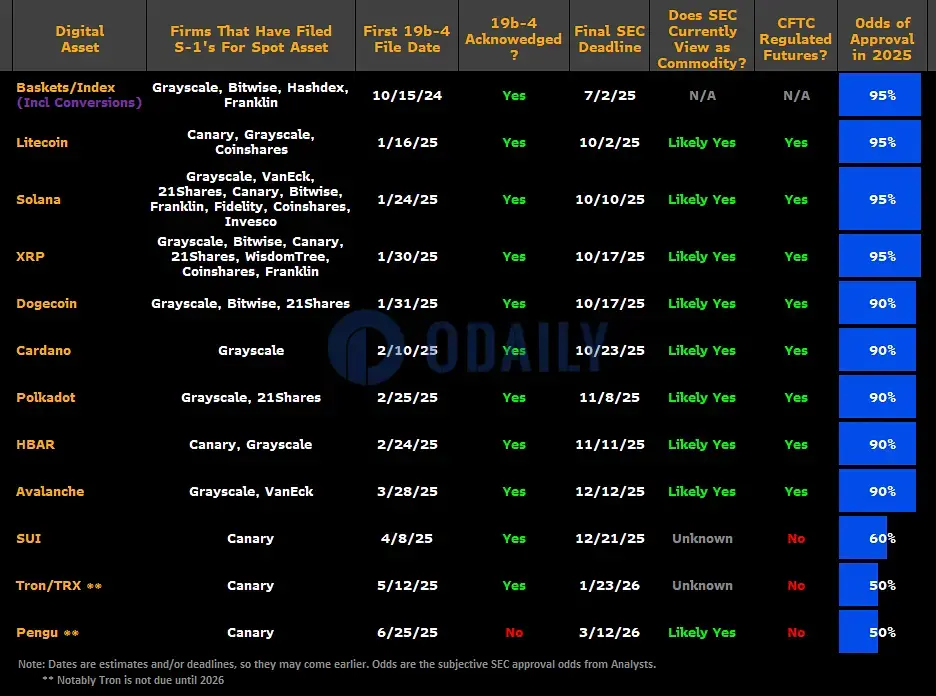
Probability chart for altcoin ETF approvals
Solana (SOL) is the first to emerge in the altcoin ETF track. On June 30, the Solana spot staking ETF applied for by REX-Osprey was approved. However, according to the issuer, the C-Corp structure used by the fund can hold spot SOL and conduct on-chain staking to generate income and incorporate it into the fund's assets, but this ETF does not enjoy the tax-exempt status of ETF funds and must pay income tax at the corporate level. Therefore, it is different from the ETFs applied for by VanEck, 21 Shares, Bitwise, etc.
Recommendation Rationale
If a traditional spot SOL ETF is approved in the future, it may further enhance its market appeal, as we have already recommended in the above article. A similar situation is faced by XRP, where the New York Stock Exchange has already approved ProShares Ultra's futures-based XRP ETF, and the long-standing regulatory dispute between Ripple Labs and the SEC may soon conclude, making it highly probable that the SEC will approve an XRP spot ETF this year. Moreover, from XRP's price trend, it has maintained a resilient stance during multiple market corrections. The strong will remain strong, which has always been well-validated in the crypto space.
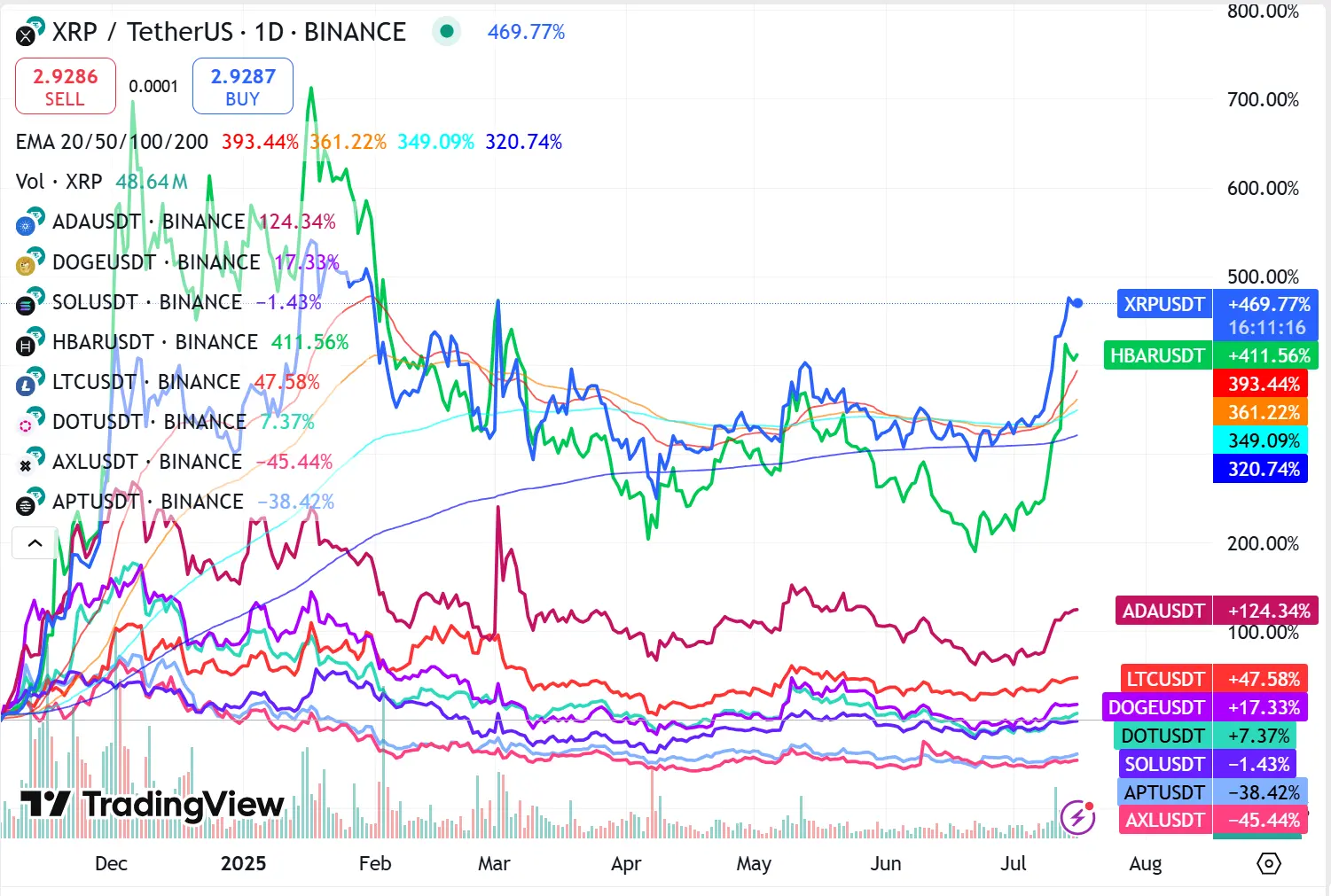
Price trend chart of altcoin ETFs (daily)
Additionally, LTC and HBAR have a high probability of approval, and both are not classified as securities, with clear compliance attributes. HBAR has also shown strong resilience during multiple market shocks.
RWA Track: Mapping Real Assets on the Chain
RWA (Real World Assets) releases the liquidity, transparency, and global accessibility potential of traditional assets such as real estate, bonds, stocks, and artworks by tokenizing them. This "on-chain assetization" model provides investors with more flexible trading methods while opening new investment channels for traditional financial institutions.
With the gradual optimization of the regulatory environment, the RWA track has received policy support. For example, Hong Kong's "Digital Asset Declaration 2.0," set to launch in 2025, explicitly supports RWA tokenization pilots, providing policy backing for its large-scale development. The popularity of the RWA narrative stems from its unique positioning in the integration of traditional finance and blockchain, combined with the continuous inflow of institutional funds, improved regulatory environment, attractiveness of real yields, and technological maturity, making it likely to become one of the important tracks in this round of "altcoin season."
According to data from rwa.xyz, the largest RWA asset by market value is BlackRock's BUIDL fund, which collaborates with Securitize. Additionally, Exodus Movement (EXOD), Blockchain Capital (BCAP), and others have partnered with Securitize, but Securitize itself has not issued tokens and has launched Converge, focusing on RWA, in collaboration with Ethena, planning to go live on the mainnet in Q2 of this year. Other notable projects include Ondo, Superstate, and Centrifuge.
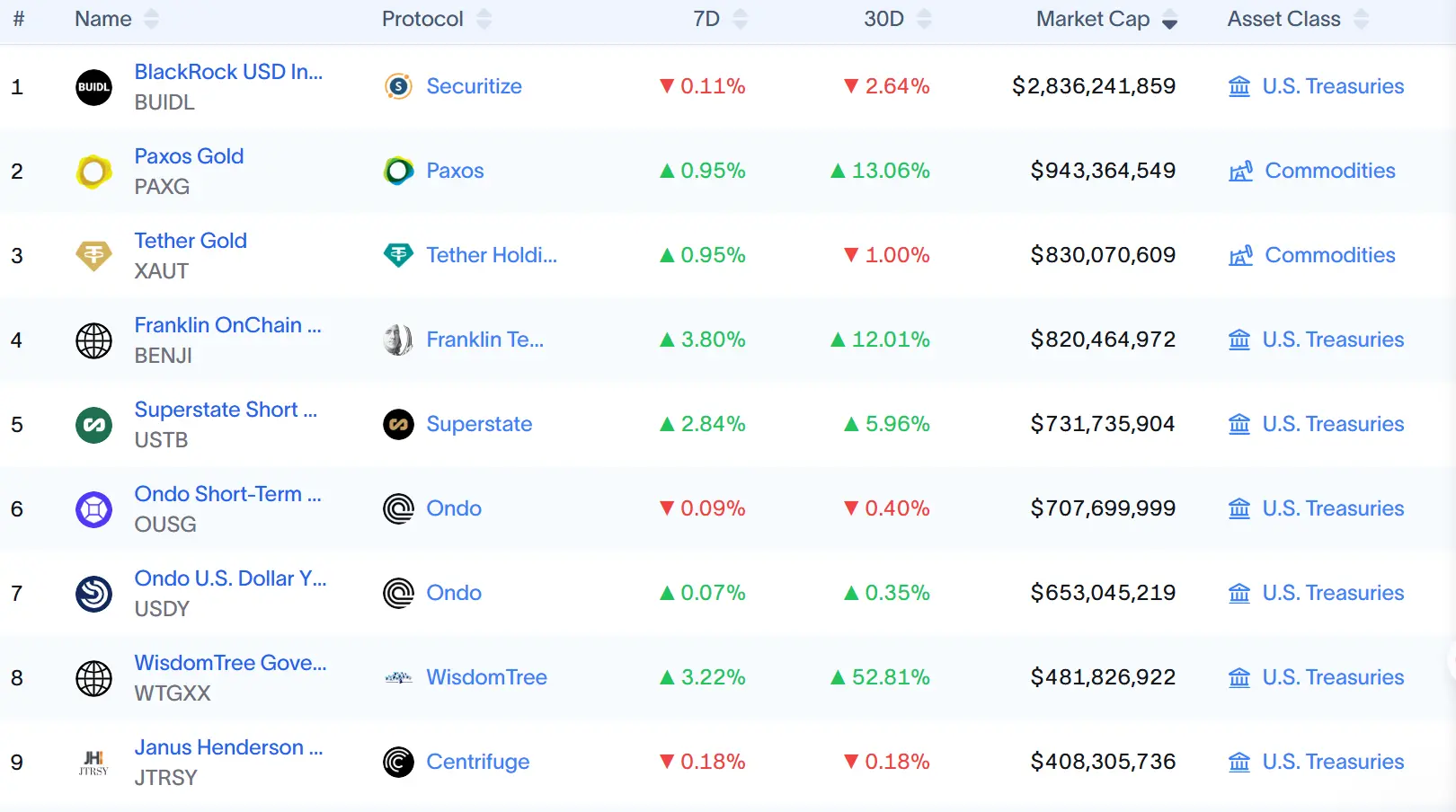
Ranking of asset tokenization protocols by market value
Moreover, Chainlink's decentralized oracle is a key infrastructure for many RWA projects. In 2024, Chainlink partnered with several financial institutions, including Goldman Sachs, Morgan Stanley, and Wells Fargo, to provide data and settlement support for tokenized bonds and real estate asset tokenization.
Recommendation Rationale
RWA naturally aligns with institutional investment preferences, serving as a "bridge track" that combines real yields and compliance expectations. However, currently, only Ondo (ONDO) and Centrifuge (CFG) have formed scale and issued tokens. Additionally, Chainlink (LINK), as an indispensable technological pillar of the RWA track, is also worth paying attention to.
DeFi Track: Real Cash Flow, Institutional Exemption Catalyst
DeFi (Decentralized Finance), as one of the core applications of blockchain, is receiving policy-level support. The U.S. SEC plans to introduce an "innovation exemption" policy to pave the way for the compliant development of DeFi projects, reducing regulatory uncertainty.
Furthermore, on-chain data for DeFi shows strong performance. According to the Q1 2025 Industry Report released by Coingecko, while spot trading volumes on centralized exchanges (CEX) have generally declined, DEX spot trading volumes have increased by 6.2% quarter-on-quarter, and quarterly trading volumes for DEX derivatives have reached a new historical high of $799.1 billion, even surpassing the total trading volume for the entire year of 2023. This is mainly due to the outstanding performance of Hyperliquid, which has now become the eighth-ranked trading platform among all DEX and CEX derivatives exchanges.
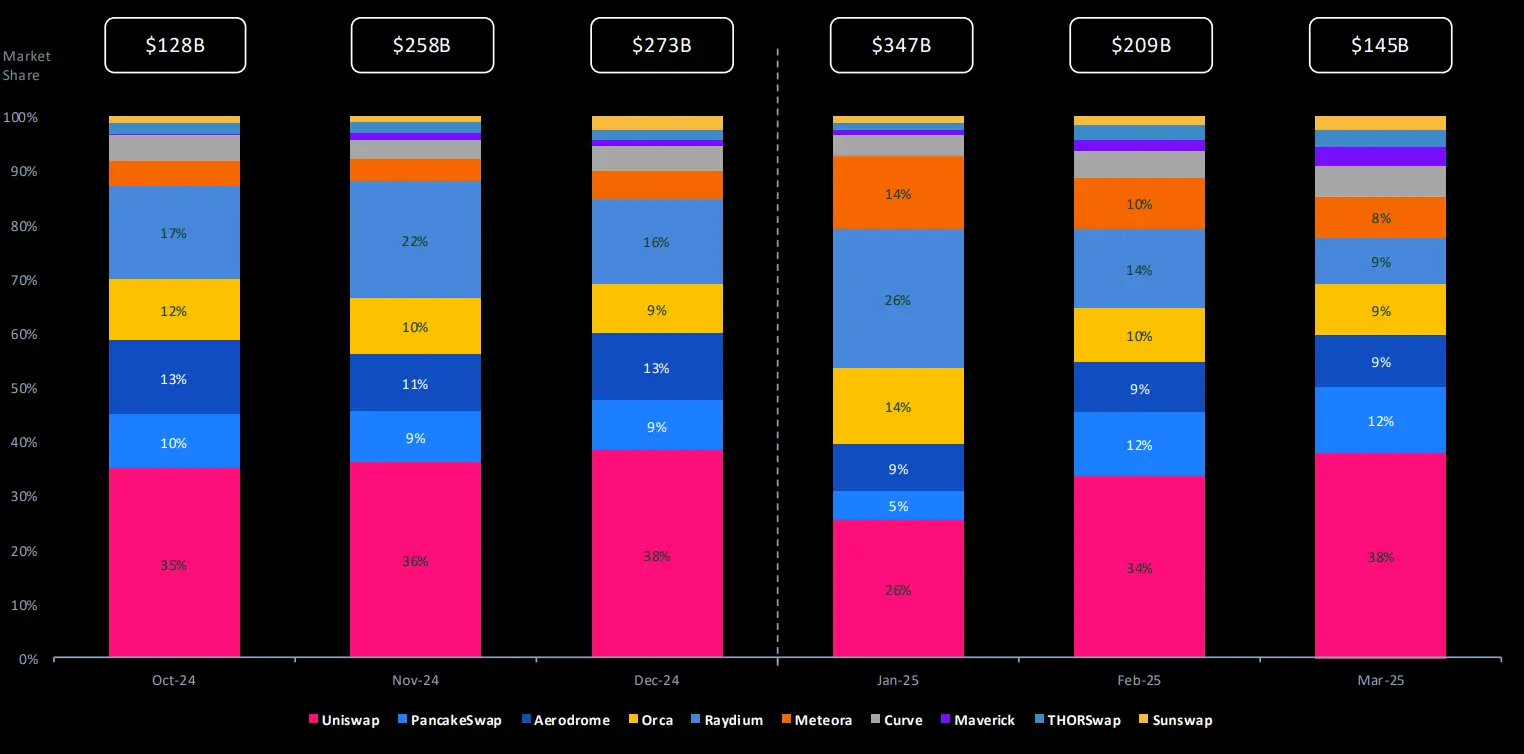
Trend changes in DEX spot trading volume
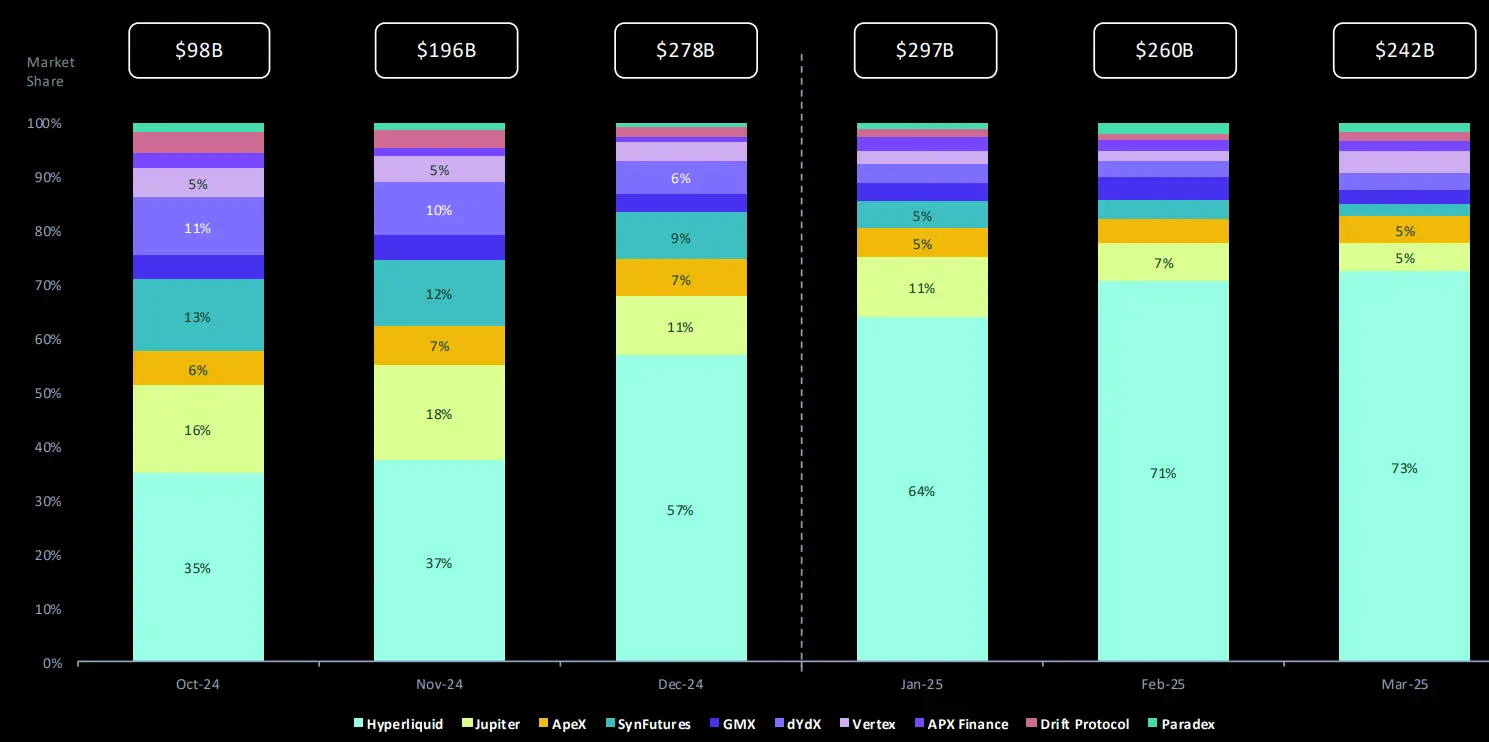
Market share of Hyperliquid
In the DeFi track, lending protocols account for the highest proportion of locked value (TVL), followed by liquid staking protocols, with leading protocols being Aave and Lido.
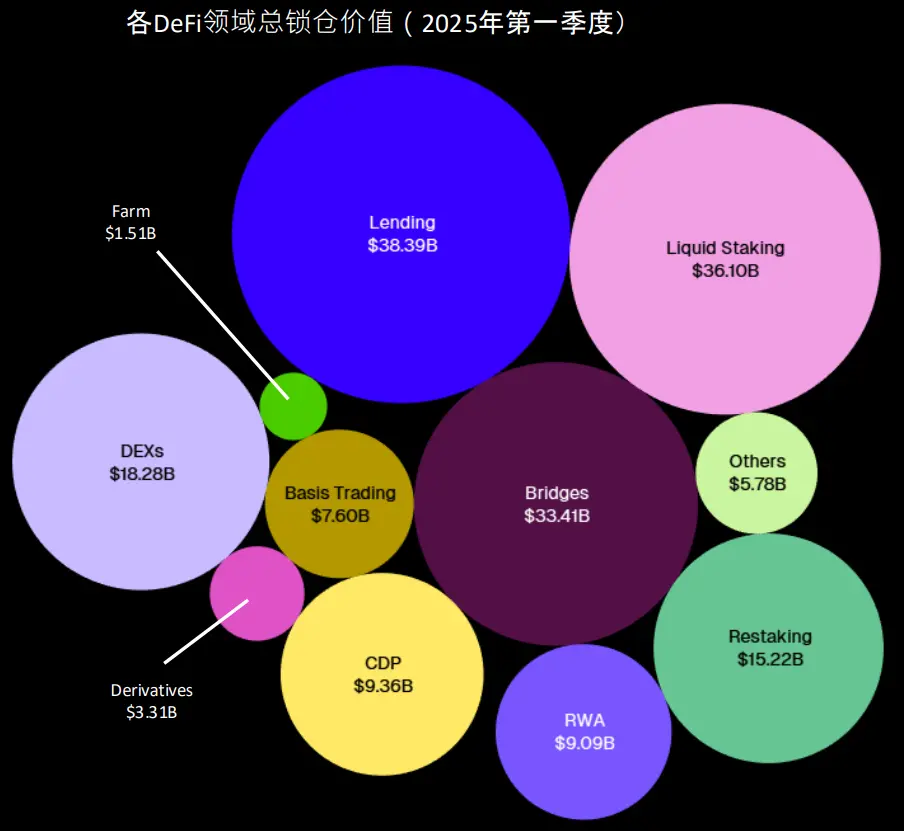
Proportion of locked value in DeFi track assets
Additionally, DeFi projects are often the most capable of generating real cash flow returns, and in periods of scarce confidence, healthy finances are key to sustaining project viability.
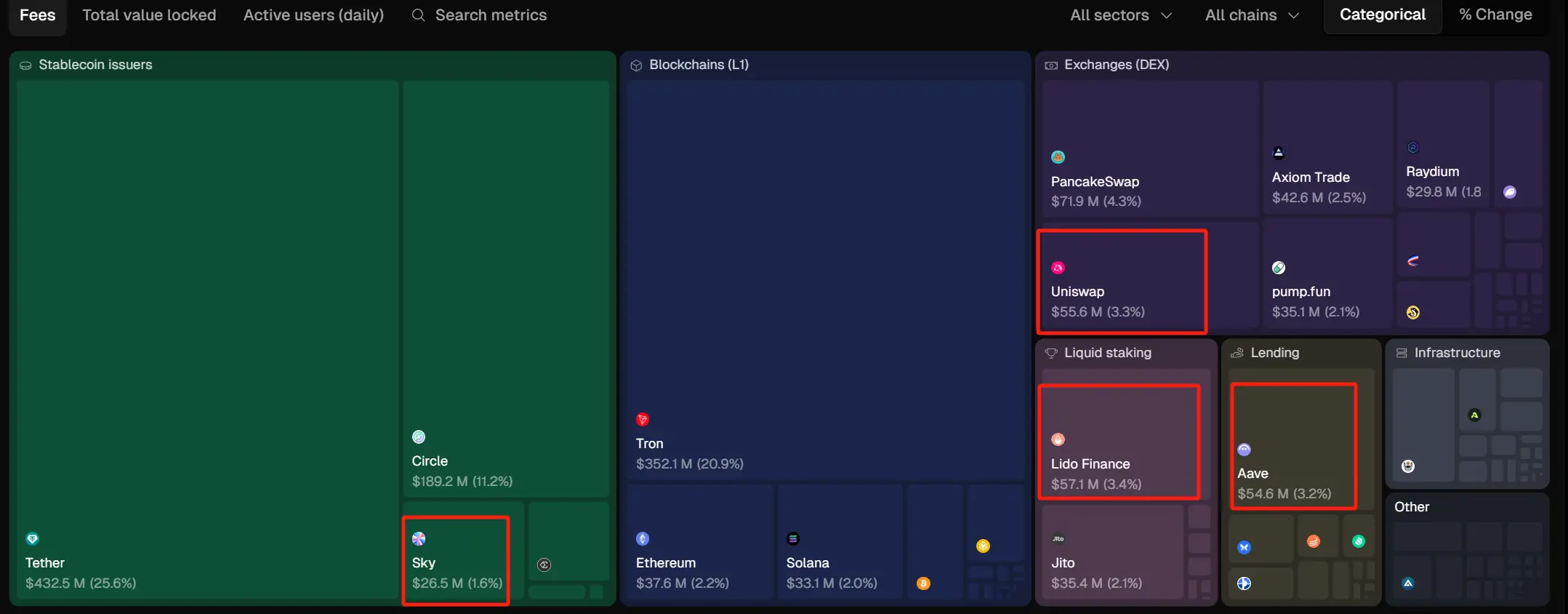
Revenue from DeFi protocol fees
There are many investment options in the DeFi track, among which DEX is one of the most profitable protocol types. Leading DEXs on different public chains have performed particularly well, such as Uniswap on Ethereum, PancakeSwap on BSC, and Raydium on Solana. These DEXs, as core hubs of their respective chain ecosystems, directly benefit from the explosion of on-chain activities.
Taking the recent rise of Letbonk.fun in the Solana ecosystem as an example, its rapid emergence has driven the price of the BONK token to surge by about three times, while also nearly doubling the price of the RAY token from the leading DEX Raydium on the Solana chain. This phenomenon indicates that the prosperity of the on-chain ecosystem often amplifies the revenue potential of DEXs, making them direct beneficiaries of capital overflow. However, the performance of DEXs is highly dependent on the activity level of the on-chain ecosystem and market sentiment.
Recommendation Rationale
With the continued warming of the Ethereum ecosystem, DeFi projects on it are most likely to benefit from the capital overflow effect. As the leading lending protocol, AAVE, and the leading DEX protocol, UNI, may become preferred choices for capital due to their mature ecosystem positions and stable revenue models. HYPE, as an emerging potential project (previously mentioned in the asset reserve track), shows certain investment attractiveness due to its rapid growth in the derivatives trading field.
Stablecoin Track: The Narrative Closest to Real Payment Implementation
The next wave of true adoption of cryptocurrencies may come from stablecoins and payments. With the introduction of the Genius Act, the regulatory framework for stablecoins is becoming increasingly clear.
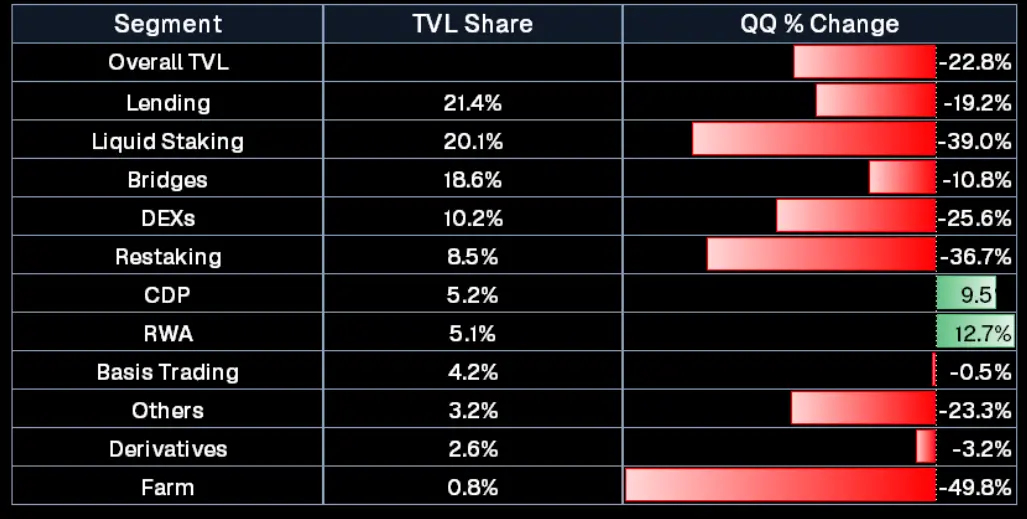
The stablecoin track typically forms a synergistic effect with the RWA and DeFi tracks. In the context of capital outflows from the DeFi track and depreciation of protocol deposits, RWA and CDP (Collateralized Debt Position) have achieved significant growth in TVL.
In the stablecoin track, centralized stablecoins like USDT and USDC dominate due to their dollar reserve anchoring and have a wide range of application scenarios. If one can only choose decentralized stablecoin governance tokens as investment targets, options include MKR behind DAI or ENA behind USDe.
Recommendation Rationale
Sky (formerly MakerDAO) is the leader in the decentralized stablecoin field, maintaining a healthy financial status through investments in tokenized U.S. Treasury bonds, demonstrating robust fundamentals. It is currently attempting to create its own ecological narrative through brand restructuring.
Ethena, set to launch in 2024, has already locked in capital comparable to Sky and is collaborating with Securitize to launch a public chain, Converge, focused on RWA.
Conclusion
The true explosion of the altcoin market has never been driven by mere shouting but is the result of a combination of capital structure, policy environment, and market narratives. As Bitcoin and Ethereum become core assets in institutional holdings, a new "altcoin logic" is quietly taking shape: only coins with fundamentals, capable of telling a story, and able to be embraced by institutions are likely to navigate through the fog of valuation reconstruction in the upcoming cycle and become true winners.
Recommended Reading:
Price Resilience: An Overview of the Four Major "Buy Orders" for ETH
Three Major Catalysts Boosting Altcoin ETFs: Will 2025 See a Crypto "ETF Summer"?
Going Public in the U.S.: The Ultimate Destination for Crypto Companies or a Stopgap Measure?
 Risk warning
 Risk warning



Popular articles





