








Is the era of "Universal Development" approaching? A deep analysis of the evolution of Vibe Coding technology and its ecological landscape

 One of the hottest tech concepts in Silicon Valley in 2025, how will it change software development in the AIGC era?
Author: Black Mario
In the wave of AI reshaping technology development, "Vibe Coding" is becoming one of the most disruptive trends.
The concept of Vibe Coding was first proposed by Andrej Karpathy, co-founder of OpenAI and former AI director at Tesla, in early 2025. It depicts a new software development model in the AIGC era—developers do not need to write code directly; instead, they provide requirements to AI, which automatically writes the code.
Vibe Coding aims to enable the general public, who are not technically trained, to participate in software programming and development. It brings not only an evolution of development tools but, more importantly, reshapes the distribution of creative power, making development capabilities truly accessible to the masses.
In just a few months, Vibe Coding has become one of the hottest tech concepts in Silicon Valley. More and more projects are entering the field to explore productization around this paradigm, and the Web3 market is not short of players participating in the exploration. This report will delve into the impact of this concept, the situation of key participants, and future trends.
AIGC Era: The Dawn and Dilemmas of Programming Equality
The evolution of programming is essentially a long-term battle to continuously lower technical barriers. From the early binary and assembly language expert monopoly to BASIC and C language enlightening personal computer users; from the LAMP architecture simplifying web development to modern tech stacks (like React, Node.js) being powerful yet more complex—each technological iteration has improved efficiency but has never truly broken down professional barriers.
Even though open-source tools (like WordPress) have made it easier to build products like blogs and forums, complete software development still requires deep engineering knowledge. On the surface, the development process is increasingly standardized; in reality, the "right to build" has always been firmly controlled by a minority with professional knowledge.
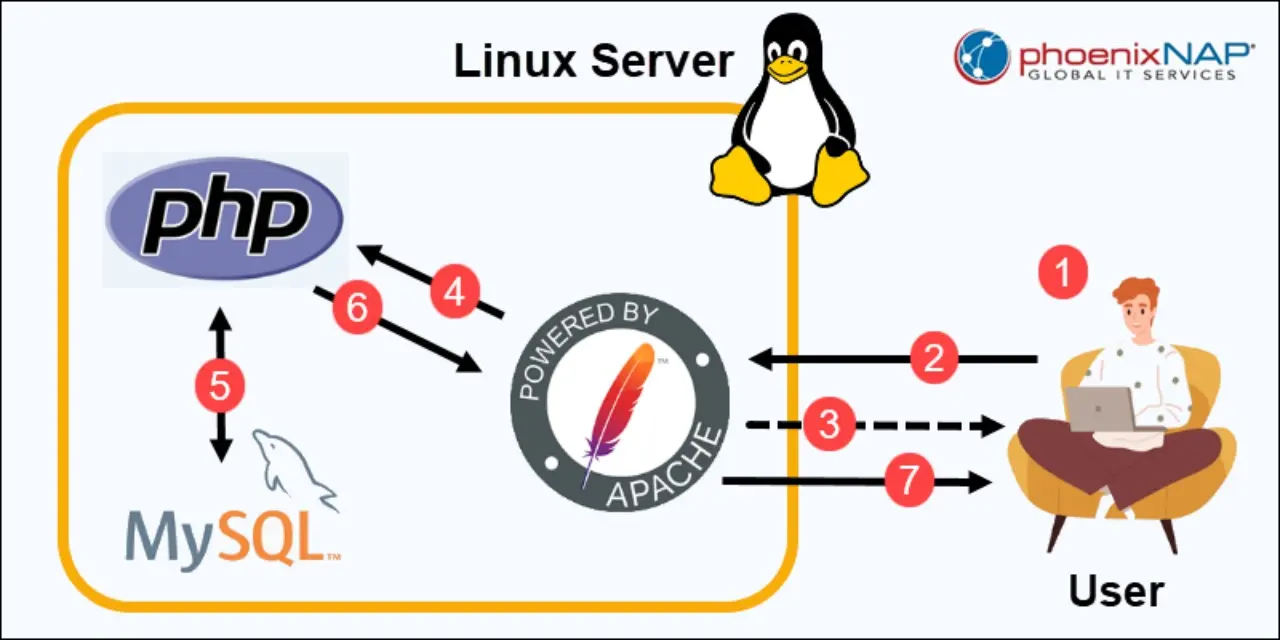
Image Source: phoenixNAP
It wasn't until the arrival of the AIGC era that a fundamental loosening of this situation became possible.
With the large-scale application of generative AI, the barriers to programming have been significantly lowered. Large models like GPT-4, Claude 3, and Gemini have made breakthroughs in semantic understanding, code generation, and context retention, shifting development behavior for the first time from "structured understanding" to "perceptual dialogue."
We see that people can communicate their intentions directly with the system using natural language, allowing AI to generate the required functions, interfaces, components, or even complete pages. Prompts have become the new input method, and system responses have upgraded from suggested snippets to structured, composable results.
AIGC not only improves development efficiency but also breaks down the "language barrier." More and more non-programmers are starting to use tools like Copilot to fill in code, debug logic, write interfaces, and even quickly complete web prototypes or functional simulations based on ChatGPT. The potential of AIGC programming is beginning to emerge at this stage: code becomes "conversational," and development becomes "co-creative."
Of course, the first wave of attempts at this transformation has also exposed many limitations:
- Most generative models are still at the "fragment generation" level, struggling to understand the overall task and unable to organize complex project structures across files and modules;
- Code output lacks contextual memory, and generated results are often not reusable or require extensive manual corrections;
- There is a lack of connection with the runtime environment, and the generated code often cannot be directly deployed, tested, or launched;
- AIGC tools are almost entirely designed around "helping developers write code faster," rather than serving to "empower non-coders with the right to build."
Especially in the world of Copilot, developers become more efficient, but non-developers still cannot enter the game.
Although AIGC programming significantly enhances development efficiency and lowers language barriers, it still primarily revolves around existing developers, and the building capability has not truly reached a broader audience.
In this context, a new generative paradigm, Vibe Coding, has begun to emerge, attempting to bypass engineering barriers and usher in a new round of programming equality.
Vibe Coding: The "Universal Development" Revolution in the AI Era
Vibe Coding is seen as a new trend in the AIGC programming field, serving as the logical starting point for reconstructing the entire application building process.
Unlike traditional Copilot-like AI tools, Vibe Coding represents a "building rights delivery mechanism" aimed at a broader audience, especially users without engineering backgrounds.
Its core is not to make users more knowledgeable about code, but to allow users to fully describe, experiment, publish, and iteratively refine their product structures without needing to understand code.
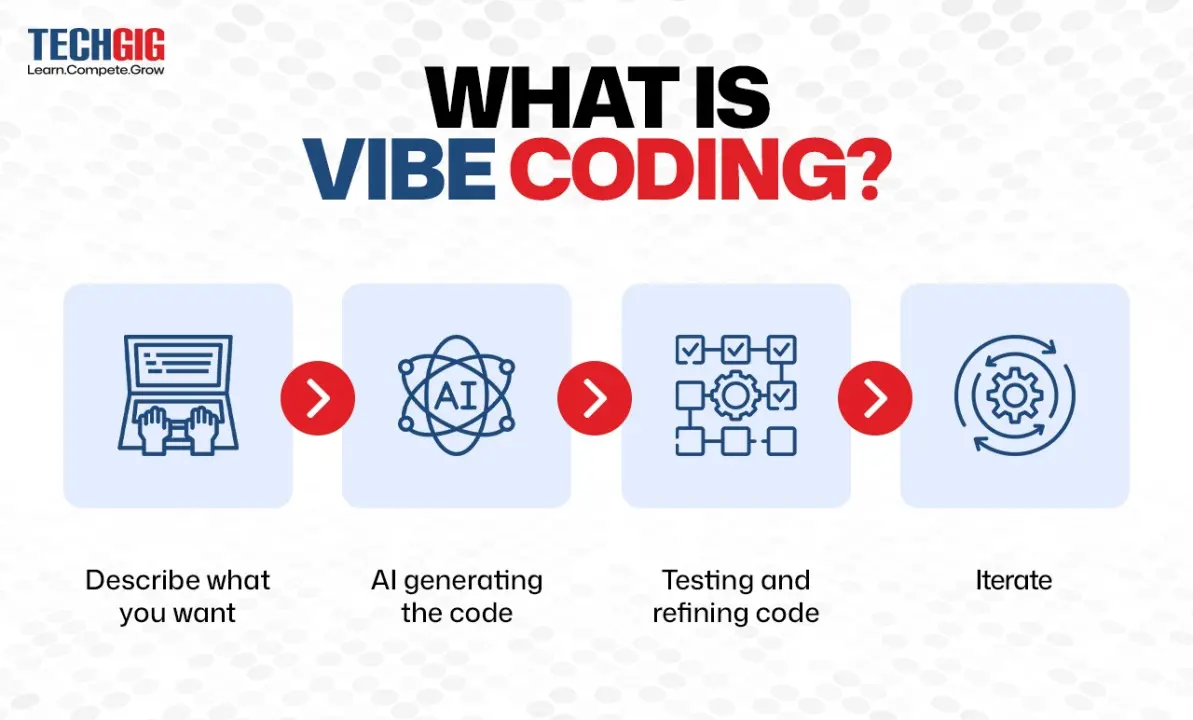
Image Source: TECHGIG
The concept of "Vibe Coding" has significantly gained traction since 2025.
We see platforms like Cursor introducing the idea of "conversational building" into IDE systems, supporting natural language control of project structures, cross-file code generation, and instant running previews.
More platforms are beginning to design development processes around the path from "Prompt to module to release," attempting to create a semantic-driven application creation closed loop.
Beyond the technical path, Vibe Coding also represents a brand new product organization paradigm: it emphasizes rapid prototype validation, lightweight iteration, high reusability, and distributability, adapting to fragmented application scenarios like creator economies, community operations, and individual entrepreneurship, becoming an important generation method for the next generation of lightweight Web3 applications or interactive content.
Analysis of Representative Projects in the Vibe Coding Track
As the trend of Vibe Coding develops, more and more projects are beginning to explore productization around this paradigm, gradually giving rise to various paths and solutions.
In this field, projects like Infinity Ground, Ohara AI, and Dev.fun have gradually emerged as representative explorers in the current Vibe Coding track.
Next, we will analyze the capability positioning, user paths, and building closed loops of these three types of platforms one by one, and attempt to outline the preliminary map of the Vibe Coding industry.
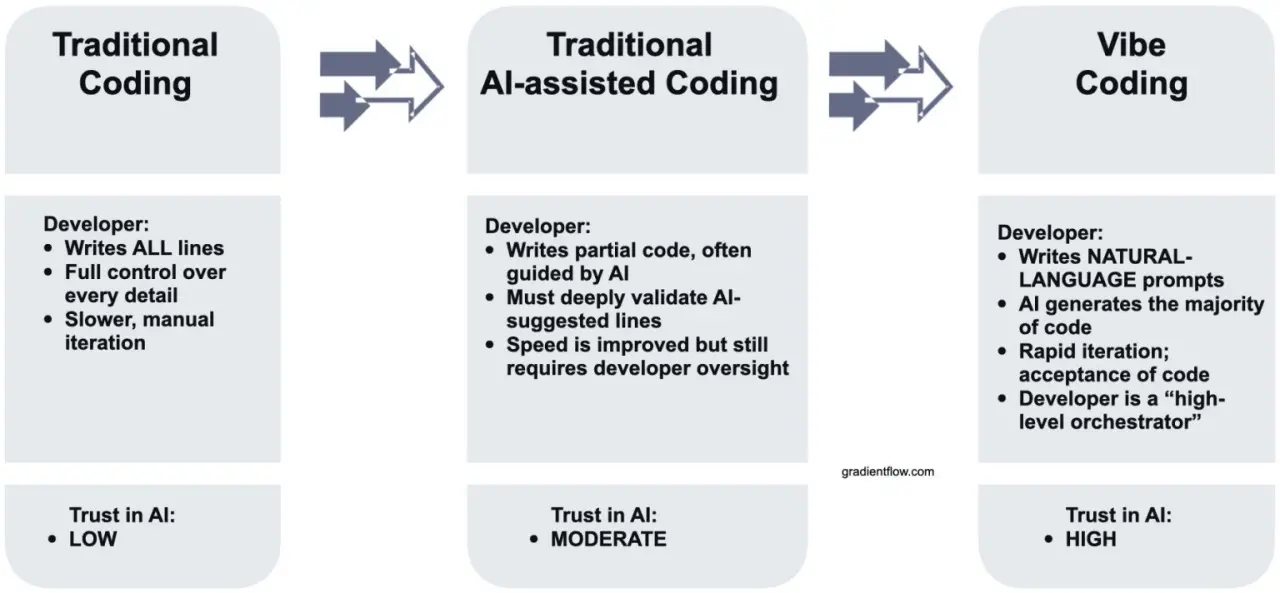
Image Source: Gradient Flow
It is important to note that tool-type products leaning towards IDE enhancement and localized programming assistants, such as Cursor, Codeium, and Windsurf, are mostly embedded in the local programming environments familiar to developers, focusing on optimizing code completion, cross-file generation, and contextual interaction, significantly enhancing the development efficiency of existing engineers.
However, the core design of these products still revolves around "enhancing the efficiency of programmers," rather than "empowering non-programmers to conduct complete builds." Their interaction models still rely on code editors and engineering semantics, thus not changing the underlying logic of development and struggling to deliver "end-to-end" applications outside the IDE framework, also lacking some Web3 characteristics. Based on this, these platforms have not been included in the comparison.
- Infinity Ground
Infinity Ground is one of the most representative projects in the current Vibe Coding track, dedicated to providing a natural language-driven building path for users without engineering backgrounds.
This project is positioned as a Web3 building platform for ordinary creators, content operators, and individual developers, with the core goal of compressing the development process from "intention to product" into a comprehensible, operable, and deployable closed-loop pathway, thereby creating a decentralized "Web3 App Store."
One of the main features of the Infinity Ground platform is its fully natural language-driven process. In this system, users can describe target functions through prompts, and the system will automatically call component libraries, logic modules, and page templates to generate complete application content, including front-end pages, business logic, and on-chain interfaces. The generated results will be packaged as accessible links, directly deployed online, without the need for code writing or environment configuration. The new process bypasses the traditional development dependencies on IDE environments, debugging deployment stages, and back-end on-chain integration processes, significantly lowering the barriers to application building.
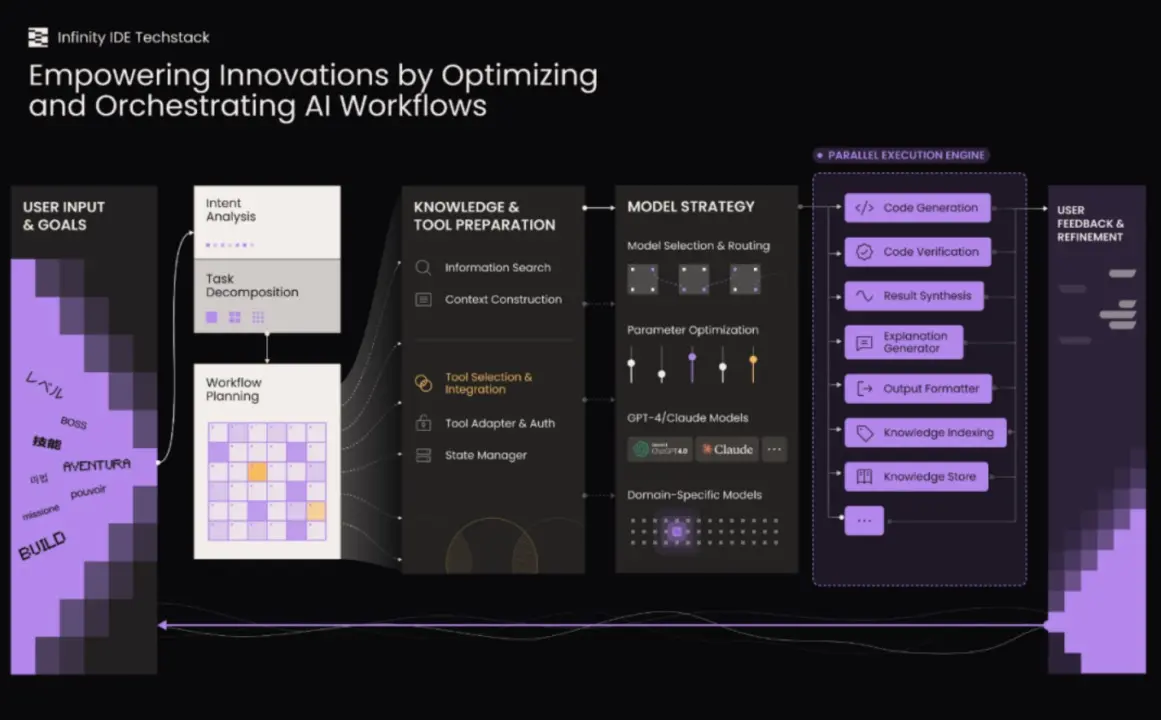
In terms of interaction methods, Infinity Ground introduces the Agentic programming paradigm, supporting rapid generation of functional modules from semantics through task decomposition, contextual understanding, and model strategy routing mechanisms. The platform supports multi-model collaboration (such as GPT-4 and Claude), dynamic parameter optimization, structured output, and interpretable result generation, enhancing the controllability and comprehensibility for non-technical users during the interaction process.
Based on user prompts, the application can support wallet connections, permission management, and payment interfaces, featuring complete Web3 usage characteristics. The platform also allows users to distribute applications via links to communities, social platforms, or other channels, forming an external path from building to usage to dissemination. The entire process is coherent and complete, allowing users to complete delivery without exiting the platform.
In addition to page building and interaction configuration, Infinity Ground has also pioneered the semantic generation capability of smart contracts among similar platforms, becoming an important explorer of on-chain logic generation in the context of Vibe Coding. The platform includes contract generation and deployment modules, allowing users to complete a series of smart contract generation, packaging, and on-chain operations simply by describing in natural language, such as "create a token airdrop with 1000 recipients," without needing to touch the Solidity programming language or perform local compilation or environment configuration.
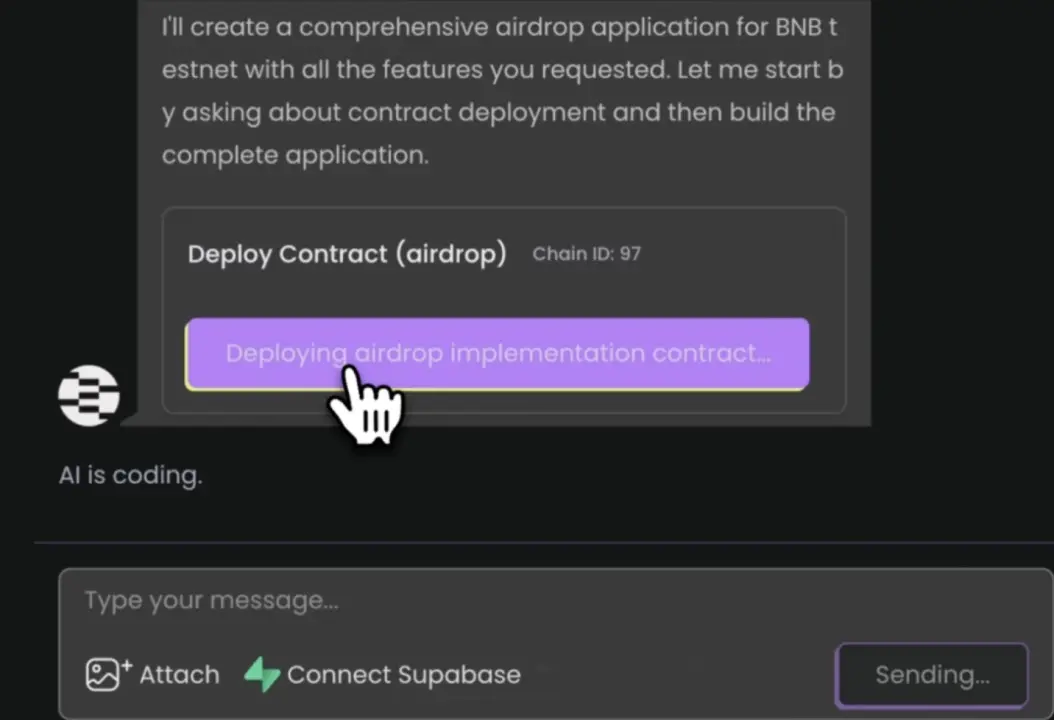
To ensure security and contract usability, the system's pre-set templates are sourced from third-party audited standard contract libraries and encapsulate necessary parameter configurations and permission control logic. After users input their goals at the semantic level, the platform will call the corresponding templates and complete the deployment execution, ensuring that the building path is both low-threshold and possesses on-chain stability and traceability.
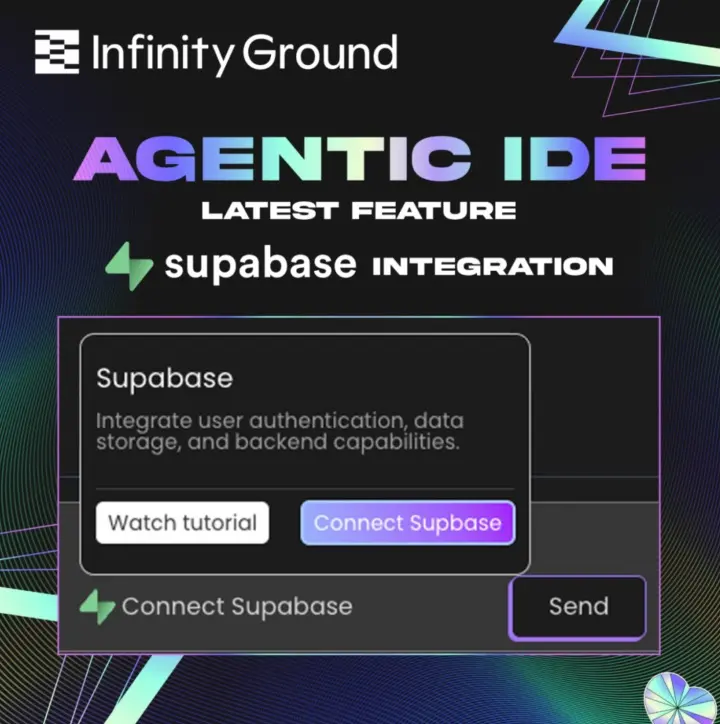
Notably, the platform also provides backend monitoring and data tracking functions for contract behaviors, helping users observe on-chain indicators such as call frequency, interacting wallet distribution, and token flow paths. This combination of "generable + deployable + operable" integrated capabilities greatly enhances the operability of on-chain logic for non-engineering users and builds a technical moat from "buildable" to "operable."
On this basis, Infinity Ground further establishes a template library, building leaderboard, and code remix system, allowing users to generate secondary creations based on existing templates or upload custom modules, gradually forming a supply-oriented building network. The platform also introduces blockchain-based template version control, decentralized incentive mechanisms, and contribution revenue distribution paths, allowing users to earn rewards through contributions of templates and improvements to building processes, creating a production closed loop centered around AI collaboration and user co-creation.
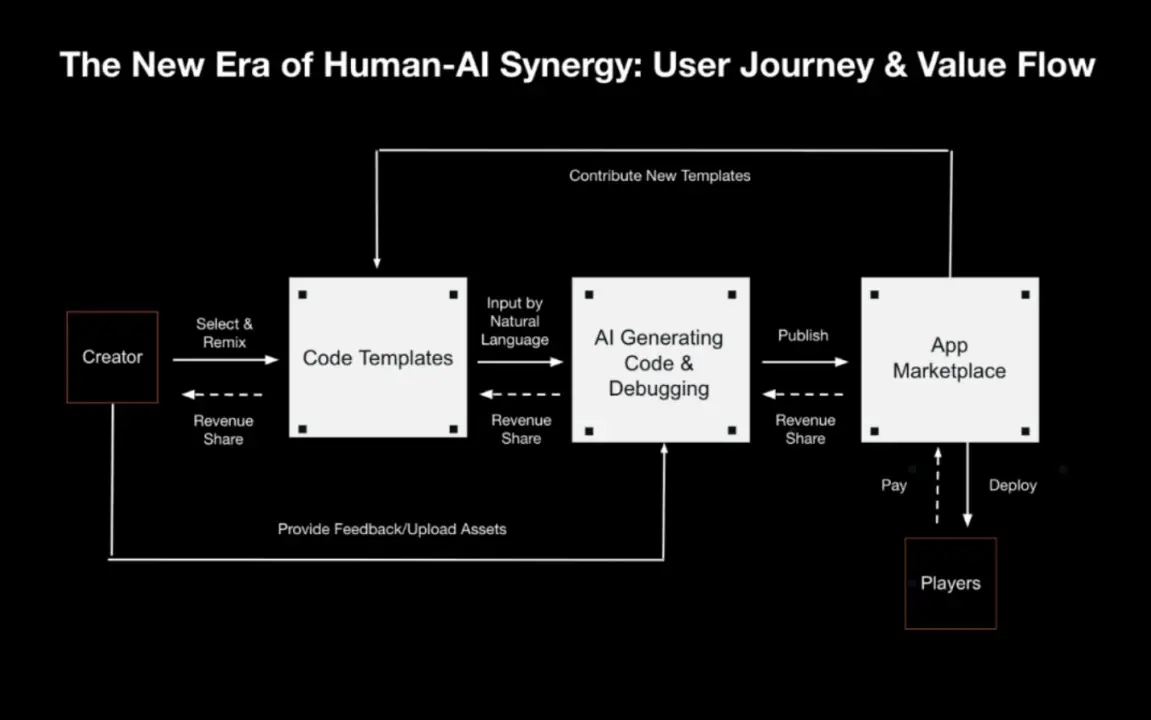
The platform currently has built-in lightweight Web3 application templates covering NFT markets, DAO management, on-chain data dashboards, RWA registration forms, content subscription systems, etc., addressing common creation, community, and trading scenarios. Users can call, modify, or completely reconstruct structures based on new semantics as needed, with all building steps completed within the platform, further forming a new chain-like process from prompt to module combination to release and operation.
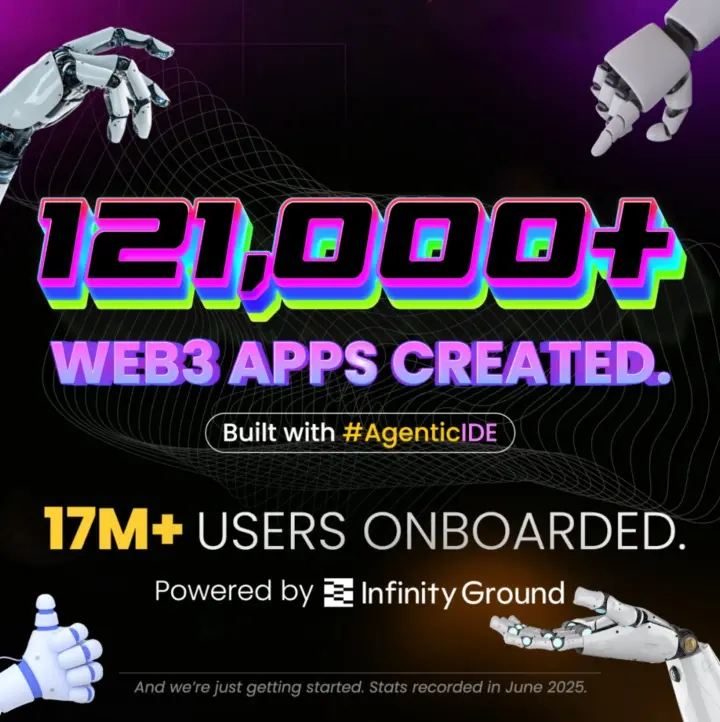
It is worth mentioning that, according to the latest data, the Infinity Ground platform has currently connected over 17.5 million unique wallet addresses and generated over 190,000 launched applications, forming a relatively significant scale of use. Its user profile mainly covers market operators, NFT and meme creators, independent product managers, students, and Web3 players. The platform has also incubated representative products, including the blockchain game AI Town project "Love Terminal" (which attracted over 58,000 users in the first week) and the on-chain mini-game "Jump Jennie" (which completed over $16,000 in entry fees within two weeks), fully validating the commercial monetization potential of Infinity Ground.
- Dev.fun
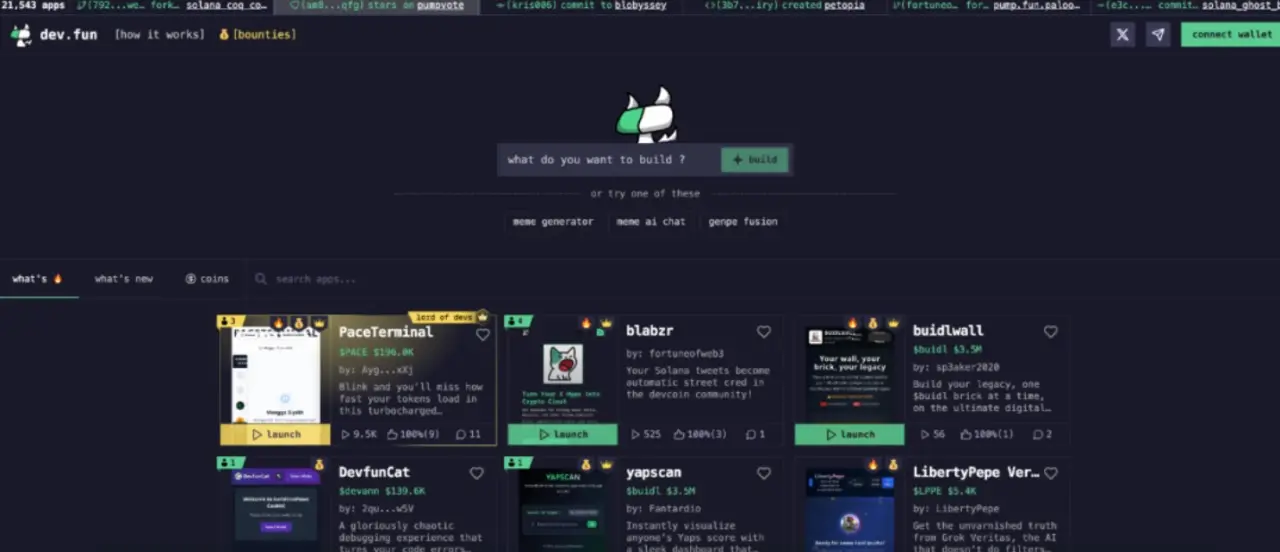
Dev.fun is a tool-type platform in the Vibe Coding track that emphasizes "light expression" and "instant interaction." It is based on an extremely simplified semantic input mechanism, allowing users to quickly generate interactive module pages (called devlet) with preliminary logic through a single natural language sentence, without programming or configuration. Common applications include voting, mini-games, forms, real-time displays, etc., emphasizing low creation thresholds and short distribution paths.
The platform has a large number of user-generated or remix templates, supporting direct generation of access links for community sharing or embedded dissemination, creating a content dissemination path with meme characteristics. Dev.fun also includes mechanisms like likes, leaderboards, and creative challenges to encourage expressive creation around hot topics and community discussions.
Positioned as a meme engine for Web3 community culture, Dev.fun serves content creators, community operators, and brand expressers, making "building as expression" a common creative approach. By connecting users through lightweight interactive content and amplifying influence, it is one of the more representative expressive platforms in Vibe Coding.
- Ohara AI
Ohara AI is one of the representative platforms in the Vibe Coding track focusing on "building + incentives," dedicated to constructing runnable Web3 applications through natural language and automatically issuing exclusive App Coins to support incentives, transactions, and community interactions.
The platform provides a modular conversational building experience, where users only need to input requirements, such as "create a meme tool that generates GIFs" or "build a button that supports ETH donations," and the system can generate a complete application that includes front-end pages, wallet interactions, and on-chain calls. The application can run instantly, undergo semantic fine-tuning, and allows users to access the underlying code for secondary editing.
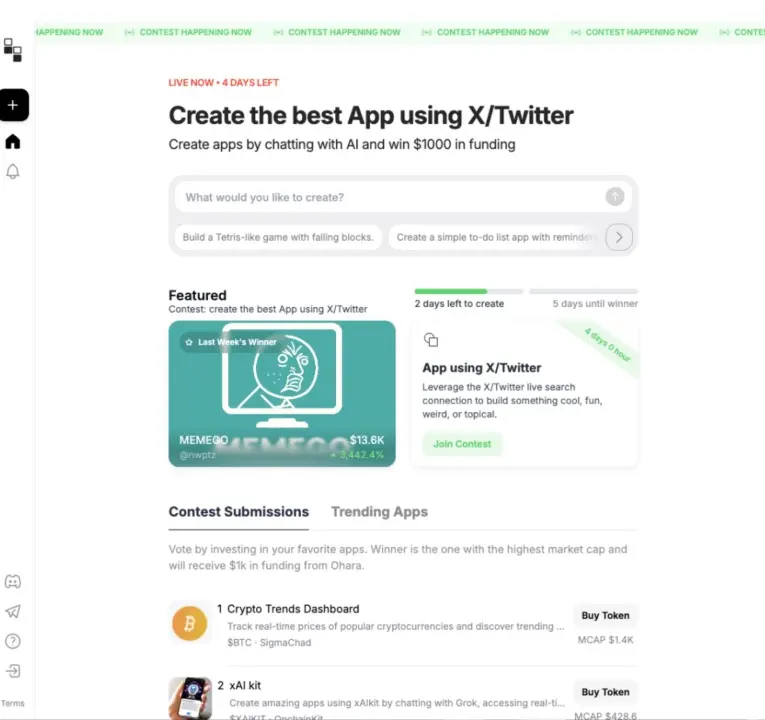
Ohara AI's biggest feature is "one-click deployment + automatic App Coin generation." Each application can embed a token incentive mechanism for rewards, distribution, or sales, achieving an economic closed loop between creators and users. The platform also supports remix building, facilitating quick copying, modification, and publication of applications, promoting community co-creation.
Ohara includes the OnchainKit SDK, supporting wallet integration, on-chain operations, data reading, and can connect to external APIs, such as integrating xAI or real-time content sources, enhancing application interactivity. The platform also regularly hosts development challenges to enhance user engagement and content exposure. Currently, Ohara's user base includes creators, entrepreneurs, and Web3 content experimenters, suitable for rapid prototype testing and token mechanism validation, making it an ideal platform for lightweight developers and creative product validators.
Diverse Evolution Paths of Vibe Coding
In fact, the three platforms represent different verticals.
Among them, Infinity Ground focuses on the "generation, deployment, and distribution closed loop of Web3 applications" as its core design philosophy, building a complete end-to-end generation infrastructure around the entire process from prompt generation to module invocation, on-chain deployment, wallet interaction, permission configuration, and application distribution, emphasizing a complete product path from "creation" to "usable and shareable," leveraging the combination of template ecology, operating environment, and deployment support.
Ohara AI leans more towards a "front-end prototype generation tool." Its core capabilities mainly focus on generating page sketches through natural language descriptions, supporting simple interactions and static display content. Ohara AI's "generation equals display" path is closer to the thinking of Web2 creative tools, also suitable for educational scenarios, creative expression, and other lightweight uses, making it more like a "starter generator" or "prototype drafter" in the Vibe Coding track.
Dev.fun's positioning is between the two, targeting meme creators and on-chain content builders, supporting the generation of visually expressive content pages from textual intentions while providing basic wallet connection and data interface calling functions, combining lightweight semantic interaction with template-driven approaches, emphasizing "quickly creating shareable works," making it more of a tool-type platform aimed at creator communities.
If we broadly categorize Vibe Coding into two types of paths:
- One type will be infrastructure-oriented systems attempting to reshape the entire process of "building—deploying—distributing";
- The other type will focus on specific segments, targeting lightweight generation, creative display, or front-end sketches, forming a group of tool-type or launchpad-type platforms.
Within this framework, Infinity Ground is closer to the former, building a complete closed loop around the building process, operating environment, and distribution mechanism. With a functional architecture based on natural language generation, it also includes capabilities for on-chain deployment, wallet binding, permission settings, and builds an application template ecosystem. The platform envisions a "Web3 App Store," essentially belonging to the infrastructure-type projects in the Vibe Coding track, aiming to serve the creator community and solidify a module market.
Based on the technical fundamentals of Infinity Ground, it is being classified as an L3+ smart level, demonstrating outstanding performance in visibility, Web3 native characteristics, composability, and usability, showcasing the platform's systemic capabilities in building a complete ecological closed loop.
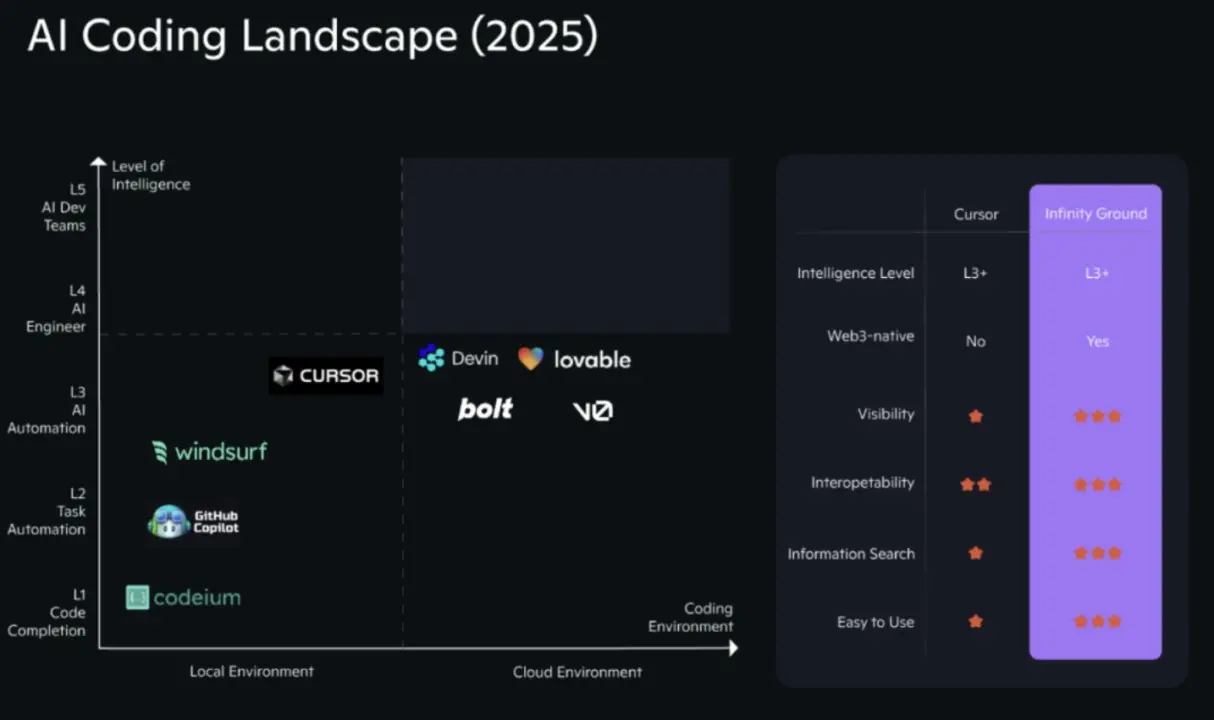
In terms of functional structure, further horizontal comparisons can also validate the aforementioned differentiation paths.
As shown in the table below, Infinity Ground supports the generation of multi-page structures, stable wallet connections, real-time on-chain data displays, and AI collaborative generation based on user intentions, possessing strong systemic combinability and being chain-wide. While Ohara AI and Dev.fun each have their highlights, they focus more on front-end sketches, creative content generation, and basic on-chain interaction directions.
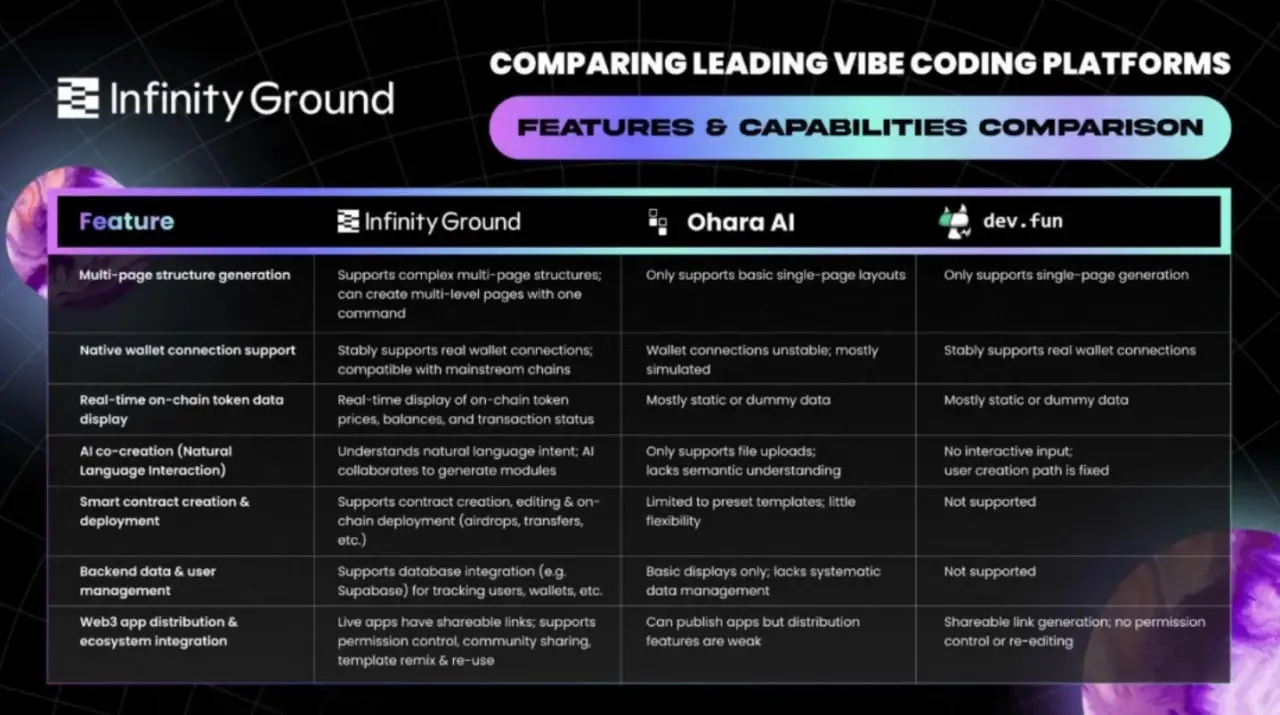
In summary, the current Vibe Coding ecosystem has initially formed two evolutionary paths: "infrastructure-type platforms" and "tool-type generators." Infinity Ground, as a representative of the former, demonstrates systemic closed-loop advantages in building logic, operational paths, and ecological organizational capabilities, while Ohara AI and Dev.fun are more launchpad-oriented, positioned as entry tools for lightweight building. This trend of differentiation also marks the evolution of Vibe Coding from a single building tool to a multi-layered, multi-role system.
Conclusion
Vibe Coding is in an early stage of technological evolution and user cognition enhancement. As the capabilities of large models continue to be released and the demand for Web3 native building continues to grow, "language equals building" is gradually becoming the mainstream paradigm for the next generation of application development, opening the underlying entry to the "universal development" era.
Based on this, user identities are undergoing a structural transformation, extending from programmers to creators, operators, educators, and even individual entrepreneurs. The high-threshold processes that originally belonged to technical experts are being reconstructed into a more universal, expressive, and operable building path. This lowering of barriers not only brings vast user growth potential but also significantly expands the potential market size for the Vibe Coding track.
Currently, the track presents a flourishing state. Whether it is the end-to-end platform-type products represented by Infinity Ground or the more lightweight building tools like Dev.fun and Ohara AI, despite differing target audiences and functional emphases, they are all deeply exploring the core proposition of "low-threshold building." Their competition is not merely homogeneous but rather a collaborative expansion of application boundaries, achieving complementary penetration in different verticals.
From an industrial perspective, Vibe Coding possesses typical characteristics of platform-type innovation. Once its underlying logic stabilizes, the combinability of modules and the scalability of the ecosystem will continue to release potential, likely forming a development stack structure similar to an operating system, thereby reshaping the entire cycle of product conception to validation, from iteration to launch.
Vibe Coding is an early track with clear structural increments, diverse scene diffusion potential, and strong platform moat potential. It is driving not only the evolution of development tools but also a redistribution of building rights and the inclusive release of creativity.
In the next 3 to 5 years, as the ecosystem matures and user mindsets evolve, this field is expected to become one of the most promising long-term opportunity windows at the intersection of AI and Web3.
About Infinity Ground
Infinity Ground is a blockchain infrastructure designed specifically for Vibe Coders, dedicated to building an agent-driven, fully decentralized development ecosystem that breaks through the boundaries of traditional development models. The platform is built on three core pillars: first, the world's first decentralized Agentic IDE, allowing anyone to build DApps, such as games, social applications, and DeFi, without programming, solely through natural language; second, an app store supporting the release and commercialization of AI-native applications, facilitating application publishing, collaboration, and monetization; third, the ING Network, a high-performance, modular, fairly incentivized scalable public chain designed for Vibe Coders.
 Risk warning Risk warning




Popular articles





