








The South Korean market starts to soar: doubling in a single day, Upbit's daily trading volume exceeds 10 billion USD

 The quiet South Korean virtual asset market officially revived in late July, ushering in a surge in both volume and price.
Author: Zen, PANews
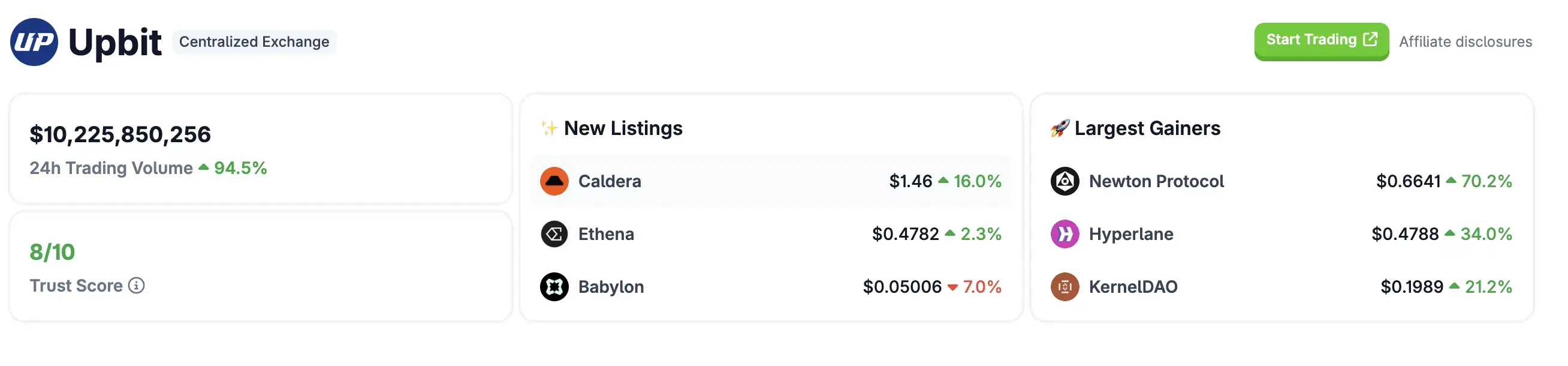
In July, the quiet South Korean virtual asset market officially revived, ushering in a "surge in both volume and price." As of 8 PM on July 24, the cryptocurrency exchange Upbit, which ranks first in market share in South Korea, saw its 24-hour trading volume exceed $10.2 billion, an increase of 94.5%; the second-ranked Bithumb also experienced a surge, with a 24-hour trading volume exceeding $3.2 billion, up 61.5%.
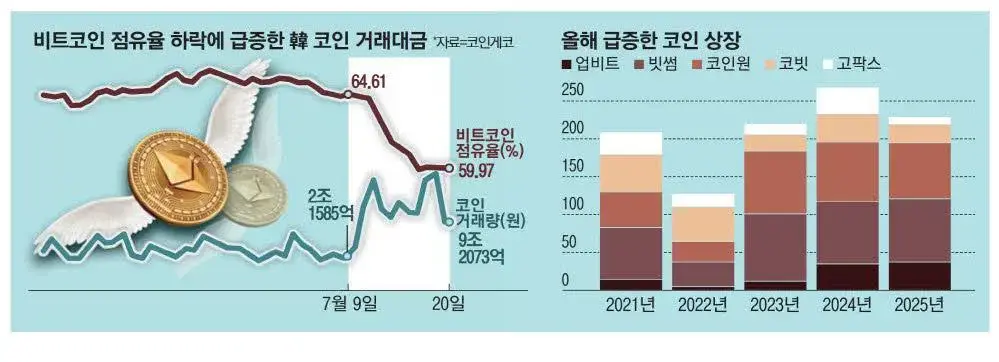
Before this wave of enthusiasm, liquidity at the market's base had quietly accumulated. According to CryptoQuant data, from July 13 to 19, the trading volume of stablecoins on South Korea's five major cryptocurrency exchanges—Upbit, Bithumb, Coinone, Cobbit, and Gopax—reached 2.226 trillion won (approximately $16.2 billion).
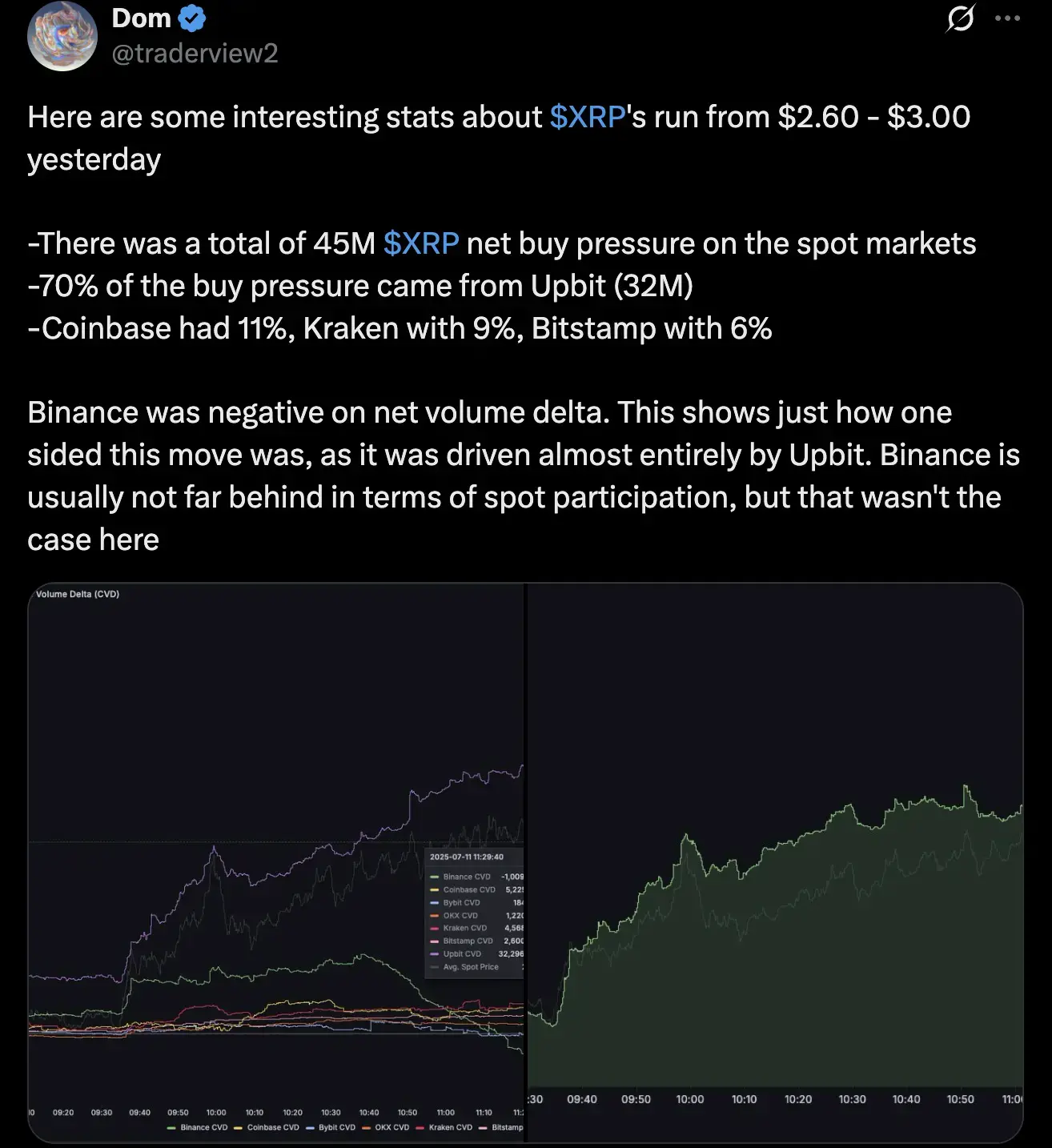
The heightened trading enthusiasm among South Korean investors began to manifest on July 11 when they frantically purchased XRP tokens.
According to data shared by analyst Dom on social media platform X, the price of the token rose from $2.60 to $3.00 within a few hours that day, with a total net buying pressure of $45 million in the spot market for XRP, of which 70% came from Upbit ($32 million), 11% from Coinbase, 9% from Kraken, and 6% from Bitstamp. This surge was almost entirely driven by South Korean buying.
XRP, which ranks just behind Bitcoin and ETH in total market capitalization, is undoubtedly the favorite virtual asset among South Korean investors, with about 15% of the global trading volume coming from the country. The token broke through the $3.6 mark on July 18, exceeding the historical high set on January 16 for the first time in six months. As of July 24, the price of XRP was approximately $3.16, with a 24-hour trading volume on Upbit reaching $2.28 billion, firmly maintaining its position as the platform's hottest asset.
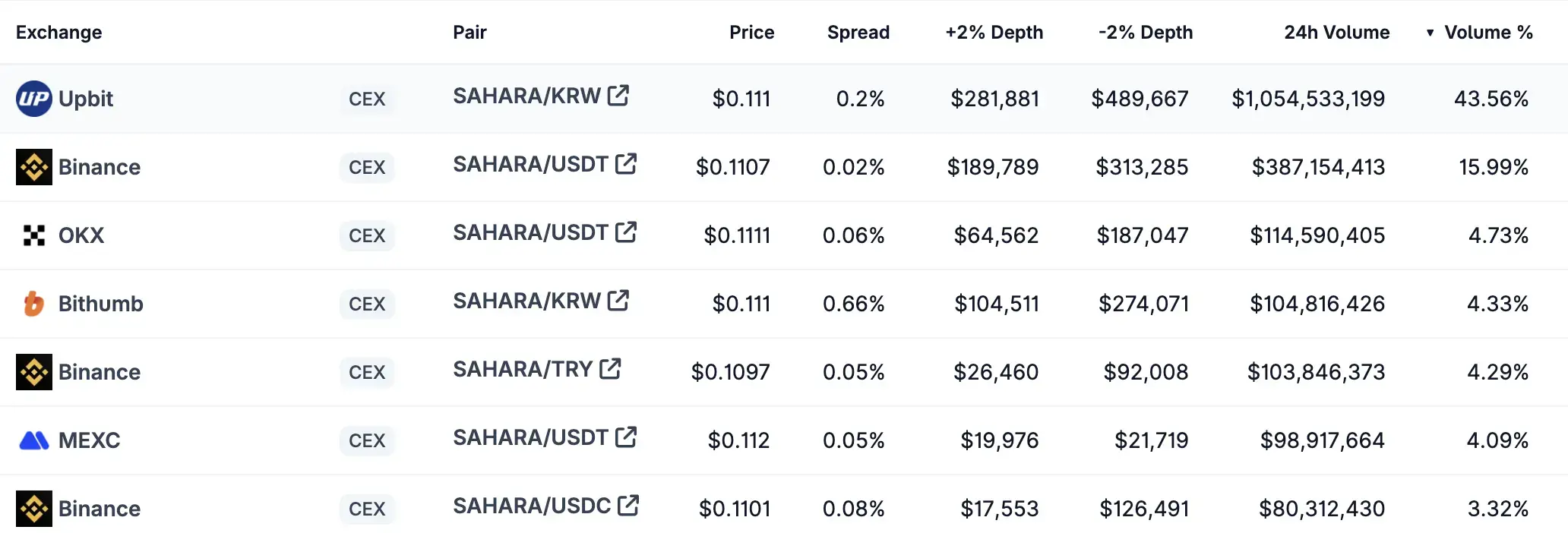
On July 23, the SAHARA token of the "AI-native" full-stack blockchain platform Sahara AI triggered a second wave of excitement. According to PANews report, SAHARA's daily maximum increase reached 86%, ranking third in trading volume on Upbit's spot market, accounting for 8.76% of the total platform trading volume. Today, South Korean investors continued their trading enthusiasm for SAHARA. As of 8 PM on July 24, its trading volume in the past 24 hours reached $2.3 billion, with 43.56% of spot trading coming from Upbit and another 4.33% from Bithumb.
After the SAHARA token broke through $0.16 to reach a historical high, it faced a pullback, and the NEWT token of the on-chain financial verifiable automation layer Newton Protocol began to take over.
NEWT has been driven by South Korean buying even more than SAHARA. As of 8 PM on July 24, this token had risen over 70% in 24 hours, with a trading volume of $1.78 billion in the past 24 hours, of which 57.07% of spot trading came from Upbit and another 4.99% from Bithumb. This demonstrates the concentration and explosive power of South Korean crypto retail investors.
In addition to the aforementioned tokens, South Korean crypto investors, who favor altcoins, have also driven the rise of tokens such as Hyperlane, Babylon, HUMA, LISTA, and MERL.
Moreover, against the backdrop of Bitcoin reaching historical highs, ETH making a comeback, and an increasingly optimized regulatory environment, the pace of new listings on South Korean exchanges has also noticeably accelerated.
According to a report by South Korean media outlet Maeil Business Newspaper report, as of July 21, the five major virtual asset exchanges in South Korea—Upbit, Bithumb, Coinone, Cobbit, and GoFox—had listed a total of 229 types of won-denominated virtual assets, accounting for 85.44% of the 268 types listed throughout the previous year. Upbit and Bithumb have listed 37 and 84 types of won-denominated virtual assets this year, respectively, surpassing last year's listings (35 and 82 types, respectively). If this trend continues, Upbit and Bithumb are likely to list the most cryptocurrencies in nearly five years this year.
This "listing frenzy" not only provides more landing spots for speculative funds but also allows market hotspots to change continuously. However, the intense flow of funds and rapid rotation also come with significant volatility risks: XRP and SAHARA have both experienced short-term pullbacks of over 10%, with concentrated contract liquidations. If liquidity suddenly reverses, prices will face severe fluctuations.
CryptoQuant analysts have also warned that as the altcoin craze finally arrives, the behavior of South Korean investors will undergo significant changes. Therefore, in the context of a surge in new capital inflows, the enthusiasm of South Korean investors for altcoins often exceeds that of overseas markets. Thus, in small investments, FOMO plays a crucial role in this environment, sometimes posing significant risks to savings.
Recommended reading:
Stablecoins breaking the circle: in-depth analysis of the regulatory policies of stablecoins in 12 countries
 Risk warning
 Risk warning

Popular articles





