








Disruptor Robinhood: Driving the Democratization of Financial Services

 Since its establishment in 2013, Robinhood has continuously broken and rewritten the traditional financial rules with a series of disruptive innovations. From the "zero-commission revolution" in 2013 to the "retail investors vs. Wall Street" in 2021, from offering cryptocurrency trading in 2018 to now launching stock tokens, Robinhood seems to always be in tune with the times, becoming the protagonist of the new narrative.
Wall Street is known for its conservatism, but there is a timeless adage: "Everything is cyclical." Until they encountered Robinhood ------ an internet brokerage that breaks the cycle and challenges the status quo.
Founded in 2013, this internet brokerage has continuously innovated and disrupted the traditional practices of Wall Street for over a decade, reshaping the U.S. securities brokerage industry and redefining the relationship between a new generation of investors and financial markets.
As of the market close on July 18, Robinhood (NASDAQ: HOOD) has seen its market capitalization rise to $96.842 billion, nearing the $100 billion mark. Wall Street analysts have raised their target prices, and media headlines frequently refer to it as the "Rise of Robinhood" and "New Financial Power."
Just over a month ago, on June 30, Robinhood dropped a bombshell ------ announcing the launch of Robinhood Stock Tokens, allowing EU customers to trade U.S. stocks and ETFs on the blockchain. The news sparked widespread discussion in both the financial and crypto circles, and the company's stock price surged 12.77% on that day.
However, for those familiar with Robinhood's history, this move was not particularly surprising. Since its inception in 2013, Robinhood has consistently broken and rewritten the rules of traditional finance with a series of disruptive innovations. From the "zero-commission revolution" in 2013 to the "retail investors vs. Wall Street" battle in 2021, and from offering crypto trading in 2018 to now launching stock tokens, Robinhood seems to always be in tune with the times, becoming the protagonist of a new narrative.

Stock Tokenization: Practicing "Capital as a Service"
On June 30, 2025, Robinhood announced the launch of U.S. stock and ETF token services in the EU, allowing eligible users to invest in over 200 U.S. stocks and ETFs with 24/5 real-time trading, including popular stocks like Nvidia (NASDAQ: NVDA) and Tesla (NASDAQ: TSLA), as well as equity tokens for private companies like SpaceX and OpenAI.

This initiative not only breaks the geographical and temporal barriers to investing in traditional securities but also significantly lowers the investment threshold, allowing participation with as little as $1.
Additionally, Robinhood supports European customers in trading cryptocurrency perpetual contracts.
Now, with just one Robinhood account, users can engage in a one-stop investment and asset management experience on the same platform, including stocks, ETFs, options, bonds, money market funds, cryptocurrency spot and contracts, stock tokens, as well as cash management and savings, and IPO subscriptions.
"What people really want is not complex financial tools, but 'Capital as a Service' ------ press a button, and the funds can enter your account," said Robinhood founder and CEO Vladimir Tenev in a recent appearance on the well-known podcast "The Twenty Minute VC." He pointed out that the potential impact of this "Capital as a Service" model is revolutionary:
Lowering the barriers to entrepreneurship: Companies at any stage can quickly access funding.
Market-driven pricing: Letting the market determine valuations rather than a few institutional investors.
Liquidity release: Transforming illiquid assets into tradable digital assets.
Regarding stock tokenization, Tenev believes this model has two core values:
Global access: Providing the simplest way for investors outside the U.S. to access American assets.
Democratization of illiquid assets: Allowing retail investors to invest in private companies, real estate, and other traditionally inaccessible assets.
Starlabs Consulting believes that Robinhood's stock tokenization is another profound reshaping of the global financial market following the zero-commission trading revolution.
Zero-Commission Revolution: Making Investing "Accessible to All"
In 2015, Robinhood's two founders, Vladimir Tenev and Baiju Bhatt, proposed a zero-commission trading model with the intention of "making investing accessible to everyone." This decision not only challenged Wall Street's traditional fee structure but fundamentally changed how retail investors participate in the market.
Previously, retail investors had to pay significant commissions for each stock trade, with mainstream Wall Street brokers charging up to $7-10 per trade. This kept small investors out of the market.
Robinhood completely disrupted this landscape ------ users do not need to pay any trading commissions and can buy and sell U.S. stocks through a mobile app. Robinhood generates revenue through an innovative business model primarily from three channels: Payment for Order Flow (PFOF), Robinhood Gold subscription services, and interest income from idle cash.
The PFOF model refers to Robinhood sending user orders to market makers, who pay Robinhood for this service. Although this revenue model has faced criticism, it has indeed provided a sustainable economic basis for zero-commission trading.
The zero-commission model acted like a deep-water bomb, triggering a chain reaction throughout the financial industry. On October 1, 2019, the then-market leader Charles Schwab announced it would eliminate online trading commissions for U.S. stocks, ETFs, and options starting October 7. Subsequently, under competitive pressure, major brokers like TD Ameritrade, E*Trade, and Fidelity were forced to follow suit, announcing the elimination of most stock and ETF trading commissions. October 1, 2019, was thus dubbed "Zero-Commission Monday," marking the official entry of mainstream U.S. brokers into the zero-commission era.
This transformation, known as the "zero-commission revolution," is estimated to have saved U.S. retail investors billions of dollars in trading costs each year. More importantly, the zero-commission model has fundamentally changed the trading behavior of young investors. Without the burden of commissions, investors can trade smaller amounts more freely, allowing for flexible adjustments to their portfolios. Data released by Robinhood in 2021 showed that the average age of its users was only 31, significantly lower than the average age of customers at traditional brokers.
According to The Wall Street Journal, the U.S. brokerage industry saw overall profit margins decline by more than 20% due to zero-commission policies in 2019, but the user base grew significantly, making the investment market more inclusive.
Today, zero-commission has become the new norm on Wall Street, and this transformation initiated by Robinhood has permanently changed the landscape of retail investing. But Robinhood did not stop there; as its CEO Tenev stated, "Our mission is to enable more people to participate in financial markets, and zero-commission is just the first step."
Catering to Young Users: Mobile-First + Gamified Design
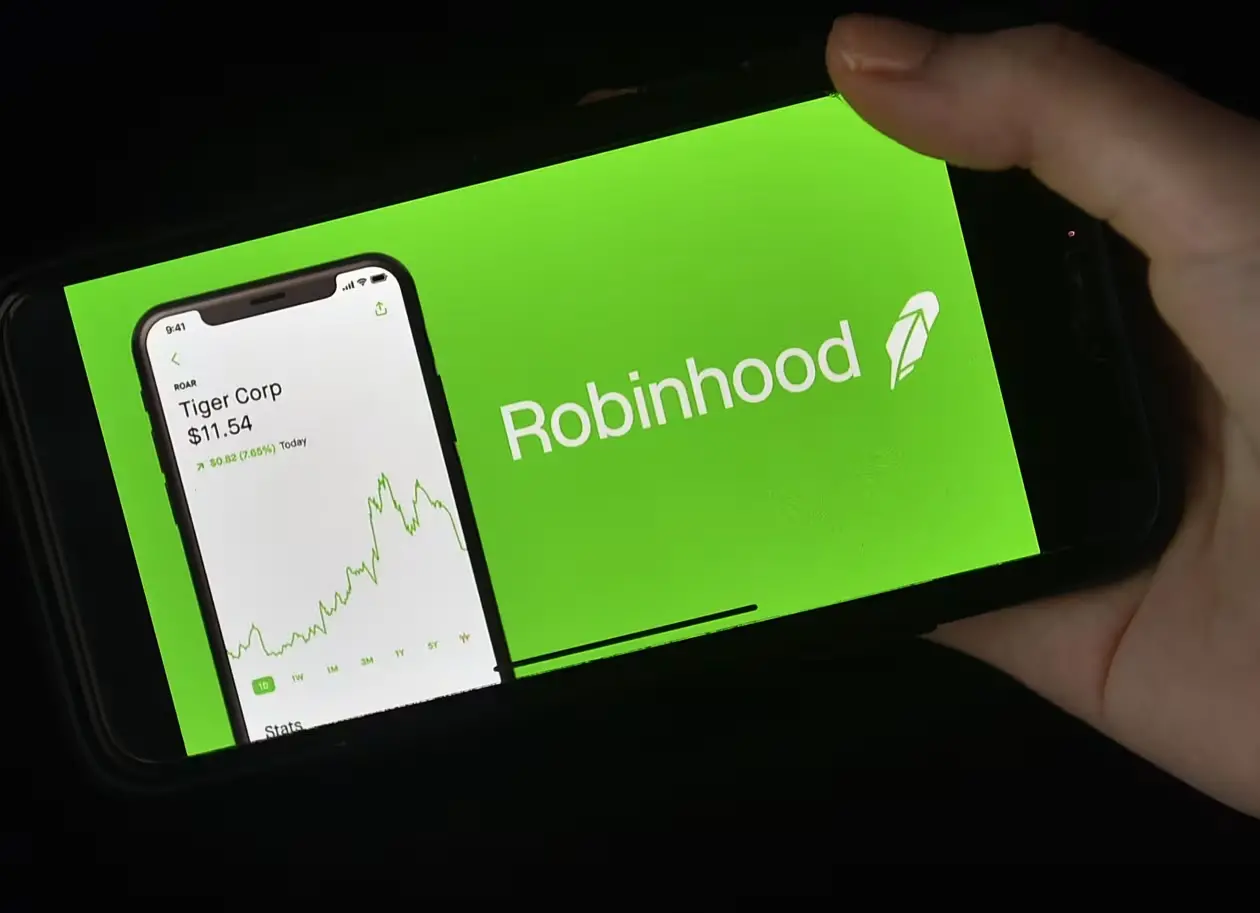
As an internet brokerage, Robinhood has seized the demand for mobile investing from millennials and Gen Z, proposing a "mobile-first" strategy and launching a simple, user-friendly mobile app that makes stock investing as easy as playing a game. Meanwhile, traditional brokers still relied on complex desktop terminals.

To attract young people, Robinhood incorporated gamified elements into its UI design, such as animations when stock prices change and colorful screens after successful trades, making serious investment activities more engaging.
Although critics argue that Robinhood's zero-commission and overly convenient trading could lead to overtrading by investors, and that the gamified interface design might dilute the seriousness of investing, it is undeniable that this user-friendly, low-barrier innovation has greatly enhanced user engagement, leading to the subsequent "retail investors vs. Wall Street" movement.
In early 2021, U.S. retail investors gathered in the Reddit forum WallStreetBets to launch a "short squeeze" action against hedge funds, targeting the heavily shorted GameStop (NYSE: GME) stock. Robinhood, as the preferred trading platform for retail investors, became the main battleground of this financial storm.
In no time, millions of retail investors bought stocks like GME through Robinhood, causing the stock price to skyrocket several times. Hedge fund giants suffered heavy losses, shaking Wall Street.
However, as the market fluctuated abnormally, Robinhood temporarily restricted buying of certain popular stocks for risk control reasons, leading to strong user dissatisfaction and even congressional hearings and class-action lawsuits.
Despite this, the GameStop incident is considered a landmark event in the "awakening of retail power," and Robinhood has firmly secured its position at the center of the global fintech narrative.
The Economist commented that technology has given millions of retail investors the opportunity to compete with Wall Street giants in the financial market for the first time.
Introducing Cryptocurrency: Breaking Down Web2 and Web3 Business Barriers
Robinhood is also one of the earliest traditional financial platforms to offer cryptocurrency trading services.
As early as 2018, when Bitcoin was still referred to by Buffett as "rat poison squared," Robinhood launched BTC and ETH trading.
This move not only broadened the company's business scope but also broke down barriers between cryptocurrency and traditional finance, promoting the popularization of crypto investments.
Subsequently, Robinhood continuously expanded the boundaries of its crypto business:
In 2021, it acquired the crypto aggregation trading platform Cove Markets;
In 2022, it launched the Web3 wallet Robinhood Wallet, currently supporting Ethereum, Polygon, Arbitrum, Optimism, and Base networks;
In May 2025, it acquired Canadian crypto operator WonderFi (which includes two regulated trading platforms, Bitbuy and Coinsquare);
In May 2025, it obtained a brokerage license from the Bank of Lithuania, allowing it to provide stock trading and other investment services throughout the EU and enabling compliance with the EU's crypto market regulatory framework MiCA;
In June 2024, it acquired the established exchange Bitstamp (which holds over 50 licenses in Europe and globally), and after the transaction, Robinhood will be able to use Bitstamp's MiFID multilateral trading facility license to offer crypto derivatives;
On June 30, 2025, it announced the launch of U.S. stock and ETF token services and plans to introduce its own Layer 2 blockchain, tentatively named Robinhood Chain;
On July 1, 2025, it announced the acquisition of the AI investment advisory platform Pluto.
As of now, Robinhood has achieved comprehensive coverage of cryptocurrency spot, contracts, staking, wallets, RWA, and AI strategy analysis, and will launch its own L2 public chain.
Additionally, Starlabs Consulting noted that Robinhood has been advocating for tokenization legislation in the U.S., having submitted a proposal to the SEC for establishing a national framework for tokenized RWA, and plans to launch a platform called Real World Asset Exchange for off-chain trading and on-chain settlement.
Tenev revealed that the company currently has nine product lines with annual revenues reaching hundreds of millions:
Stock trading, options, cryptocurrency (traditional core)
Robinhood Gold subscription, cash management (sticky services)
Instant withdrawals, tokenization (innovative value-added)
Private banking, prediction markets (high-end expansion)
Robinhood has repeatedly mentioned "significant increases in cryptocurrency trading volume and related revenue." Some analysts pointed out that in Q1 2025, cryptocurrency trading revenue accounted for about 30% of Robinhood's trading revenue, approximately $175 million. This proportion has increased by 5-10 percentage points compared to Q1 2024.
From options trading to cash management, from cryptocurrency to the upcoming private banking business, from AI-driven operational efficiency improvements to disruptive stock tokenization, Robinhood has expanded from a securities brokerage to a comprehensive financial infrastructure platform spanning Web2 and Web3.
"Disruptor" Gene: Making Finance Fairer and More Inclusive
Throughout its journey, every step of Robinhood's expansion has challenged the old order of the industry. Each disruptive innovation is rooted in the mission of "making finance fairer and more inclusive."
Fractional Shares Trading: Inclusive Innovation in Asset Fragmentation
Robinhood is also one of the first brokers in the U.S. to offer fractional shares trading services. This aligns with the concept of cryptocurrencies supporting infinite divisibility (the smallest unit of Bitcoin is 0.00000001 BTC, or 1 Satoshi).
Fractional shares trading allows users with just a few dollars to invest in the stocks of well-known companies with high prices, participating in the growth dividends of top global assets, truly achieving the democratization of investing.
According to official data from Robinhood, in 2023, the number of users trading fractional shares surpassed 20 million, accounting for more than half of the total user base.
Cash Management Services: Connecting Investment and Consumption Scenarios
In 2022, Robinhood launched its own debit card service, Robinhood Cash Card, offering up to 3% cash back. This service seamlessly connects investment accounts with daily payments, allowing for the interchange of funds between consumption, withdrawals, and investment accounts, enhancing the integration of the financial ecosystem.

Additionally, Robinhood introduced an instant deposit feature, allowing eligible users to withdraw part of their funds immediately after selling stocks, without waiting for the traditional 2-3 day settlement period.
Individual Retirement Accounts: Attracting Long-Term Investment Users
In 2022, Robinhood launched Robinhood Retirement services, offering a "1% match" incentive for users who open individual retirement accounts (IRAs) on its platform: for every $1 deposited into the IRA, Robinhood provides an additional 1% matching fund. This is similar to the matching incentives offered by some employers for 401(k) plans, but provided directly by Robinhood, applicable to all retail investors.
This move has attracted more users focused on long-term investment and wealth accumulation to join Robinhood, which is known as a "retail short-term trading platform," improving its user structure.
As of 2024, Robinhood has over 25 million registered users, more than 17 million active users, and manages assets exceeding $139 billion, a 116% increase from 2023.
Behind these numbers is an important signal of the times: financial services are undergoing an unprecedented democratization process.
Robinhood Founders: The "Elon Musk" of Finance?
Whether it is the courage to challenge the old order, the spirit of continuous innovation, or the profound changes brought to the industry, even in their immigrant backgrounds, Robinhood's two founders exhibit many similarities to the "tech mogul" Elon Musk.
Tenev was born in Bulgaria in 1987 and immigrated to the U.S. with his parents during childhood. Bhatt was born in India and grew up in the U.S. Both have a strong interest in financial markets.

Baiju Bhatt (left) and Vlad Tenev (right)
This pair of Stanford University alumni had already co-founded two high-frequency trading software companies, Celeris and Chronos Research, aimed at Wall Street before founding Robinhood. These experiences made them aware of the inequalities in the traditional financial system and inspired their ideal: to make financial markets fairer and more open.
In 2013, they co-founded Robinhood, named after the legendary English folk hero Robin Hood, who stole from the rich to give to the poor. They firmly believe that through technological and business model innovation, they can break Wall Street's monopoly and make financial markets no longer a game for a few, but a fair arena for everyone to participate in.

Still from "The Rise of Robinhood"
In the early days of their startup, they visited 75 venture capital firms and faced 74 rejections. This experience strengthened their resolve to change the status quo. Bhatt once stated in an interview, "Every rejection made us more certain that we were doing the right thing."
Driven by a strong sense of mission, the two have maintained a passion for innovation throughout Robinhood's rapid development.
During the GameStop short squeeze incident in 2021, Robinhood faced user protests for restricting trading on certain stocks and was questioned by Congress. In the face of public pressure, Tenev voluntarily attended the congressional hearing, admitting the risks and challenges the company faced. Subsequently, Robinhood strengthened the stability of its systems and risk controls while also placing greater emphasis on user education to help investors establish correct investment concepts.
After launching equity tokens for OpenAI and SpaceX in 2025, Robinhood faced resistance from both companies. Tenev responded that while this resistance is understandable, it is unfair, reflecting a fundamental issue in the traditional private market ------ adverse selection. The key innovation of tokenization is that it "works without needing to be chosen by the tokenized companies," which is precisely Robinhood's core philosophy ------ to eliminate artificial barriers in financial services and democratize high-end financial services.
In company management, Tenev advocates for flat management and rapid trial-and-error, encouraging teams to challenge authority and embrace change.
Tenev himself is also a passionate enthusiast of cryptocurrency and AI, often personally involved in product design and user experience optimization. He has stated that new technologies like blockchain and artificial intelligence will continue to drive transformation in the financial industry, and Robinhood will always stand at the forefront of innovation.
 Risk warning Risk warning


Popular articles





