








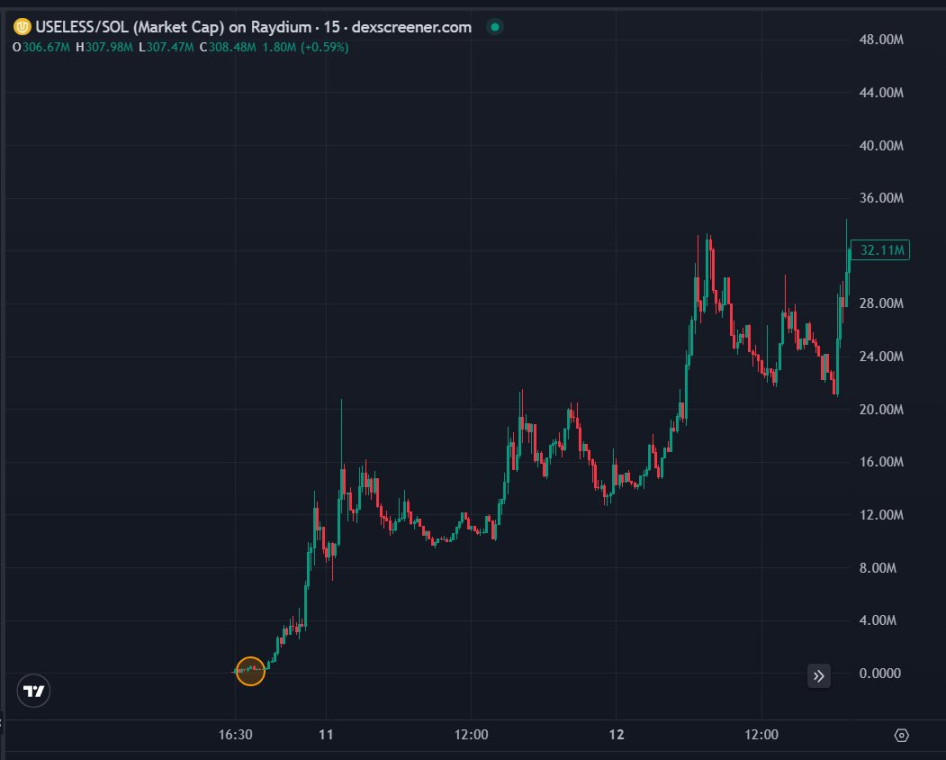
After the launch of Binance Alpha, the price of the coin skyrocketed. How many insider trading cases does USELESS have?

 USELESS went live on Binance this morning, with the price skyrocketing by 50%. Is its chip structure healthy?
Author: Alex Liu, Foresight News
On the morning of July 28, Binance Alpha announced the launch of USELESS, with its BSC chain token briefly surpassing 0.6 USDT, surging over 50%. Behind the celebration, what are the risks? Is USELESS a highly controlled token, and is its chip structure healthy?
The on-chain analysis account Onchainmetrics recently published a lengthy article analyzing on-chain data regarding USELESS, in response to doubts about the "Bonk Cabal (conspiracy group) controlling all chips," and presented the project's real distribution structure and internal wallet behavior through on-chain tracking.
What is "Insider Trading"? --- Profile of Early Buyers
The "Insider" referred to in Onchainmetrics' analysis indicates addresses that completed purchases within the first two hours of USELESS's launch, during a market cap of 150,000 to 300,000 USD. This definition not only includes project insiders but may also encompass some "lucky early bird" users.
Based on this analysis, 18 Insider wallets and over 300 "Insider Descendants" (associated sub-wallets) were identified, forming the core sample of this tracking.
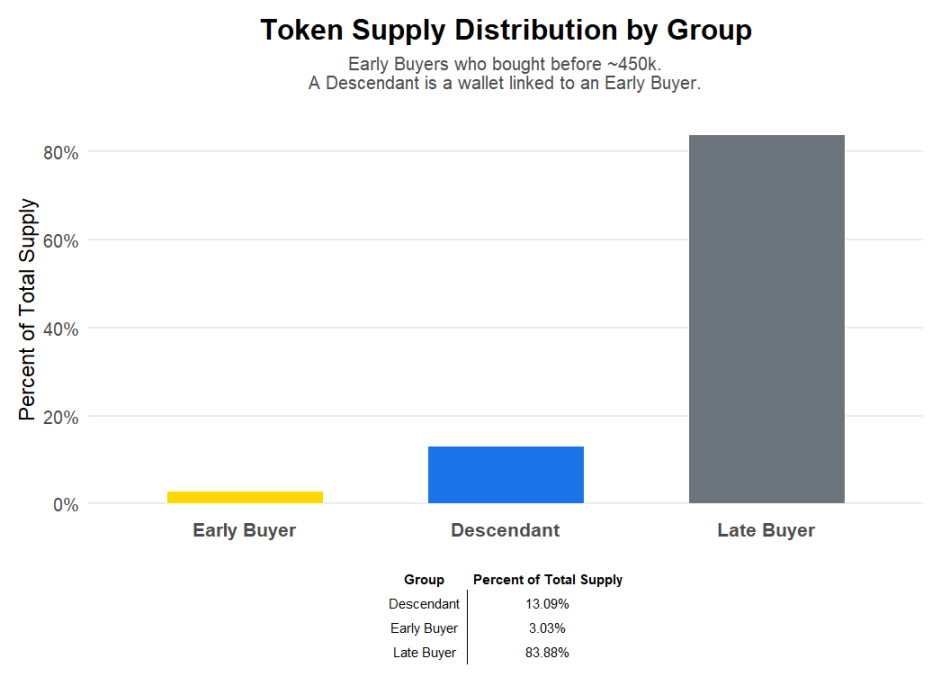
Distribution: Proportion of Insiders vs. Retail Investors
Statistics show that the 18 Insiders and their sub-wallets hold a total of 16.12% of the total supply of USELESS, while later buyers (approximately 25,000 addresses) hold the remaining 83.88%.
This means that although there are indeed "Insiders" with large holdings in the early stages, there is no concentration phenomenon of "Bonk Cabal controlling all chips," and the claim of "absolute monopoly on supply" is unfounded.
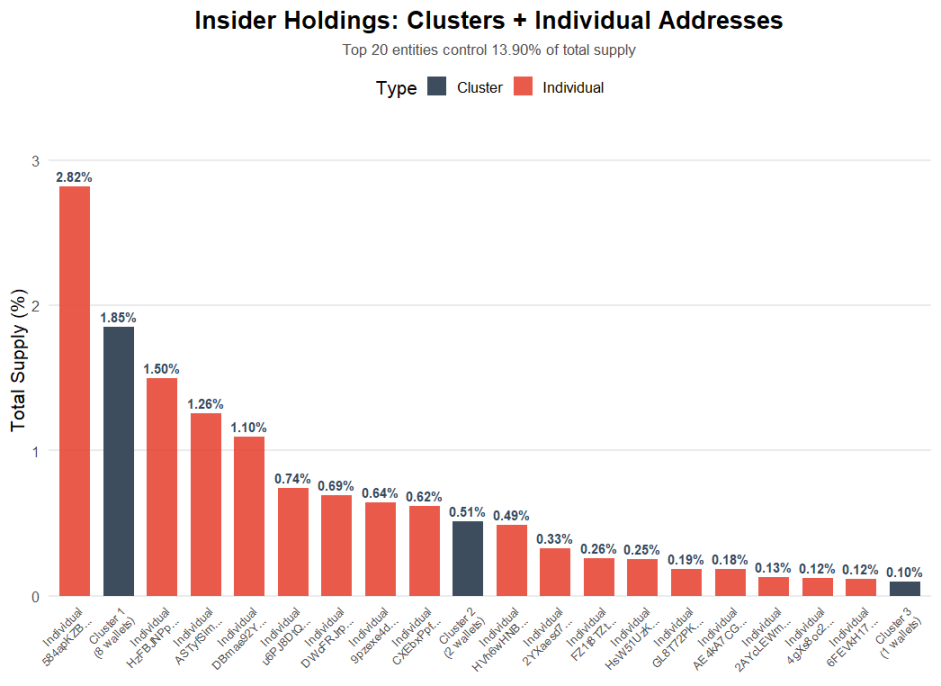
Insider Structure: More Large Holders are Individuals
Further network structure analysis of these Insider wallets, after removing all bot and smart contract addresses, identified multiple "Insider Clusters" with financial connections to each other.
Notably, most heavyweight Insider wallets do not belong to a specific cluster but are held by individuals. Currently, the largest single Insider wallet holds 2.82% of the supply, while the largest cluster's holding accounts for 1.85%. This indicates that the chips are primarily concentrated among a few individuals rather than organized groups.
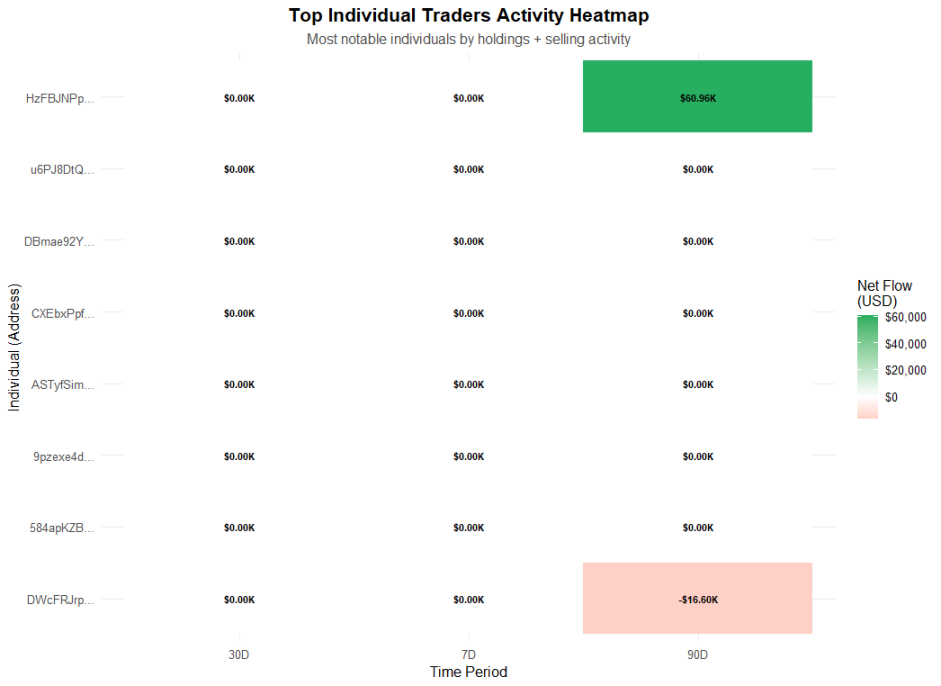
The Vast Majority of Insiders Choose to "Hold" or Continue Buying
Onchainmetrics constructed a comprehensive evaluation formula based on holding volume, historical holding, selling behavior, etc., to select 8 of the most representative Insider wallets and visualize their trading behavior.
The results show that almost all of these 8 wallets are in a "hold or increase position" state, with only 1 wallet exhibiting significant selling behavior. Considering that the asset scale of these wallets generally reaches seven figures or higher, the collective choice to "hold" is particularly striking and reflects their optimism about the future market.
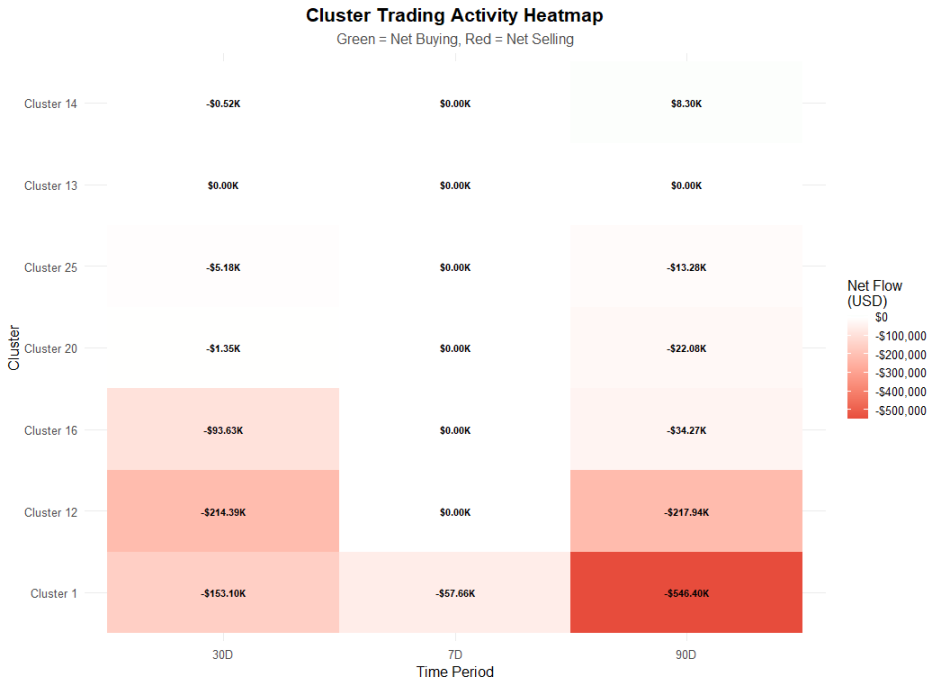
Insider Cluster Behavior: Some Clusters are Still Distributing
Unlike individual behavior, Insider clusters are generally in a "gradual distribution" phase. Current liquidity mainly comes from two clusters: Cluster 1 has 1.9% of the remaining tokens, and Cluster 12 has 0.53% left. Other clusters have either completed distribution or are still quietly holding.
Conclusion: Is it the "Healthiest Chip"?
Although the token distribution structure of USELESS is not perfectly "decentralized," it is overall more dispersed than many projects. Measured against conventional projects, maintaining low selling pressure after a 1000-fold increase is unusual.
Currently, most selling pressure mainly comes from a few clusters holding about 2.5%, while core large holders choose to continue "holding" or even increasing their positions. Onchainmetrics summarized: "They want a higher price."
 Risk warning
 Risk warning



Popular articles





