Dialogue with Hong Kong's largest licensed virtual asset exchange: As stablecoins set sail, how to navigate steadily and far?

 The global stablecoin landscape is undergoing profound reshaping.
Author: Liu Lanxiang, Fortune

Image source: Visual China
The global stablecoin landscape is undergoing profound reshaping. The passage of the U.S. "Stablecoin Act" has accelerated the tokenization process dominated by the dollar, while Singapore's adjustments to the crypto ecosystem have indirectly created a development window for Hong Kong. Meanwhile, the active pace of asset tokenization in Middle Eastern countries like the UAE poses new challenges to traditional financial centers. Against this backdrop, Hong Kong is establishing its position in the stablecoin sector with its transparent and efficient regulatory framework and financial innovation capabilities, while accelerating the construction of its virtual asset center status.
Hong Kong's "Stablecoin Regulation" came into effect on August 1. Three days before the law took effect, the Hong Kong Monetary Authority released two "explanations" related to the stablecoin licensing system and application procedures, stating that institutions intending to apply for a license could express their intentions to the Hong Kong Monetary Authority within August, and those that ultimately decide to apply must submit their applications and materials by September 30. Hong Kong Monetary Authority Vice President Chen Weimin revealed that the first phase of licenses will be issued in early 2026, with the number of initial licenses being in single digits.
As stablecoins officially set sail, it is noteworthy that Hong Kong Monetary Authority President Yu Weimen stated in a post on July 23 that stablecoins, as emerging payment tools, have positive significance by entering the traditional financial system through regulation, but it is necessary to guard against excessive market and public speculation on stablecoins, and to implement the "Stablecoin Regulation" according to prudent and sustainable principles.
As Hong Kong's largest licensed virtual asset exchange, HashKey Exchange's leader, Ru Haiyang, strongly agrees with this perspective. In a recent interview with Fortune, he bluntly stated, "The capital market should avoid excessive speculation on the stablecoin concept." His professional background also provides a unique cross-border perspective for observing this chess game. As a firsthand witness to the development of China's mobile internet and fintech, he joined Meituan Waimai as a founding team member in April 2015; thereafter, he was responsible for platform leasing at Beike Zhaofang and participated in key rectifications and fund channel management related to the central bank's payment clearing system at Ant Group's licensed entity Alipay (China); after joining HashKey Group, he was appointed Chief Risk and Compliance Officer due to internal needs, and within two years accumulated deep regulatory knowledge of the digital asset market, facilitating HashKey Exchange's acquisition of key licenses issued by the Hong Kong Securities and Futures Commission, Dubai Virtual Assets Regulatory Authority, Central Bank of Ireland, and Bermuda Monetary Authority.
His cross-border experience from frontline business to compliance leadership undoubtedly endows Ru Haiyang with a dual sensitivity to market pain points and the necessity of compliance. In his view, innovation within a compliance framework is the sustainable competitive advantage. At HashKey, he successfully facilitated cooperation with traditional financial institutions such as Deutsche Bank, simplified fiat currency deposit and withdrawal processes, and promoted the tokenization of the world's first money market fund ETF. The Wanxiang Group, which provides strategic support to HashKey, established the Wanxiang Blockchain Lab in 2015, and its founder, Xiao Feng, is also the chairman and CEO of HashKey Group, having invested in Ethereum early on—this layout clearly laid the foundation for HashKey's unique role in Hong Kong's stablecoin ecosystem.
Ru Haiyang observed that in the past year, stablecoins have rapidly grown in cross-border payments, especially in their increasing application in bulk trade settlements. Given that exchanges are inherently the core trading scenarios for stablecoins (referencing the strategic collaboration between Circle and Coinbase, where the former leads the technical issuance and compliance management of stablecoin USDC, while the latter achieves distribution expansion relying on its trading platform and user scale), HashKey plans to collaborate with most stablecoin licensing applicants to list Hong Kong dollar stablecoins while exploring innovative scenarios such as secondary trading of tokenized securities products.
From a more macro perspective, under specific geopolitical pressures, stablecoins have become an important alternative channel for cross-border payment clearing and settlement. Regarding their impact on different countries, Ru Haiyang pointed out that in markets like Argentina and Nigeria, where local currencies are unstable and foreign exchange is scarce, stablecoins (especially U.S. dollar stablecoins) may become a "financial alternative" for the public, posing a challenge to traditional banking systems; in markets where local currencies are stable and payment systems are highly developed, their substitutive role is relatively limited. This highlights that stablecoins are not only technological tools but also involve complex international financial power balances. How to achieve stability and long-term success? Below is the edited transcript of the dialogue between Fortune and HashKey Exchange CEO Ru Haiyang:
In the Financial Industry - Only "No Original Sin" Can Go Further
Fortune: Your career path spans internet platforms, fintech, and compliant digital asset exchanges, which may provide you with different perspectives on the digital asset market. HashKey is one of the first exchanges in Hong Kong to obtain a full license from the Securities and Futures Commission. Can you discuss how you differ from other local exchanges in relation to the licensed institutions for digital assets in Hong Kong?
Ru Haiyang: At the end of last year, Hong Kong began to accelerate the issuance of digital asset exchange licenses. Currently, there are 11 licensed exchanges, but in reality, only we and one other are truly scaling up operations. Our biggest advantage lies in the scale effect of liquidity, which is similar to mobile internet companies; the stronger the liquidity scale effect, the better the customer trading experience. Currently, over 90% of the trading volume in Hong Kong's compliant digital asset order book belongs to us. Our OTC trading volume has grown by over 400% compared to the same period last year, and we have deep collaborations with traditional leading brokerages like Guotai Junan International and several major Chinese bank-affiliated brokerages. However, our longer-term advantage is compliance. In KYC (Know Your Client) and anti-money laundering risk control, we differ from traditional banks; for customer funds and asset sources, we implement KYT (Know Your Transaction). When customers deposit funds, we trace all historical coin chain addresses to determine whether they originate from sensitive or sanctioned countries.
We have always pursued being an "honor student" in compliance, believing that we will be able to gain more policy dividends in the future. After the central bank's ban in 2017, many companies went overseas to build non-compliant exchanges, but our company did not, because we believe that in the financial industry, only "no original sin" can go further. Fortune: This may also be closely related to the style of HashKey Group founder Xiao Feng.**
Ru Haiyang: In fact, Wanxiang Blockchain's technology and industry layout have been in place for a long time. Before Ethereum became famous, Dr. Xiao Feng was an angel investor in Ethereum founder Vitalik Buterin. When the domestic regulatory environment changed, we quickly split our business into two: retaining Wanxiang Blockchain in the mainland to focus on providing blockchain technology services to banking institutions and other clients, while migrating digital asset management and trading-related businesses to Hong Kong and Singapore, applying for relevant licenses locally to conduct and land these businesses in compliance.
HashKey Group's ecological layout and business segments are very rich. First is the digital asset exchange, which I am responsible for; Hong Kong is our stronghold, while we continue to expand globally. We now hold licenses and operate in major onshore financial centers such as Singapore, Japan, the UAE, and Europe. Second is asset management, which includes our own VC fund, having invested in over 600 blockchain projects to date. Additionally, we have expanded from the primary market to the secondary market, including spot ETFs and Top 20 index funds. Third is the on-chain division and tokenization business, including on-chain node staking and on-chain solutions for financial institutions (for example, assisting fund companies in issuing tokenized products on-chain). To address financial institutions' security concerns, we launched our own public chain at the end of last year. This Ethereum-based layer two chain has hosted nearly $200 million in assets from several financial institutions, making it one of Asia's largest compliant public chains. Our ecological layout achieves a closed loop from trading, asset management to on-chain infrastructure services, which other digital exchanges do not possess. Fortune: How is your cooperation with traditional financial institutions as a compliant exchange? What frictions and breakthroughs have you encountered?**
Ru Haiyang: We have gone through some processes regarding fiat channels; some banks' risk controls are still relatively conservative, and exchanges often encounter risk control "blocks." We have established cooperation with Standard Chartered, ZhongAn, Deutsche Bank, and some Chinese banks, and we hope that industry policies and bank-side risk controls will progress in tandem. Currently, if customers face card blocks, they will consider switching to more open banks. Many banks do not understand how strong our on-chain anti-money laundering technology is, as we can achieve full on-chain traceability, which is difficult for traditional banks to attain. I believe that as the stablecoin laws in the U.S. and Hong Kong come into effect, more banks will change their mindset and gradually enter this market. Fortune: How has your exchange's customer growth been since last year? Are there any actual cases that particularly surprised you?**
Ru Haiyang: Over the past year, our individual customer base has doubled, and the number of institutional and corporate clients has also increased twofold. Since BlackRock began establishing Bitcoin ETFs last year, internet brokerages and Hong Kong and Chinese brokerages have gradually entered the market, driving growth. In this round of market conditions, the new highs of Bitcoin and Ethereum have been driven by institutions, which is quite different from the past when retail investors led participation. One case that surprised me was last July when a company involved in new energy batteries approached us. Initially, we thought they just wanted to invest in digital assets, but upon deeper understanding, we found that some upstream suppliers required payment in stablecoins when they purchased bulk raw materials, with single transactions reaching several million dollars. We became their preferred compliant fiat-to-stablecoin exchange.
We initially thought that digital assets were primarily for individual investment and financial speculation, but we did not expect traditional industries such as energy, gold, small commodities, and shipping to spontaneously use stablecoins for large cross-border payments. This is because stablecoins offer higher efficiency in cross-border clearing and settlement; bank transfers can take 1-2 days and may involve multiple intermediaries with strict regulations, while stablecoins can arrive in one minute, meeting companies' needs for cost, efficiency, and compliance. Compliant exchanges with licenses and strict anti-money laundering and KYT traceability capabilities align well with these companies' demands. The industry's spontaneous evolution and innovation are happening faster and on a larger scale than we imagined. At the Web3 conference in April this year, I mentioned that under the trade tariff war, countries around the world will further promote the application of stablecoins, and I believe there will be explosive growth in the short term.
The U.S. Push for Stablecoins to Consolidate Dollar Hegemony - China Accelerates Window Period Layout
Fortune: Stablecoins highlight the value of compliant exchanges, which may be seen as an opportunity created by the development of stablecoins in the U.S. What other opportunities do you see?**
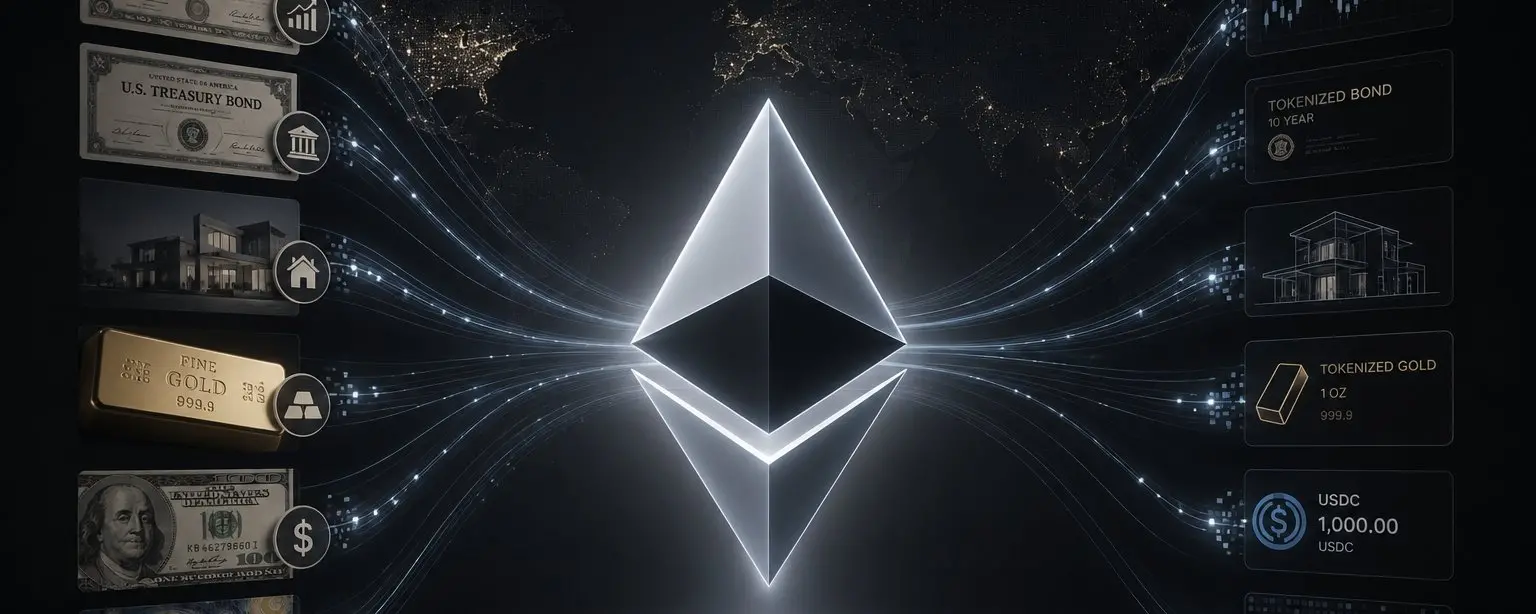
Ru Haiyang: For compliant exchanges, stablecoins are a type of asset that non-compliant institutions cannot touch. Another type of asset is RWA (Real World Assets) securitization, especially the currently emerging tokenized securities assets, whose underlying essence is traditional financial instruments such as stocks, funds, or notes. Trading these securities assets also requires licenses, and since the underlying assets are the same, the risk recognition is also the same. From the perspective of the underlying assets, operating without a license constitutes a violation, so the tokenization of assets also creates a new opportunity for compliant development. The U.S. Securities and Exchange Commission (SEC) is accelerating the push for tokenization; the new SEC chairman has been vocal in the past two months, suggesting that all U.S. stocks should be on-chain in the future. This is due to the inherent advantages of blockchain in information disclosure and other aspects, providing higher transparency. The U.S. is attempting to integrate the advantages of blockchain with traditional finance to strengthen its leadership in financial markets amid this financial transformation. The "de-dollarization" trend that emerged during Trump's administration has prompted countries (including Japan, which has recently reduced its purchases of U.S. Treasury bonds) to seek alternatives, while the U.S. hopes to consolidate its dollar hegemony through the digitalization process. The U.S. push for stablecoins is also closely related to its national interests: all stablecoin issuing institutions must purchase U.S. dollar short-term bonds as underlying reserves, which essentially absorbs a massive supply of U.S. Treasury bonds (for example, Tether has become one of the world's major holders of U.S. Treasury bonds). In June this year, U.S. Treasury Secretary Janet Yellen estimated that the scale of stablecoins would grow from the current approximately $250 billion to around $2 trillion, forming a huge buyer market for U.S. Treasury bonds. Therefore, the U.S. promoting this transformation clearly has explicit political intentions and interests, and it is trying to lead global trends. This is undoubtedly an important window period that we need to seize. Fortune: Considering the increasing global influence of stablecoins, can the internationalization of the renminbi leverage stablecoins for accelerated breakthroughs?**
Ru Haiyang: This question is actually very critical. First, for the internationalization of the renminbi to break through more quickly, it should indeed leverage CIPS (Cross-Border Interbank Payment System), and stablecoins may serve as a good auxiliary. Currently, CIPS has over 1,000 participating banks globally, either directly or indirectly, which can significantly enhance the efficiency of renminbi clearing and settlement. However, compared to SWIFT, CIPS still has limited acceptance terminals around the world, especially in regions like the Middle East, Africa, and Latin America, where there are not many CIPS participants. Currently, the renminbi accounts for about 5% of global cross-border payments, leaving significant room for improvement. China is a major foreign trade country with its unique industrial chain advantages, and more and more cross-border enterprises are looking to reduce settlement costs and improve payment timeliness. At the same time, the offshore renminbi pool is very large, with deposits in Hong Kong alone amounting to about 1 trillion yuan, all prepared for trade and asset circulation. If an offshore renminbi stablecoin is launched after the issuance of the Hong Kong dollar stablecoin, it could become a tool to increase terminal coverage and enhance on-chain efficiency, helping to boost the renminbi's share in global payments. In the long run, in the context of certain geopolitical friction risks for China, this could also serve as a channel supplement and risk backup. Fortune: Hong Kong's push for stablecoins has been quite rapid; what do you see as Hong Kong's advantages in this regard?**
Ru Haiyang: The Hong Kong Securities and Futures Commission has acted very quickly this time, and the policy is very open. The stablecoin legislation does not restrict the types of currencies issued; issuing institutions can issue Hong Kong dollars, U.S. dollars, euros, offshore renminbi, etc., depending on the richness of application scenarios. It is likely that the Hong Kong dollar stablecoin will be piloted first, starting from the two major scenarios of financial products and cross-border trade. Hong Kong itself is the largest entrepot trade center, with a solid foundation for both bulk commodity settlements and overseas investments by enterprises. Moreover, as an international financial center, Hong Kong has natural connections with major global markets and institutions, allowing it to participate in global clearing and settlement while attracting major Chinese banks and leading enterprises to participate in issuance, circulation, and custody. The policy level will also gradually open up and guide this process. Fortune: With Hong Kong launching stablecoins, what impact will these innovations have on the financial systems of other regions in Asia?**
Ru Haiyang: This actually depends on the robustness of each country's financial system, particularly the stability of their local currencies and the development level of their payment systems. If a country's local currency is stable and mobile payments are well-developed (for example, low merchant transaction fees and high efficiency in interbank fund clearing and settlement), then for ordinary people, the bank account system remains indispensable, making it difficult for stablecoins to create an experiential "generational shift" in daily payments. Therefore, in the short term, the focus of change will still be in the cross-border payment field, including trade and remittances. In the Asian market, economies like Vietnam, the Philippines, Indonesia, Thailand, and Malaysia have already developed their banking and payment systems for some time, and the impact of stablecoins is more pronounced in cross-border payment scenarios. For example, remittances involving Filipino workers between Hong Kong, the Middle East, and the Philippines are gradually shifting from traditional Western Union transfers to stablecoins. In contrast, countries with unstable local currencies, weaker monetary policies, and relatively underdeveloped payment systems will experience a greater substitutive impact on their traditional financial systems, as is currently happening in regions like Africa and South America.
Different Licenses Should Strengthen Ecological Collaboration - Build a "Serengeti Grassland"
Fortune: Stablecoins are also a type of digital asset. If you compare the digital asset market prospects of Hong Kong with those of Singapore and Middle Eastern countries, who do you think has greater potential?**
Ru Haiyang: In the past two years, Singapore has been extremely friendly to digital assets, but due to anti-money laundering issues, Singapore has recently begun to drive out non-compliant institutions, which has affected the development of the existing local digital asset ecosystem and, in turn, provided Hong Kong with an opportunity to develop its global digital asset center status. However, the Middle East, especially Dubai, has now become a very important competitor to Hong Kong, as Dubai's regulations are even more flexible than Hong Kong's, and its pace of innovation is rapid. For example, in Hong Kong, stock tokenization is subject to specific regulatory constraints, so currently, the focus is mainly on fund and note tokenization products. In Dubai, however, the UAE's regulatory authorities are promoting the on-chainization of stocks, theoretically allowing onshore financial centers to buy on-chain issued global stock assets like Apple and Tesla, and even unlisted equity can be traded on-chain. The Middle East, with its previously weak financial infrastructure, is aggressively using blockchain technology to seize new heights as an international financial center. In contrast, Hong Kong has systemic advantages, and innovation is gradually accelerating; for example, derivatives trading may also open up in the second half of the year. If we can further strengthen collaboration with other regulatory agencies in the region, we are quite confident in Hong Kong's development as a global digital asset center. Fortune: You were the Chief Risk and Compliance Officer of HashKey Group last year, and now you are leading the exchange business group. How do you balance the speed of innovation with compliance costs?**
Ru Haiyang: Compliance is not just a pure cost; it is more of a business barrier. Take cold wallets as an example: Hong Kong regulations require leading compliant exchanges to adopt HSM cold wallet technology. We have specifically built a corresponding wallet system internally and purchased the world's largest digital asset insurance coverage. Although this increases operational costs, it greatly enhances asset security. Just like the ByBit theft case that resulted in a loss of $1.5 billion in assets, if there had been isolation through cold wallets along with insurance as a double guarantee, the outcome would have been very different. The "complexity" of compliance is sometimes a rigid guarantee for risk prevention. Another example is anti-money laundering; compliance processes have driven us to invest heavily in KYC systems, on-chain checks, compliance risk control, and other technological research and service integration, such as introducing full-chain traceability for wallet addresses, achieving "birth to endpoint" on-chain flow for every fund.
In fact, our precision in anti-money laundering and depth of traceability even exceed those of traditional banking systems. The higher the compliance standards required, the more the levels of operation, risk control, and research and development are forced to improve, which also earns us the trust of institutional clients. At the same time, in the face of short-term operational pressures brought by compliance requirements, we actively communicate closely with regulatory agencies like the Hong Kong Securities and Futures Commission, often proposing innovative operational models, such as optimizing insurance costs and liquidity costs. Regulatory bodies in Hong Kong and globally are also paying attention to business sustainability and will provide policy windows and flexibility for projects that are "innovative yet safe." Only on the basis of proactive communication and transparent compliance can innovation gain space and support. Compared to the "short-term high growth, long-term high risk" model of non-compliant institutions, we continuously refine products and services within the compliance framework, making it easier to grow into business forms with barriers that can achieve stable and sustainable profitability. Fortune: From the perspective of licenses, what is your core strategy for global layout? Are you currently applying for any new licenses?**
Ru Haiyang: We place great importance on obtaining compliant digital asset licenses in mainstream onshore financial centers. We are the only company that holds licenses in Hong Kong, Singapore, Tokyo, Dubai, and other financial centers, and we are upgrading our European license to the new MiCAR framework. Different market regulatory environments and trading structures vary significantly, and our business strategies for operating in different compliant markets are also different. For example, in the Middle East, Dubai has a geographical advantage, with an open city, rapid talent and capital inflow, and high activity in the digital asset ecosystem. However, local trading is not primarily focused on crypto asset investment; rather, cross-border trade payments occupy a larger share.
For already licensed markets, our challenge is not to obtain additional licenses but to expand the scope of licensed business. For instance, in Hong Kong, we aim to expand into derivatives trading. From this perspective, the quality of licenses is more important than quantity. For markets where we do not hold licenses, we prefer to collaborate with local licensed institutions rather than operate independently, as local collaboration can quickly integrate into local regulations and business resources, fully leveraging each other's advantages. For example, in Southeast Asia, we recently reached a strategic cooperation agreement with Coins.ph, the largest digital asset trading platform in the Philippines. At the same time, we hope to promote mutual recognition of standards across regulatory jurisdictions, allowing the scale effects of various exchanges to be maximized. Different types of licenses should also strengthen ecological collaboration, as the relationship between stablecoin issuing institutions and exchanges is a strongly coupled cooperative relationship, since most activities related to stablecoin exchanges occur on the exchange side. We are also communicating and collaborating with several stablecoin licensing applicants in Hong Kong to fully leverage each other's licensing advantages.
The scale of digital assets currently accounts for less than 1% of global financial assets, leaving significant growth potential. However, the financial regulatory system remains fragmented by country and region, and no single company can achieve full coverage on its own. This industry needs to build an ecological system similar to the "Serengeti Grassland," where different jurisdictions and licensed entities strengthen cooperation and collaboration to jointly create industry prosperity. Fortune: It is reported that there is a talent gap of up to 100,000 in Hong Kong's digital asset field. What insights does HashKey have in team building? What advice would you give to those looking to switch from traditional finance to the digital asset field?**
Ru Haiyang: The biggest challenge in our team building is the integration of diverse cultures and backgrounds. Our current team composition consists of one-third from the crypto space, one-third from mobile internet, and one-third from traditional finance, but each has its own thinking inertia. The challenge lies in how to align and reach consensus. We value colleagues who are "open-minded and have strong learning abilities," encouraging everyone to rethink what a compliant exchange is using first principles. For traditional finance talents who want to join the digital asset industry, the most important thing is to maintain an open mindset and actively learn new technologies and regulatory trends. By integrating and understanding these, they can find the right positioning and opportunities. Many underlying logics of risk assets and innovative applications are actually interconnected with traditional finance and mobile internet. The compliant digital asset industry has just opened the door to a new world, and Chinese companies and talents should seize the opportunity to lead globally. (Fortune Chinese Network)
 Risk warning
 Risk warning