








How did he break into the social circle of Bitcoin tycoons with 80,000 bitcoins?

 The era no longer rewards those who run fast; power has returned to the hands of those who govern the rules.
 Cover image source: "Billion"
Author: Lin Wanwan, Dongcha Beating
In the crypto world, the loudest sounds are not the trading bells, but the connections that can quietly secure $9 billion.
In July 2025, 80,000 dormant Bitcoin addresses that had been inactive for 14 years suddenly moved their assets, marking one of the largest nominal Bitcoin transactions in history. Such a large transfer should have triggered a 30% market drop, but the reality was—no significant flash crash, no panic; this batch of Bitcoin was quietly absorbed by the market.
$9 billion worth of chips were "silently" consumed by the market. The operator was neither an exchange nor a hedge fund, but a somewhat obscure Wall Street player: Galaxy Digital.
During the latest Q2 earnings call on August 5, someone asked the CEO: How did you secure the client for 80,000 BTC? Was there a formal bidding process?
The CEO casually replied, "The relationship is more important than the quote."
Who exactly is behind Galaxy Digital? What kind of political and business resources were mobilized to secure this epic transaction? And what new power structure is this network creating for the crypto world?

High-level "Circle of Friends": Political Capital in the Boardroom
The key to this transaction lies not in the quotes on stage, but in the connections behind the scenes—everything points to an old Wall Street figure.
Mike Novogratz, the 56-year-old founder, is a standard "Wall Street product."
He worked at Goldman Sachs for 11 years, starting from the Southeast Asia futures desk and eventually becoming a partner in fixed income. At that time, Novogratz was one of the few who could navigate between macro trading, asset allocation, and national policy.
He then joined Fortress Investment Group, leading macro strategy investments and was one of the first key figures to bet on emerging markets and sovereign debt.
During that period, he frequently interacted with policy institutions, central banks, and market departments in Latin America, Asia, and Eastern Europe, negotiating bond issuances and exchange rate policies with local governments, becoming familiar with the game logic of leverage and sovereignty in the "gray areas."
From 2012 to 2015, he became a member of the New York Federal Reserve's Investment Advisory Committee, directly participating in policy consulting, monetary mechanism research, and financial institution evaluations. This gave him a rare "dual capability"—understanding both derivatives trading and the language and rhythm of regulatory bodies.
He is someone who has been dealing with the intersection of political power, Wall Street capital, and information for over a decade.
As early as 2013, he heavily invested in Bitcoin and Ethereum with his own funds, totaling about $7 million. By 2017, he publicly stated in a CNBC interview, "In the past two years, I made over $250 million from crypto assets."
However, he is not a "native" of the crypto industry, nor a typical speculator. His real pivot occurred in 2015—during that year, he faced losses in the Brazilian interest rate market and exited Fortress, briefly retreating from frontline investment. It was during that "gap period" that he first seriously examined Bitcoin and rebuilt his understanding of currency, credit, and financial infrastructure.
But Novogratz did not stop at merely "holding Bitcoin" like many early crypto evangelists. His ambition lies in establishing a new "financial system design" for the on-chain world. He said, "What I see is a systemic gap—liquidity in the crypto world is deepening, but there is no structure."
In his view, the entire chain of asset management, market making, clearing, ETF custody, PIPE financing, audit disclosure, and regulatory lobbying in the traditional financial world has almost no counterpart in the crypto world. This is a "systemic wasteland" that urgently needs reconstruction.
Galaxy Digital was born in this structural gap.
In 2018, Novogratz invested $350 million of his own money and successfully went public through a reverse merger with the Canadian shell company Bradmer Pharmaceuticals, becoming the first crypto financial platform to provide full-stack services to institutions. This was a company designed to be the "Wall Street version of an on-chain investment bank."
However, the path from the Canadian exchange to NASDAQ took Galaxy Digital a total of 1,320 days, nearly four years. During this time, the company underwent nine rounds of feedback from the SEC, countless legal reviews, and invested over $25 million to meet compliance requirements. In a regulatory winter where the entire crypto industry faced obstacles and frequently "went overseas," Galaxy persevered.
 It is not a trading platform, nor a VC, but a "financial structure service provider" in the crypto field. Galaxy Digital was designed by him to be the "Wall Street version of on-chain Goldman Sachs." Its structural design bears the imprint of his Wall Street background:
· Service list benchmarks against Goldman Sachs: covering asset management, market making, OTC trading, proprietary research, risk management, and financial advisory;
· Trading structure benchmarks against Citadel: supporting dark pool matching, low-latency derivatives systems, and liquidity integration with ETFs;
· Policy path benchmarks against Brookings: establishing a policy research team, writing reports, participating in hearings, and entering regulatory sandboxes;
· Compliance path benchmarks against Deloitte and EY: creating a "digital asset legal packaging system" that supports financial statement accounting and audit disclosure.
At the core of all this is the "political and business circle" built by Galaxy's board of directors.
Among the board members of Galaxy Digital is Tyler Williams, who previously served as the Deputy Assistant Secretary of the U.S. Treasury and was appointed as a special advisor on digital assets by the current Treasury Secretary in 2025—he can translate crypto language into regulatory language and is an important bridge for Galaxy's communication with the SEC, CFTC, FASB, and other institutions.
Another board member, Doug Deason, is one of the most influential real estate and energy lobbyists in Texas. He has participated in promoting various legislation related to mining sites, electricity prices, and taxes, and is a key figure behind Galaxy's successful conversion of Bitcoin mining sites into AI computing centers.
This "policy-capital-technology" three-line convergence structure gives Galaxy a rare "policy influence capability" among crypto companies.
In the new financial structure he built, Galaxy is not just trading or asset management; it is also a "legitimate power supply" service provider for traditional companies entering the on-chain world.
Compared to CZ's extreme operational capabilities and SBF's aggressive funding strategies, Mike Novogratz represents another type of founder. He never emphasizes "decentralization," but rather "structural arrangements"; he has never used token prices as the sole metric, but focuses more on whether privacy, regulation, systems, finance, custody, and compliance paths are genuinely connected.
This also explains why, although Galaxy is not the strongest in terms of traffic, it became the only player capable of securing large orders, completing settlements, and reassuring counterparties in the silent transaction of 80,000 Bitcoins.
Many people think that Galaxy Digital's moat is capital, but the real advantage is its political and business sensitivity.

The Bankers Behind the Crypto Treasury
The 80,000 Bitcoins are just one corner of this network, with companies represented by the Chinese billionaire CZ also starting to view Galaxy Digital as a "political passport" to compliance.
In mid-2025, a new mainstream narrative in U.S. stocks quietly emerged: crypto stock. The U.S. stock market is staging a capital "shell game": putting BTC and ETH into listed companies, allowing crypto assets to appear on Wall Street under the guise of financial reports.
However, before the end of 2023, this was still seen as a "forbidden zone" in the capital market.
It is actually very difficult for American companies to "legally hold coins" because the financial system cannot accommodate it. According to the then FASB accounting standards, cryptocurrencies like Bitcoin could only be recorded as "intangible assets"—if the price drops, it must be impaired, but if it rises, it cannot be counted as income, leading to serious distortions in company financial reports and making audits difficult to pass.
For example, if you buy 10,000 ETH, you must immediately record a loss if it drops, but if it rises, you act as if you didn't see it, and cannot count it as profit. This makes corporate financial reports look terrible and leads to chaotic audits.
The new FASB regulations, which will take effect in the 2025 fiscal year, will allow for "fair value" accounting, where price increases can be counted as income, finally opening the door to "holding coins legally."
Galaxy was one of the first to enter this space and helped a number of listed companies "legally enter the market."
The earliest to sense the opportunity were a group of ancient ETH whales. They quietly packaged their ETH into U.S. shell companies, completing a disguised cash-out using the liquidity of the U.S. stock market without alarming the market. SharpLink Gaming is a leader in this "cash-out technique."
Soon, Chinese billionaire CZ followed suit—stuffing his company's platform token BNB into a U.S. company, reverse merging, packaging, and going public, turning the platform token into a compliant asset, and then entering the capital valuation system.
Behind this series of operations, Galaxy Digital has quietly emerged—it is the orchestrating advisor of the entire script.
It customizes "crypto treasury" narrative plans for these companies: from OTC building, asset custody, to compliance disclosure and staking income, every step cannot bypass the political and business channels it has built, and every step precisely steps into the gray area between regulatory blind spots and capital leverage.
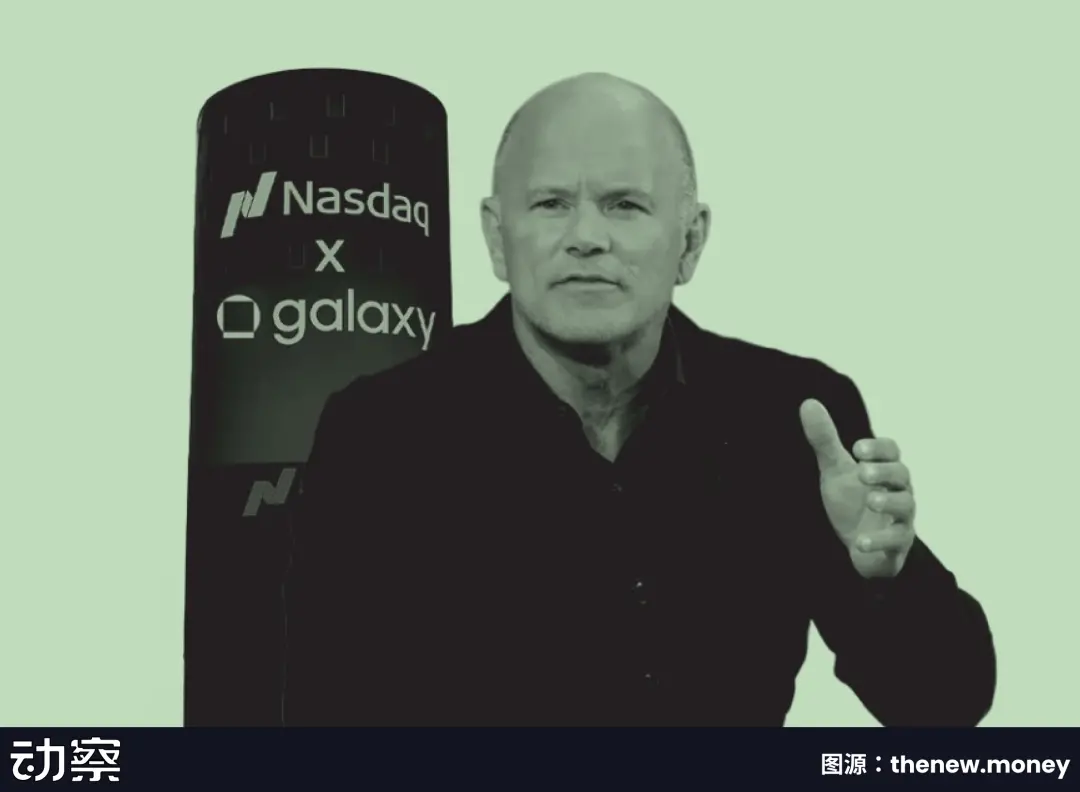 Galaxy Digital's core business has three directions: OTC trading + custody + strategic consulting.
It has top-tier crypto OTC trading capabilities in the U.S., able to complete large-scale matching and risk hedging for clients amid volatility; it also provides ETF custody, staking, tax reporting, and other compliant asset management services, managing billions of dollars in digital assets; it further participates deeply in the strategic planning of enterprise-level clients, from PIPE financing to asset classification, financial accounting, disclosure paths, and even co-investing with its own funds to help traditional companies transform into "crypto treasuries."
Taking SharpLink Gaming, a leading company in ETH treasury, as an example. This company purchased ETH through Galaxy's large-scale OTC and signed an asset management agreement with it. A portion of the ETH purchased by the company is held in custody at Galaxy, and under Galaxy's guidance, the entire process from financing to disclosure is designed. It provides clients with a complete set of "on-chain financial structures," including PIPE structures, token classification, and custody proofs, helping companies achieve a discreet yet compliant build-up.
According to SEC disclosures, Galaxy and ParaFi Capital charge an annual tiered management fee of 0.25% to 1.25%, with a minimum of $1.25 million. As SharpLink's token holdings expand, Galaxy will receive stable long-term income.
This is no longer a single transaction, but a clearly structured, stable-yield "on-chain treasury business." In the institutionalization path of crypto finance, Galaxy is becoming an unavoidable entry point for companies looking to "legally hold coins on their balance sheets."
This template is not a simple replication but a complete path:
· First, help you buy coins discreetly but compliantly: provide OTC channels, coordinate PIPE investment structures, directed placements, and warrant plans.
· Second, teach you how to "put crypto assets into financial reports": how to get auditors to confirm that these coins really exist?
· Third, solve the American political channels for you: how to disclose the compliance path in U.S. stocks, providing a one-stop solution. In the process of traditional companies transforming into crypto treasuries, Galaxy has participated in nearly every key action.
CEO Novogratz said in the Q2 earnings call, "Almost all traditional institutions on Wall Street are preparing for a brand new financial architecture—assets moving from accounts to wallets, funds and stocks beginning to be tokenized, and stablecoins becoming mainstream payment vehicles."
What Galaxy is doing is precisely making these institutional changes move from "concept" to "financial statements."
For many listed companies, choosing Galaxy Digital is not just choosing a crypto service provider, but more like choosing a channel with a "politically legitimate identity."

The Reshaping of Power Dynamics in the Crypto Industry
In 2025, the crypto industry seems to be ushering in a spring of normalization: ETF approvals, stablecoin legislation, corporate coin accounting—all moving closer to traditional finance.
However, in this wave of "compliance," the real winners are not the natives who have been shouting decentralization for a decade, but a small group of political and business navigators who understand institutional language and master policy rhythms.
From the crypto circle to Wall Street, from wallets to financial reports, the path of crypto assets appears compliant on the surface, but underneath is a typical institutional arbitrage—whoever can build bridges between regulation and capital holds the pricing power.
During the Q2 earnings call in 2025, an analyst asked, "How do you view the development opportunities for stablecoins and asset tokenization?"
Novogratz's response hardly touched on products, but rather a seemingly simple yet institutionally significant judgment: "Assets are migrating, accounts are moving to wallets, and compliance paths will become core competitiveness." It was also in this quarter that Galaxy Digital began to turn a profit.
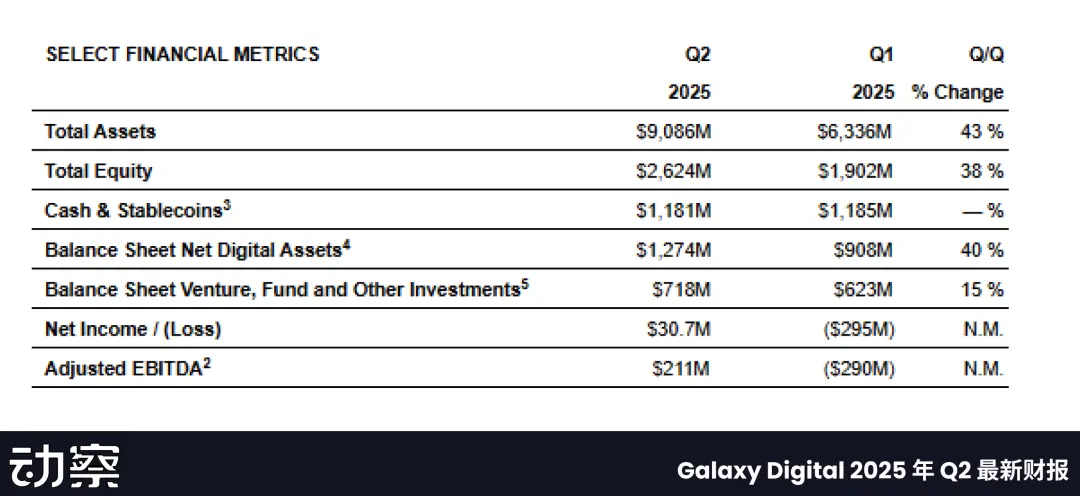 Galaxy Digital is the hidden intermediary in this power transfer. It does not issue tokens, nor does it tell narratives, but it excels in structural design, packaging on-chain assets into PIPE financing, ETF custody, and audit disclosures at every link, using a complete set of compliance grammar to make new finance legally land.
What it sells is not services, but structures; it does not earn market money, but rather the seams of compliance systems.
This is the true power structure of the crypto industry: when the surface market prices, protocols, and narratives rise and fall, the underlying institutional structures have long been firmly controlled by a few.
An increasing number of crypto projects and traditional companies are completing their "political entry" through it. And the ones truly being fed are not the developers or investors, but those with dual language capabilities who can freely switch between crypto, traditional finance, and power.
As compliance becomes a scarce resource, a new hierarchical order is quietly taking shape: the era no longer rewards those who run fast; power returns to the hands of those who manage the rules.
Click to learn about job openings at ChainCatcher
Recommended Reading:
 Risk warning
 Risk warning




Popular articles





