








Cardano's $71 million governance reform experiment: A step towards autonomy

 From diss Ethereum to leading protocol grants and stepping back, that "alien chain master" who loves raising bison is teaching Cardano to walk the rest of the way on its own.
Author: Ethan, Odaily Planet Daily
On August 4, in a quiet yet significant on-chain vote, the Cardano community passed a core proposal called "IOE Roadmap": it will utilize up to 96,817,080 ADA (approximately $71 million at the time) from the treasury funds to finance technical upgrades of the Cardano core protocol. The final support rate for this proposal was 74.01%, which means that a radical reform plan initiated by Charles Hoskinson received more support than expected in a public chain system known for its slow governance.
According to the proposal document, the funds will primarily be allocated to three areas: scalability improvements, developer experience optimization, and cross-chain interoperability upgrades. The underlying goal is clear: to pave the technical runway for Cardano's final phase towards the "Voltaire era." In other words, this is a global campaign centered around "on-chain governance, DeFi ecology, and foundational protocol iteration."
This is not a small amount. In the context of DeFi projects, it is enough to support a complete Layer 1 development budget for a year; within the context of Cardano itself, it is even the most significant allocation of protocol layer funds to date. Notably, this funding is not directly disbursed by the three entities: the foundation, IOG, or EMURGO, but is initiated through an on-chain community proposal and passed via the governance mechanism—this marks that Cardano is moving towards its long-claimed decentralization goal through action.
However, surrounding this funding vote, there are not only consensus but also many questions. Why spend this money when the market's attention is not on it? Who will supervise the use of these funds? Will the allocation itself trigger liquidity changes in ADA? All these questions point to that familiar name: Charles Hoskinson (founder of Cardano).
Since 2023, Hoskinson's style seems to have undergone a fundamental shift: from a "philosophical technological idealist" to a "pragmatist actively promoting governance reform." This $71 million allocation may very well be a footnote to his identity transformation.
Is all this a result of accidental path dependence, or was it laid out in advance? Let's return to the starting point of the proposal.
Proposal Retrospective: From Criticism of Ethereum to Building a Governance Path
If Ethereum defined the "universal computational logic of smart contracts," then Cardano's ambition has always gone beyond just the code-level "smart." In Hoskinson's long-standing statements, Cardano embodies a more complete "institutional experiment"—it is not just a decentralized execution tool but a self-updating, self-managing on-chain public governance system. For this goal, he has invested in the patience of building "institutional components" from scratch and the stubborn belief that "slow is fast."
The passing of the funding proposal is not a sudden event but a natural extension of Cardano's entire governance advancement path. As early as April 2024, Cardano officially announced a hard fork upgrade plan called Chang, which aims to advance network governance autonomy in two phases—at its core, it involves restructuring the on-chain voting mechanism, constitutional framework, and treasury allocation authority, ultimately moving towards the last phase of its roadmap, the so-called "Voltaire era."
On the technical level, the Chang upgrade is accompanied by the CIP-1694 proposal, which reconfigures the power distribution among governance participants. ADA holders will be able to delegate their governance rights to "DReps" (representative voters), SPOs (stake pool operators), and the temporary constitutional committee ICC, thus forming a governance pattern that combines three powers negotiation and on-chain execution. All of this will operate automatically on-chain through smart contracts and the CIP roadmap, without relying on the foundation or Hoskinson himself.
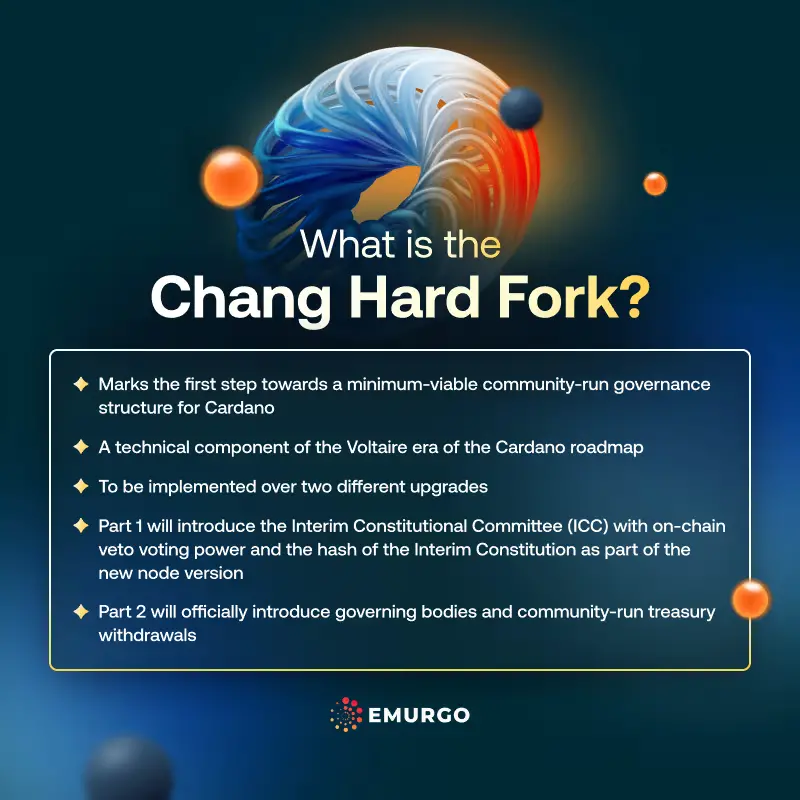
Image source from “What to Know About the Chang Hard Fork (Cardano)”
This design sounds complex, but the core logic is quite simple: the distribution of governance rights should match the distribution of economic rights. This is also what Hoskinson has emphasized for years as "true decentralization," a structure that no longer relies on a leader but is led by token holders' decisions.
However, to truly translate ideals into reality, mere mechanism design is not enough; execution capability, technical architecture, and governance infrastructure must keep pace. Thus, the "allocation of $71 million" is no longer just a financial allocation issue; it is almost a "major test" of the entire institutional design.
The more critical point is that this allocation is not a personal directive from Charles Hoskinson but is realized through community proposals and on-chain voting. At least from the execution perspective, it also supports the notion that Cardano is transitioning from "founder rule" to "institution-driven," even if the process is long and slow, it is fulfilling Hoskinson's promises in some form.
As early as an AMA in April 2025, Hoskinson once again criticized Ethereum's three structural flaws: erroneous economic models, redundant VM designs, and L2 "parasitism" draining the main chain's value. He pointed out: "Their governance model fails to address the core scalability issue and instead drains the main chain's value." Cardano's response is itself—building a complete public governance stack. In this structure, funds are not a weapon controlled by the founding team but a concrete manifestation of ADA holders' governance will. The $71 million is just the first step; the real endgame is whether Cardano can become the first "truly self-governing" financial protocol ecosystem in the crypto world.
However, this path to autonomy is not without doubts and divisions.
Controversial Views: Criticism from Other Chains, Community Distrust, and the Rebuilding of Founder Credibility
For the Cardano community, this is not merely an upgrade vote but more like a trust test for Charles Hoskinson himself—its tension arises precisely because Hoskinson has always been the project's entire brilliance and the center of all controversies.
Rewind to June 2025, Hoskinson proposed a radical suggestion in a live stream: to exchange ADA worth $100 million for Bitcoin and stablecoins within the ecosystem to improve Cardano's stablecoin liquidity and promote the development of the Bitcoin DeFi ecosystem Cardinal. He stated that Cardano's current TVL and stablecoin scale are severely lagging, and this conversion would "bring non-inflationary income" and build a healthier asset base.
As soon as this proposal was made, it sparked controversy. Solana co-founder Anatoly Yakovenko publicly criticized the proposal as "too foolish," questioning why the project team would hold Bitcoin for users instead of choosing "more rational short-term debt assets"](https://www.odaily.news/zh-CN/newsflash/434978). Meanwhile, within the community, there was panic over the potential selling pressure on ADA, with some users stating in forums: "Are you asking us to delegate our ADA to vote just to exchange it for other coins?"
Although Hoskinson argued that the market depth could absorb this selling pressure, it did not completely quell concerns. The situation worsened when old accusations against Hoskinson resurfaced—specifically, a transfer record of 318 million ADA from the 2021 Allegra hard fork period was re-examined, raising questions about whether Hoskinson had abused the genesis key to secretly allocate funds, totaling nearly $600 million. NFT artist Masato Alexander pointed out that this transfer was "extremely unusual" and directly stated on social media that "on-chain records do not lie."
In response to the accusations, Hoskinson expressed feeling "deeply hurt" in mid-May, stating that most of these ADA had already been redeemed by the original buyers, and the remaining portion had been donated to the Cardano governance organization Intersect. He stated: "We will release a complete audit report in mid-August." He also added that he would consider handing over his social media to a professional team to avoid emotional responses causing collateral damage.
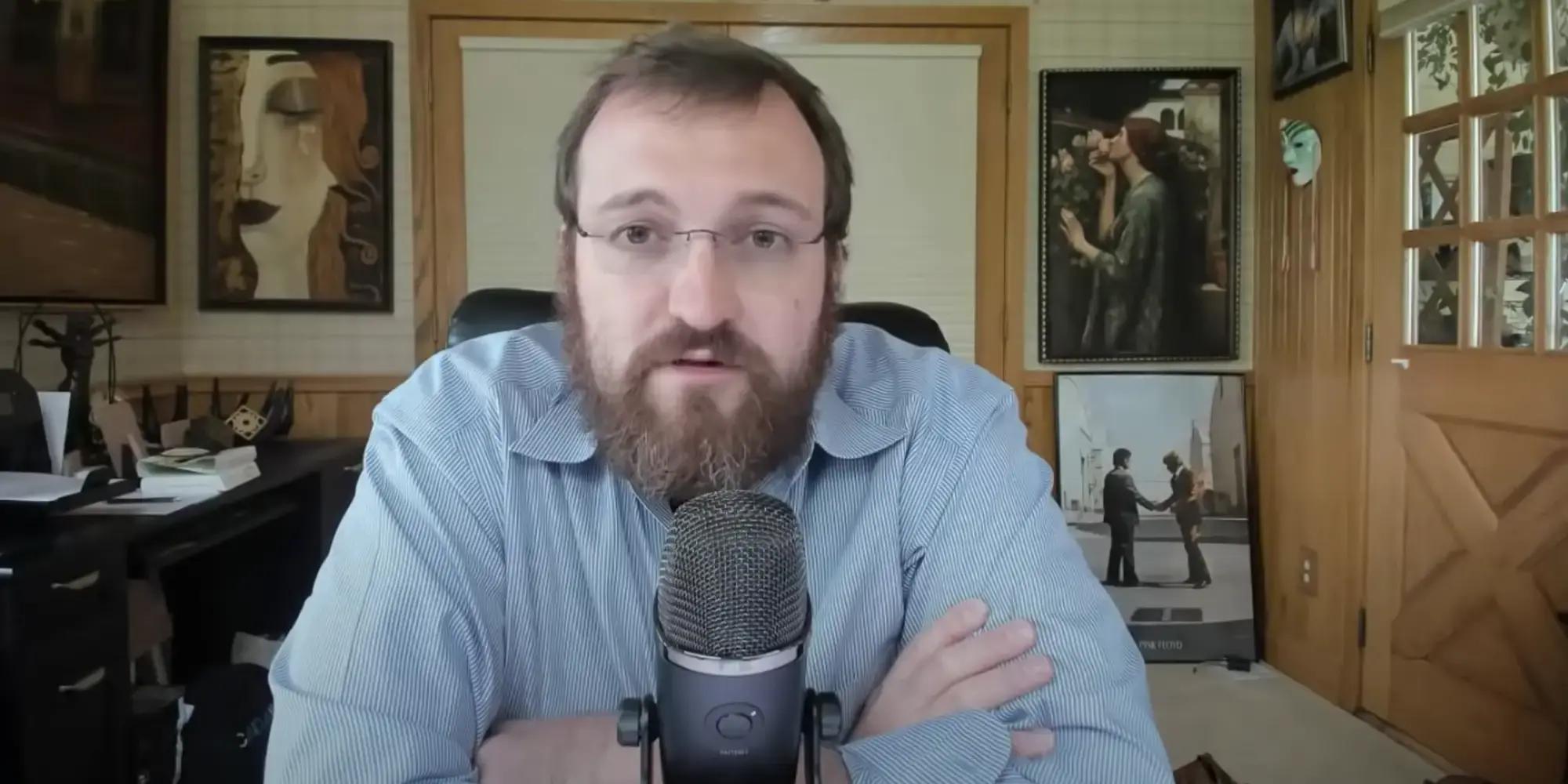
Charles Hoskinson during a previous live stream
In fact, this is not the first time Hoskinson has faced public scrutiny. As early as 2022, Laura Shin, author of The Cryptopians, accused Hoskinson of exaggerating his academic credentials and background, claiming he does not hold a doctoral degree and had previously claimed to have collaborations with the CIA or DARPA. "This book is a good work of fiction," Hoskinson responded, "but it is not enough to surpass Tolkien."
These trust crises have cast a shadow of "founder intervention" over this funding event—despite the funding itself being completed through on-chain governance, in the eyes of many observers, all decisions in Cardano still revolve around Charles's will.
This "binding of personality and protocol" is both the reason Cardano can maintain unity in long-term construction and may also become an obstacle to its path toward true autonomy. Now, as Hoskinson begins to try to delegate more authority to Intersect and the on-chain voting mechanism, he himself is walking the path of transformation from "ruler" to "spiritual symbol."
Whether this transformation is thorough enough and whether Cardano can withstand the painful test of transitioning from "leader charisma" to "institutional autonomy" will gradually be revealed in the upcoming market feedback and ecological evolution.
Market Follow-up: On-chain Ecological Reconstruction and the Formation of a Pragmatic Route
Compared to controversy and emotions, on-chain data remains calm, even cold. They do not speak of sentiment but only record actions. From a recent series of governance events and treasury funding actions, we may see a clear trend signal: Cardano is moving from idealism to pragmatic execution.
This signal is first reflected in the change in asset structure. The Cardano Foundation disclosed that as of July, the total value of its held crypto assets increased to $659.1 million, with Bitcoin's share rising to 15%, while ADA's share decreased to 77%. In other words, the foundation itself has begun to reduce its single reliance on its native currency, shifting towards a more robust asset allocation structure.
This somewhat echoes Hoskinson's proposed "non-inflationary income source" concept and indirectly refutes the community's concerns that "the currency exchange proposal will harm ADA's price": the reality is, they have already started doing so.
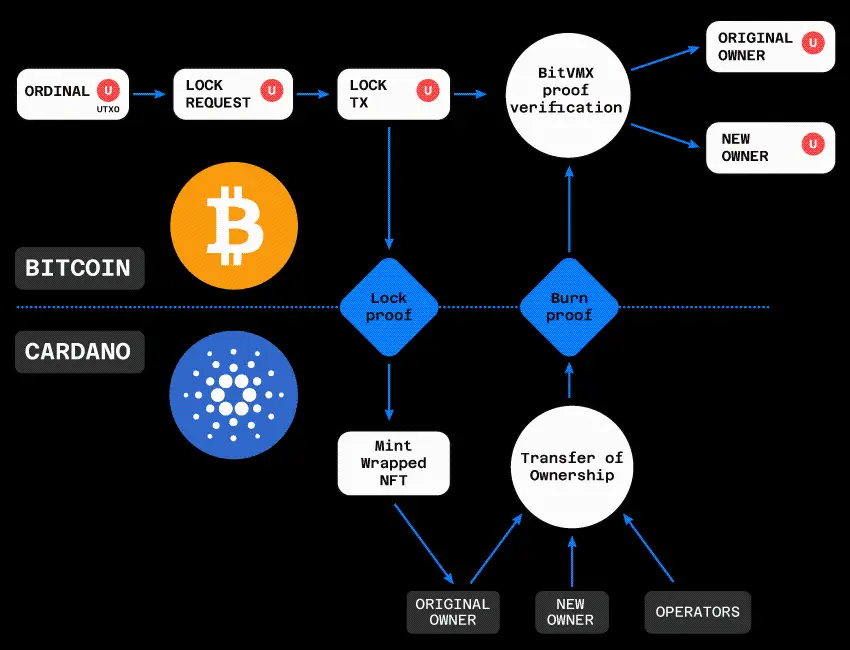
At the same time, Cardano is quietly undergoing changes at the DeFi layer. In June 2025, Hoskinson announced the launch of the Bitcoin DeFi protocol Cardinal, which implements cross-chain non-custodial support based on MuSig 2 multi-signature, allowing BTC to participate in staking, lending, and trading operations on the Cardano chain, and compatible with Ordinals inscriptions as collateral assets. This protocol will also integrate zero-knowledge proof systems to enhance liquidity and interoperability.
This marks the first time Cardano has opened up the liquidity entry for Bitcoin assets on a technical level, and it also signifies that its ecological strategy has shifted from "building a closed academic public chain" to "embracing mainstream assets with cross-chain compatibility." In other words, Cardano is no longer trying to carve out a separate track but is attempting to participate in the DeFi world dominated by Bitcoin and stablecoins.
In terms of governance structure, the first phase of the Chang hard fork has been basically completed, with DRep representative registration channels opened, SanchoNet testnet running stably, and Intersect implementing a member-based development collaboration mechanism, representing that Cardano's on-chain governance has moved from framework design to practical execution. Governance authority is also gradually transitioning from core development teams like IOG to community governance and treasury proposal systems.
In multiple indicators, Cardano has shown consistent adjustments from top to bottom: a more robust asset structure, a more open technical ecology, and a more autonomous governance mechanism. The underlying logic of all this is its attempt to build a long-term incentive model driven by institutions, allowing on-chain governance to truly detach from "founder will" and operate towards institutionalization and sustainability.
Ultimately, the effectiveness of this transformation still needs to be observed through two key indicators: first, whether the stablecoin TVL can increase from the current 10% to 30%-40%; second, whether the community can continuously produce DRep governance decisions that possess consensus and quality.
Conclusion: Cardano's Second Opportunity to "Define Itself"
In a sense, this is not the first time Cardano has "defined itself," but it may be the most critical one.
As early as 2017, Charles Hoskinson founded Cardano, choosing to bypass Silicon Valley, reject venture capital, and start from academic norms to build the consensus model Ouroboros. He hoped Cardano would become a rational system that does not rely on personas and does not chase cycles—that was the first self-definition: not following the ETH route, not catering to the DeFi craze, but being slow to achieve stability.
Now, after the transfer of governance authority, treasury fund allocation, and ecological planning updates, Cardano has entered its second self-definition phase: no longer "a project led by Hoskinson," but as an existence of its governance structure itself, beginning to operate independently of personal will.
From asset structure adjustments, DeFi connections to mainstream assets, to the promotion of CIP-1694 and the autonomous mechanism of Intersect, Cardano is working through a series of technical and institutional implementations to shed external labels like "symbolic chain" and "zombie chain." It no longer emphasizes crypto ideals but chooses a slow yet clear path—replacing emotion with institutions and responding to criticism with practice.
Charles Hoskinson himself is gradually stepping back: from CEO to institutional designer, now turning to ranching, healthcare, and extraterrestrial exploration. What he leaves behind is an autonomous system that can be driven by representative voting and operate through treasury governance.
The allocation is not the end but a verification of institutional self-rotation. When one day Cardano can continue to evolve without a leader, Hoskinson's name will also exit from "executor" and remain within the logic of the institution itself.
This may be the "Voltaire moment" he has truly been waiting for.
 Risk warning
 Risk warning

Popular articles





