Solana aims to build an "on-chain Nasdaq," where does the AI narrative go?

 Is Solana strong enough to support both the narratives of "on-chain Nasdaq" and AI at the same time?
Source: Biteye
"The biggest advantage of Solana lies in its versatility, capable of supporting multiple different types of applications and tracks simultaneously." ------Lily Liu, Chair of the Solana Foundation
Many relationships in the world resemble a seesaw. On one side, the ETH price is recovering as it celebrates its tenth anniversary, while on the other side, SOL is feeling a bit anxious ------ the path of the "Ethereum killer" has become even more challenging, and it has also encountered a batch of its own "killers" ------ it feels somewhat like a turn of fortune.
However, moderate anxiety is not necessarily a bad thing for individuals or projects. For the battle-hardened Solana, it is even more adept at coping. In this article, we intend to take you through some recent significant moves from Solana's official side, and delve into the current landscape of Solana AI and our subsequent views on the AI sector.
01 Frequent Major Moves from the Official Side
1. Alpenglow Upgrade: Replacing SoH, Racing Competitors like SUI with Faster Speed
Alpenglow is regarded as the most significant upgrade to the Solana core protocol to date, comparable in importance to Ethereum's transition from PoW to PoS consensus, as Alpenglow's mission is to replace the existing PoH (Proof of History) and Tower BFT (Tower Byzantine Fault Tolerance) consensus mechanisms.
Why replace the existing formula mechanisms?
In the past, PoH did not require synchronization of timestamps like other blockchains, and Tower BFT simplified block synchronization time significantly by adopting a "one person packages, others vote" approach, allowing Solana to lead all public chains in performance during its early days. However, this structure incurs significant computational overhead during high loads, compounded by the single-leader overload issue of Tower BFT, leading to the frequent outages that Solana has been criticized for.
Additionally, Solana has often been criticized for the high operating costs of nodes, resulting in insufficient decentralization.
How does Alpenglow improve?
In simple terms, Alpenglow removes the potential computational killer, PoH, and uses Votor (stake-weighted voting) combined with node clock processing time order and confirmation, reducing the computational burden on the leader node; and addressing the drawbacks of single leadership, it is designed to pave the way for multiple leaders to propose blocks simultaneously in the future.
Another core component, Rotor, is used to optimize block propagation and synchronization, reducing block confirmation time from 12.8 seconds to 150 milliseconds. Additionally, since Rotor reduces communication overhead and computational burden between nodes, weaker nodes can also participate efficiently, achieving "performance upgrades without hardware upgrades."
According to Cogent Crypto's validator yield calculator, after the implementation of Alpenglow, the minimum staking amount required for validators to profit will drop from 4,850 SOL (approximately $800,000) to 450 SOL (approximately $75,000).
Final Expectations
The Alpenglow white paper states: "Alpenglow will become a turning point for Solana; it is not just a new consensus protocol but a key step for Solana to achieve competitiveness at the level of internet infrastructure."
In simple terms: faster, more stable, cheaper, more scalable, and more decentralized, reclaiming the throne of performance and shaking off the nightmare of outages.
2. ICM Roadmap: Re-optimizing Transactions, Continuing Towards "On-chain Nasdaq"
After announcing the Alpenglow upgrade, Solana Labs, along with several core development teams within the ecosystem such as Anza and Jito, released a more specific "Internet Capital Markets" (ICM) roadmap.
In recent years, Solana has attracted a large number of users and DeFi market share due to its low costs and fast transactions. However, the transaction-specific chain Hyperliquid has rapidly risen, capturing over 70% of the on-chain contract market. The founder of Hyperliquid even publicly criticized Solana's speed as "not fast enough." This undoubtedly made Solana feel a sense of crisis.
Is Solana still not fast enough?
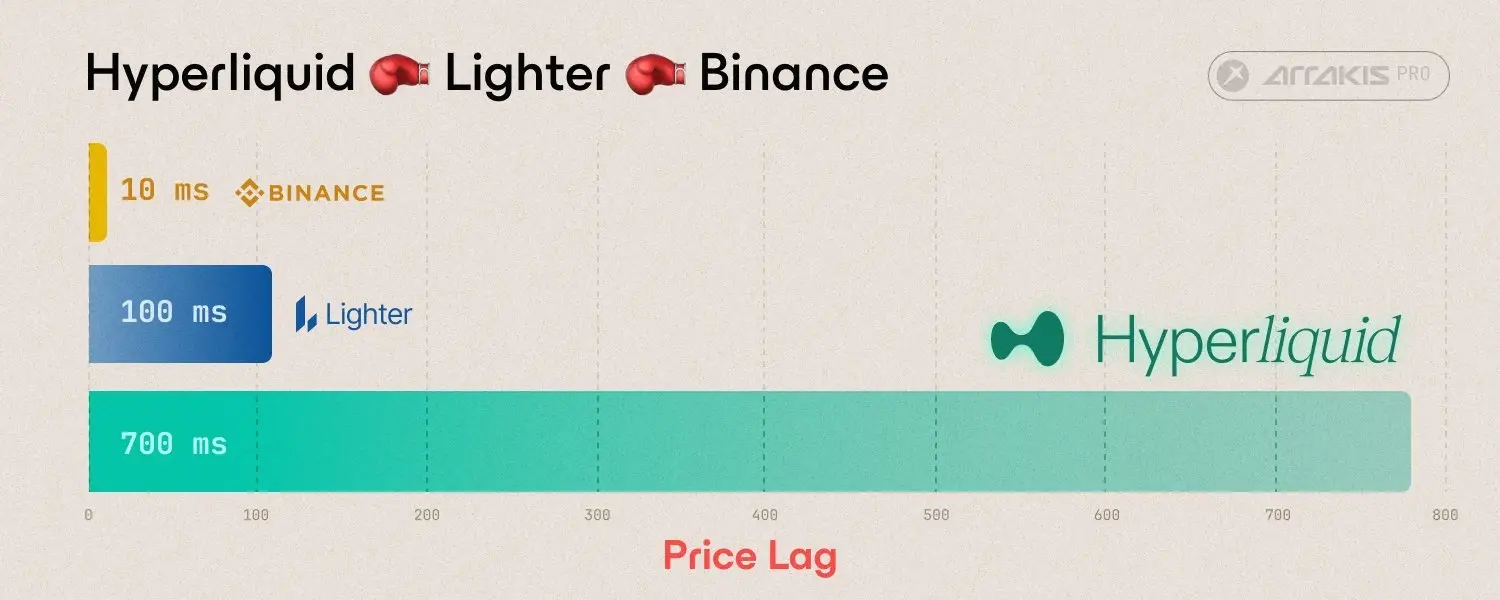
Currently, the final confirmation of transactions on Solana takes 12-13 seconds, while Hyperliquid's average confirmation time is about 0.2 seconds, and SUI's average confirmation time is 0.5 seconds.
It is expected that after the Alpenglow upgrade, Solana's confirmation time will reach 150 milliseconds, regaining its speed advantage and achieving Visa-level transaction confirmation capabilities, but still falling short compared to Nasdaq's "microsecond-level" high-frequency trading systems.
What else needs to be done besides being faster?
Empowering dApps on the platform ------ the so-called ACE (Application-Controlled Execution) ------ allowing dApps (smart contracts) to decide their own transaction priorities, enabling dApps to be more flexible and powerful when handling complex issues.
Protecting market makers and addressing the MEV (Maximal Extractable Value) issue: Hyperliquid's order matching engine provides higher priority for market maker orders, protecting them from MEV attacks, thus offering better prices and attracting retail investors. The roadmap for Solana ICM is similar; through the introduction of BAM and the completion of the Alpenglow upgrade, DEXs within the ecosystem will have the capability to address the high-frequency arbitrage issue, enhancing market health and providing better prices for retail investors.
A More Ambitious Goal
In addition to aligning with Hyperliquid in DeFi, Solana has an even more ambitious goal ------ a true "on-chain Nasdaq" ------ helping more companies bypass the complex IPO process for on-chain financing.
Solana co-founder Anatoly Yakovenko recently stated in an interview that he hopes to complete the on-chain integration of traditional financial assets (RWA) within a year and provide compliant, open-source on-chain IPOs for entrepreneurs within five years, ultimately creating an open, low-cost, decentralized internet capital market.
This is an ambitious goal, but it seems to be the target of almost all leading public chains. Currently, we see Solana continuously striving for reform in various aspects such as underlying architecture, ultimate performance, and application scenarios. However, this strategy will need time and market validation to break through in this highly competitive era.
02 In a Tumultuous Autumn, How Will the AI Narrative Develop?
Public chains typically do not easily change their consensus strategies, just as no one casually changes their nationality or residence. Once a change occurs, it is often driven by significant threats.
In terms of core chain trading business, whether it is Hyperliquid rapidly eroding Solana's advantages in the DEX perpetual contract market as a transaction-specific chain, or the rising star Sui catching up in performance across multiple fields such as DeFi and DeAI, coupled with stablecoins, RWA, and micro-strategies pushing ETH back to the throne, all have put considerable pressure on Solana, forcing it to accelerate upgrades to reverse the situation.
The AI field, which Solana prides itself on, is also not optimistic. After the previous DePIN and AI Agent MEME craze faded, the Virtuals ecosystem quickly rose, giving Base an absolute advantage in the AI Agent field; BNB Chain, leveraging celebrity effects and exchange resources, diverted a significant amount of attention from AI MEME. Meanwhile, in the decentralized AI infrastructure space, the rapid expansion of the Bittensor subnet and the rise of numerous AI Layer 1s are gradually forming a new force in the DeAI field.
For a time, anxiety seems to have spread to all levels of the Solana chain, but the battle-hardened Solana is clearly not one to give up easily. Currently, the Alpenglow upgrade is expected to bring strong confidence to the ecosystem. At the very least, Solana's official side has demonstrated sufficient humility and pragmatism, clearly benchmarking against competitors, gradually addressing shortcomings, and even aiming to become stronger.
Next, let's sort out Solana's AI ecosystem together and see if Solana's AI narrative can still help it usher in a new round of prosperity.
03 The AI Landscape of Solana
The development time and breadth of AI projects on Solana are quite impressive. Here, we can roughly divide the AI projects on Solana into three stages based on time intervals.
First Stage: Early DePIN Ecosystem Explosion, DeAI Seed Growth
The popularity of the DePIN concept made Solana one of the first public chains to explore decentralized AI on-chain. These projects leveraged Solana's powerful performance and low costs to build their own decentralized networks for computing power, bandwidth, and data, laying the early foundation for the Solana AI ecosystem.
In terms of AI computing networks, early projects like Render, io.net, and Aethir were among the first to attempt decentralized computing power on-chain, although with different focuses:
- Render focuses on rendering tasks for 3D animation and the metaverse, recording the allocation and payment of rendering tasks on Solana, and matching GPU providers and demanders through smart contracts.
- io.net primarily provides low-cost decentralized GPU computing power for AI and machine learning, automatically allocating computing power through its own network, with Solana used for settling $IO tokens and recording node contributions.
- Aethir mainly optimizes real-time applications like gaming through edge computing, allocating computing power to edge nodes via its own network, with Solana used for recording transactions and incentivizing with $ATH tokens.
These projects were early explorers in the already saturated decentralized computing power network, and as early entrants, they received significant market attention due to their large financing scales. However, these projects typically require high-performance GPUs to participate in the network, which poses a high barrier for ordinary users.
In contrast, projects like Grass, Helium, Roam, and Gradient Network have a better grassroots foundation.
- Grass is a decentralized data collection network where users can automatically contribute bandwidth by downloading a browser plugin or app, collecting network data through web crawling activities. Users' contributions are recorded on the Solana chain and rewarded with $GRASS tokens.
- Roam aims to provide seamless and secure global internet coverage through community-provided WiFi nodes. Users can earn $ROAM tokens by providing WiFi coverage or verifying networks through the app, with the project using Solana for node management and payments.
- Gradient Network is a decentralized edge computing platform where users can contribute idle computing resources (such as smartphones, laptops, etc.) by installing a plugin to support AI inference, content distribution, and serverless functions, with Solana's on-chain mechanism handling coordination and payments between devices to ensure efficient and secure decentralized computing.
- Helium provides IoT and mobile network coverage in a decentralized manner, using Solana to record hotspot data and transactions. Users purchase and deploy Helium Hotspots (hotspot devices priced around $200-500) to provide network coverage and earn $HNT or $MOBILE token rewards. A more accessible way to participate is through the phone cards launched by Helium and T-Mobile in the U.S., enabling the "network mapping" feature, sharing anonymous location data to help optimize network coverage, earning Cloud Points or $MOBILE tokens, and trying the phone card for free.
These projects have actively explored the infrastructure field combining blockchain and AI (such as bandwidth, data, computing power, etc.), bringing enormous imagination and confidence to the market, and further opening a new chapter for DeAI. Although the token prices of these projects have retreated from their highs, the network effects are still evident, with many projects establishing partnerships with traditional large companies and gaining recognition in the mainstream market.
Second Stage: AI Agent Flourishing in Multiple Aspects
With the significant enhancement of LLM capabilities represented by ChatGPT, applications like AI Agents have rapidly developed in the past year. Solana, with its excellent performance and rich ecosystem, has become one of the first public chains to reap the prosperity of on-chain AI Agent tokens and related applications.
- Wayfinder, developed by Parallel Studios (invested by Solana Ventures, previously known for the chain game Colony on Solana), simplifies cross-chain operations through AI Agents, supporting assets to easily cross chains between Solana, Ethereum, Polygon, and Base.
- ElizaOS is an open-source AI Agent framework that helps developers quickly create, deploy, and manage AI Agents on Solana. These AI Agents can quickly process information, execute transactions, and interact with smart contracts, governed by DAO AI 16 Z. The DAO token $AI 16 Z reached a market cap of over $2.5 billion, briefly becoming the leading AI token on Solana. However, due to its strong MEME attributes, its value later returned to rational levels.
- Holoworld is a multi-modal AI Agent launch platform that allows ordinary people to create, customize, and trade AI Agents, supporting customization of 3D characters and videos, with all digital asset interactions managed through Solana's smart contracts.
- Moby AI initially focused on Alpha research and providing real-time crypto information as an AI Agent, and has now launched its own terminal, focusing on Alpha mining and trading on the Solana chain.
- Hey Anon is a DeFAI protocol deployed on Solana, aiming to simplify DeFi interactions through natural language processing and real-time data aggregation, helping users manage DeFi operations, obtain project updates, and analyze market trends.
In addition, many well-known Agent and application projects emerged on the Solana chain during the AI craze at the beginning of the year, such as the Agent framework $ARC, $SWARMS, the DeFAI platform $GRIFFAIN, $BUZZ, the AI Agent launcher $HAT, and notable AI Agents $PIPPIN, $ZEREBRO, etc. However, after the tide receded, the token prices and popularity of these projects quickly declined, with some projects' development being stalled.
Third Stage: The Post-On-Chain AI Era, More Pragmatic Steps Towards On-Chain DeAI
As the market gradually returns to rationality, we notice that a new batch of projects has emerged on the Solana chain, washing away the noise of the AI MEME era and building decentralized AI infrastructure in a more pragmatic and feasible manner.
- Nous Research is dedicated to training open-source AI models that can compete with mainstream large models like OpenAI in a decentralized manner. Its core Psyche network significantly reduces the communication frequency between nodes through compression technology, effectively addressing the communication bandwidth bottleneck in decentralized AI training, enabling the network to handle high computational demand AI training scenarios such as LLM pre-training; and records node contributions and completes incentive distribution through the Solana network. It has launched the Hermes series of open-source models fine-tuned based on the Llama model.
- Arcium initially started as a privacy protocol Elusiv on Solana, later transforming into a broader privacy computing platform. Using MPC and ZKP technologies, it allows computations on encrypted data without exposing data content, providing privacy protection not only in fields like DeFi and Desci but also for AI model training, inference, and AI Agent applications that require attention to training data privacy.
- Neutral Trade is a hedge fund platform based on Solana, offering various AI-driven quantitative and automated trading strategies. In addition to common quantitative neutral strategies and arbitrage strategies, it also features a well-performing CTA Momentum strategy, a multi-asset, high-liquidity strategy operated in collaboration with the well-known quantitative firm R* Research, achieving an annualized return of up to 95.11%, with a subscription limit of ten million dollars already filled.
Although the heat of Solana AI has decreased in this stage, it also carries a sense of sifting through the sands. The quality of projects has significantly improved ------ with stronger implementation capabilities and solutions to more practical problems ------ evolving from "dream speakers" to "pragmatic doers."

04 How to View Solana's Current AI Ecosystem?
From the above overview, we can see that the AI ecosystem on Solana has developed early and covers a wide range, with comprehensive strength still being very competitive among existing public chains.
Alongside this comprehensiveness, many excellent projects have emerged within the Solana ecosystem. For example, Nous Research is dedicated to solving the challenges of decentralized large-scale training of AI models, Grass collects massive training data through a decentralized network, and Arcium focuses on building privacy infrastructure. The competitive products of these projects often require proprietary chains to support them, while they thrive on Solana, fully demonstrating Solana's outstanding carrying capacity.
Although the current heat of on-chain AI has been diverted by Base, BNB Chain, and others, the possibility of one chain dominating the AI field in the long term is almost zero; cooperation between chains is more prevalent than competition. At the same time, with the Alpenglow upgrade, Solana's advantages in the AI field will be further strengthened:
1. Fast and Cost-Effective: Speed, throughput, and costs are the most critical factors for on-chain AI projects. Multiple AI Agents need to closely cooperate and trade under protocols like MCP, and decentralized training and data collection also rely on high-frequency, rapid interactions between nodes. Currently, Solana is already very efficient, and after the Alpenglow upgrade, confirmation time will be reduced to 150 milliseconds, further lowering latency and costs, better supporting real-time AI applications.
2. Good Liquidity: As the currency of projects, the price stability and smooth circulation of AI tokens significantly impact projects. Solana's current daily average DEX volume reaches $1.4 billion, ranking second in the entire network, only behind Ethereum, and it has mature and active DeFi ecosystems like Raydium and Jito, allowing AI projects to easily access stable liquidity pools. After the upgrade, it is expected to attract more market makers, providing deep liquidity to help AI tokens circulate and finance quickly.
3. Smart Contract Support: Solana supports parallel processing and more flexible development languages. Its virtual machine SVM can handle complex logic more efficiently, suitable for the more complex on-chain execution required for AI tasks (such as Agent decision-making or data validation). After the Alpenglow upgrade, contract functions will be more powerful and stable, making it easier for AI developers to build applications like prediction markets or automated training.
4. Decentralization: Although Solana has long been criticized for being "not decentralized enough," this is only in comparison to Ethereum. Its current 2,000+ nodes far exceed many popular performance chains and proprietary chains. The Alpenglow upgrade will reduce operational costs, and it is expected that more nodes will join, further enhancing the level of decentralization and strengthening the AI ecosystem's resistance to censorship and global distribution.
5. Ecological Interaction: As a general-purpose chain, Solana's ecosystem is more complete, diverse, and mature, making it easier for AI projects to collaborate across fields, such as AI Agents using DePIN computing power networks for seamless interaction with on-chain RWA assets. A comprehensive ecosystem can easily empower AI projects.
05 In Conclusion
In the crypto space, we are always particularly excited about the birth of narratives, yet anxious about their demise. Solana, full of memes, is a master of narratives. "On-chain Nasdaq" and AI are undoubtedly its two most important narratives.
The arrival of the Alpenglow upgrade fills people with anticipation. At that time, Solana, which once fought Ethereum and the entire Layer 2 ecosystem single-handedly, will become even stronger. But will it be strong enough to carry these two narratives and compete with more general-purpose and proprietary chains? Perhaps only time will tell.
 Risk warning
 Risk warning