








Ethereum returns to $4300, he redeemed the sold "ETH10K" license plate | OKX Friends · Conversation with Wesley

 "After it rises to 10,000, I will put ETH into Aave/Compound, borrow a little U, and still not sell."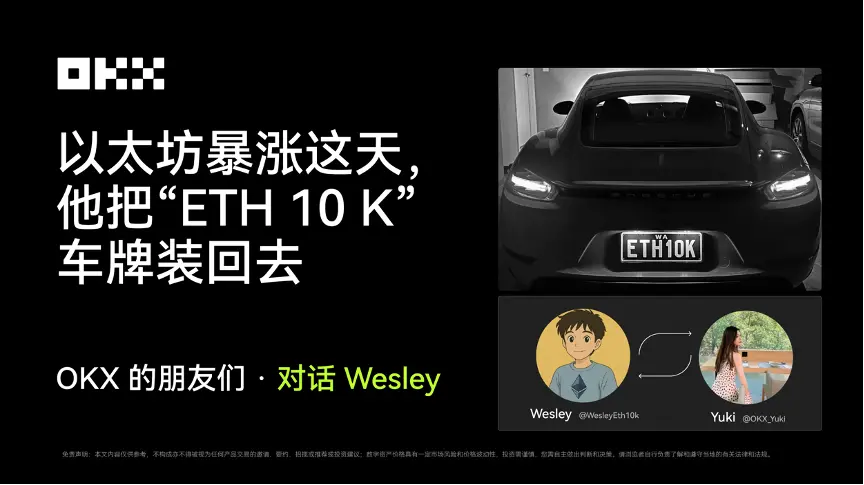
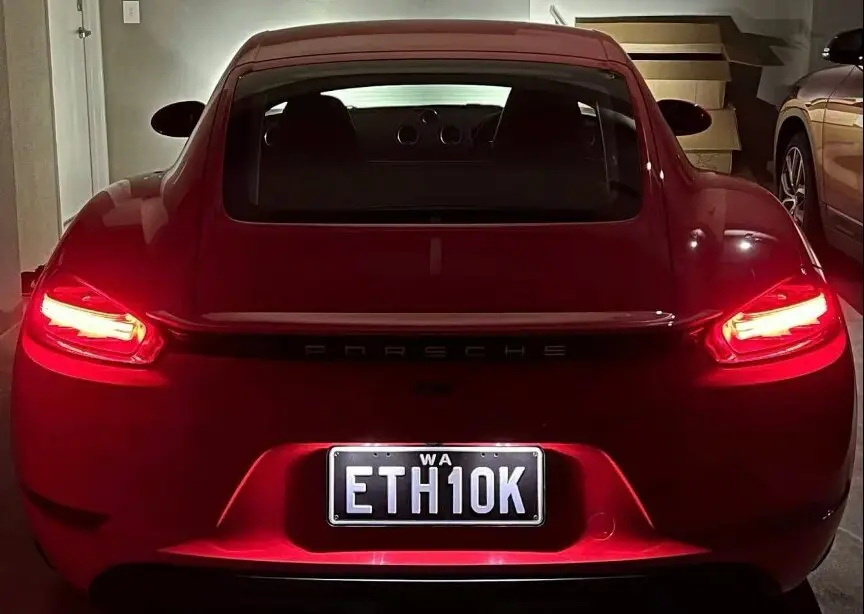
The moment the red taillights lit up, Wesley reattached the license plate that read ETH 10 K. He laughed and said, "Cars can be bought again, positions can be added again, but face must be regained first."
After the Spring Festival, ETH dropped and the market was filled with judgments of "800 dollars seen." He sold all three cars: a Ferrari used for buying cola, an SUV for grocery shopping, and a red Porsche with the license plate "ETH 10 K." He even let go of the license plate, sold two houses in Australia, and went to a farm to pick fruits, doing physical labor during the day and self-studying coding at night, working for several project teams.
On August 11, the day ETH stood back at $4,350, he didn't rush to add positions or change cars; the first thing he did was redeem the license plate. He said that this small metal plate was a way to account for his past self.
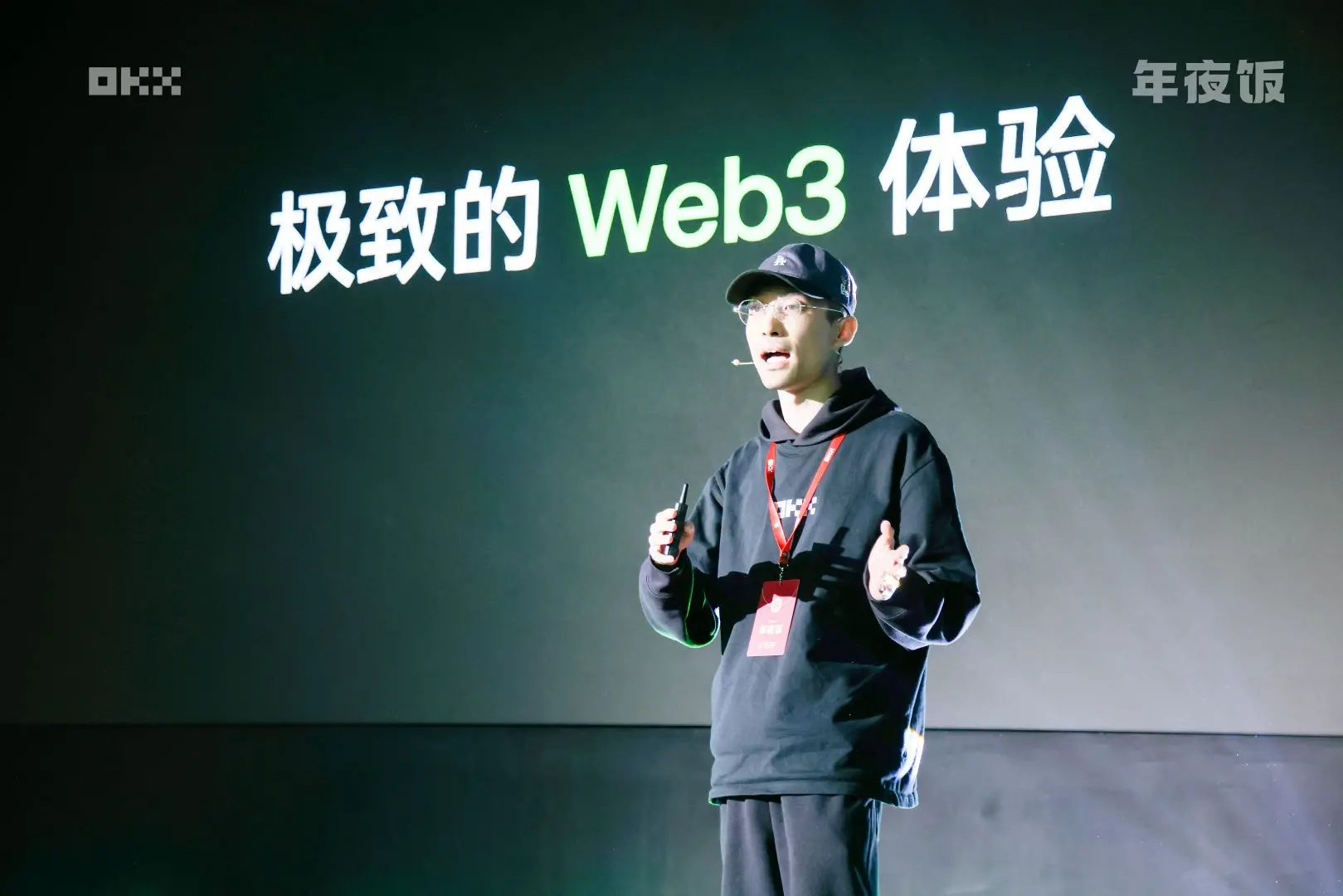
In the interview room at OKX, I sat across from him. He didn't look like a traditional "trader," but more like an engineer. He spoke logically, didn't chase trendy words, and preferred to start from "verifiable" discussions.
"I won't sell; I have no intention of selling. When it rises to 10,000, I will put ETH into Aave/Compound, borrow a little U out, and still not sell. Even if there's a pullback, it doesn't matter; low leverage is fine."
He said "I won't sell" calmly, as if completing a task that needed to be done.
From 2015 to 2025: A winding but clear line
2015---2016, Hong Kong investment bank → Entrepreneurship (chatbot lending MVP)
Wesley graduated from the finance department and received a full-time offer in Hong Kong, working as a bond salesman for two years. "Working felt like acting; I'm more introverted, so I quit and went home to start a business."
His first "product" was neither an app nor a website, but a chatbot built using the Facebook SDK—a set of online lending aimed at students. "To be honest, I had only been coding for a month or two and couldn't create a complete app or website. For me, the easiest way was to write the logic into the SDK and guide users through the process with text." At that time, there was no ChatGPT or LLM, so he used conditional statements to parse keywords, breaking down the borrowing process into executable dialogues, thus completing a rough but functional MVP.
After launching, due to the extremely minimalist team (basically just him and a partner), the product logic was simple, and they broke even in two to three months; the total transaction volume was about 10 million, serving five to six hundred users.
"My motivation to start a business was simple: my family was poor, and I wanted to go abroad but couldn't afford the tuition." He rented a place in Wan Chai, paying a deposit and two months' rent, with the deposit alone being 26,000 HKD. The bank wouldn't lend, and the landlord wouldn't accept credit cards, so he had to scrape together money from a few friends to settle in. "At that moment, I thought, could there be a more dignified way for students like me? Uploading a student ID and scholarship records to get a small loan?" Among the first batch of borrowers, some students used the money to buy tickets to Japan and repaid it as soon as they landed. Fortunately, there were no bad debts. The amounts were small, but surprisingly stable.
Later, after arguing with his partner, he was forced to learn coding by himself, "or the company would go under." Soon, the company was sold off entirely, marking his first accumulation of wealth.
2016---2017, Australia working holiday: daytime financial analysis, nighttime self-learning coding
After wrapping up his entrepreneurial project in 2016, he had the idea to go to Australia for a working holiday. To obtain residency, he first went to study, but since his undergraduate degree was in finance, he had to study finance and work in finance.
During the day, he worked at a very small community bank, where his daily tasks even included counting the cash in and out of ATMs. Once, a bizarre case emerged: a gangster from South Africa tampered with the cash transport armored vehicle, underloading the ATMs slightly each time, stealing 7 million over the year. The bank was a publicly listed company, and ultimately insurance covered the loss, but his position was affected. Later, the bank faced a hostile takeover, and he was reassigned to financial analysis: equity valuation, merger models, Excel reports—solid processes but slow pace, with colleagues leaving work by three or four in the afternoon.
After hours, he dedicated all his "free time" to programming: casually finding online courses to learn, watching public lectures and reading PDF textbooks, filling in data structures, algorithms, and operating systems piece by piece; simultaneously preparing for GRE/TOEFL, planning a path of "going to the US for a master's → obtaining OPT → entering a big company."
Reality was not glamorous: having only coded for a year and lacking systematic training, his resumes were repeatedly rejected. To maintain his Australian residency, he briefly took finance-related courses, only to circle back to his old profession. After two years, he had saved about 400,000 RMB in Australia and increasingly confirmed—if he really wanted to code, he had to return to the Chinese community and solidify his path as an engineer. So he chose to return, officially shifting to the engineering track, laying the foundation for his later entry into Web 3.
2018---2019, Australia → Return
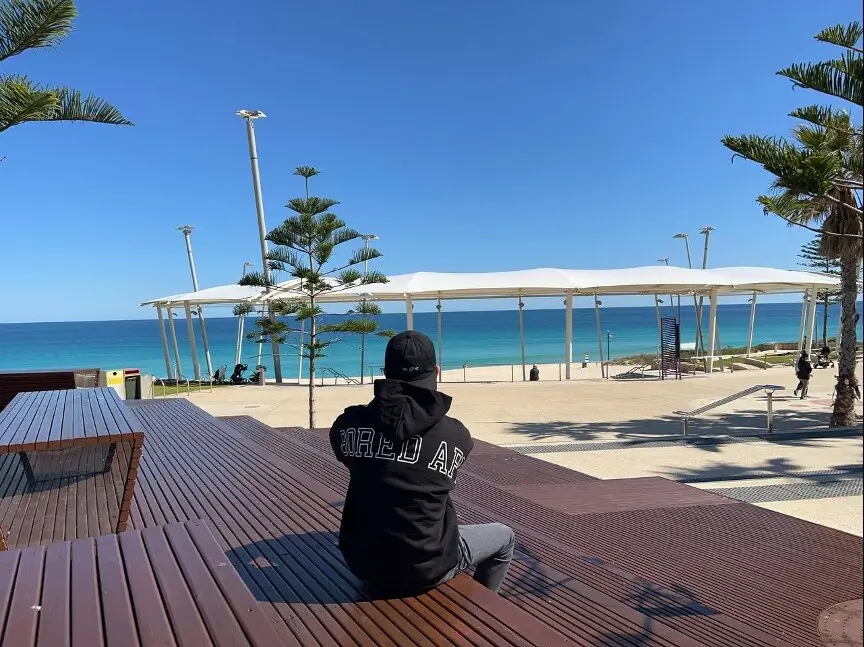
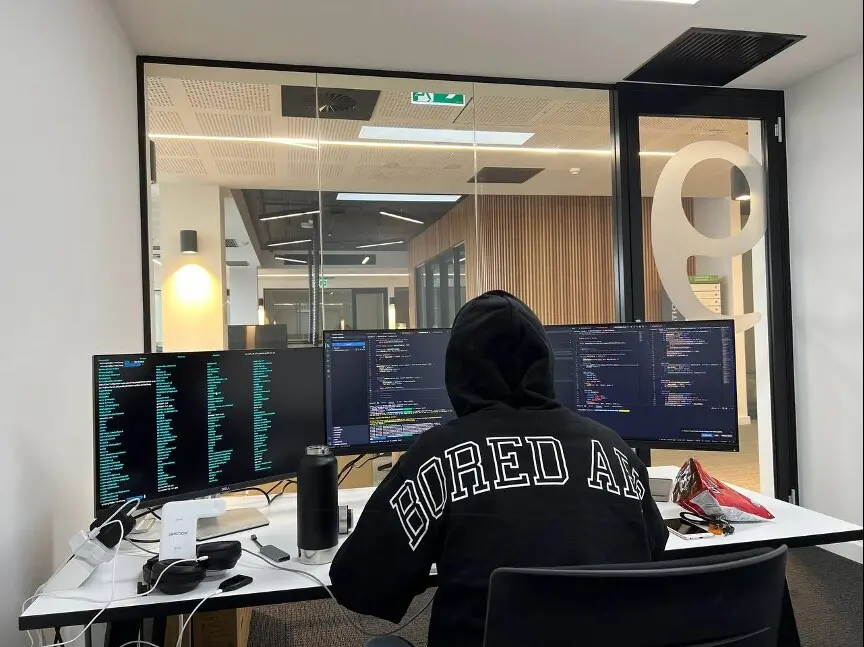
In the photos Wesley shared with us, two were of cars, and another was of the Australian sea, with the wind blowing across the vast shore. As for the following "room photo," it was not taken in Australia but in a small place he rented after returning to the country; the room was small but very bright.
"The view is nice, and many friends are willing to come," he said with a smile.

After returning to the Chinese community, Wesley joined a Hong Kong insurance startup as a backend engineer. At that time, a cryptocurrency exchange collapsed, leaving eighty to ninety practitioners unemployed, and the company hired many people at once, "the language in the office suddenly turned into crypto jargon." Thus, he officially entered the circle.
In 2019, he began allocating ETH and Synthetix (SNX)—"the year before DeFi Summer." By the summer of 2020, SNX surged in the DeFi narrative, and he self-deprecatingly remarked, "At that time, I didn't have much money; no matter how much it rose, it was just a momentary thrill." What really got him moving was funding rate arbitrage: he and a colleague developed an algorithm for spot-futures basis/funding rate arbitrage. By the end of 2020, it was executed effectively, achieving an annualized return of 80%—90%.
"The problem was I had no money." He took a PDF page to meet old classmates and friends in finance: investment bankers, private banking client managers, and some HNWIs. He didn't talk about "alchemy," but discussed "spot vs. futures basis, holding costs, Carry," explaining it in a way that traditional finance people could understand. By then, the market had already shown interest in crypto, but many people were reluctant to bear the volatility; a solution that offered crypto exposure + stable yields was very attractive. In the end, he raised nearly ten million USD in a small scale in Hong Kong and Singapore, starting real trading.
The team size was almost zero—"basically just me." He connected the API to the exchange, automating execution, and in the first year, his personal strategy achieved about 87%. After making money, he suddenly realized, "I was running on the API, but I actually didn't understand the blockchain itself well enough." So he simply resigned and systematically learned EVM: from Yellow Paper to Solidity, from reading contracts and examining bytecode to writing small tools himself. "Some friends were doing core development in leading teams," so he followed them to strengthen his engineering foundation, making the "running" part more solid.
2020---2021, DeFi Summer bull market confirms ETH
What truly pulled him into the center of the Web 3 wave was not the noisy stories of getting rich quickly, but a "skill in the gaps": stitching together the small difference between spot and futures prices into a path that could be walked repeatedly. In the industry, this is called funding rate/basis arbitrage—no directional bets, no chasing trends, focusing on discipline and patience. During those two years of good market conditions, he once "ran for others," growing AUM to tens of millions of RMB, achieving an annualized return of over 87%. Clients opened accounts at the exchange and connected the API, with about 60 in total. "I was worried they wouldn't agree to a 30% management fee," he laughed, saying ultimately "the key is in their hands; I can only turn off the API." "It's like fixing a passage; cars come and go, slowly making money."
The impulse to write code also completely took over at that time. He joined a leading project as a "CTO" to write code: releasing, rolling back, changing parameters, receiving price data, and refining settlement rules. The chain is not always safe—during his first week, the project was hacked, losing millions; a few months later, they were hit again, with tens of millions of dollars taken by hackers. These two blows pulled him back down to earth from the bull market euphoria and instilled a set of order in him: key operations require multi-signature and time locks, avoid upgrades if possible; each deployment must match the bytecode; start with small traffic for gray testing, and if issues arise, trigger a rollback. "Code can be verified; the system deserves to be trusted," he said.
After the second incident, he chose to leave and start his own venture, creating a small system for NFT trading/revenue sharing, settling on a "fixed fee + 10% commission" basis, with one deal yielding 80 ETH. During this period, ETH truly "secured" its position in his heart. It wasn't about who shouted what price Ethereum should reach, but rather it provided a kind of reliable certainty: interactions are visible and verifiable; lending, exchanging, vaults, and derivatives can be pieced together like Lego, making tasks manageable.
As for the price, he preferred to hand over the decision-making power to structure rather than emotion—"(Ethereum) is transparent and clear; Solana is relatively like a black box, where you can't see anything… it's more centralized." "At least when I interact with each EVM, I can first check (the code/bytecode) myself and then decide whether to interact with it."
This "structure-first" simple principle was not held without regret. During the most frenzied market conditions, he was also swept along by the tide. In 2021, he bought a BAYC for 35 ETH, and the floor price soared to 140 ETH, yet he never sold. Because in crypto activities, as long as he showed the monkey avatar, someone would always come up to talk.
At the peak of the bull market—after the Otherside sale, he spent hundreds of ETH to buy Otherside containing Koda and Azuki. The flip was quicker than flipping a book; the once "blue chip" rapidly collapsed, ultimately nearing zero.
"Later, I realized that using these materialized symbols to attract others didn't suit me." When the bear market arrived, he almost cleared out his possessions, dragging only a suitcase, becoming a digital nomad across Asia. Unexpectedly, he began to enjoy the way of connecting solely through conversation and interaction—no boasting, no external aids, just the challenge of communication itself.
2022, back to Australia, buying the "ETH 10 K" license plate
With LUNA and FTX facing issues one after another, he gradually withdrew client accounts: "only running my own money." During the most chaotic months of emotions, he flew to Australia to give his "youth" an explanation—a big house by the sea, a yard, a sports car, living close to the beach, watching the sea at dusk. He even pursued a master's in IT for residency, with the thought of "settling down in life."
It was also during that time that he registered the "ETH 10 K" license plate in Perth—at that time, ETH was still around 3,000 USD, and he intuitively felt that "10 K" was not far off, treating this plate as a bet and a belief.
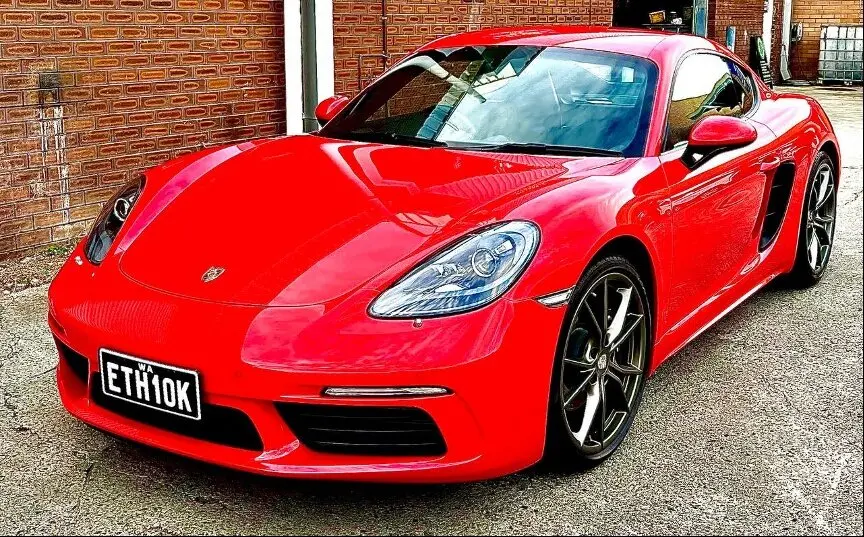
Reality quickly dulled the romance. In a house of over two or three hundred square meters, he only visited one room in six months; of the three bathrooms, only one was frequently used. The sports car was hardly driven, and grocery shopping relied on an ordinary SUV. The sea breeze was nice during the day, but at night it felt empty—like a retired town, with few people and sparse social interactions. He suddenly realized that the symbols he once thought were important—big houses, nice cars, sea views—did not provide meaning.
More pressing was the pressure from his trading system. The exchange's API "went down" for seven minutes in the early morning; he was executing a "long spot, short futures" funding rate strategy, which should have hedged each other—but during those seven minutes, a certain coin surged two to three times. At that time, there was no complete cross-margin, and he had to manually move the profits from the spot to cover the futures margin; once the API went down, balance was lost, the futures leg was liquidated, and the spot leg fell again, incurring another loss. That time, three small clients' accounts were wiped out, and he used his performance share for the month to fully compensate them.
He didn't protect the principal, clearly communicating the risks, charging a 30% performance fee when making money. For many traditional traders accustomed to "2% management fee + 20% commission," this "only sharing profits" approach felt more like binding both parties' interests together. But after the FTX crash, he thought more clearly: if my position is over there, it could mean zero. Coupled with API stability, counterparty risk, and the increasing number of times he was awakened at night, he made a decision—to return external funds and only run his own money.
2023---2025, selling the villa to pick apples, dollar-cost averaging into Ethereum; redeeming the license plate as faith
Looking back, what he truly grasped about "long-term" began from that major drop. In 2022, Ethereum fell from 4,871 to 880; he watched the market, "When it was around 800 or 900, I did think about cutting losses, but in the end, I held on." After that, he handed decision-making over to discipline: starting dollar-cost averaging from around 1,200, "buying more when it hit 1,000, all the way to now. If it drops 50 USD, I treat it as a crash and add more." With the other hand, he cleared out those things he thought would bring satisfaction—the seaside villa and the sports car. He said during that time, "I felt very empty," so he sold both the house and the car and went to the farm to pick apples. The more he sweated, the more settled his heart became: cash flow depended on strategy, and accumulation relied on dollar-cost averaging.
Starting in 2023, he completely cleared out external funds, only running his own accounts: still using that low-leverage, non-directional strategy; simultaneously taking on contract work, writing smart contracts/NFT contracts, settling on a "fixed fee + commission" basis. By 2025, this funding rate arbitrage program could still achieve about 10% annualized return—"I thought I would only play for three years, but unexpectedly, I'm still running in the fifth year." He assessed, "In the future, it will likely be thinner, but small volumes can still yield profits." The method was not flashy: verify what can be verified, gray test what can be rolled back, and avoid naked positions where hedging is possible.
In the spring of 2025, he bought back the "ETH 10 K" license plate. It was not for show, but more like giving himself a footnote: the choices made during the bear market, he was still willing to sign off on today.
Why Ethereum? Seeking certainty in code
Yuki asked him, "Why is the license plate Ethereum?" Wesley gave an engineer-like answer: because it can be verified.
His logic was straightforward—if a contract is non-upgradable, it will run according to the code on the chain, without needing to trust anyone; in the EVM ecosystem, you can first look at the source code or bytecode before deciding whether to interact with it. "For an engineer like me, this is a sense of trust."
He also talked about Solana: "It has strong performance, but after deployment, you can't verify bytecode on-chain like EVM, which makes me personally lack a sense of control." This was not a denial but a preference: weighting in places that are understandable and reproducible.
What about BTC? He respects its status as "digital gold" and acknowledges that a long-term portfolio of BTC + ETH is reasonable; but when it comes to his own positions, he almost exclusively buys ETH—"You could say it's 'professional bias.' In my mind, Ethereum is more like an operating system such as iOS/Android."
This summer, he got back the "ETH 10 K" license plate. As the interview concluded, he was flying to Bali and then transferring to Phu Quoc. Before leaving, he sent a message to a friend: "When the red taillights lit up, the clouds of the bear market were left in the rearview mirror."
We returned to discussing "verifiability" and "risk constraints" in life: he likes cars and captures the red light of the taillights; he also rolls back for a small bug at three in the morning. On the day ETH surged, the first thing he redeemed was the license plate—"It's not vanity; it's giving an account to my past self."
He doesn't urge people to "go all in," but prefers to share "how to learn." The simplest line goes like this: first, use Udemy's Python Bootcamp to get the code running, then use O'Reilly's Introducing Python (2nd) to fill in the basics and details, and finally take Coursera's "Data Structures & Algorithms" specialization to solidify the underlying logic—first learn to do, then understand why.
This interview belongs to the series for friends at OKX. What we care about is always the people who put technology and finance on the same table: the market will fluctuate, but the methods must be verifiable. Wesley's story is merely a footnote—low leverage, heavy auditing, and verifiability are the underlying rules that traverse cycles.
If Ethereum 10,000 USD is destined to come, that "ETH 10 K" license plate will remind him first: drive slowly, don't get carried away.
Disclaimer: This article is for reference only. It represents the author's views and does not reflect the position of OKX. This article does not intend to provide (i) investment advice or recommendations; (ii) offers or solicitations to buy, sell, or hold digital assets; (iii) financial, accounting, legal, or tax advice. We do not guarantee the accuracy, completeness, or usefulness of such information. Holding digital assets (including stablecoins and NFTs) involves high risks and may fluctuate significantly. You should carefully consider whether trading or holding digital assets is suitable for you based on your financial situation. Please consult your legal/tax/investment professionals regarding your specific circumstances. You are responsible for understanding and complying with applicable local laws and regulations.
 Risk warning
 Risk warning
Popular articles





