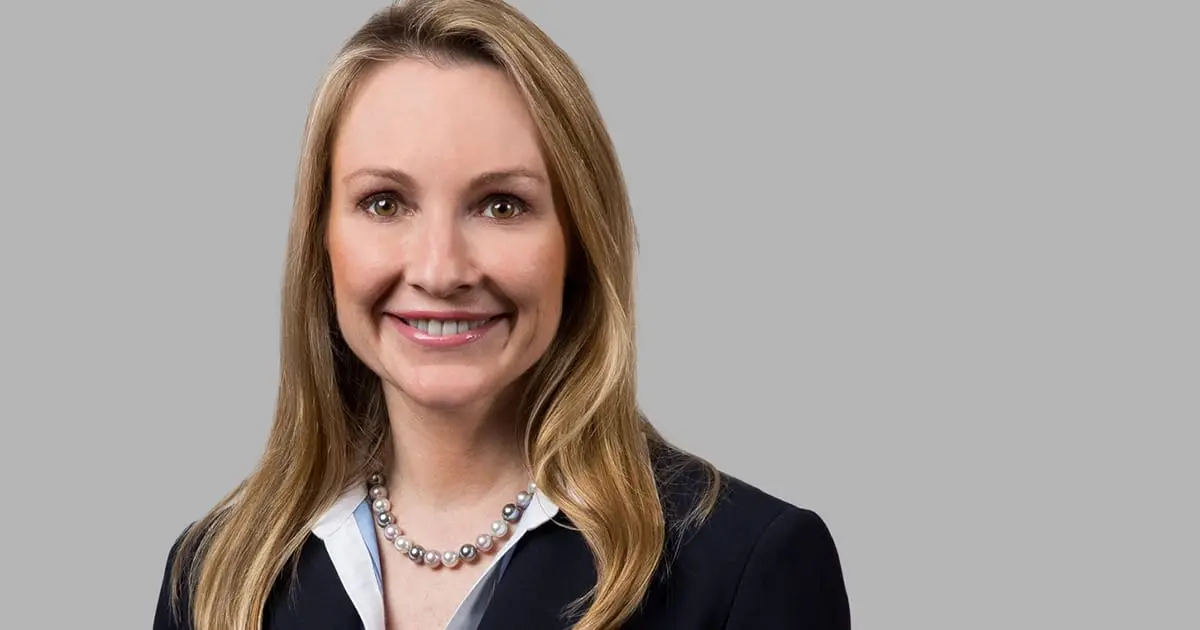
Can BMNR rise again? Cathie Wood discusses the investment logic of Ethereum treasury BitMine
 ARK's Bet on the Future of the Next Decade in Crypto and Technology Waves.
Original Title: Why Cathie Wood's ARK Invest Modified Its $1.5M Target | CoinDesk Spotlight
Original Source: CoinDesk
Host: Jennife Sanasie
Guest: Cathie Wood, Founder, CEO, and Chief Investment Officer of ARK Invest
Broadcast Date: 2025.8.15
Introduction
In the realm of digital assets and innovative finance, market changes often exceed expectations. Cathie Wood is surprised by the rapid adoption of stablecoins and points out in her optimistic forecast that even with the most cautious adjustments, the potential over the next five years remains far beyond expectations. As she describes in "Big Ideas 2025," investing in emerging markets and frontier technologies is not only full of opportunities but also requires investors to possess forward-thinking and keen insights. Through this interview, we will gain a deeper understanding of Cathie's investment philosophy, market observations, and how she seizes innovative opportunities in a turbulent financial environment.
I. The Journey Begins: Cathie's Investment Path
"We are very surprised by the speed of stablecoin adoption. If we were to make any adjustments to the $1.5 million forecast, you might see how we constructed this optimistic scenario in 'Big Ideas 2025.' We might slightly pull back from the expectations from emerging markets. I think we can say with complete confidence that in five years, our optimistic scenario is far more than a million, well beyond a million dollars." - Cathie Wood
Jen: Cathy Wood, welcome to CoinDesk Spotlight.
Cathie Wood: Thank you, Jen, I'm glad to be here.
Jen: We are also very pleased to have you. Let's start from here, looking back, when did you first become interested in the market, the financial system, and the importance of innovation?
Cathie Wood: Oh my gosh… I actually had no idea what I wanted to do in college, so I tried almost everything—engineering, education, geology, astronomy, physics… I touched on all of them.
Jen: You really explored across all fields.
Cathie Wood: Yes, really. And the reason I didn't take economics classes, to be honest, was that my father always hoped I would study economics, so I deliberately put it off until the end. It wasn't until my last semester as a sophomore at UCLA that I took my first economics class, and I fell in love with it right away. At that time, I also found out that UCLA wouldn't let me take more business courses because they only had a graduate business school… So I transferred to USC, where I met Art Laffer.
Maybe I got a bit too detailed, but that's okay. Art Laffer is a famous economist and the proposer of the "Laffer Curve." He saw my passion for economics and introduced me to what was then the largest and possibly most prestigious investment firm in Los Angeles, Capital Group.
When I first walked into the company, I knew almost nothing about how the financial world operated. But there, I felt for the first time that economics could be closely tied to these exciting market activities. More importantly, I realized: "Wait a minute, our job is to keep learning, and we get paid for it? That's amazing! We can even use our understanding to deduce how the world works."
I started my career at Capital Group at the age of 20, and from that moment on, I knew I would stay in this industry for life.
II. Meeting Art Laffer and Falling in Love with Economics
Jen: What ignited your passion for economics? After all, you had tried almost every major before and even had a bit of a rebellious phase with your father.
Cathie Wood: Yes, a little bit. But my father-daughter relationship has always been good; this "rebellion" was more of a normal teenage phase. The real turning point that led me to economics was Art Laffer's captivating teaching style.
After I transferred to USC, he would start each class with a joke to set the atmosphere, then place the day's topic in the context of the real world, explaining "why we should learn this." By the time the class was about to end, you would find the blackboard filled with formulas.
He always guided us in a very vivid way, while also exposing us to different schools of economic thought: Harvard's Keynesianism, the Chicago School's monetarism. And he himself promoted the supply-side perspective at USC, which was even closer to the Austrian School to some extent. He wanted us to not only learn the theory but also understand the differences between these frameworks.
This multi-perspective training was crucial for my entry into the investment industry. In the late 1970s, almost everyone was a Keynesian, even the monetarists were considered a "minority." Later, I witnessed firsthand during the Reagan administration a shift in global economic thought towards supply-side economics. Thanks to my studies at USC, I was well-prepared for the most astonishing bull market in the 80s and 90s.
However, when I first started working in New York, I couldn't openly discuss Laffer's views. The core assertion of supply-side economics, "when tax rates are too high, tax cuts can actually increase tax revenue," was hard to convince people of in the context of the early 80s recession. At that time, the Federal Reserve raised interest rates above 15%, and mortgage rates even exceeded 20%, plunging the economy into a deep recession. It wasn't until a few years later that I had the opportunity to express these views more candidly.
III. On Federal Reserve Interest Rates, Economic Outlook, Real Estate, and Innovation
Jen: Hearing about your experiences and how you cope, I want to bring the topic back to the present. Today, as we record the show, the Federal Reserve just announced it would keep interest rates unchanged. I'm curious, how do you see the future trend of interest rates?
Cathie Wood: I find today's voting results quite interesting, with two members voting against it. This hasn't happened since 1993, and I remember it clearly because I was in the industry at that time. This is symbolically significant, as Chairman Powell has always hoped for unanimous votes, and this time there was a divergence.
Part of the reason might be that Powell's term will end next May, and perhaps these two members are "competing" for that position? Who knows. It could also be that they noticed some changes; I haven't finished reading all the meeting minutes, but I've already seen that the real estate market is clearly retreating, with many areas' home prices barely reacting to the rise in tariffs. They might be thinking, "Wait a minute, maybe the biggest surprise in the next six months is a significant drop in inflation."
Recent employment data is somewhat "mixed," with some indicators strong and others weak. But I noticed that the unemployment rate for recent college graduates is rising because many entry-level positions are being automated, especially by AI.
We have always believed that the U.S. economy is currently in a "rolling recession," with the Federal Reserve raising interest rates 22 times over more than a year, crushing one industry after another, starting with real estate. By many standards, real estate is still 35% lower than its peak, and some indicators are again declining sharply.
I expect housing-related inflation to continue to decrease. Various monthly data sources have already shown year-over-year declines, although it hasn't fully rolled back except for the median price of existing homes. But if sellers really want to sell their homes and interest rates don't drop, they can only lower their prices. Once prices drop, the biggest surprise in the second half of this year might be that inflation falls very low.
It's important to note that the transmission of falling home prices into statistical data and then "disappearing" from the data has a long lag period, so this impact will last for a while.
We believe that as uncertainties around tariffs, taxes, government spending, and regulation gradually diminish, the U.S. economy is moving from a "rolling recession" to a recovery that is stronger than expected. This will be reflected in productivity improvements over the next 6 to 9 months. Although the overall economic growth rate is slow, productivity has already exceeded 2% year-over-year, and I believe it will be even higher because the technologies we are focusing on—robotics, energy storage, AI (especially important), blockchain, and multi-sequencing—have tremendous potential for productivity enhancement.
Most of these innovations are deflationary, with AI being the most typical example. The training costs of AI are decreasing by 75% each year, and the inference costs—meaning the costs of inputting questions and getting answers in ChatGPT or Grok (which I use more often now)—are decreasing by 85% to 98% each year (with Chinese data even at 98%). The drop in costs will significantly drive the growth in usage.
So we believe this is "benign deflation," unlike the "bad deflation" of 2008-2009. This is beneficial for companies at the technological frontier; for companies being disrupted, it poses pressure, and they will have to lower prices. We believe the future will enter a more deflationary world than most economists and strategists expect.
IV. How the New Regulatory Environment Drives Agentic AI and Blockchain Innovation
Jen: You just mentioned a 6-9 month outlook, so in your envisioned strong recovery, what role will cryptocurrencies play?
Cathie Wood: The shift in the regulatory environment is crucial. We have just experienced a hostile regulatory period led by SEC Chairman Gary Gensler, transitioning to a now legislative-driven and extremely friendly situation. Now, regulation is guided by a legal framework rather than "enforcement-style regulation" that suppresses innovation. The previous approach forced many innovative projects to leave the U.S. for other countries.
The situation is rapidly improving now, especially with David Sacks being appointed to oversee both crypto and AI affairs, and the concept of "Agentic AI" has emerged. Agentic AI refers to AI agents that can autonomously perform specific tasks like walking, working, and communicating. Of course, its capabilities have certain boundaries. To make these AIs operate efficiently, smart contracts are core because AI agents need to interact with websites, such as purchasing certain content or services on CoinDesk, and the payment process needs to be executed by automated smart contracts. This is precisely the entry point for the fusion of AI and blockchain technology.
Before this, we had already seen similar revolutions in the financial services sector. After the regulatory green light, more and more financial institutions entered the blockchain space because they found it could significantly reduce costs.
I like to compare this situation to the early days of the internet in the late 80s and early 90s. At that time, the developers building the internet hardly thought that financial services or commerce would move online, so there was no native payment layer. It wasn't until today that we truly have this layer because of blockchain. Over the past 30-40 years, due to the lack of a payment infrastructure, traditional finance had to rely on numerous intermediaries to reduce risks after credit cards went online, resulting in a fee of 2%-3.5% being taken from each transaction, which has almost become a "system tax."
Blockchain can reduce this "tax" from 3.5% to about 1% (in Nigeria, it can even drop from 20% to nearly 1%). We expect the global financial services asset management scale to reach $250 trillion in five years. If you can reduce costs by 2-2.5 percentage points in such a large market, that would be a disruptive improvement in friction and efficiency.
Cost is just one aspect. In terms of productivity, Agentic AI + smart contracts + API-to-API automated trading (including micro-trading) will also have similarly profound impacts.
V. Ethereum, Agentic AI, and the Logic Behind ARK's Investment in Bitmine
Jen: You previously bet on Tom Lee's Bitmine, and ARK is currently one of the largest institutional holders of Ethereum (ETH). Is this related to the Agentic AI and smart contracts you just mentioned? Do you think Ethereum will become the foundational layer supporting an efficient Agentic AI world?
Cathie Wood: Yes. We have been closely observing which protocols institutions choose to connect with when formulating their digital asset strategies. First, Coinbase chose Ethereum for its Layer 2 network Base, and recently Robinhood's Layer 2 is also built on Ethereum. We have long had a hypothesis that Ethereum will become an institutional-grade protocol. Although Solana significantly outperformed Ethereum for a period, leading many to question our judgment, from the perspective of voting (actual deployment), Ethereum, despite higher transaction costs and slower speeds, is safer due to its greater decentralization; Solana is more likely to excel in consumer-facing applications.
As for investing in Bitmine, this is actually our first opportunity to gain stable exposure to Ethereum within an ETF. Directly buying into other funds or ETFs has many issues, including tax (such as "bad income" clauses, where if a certain type of gross profit exceeds 10% of the fund's annual profit, it may lose tax benefits or even be forced to shut down), layered fees, etc. We cannot take on that risk, so we have been unable to find a suitable path. Bitmine provides a solution; although there is a premium, the utility of the Ethereum treasury is greater than that of the Bitcoin treasury, such as staking, while ETFs currently cannot stake ETH.
Additionally, we are also cornerstone investors in Circle and have been closely monitoring the explosive growth of stablecoins, with most stablecoin activity occurring on Ethereum. These factors combined give us more confidence in Ethereum's potential as the foundational layer for Agentic AI and explain our logic for investing in Bitmine.
VI. The Case for Bitcoin Surpassing $1 Million
Jen: Will this change your view on Bitcoin? I know you predict that Bitcoin will rise to $1.5 million by 2030; has this prediction been adjusted?
Cathie Wood: If you ask me what the biggest surprise of the past decade has been, it was that in 2014, we founded ARK, and in 2015, we released our first Bitcoin white paper. At that time, we believed Bitcoin would play the role that stablecoins do today in emerging markets. The story of Tether was completely unexpected. Co-founder Paolo told me that they only realized during the pandemic that Tether would become an important way for emerging markets to gain exposure to dollars. At that time, kids would tell their parents, "We don't need to go to the black market to exchange dollars today; we can do it directly online." That was the opportunity for its widespread adoption.
We didn't expect stablecoins to replace Bitcoin's role in this area so quickly. If we were to adjust the $1.5 million forecast, we might slightly lower the contribution from emerging markets. But the bigger drivers still come from two points: first, Bitcoin is becoming the primary entry point for institutions into the digital asset market; second, Bitcoin is replacing gold as a store of value. These two logics have never changed, so we still believe Bitcoin will surpass $1 million in five years, and it may even far exceed that number.
VII. Cathie's Top 3 Crypto Assets and Crypto-Related Stocks
Jen: Let's talk about your focus beyond Bitcoin. With continuous innovations in the crypto asset space, it seems your vision has extended beyond Bitcoin, and even your price expectations for 2030 have been adjusted. From your perspective, what blockchain protocols or projects are currently worth paying attention to?
Cathie Wood: We primarily invest in the public market while also taking on the responsibility of educating investors, just like CoinDesk does, so we will cautiously guide clients into the crypto ecosystem. Currently, our core holdings are Bitcoin (BTC) and Ethereum (ETH). In our private equity fund, we had previously been relatively heavily invested in Solana (SOL), but recently, as Ethereum's performance surpassed Solana's, we adjusted our weight accordingly.
These three (BTC, ETH, SOL) are our current "top three." We are also paying attention to Layer 2 networks. From the perspective of educating investors, we will analyze these three major assets more deeply using familiar investment terminology, such as return-risk ratio, Sharpe ratio, Sortino ratio, etc. Relevant research papers are already in preparation.
Additionally, we will draw on the model of "Bitcoin Monthly," which may become a bi-monthly publication in the future, alternating months to release analyses of Ethereum, Solana, and other potential protocols, especially showcasing their signal characteristics through on-chain analytics. This level of transparency is not present in the stock or bond markets and is particularly valuable for institutional investors.
Jen: You just listed your top three in the crypto ecosystem. So do you have a similar "top three" list for crypto-related public companies?
Cathie Wood: In our flagship fund ARKK, fintech fund ARKF, and next-generation internet fund ARKW (covering crypto and AI themes), Coinbase, Circle, and Robinhood all rank in the top ten. Although Robinhood is not a pure crypto company, we have been consistently questioning their crypto strategy in quarterly communications for the past three years. At that time, they were scaling back, and we reduced our focus on them. But now they are fully entering the crypto space, and if you have seen their Analyst Day or new product launches, you will find that their goal is to win big.
VIII. Why MSTR Is Not in the Top Three
Jen: So, MicroStrategy is not in your top three?
Cathie Wood: MicroStrategy is indeed a bet on Bitcoin, as it is the largest asset in this field. However, Coinbase is also largely driven by Bitcoin's performance and can cover a broader crypto market. Additionally, while Bitmine is not in the top ten, we believe its strategic position is improving as Ethereum's popularity among institutions rises.
IX. Will Quantum Computing Threaten Bitcoin?
Jen: Cathie, I would love to hear your thoughts because you are known for "betting on the future," and you have the ability to discern trends and make bold decisions on new technologies. We have previously discussed that many people are now thinking about their positioning in the future world. In the Bitcoin space, there is a notion that quantum computing might threaten Bitcoin's security. Since you are here today, I particularly want to know, do you think quantum computing could really threaten the Bitcoin ecosystem?
Cathie Wood: Of course, this is a question we often discuss. In fact, the reason we promoted our former research director to Chief Futurist is that these long-term survival issues are very important. He and our team, especially David Puell from our crypto team (many well-known on-chain analysis indicators are named after him), are very focused on this. Brett (the Chief Futurist) and David have been evaluating the breakthroughs we hear in the quantum computing field. There have indeed been some advancements, but most are incremental, and we are still far from a true technological leap. We judge that if quantum computing is indeed going to impact Bitcoin, it may not be until the late 2030s or even the 2040s.
One reason is that the pace of AI development is far exceeding expectations, even surpassing what we imagined when we founded ARK. Many tasks that were originally expected to be completed by quantum computing are now likely to be achieved first by AI. Moreover, AI's performance has not shown any so-called "ceiling" effect; on the contrary, the more computational power invested, the faster the performance improves. This means that much of the capital that might have flowed into quantum computing will continue to concentrate in the AI field in the short term, and we want to see how far AI can go.
X. The Threat of Innovation
Jen: You mentioned that the team often discusses these "survival issues" when formulating investment arguments. What keeps you up at night?
Cathie Wood: Over the past few years, our biggest concern has been the poor regulatory direction in the U.S. In the past four years, we even seriously considered turning more to overseas sources for new ideas, especially in the blockchain space, because the innovative environment in the U.S. is being thoroughly stifled. It’s important to note that blockchain is the next generation of the internet, and the rise of the previous generation of the internet allowed the U.S. to lead the global tech revolution. If we miss this opportunity, the U.S. is likely to hand over the next wave of larger tech trends to others.
From an investment perspective, the landscape in other parts of the world is more fragmented, and going to Europe means facing dual regulatory pockets from the EU and its member states, along with geopolitical risks. So for us, this is a very real threat. I remember during a live broadcast or online seminar, I bluntly stated, "Chairman Gensler is a menace to innovation." After saying that, I realized we are a SEC-regulated entity; would this lead them to retaliate against us? After all, there were indeed some retaliatory regulatory actions at that time. But we decided we had to speak out because this is not only about us but also about the future of all tech companies in the U.S., even if it involves risks.
Jen: Has the SEC ever approached you because of your comments?
Cathie Wood: No, we have not received any direct feedback. Of course, like all investment firms, the SEC regularly audits us. Especially since we operate very transparently, for example, we were the first firm to publish research for free on social media, publicly trading records daily, and maintaining a high level of transparency in our portfolios. Mutual funds do not do this because it brings more SEC scrutiny risks. But we have long known we would be frequently audited, so we must ensure compliance is impeccable.
Our Chief Compliance Officer previously served as an examiner at the SEC for four years, and we have always held ourselves to that standard. I'm not sure if the SEC feels more at ease with us because they never clearly tell you whether the audit is over or if everything is normal; if you don’t hear back, that’s considered good news. But I believe we have undergone enough comprehensive or partial audits that they also know we are "more compliant than saints."
XI. Why ARK and Cathie Maintain High Transparency on Social Media
Jen: Cathie, you share a lot of information on social media, including trading records, and it's publicly accessible, which is completely different from many competitors. Why is transparency so important to you, even becoming a core part of your identity?
Cathie Wood: After the financial crisis of 2008 and 2009, we began to observe trends in the financial markets. At that time, in a brainstorming session at my previous company, we noticed a phenomenon: mutual funds were losing market share, gradually being replaced by ETFs. At that time, I didn't even fully understand ETFs because they existed almost exclusively in the passive investment space, not in the active management space we were in. We were active investors who traded daily, while passive investments might only adjust their portfolios once a quarter or even once every six months.
When I truly understood the mechanics of ETFs, I immediately thought, "Why can't we put active funds into the ETF structure?" So I voluntarily pushed this project at my previous company, just as they had already obtained an SEC exemption. At that time, I realized two things: first, this would disrupt mutual funds because ETFs have lower fees; second, ETFs are more transparent in every aspect. The crisis of 2008-2009 made investors lose trust in the financial system, and they wanted to be on the same wavelength as fund managers, which we could meet.
Today, many asset management companies either completely shift to passive or become "highly benchmark-sensitive," resulting in almost identical holdings across the board, such as heavily investing in a few large tech stocks (Mag 6). We are not like that; our goal is to provide investors with exposure to future operational methods. In technological revolutions, some giants will be disrupted, some will adapt, but we will leave the largest positions for "pure disruptors."
From 2021 to early 2024, although the market was in a bull phase, the gains were concentrated in a few stocks, especially Mag 6, and we said this is not a healthy bull market. A healthy bull market would spread to more companies, which is exactly what has started to happen this year.
Back to your question, the reason we adhere to this model is that transparency is a genuine market demand. In 2020, we did not expect this approach to have such a significant impact. The pandemic lockdown forced global investors to stay home, and aside from online shopping, they turned to online investing. We publicly shared research and trading records daily, resulting in countless videos interpreting our trades on YouTube, especially in Asia, which unexpectedly helped us grow into a global brand.
At the beginning of the pandemic, my economics background allowed me to quickly form a clear judgment: massive monetary and fiscal stimulus, a soaring savings rate (which peaked at 27%, now only 4-5%), combined with supply chain disruptions, was the recipe for economic prosperity and volatility. And indeed, the results were as expected: supply constraints, rising inflation, and the Federal Reserve's aggressive rate hikes put tremendous pressure on innovative companies outside of Mag 6. But regardless, our openness and transparency allowed investors to understand our logic and walk alongside us.
XII. Will AI Surpass ARK?
Jen: Time is running out, and I have two more questions. Returning to those future-related thoughts, with all your research on AI, do you worry that AI might one day surpass ARK in investing?
Cathie Wood: I would look at it from two aspects. The easiest areas for AI to replace are passive investing and "benchmark-sensitive" strategies, as these strategies are highly standardized, and many investors are chasing safe bets like Mag 6. Quantitative strategies (Quant) analyze historical factors—growth, quality, volatility, profitability, etc.—to slice the market, but our strategy has a large portion marked as "Residual" (unexplainable) in their models because the future won't be like the past, and quant relies on the past.
So, I believe quant will be completely commoditized by AI. Our strategy relies on original research; we even actively open our research findings to AI, such as OpenAI, Grok, and other large models, allowing them to help us with pattern recognition and efficiency improvements, especially in the application of Wright's Law. Wright's Law is similar to Moore's Law, but it predicts cost declines based on output rather than time. We use it to forecast the cost curves of technologies, a process that is very time-consuming, but AI can significantly accelerate this type of work. AI will be a powerful tool, but I won't underestimate the creativity of human research teams.
XIII. Cathie's Advice to Her Younger Self
Jen: I want to end the interview with a question that echoes the beginning: if you could go back to your 20-year-old self, what would you say?
Cathie Wood: I would say: well done, keep an open mind, and don't panic. If you don't know your future direction in college, try anything that interests you. I find that whether it’s myself or colleagues who join our company, if you immerse yourself in a field you love and are willing to learn, life will be enjoyable. Although it won't be completely stress-free, overall, it is worth it.
I love my job now. Everything happening today in the field of innovation has sown seeds in the first 20 years of my career, and I am fortunate to witness them sprout and grow. In the late 90s, capital flooded into the internet, biotechnology, and other fields; we knew that the technology was not ready for scaling at that time, and costs were too high. For example, the first human genome sequencing completed in 2003 cost $2.7 billion, and now it only costs $200. But ironically, now this most promising sector is performing the worst in the market, which reflects investor sentiment. When making money is easy, it often leads to bubbles; when everyone is worried and overlooks the most important opportunities, it is often the beginning of a healthy bull market.
Moreover, this bull market is spreading to more sectors, and we are pleased that blockchain is among them, allowing the traditional financial system to engage more with this new asset class, which is truly important.
Click to learn about job openings at ChainCatcher
Recommended Reading:
 Risk warning
 Risk warning