








From mining to mining artificial intelligence
 When you look at Galaxy Digital's second-quarter data, it's easy to overlook one thing: what comes next. A closer look reveals that the company, led by Michael Novogratz, is at a turning point from cyclical cryptocurrency trading to more stable AI infrastructure revenue.
Article Author: Prathik Desai
Article Compilation: Block unicorn
Today, we take an in-depth look at Galaxy Digital's Q2 2025 financial report, as this digital asset and data center solutions provider prepares for a transformation. From its core business—accounting for 95% of revenue but with a profit margin of less than 1%—to a business model that sounds incredibly promising in terms of revenue-to-expense ratio.
Summary
Galaxy's cryptocurrency trading business generated only $13 million in profit from $8.7 billion in revenue (profit margin of 0.15%), while paying out $18.8 million in salaries each quarter—resulting in negative cash flow from core operations.
AI Transformation: A 15-year, 526 MW contract with CoreWeave is expected to generate over $1 billion in annual revenue in three phases starting in the first half of 2026, with a profit margin of 90%.
Controlling 3.5 GW of capacity in a supply-constrained market, data center demand must quadruple by 2030.
Secured $1.4 billion in project financing, validating commercial viability and eliminating execution risk.
The current model relies on cryptocurrency asset returns ($198 million in Q2) to fund operations, as capital-intensive trading yields slim returns.
After a 17% rise, the stock price fell back as investors see no incremental revenue before the first half of 2026.
When you look at Galaxy Digital's Q2 data, it's easy to overlook one thing: what comes next. A closer inspection reveals that this company, led by Michael Novogratz, is at a turning point from cyclical cryptocurrency trading to more stable AI infrastructure revenue.
A Gold Mine in AI Infrastructure
Galaxy Digital is undergoing one of the largest business transformations in the cryptocurrency industry—shifting from low-margin trading to high-margin AI data centers.
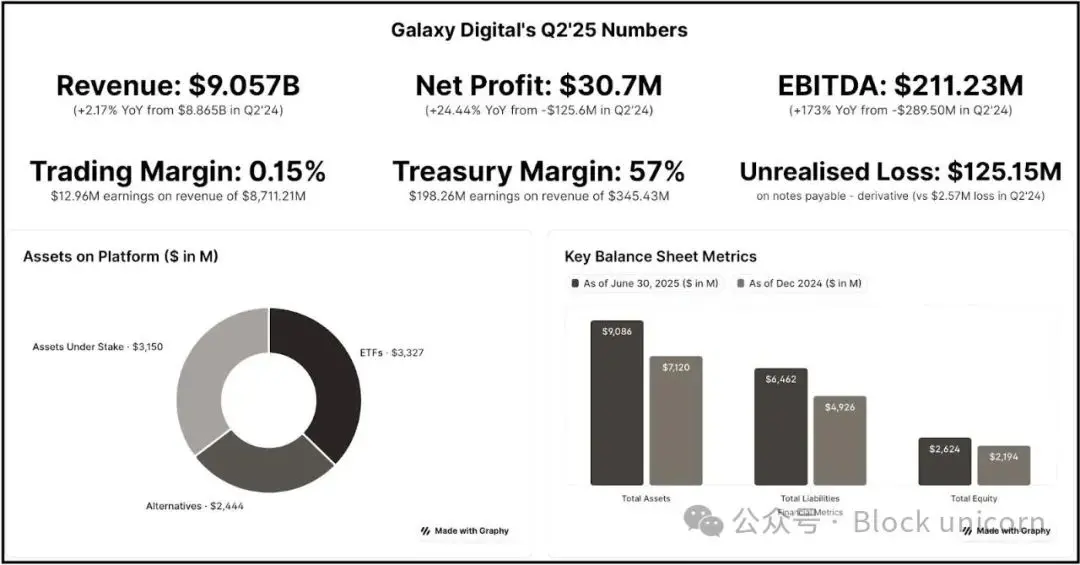
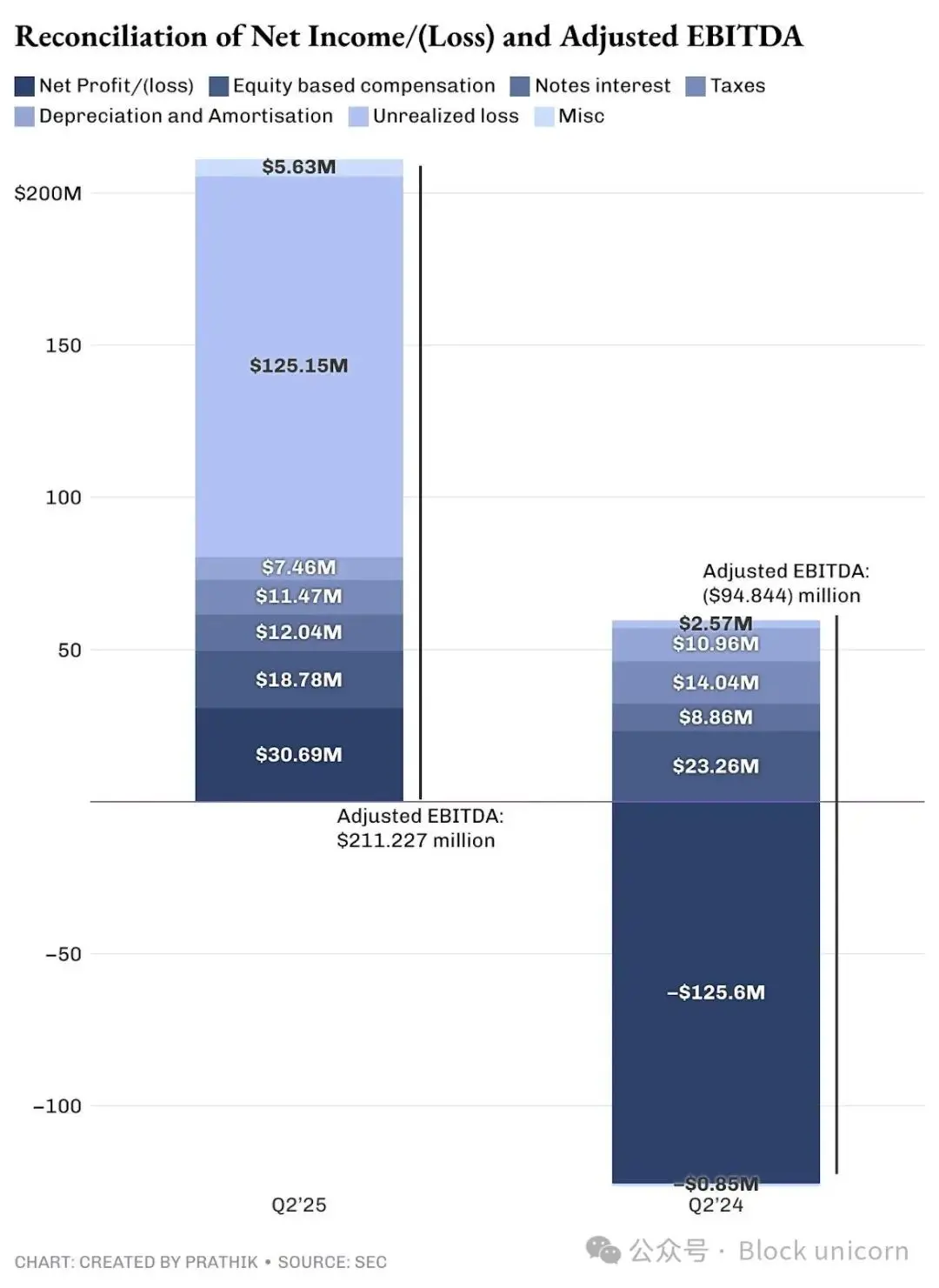
Galaxy achieved $31 million in net income this quarter, with adjusted EBITDA totaling $211 million after accounting for non-cash and unrealized expenses.
Of its total revenue, the trading business earned only $13 million in profit from $8.7 billion in sales—a profit margin of just 0.15%. Thus, its 95% revenue is nearly unprofitable.
In contrast, their new AI data center contracts promise a 90% profit margin on over $1 billion in average annual revenue.
While I am optimistic about building AI and high-performance computing capabilities, I believe the promised profit margins are overly exaggerated. But don’t just take my word for it; you can compare the profit margins reported this quarter by top AI data operators like Equinix and Digital Realty: 46-47%.
However, I believe the direction is correct, purely from a revenue generation perspective. Currently, most of Galaxy's revenue comes from high-cost, low-profit trading operations. Most of its profits (revenue minus expenses) come from its asset and corporate divisions.
The asset division includes investments in digital assets and mining activities, equity investments, and realized and unrealized gains and losses on digital assets and equity investments.
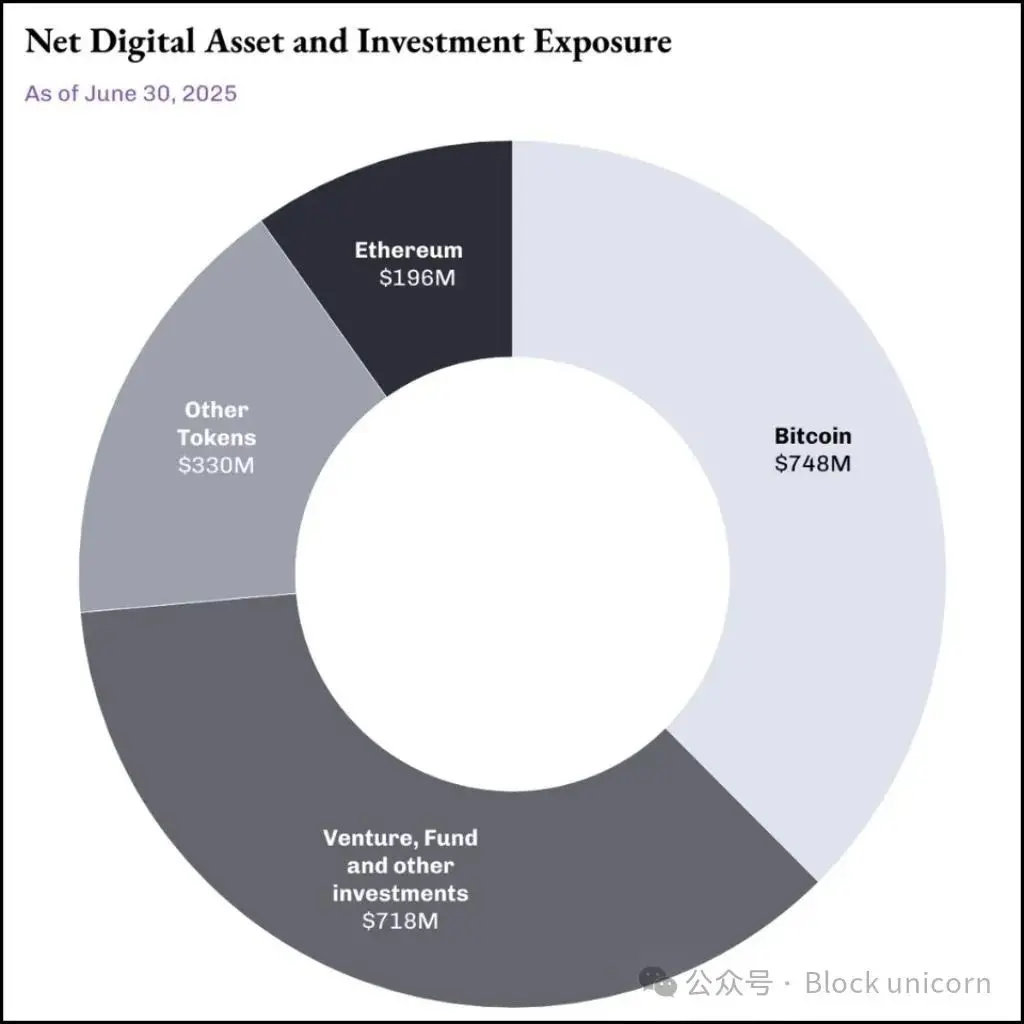
Its $2 billion asset pool serves as an investment tool and even as a strategic source of funding when market conditions are favorable.
This division generated $198 million in earnings without accounting for non-cash unrealized gains. Unlike pure cryptocurrency companies, Galaxy's asset business funds itself through strategic asset sales.
This is precisely where I believe Galaxy's cryptocurrency asset strategy differs from Michael Saylor's Bitcoin asset strategy. Saylor's "buy, hold, but never sell" strategy realized $14 billion in unrealized gains this quarter. But these are just paper profits, and Saylor's shareholders cannot benefit from them.
Galaxy's situation is different. It not only buys and holds cryptocurrencies in its asset pool but also engages in strategic sales that generate realized profits. This is real cash that shareholders can share.
However, I believe Galaxy's asset division is an unreliable source of income. As long as the cryptocurrency market is in optimal condition, this division will continue to generate earnings. But the market does not operate that way, whether in traditional markets or cryptocurrency markets. Markets are at best cyclical, which makes these returns heavily dependent on the state of the cryptocurrency market.
This is why Galaxy needs its AI transformation to succeed, as the current model is unsustainable.
Market Opportunity
Galaxy has positioned itself at the intersection of two massive trends: explosive demand for AI computing and a long-term shortage of power infrastructure in the U.S. According to a McKinsey report, global data center demand is expected to quadruple from 55 GW in 2023 to 219 GW by 2030.
Hyperscale cloud providers are expected to invest $800 billion in data centers as capital expenditures (CapEx) by 2028, a 70% increase from 2025, but are constrained by power supply.
Galaxy's advantage lies in its Helios campus in Texas, which has a potential capacity of 3.5 GW, enough to supply power to over 700,000 homes in the state. 800 MW has already been approved, and an additional 2.7 GW is under study by the Electric Reliability Council of Texas (ERCOT), giving Galaxy control over some of the largest available power capacities in the supply-constrained AI infrastructure market.
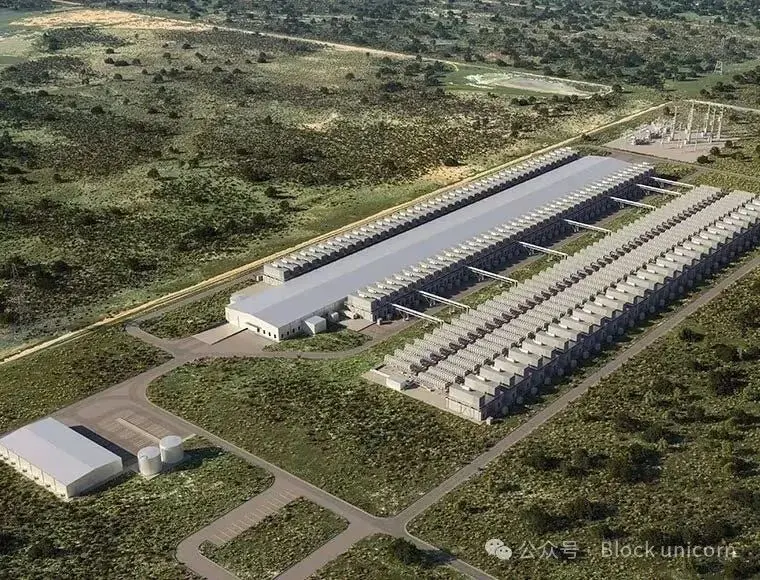
Digital rendering of Galaxy's Helios AI and HPC data center campus located in Texas.
The foundation of Galaxy's transformation is the 15-year commitment made with CoreWeave, one of the largest AI infrastructure deals in the industry. CoreWeave has committed to providing 526 MW of critical IT capacity in three phases.
The expected 90% profit margin is attributed to the light asset nature of data center operations after the infrastructure is built.
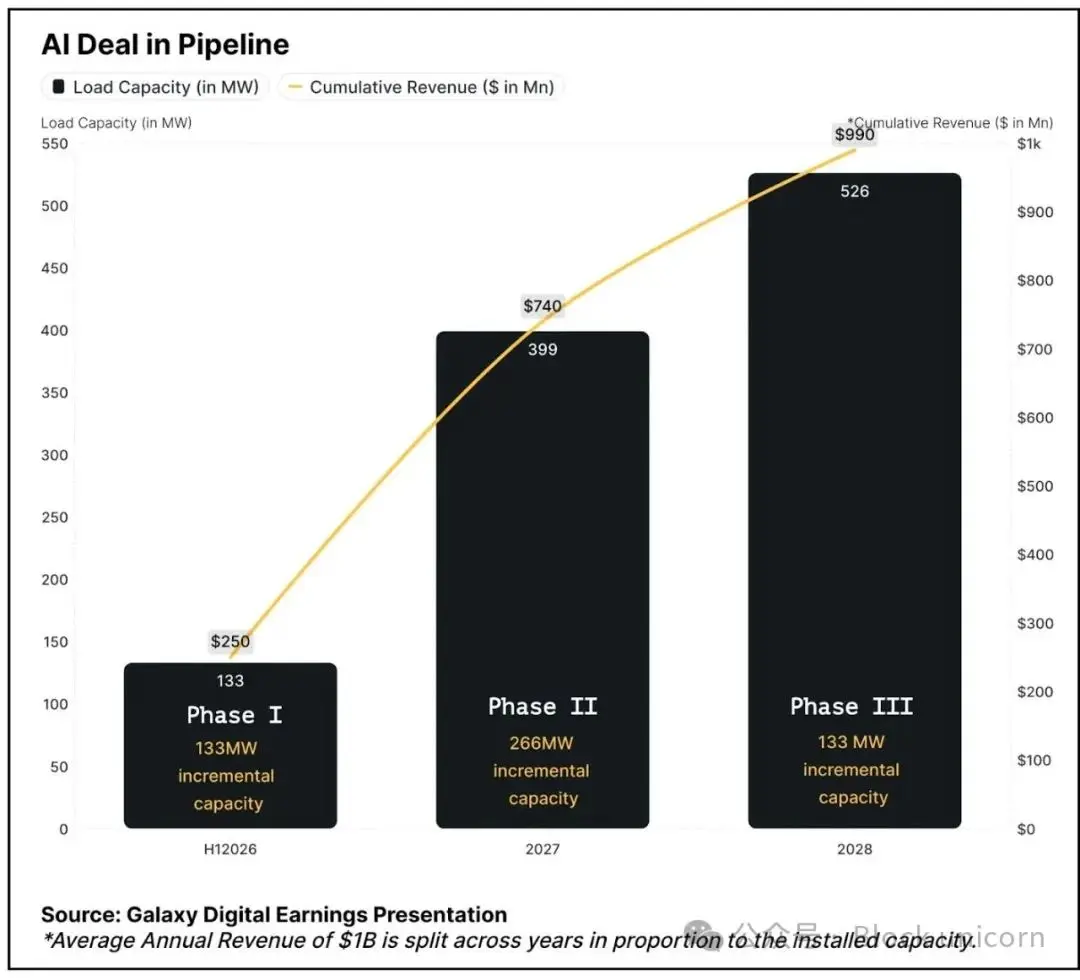
I see a significant risk in the CoreWeave deal: execution. As I ponder the scale of funding, planning, and execution that Galaxy needs, the company has cleared the first hurdle.
On August 16, Galaxy successfully completed $1.4 billion in project financing for the Helios data center, securing the funds needed for the first phase of construction. This gives me greater confidence in how they have eliminated key funding risks and validated the commercial viability of the Helios project.
Cash Flow Equation
Galaxy's current cash flow exposes the instability of its trading business while highlighting why AI infrastructure can provide true financial stability.
At the end of Q2, the company had $1.18 billion in cash and stablecoins, which sounds like a lot, but the reality is more complex. Galaxy's trading business operates on a capital-intensive model, with margin loans requiring substantial cash reserves. Most of the $1.18 billion is not freely usable.
The actual free cash flow generated by Galaxy is negligible. After paying $14.2 million in interest expenses and ongoing operating costs, the core business is nearly unable to achieve cash flow balance.
This forces Galaxy to rely on appreciation in the cryptocurrency market, namely its treasury and mining operations, to generate funds to support operations amid inherent cyclicality and unpredictability. In contrast, CoreWeave's three-phase contract structure and high-profit business characteristics could immediately generate positive cash flow.
While the profit margin may not be as high as 90%, even a more conservative 40-50% profit margin would still be more reliable and stable than the cyclical treasury business.
Unlike the trading business, which requires continuous investment in working capital and technological infrastructure, cash generated from data center operations can be reinvested in expansion or returned to shareholders.
Galaxy's recent Helios project financing helps address the cash flow issue. By securing dedicated construction funding, Galaxy separates infrastructure development from its operational cash flow needs. This is not achievable in trading business expansion, as the capital required for trading business expansion would directly compete with other business needs.
Expense Breakdown
The total expenses of the digital asset division amounted to $8.714 billion, with trading expenses accounting for the largest share ($8.596 billion). These expenses are purely pass-through costs, with little room for increases. Galaxy can hardly optimize these costs, as in commoditized trading businesses, spreads continue to narrow, making these costs unavoidable.
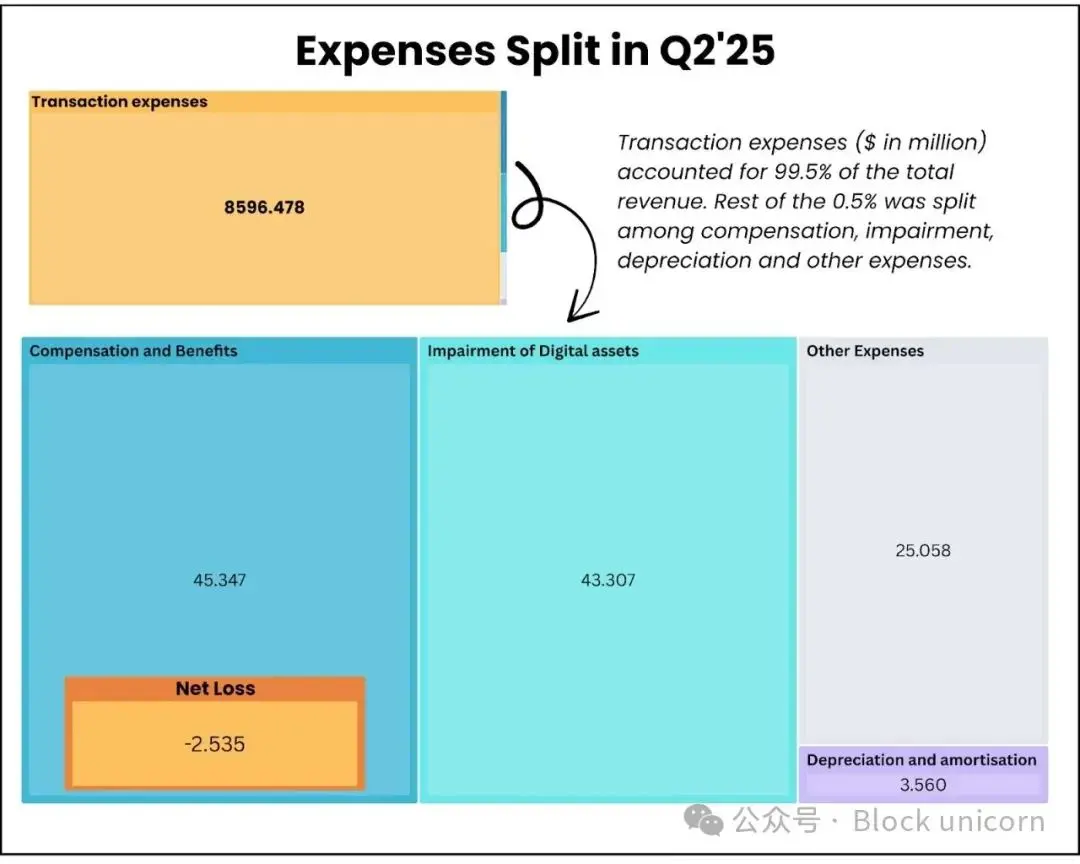
More concerning is that quarterly compensation expenses include $1.88 million in stock compensation, which must be paid in cash. This means that Galaxy is paying more to retain talent than its core business generates in earnings ($13 million).
The transformation to AI infrastructure will change this dynamic. Once the facilities are operational, the data center operations will require minimal variable costs.
To illustrate more clearly, Galaxy's entire digital asset business generated $71.4 million in adjusted gross profit in Q2. At full capacity, just the first and second phases of Helios (approximately 400 MW) could potentially generate $180 million in quarterly revenue, with operational complexity and costs being only a fraction of those in the trading business.
Market Reaction
Within 24 hours of announcing its Q2 financial report, Galaxy's stock price rose slightly by 5% and surged about 17% within a week, before investors began to pull back.
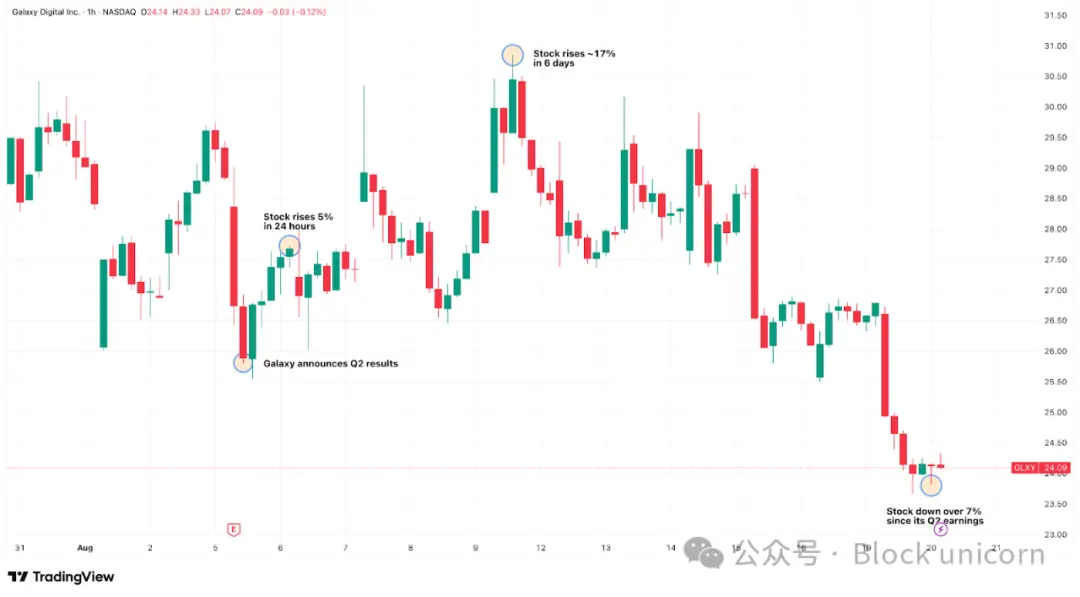
This may be because investors realized that $211 million in earnings included $180 million from non-cash adjustments and treasury gains, rather than operational improvements.
Investors may not have fully considered Galaxy's complex transformation to AI infrastructure, as significant data center revenue is not expected until the first half of 2026.
I remain optimistic about long-term market sentiment, given the potential for future developments.
According to ERCOT research, the addition of 2.7 GW of capacity indicates that the company intends to solidify its position as a long-term infrastructure provider rather than a single-tenant facility operator.
Once fully developed, Galaxy's operations in Texas could rival some of the largest hyperscale data center campuses operated by Amazon, Microsoft, and Google. This scale could provide leverage in negotiations with other AI companies while improving operational efficiency, thereby increasing profit margins.
The company's expertise in cryptocurrency positions it uniquely in the emerging field at the intersection of AI and blockchain technology.
The Path Forward
Galaxy is undertaking a massive, polarizing bet. If the AI infrastructure transformation is successful, they will transition from a low-margin trading company to a cash-generating machine. If they fail, they will have spent billions on expensive real estate in Texas while their core business gradually shrinks.
The $1.4 billion project financing confirms external confidence, but I am watching two key metrics: Can they really deliver 133 MW of AI-ready capacity before the first half of 2026? Once they start incurring actual operating costs, can this 90% profit margin be maintained?
Current operations provide enough cash flow to sustain the business, but meaningful growth investments require continued strong performance in the cryptocurrency market. The AI infrastructure opportunity promises sustained and reliable revenue potential, and its success entirely depends on execution over the next 18-24 months.
The recent project financing completion has eliminated significant execution risks, but Galaxy must now prove that they can successfully transform cryptocurrency mining infrastructure into enterprise-level AI computing facilities to attract long-term investor bets.
That concludes the overview of Galaxy's Q2 financial report. We will bring you another report soon.
 Risk warning
 Risk warning


Popular articles





