Interview Transcript with Liquidity Heads of Pantera Capital & CoinFund: The Token Selection Logic of Funds and How DATs Empower DeFi

 The world of cryptocurrency has never been a field that runs solely on hype. Seth and Cosmo, with their certainty about value and respect for risk, have written the answers belonging to this transformative era in the development of liquidity funds.
Original Title: ++What Liquid Funds Are Buying++
Host: Jason Yanowitz, Empire
Guests: Seth Ginns, Cosmo Jiang
Compiled & Edited by: Janna, ChainCatcher
This article is compiled from the video interview program of Empire under Blockworks on August 18, featuring guests Seth Ginns, Managing Partner and Head of Liquidity Investments at CoinFund, and Cosmo Jiang, Head of Liquid Token Strategy at Pantera Capital. They engaged in an in-depth discussion on topics such as the coin selection logic of current liquidity funds and the impact of Digital Asset Treasuries (DATs) on the crypto industry. Seth firmly believes in the fundamental value and policy dividends of the crypto market, using a stock-like investment logic to uncover token opportunities, and is convinced that DATs are a key bridge connecting traditional finance and the crypto space. Cosmo focuses on risk management, carefully selecting tokens in the current fragmented market, always anchoring on core fundamentals like cash flow, while being optimistic about the intersection of AI and crypto. The two outline the current state and development prospects of the crypto liquidity fund industry from different perspectives.
TL & DR
- The core of liquidity funds is to select tokens based on fundamentals, similar to stock analysis, trading primarily in spot markets with derivatives as a supplement, emphasizing institutional-grade infrastructure and risk management.
- Both Seth and Cosmo are optimistic about Solana and Ethereum; the former believes Solana is poised to become a leading L1 blockchain, while the latter is positioning Ethereum through options, as ETH serves as an entry point for traditional finance and has catalysts for commercialization.
- Stablecoins are a key area, with Athena excelling in the decentralized stablecoin space, and Plasma, focusing on stablecoins, significantly oversubscribed in its ICO, will benefit from related legislative pushes.
- DATs serve as a bridge for traditional capital to enter the crypto space, reducing investment friction and educating investors; cases like Bitmine show that information disclosure is key to attracting funds.
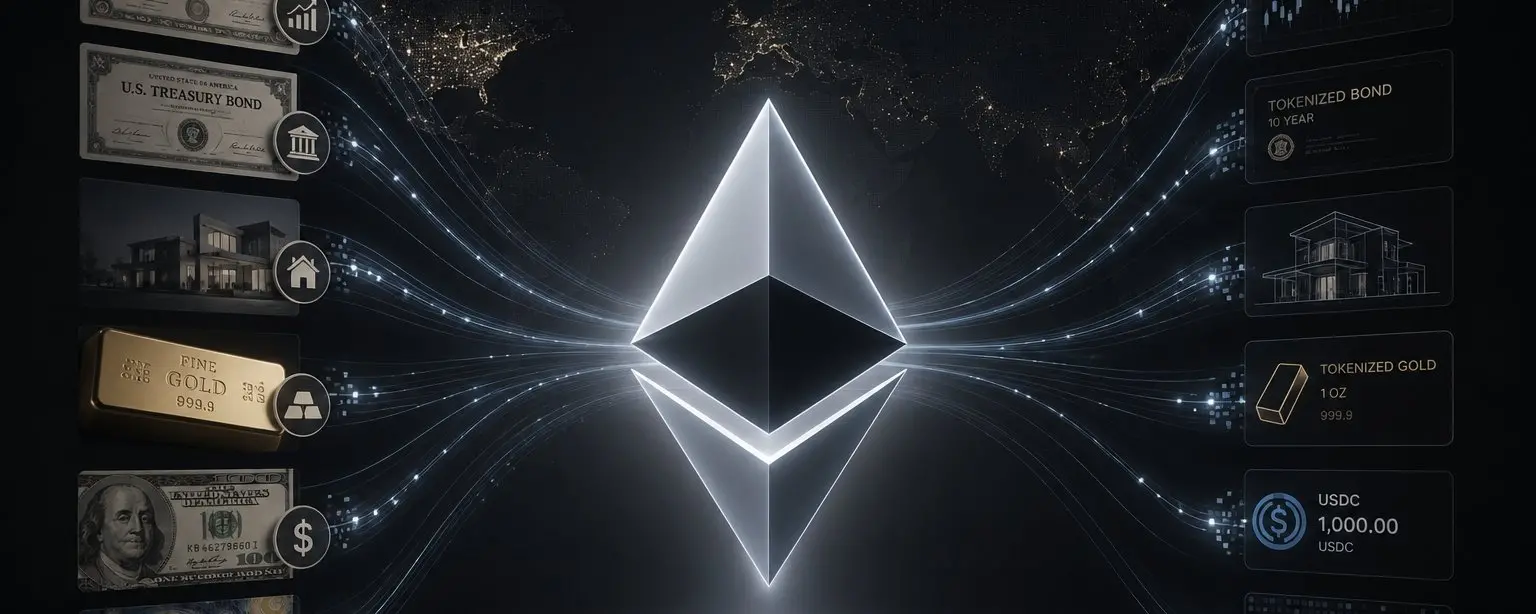
- The integration of crypto and traditional finance is accelerating; tokenized stocks will enable 24/7 trading, with exchanges like Nasdaq already positioning themselves, and traditional institutions need to adapt to an all-day market model.
- The DeFi ecosystem and the intersection of AI and crypto will benefit from DATs; the DeFi ecosystem provides yield opportunities, while the latter is a hot topic in traditional markets with significant potential.
- Regulatory policies are driving industry standardization; DATs are in their early stages, with traditional large capital beginning to enter, which will promote further integration of the crypto market with traditional finance in the long term.
(1) Definition and Institutional Positioning of Liquidity Funds
Jason: I want to start with the concept of liquidity funds. This industry has long been dominated by venture capital firms, with about 98% of the institutional capital flowing into this sector going to VC firms, but this situation is changing. What is a liquidity fund? What is the strategy of liquidity funds? How many tokens do you hold? Is it active trading, or do you hold these tokens long-term?
Seth: An interesting dynamic in cryptocurrency is that private companies have a liquidity investment tool available to anyone relatively early in their lifecycle, which is tokens. I grew up in the public stock market, and if I start to see institutional infrastructure gradually improving, I can build a truly institutional-standard liquidity cryptocurrency fund for this expanding token space. I began to see this situation emerge towards the end of the last decade. In early 2020, I joined CoinFund with Jake and Alex, which mimics what I did in the stock space, so it is based on fundamentals to assess investments. There were far fewer tokens that could capture value through tokens before. Blockworks recently outlined a checklist for what constitutes a great, transparent, investable liquidity token. But they are starting to look more like stocks now; you can simulate income, derive target prices, and build a fundamentals-focused portfolio. Moreover, with governments promoting cryptocurrency-friendly policies, these will become stocks in the future. So, in the cryptocurrency world, this integration and expansion of market cap tables and capital structures are unfolding.
Seth: As an investment firm, our responsibility is to find the best, fundamentally-based opportunities in venture capital and liquidity. In terms of liquidity, we pursue an absolute return strategy. So we invest in long-term growth opportunities, believing that these opportunities have a very large target market, outstanding teams, and the potential for significant returns based on fundamentals over many years. It’s about applying the fundamental hedge fund approach to liquidity investments in cryptocurrency, and because these tokens are liquid, we can manage risk.
Jason: Cosmo, how much overlap is there between managing public equity funds and managing liquidity token funds?
Cosmo: From my perspective, they are the same. Perhaps I should first talk about the classification of liquidity funds. People do not fully realize that different types of funds have very different responsibilities. At the highest level, there are market-neutral funds, which aim to generate returns without any market directional risk; then there are more absolute return funds, whose responsibility may be to take on some directional risk; and there are pure, fundamentally-based long-only funds, whose responsibility is to take on significant directional risk and hope to achieve meaningful alpha based on that. It’s a bit like classic stock-picking thinking, selecting good stocks, in this case, selecting good tokens, which should outperform the market in the long run. The confusion now mainly lies in the fact that in a highly volatile market like cryptocurrency, the performance of directional funds will obviously be very volatile. Market-neutral investing in cryptocurrency is very attractive because the market is so volatile, which increases the returns and spreads available to market-neutral funds, so when market-neutral funds can achieve huge returns regardless, this distinction becomes less obvious. Moreover, over the past three years, everyone has been dealing with a massive wave, which is the rise of Bitcoin's dominance. In a world where Bitcoin is one of the top 5 performing assets in cryptocurrency, it has become a benchmark.
(2) The Conflict Between Bitcoin Dominance and Fund Management
Jason: Talk about the responsibilities and how you manage the relationship between fund investors and Bitcoin's dominance. I ask this because Bitcoin is one of the best-performing assets in the market, but fund investors do not pay fund managers to simply buy Bitcoin in the open market.
Cosmo: To some extent, if you know Bitcoin will be the best-performing asset, you should go long on Bitcoin. But as a risk manager trying to build a repeatable process over many years, that process is unlikely to allow you to hold 100% Bitcoin. You likely have a long-term risk management threshold that works in so-called normal environments, which might mean your maximum concentration in any token is 25%, 30%, or maybe 40%. In that case, if you only hold 25% Bitcoin, and Bitcoin is the best-performing asset, you will obviously underperform Bitcoin. So this becomes a problem, especially when Bitcoin is more accessible and once again becomes the most recognized asset. The success of liquidity funds depends on fund investors choosing funds that suit them; as a manager, you choose fund investors who understand the goals you are trying to achieve, otherwise, you will fall into these difficult-to-manage conflicts.
Seth: There’s also a very interesting dynamic, which is that Bitcoin is a bit like the cover story of CNBC; when they talk about cryptocurrency, it appears on the cover of The Wall Street Journal or The Financial Times. For mainstream media, this is what attracts them. Interestingly, there is a lot of positive fundamental momentum in decentralized finance and stablecoins, with very innovative foundational layers and innovative companies emerging, but every time the market has buy orders, the Biden administration pushes back on this space, and then funds flow from altcoins to Bitcoin. So the focus on Bitcoin is a dynamic; people first focus on Bitcoin. We are now entering a period where the government is bringing more positive dynamics to cryptocurrency, and the speed is faster than anyone here expected. Clearly, at the end of the first quarter, there were widespread concerns about tariffs, but as those concerns began to fade, we are now starting to see excitement in the market about stablecoins. When a government shifts from executive orders to actually pushing a legislative agenda and invests political capital in the development of cryptocurrency, this is a truly breakthrough long-term growth moment for cryptocurrency.
Cosmo: Digital assets are divided into Bitcoin and blockchain technology. Bitcoin can survive, develop, and succeed independently of whether blockchain technology succeeds. Bitcoin is basically no longer related to blockchain as a technology, except that it runs on a blockchain. They are two very independent risk factors and fundamentals. So if you want Bitcoin, you should buy a Bitcoin ETF. If you want exposure to blockchain technology, you have to bet that blockchain technology will ultimately have a lot of productive use cases.
(3) Market Fragmentation and Portfolio Construction
Jason: Seth, when you joined CoinFund, if you randomly bought 10 tokens, 9 of them would go up. The market is very different now. Now if you blindly pick 100 tokens, only 2 might go up, and 98 won’t. Talk about the market or portfolio construction.
Seth: This is a good market for liquidity funds. In this environment, if you put in the effort, have good connections, attend developer conferences, and can see the direction of technological development, you can achieve very good returns. The biggest frustration over the past few years has been not seeing these positive fundamentals reflected in token valuations despite the effort. The core premise of my investment in altcoins is that these are long-term growth opportunities with a huge and expanding target market, led by very savvy developers and entrepreneurs. If you enter a seed or Series A stage startup and pick the right one, the performance of these investments should significantly outperform a quality asset like Bitcoin, even though Bitcoin still has a lot of upside potential.
Cosmo: The degree of market fragmentation this year has been truly crazy. I have been a portfolio manager in the stock space for a long time and am used to a lot of fragmentation, but this year, the reason there are so many issues comparing Bitcoin to all other tokens is that Bitcoin is up 24% this year, while by the end of July, the average drop for the top 100 tokens was around 30%. So in a world where the average token is down 30% and Bitcoin is up 24%, this comparison becomes very crazy, with only about 5% of the top 100 tokens up this year. So to some extent, this is a token-picking market, but unless your token is Bitcoin, good luck.
(4) Token Selection and Trading Strategy
Jason: How do you select tokens? How many tokens do you typically hold at any given time?
Cosmo: The core of what we do is fundamental assessment. We look for trustworthy, assessable management teams, and projects with unique economic models or those whose future economic conditions can be evaluated. And the cash flow of all assets is the most important. Interestingly, the initial discussion about value capture revolved around tokens that need to use all income for buybacks if they generate revenue, or return income to token holders through staking or other means. I typically hold about 10 to 15 tokens. The first half of the portfolio, which is 50% of the position, consists of 5 tokens. So the concentration is quite high. Regardless of the field, I would have a portfolio of 20 tokens. But as a single analyst, I cannot analyze more than 10 tokens, but I have resources and a strong team, so I can expand to 20.
Jason: You have been mentioning fundamentals; can you elaborate on what fundamentals mean?
Seth: Growth is the key factor; any on-chain metrics will almost immediately be priced in. If on-chain metrics change, for example, looking at revenue multiples, if you look at Ave and its revenue multiples, you will see that as revenue rises, the multiple remains constant, which means revenue growth is reflected in the token in real-time. You won’t gain any advantage because revenue grew by 25% last month, as that has already been priced in. It’s essential to understand the upcoming opportunities and whether revenue can continue to grow at such a pace, whether it might accelerate or decelerate. And the multiple reflects the acceleration or deceleration of revenue. If you are in a genuinely early stage of significant acceleration, you typically see multiples above trading levels.
(5) Market Narratives and the Existence of Non-Fundamental Tokens
Jason: How do you handle the view that the market is still largely narrative-driven?
Cosmo: The term narrative is a shortcut for humans; in reality, it’s a more complex system. And I do believe there are many factors involved, but there is also a timing issue, and behind the "narrative," there is likely a truth driving action. In the short term, the market is often narrative-driven, or it’s easy to use narratives to explain what happens in hindsight. But in the long run, fundamentally sound tokens clearly outperform those that are not fundamentally sound. We have a fundamentally sound portfolio, and among the top 400 tokens, there may be 75 to 80 tokens that fit this category, and these tokens have averaged about 20% to 30% better performance this year than those that are not fundamentally sound. In traditional markets, this may not sound like a huge number, but in cryptocurrency, it’s a massive number.
Seth: First, in traditional markets, meme stocks are the best-performing stocks. Second, the ability to directly drive value capture and change the fundamental nature of tokens to make them more tied to actual value capture may be more than the dynamic systems of traditional stock markets. But even in traditional stock markets, Tesla was the most shorted stock in 2013 and 2014 because people thought it was a meme stock, far exceeding its potential from a fundamental perspective. So in cryptocurrency, we have more ability to allow a project to start unlocking real fundamental value capture. Bonk is a great example on this list, with well-performing tokens having good momentum in fundamental penetration.
(6) Token Trading Execution and Timing of Selling
Jason: Part of your job is to select the right tokens. There are two other aspects I’m very interested in: one is when to sell tokens, and the other is how to execute trades. And what tokens are you holding now?
Cosmo: Alpha comes from token selection. Other managers may have advantages in token acquisition or strategy execution, such as market-neutral managers, market makers, etc. Most of our performance comes from token selection rather than actual execution. That is to say, we primarily trade spot and some derivatives to gain liquidity elsewhere. Because funds registered in the U.S. cannot trade on international exchanges. This year, we have a very distinctive and effective investment area in Ethereum. We established our ETH position primarily through the options market in May. The argument at that time was that everyone was disappointed with ETH, but ETH is still the second-largest token by market cap, the place where traditional finance enters the crypto space, and where most stablecoins reside. Over the past six or seven months, people have been very frustrated with ETH's price performance relative to Bitcoin. From the Ethereum Foundation to project leaders, everyone is trying to get ETH back on the right track and cultivate a more commercial mindset.
Cosmo: I can say at a higher level. Our largest holding remains Solana. We are still very optimistic about Solana becoming the leading L1 blockchain. We are currently expressing many of our views on other tokens through DATs. So we are the largest investor in Caner Equity Partners, aside from SoftBank and Tether, which is a large position we hold as an alternative to Bitcoin. We are also one of the largest anchor investors in Bitine, holding it as an alternative to ETH. A token that has recently performed very well is Athena. With the explosive growth of stablecoins following the passage of the stablecoin bill, this is one of the exciting things guiding and establishing the stablecoin space after the passage of the U.S. stablecoin bill. Paul Atkins' speech last week about decentralized finance shows they are really pushing decentralized finance lending. Athena is very pro-cyclical in a pro-cyclical environment.
Jason: Before we wrap up this topic, I want to discuss some other things about DATs, but before we finish the discussion on tokens and portfolio construction, when do you sell?
Seth: When there is a fundamentally strong, rapidly growing, well-performing token, and it experiences a significant drop, we will manage the risk of that position, which will be adjusted based on the token's volatility. We also conduct weekly portfolio reviews and risk management meetings, covering macro, top-down cryptocurrency situations, well-performing and poorly performing tokens among the top 100, effective and ineffective parts of the portfolio, governance proposals, key news, charts for the week, and then select each token in the portfolio as well as those being considered for inclusion or recently removed from the portfolio.
Cosmo: Starting from my thoughts on risk management, from portfolio construction, there is always a top-down view of our position in the market, how much we want to invest in any particular sector or factor, such as large-cap stocks, small-cap stocks, decentralized finance, non-decentralized finance, L1s, etc. This plays an important role in our portfolio construction and relative sizing, which may drive some non-specific or non-bottom-up decisions. But from a bottom-up perspective, when we look at any position in isolation, we pay great attention to the process, and we check our token KPIs at least once a week. When investing in high-growth stories, we want them to run. But when things are trading at extremely high valuations, the fundamentals must continue to improve; otherwise, once the market sniffs signs of weakness, it becomes difficult. So we pay close attention to weekly tracking. If revenue declines for several weeks in a row, I won’t sell, but it will increase the pressure, and we will ask ourselves why and reconsider our position size.
(7) Discussion on DATs
Jason: One thing that exists in the stock market but not in cryptocurrency is investor relations. There might be investor relations portals, investor relations teams, quarterly earnings calls. None of this exists in cryptocurrency, and I’m just starting to see some signs. If there is a founder who has issued a token listening to this, what advice would you give them about managing investor relations with liquidity fund investors?
Cosmo: People must realize that when you have a liquidity token, doing so is a huge responsibility because it is now in the public market, so you should interact with your ultimate stakeholders, which are your token holders. And as the market begins to focus more on fundamentals rather than pure speculation or narratives, management teams are starting to realize they must focus on cultivating a healthy shareholder investor base, which is crucial for the long-term health of the token.
Seth: I completely agree. Interestingly, during the previous administration, many teams were afraid to play the role of investor relations because it made them look insufficiently decentralized. Now there is a government moving in the right direction from a policy perspective, encouraging teams to engage, which has encouraged more teams to consider the investor relations function, and DATs have played a significant role in this.
Jason: Should every founder with a token, who is reputable and has fundamentals, consider DATs now?
Seth: DATs are doing a few things; one is driving education, playing an important role in introducing traditional investors to what protocols are doing, what Bitcoin, ETH, and Hyperliquid are doing, while also reducing some friction. Many traditional stock funds cannot directly hold tokens, and many tokens do not have ETFs; current ETFs typically cannot stake and generate yields. So DATs overcome a lot of friction, and the capital flow from traditional finance compared to crypto-native funds is enormous. But over time, we will see more such bridges, and after the passage of market structure legislation, traditional funds will directly invest in tokens.
Jason: From a more macro perspective on DATs, the industry has two views on them. One is a temporary trend, while the other side says this is a new reality, and you must prepare for the new reality.
Seth: This is precisely what is leading us toward the integration of the cryptocurrency market and traditional finance. The regulatory and policy environment is opening up, potentially the second-largest growth opportunity after artificial intelligence. And it’s more directly investable, easier to access, and clearer where to deploy capital. The capital flows seen in DATs are before traditional funds can enter the crypto-native space. So with the passage of market structure legislation, we see MNAV (multiple of net asset value) declining, and there may be some large winners concentrated in each ecosystem. Moreover, it will still take two to three years for traditional funds to fully enter and be able to directly participate in token trading. So before obtaining sufficient regulatory clarity to participate directly, we will go through these bridges.
Cosmo: One of the least understood and least reported aspects of DATs is that Coinbase being included in the S&P 500 is a very groundbreaking event because now all asset managers benchmarked to the S&P 500 suddenly have to decide whether to increase, decrease, or hold their positions in Bitcoin. Before this, before April, you could choose to ignore it. But now, if you manage any funds in the world, you must care about cryptocurrency. This is now reflected in the market; you can see it from the performance of Coinbase, Robinhood, Circle's IPO performance, and the emergence of DATs and the strong market response they have received. So this is all part of the big trend that stock investors now must allocate or decide to allocate digital assets, and they are clearly choosing to increase their holdings rather than hold or decrease.
(8) The Integration of Crypto and Traditional Finance and Future Trends
Jason: Finally, let’s talk about the idea of integration. We have seen DATs and, for example, Atkins' speech about on-chain financial markets and tokenized stocks, which can be seen from Kraken's acquisition of Ninja Trader. What will the world look like in a few years?
Seth: Suppose Coinbase tokenizes its stock later this year or early next year, and this tokenized stock trades 24/7 with ample liquidity. If you are a fund that currently holds Coinbase stock, and it only trades from 9:30 AM to 4 PM Eastern Time Monday to Friday, does holding traditional stock instead of 24/7 liquid Coinbase tokenized stock fulfill your fiduciary duty to investors? If there is sufficient liquidity, the answer is clearly no. This will ultimately lead people into the cryptocurrency space, allowing them to hold tokenized stocks. Then brokers like Robinhood, Circle, and traditional banks will do the same. This will create a large number of traditional stocks trading 24/7, and once it starts, it will happen very quickly. The market structure legislation may be a key component to achieving this. Nasdaq and the New York Stock Exchange understand this, but there are currently some practical operational issues. Crypto-native players have some inherent advantages, while others will need to go through a steep learning curve to catch up. This is the future, and it will come quickly.
Jason: One last question before we wrap up. Which groups in cryptocurrency will benefit the most from these DAT companies?
Seth: I think all participants, all large decentralized finance ecosystems. When you think about what DATs are, they are funds that will deploy capital as much as possible to maximize returns. Nowadays in decentralized finance, you find many interesting yield opportunities. So anyone who can generate excess returns at reasonable risk levels will be a huge beneficiary, whether it’s Athena’s 10% stable yield or staking providers or circular loan providers, they will all be huge beneficiaries.
Cosmo: Any area that people can fundamentally assess will be one of the key areas, decentralized finance will be one of them, and a hot area that will emerge soon is the intersection of artificial intelligence and cryptocurrency. This is a significant MAG 7 theme and a big theme in traditional markets. There are some very interesting opportunities at the intersection of AI and cryptocurrency, which is a mature area for DATs.
++Click to learn about job openings at ChainCatcher++
Recommended Reading:
 Risk warning
 Risk warning