








Back in Hong Kong, Zhao Changpeng's on-site interaction record: Recently traveled a lot, enjoys experiencing air surfing, mainly focuses on RWA, compliance, and biotechnology

 Hong Kong, as a pilot area for the digital currency and Web3 industry, is at a great time for development.
Organized & Edited by: ChainCatcher HK Observation Team
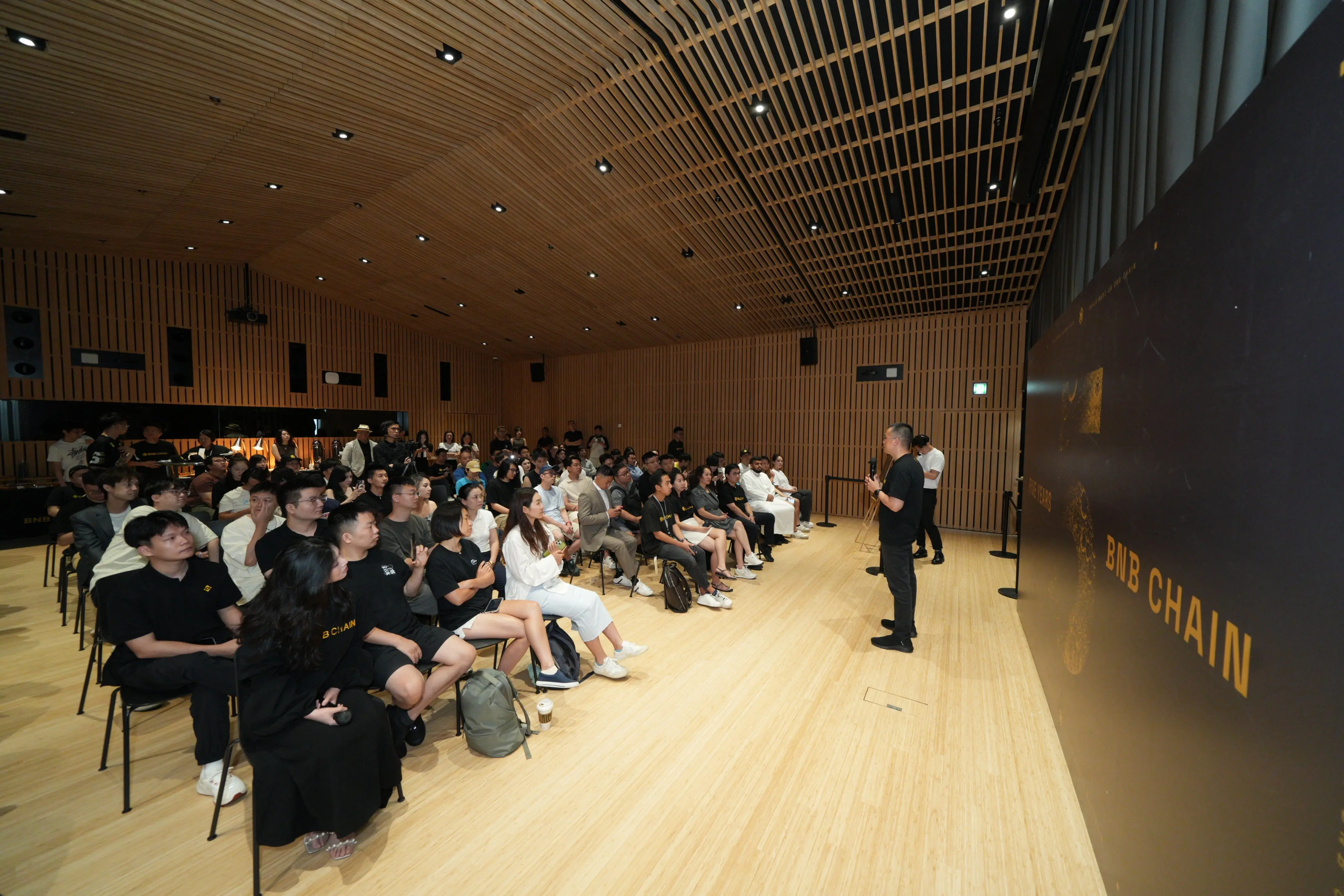
Today, BNB Chain is hosting a five-year anniversary event in Hong Kong, and CZ is here again! Regarding the development of Web3 in Hong Kong, his overall feeling is that Hong Kong is currently supporting innovation and doing well in attracting new industries to enter this space. In the future, once the mainland supports digital currencies and the Web3 industry, a large number of talents may be attracted back because the market is larger. Now, Hong Kong is a pilot, making it a good time for development. The following is a compilation of his series of viewpoints from the interactive session on-site, hoping to inspire you.
Q: A few months ago, you were often surfing on Twitter and paying attention to BSC memes. Recently, your surfing frequency has decreased. What interesting new content are you focusing on now? Also, you changed your Twitter avatar to one of aerial surfing.
CZ: I was squeezed a few times while playing memes on BSC, and later realized that public learning is not very good. I studied Trust Wallet for a long time, and Pancake for a long time, but when it comes to actual application, I found that the user experience is different from CEX. Meme coins are quite fun, but I’m not sure how long they can last. I think RWA has great potential now, but there are many challenges when assets go on-chain. Financial assets are often defined as securities, which come with a set of compliance requirements. If defined as commodities, there are also compliance requirements for commodities. Beyond these two categories, other assets going on-chain will face issues like liquidity and redemption. Our team encounters many problems that need solving when collaborating with institutions like BlackRock, which is quite interesting. Recently, I’ve spent a lot of time focusing on AI and biotechnology, and I might invest in related projects.
Additionally, I’ve been traveling more than before. I was confined in the U.S. for a while, which was a bit dull. Now that I’m free, I’ll travel more. One benefit is that many high-level officials in various countries are willing to consult me on how to regulate Web3 and how to manage national digital currency funds. For these questions, I’m very willing to help, so I spend a lot of time traveling. When I travel, I update Twitter less; generally, I tweet more during exhibitions. My X is mostly operated by myself; I tweet more when I have free time and less when I’m busy, which is quite random. Also, I was confined for a long time, and after getting out, I found that there are many pleasures in life that I haven’t experienced, so I’ve become more playful and tried surfing and skiing.
Q: Hello, Big Brother, I want to ask you about changing your Twitter avatar to aerial surfing. Have you calculated how much seawater you drank to successfully leap? What was the feeling like when you leaped?
CZ: Sports are very fun; I drank a lot of seawater, almost dried up the sea, haha! I like being in nature. Skiing is a bit dangerous for me; I’ve been skiing for over thirty years, but going fast comes with risks, and I’m worried about falling due to my back issues. Water sports are safer when it comes to falling, so aerial surfing is very interesting; I recommend you try it.
Q: I noticed that you mentioned in your speech in Japan that there is a gap in RWA token price tracking data. We at Rootdata have been a crypto data platform for three years and are now focusing on RWA data. In your view, what opportunities for integration exist for RWA asset data infrastructure for products like ours?
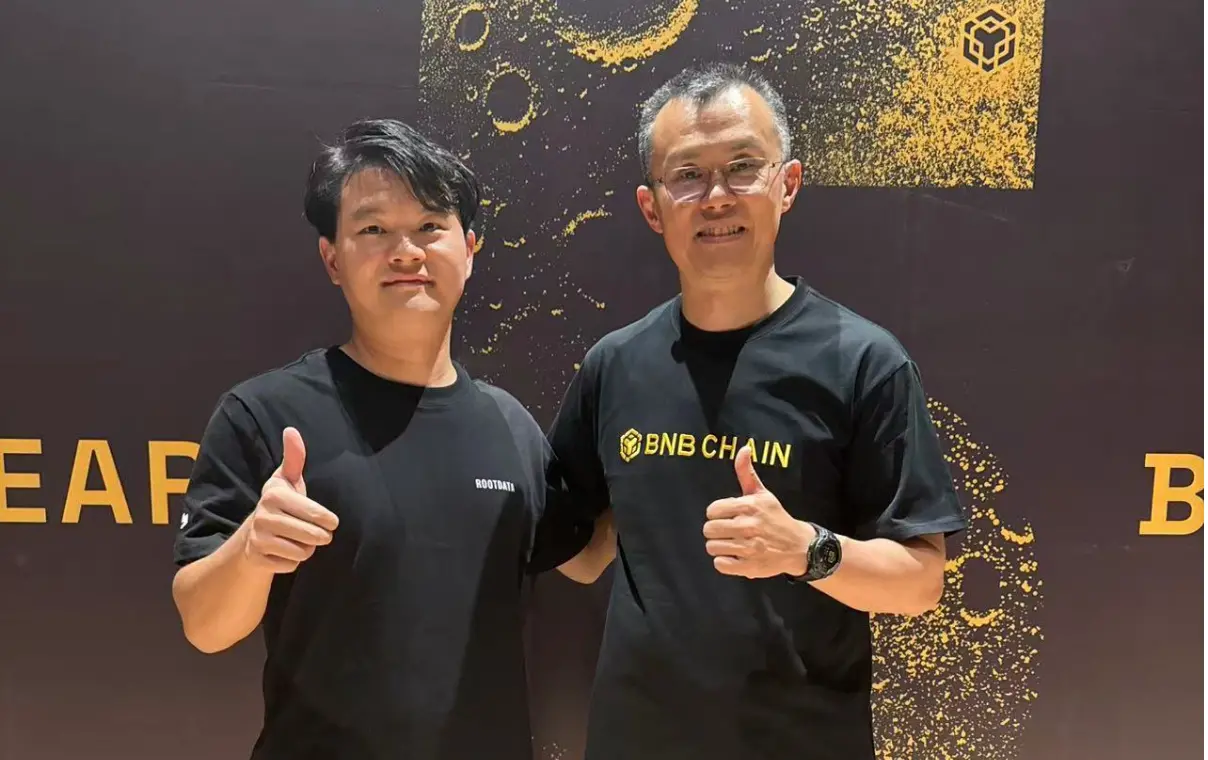
CZ: Traditional financial products (like currencies and stocks) have well-established pricing and historical data, but data for assets like real estate and art is unreliable or very subjective. Once RWA matures, on-chain trading volume and liquidity will shift pricing power to the chain (for example, stablecoins achieving high trading volume through AMM). Currently, most transactions are bulk trades, which are very opaque. Therefore, data transparency (like historical prices and trend comparisons) can promote trading, forming a positive cycle of "data improvement → increased trading → enhanced liquidity." Currently, the lack of RWA data presents an opportunity for data platforms, and I have also suggested that platforms like CMC pay attention to this area.
People often ask a question: how much is this worth? However, many prices are not transparent. Once everything is on-chain, prices will be transparent, so I believe there are many opportunities in creating related data platforms.
Q: In your opinion, why don’t publicly listed companies create native stock tokens themselves and instead choose third parties (like Robinhood)? What is the ultimate product form of stock tokens? For example, X stocks, Robinhood, or stable stock, which would be more ideal?
CZ: The core issue is compliance. Publicly listed companies are regulated by the securities regulatory authority, and directly issuing stock tokens may be defined as securities, requiring compliance with regulations (like KYC and accredited investor systems). On-chain wallets do not require audits, leading to regulatory conflicts. Intermediaries are involved to avoid direct association risks, but this results in tokens not being able to distribute dividends, harming user interests. The ideal situation is for regulators to allow publicly listed companies to issue tokens, making them globally tradable (for example, the U.S. promoting the commercialization of securities means that in the future, everyone worldwide can buy U.S. stocks; if Hong Kong doesn’t adjust, it will suffer, and if Japan doesn’t act, it will also suffer). Technically, issuing tokens is very simple; the challenge lies in adjusting regulatory rules. Currently, token prices are decoupled from actual stocks, and the price difference cannot be arbitraged, indicating that the product is not fully linked. However, the core issue now is compliance rather than technology.
Q: We are working in the DeSci space, which is more led by leaders, and the attention from crypto investors is very insufficient. However, we hope to convey knowledge and bring new types of data to blockchain. We currently need the power of Web3 to assist us. What are your thoughts on this?
CZ: The difficulty in combining DeFi and Science lies in the contradiction of time cycles. Scientific research takes years, while Web3 users pursue short-term gains (like "speculating on meme coins"). However, theoretically, excellent researchers need small amounts of funding (around $100,000 to $200,000) for support. For example, if research is successful (like cancer drugs), the returns can be substantial. If future profits can be shared with token holders, the logic holds. I understand that there are already projects trying to reduce research costs by processing biological data through AI. Once there are breakthrough results, the sector will explode, but what is currently lacking is a "flagship case."
Click to learn about job openings at ChainCatcher
Recommended Reading:
Pantera Capital In-Depth Analysis: The Value Creation Logic of Digital Asset Treasury DATs
Backroom: Tokenization of Information, a Solution to Data Redundancy in the AI Era? | CryptoSeed
 Risk warning
 Risk warning


Popular articles





