








WLFI has dropped, can the coin stock ALT5 still surge?

 Trump: Cutting coins with the left hand, cutting US stocks with the right hand.
Author: Lin Wanwan, BlockBeats
Editor's Note: On September 1, World Liberty Financial (WLFI) welcomed the first token application and trading. However, as early as August, WLFI had packaged its tokens as stock and went public through a reverse merger in the U.S. stock market.
Currently, from a market capitalization perspective, ALT5, as "WLFI Reserve Stock," has seen its stock price plummet alongside WLFI's token price. The Trump family's grasp of the cryptocurrency narrative and their strategic maneuvering has once again harvested the market.
The following is an in-depth analysis of the ALT5 stock company, originally published by Rhythm BlockBeats on August 20. Enjoy reading.
In August, among the announcements on Nasdaq, there was a seemingly ordinary financing that exploded like a hidden thunder: ALT5 Sigma issued up to 200 million shares of common stock at $7.50 per share (approximately 10 billion RMB), exchanging shares for WLFI tokens, and sent Eric Trump, the youngest son of Trump, into the board of directors.
Overnight, this financial technology company ALT5, which had an annual revenue of only $20 million, transformed into "the Trump family's listed treasury." ALT5 is not just raising funds; it is brazenly pushing the politically charged WLFI token and its issued USD1 stablecoin into the U.S. securities system.
WLFI (World Liberty Financial) is not merely a startup but a "political mint" crafted by the Trump family.
Founded two months before the U.S. elections, WLFI has already brought in hundreds of millions of dollars in revenue for the family business through the stablecoin USD1 in just a few months. In other words, ALT5 is not just accessing a stablecoin but a complete set of political financial weapons.
The question is—Is ALT5 really raising funds, or is it selling a wealth ticket inscribed with "political dividends"?
1. ALT5's Hidden Lineage: The Interconnection of Three Forces
A company's shareholder list often reveals more than its financial reports.
The shareholder structure of ALT5 is almost a power puzzle: offshore capital, Wall Street funds, and the political token faction intertwine, making this company appear both like a fintech enterprise and a political financial experiment.
What truly gives ALT5 a whiff of gunpowder is this type of shareholder: the political token faction. The two representatives are Zach Witkoff and Eric Trump.
Eric Trump needs no introduction—he is the son of U.S. President Trump, and the family's cryptocurrency business currently falls under his jurisdiction, directly entering the ALT5 board.
What is worth discussing is Zach Witkoff—co-founder of the WLFI stablecoin and currently serving as the chairman of ALT5.
If we only look at his resume, Zach Witkoff's background already determines that he is not an ordinary entrepreneur. He is the son of Steven Witkoff, a well-known real estate developer in New York, who currently serves as the U.S. Special Envoy for Middle East Peace. The Witkoff family has decades of experience in Manhattan's real estate market, having held numerous landmark properties, and his father Steven has had years of dealings with New York's financial and political circles.
The Trump family's roots are in real estate, and Steven Witkoff has long-standing connections with the Trump family in the New York real estate sector.
Zach's relationship with the Trump family can be summarized in one sentence: real estate connections + political ties. Thus, the relationship between Zach and Eric is not merely "cooperation," but rather a familial political financial alliance.
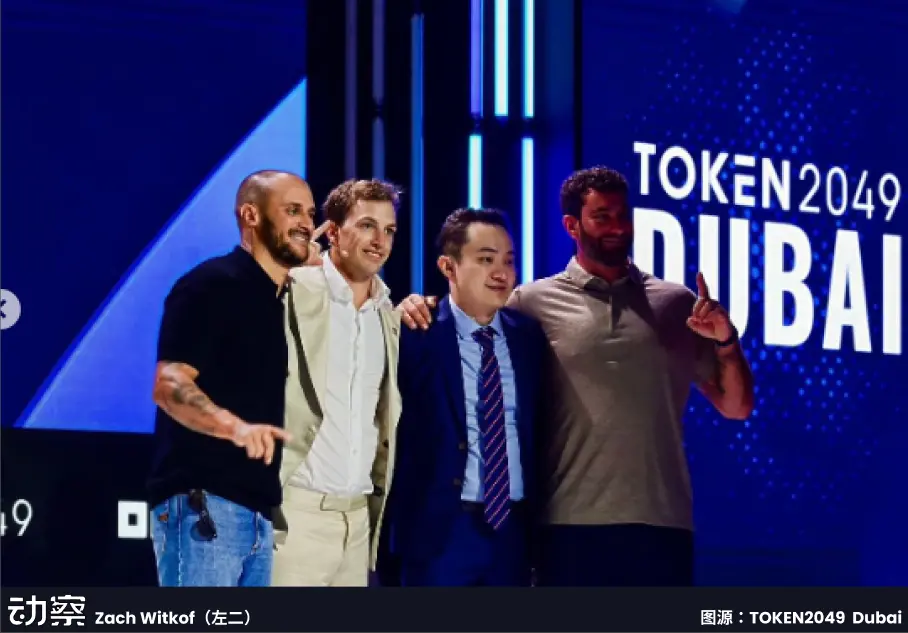
If Eric Trump puts the family's political resources on the table, then Zach Witkoff is the one executing the financial grounding for the Trump family. He is a key bridge in this intertwining of political and financial interests.
The existence of these two individuals means that ALT5's development path will become increasingly politicized. It is not just pursuing commercial expansion but is preparing financial tools for the U.S. political cycle from 2025 to 2028. To some extent, it is part of the Trump family's "financial arsenal."
Next, let's take a look at one of ALT5's major shareholders, an offshore company registered in the Bahamas—Clover Crest Bahamas Ltd., holding about 11% of the shares. The Bahamas is well-known as a tax haven, where many wealthy individuals and companies register their businesses. The reason is simple: it allows for lenient tax policies while avoiding excessive regulatory scrutiny.
In simpler terms, Clover Crest acts like a hidden channel for the Trump family, quietly sending money to ALT5 while also isolating risks when necessary.
Another force among the shareholders comes from Wall Street fund companies, such as the well-known Vanguard Group. These types of funds may be indirectly held by retail investors globally, as they operate large-scale index funds.
Vanguard's stake in ALT5 is not high and appears to be a passive allocation. However, the issue is that when the public sees a name like "Vanguard" on the shareholder list, there is an instinctive perception that this company is "legitimate" and "reliable." This is what is known as legitimacy endorsement.
These three forces each have different logics: offshore financiers provide hidden funding channels to ensure money flows in; Wall Street funds provide facade and legitimacy to ensure the company appears "compliant and proper"; and the political token faction provides narrative and strategic direction, pushing ALT5 onto the global stablecoin stage.
The combination of these three makes ALT5 both clean and dangerous.
On the surface, it is a rule-abiding fintech company; in reality, it is being used as a stablecoin version of a "Trojan horse," quietly carrying political and capital ambitions under the guise of compliance.
2. The FinTech Facade—Where Does the Compliance's Secret Door Lead?
On paper, ALT5 is a perfectly normal fintech company. It holds complete licenses, offering a full suite of services including payment gateways, OTC trading, custody, and white-label exchanges, with an annual revenue of about $20 million and a gross margin close to 50%, making it a top performer in the crypto payment industry. Compliant, transparent, with impressive data, it even appears "cleaner" than many traditional payment companies.
However, what truly propelled ALT5 from a niche tool-based fintech to a global focus was the $1.5 billion financing in August 2025. Overnight, it transformed from a company that merely provides APIs to a new position—becoming the "Nasdaq treasury" for the Trump stablecoin WLFI.
This means that ALT5 is no longer just a technology-selling factory but has become a key node in the globalization of stablecoins.
Why is it called a "backdoor"? The reasoning is quite simple.
First is the protection of surface identity. If the WLFI stablecoin wants to directly enter payment networks in various countries, it will almost certainly hit the high walls of central banks and regulators. But ALT5 has existing fintech licenses, allowing it to step in as a "payment API service provider." Regulatory agencies see a compliant fintech company rather than a politically charged stablecoin.
Secondly, there is a hidden channel for cross-border settlements. ALT5 Pay's API allows merchants to accept cryptocurrencies like BTC and USDT, which can then be automatically converted to dollars or euros in the background. If WLFI/USD1 is embedded, merchants and users may not even realize they are using a stablecoin backed by the Trump family. On the surface, it is "payment technology," but in reality, it completes the infiltration of stablecoins.
Finally, there is the natural integration of a global network. ALT5 has already connected the Lightning Network with stablecoin payment systems, achieving efficiency far superior to traditional cross-border payments reliant on SWIFT. For many emerging markets with a strong demand for dollars but lacking direct access to Wall Street, ALT5 provides an invisible express lane. Through it, WLFI can quickly "sink" into global trading scenarios with minimal resistance.
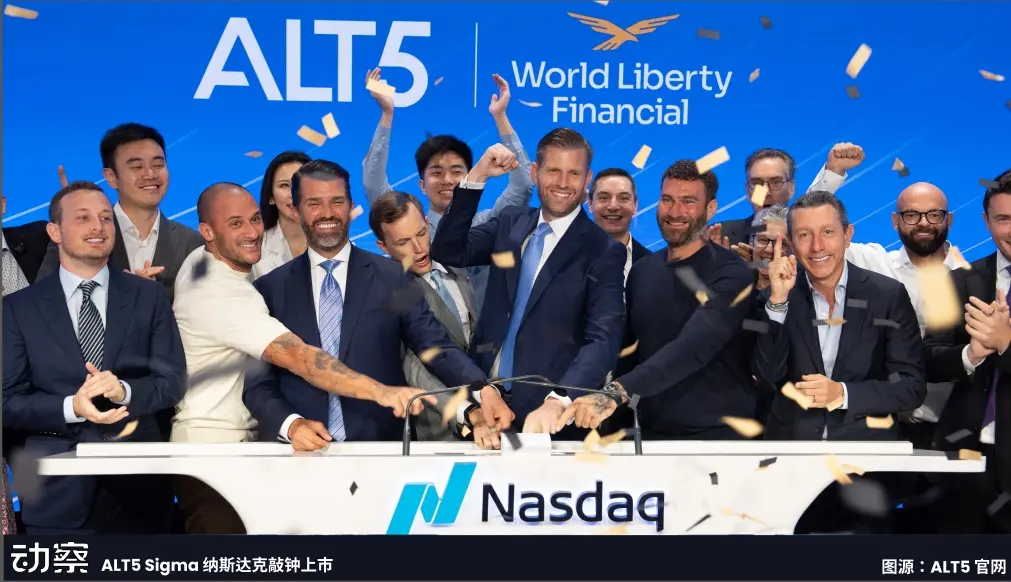
In this way, the significance of that $1.5 billion financing becomes clear: it is not just simple expansion funding but more like a strategic deployment to lay out a global payment pipeline for WLFI.
ALT5 can naturally continue to assure regulators, "We are just a compliant API payment company." But in the shadows, its interfaces may be becoming the tracks for stablecoins to bypass the traditional financial system.
This dual narrative makes ALT5 a typical "fintech facade." Externally, it appears clean, transparent, and professional, a textbook example of fintech; internally, it is being pushed to a strategic height, becoming an indispensable piece in the puzzle of stablecoin globalization.
This may be the key to how WLFI can quickly transition from a political concept to a real financial tool: it has found a "legitimate backdoor" like ALT5.
When the compliance facade is thick enough, stablecoins can silently flow into merchants' and users' daily transactions, and by the time regulators truly react, that door may have already been completely opened.
3. Trump's Shadow Financial Empire
ALT5 is just the tip of the iceberg; the larger landscape beneath is the Trump family's effort to create their own dollar system.
……
Click to learn about job openings at ChainCatcher
Recommended Reading:
Pantera Capital In-Depth Analysis: The Value Creation Logic of Digital Asset Treasury DATs
 Risk warning
 Risk warning


Popular articles





