Dialogue with BNC CEO David: Unveiling the Past and Present of BNB Version Microstrategy

 If the team is determined enough, the DAT model has the opportunity to outperform the target assets in the long run, which is what truly deserves attention.
Author: Crypto Brave
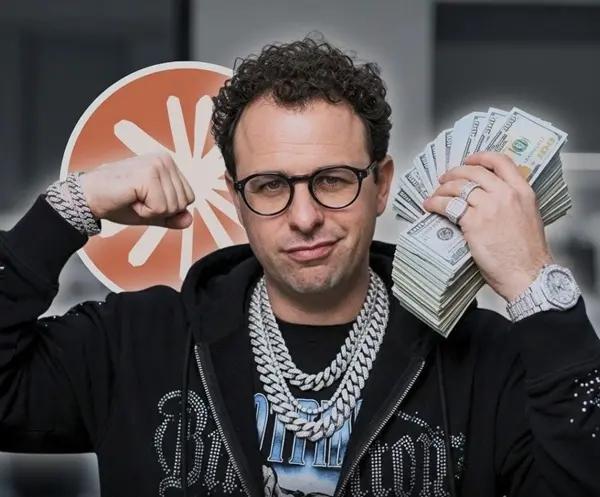
On August 26, in the CHi Labs program "Facing the Trader," Brave had a conversation with Joanna, Chloe, and BNC CEO David J @namdar, revealing the past and present of the BNB version of MicroStrategy.
Topics covered included David's crypto journey, the secrets behind the birth of BNC, predictions for the future of BNB, and even Galaxy Digital's "network of relationships."
Guest introductions:
David J @namdar (BNC CEO, Galaxy Digital Co-Founder)
Joanna @justsayuluvjo (SOON Co-Founder/CEO)
Crypto Brave @cryptobraveHQ (Crypto blogger, host, CHi Labs anchor)
Chloe: @ChloeTalk1 (Host, HTX Research)
CHi Labs: @CHILABS_ focuses on Binance Square live broadcasts and influencer IP creation.
Binance Square Live Replay, Edited Video Replay.
Joanna: Let me introduce myself first. I worked as a forex trader and derivatives creative designer in traditional finance, initially at Citibank. In 2017, the programmability of Ethereum smart contracts led me to delve into cryptocurrency technology. Although I couldn't fully understand the terminology in the white paper at the time, I self-studied programming and created a crypto developer community in New York. In 2020, I joined Coinbase, where I was responsible for institutional team listing strategies and the launch of the NFT market. Since then, I have focused on ecosystem expansion, especially on EVM-compatible protocol layers.
Joanna: The BNB MicroStrategy company BNC you lead currently publicly holds 325,000 BNB. May I ask how much BNB you personally hold?
I am currently unable to provide specific numbers. However, I can share that CZ has publicly stated that over 90% of his crypto assets are in BNB, with Bitcoin being the only other allocation. I personally agree with this approach. Within the next year, I hope to disclose my actual holdings to the market and community. Right now, my asset types are still quite diversified, but I plan to gradually narrow them down to just Bitcoin, BNB, and a very few other assets.
If I could go back in time, I wish I had the same confidence in BNB when it first conducted its ICO and held onto it. The reality is that I only started buying BNB between 2020 and 2021, during which I frequently traded many different tokens. Like many crypto practitioners, I often ended up holding fewer tokens than I initially had.
Now, I don't hold as much BNB as I did back then, but I still retain a portion. Both at the company level and personally, I will continue to increase my holdings. I can say with certainty that my confidence in BNB is stronger than ever, and I believe that over the next 1, 3, or even 5 years, BNB will outperform Bitcoin.
Crypto Brave: What is the background of BNC's establishment? Why adopt a MicroStrategy model?
The decision to establish BNC actually stems from my long-term attention to Michael Saylor's MicroStrategy. Over the past five years, I have not only traded MicroStrategy's stock but also personally invested and experimented with related derivatives strategies. This year, I participated in Nakamoto, driven by David Bailey, and shared it with friends; out of 13 people, 12 invested, and the feedback was very positive.
From these cases, I have become increasingly convinced that Digital Asset Treasury (DAT) is essentially a highly cost-effective investment approach. Unlike ETFs, which passively track prices, the uniqueness of DAT lies in the fact that you are betting not only on the asset price itself but also on whether the management team behind it can continuously accumulate more underlying assets. For example, investing in a DAT like MicroStrategy, MetaPlanet, or BNC, after holding for one or five years, your unit holdings could correspond to two, three, or even four times the number of underlying assets.
Many crypto investors often lament that they end up with fewer assets than they initially had. The reason I like DAT is that its goal is to continuously increase holdings rather than frequently entering and exiting based on short-term fluctuations. Specifically, when choosing targets, I prefer to focus long-term on projects that truly have growth potential, with strong commitments from both the team and community, active ecological activities, and a willingness to build long-term. Such assets are worth being included in the treasury and are worth holding onto for the long term.
Crypto Brave: You established 10X Capital this year, specifically to promote the BNB MicroStrategy, right? Among many crypto assets, why did you choose to focus on BNB?
Actually, 10X Capital was not founded by me in 2025; it was established about 20 years ago by Hans Thomas, the current CEO and my partner. They have long focused on venture capital and investment banking and have participated in several digital asset treasury-related projects, such as Nakamoto and DeFi Development Corp (DFDV). I have known Hans for many years, and after the Nakamoto transaction was completed, he and Nakamoto CEO David Bailey both believed that my understanding and expression of digital asset treasury surpassed that of many management and investment banking professionals. Therefore, they hoped I would join and expressed their willingness to support me in promoting Bitcoin treasury globally in any market. At that time, I was also considering different possibilities, such as Israel, Korea, and even hoping to see large DATs in mainland China one day.
Later, Hans invited me to participate in the BNC project, which had not yet been renamed. I jokingly said that I wouldn't take the CEO position unless CZ and my friend, Binance board chairman Gabriel, both agreed. At that time, I actually enjoyed a relatively low-key life as an investor behind the scenes. But unexpectedly, CZ and Gabriel both wanted me to take the CEO role and build BNC into the BNB version of MicroStrategy. So I decided to step up and take on this role, and I am very grateful for their and Hans's support.
Now, as I interact with more builders in the community, my confidence in BNB continues to grow. I feel that my role is to help more people truly see the potential and value of the BNB ecosystem. Looking back at my career, I have had many intersections with BNB and Binance. After Galaxy, I was invited to be the CEO of Binance US, but at that time, the regulatory environment in the U.S. was not ideal, and I didn't want to be limited to the role of an exchange. More than a year ago, CZ and Gabriel also approached me, hoping I would join the BNB Foundation, but I felt that the role of operating the foundation was more suitable for someone else. I believe I am better suited to leverage my years of experience in investment banking, investment, and ecosystems to promote BNC as a treasury company focused on BNB and make it a successful long-term strategy.
Chloe: What is the relationship between BNC and YZi Labs? What role do ecosystem partners play?
I have actually known CZ for about eight or nine years, and we have a good personal relationship. We often communicate in social settings, but we have never worked together before. I feel very honored to join BNC and partner with CZ and YZi Labs. After all, besides Satoshi Nakamoto, CZ may be the most important figure in the entire crypto industry.
The YZi Labs team has performed exceptionally well during our collaboration; they have consistently adhered to long-termism and focused on building. They not only helped us formulate the initial plan for BNC but also established a long-term vision: to build BNC into a truly significant digital asset treasury that holds a substantial amount of BNB and promotes the development of the entire BNB ecosystem.
In terms of our partnership, they brought credibility and resource channels, allowing us to better understand everything happening in the ecosystem. Our role is to demonstrate the unique value of BNB as an asset to the market through long-term holding and firm belief. The collaboration between both parties creates a virtuous cycle—focusing on ecosystem building attracts more people and capital, which in turn benefits the entire BNB ecosystem.
Crypto Brave: In Chinese culture, the number "8" has always been regarded as a very auspicious and lucky number. I noticed that the number of BNB you purchased recently was exactly 88,888, and this number often appears in many financial records of BNB and Binance. So I would like to ask, was this number a deliberate arrangement between you and CZ, or was it a coincidence?
Actually, BNC has been regularly increasing its holdings of BNB, but we also attach great importance to the significance of cultural symbols. I lived in Hong Kong for three years and have been visiting Hong Kong, Singapore, Japan, and other parts of Asia every year since. Although I haven't been to mainland China for over ten years, I hope to visit soon.
For me, the number 8 seems to have become part of the BNB story. For example, recently, the price of BNB broke through $800 and even reached a new high of $888. In the future, people will see more coincidences related to "8" from us—we will continue to increase our holdings regularly and like this symbol of good luck.
Additionally, I also appreciate CZ's redefinition of the number "4." In Eastern culture, "4" is often seen as unlucky, but in the crypto world, CZ has given it a new positive meaning. Many times, we even jokingly make the "4" gesture together. So in the future, you will not only see more "8" but also quite a few "4," and they will all become part of the BNB story.
Joanna: BNC plans to hold 1% of the total supply of BNB, with a current market value of about $120 billion. How much funding is needed to achieve this goal?
We have completed $500 million in equity financing and have also bound a warrant, which may bring in another $750 million in the future. This means the overall scale could exceed $1.25 billion. Based on this, we have set an initial goal of holding about 1% of the total supply of BNB.
However, our focus is not just on achieving a single milestone but on clearly conveying our long-term vision to the market and building the right structure to achieve sustained and steady accumulation. We cannot control the price of BNB in a month or six months, so we are not pursuing specific numbers. More importantly, through long-term execution, we aim to solidly accumulate the number of BNB. Referring to other digital asset treasury cases, I am very optimistic about the future. As our strategy gradually lands, I believe we will have the opportunity to further expand our goals and plans at the right time.
Crypto Brave: Tom Lee predicts that Ethereum will reach $10,000. What do you think about BNB's price potential?
I have actually known Tom Lee for a long time. I entered the crypto space around 2012 or 2013, when he had not yet started paying attention to the industry. When I founded my first company in 2014, I actively reached out to traditional finance figures like Tom Lee and Cathie Wood, hoping to bring them into the crypto world, and I tried to introduce Bitcoin to them. More than a decade later, looking back, some of Tom Lee's predictions, while controversial, have indeed successfully placed him at the center of media and public attention.
In my view, running a digital asset treasury requires telling a good asset story while highlighting the unique value of the underlying asset itself. I personally have not invested in BMNR, but I have invested in Sharplink because I know Joseph Lubin well; we have known each other since he founded ConsenSys and Ethereum. I believe that in the long run, SBET will outperform BMNR.
As for price predictions, I hope Tom Lee is right. My confidence in Bitcoin is stronger than at any time in the past, and I believe it will break $1 million; I also hope Michael Saylor's prediction comes true, and BTC could even reach $10 million. I also believe that Ethereum will reach $10,000 to $20,000 within the next one to three years.
As for BNB, I believe it will definitely grow into an asset with a market value exceeding $1 trillion. Based on the current supply, the corresponding price is about $7,000 to $8,000, and my personal long-term goal is for BNB to break $10,000.
Chloe: In the Chinese-speaking community, Tom Lee is seen as a KOL, and his views often trigger market sentiment, sometimes even more than the projects themselves. What do you think of this phenomenon? Do you think a DAT company needs to have a similar opinion leader like Tom Lee to help expand its influence? If you had the opportunity to choose another project, would you prefer to invest in SBET or BMNR?
For me, I am very familiar with SBET, and I have met their new co-CEO Joseph Chalom. I have always maintained an open and cooperative mindset in the crypto industry, which is one of the things I love about the crypto world. Many people, once they enter the crypto industry, naturally start to explore more areas they had not previously engaged with—from trading to investing, even learning to code themselves, gradually participating in NFTs and different cyclical trends. I have seen many such transformations and enjoy helping people delve deeper into this industry.
So in my view, anyone who contributes to the industry, regardless of how they do it, deserves respect. Some expand their influence through media appearances, like Tom Lee; others focus on building infrastructure, like Joseph Lubin's role in the Ethereum ecosystem. Both types of people are driving the industry forward.
Returning to BNB, my core focus is on all the people and projects building the BNB Chain ecosystem. My role is to support them and promote community development. This is why I am very pleased to partner with YZi Labs, the BNB Chain Foundation, and the Binance team. For me, the story of BNB has almost run through my career, and now I am willing to fully focus on BNB. Through BNC, I hope to direct more capital toward BNB and also support other teams that want to create BNB treasuries to grow this ecosystem together.
Chloe: Is the DAT market in the U.S. saturated? How does BNC maintain its competitiveness?
In my view, competition is actually a reflection of market demand. As an investor, I judged a few months ago that about $50 billion to $100 billion would flow into the crypto industry through DATs and public markets. Now, I expect that this number could reach $100 billion to $200 billion in the next year. So when I see more and more DATs emerging, it actually indicates that investors are interested in this vehicle and want to enter the market through it.
Interestingly, this competition will play out in different markets in turn. At one stage, the U.S. may be the most active, but at any moment, there could suddenly be tens of billions of dollars emerging in Japan, Hong Kong, or London. I often see teams from different regions exploring how to implement the DAT model under their respective exchange rules.
As for BNC, our differentiated advantages are very clear: the background of our team and partners, the singular narrative focused on BNB, and the scale and credibility brought by being listed on NASDAQ all put us in a leading position. I hope BNC can maintain its first-mover advantage and become the largest BNB treasury globally. Of course, I also welcome healthy competition. If in the future, there is an opinion leader like Tom Lee focusing on telling the BNB story and spreading it globally, I would be very happy. Because ultimately, all of this will drive the entire ecosystem further.
Chloe: The DAT strategy in the U.S. market is rapidly heating up, and BNC is also one of the earliest teams to launch in the U.S. At the same time, you recently collaborated with Huaxing Capital to launch a new DAT in Hong Kong. Looking ahead, which regions or markets do you personally see as the most promising for DAT growth?
For BNC, the U.S. market will continue to be our flagship and focus because it has the most mature capital markets. In my personal crypto career, I have led several companies to go public in Canada, and Galaxy successfully entered the U.S. market, while this time BNC is starting directly from NASDAQ. Meanwhile, my partners at 10X Capital will also support more Bitcoin treasuries and other types of projects globally.
Of course, Asia has always been a market I pay close attention to. This year, I hope to return to Asia next month to attend Korea Blockchain Week and Token 2049 in Singapore, and also visit Hong Kong. The markets I am most optimistic about are Hong Kong, Korea, and Japan.
Singapore has been very friendly to crypto in the past, but recent regulatory tightening presents more challenges. Taiwan is also good, but there are some issues with regulation and implementation.
Besides Asia, the opportunities in the Middle East are also huge; the UAE is a very suitable market for DAT, and Bahrain and Saudi Arabia may follow suit soon. As for Europe, I am still observing; Poland could potentially become a "dark horse," even possibly having the largest Bitcoin treasury in Europe. Meanwhile, Germany and the Netherlands also have opportunities.
Overall, the story of Bitcoin has deeply resonated, and there is almost a global consensus. But I believe that the globalization of BNB is not inferior, and may even be broader. After all, Binance is the largest exchange globally, with nearly 300 million users, the vast majority of whom have directly or indirectly interacted with BNB. This user base gives me more confidence in the global prospects of BNB.
Joanna: Galaxy Digital once executed an OTC trade of 80,000 BTC and emphasized that "relationships are more important than quotes." How do you understand the power structure in the crypto world?
For me, what I value most has always been the community, networks, and the reputation built in the industry. This is also what I love about the crypto industry. When I co-founded Galaxy with Novogratz, I emphasized a principle: regardless of bull or bear markets, we must persist as long-term builders. Only in this way can you truly build trust and form long-term relationships that stand the test of time.
The phrase "relationships are more important than prices" emphasized by Galaxy reflects this principle. Prices will always fluctuate; volatility is part of the crypto market. But when conducting large trades, what truly matters is trust and credibility. You must always fulfill your commitments, so that over the years, you can build a good reputation in the industry. This is especially important because many people entering the DAT field only want to cash out while it's hot and lack the willingness to build long-term. For me, whether in investing or leading BNC, what I value in decision-making is the medium- to long-term cooperative value—I want to collaborate with those who truly value reputation and are willing to build long-term.
In the early days of Galaxy, after we went public, I focused my efforts on building the trading business. We established an OTC trading desk, cultivated a team for external client development, and formed an internal team of quantitative traders. I was primarily responsible for promoting the development of Galaxy's OTC business and helping the company establish a network for large trades. Although I left Galaxy many years ago, I believe they have done quite well in building relationships in the industry and completing large Bitcoin trades.
Chloe: Many investors in Asia are very interested in DAT. Can you give some advice to Asian investors?
Actually, I always remind investors to be cautious and avoid being swayed by market emotions. My first piece of advice is not to blindly rush into DAT projects right after they are announced. Because at such moments, the prices of related stocks often surge fivefold, tenfold, or even twentyfold in a short time, while many people overlook the real indicators that should be focused on, such as the future market value to net asset value ratio (mNAV) and the current valuation multiples corresponding to the purchase price. If these factors are not considered, it is easy to buy at a high price. A better approach is to let the market cool down first and carefully assess whether the company really has the ability to continuously accumulate more underlying assets at the current price. Only in this way can investments have a chance to yield good long-term returns.
Another equally important point is to choose teams and companies that truly have a long-term commitment to building. We can see some successful cases; for example, MicroStrategy experienced significant volatility in its early days, but five years later, its stock performance greatly outperformed Bitcoin; Japan's MetaPlanet has a similar story. So I would advise everyone to detach from the short-term fluctuations of one to three months, or even six months, and focus on a one to five-year cycle. If the team is determined enough, the DAT model has the opportunity to outperform the underlying assets in the long term, which is what truly deserves attention.
 Risk warning
 Risk warning