When wealth management returns to the chain: Is the 10% stablecoin yield of CeDeFi a new dividend or an old illusion?

 The subsidies of CeFi are unsustainable, the threshold of DeFi is too high, and CeDeFi is trying to provide a middle solution.
Author: kean
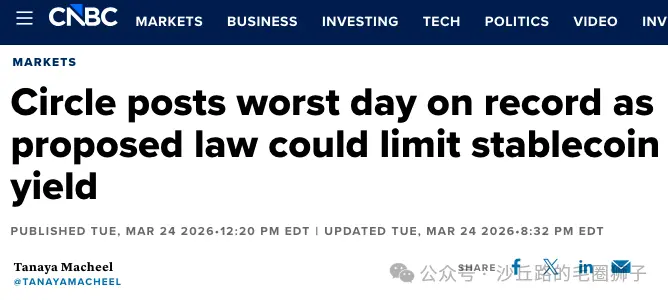
Regardless of your familiarity with Web3, you've likely come across similar promotions recently: "USDC offers a 12% annual yield on demand deposits."
This is not just a gimmick. Although it is merely a short-term promotional activity by Circle for one month, it reflects how the logic of making money on-chain is gradually penetrating broader financial scenarios. After all, for a long time, high-yield on-chain finance was just a niche play for "DeFi geeks," requiring users to connect wallets, study complex protocol nesting, and constantly monitor yield curves, making it difficult for ordinary people to truly engage.
Now, with the integration of wallet products and CeDeFi architecture, these complex processes have been gradually streamlined, leading to the emergence of a batch of simplified operations with stablecoin financial products offering annualized yields of 8%, 10%, or even higher:
Their operational experience is almost indistinguishable from that of traditional savings products, but the logic of returns is entirely different—funds earn real interest through on-chain DeFi protocols (like Aave), supplemented by platform subsidies, eliminating the layers of commissions in the traditional financial system, ultimately providing users with returns far exceeding the 1%-2% interest rates offered by banks.
Objectively speaking, this is also a trend of "Web2 & Web3 integration" taking shape, where on-chain finance is gradually transitioning from a niche "DeFi geek play" to a more universal wealth management tool that siphons off traditional financial users.
1. The Current State of On-Chain Finance: From CeFi and DeFi to CeDeFi
Broadly speaking, crypto financial products can be divided into two categories.
One category is centralized finance (CeFi) products, which are hosted by exchanges and other platforms, offering a user-friendly experience but primarily consisting of structured products, with fewer high-yield stablecoin options that often rely on subsidies. The other category is decentralized finance (DeFi) products, where returns are driven by on-chain protocols, with transparent funds and real interest rates, offering many high-yield leverage options, but the operations are complex and the barriers to entry are relatively high for ordinary users.
In the CeFi camp, in addition to traditional spot trading, high-risk contract trading, and high-threshold options trading, leading exchanges have almost all built distinctive financial product matrices, covering coin savings, structured products, and integrated asset management services on and off-chain.

Despite the dazzling array of products, the logic still follows the path of traditional finance, with returns largely relying on subsidies or structured designs—while they are relatively diversified investment tools for professional users, for ordinary retail investors, the most interesting category of "stablecoin finance" typically maintains returns in the range of 1.74%-5.5%, and not only are there time limits on subsidies and fee constraints, but although they are "easy to use," they are not attractive enough.
In contrast, DeFi is more competitive in this regard. In addition to mainstream lending protocols like Aave providing long-term stablecoin benchmark interest rates of 4%-6%, emerging applications like Nook, Stable, and Fuse have also amplified returns through "packaging" mechanisms. This year, on-chain stablecoin financial products have subtly revived the prosperity of the 2020 DeFi Summer, attracting a considerable number of traditional Web2 users to participate.

Note: Comparison of mainstream exchanges' USDC financial products
However, user experience remains the biggest obstacle for DeFi. Connecting wallets, paying gas fees, understanding complex protocol logic and risk management… these processes deter the vast majority of ordinary investors. While the returns are high, they are difficult to penetrate into the mass market.
For this reason, the CeDeFi model has gradually become an intermediate form worth paying attention to. For example, Circle's short-term subsidy activities with exchanges provide a phase of high-yield experiences, while Bitget Wallet's newly launched 10% stablecoin financial product Plus further institutionalizes this, becoming a more representative case:
- Long-term high yields: Not a one-time subsidy, but a combination mechanism of "protocol interest + permanent platform subsidy," turning the 10% yield into a normalized level;
- Extreme liquidity: Supports instant deposits and withdrawals, with subsidies also settled on a T+0 basis, making the deposit and withdrawal experience close to that of traditional savings products, but with returns far exceeding traditional finance;
When users actually use Bitget Wallet's 10% stablecoin financial product Plus, they will find that the front-end interface of this product is almost indistinguishable from a bank app. With just a click on "Subscribe," they can achieve yields close to DeFi's high rates without worrying about interactions with protocols like Aave or contract risk management, achieving both "ease of use" and "high returns."
In other words, the CeDeFi model is not a simple compromise but offers a new path worth observing: traditional CeFi struggles to meet users' demands for high yields on stablecoins, while native DeFi is difficult to popularize due to high barriers to entry. The balanced approach of CeDeFi makes it an important entry point for attracting ordinary retail investors in Web3 and even traditional financial Web2 users.
2. Overview of the CeDeFi Stablecoin Yield Sector
If the emergence of CeDeFi brings on-chain finance closer to the public, then stablecoin finance is undoubtedly the most core and universal track within it.
The reason is simple: stablecoins are pegged to fiat currencies, have low volatility, and are naturally suitable as underlying assets for financial products. Even for Web2 users in the traditional financial system, USDT/USDC often serves as their first point of contact with on-chain finance. Therefore, stablecoin finance can almost be regarded as the "foundation" of on-chain finance.
Compared to traditional finance, I believe that CeDeFi stablecoin finance should at least possess three distinct characteristics:
- Self-custody: Funds are always held in the user's wallet, without relying on centralized custody;
- 24/7 continuous yield: Protocol interest accumulates in real-time, unlike traditional finance, which is constrained by business days;
- Instant redemption, no lock-up period: Both principal and returns can be redeemed at any time, achieving true "T+0";
In simple terms, the core logic of CeDeFi must combine the user experience of bank accounts with the high-yield logic of DeFi protocols.
 Note: Comparison of mainstream Web3 wallets' USDC financial products
From the current market situation, mainstream CeDeFi stablecoin financial products like Trust Wallet and OKX Wallet generally maintain yields around 5%, mostly based on "fixed income" solutions linked to U.S. Treasury bonds, providing stable returns but struggling to break into double digits.
In contrast, Bitget Wallet's newly launched stablecoin financial product has chosen a new path—directly connecting to mainstream DeFi protocols like Aave to obtain real interest, then adding platform subsidy mechanisms to stabilize the yield at around 10%, making it a controversial yet highly observable case under the current CeDeFi model.
The key to this model is that it does not solely rely on short-term subsidies but institutionalizes the "DeFi interest + platform subsidy" approach, emphasizing transparency and sustainability. Users can subscribe with just 1 USDC: the overall yield comes partly from the real on-chain lending interest generated by depositing funds into the Aave protocol, and partly from the platform providing a certain level of yield subsidy, ensuring that the final annualized return is not less than 10%.
Interest is distributed in the form of "hourly settlements," and the distribution is synchronized with the redemption, meaning that when users redeem their principal, the corresponding subsidy returns are directly airdropped to their wallets proportionally. This way, the flow of funds is clear, and the sources of returns are transparent and traceable.
Thus, structurally, it is not a "high yield promise out of thin air," nor is it the subsidy-driven model commonly seen in CeFi, but rather through an institutionalized yield model, it ensures an annualized return of 10% while balancing transparency and user experience, providing a reference paradigm for the standardization of CeDeFi products.

Of course, whether such products can become key samples for CeDeFi to break through still requires time to test. But one thing is certain: when high yield, sustainability, and ease of use converge in stablecoin products, on-chain finance truly possesses the potential to become mainstream.
3. "Instant deposits and withdrawals, long-term high yields": From Crypto Native to Popularization
From this perspective, whether it is Circle's 12% short-term subsidy or Bitget Wallet's representative 10% stablecoin financial product Plus, the potential customer base is no longer limited to crypto-native users deeply engaged in Web3 but extends to Web2 and Web2.5 users interested in stablecoins but not yet fully on-chain.
As mentioned earlier, for these users, they may have heard of high yields on-chain but were deterred by wallet connections, gas fees, and contract logic. However, when stablecoin finance begins to exhibit characteristics of "instant deposits and withdrawals," "visible returns," and "second-level redemptions," they see for the first time a financial product similar to banks or traditional savings products, but with significantly higher returns.
This also explains why CeDeFi products like Bitget Wallet actively focus on the experience of "instant deposits and withdrawals, long-term high yields," aiming to transcend the crypto-native community and embrace a broader user base—this is part of the evolution of on-chain finance from a long-term perspective.
Their competitiveness lies in finding a new balance within the triangle of "high yield," "liquidity," and "security."

The "impossible triangle" of Web3 finance
First is the "high yield" linked to the interest rate environment.
The traditional financial system has inevitably entered a rate-cutting cycle, with declining financial yields. Domestic banks' demand deposit rates have generally dropped to the 1%-2% range, and many money market funds' yields have fallen below inflation levels. In stark contrast, the borrowing demand in the on-chain market continues to grow.
Taking mainstream protocols like Aave as an example, stablecoin interest rates have long maintained in the 4%-6% range, and with CeDeFi platform subsidies, achieving an annualized yield of 10% is not unfounded. Therefore, Bitget Wallet's stablecoin financial product Plus theoretically possesses sustainability and competitive advantages far exceeding those of traditional finance in terms of yield.
Secondly, the "liquidity" aligns with user habits.
If yield determines the attractiveness of financial products, liquidity determines their practicality. Traditional financial products often have redemption waiting periods, with T+1 and T+2 being the norm. For the internet generation accustomed to "instant deposits," such delays are increasingly out of touch.
The T+0 second-level deposit and withdrawal model of on-chain finance precisely addresses this pain point. For instance, Bitget Wallet allows users to not only instantly recover their principal upon redemption but also receive interest returns proportionally airdropped to their wallets, achieving true "instant arrival."
This extreme liquidity experience not only makes fund management more flexible but also brings on-chain finance closer to the daily financial habits of internet users, thereby lowering the barriers to entry.
Finally, the enhancement of "security" and transparency.
For a long time, the dark forest has been a soft spot for on-chain finance, with many investors worried about smart contract vulnerabilities, hacking, and even distancing themselves from on-chain finance due to rug pull incidents.
In contrast, the transparency of CeDeFi is superior to the black-box operations of CeFi. For example, in the Bitget Wallet financial product mentioned earlier, users can clearly see that assets consist of principal, protocol interest, and subsidy returns, avoiding the common "black-box model" seen in CeFi.
Theoretically, leading DeFi protocols like Aave have been operating stably for years without major security incidents, and combined with the transparent flow of funds on-chain, security is even superior to most CeFi platforms in certain dimensions. Moreover, funds remain self-custodied in users' wallets, preventing the platform from misappropriating them. The subsidy mechanism attracts users to participate but does not alter the transparency of fund flows, making CeDeFi products more likely to gain user trust in terms of security.
When the visibility of high yields, the immediacy of liquidity, and the transparency of security are achieved simultaneously in a product, CeDeFi stablecoin finance is no longer just a choice for the Web3 native community but possesses the potential to reach Web2.5 users.
In Conclusion
Over the past decade, internet finance has educated users to the habit of "instant deposits and withdrawals, visible returns" through products like Yu'ebao and WeChat's "零钱通." In the next decade, on-chain financial products may build on this foundation to offer higher yields and stronger transparency.
From CeFi to DeFi, and then to CeDeFi, the essence is to answer the same unresolved question: Can high yield, strong liquidity, and security truly coexist?
What we see today in CeDeFi stablecoin finance may only be a preliminary attempt at answering this question—whether it is Circle's 12% short-term subsidy activity or Bitget Wallet's long-term 10% yield plan, they are ultimately different solutions to this problem.
As for which model can transcend cycles and become the truly trusted "on-chain finance entry point" for mass users, it still requires time and market validation.
Click to learn about job openings at ChainCatcher
Recommended reading:
Pantera Capital In-Depth Analysis: The Value Creation Logic of Digital Asset Treasury DATs
Backroom: Tokenization of Information, a Solution for Data Redundancy in the AI Era? | CryptoSeed
 Risk warning
 Risk warning