RWA Deep Research Report: On-Chain IPO and Recombination of Real World Assets

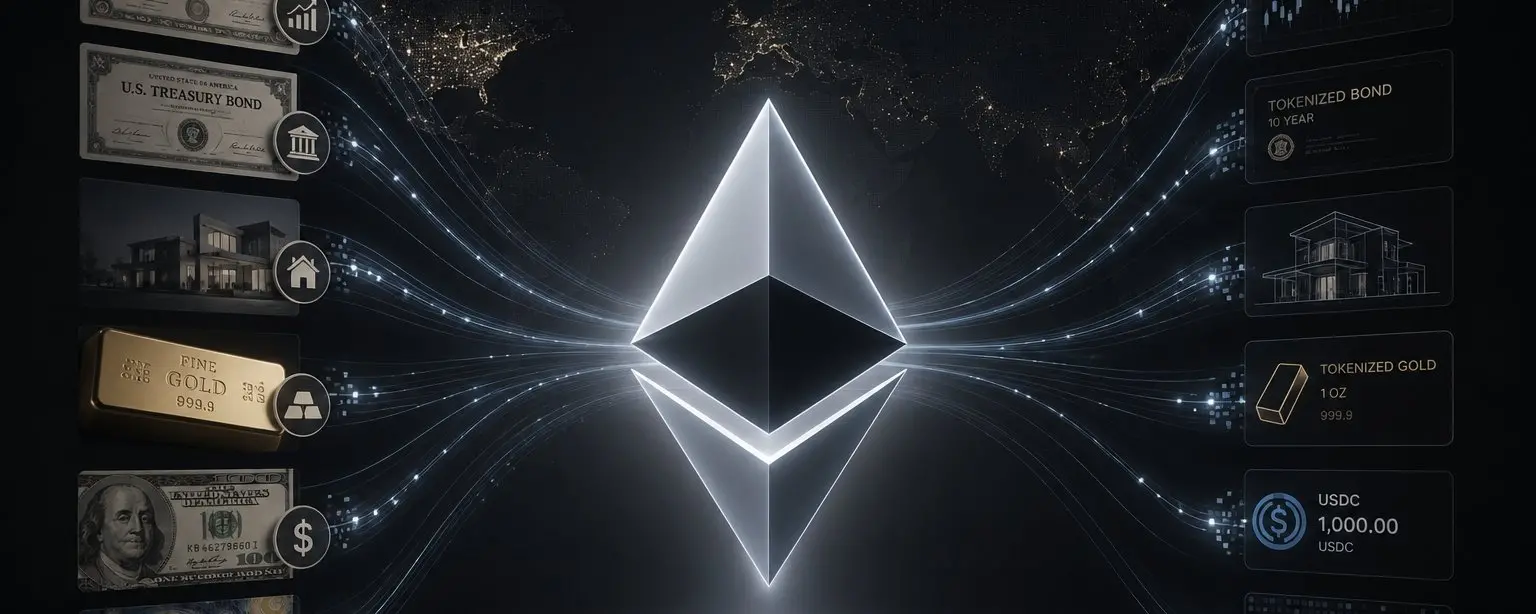
 This report analyzes the on-chain financialization as a de facto top-level national strategy and market trend in the United States, with the core focus on the tokenization of real-world assets (RWA). The essence of RWA is the on-chain reissuance of real-world assets, and its core value lies in improving clearing and settlement efficiency, expanding distribution reach, and enhancing asset composability.
Original Authors: Paolo & Andy @VDX
Original Source: VWIN Ventures
TL;DR:
- Big Picture: Why Financial On-Chainization is a Top-Level National Strategy and Market Trend in the U.S. -- RWA is a tool for "de-geographical output of global assets and competition for on-chain liquidity." The U.S. builds a highway network for the free flow of global funds and assets with quality assets + open borders + standard output, pushing the radius of dollar pricing and settlement onto an open chain.
- The Essence and Core Value Creation of RWA: The essence of RWA is the on-chain reissuance of real-world assets, rewriting "issuance---circulation---pricing---trading---settlement---composition"; its value comes from 1) efficient and trustworthy settlement, 2) open matching of funds and assets, 3) asset combinability. It enhances corporate capital efficiency and asset plasticity.
- Market Landscape: The early stage focuses on on-chain asset issuance, while the next phase will compete on channel + ecosystem integration: the current focus is on connecting compliant issuance + on-chain integration, running through leading models; as issuance thresholds lower, competition will shift to channel control and ecosystem collaboration (market making, redemption, collateral, hedging, distribution), with DeFi protocol integration, liquidity routing, and scenario access as core focuses.
- Opportunities at Different Stages of the Industry Chain: Core links include "issuers -- tokenization platforms -- distributors," along with third-party service providers such as blockchain financial contracts, oracles, law firms, custodians, and auditors. The future industry will converge into a "RWA Prime Broker" super platform, integrating issuance, compliance, settlement, and distribution/liquidity.
- Issuers: In the short term, focus on yield and liquidity realization, prioritizing strong consensus and differentiated underlying assets.
- Tokenization Platforms: Value capture is relatively low and may be integrated by upstream and downstream; focus on compliance and neutrality.
- Distributors: Mastering the control of fund routing is expected to achieve scalability, focusing on fund acquisition and channel coverage.
Big Picture: Why Financial On-Chainization is a Top-Level National Strategy and Market Trend in the U.S.
By studying Project Crypto, the Trump administration, and SEC Chairman Paul Atkins' various policies and statements, we believe that financial on-chainization may have risen to the de facto top-level national strategy of the United States. The positioning is to make the dollar an "open chain programmable settlement standard," with tools being stablecoins and RWA, and the path being legislative anchoring + dollar asset on-chain + fund channel access (traditional financial institutions, CEX, DeFi); the goal is to expand the dollar's interest rates and rules into an open chain settlement gravitational field. From the GENIUS Act stablecoin bill passed in July to the accelerated entry of traditional asset management, exchanges, and banks, this chain has already begun to operate.
The main drivers of the U.S. financial on-chainization include three aspects:
- Institutional drivers: Decentralization of issuance rights, with pricing and anchoring rights becoming more market-oriented, establishing a stablecoin/RWA licensing framework, reserve quality, disclosure frequency, and penetration standards at the federal level; control has evolved from "permission control" to "market choice competition."
- Asset drivers: On-chainization of "dollars, U.S. Treasuries, U.S. stocks" moves dollar assets onto the chain, allowing global DeFi/on-chain institutions to use dollar interest rates as the "gravitational field"; collateral and hedging become accessible, and minting and settlement speed up, attracting global idle stablecoins and risk capital into dollar assets.
- Channel drivers: Standardizing the "settlement pipeline" to the open chain.
Assets packaged on-chain will connect to traditional financial institutions (brokerages, stock exchanges), crypto CEX, and on-chain DEX/DeFi protocols, expanding user and fund access, while gradually embedding regulatory logic into protocols as on-chain asset issuance regulatory details are released.
Long-term Impact Trends
- On global finance and capital flows: The dollar's "gravitational field" expands, and the dollar's on-chain pricing power and asset anchoring power strengthen.
- On other regions: Liquidity is siphoned off, "regulatory follow/defense," forcing regulatory and market infrastructure upgrades.
- On the crypto industry: Stablecoin issuance rises, crypto assets increase, but structural differentiation occurs.
- On opportunities for RWA issuers/participants: RWA connects to the global funding highway, reducing incremental and financing costs, and financial Lego releases asset liquidity.
Core Value Creation of RWA: More Than Just Financing
Essence = Asset Reissuance + Full Process Rewriting
Value = Settlement Efficiency × Distribution Radius × Combinability.
The value creation of RWA closely revolves around the core advantages of blockchain technology:
1. Efficient and Trustworthy Settlement: Reshaping the Underlying Architecture of Enterprise Operations
To B (financial institutions) -- Achieve upgrades in underlying infrastructure and more standardized/convenient asset issuance, solving trust, traceability, and transparency issues through blockchain technology, and achieving more efficient settlement, gradually transforming the traditional financial system.
To Enterprises -- Reduce intermediary friction, simplify cross-border and OTC processes, enhance reconciliation and penetration, and accelerate capital turnover.
2. Open Finance: Breaking the Growth Ceiling
By allowing quality assets to enter the global settlement network, it helps improve the existing problems of financing difficulties, enhances the matching efficiency of the funding side and asset side, significantly expands the issuance and distribution radius, diluting the constraints of "financing difficulties/expensive" through networked liquidity, greatly improving capital allocation efficiency and opening up new imaginative spaces for enterprise growth.
3. Combinability: Igniting Business Model Innovation
Connecting off-chain assets with on-chain funds, achieving permissionless combinations and leveraging assets in a more efficient network. On-chain allows for combinations such as "yield enhancement + hedging + re-pledging," forming a new paradigm for asset operations.
Industry Chain: How Enterprises Position and Participate
A three-stage model of issuers---tokenization platforms---distributors, with neutral third parties (oracles/custodians/law firms/auditors) forming the foundation.
The competitive focus shifts from "can it issue" to "channel and ecosystem integration," ultimately converging into RWA Prime Broker.

The core links of the RWA industry are asset issuers + tokenization technology platforms + distributors, along with third-party service institutions (oracles/lawyers/custodians/auditors/on-chain contracts, etc.), expanding into blockchain-native scenarios through on-chain packaging after off-chain compliant issuance.
Positioning at the three ends of the industry chain: Issuers connect compliance and quality asset supply, tokenization platforms provide neutral on-chain issuance infrastructure, and distributors integrate ecosystems and master funding access.
Core enterprise focus: Issuers look at yield and liquidity, platforms focus on compliance and neutrality, distributors focus on user acquisition and channel coverage.
Competitive landscape: Issuers are decentralized; platforms are squeezed by upstream and downstream but will see the emergence of leading neutral third-party platforms; distributors are relatively concentrated (including on-chain ecosystems and CEX).
Current pain points: Lack of cross-border extension motivation at both issuance and distribution ends; platform technology homogenization, with thin value capture.
Evolution direction: The industry will converge into a "RWA Prime Broker" super platform, integrating issuance, compliance, settlement, and distribution/liquidity.
Market Landscape and Breakthrough Opportunities
First movers enjoy the "traffic × valuation" dividend, with barriers quickly shifting from licensing/issuance to cross-domain integration and operational capabilities.
The funding side prefers high yield and high liquidity, while the asset side faces oversupply—high-quality targets lead under mismatched conditions, with long tails eventually spilling over.
The current market is in the stage of connecting compliant issuance + attempting ecosystem integration, running through leading asset cases. The early market has potential traffic and liquidity dividends, and enterprises that first RWA-ize quality assets can enjoy significant "traffic and liquidity dividends." Early successful cases often achieve excess valuation premiums in capital markets, as the industry develops, asset issuance barriers gradually lower, and market dividends narrow, competition will shift to deeper industry integration capabilities.
The underlying RWA assets are mainly divided into two categories:
- Fixed Income Products (government bonds/MMF/private credit/accounts receivable/physical asset ABS, etc.) provide stable cash flow returns.
- Equity Assets (stocks/PE/gold/art, etc.) provide volatility.
The market development stage aligns with the three core changes that RWA brings to the industry: compliant issuance -- open finance -- combinability. From permissioned token issuance to permissionless wrappers, to the RWA ecosystem, mainstream global markets are gradually opening up compliance boundaries to explore derivative scenarios.
Looking at the current development of the funding side and asset side in the market, although the volume of stablecoins on the funding side is growing rapidly, most on-chain native funds still favor high yields and high odds on-chain, the audience for RWA assets is relatively short on the funding side; in contrast, the real-world asset side has a relatively oversupplied demand for on-chain financing.
Therefore, the asset side should prioritize leading and differentiated assets, as well as empower asset appreciation; similarly, as a distribution channel, it should prioritize finding quality assets for funds. Market development should also prioritize mainstream assets with strong consensus and high liquidity, and as the funding side scales up, it will gradually spill over to long-tail and alternative assets. Ultimately, in the phase of everything going on-chain, the scale distribution of asset categories will tend to align with traditional financial market patterns.

Breakthrough Opportunities in Industry Chain Links
Issuers rely on leading assets to scale up, forming economies of scale or expanding differentiated assets.
The market issuance threshold is gradually lowering, and long-term issuers are extending downstream; vertical tracks have the opportunity to form leading issuers + bundled third-party service providers, combining distribution channels + branding to achieve stronger bargaining power.
Long-term decentralized on-chain investment banks (similar to traditional finance where there are local leading asset issuers), but will form regional leading RWA Prime Brokers.
Tokenization platforms run through issuance channels, connecting compliance and technical architecture, relatively neutral to third parties.
Core capabilities lie in compliance ability, licensing, architecture reuse, and marginal cost reduction.
Long-term integration upstream or emergence of leading third-party technology service providers like Paxos.
Distributors capture the funding side and connect the on-chain ecosystem.
Can be CEX or on-chain.
Long-term barriers strengthen, with relative concentration on leading players.
On-Chain Ecosystem Integration
RWA brings asset choices with real cash flow and different risk preferences and yields to the entire on-chain ecosystem, while various on-chain infrastructures also provide additional empowerment for underlying RWA assets.
Analyzing the transmission and combination mechanisms of different types of RWA assets on-chain, the most directly related infrastructures include oracles -- DEX -- lending pools, etc. Among them, oracles serve as the core infrastructure for mapping RWA assets on-chain and off-chain, while DEX acts as a liquidity gathering place, becoming a key upstream link in the RWA ecosystem.
Due to the different investor profiles for equity and fixed income RWA assets on-chain, their impact mechanisms on on-chain infrastructure also differ: equity RWA asset audiences pursue volatility, with core infrastructure oriented around trading, such as Perp Trading, cyclical lending with leverage, etc.; fixed income RWA asset audiences pursue yield, with inherently low secondary price volatility and low trading demand, core infrastructure oriented around yield, such as staking, yield swaps (similar to Pendle), etc.
Key Case Analysis: Different Attempts at Compliance and On-Chain
Path = Trade-off function of compliance boundaries × depth of rights confirmation × distribution radius.
First "penetration of ownership and pricing," then "channel and market-making arrangement"------clearly define rights/benefits and extreme rights confirmation paths, select neutral oracles/custodians and issuance paths; simultaneously design CEX + DeFi distribution, market-making/redemption/repurchase and yield components.
Equity: Stock Tokenization
Currently, there are three mainstream solutions in the market:
xStocks / Dinary offshore SPV share tokenization, adopting a B2B business model to connect on-chain and off-chain exchanges, avoiding being classified as securities risk by weakening the corresponding underlying rights of the token (such as voting rights, etc.); relatively compliant issuance in the form of securities.
Robinhood uses CFD contracts to map stock price fluctuations, with tokens only pegging to yields without corresponding ownership of the underlying assets, and has not yet issued a native on-chain token; rapidly establishing a presence while waiting for policy regulation to land.
StableStocks adopts a large account system, allowing users to subscribe and redeem tokens corresponding to securities transactions within brokerages using stablecoins, a B2C business model.
Core user profiles are divided into three categories:
1. Accessing New Markets: Covering investors in third-world countries or emerging markets who cannot invest in your company due to traditional brokerage account restrictions.
2. Providing New Play: On-chain investors can use DeFi lending or derivative protocols to play higher-level leverage and hedging strategies with the company's stock tokens, increasing the depth and breadth of stock trading.
3. Empowering Traditional Stock Holders: Traditional long-term holders can enhance returns through on-chain wealth management (locking in the underlying stock value through options, providing liquidity through on-chain mapped tokens to earn excess returns).
xStocks U.S. Stock On-Chain Architecture

Fixed Income: U.S. Treasury Tokenization
Ondo Finance achieves the output of risk-free returns from underlying U.S. Treasuries to global investors through two wrapped tokens: OUSG (lowering the threshold for U.S. domestic investors through Reg-D) & USDY (outputting to global investors through Reg-S).
Core user profiles:
1. Lowering Investment Thresholds: Opening investments that were previously only accessible to institutions or high-net-worth individuals to a broader range of qualified investors globally.
2. Empowering Idle Funds: Providing yield enhancement for institutions and individuals holding large amounts of stablecoins globally (on-chain hedge funds, on-chain idle stablecoins).
3. Building Yield Base: Becoming the foundation for on-chain treasury investment portfolios.
OUSG Architecture

OUSG Mint Cash Flow

OUSG Redemption Cash Flow

USDY Mint Cash Flow

USDY Redemption Cash Flow

Action Recommendations for RWA Participants
- Prioritize Inventory of Core Assets: Sort out assets within the enterprise that have high consensus, are easily standardized, easily penetrable, have strong cash flow, or have high growth potential. E.g. mainstream financial assets -- high-credit corporate bonds, accounts receivable, gold ETFs, etc.; mainstream equity assets -- high liquidity, high market demand, high growth potential company equity, etc. Differentiated assets -- specific ABS as a second-phase breakthrough point that can be amplified in branding and channels.
- Choose Issuance Path: Combine the target audience and channels, integrate leading compliant institutions in mainstream regions or adopt mature offshore paths such as foreign SPVs. Choose trusted third-party neutral platforms (issuance, custody, oracles, lawyers, etc.) to ensure strong binding of price/net value to the underlying and clear KYC/AML and information disclosure boundaries.
- Distribution and Liquidity Integration: Simultaneously layout on-chain protocols and CEX channels, design market-making/redemption/repurchase and yield enhancement components (such as staking, swaps); strive to connect to mainstream liquidity pools to avoid liquidity fragmentation.
- Clarify Risks: Legal penetration and investor suitability -- ensure clear definitions of rights/benefits, with clear paths for rights confirmation/settlement in extreme scenarios; pricing and oracle risks: net value/price should be strongly consistent with the underlying to avoid liquidity mismatches triggering runs; operational and reputational -- transparency and verifiability of redemption/repurchase and market-making mechanisms, with information disclosure and audit frequency acceptable to institutional investors.
The essence of RWA is to conduct a "reissuance" of your enterprise's quality assets on a global blockchain, rewriting the entire process from issuance, circulation, pricing to composition. Its core business value comes from a more efficient and trustworthy settlement system, an open financial network that breaks boundaries, and a disruptive permissionless combinability.

Enterprise Action Recommendations:
- Strategically prioritize: Treat financial on-chainization as a core strategy related to the future competitiveness of the enterprise, rather than a simple financing tool.
- Actively embrace: Inventory the internal quality assets most suitable for RWA, prioritize leading and differentiated assets, and run through the first model case.
- Strong partnerships: Select the most top-notch partners in compliance, technology, and global distribution to seize blue ocean market dividends.
```
 Risk warning Risk warning