PUMP hits a new high, anonymous co-founders discuss the reasons behind it
 The crypto circle also has its own Pop Mart.
Original Title: pump.fun's Sapijiju: First-Ever Discussion on Building the Future of Social Trading
Original Source: Delphi Digital
Original Compilation: Ismay, BlockBeats
On September 11, Pump.Fun's native token PUMP was launched on the South Korean exchange Upbit, bringing renewed attention to this once rapidly growing crypto company. The meme craze is clearly not as vibrant as it was last year, but the competition in the space where Pump.Fun operates has been fierce over the past year.
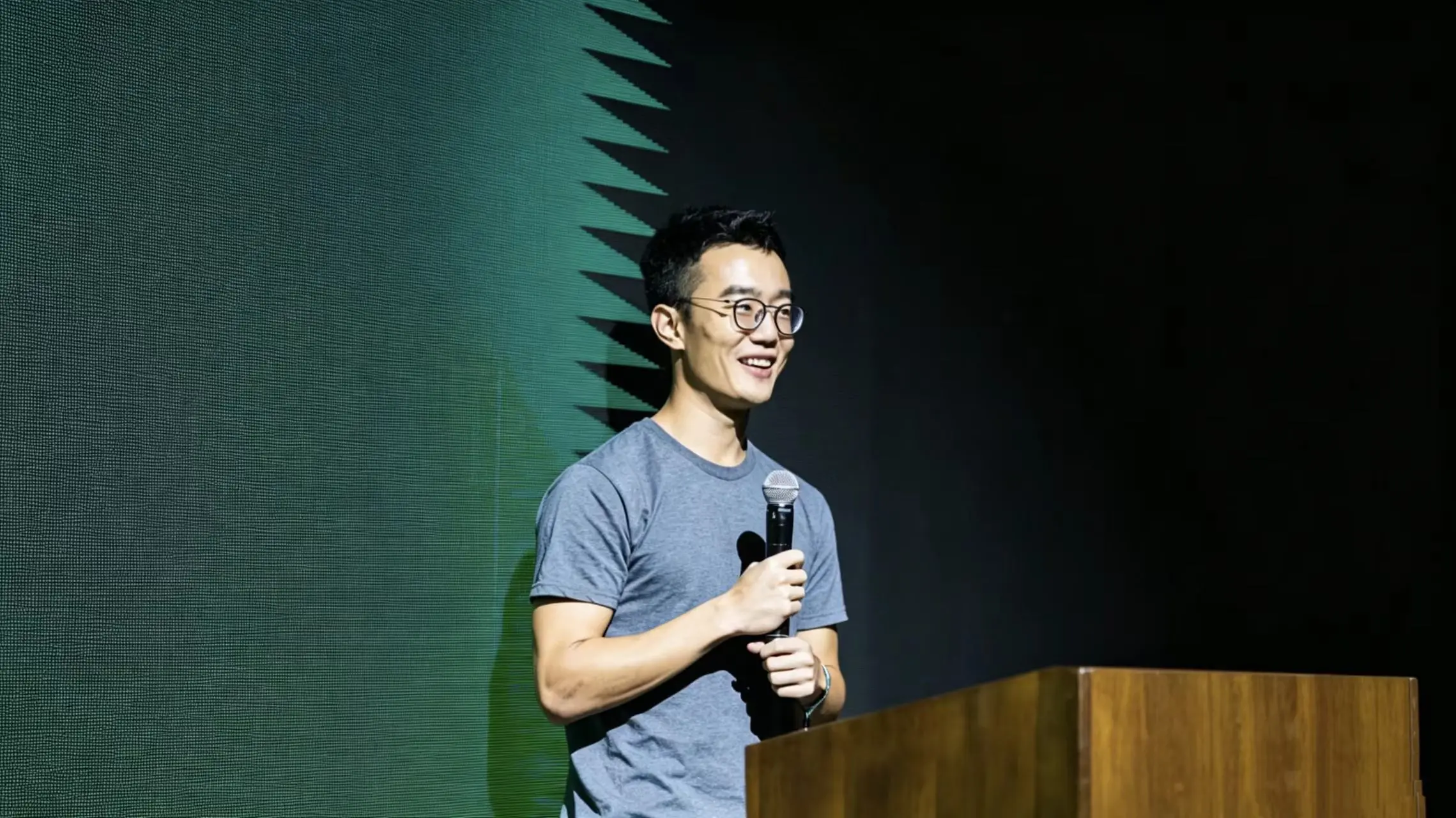
It is precisely in this environment of "diminished enthusiasm and heightened competition" that Pump.Fun's product and capital strategies have become more distinctive. This podcast features Noah, one of the anonymous co-founders of Pump.Fun, marking his first public appearance in podcast form. He aims to address external questions regarding Pump.Fun's token launch, buyback mechanisms, and other strategic moves, as well as to signal a shift in the team's communication strategy. He hopes to showcase an internal perspective and long-term vision for Pump, helping the community and potential users understand that the company is not content with being labeled merely as a "meme launch platform," but is striving to open up a larger imaginative space through product-driven approaches.

01 Nine Startups Led to Pump.Fun, Coinbase is a Failed Company
Delphi Digital: Hello everyone, it's great to have you here. Today we have a special guest—Noah ( @sapijiju), one of the co-founders of Pump Fun.
Pump launched last year and quickly swept the entire market, with data performance being quite insane. By the fourth quarter, they had a highly anticipated token issuance. Earlier this year, they raised a substantial amount of funding, and the token initially surged before retreating, currently priced about 10% above its ICO level. From a market share perspective, they were once the absolute leading launch platform, briefly overshadowed by Bonk, but later regained their share.
According to the latest data, their revenue over the past month was around $50 million, almost all of which was used to buy back tokens on the order book. This trend continues, which is the core reason for attracting attention. In a market environment where no one would describe it as "prosperous," they are still able to achieve such a scale of buybacks, which annualizes to a buyback volume of $600 million. So everyone is eager to see what they will do next. They have substantial funds and long-term plans; the key is to understand how they intend to deploy this capital and expand the platform.
Friends on Crypto Twitter should know Alon, but conversing with Noah has helped us better understand Pump's role in the crypto industry—not only how it has grown internally but also how it drives the development of the entire crypto industry. So, Noah, I'm really looking forward to starting with your background. How did you end up dedicating your life to Pump?
Noah: Some people might know me more from the investment side, which is my primary role, so I tend to keep a low profile.
However, we feel that now is a suitable time to talk more openly about the product and bring some different internal perspectives. Because when many people think of Pump, the first image that comes to mind is Alon on Twitter and our corporate account. That account does a great job sharing our plans, but its audience is limited. What I want to talk about today is that Pump is not just a part of the current "Trench" ecosystem; we genuinely hope to develop this company into something much larger.
Many people think Pump is just a small team with not many people behind it. But in fact, the situation is completely different now. We have three co-founders: myself, Dylan, and Alon. Currently, the team working directly or indirectly on the Pump platform is nearly 70 people. We are quite a large team and are still hiring, aiming to advance further in competition.
Regarding my background, to be honest, I have almost no formal background. Alon, Dylan, and I are all very young. I founded a company related to Pump when I was 19. Before that, I basically just went to high school and spent about six months in college. Starting at 16 or 17, the only thing I did was related to cryptocurrency.
Initially, I got into mining, and at that time, my dorm room was heated to 35 degrees by four GPUs. With about $10 a day from mining, I gradually entered this field. My first job was actually as a moderator for a Discord community, as I wanted to quickly find a way to connect with users and investors, so I soon joined a project called SoJava NFT Pub, which aimed to create an NFT futures exchange.
I remember you might know Joe; we talked about this project back then. I was about 18 or 19, and it was during that time that I started collaborating with Alon. I even suggested to Joe to bring Alon on board. Joe is a great person, and he is still an angel investor on our platform, witnessing the project's early stages in an interesting way.
After that, I maintained the mindset of "finding something that can get things done." I met some people through BD and built some connections at conferences. Later, I decided to leave NFT Pub and start new attempts. Initially, it was still in the NFT space, where our idea was to create a product truly aimed at consumers. That was over two years ago. We tried many things, but the infrastructure back then was a complete mess, with almost nothing truly being utilized.
Of course, there were exceptions. For example, Daniella's MIM, although many people later rated it poorly, at least what he created was used, and MIM was widely used for leveraged trading. Another example is Terra Luna; despite the tragic outcome for many, UST was indeed used by millions at that time. For me, these cases inspired the idea that if we were to create something, it should be a product that could be used by thousands or even millions of users, rather than relying on false narratives or endorsements from prestigious schools or VCs to fool everyone.
Our goal has always been to create a widely used product. If we can truly achieve this, I even hope to exit the industry entirely in the future. Because from the current situation, the crypto world is not doing well; it needs real change to grow to a scale that can alter the industry landscape.
Delphi Digital: I'm actually quite curious about why you ultimately chose to create the Pump product, as its initial positioning was to prevent "rug pull projects," providing a service to the market. Moreover, it quickly found product-market fit, not only within the crypto circle but also outside of it. I want to ask how you got to this point? Why did you determine that Pump was the "killer product"? What have you learned in this process? Including before and after the token issuance, because we often see in our advisory work that once a token is issued, it can become a whole new "beast." It can serve as fuel to ignite the flames or potentially become a disruptive factor at some stage. So I’m eager to hear your thoughts on how you view the product at different stages before and after the token issuance, as well as the changes throughout its lifecycle.
Noah: In fact, many people do not understand this. We have told this story several times, but I think people really need to grasp how difficult it is to achieve PMF (Product-Market Fit). Looking at the current top 100 tokens by market cap, only about fifteen have truly reached PMF; the rest are basically somewhat scammy.
Our journey to today has been built on one failure after another. Since founding the company that now operates Pump, we have tried eight or nine different ideas. For example, we created an NFT Launchpad, which had a mechanism somewhat similar to Pump's current logic; my co-founder also created an NFT AMM; we even tried a financing model for content creators—like allowing a TikTok creator to sell 5% of their future income in advance and tokenize it, but that model failed. We also attempted to create a revenue-sharing mechanism for crypto auditors, somewhat like professional poker players selling part of their stakes to reduce volatility, but that didn't work either.
Later, we even tried forking FriendTech, conducting "vampire attacks" on FriendTech, and even experimenting with meme coin mechanics. These projects came one after another, but at that time, we didn't raise much money, unlike other companies that could secure millions in funding. We only had a few very loyal angel investors supporting us. So we had to keep trying over and over again, and the process was incredibly tough. You spend months working on a product, launch it to the community, and then no one pays attention. You tweet something, and people glance at it, think "what is this? Not interested," and scroll away. That feeling of defeat is really heavy.
It wasn't until the ninth attempt that we successfully "hit" the market with Pump.
Looking back, it's quite interesting because
 Risk warning
 Risk warning