RWA Panorama Analysis: Opportunities, Challenges, and Future of Asset Tokenization

 This article deeply analyzes the development history, core concepts, main categories, and challenges faced by Real World Assets (RWA), and highlights how BenFen Chain provides new solutions for RWA on-chain through its "One-Click RWA Issuance" feature.
Introduction
Recently, RWA has become the darling of capital, with various listed companies in real estate, renewable energy, and innovative pharmaceuticals announcing their ventures, causing stock prices to soar and stirring the hearts of investors. What exactly is the magic of RWA, and what opportunities and challenges does it represent?
1. The Development History of RWA
The concept of RWA can be traced back to 2017-2018, during which some attempts at Security Token Offerings (STO) emerged amidst the ICO boom, where startups issued tokens representing company equity or fund shares. However, due to a lack of secondary markets and regulatory barriers, these early attempts had limited impact. In 2019-2020, with the rise of DeFi, projects like MakerDAO began to focus on RWA: Maker first introduced off-chain assets (such as commercial paper) as collateral in its DAI stablecoin system in 2020, marking an important milestone for RWA. During the same period, Centrifuge launched the Tinlake protocol, collaborating with Maker to provide on-chain financing channels for small and medium-sized enterprises' receivables. Entering 2021, the booming crypto market brought a demand for unsecured lending, with Maple and TrueFi launching to provide credit loans to trading institutions, also directing some funds to off-chain assets. (Although these loans were primarily used in the crypto space at the time, they laid the foundation for future RWA credit.) Starting in 2022, as global macroeconomic conditions saw rising interest rates and declining crypto-native yields, the market's thirst for stable on-chain returns made RWA a new hot narrative. Especially after the Federal Reserve raised interest rates, low-risk, high-yield assets like U.S. Treasury bonds regained favor, leading to a surge of projects bringing U.S. bonds and treasury bills on-chain. The year 2023 has been referred to as the "Year of RWA" in the industry, with traditional financial giants entering the space: for instance, large asset management companies in Germany and the U.S. (such as BlackRock and Franklin Templeton) launched tokenized fund products; payment companies like Visa began researching on-chain U.S. Treasury bonds for stablecoin settlements; and regulatory attitudes towards RWA in various countries gradually became clearer. These factors propelled RWA from proof of concept into an expansion phase.

2. The Concept and Asset Classification of RWA
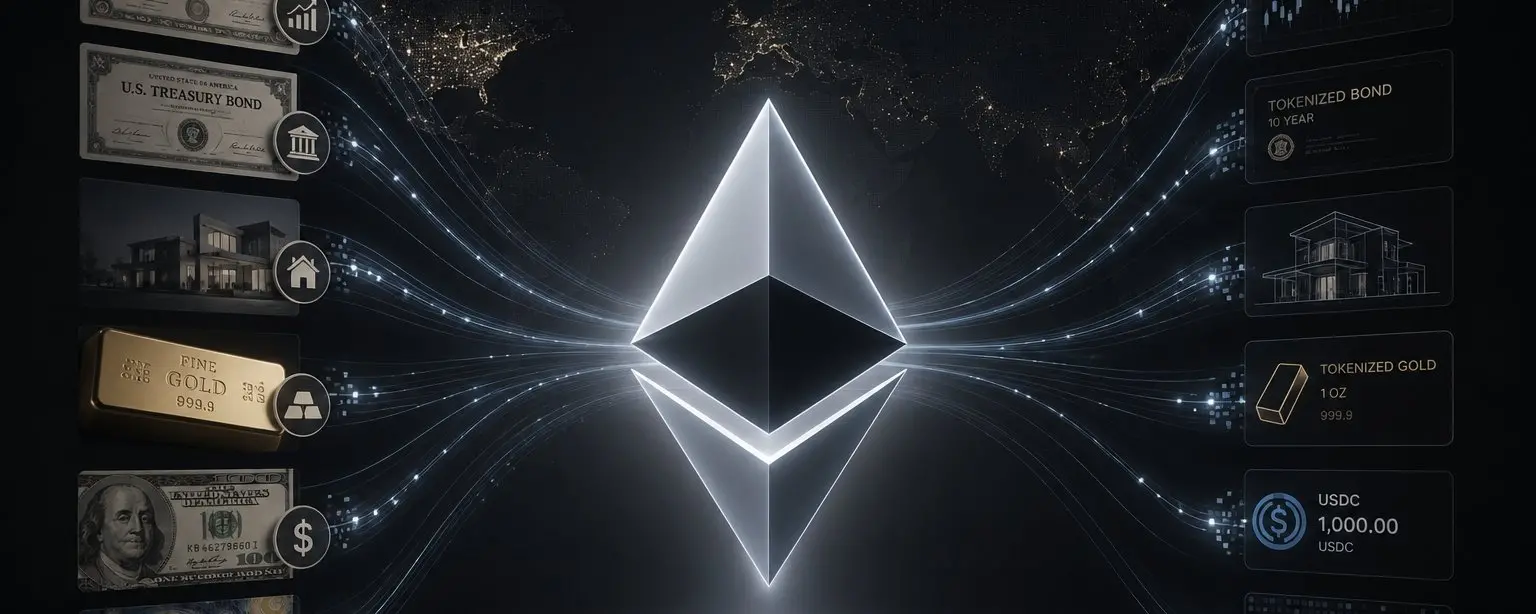
Real World Assets (RWA) typically refer to the conversion of tangible or intangible assets from the real world into tradable digital tokens through blockchain technology, achieving asset digitization and tokenization. RWA covers a wide range, extending from traditional financial assets to various sectors of the real economy. Specifically, it includes debt instruments such as government bonds and corporate bonds, equity assets like stocks, physical assets such as real estate and gold, non-standardized rights like private equity, intellectual property, and supply chain receivables; almost any asset type with value or ownership is being explored for on-chain possibilities.

It is important to note that narrowly defined RWA typically does not include tokens pegged to fiat currencies, such as stablecoins: although the reserve mechanism of stablecoins is also supported by off-chain fiat or bonds, they are generally classified separately as stablecoins. The RWA discussed in this article will primarily focus on the tokenization of real assets outside of stablecoins, such as government bonds, real estate, private debt, private equity, receivables, and artworks.
Based on asset nature, current on-chain RWAs can be categorized into the following types:
- Government Bonds and Public Bonds: Highly standardized bond assets are the preferred targets for RWA, with U.S. Treasury bonds being the most prominent. U.S. bonds theoretically have no default risk and are highly liquid, with a clear and mature legal structure for tokenization, such as through offshore funds + token packaging to meet regulatory requirements. In addition to U.S. bonds, sovereign bonds and corporate bonds from Europe and Asia are also beginning to explore on-chain issuance, such as through BVI funds or Luxembourg SICAV structures to issue tokenized notes.
- Private Credit (Private Debt): This includes loans to small and medium-sized enterprises, trade receivables financing, consumer finance debt, and real estate mortgages. Tokenizing these assets can provide real yield sources for DeFi funds, but due to the diverse qualifications of underlying borrowers, the risks are relatively high. Typically, a Special Purpose Vehicle (SPV) is established to hold the underlying assets, with DeFi protocols providing liquidity, allowing investors to earn on-chain interest. Representative projects include Maple, Centrifuge, Goldfinch, Credix, and Clearpool, which aim to connect real assets like off-chain SME loans and property loans, enhancing data credibility through Chainlink's proof of asset mechanism.
- Commodities and Bulk Assets: This mainly refers to the tokenization of bulk commodities such as gold, carbon credits, and oil. Among these, gold is the most common commodity RWA due to its stable value and clear reserve logic, with typical examples like Paxos Gold (PAXG) and Tether Gold (XAUT) issued with a 1:1 physical gold reserve. Carbon credits and energy assets like crude oil face higher regulatory hurdles and are currently mostly in pilot stages.
- Equity and Fund Shares: This includes the on-chain issuance of unlisted equity, publicly traded company stocks, and various private fund shares. Representative platforms include Securitize, ADDX, and Swarm, which compliantly convert corporate equity or fund benefit certificates into circulating on-chain tokens. These assets are subject to significant securities regulation, with secondary trading requiring strict KYC whitelisting; some projects choose permissioned chains to limit circulation. The scale of equity-type RWA is currently very small (as of the end of June 2025, the market cap is about $362 million, accounting for less than 2% of RWA) and lacks liquidity, a result of both regulatory and market factors.
- Real Estate: Real estate is characterized by high value and low liquidity, with traditional transactions often having high thresholds and long cycles. RWA provides a fragmented new path for real estate investment, such as holding real estate through SPVs and issuing tokenized rights, allowing small investors to proportionally share rental income or property appreciation. However, real estate on-chain faces challenges of complex rights confirmation and legal integration: there is still no clear precedent for synchronizing on-chain token transfers with off-chain property transfers. There was a case in Singapore where a real estate project failed to timely reflect off-chain property changes in the NFT token, leading to the NFT becoming "orphaned," exposing the risk of off-chain information lag. Therefore, current real estate RWA mainly focuses on rights tokens (such as rental income rights), where holders do not directly own the property but receive income distribution based on their token holdings.
- Alternative Collectibles and Artworks: This includes the tokenization of non-traditional assets such as artworks, collectible cards, and luxury wines and watches. These assets typically lack active public market pricing, and the main purpose of going on-chain is to lower investment thresholds and improve circulation efficiency. For example, early platforms issued NFT fragments of famous paintings, allowing multiple people to share ownership. However, due to the strong subjectivity in art valuation and extremely low liquidity, RWA in this area remains a niche attempt with limited scale and influence. However, with platforms like BenFen popularizing one-click issuance capabilities, the tokenization threshold for artworks and collectibles is expected to significantly decrease in the future.

3. Overview of Mainstream RWA Projects
In recent years, various models of projects have emerged in the RWA space. Below are the main representative projects categorized by asset type, along with a brief description of their core mechanisms:
- Government Bond RWA Projects: Typical representatives include Ondo Finance, Superstate, and Backed Finance.
*
- Ondo is a platform focused on bringing traditional financial assets on-chain, being the first to launch a short-term U.S. Treasury ETF token OUSG, which holds real bond assets through a Special Purpose Vehicle (SPV) and issues corresponding ERC-20 tokens pegged 1:1 to the underlying ETF value, with daily automatic interest settlement.
- Superstate, initiated by the founder of Compound, follows a fully compliant fund path—its product USTB directly invests in U.S. short-term Treasury bonds and issues on-chain shares through a registered fund, with a management fee of only 0.15%. USTB is only open for subscription to qualified investors as defined by U.S. regulations, allowing investors to either self-custody their token shares or store them with custodial banks like Anchorage or BitGo.
- Backed Finance provides the xStocks framework to tokenize U.S. and European stocks. For example, the TSLAx token issued by Backed is pegged 1:1 to Tesla stock, with real stocks held by a regulated custodian and supporting 1:1 redemption of tokens at any time. Backed's tokens support 24/7 trading, breaking the traditional stock market time zone limitations, and dividends are distributed to token holders through airdropped additional tokens; the only issue is that its settlement model is semi-closed synthetix, meaning users' profits cannot be settled 24/7.
Overall, the common characteristic of government bond and securities RWA projects is a strong emphasis on compliance, usually through the establishment of offshore SPVs or regulated funds to ensure a solid and clear legal relationship between the tokens and the underlying assets.

- Credit Loan RWA Projects: This field has seen the emergence of protocols such as Maple Finance, Goldfinch, TrueFi, Centrifuge, Credix, and Clearpool. *
- Maple Finance positions itself as a multi-chain institutional lending platform, primarily serving institutional borrowers such as hedge funds, trading companies, and DAOs. Maple achieves automated matching of unsecured/low-secured loans on-chain by introducing off-chain due diligence and borrower credit scoring, and its product line has expanded to include tokenized U.S. Treasury bonds and trade receivables pools, with the platform's managed asset scale surpassing $2.4 billion by June 2025.
- Goldfinch focuses on credit lending in emerging markets, allowing crypto investors to provide loan funds to fintech institutions in developing countries for high-yield interest. Goldfinch employs a dual-pool model: retail funds enter a senior pool for stable returns (historical annualized around 7-10%), while a community-elected junior pool provides some funds to bear higher risks in exchange for higher interest returns. This model utilizes community consensus and token incentives for risk pricing, partially achieving unsecured lending.
- TrueFi initially focused on unsecured lending for crypto institutions but is now transitioning to serve institutional-level RWA, gradually introducing on-chain financing channels for traditional assets.
- Centrifuge positions itself as an RWA infrastructure provider, using its Tinlake protocol to mint real assets (receivables, mortgages, etc.) into NFTs, which are then split into two types of tokens: senior DROP and junior TIN for investors to subscribe, becoming a leading platform for on-chain receivables financing.
Overall, credit RWA projects introduce assets like SME loans into DeFi through a structure of off-chain SPVs + on-chain liquidity pools. On these platforms, investors typically receive relatively high interest rates (usually annualized between 8% and 18%), but they must bear higher credit risks and rely on off-chain audits and legal means to ensure investment safety.

- Other Category RWA Projects: In the commodities sector, projects like Paxos Gold (PAXG) and Tether Gold (XAUT) issue tokens after custodizing physical gold.
*
- Each PAXG token corresponds to 1 ounce of London gold, held by top institutions like Brink's, and allows holders to redeem physical gold for a fee. Gold tokens like PAXG enable investors to gain exposure to gold without bearing the costs of physical custody, while also allowing for 24/7 trading or use in DeFi collateral lending.
- In the direction of institutional funds and equity tokenization, in addition to the aforementioned Securitize and Backed, there are emerging projects like Swarm Markets introducing European securities on-chain, and ADDX providing a platform for private fund token subscriptions in Singapore. These platforms are limited by regulations and mostly open only to qualified investors.
Overall, the currently viable and sizable RWA projects are still dominated by bonds and credit, while other categories are mostly in the exploratory phase. It is worth noting that, in addition to specific projects, the evolution of underlying public chain infrastructure is also crucial. For example, BenFen has taken the lead in supporting one-click issuance of RWA in its 2025 upgrade, providing a standardized framework for the on-chaining of various assets such as bonds, equity, and real estate, forming a complementary relationship with these application layer projects.
4. Blue Ocean or Red Ocean, How Far Can RWA Go?
Although the scale of on-chain RWA assets has shown explosive growth in the past two years, how far can it really go in the future? According to data from Binance Research and RWA.xyz, the total amount of on-chain RWA was less than $200 million in 2020, while by the end of 2023, it had exceeded $1 billion; by mid-2024, it is expected to surpass $12 billion (excluding stablecoins). Entering 2025, with institutional funds pouring in, the scale continues to soar. By the first half of 2025, the total value of global on-chain RWA assets has exceeded $23.3 billion, a nearly 380% increase from early 2024.
As of August 2025, the market cap of RWA is approximately $25.22 billion. Among them, tokenized U.S. Treasury bonds are the largest single category, with a market cap of about $6.8 billion, accounting for around 27% of the total RWA. If calculated more broadly, including stablecoins in the RWA category, the on-chain RWA market cap would also include $25.68 billion in stablecoins; however, as mentioned earlier, we primarily focus on non-stablecoin assets. Besides U.S. bonds, the second largest segment in RWA is private credit, which includes various on-chain loan pools, and its scale is continuously increasing.
For instance, the combined scale of loan pools managed by Maple, Goldfinch, and Centrifuge has reached several hundred million dollars. However, due to the longer duration and lower liquidity of credit assets, this portion still accounts for a limited share of the overall RWA market cap (around 10%). Other categories, such as tokenized stocks and commodities, currently have very small volumes: the total value of on-chain stock tokens is only about $360 million; commodity tokens like gold also have a circulating market cap of only a few hundred million dollars. It can be seen that, outside of stablecoins, the RWA landscape is driven by two engines: U.S. Treasury RWA, with its low-risk yields, serves as the "yield base" for DeFi, while private credit RWA attracts risk-tolerant funds with higher returns. Both have propelled the rapid growth of on-chain RWA scale over the past year.
In this context, breakthroughs at the infrastructure level are particularly crucial. The stablecoin payment public chain BenFen announced a major upgrade, officially supporting one-click issuance and on-chaining of RWA, maintaining a unified framework with one-click stablecoin issuance. Through mechanisms like one-click stablecoin issuance and Gas fee sponsorship, BenFen is evolving into a one-stop issuance center for stablecoins and RWA, as well as a gateway for global payments and asset circulation.
It is foreseeable that, with technological maturity and regulatory improvement, RWA is expected to grow into another pillar track in the crypto space after stablecoins. Logically, asset categories that originally belonged to a red ocean will be encapsulated into a new blue ocean through blockchain, and this tool is bound to become a new financial darling. Public chains like BenFen, which possess both stablecoin and RWA one-click issuance capabilities, will play a key role in this process.
(Source: blocktempo.com)

(Material sourced from the internet, please delete if infringing)
5. Regulatory Attitudes and Compliance Frameworks in Major Jurisdictions
RWA involves the on-chaining of traditional financial assets, inevitably facing constraints from securities and financial regulations in various countries. The regulatory attitudes towards RWA and its tokenization vary significantly across jurisdictions. In summary:
- United States: The U.S. takes a cautious approach to RWA, with the regulatory framework based on existing securities laws. Project parties typically operate through a model of SPV isolation + compliance with private securities offerings. Additionally, token issuance must comply with SEC regulations, such as following Reg D (private offerings to qualified investors) or Reg S (offshore offerings) paths to exempt from public registration requirements. This means that issuing RWA tokens in the U.S. is mostly limited to qualified investors, making it difficult for ordinary retail investors to participate directly. Overall, U.S. regulatory agencies (SEC, CFTC, etc.) have a conservative attitude towards RWA, requiring such tokens to be essentially equivalent to securities and must adhere to information disclosure and investor protection rules. This has led to RWA innovation in the U.S. primarily focusing on the institutional market, with many projects choosing to pilot overseas before introducing them to the U.S. (After all, Trump has already filled his plate with stock and mining issues, there's no need to dig new pits for himself.)
- European Union: The EU is relatively proactive in RWA regulation, with the MiCA regulation (regulating crypto asset markets) passed in 2023 directly addressing RWA, defining tokens pegged to real assets as "Asset-Referenced Tokens (ART)" and bringing them under regulation. In the EU, RWA projects often adopt trust or EU-recognized SPV structures, establishing variable capital investment companies (SICAV) as SPVs to hold underlying assets and issue tokens. MiCA compliance requirements state that issuers must disclose the custody methods of underlying assets, rights distribution rules, etc. Overall, the EU tends to incorporate RWA into the existing financial regulatory framework, reducing legal uncertainties through unified rules.

- Singapore: The Monetary Authority of Singapore (MAS) launched the Project Guardian in 2022, collaborating with several financial institutions to test on-chain settlement and tokenization of government bonds and foreign exchange transactions. In the digital asset framework released by MAS, stablecoins and security tokens are included in the regulatory sandbox, encouraging experimentation with RWA applications in a compliant environment. Overall, the Singapore government is relatively lenient in regulation and provides policy support (such as tax incentives and regulatory sandboxes).
- Hong Kong: Currently, Hong Kong has allowed licensed brokers to apply for pilot projects for tokenized securities issuance and trading, limited to professional investors. Overall, Hong Kong has a very positive attitude towards RWA, attracting relevant projects to land through government endorsement, emphasizing compliance first, innovation follows.
- United Arab Emirates: The Virtual Assets Regulatory Authority (VARA) established in Dubai has launched the world's first comprehensive regulatory framework for RWA tokenization, covering token issuance, custody, trading, and other aspects, providing legal certainty for tokenized assets. Although VARA rules have not yet covered all asset types, they demonstrate Dubai's determination to become an RWA hub. Additionally, Abu Dhabi's financial center ADGM also launched a tokenization pilot sandbox in 2023, inviting fintech companies to test RWA products, including debt and fund shares. In terms of applications, the Dubai Land Department announced plans to explore real estate tokenization, aiming to combine property registration with blockchain; the UAE's carbon exchange is also considering introducing blockchain to expand carbon credit trading. Overall, the UAE adopts a public-private partnership and regulatory sandbox approach, encouraging domestic and foreign institutions to conduct RWA business locally, with its lenient tax policies and clear crypto regulations attracting many project teams. It is foreseeable that, as laws gradually improve, Dubai and Abu Dhabi are likely to become RWA issuance and trading centers in the Middle East.

6. Comparison of On-Chain Issuance Costs and Returns by Country and Asset Type
The economic model of RWA projects involves multiple costs and returns, including underlying asset yields, custody and auditing costs, protocol fees, and investor return levels. The regulatory environment in different countries and the different asset categories will affect the issuance costs and returns. Below, we compare major asset categories based on data and case studies:
- Government Bonds and Public Bonds: The yield of these RWA underlying assets depends on macro interest rates. Taking U.S. Treasury bonds as an example, the current one-year U.S. Treasury yield is around 5%, so tokenized U.S. bonds (such as Ondo's OUSG and Superstate's USTB) can provide nearly 5% annualized risk-free rates, becoming the "interest rate anchor" for on-chain funds. The costs of issuing such products mainly lie in fund management fees and compliance expenses. For example, Ondo's OUSG adopts an ETF cross-chain packaging structure, charging about 0.15%--0.3% annual management fee to cover operational costs, including custodian banks, legal compliance, and other expenses. Superstate's USTB, being a registered fund, has an even lower management fee of only 0.15%, with additional custody fees paid to custodians like Anchorage, but by directly holding U.S. Treasury bonds instead of embedding them in an ETF, it reduces the double fee layer. In terms of compliance costs, issuing such products in the U.S. requires adherence to regulatory exemptions, leading to high legal service fees; whereas in Switzerland, Singapore, and other places, issuing U.S. Treasury bond tokens is relatively simplified due to higher regulatory acceptance. Overall, the yield center for government bond RWA is relatively low but stable, with management fees making up a small proportion of the cost structure.

- Private Credit: On-chain private loan assets typically offer yields higher than traditional rates to compensate for greater credit and liquidity risks. For example, Maple and Goldfinch target SMEs or emerging markets for lending, with historical annualized interest rates ranging from 8% to 15%. Specific yields vary based on borrower qualifications: high-quality borrowers (such as those with collateral or stable cash flows) may have loan rates around 8-10%, while higher-risk loans (such as unsecured loans to startups) could reach 15% or higher. Investors in these loan pools can earn corresponding interest returns but must bear default risks and longer lock-up periods. To enhance investment attractiveness, many platforms adopt yield tiering mechanisms: for instance, Goldfinch's senior pool investors receive fixed rates, while junior participants earn the remaining high yield but bear losses first. The costs of issuing such assets are primarily reflected in due diligence and risk management. Borrowing projects typically require hiring third-party auditors and lawyers for off-chain due diligence. Platforms also take a certain percentage from borrowing interest as protocol fees: Maple charges 0.5%--2% as a service fee for each loan. These fees are partially passed on to borrowers and partially reflected in the discount on investor returns. Compared to traditional finance, on-chain lending has reduced matchmaking and management costs (smart contracts automate repayments and profit sharing), but credit assessment and collection still require human and legal intervention, so overall costs are not low. Additionally, different jurisdictions' compliance requirements for on-chain lending significantly impact this: in the U.S., public-facing lending is likely to be viewed as securities or investment products, requiring registration or exemptions (high compliance costs); while in Singapore and other places, issuing tokenized debt with limited participation can be conducted within a sandbox, simplifying procedures. Therefore, some projects choose to establish funds in friendly jurisdictions like Singapore and Switzerland to issue loan certificates and then raise funds globally to reduce regulatory friction.

- Real Estate and Other Physical Assets: Real estate tokens typically correspond to rental income or property debt, with yields influenced by local real estate rental and sales markets. Generally, quality properties in developed markets yield rental returns of 3% to 5%, while developing markets may exceed 8%. If property rights are fragmented and brought on-chain, the basic yield for investors would be rental income minus property management and tax expenses. This yield is relatively stable but far lower than credit assets. However, considering potential property appreciation, long-term total returns may be higher. The main costs of on-chain issuing property rights lie in legal structure setup and ongoing management. Fees for appraisers, custodian banks, and notarizing legal documents need to be paid. In places like Hong Kong and Singapore, governments are exploring ways to reduce these costs: for instance, in the digital green bond project supported by the Hong Kong Monetary Authority, blockchain has simplified settlement processes, saving some intermediary fees. Similarly, the returns from RWA in artworks and collectibles are more derived from asset appreciation rather than ongoing income. The price discovery for these assets is challenging, and the lack of transparency in valuations leads to significant bid-ask spreads. Issuers typically charge custody, insurance, and transaction commissions. For example, some art platforms charge token holders a 2% custody fee annually. In contrast, commodity tokens like gold, while having no interest, tend to have higher liquidity and trading activity than other RWA categories, as the gold market is globally accessible and has high price transparency. Statistics show that the monthly on-chain trading volume of gold tokens like PAXG and XAUT far exceeds that of most credit or equity tokens. **Thus, different RWA assets exhibit a trade-off between yield and liquidity: high-yield assets often have poor liquidity, while liquid assets (like gold) yield low or even zero returns, necessitating the use of *DeFi* compounding strategies to enhance returns.**

- Regional Differences and Cost Comparisons: From a national perspective, the regulatory environment directly affects RWA issuance costs and return pricing. In the U.S., stringent compliance requirements drive up legal and operational costs, leading many projects to issue only to high-net-worth clients, resulting in limited liquidity and relatively higher financing costs (borrowers must offer higher rates to attract limited funds). Conversely, in RWA-friendly jurisdictions like Singapore and Switzerland, compliance costs are lower, allowing issuers to reach global investors at lower costs, thus having room to finance at lower rates or pass on more returns to investors. This is also why some RWA products cannot be offered to retail investors in the U.S. but can be indirectly introduced by issuing overseas and then allowing U.S. institutions to purchase.
Overall, the on-chain issuance costs of RWA include technical costs + compliance costs: at the technical level, blockchain is playing a role in leveraging scale effects to reduce labor and time costs, while compliance costs depend on the regulatory friendliness of the jurisdiction.
7. Core Issues Facing the Current RWA Market
Despite the high hopes for RWA, it still faces a series of challenges in practice that require joint efforts from the industry and regulators to address:
- Legal Compliance Challenges: The on-chaining of real assets involves complex legal relationships. The current legal framework lags behind technological development, with many key issues lacking case law support. For example, how do on-chain tokens correspond to off-chain asset ownership? How are the rights of token holders recognized in court? As mentioned earlier, under the SPV structure, tokens are viewed as equity certificates of the SPV, but the legal gap remains that on-chain transfers do not equate to off-chain transfers. Different jurisdictions may classify the same RWA token differently, leading to a lack of legal protection for cross-border transactions. This legal uncertainty means that RWA projects always carry compliance risks, with some lawyers pointing out that many RWA tokens currently resemble "self-proving legal digital IOUs."

- Authenticity of Off-Chain Assets and Credit Risks: The value foundation of RWA lies off-chain, making the verification of the authenticity and credit status of off-chain assets crucial. Currently, the industry mainly relies on third-party institutions (such as accounting firms and appraisers) to provide proof, which is then uploaded to the chain via oracles. However, intermediaries themselves may make mistakes or commit fraud, requiring on-chain investors to still "trust" them. For instance, a certain RWA lending project exposed issues with borrowing companies providing false financial reports, which the due diligence party failed to detect in time, resulting in investor losses. Furthermore, assets like real estate involve challenges in updating synchronization: if the status of the underlying asset changes (such as collateral loss or property transfer), there is still no perfect mechanism to quickly reflect this on-chain. Although solutions like Chainlink's Proof of Reserve have been launched to periodically verify asset reserves, the credit risks of complex assets cannot be solely resolved through technology; off-chain legal measures such as guarantees, insurance, and default handling arrangements are still needed. All of these increase the operational difficulty and costs of projects.
- Insufficient Market Liquidity: RWA assets generally face liquidity shortages. The reasons stem first from the limited range of investors: many RWA tokens can only be sold to qualified investors or whitelisted addresses, naturally shrinking the secondary market scale. Secondly, there is a lack of active trading venues and market makers, with most tokens trading quietly on decentralized exchanges, leading to large bid-ask spreads and low transaction frequencies. Research shows that most RWA tokens have long holding periods, with extremely low turnover rates, and most investors adopt a "buy and hold long-term" strategy. While this reflects a preference for medium to long-term RWA investments, it also means that liquidity is insufficient to support active trading. When investors need to liquidate, they may face issues of no buyers or having to sell at significant discounts. The lack of liquidity also brings pricing difficulties: due to the absence of continuous trading, the fair value of assets is opaque, further dampening potential trading willingness. To alleviate these issues, the market has begun exploring the introduction of professional market makers and incentive mechanisms. For example, some platforms provide additional token incentives to liquidity providers (LPs) or seek centralized brokers to facilitate RWA token trading. However, overall, until RWA can attract a larger scale of investors (including ordinary individuals), liquidity bottlenecks will likely persist in the short term.

- Valuation Pricing and Oracle Issues: Many traditional financial assets do not have real-time prices, such as unlisted equity and real estate valuations, which are often lagging and lack unified standards. When these assets go on-chain, how to price the tokens becomes a challenge. The current main approach is for issuers to periodically announce net asset values (NAV) or reference appraised values, which are then fed onto the chain by oracles. However, the data sources and frequency of oracles are uncertain, making it difficult for investors to verify the accuracy of prices. Some assets, due to their uniqueness, have subjective valuation models, leading to significant price expectation differences between buyers and sellers, making transactions difficult. Even for transparent market assets like U.S. Treasury bonds, there are technical risks of oracle delays or failures. If oracle pricing becomes inaccurate (for example, due to attacks or data source disconnections), it could lead to market chaos or even liquidation risks. Additionally, the rise of derivatives and composite strategies (such as using RWA tokens as collateral for stablecoins and then participating in other DeFi) places higher demands on price accuracy. If valuation deviations accumulate, it could lead to systemic risks.

- Institutional Participation Still Needs Improvement: Institutional investors are seen as an important driving force in the RWA market, but their current participation still needs to increase. Even though pioneers like Franklin Templeton have issued on-chain funds, most mainstream asset management companies are still in the experimental stage and have not yet moved core assets on-chain. On the other hand, some crypto-native institutions (such as DAOs and crypto funds) also have concerns about RWA: they worry about the lack of transparency in off-chain assets and the need to trust intermediaries, which does not align with the spirit of decentralization. Even MakerDAO, which has allocated a large amount of U.S. Treasury bonds as reserves, experienced lengthy internal governance discussions and risk control designs to persuade token holders to agree to introduce RWA collateral. Overall, institutional interest in RWA is rising: since 2023, major Wall Street firms have begun developing tokenization platforms, Visa has also released RWA reports, and government funds in various countries are attempting small investments in RWA projects. This indicates that institutions have recognized the potential of RWA, but to translate this into large-scale deployment, a complete infrastructure and supporting services (such as custody, clearing, and legal support) as well as successful case studies are needed to enhance confidence.
8. Introduction to the One-Click RWA Issuance Capability of BenFen Chain
As an exploratory solution to address the aforementioned challenges, BenFen Chain recently launched the "One-Click RWA Issuance" feature, aiming to simplify the process of bringing real assets on-chain. Originally positioned as a stablecoin payment public chain, BenFen emphasizes high performance and low-cost transactions. In a major version upgrade in August 2025, the official announcement stated that it officially supports one-click issuance and on-chaining of RWA (Real World Assets), upgrading its positioning to a "stablecoin + RWA infrastructure public chain." This feature maintains a unified framework with the original one-click stablecoin issuance, allowing issuers to conveniently issue compliant RWA tokens through standardized processes.
In terms of technical pathways, BenFen has optimized the underlying Move virtual machine and cross-chain engine, providing underlying support for asset on-chaining and compliant custody while maintaining high TPS throughput and sub-second confirmation speeds[80]. The chain includes built-in smart contract templates and standard business processes: issuers only need to submit asset information and compliance materials according to the guidelines to map real assets (such as real estate, bonds, stocks, etc.) into on-chain tokens with one click. The system automatically integrates custody, auditing, KYC, and other aspects to ensure the safe and reliable mapping of off-chain assets to on-chain tokens. For example, if a user wants to issue a commercial real estate bond token on BenFen Chain, they only need to upload property appraisal reports, custodian bank proofs, and other materials; the smart contract will lock these document hashes and generate tokens, which can only be subscribed and traded by qualified investor addresses that have passed KYC, thus strictly enforcing regulatory requirements on-chain. The entire process is highly automated, significantly simplifying what used to take months for asset securitization—official claims that the previously high-threshold and cumbersome RWA on-chaining can now be completed with simple operations. This means that issuers can greatly reduce technical difficulties and time costs, quickly gaining on-chain liquidity and global settlement capabilities.

In terms of potential advantages, BenFen aims to create a "stablecoin financial operating system," with its one-click RWA issuance sharing the same underlying infrastructure as one-click stablecoin issuance. The chain supports direct payment of Gas fees using stablecoins and even introduces a Gas fee sponsorship mechanism, further reducing the cost of using the public chain for users. For issuers, not only does it eliminate the need to develop smart contracts and build KYC systems independently, but BenFen also provides compliant custody solutions: it can connect with licensed custodians to safeguard underlying assets and record custody certificates on-chain, enhancing regulatory transparency. Additionally, leveraging high TPS and cross-chain capabilities, RWA tokens on BenFen can be easily bridged to other mainstream networks, increasing the potential investor base. These designs make BenFen adaptable to various asset types, including real estate, bonds, equity, and commodities; as long as legal and compliant asset proofs can be provided, they can be mapped as on-chain tokens for issuance. For instance, a real estate company can issue project revenue bonds with one click through BenFen Chain, allowing global investors to conveniently subscribe after completing KYC; simultaneously, the distribution of proceeds and subsequent rental income is also automatically executed by on-chain contracts, reducing human operational risks.
Conclusion
The narrative of RWA is grand and exciting, but its path is not without obstacles. It stands at the crossroads of "blue ocean" and "red ocean," with both a starry sea leading to a trillion-dollar market ahead and reefs of legal, risk, and liquidity challenges. The core issues currently facing the RWA market include legal compliance, asset authenticity verification, and insufficient liquidity, among many challenges.
The "One-Click RWA Issuance" feature launched by BenFen Chain is an important exploratory solution to address these challenges, providing practical solutions through standardized processes and compliant custody features. As a key explorer of RWA infrastructure, BenFen Chain is laying a solid technical foundation for bringing real assets on-chain, driving RWA from concept to large-scale application. In the future, as technological solutions continue to mature and the regulatory environment gradually improves, infrastructure providers like BenFen Chain will help RWA truly become an important bridge connecting traditional finance and the crypto world.
 Risk warning
 Risk warning