RWA 2025 Deep Dive: From Government Bond Base to Composable High-Yield Markets

 This report analyzes the development trends of on-chain real-world assets (RWA) in 2025, pointing out that on-chain capital markets are undergoing structural upgrades. The types of RWA assets have expanded from low-risk government bonds to private credit, commodities, institutional funds, stocks, and real estate. The report believes that government bonds remain the core foundation of RWA, while the on-chaining of high-yield assets is the main growth direction.
Recently, I studied the "RWA Report 2025" published by Dune (link) and the internal RWA report from Plume, which provided a clearer understanding of the development trends of on-chain real-world assets in 2025. The report shows that the on-chain capital market is undergoing a structural upgrade: asset types are expanding from low-risk government bonds to private credit, commodities, institutional funds, stocks, and real estate, while liquidity, composability, and retail participation are significantly increasing. This trend not only validates the practical implementation of RWA in DeFi but also provides important references for the future financialization of assets.

In my view, government bonds remain the core foundation of on-chain RWA. Projects like BlackRock BUIDL, WisdomTree WTGXX, and Janus Henderson JTRSY not only provide compliant, low-risk government bond tokens but also support multi-chain issuance, real-time NAV, and near-instant redemption, making government bonds a composable base asset. Plume's nTBILL has performed exceptionally well on the retail side, attracting 86,000 users in just a few months, indicating that on-chain RWA has already surpassed the limitations of traditional TVL metrics and is beginning to form a genuinely active user base. This dual-driven mechanism of institutions and retail is propelling RWA from merely being "hold-type assets" to a programmable capital market.
The on-chaining of private credit and high-yield assets is a direction I am particularly focused on. Projects like Maple Finance, Tradable, and Pact are bringing high-yield, institutional-grade assets into DeFi through cross-chain composable networks, forming a complete yield chain. It is worth noting that the on-chaining of these assets not only enhances liquidity but also brings actionable credit spread returns, while simultaneously raising higher requirements for risk management, including credit assessment, collateral portfolio liquidation, and cross-chain operational risks. Therefore, I believe that in the next 12 months, the growth rate of high-yield RWA may still exceed that of government bond assets, but sustainability will depend on the maturity of risk control and compliance mechanisms.
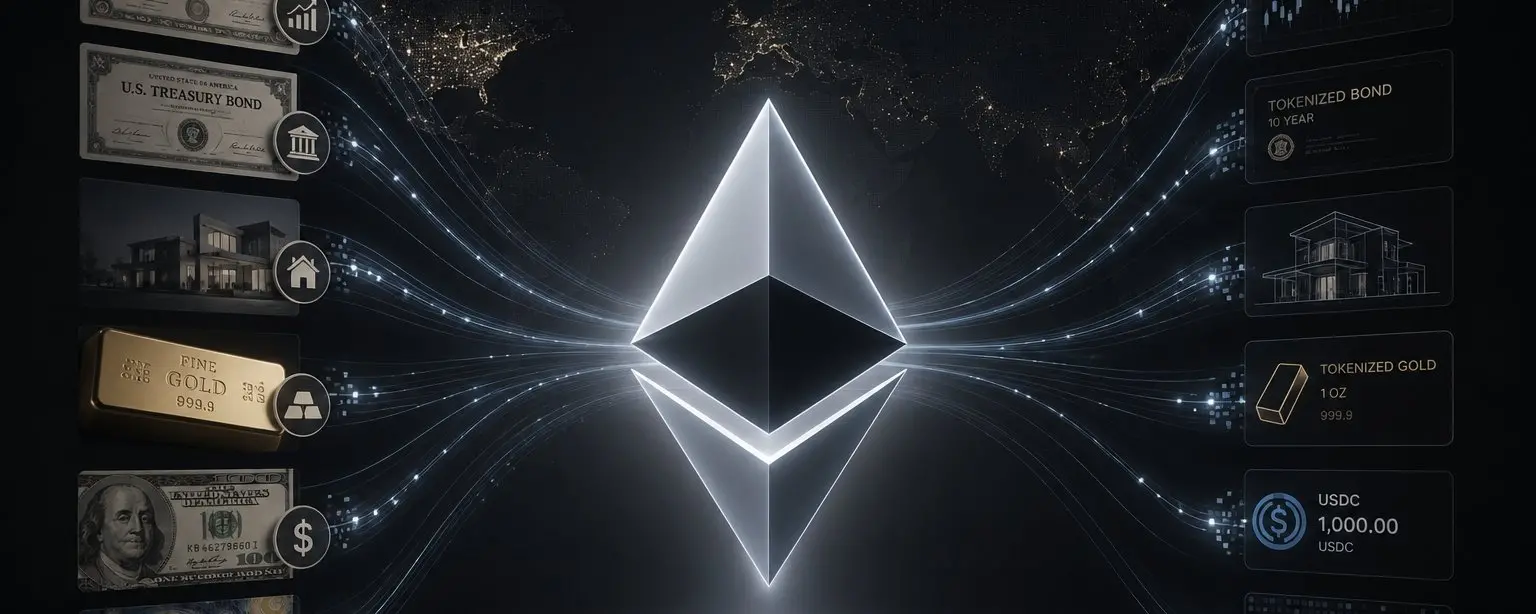
Composability is the greatest value innovation of on-chain RWA. The combination of collateral, yield, and derivatives allows government bonds, private credit, commodities, and stocks to be freely combined like financial Lego blocks. For example, Ondo GM and Backed Finance's xStocks platform achieves retail-driven high liquidity through cross-chain trading and secondary market mechanisms, while also providing a foundation for DeFi strategies. This composability not only improves capital utilization efficiency but also means that RWA will no longer be a single asset but can form multi-layered, re-packagable on-chain financial instruments.
The on-chaining of commodities and real estate reflects the future potential of RWA. Plume's XAUm, Mineral Vault (MNRL), and Spice Protocol's agricultural supply chain project demonstrate the initial activity of on-chain commodity and energy assets; RealtyX puts real estate rental income on-chain, achieving an average cash flow distribution of 6.9%. The DeFi-ization of such real cash flow assets provides investors with diversified sources of income and brings on-chain assets closer to the real economy. My observation is that with the improvement of derivatives, lending, and secondary market mechanisms, in the next three to five years, real estate and commodity RWA may become important growth engines in the on-chain capital market.

From an overall ecological perspective, the development of RWA is forming a pattern of institutional foundation + retail activity + composable financial instruments. Institutions provide stable, compliant funding and settlement channels, while retail participation brings liquidity and network effects. Whether on-chain RWA can truly replace some functions of traditional capital markets in the future depends on the maturity of regulatory compliance, multi-chain settlement capabilities, and risk control mechanisms. I personally judge that on-chain RWA is not only the underlying infrastructure of DeFi but also has the potential to become a new hub for global cross-border asset flows, especially when multi-currency and multi-region sovereign assets and real cash flow assets can be further standardized and composable.
Plume: A Benchmark Practice for On-Chain RWA
In the entire on-chain RWA ecosystem, Plume can be seen as a benchmark in this field. Compared to traditional RWA projects, Plume's uniqueness lies in widespread retail participation + multi-asset category implementation + composability, forming a complete on-chain asset financialization closed loop.
According to Plume's internal report, its Nest series products (nTBILL, nALPHA, nCREDIT, nBASIS, nINSTO, nELIXIR) have attracted hundreds of thousands of real active users in just a few months, rather than merely passive TVL accumulation. Among them:
- nTBILL: 86,000 users participated, serving as the on-chain government bond foundation, providing not only low-risk returns (annualized 4.75%) but also direct usability within the Plume DeFi ecosystem, supporting collateral, lending, and trading.
- nALPHA: Linked to commodity assets like MNRL, showcasing the potential for high liquidity and high composability on-chain, with an annualized yield of 10.20%.
- nCREDIT: Accessing multiple institutional credit products, achieving the on-chaining of high-yield assets while retaining programmability and cross-chain capabilities, with an annualized yield of 7.18%.
- nBASIS: Annualized yield of 11.54%, providing low-risk composable RWA investment tools.
- nINSTO: Annualized yield of 4.84%, focusing on high-quality institutional assets on-chain.
- nELIXIR: Annualized yield of 5.26%, serving as a composable low-volatility asset, providing stable underlying support for DeFi strategies.

Additionally, Plume continues to innovate in commodity and cash flow assets:
- XAUm: 61K users, with trading activity accounting for 87% of the total, showing that Plume has become the core network for XAUm on-chain trading.
- MNRL: Valuation increased from 0 to 2.3M USD within two months, marking the rapid implementation of on-chain commodity assets.
- Spice Protocol: Over 140K deposit and withdrawal operations, with a TVL of 54,000 USD, utilizing the Proof of Trade system to put international supply chain data on-chain, providing dual value of yield and market information for DeFi users.
- RealtyX: Real estate rental income on-chain, averaging a distribution of 6.9%, while supporting cross-chain operations between Plume and Base, demonstrating the feasibility of cross-chain cash flow assets.

Plume's successful practice not only reflects the usability and composability of on-chain assets but also sets the industry benchmark for RWA. Its experience indicates:
- Retail participation is key to scaling: The number of active users and transaction frequency directly affect asset liquidity and secondary market depth.
- The implementation of multiple asset categories validates the potential of composable financial instruments: From government bonds to credit, commodities, and real estate, RWA is no longer limited to a single asset but can form multi-layered, re-packagable on-chain capital markets.
- The maturity of risk management and compliance mechanisms determines sustainable development: Plume's institutional collaborations, custody arrangements, and transparent yield calculation mechanisms provide an operational template for the on-chaining of high-risk assets.
It can be said that Plume has completed the leap from "on-chain asset experiment" to "on-chain capital market infrastructure." For the entire RWA track, it is not only a successful product case but also a barometer and reference template for the development of the on-chain asset ecosystem. In the future, if other projects wish to achieve balance on both retail and institutional sides and build composable assets, Plume's experience undoubtedly holds significant reference value.

In summary, the RWA market in 2025 has started from government bonds and is gradually expanding to diverse assets that are high-yield, composable, and cash-flow oriented. Plume's case shows that widespread retail participation and the convenience of on-chain operations are key factors driving the scaling and sustainable development of RWA. In the long run, the true value of RWA lies not only in the on-chaining of assets themselves but also in how it reconstructs the composability, liquidity, and global interconnectedness of on-chain capital markets. I believe that in the future, RWA will upgrade from "on-chain asset display" to "on-chain capital market," becoming an important bridge for the integration of DeFi and real finance.
 Risk warning
 Risk warning